


Replicating the intense blistering heat and smoky char of an outdoor grill inside a conventional kitchen requires a deliberate strategy. Learning how to grill pizza in oven environments means combining heavy conductive heat from below with direct radiant energy from the top broiling element. Standard ovens heat food primarily through convective air, which often leaves homemade pizza crusts pale, soft, or soggy. By adopting the principles of outdoor live-fire cooking, home bakers can achieve rapid crust blister and oven spring without relying on outdoor cooking spaces or tools like wood smoker boxes for outdoor grills.
High-density cooking surfaces act as thermal batteries that dump stored heat directly into raw dough within seconds of contact. Pairing a preheated cordierite stone or heavy metal baking steel with the oven broiler creates an indoor hearth that mirrors outdoor grate conditions. The intense conductive heat flash-cooks the dough base, while radiant overhead heat bubbles cheese and chars toppings before excess moisture pools. Understanding surface materials, rack positioning, and dough handling allows any cook to produce crisp, restaurant-quality pies safely and reliably in any home kitchen.

Pros
- Excellent heat conductivity for superior crust crispiness
- Versatile use in oven, BBQ, or grill for various dough-based recipes
- Easy to clean compared to porous pizza stones
- Solid build quality ensures long-term durability
Cons
- Weighs over 13 pounds, making it less portable for camping or tailgating
- Requires significant preheat time (about 45-60 minutes) to reach optimal temperature
- May not fit in smaller ovens or compact BBQs due to its 13x13 inch size
The Hans Grill Pizza Steel PRO is essentially a heavy-duty steel plate designed to replicate the intense heat of a brick oven in your own kitchen or backyard. At 1/4 inch thick and 13 inches square, this baking steel sits directly on your oven rack or on your BBQ grates, absorbing and radiating heat with exceptional efficiency. Instead of relying on porous stone, this conductive steel transfers heat directly to your pizza dough, resulting in a crust that's crispy on the bottom and perfectly cooked on top.
This pizza steel is best suited for backyard grillers and outdoor cooks who already enjoy firing up their BBQ for more than just burgers and steaks. If you love hosting pizza nights on the patio or want to expand your BBQ's repertoire beyond grilling, this steel is a smart addition. It also appeals to indoor cooking enthusiasts who want the same crust quality without investing in a dedicated pizza oven.
In real-world cooking, the Hans Grill Pizza Steel PRO excels at heat consistency and searing. Once preheated for about 45 minutes to an hour, the steel holds a steady temperature that crisps up the bottom of your pizza in under 10 minutes. The thick steel ensures no hot spots, so your crust cooks evenly from edge to edge. While it doesn't produce smoke flavor on its own, when used on a charcoal or wood-fired BBQ, you can still get that subtle smokiness from the grill environment.
Build quality is solid. The steel is heavy—over 13 pounds—and feels robust. There's no risk of cracking like with ceramic stones, and the smooth surface resists rust when properly cared for. Just keep it dry and occasionally season it with a light oil coat. The included beechwood peel is functional, though not exceptional, but it does help slide pizzas on and off the steel easily. For portability, this isn't something you'd toss in a cooler for a camping trip—it's a permanent fixture for your home kitchen or patio setup.
Cleanup is straightforward: let the steel cool, then wipe down with water. No soap needed. Any stuck-on residue can be scraped off gently. Avoid soaking or using harsh detergents, as they can strip the seasoning and lead to rust. Storage is easy enough—just find a flat, dry spot in your kitchen or garage.
One realistic limitation is the preheat time. You can't decide to make pizza on a whim and have it ready in 20 minutes. Plan ahead. Also, the 13x13 size might be too large for compact ovens or small grills. If you have limited space, measure your oven or grill interior first. Overall, for anyone serious about making exceptional pizza at home or on their BBQ, the Hans Grill Pizza Steel PRO offers excellent value and performance.
Pros
- Excellent heat retention and even cooking for crispy crusts on pizza and bread.
- Thermal shock resistant cordierite holds up to high grill temps without cracking.
- Easy to clean with included scraper and warm water; no soap needed.
- Versatile for both oven and grill, making it a great outdoor cooking accessory for pizza nights or baking.
Cons
- Small size (15x12 inches) only fits personal pizzas up to 11 inches; not ideal for large gatherings.
- Requires proper preheating for best results; may need 30-45 minutes to fully heat.
- Heavy at 6.8 lbs, which can be cumbersome to handle and store; not the most portable option for camping.
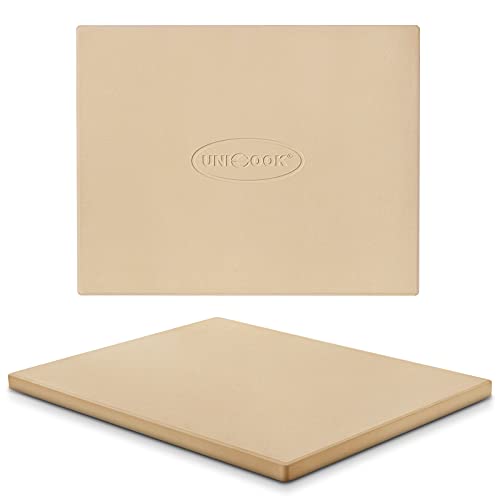
The Unicook Pizza Stone is a rectangular cordierite baking stone designed for use in both ovens and grills, making it a versatile addition to any outdoor cooking setup. While it's not a standalone grill or smoker, this stone transforms your existing gas or charcoal grill into a mini pizza oven, perfect for backyard cooks who want to expand their menu beyond burgers and steaks. It's best suited for backyard grillers, patio cooks, tailgaters, and even RV owners who want to bake pizza, bread, or cookies while camping.
In real-world cooking performance, the stone excels at heat retention and even distribution. The 0.6-inch thick cordierite absorbs and radiates heat consistently, eliminating hot spots that can lead to soggy centers or burnt edges. After preheating your grill with the stone inside for about 30 minutes, you'll get a crispy, golden crust on your pizza - similar to a brick oven. The porous surface also wicks away moisture from the dough, ensuring a firm base rather than a doughy one. While it won't produce smoke flavor like a smoker, you can add wood chips to your grill for a subtle smoky twist.
Build quality is solid for the price point. The cordierite material is thermal shock resistant up to 1450°F, so it can handle the high heat of a grill without cracking under normal use. The stone is heavy at 6.8 lbs, which aids heat retention but makes it less portable for campers who hike in. For tailgating or RV trips, it's manageable if you have a stable surface. There are no grates or wheels - it's a simple slab that sits directly on your grill grates or in the oven. Over time, it may develop discoloration from grease or food residue, which is normal and doesn't affect performance.
Setup is straightforward: place the stone on your grill grates with at least 1-2 inches of clearance on all sides for airflow. Preheat gradually to avoid thermal shock. Cleaning is easy after it cools - just scrape off residue with the included plastic scraper and wash with warm water and a brush. Avoid soap, as the stone can absorb it and affect taste. Storage can be tricky due to its weight and size, but it's small enough to fit in a cabinet or under a grill cover.
A realistic limitation is the size: 15x12 inches only accommodates personal pizzas up to 11 inches. If you're cooking for a crowd, you'll need to bake in batches or consider a larger model. Also, the stone requires patience - you must preheat thoroughly for best results, which adds time to your cook. It's not ideal for quick weeknight dinners, but for weekend BBQ parties or a relaxed tailgating session, it's a fun tool.
Overall, the Unicook Pizza Stone is a practical accessory for outdoor cooking enthusiasts who enjoy homemade pizza or artisan bread on their grill. It delivers consistent heat, a crispy crust, and is easy to maintain. If you have a grill and want to up your outdoor baking game without buying a separate pizza oven, this stone is a budget-friendly choice. Just keep the size and preheating time in mind for your specific use case.
The Unicook Pizza Stone delivers even heat distribution thanks to its thick cordierite construction. After preheating in a gas grill at 500°F for 30 minutes, the stone holds steady temperature, producing a crispy bottom crust on homemade pizza. The porous surface absorbs excess moisture, preventing sogginess. While it won't sear like a flat top or produce smoke flavor, it excels at baking. For outdoor bakers, this means consistent results batch after batch - great for pizza, bread, or even cookies on the grill.
Cleaning the Unicook Pizza Stone is simple but requires care. After the stone cools completely, use the included plastic scraper to remove any stuck-on food or dough residue. Then hand wash with warm water and a brush - never use detergent, as the stone can absorb soap and impart flavors to future bakes. Discoloration from grease is normal and doesn't need scrubbing. Avoid soaking the stone. Over time, the porous surface will develop a seasoned patina that enhances cooking. Store in a dry place to prevent mold.

Pros
- Excellent heat retention and even heat distribution for consistent baking
- Versatile for both oven and grill use, expanding cooking options
- Includes a wooden peel, saving you an extra purchase
- Durable cordierite material resists thermal shock and cracking
Cons
- Requires careful handling to avoid breakage if dropped
- Stains easily from oils and sauces, though this is cosmetic only
- Not dishwasher safe; must be hand washed with warm water
The Hans Grill Pizza Stone is a rectangular cordierite baking stone designed for both indoor ovens and outdoor BBQ grills. It measures 15 by 12 inches and comes with a free wooden peel, making it a complete setup for pizza lovers. This stone is built to handle temperatures up to 1112°F, so it can easily go from a hot grill to a hot oven without cracking.
This stone is best suited for backyard grillers, patio cooks, and outdoor entertainers who want to make authentic pizza at home. It also works well for campers and RV owners who have access to a grill or campfire setup. If you enjoy hosting pizza nights or baking bread while grilling, this stone fits right into your outdoor cooking routine.
In real-world use, the cordierite material heats up evenly and holds that heat well. Pizzas come out with a crispy bottom and evenly melted toppings. The stone also works great for baking bread, calzones, and even frozen pizzas. On a gas or charcoal grill, it adds a subtle smoky flavor to the crust that you just can't get from an oven alone. The included wooden peel makes it easy to slide pizzas on and off the hot stone without burning yourself.
Build quality is solid. The stone is thick enough to resist thermal shock, though it is still breakable if dropped. It does not have any metal parts, so rust is not an issue. The surface is porous, which helps absorb moisture for a crispier crust, but it also means the stone will stain over time. That is completely normal and does not affect performance. Cleaning is simple: just scrape off any residue and hand wash with warm water. No soap is needed, and you should never put it in the dishwasher.
One limitation is that the stone is heavy at nearly 8 pounds, so it is not the most portable option for camping unless you have a sturdy setup. It also requires preheating for at least 30 minutes to reach optimal temperature, so you need to plan ahead. Staining is inevitable, but many cooks actually prefer a well-seasoned stone.
Overall, the Hans Grill Pizza Stone is a practical and affordable tool for anyone who loves making pizza at home. It works equally well in the oven and on the grill, and the included peel adds real value. If you are a backyard griller or outdoor cook looking to up your pizza game, this stone is a solid choice.

Pros
- Dual-purpose design saves space and money by combining a brush and scraper in one tool.
- Brass bristles are tough on burnt-on food but gentle enough not to scratch pizza stones.
- Heat-resistant materials allow you to clean while the stone is still warm, improving efficiency.
- Stainless steel head resists rust and corrosion, holding up well in damp outdoor storage conditions.
Cons
- Brass bristles may wear down over time with heavy use, requiring eventual replacement.
- The handle could be longer for added safety when cleaning very hot oven surfaces.
- Not suitable for cleaning non-stick surfaces or delicate cookware due to the abrasive bristles.
If you own a pizza oven or use a pizza stone on your grill, you know that cleaning burnt cheese and crust off the stone is one of the most annoying parts of outdoor cooking. The Hans Grill 2-in-1 Pizza Oven Brush and Scraper is a simple, affordable tool that tackles this job head-on. It combines a stiff brush and a sturdy scraper in one head, so you can remove both loose debris and stubborn baked-on residue without switching tools. This makes it a handy addition for backyard grillers, campers, tailgaters, and anyone who enjoys cooking pizza outdoors.
This tool is best suited for home cooks who frequently use pizza stones in a grill, smoker, or dedicated pizza oven. It is also handy for RV owners who cook pizza while camping and need a compact cleaning solution. The dual-purpose design means you do not have to carry multiple brushes or scrapers, which is a real plus for tailgating setups or storage-limited patios. It works well on both indoor and outdoor pizza stones, so it can serve double duty in your kitchen and backyard.
In real-world use, the brass bristles do a solid job of scrubbing away food particles without scratching the stone surface. The scraper edge lets you lift off larger pieces of burnt cheese or crust that a brush alone might miss. Because the head is heat-resistant, you can use it while the stone is still warm, which makes cleaning much easier. The handle is comfortable to grip and keeps your hands safely away from the hot surface. For best results, use it after the stone has cooled slightly but is still warm to the touch, and avoid using soap or water as the stone is porous.
Build quality is decent for the price point. The stainless steel head resists rust, and the brass bristles hold up well under normal use. The handle feels sturdy and is securely attached. However, like any brush with metal bristles, it may shed a few bristles over time, so inspect it periodically and replace it if bristles become loose. It is not designed for non-stick surfaces or delicate cookware, but for pizza stones and grill grates, it works fine.
Cleanup of the brush itself is straightforward: just tap it out or rinse it off and let it dry. It is compact enough to store in a drawer, hook on a grill cart, or toss into a camping bin. Overall, this is a practical, low-cost tool that solves a specific problem for pizza lovers who cook outdoors. If you are tired of scrubbing your pizza stone with a regular brush or scraping it with a metal spatula, this 2-in-1 tool is worth picking up.
Keeping your pizza stone clean is essential for good cooking results, and the Hans Grill 2-in-1 Brush and Scraper makes it easy. After cooking, let the stone cool slightly but not completely. Use the scraper edge to lift off large pieces of burnt cheese or crust, then follow up with the brush to sweep away remaining crumbs and ash. Do not use soap or water on the stone, as it can absorb moisture and cause cracking. For the brush itself, simply tap it against a trash can to remove debris, or rinse it with water and dry it thoroughly. Store it in a dry place to prevent rust on the metal parts. If bristles start to loosen over time, replace the brush to avoid stray bristles ending up in your food.

Pros
- Superior heat retention keeps crust crispy and cooks evenly
- Works in both conventional ovens and all types of grills (charcoal, gas, pellet)
- Thick 0.57-inch cordierite construction holds heat for extended cooking
- Reversible design doubles cooking area and extends stone life
- Included dough scraper simplifies cleaning and dough handling
Cons
- Heavy at 5.3 pounds – not ideal for ultra-light camping setups
- Requires careful preheating (always start cold) to avoid thermal shock
- May develop natural discoloration over time; this is normal and doesn't affect performance
The Unicook 12-inch square pizza stone is a smart addition for anyone who loves cooking pizza outdoors. While it's not a grill itself, this cordierite stone transforms your existing grill or oven into a high-temperature pizza oven. Backyard grillers, campers, tailgaters, and RV owners will find it especially useful for getting that crispy, restaurant-style crust without the cost of a dedicated pizza oven.
Cooking performance is where this stone shines. The porous cordierite pulls moisture away from the dough, so you never end up with a soggy center or burnt edges. The heat distributes evenly across the whole 12x12 surface, eliminating hot spots that can ruin a pie. For the best results, preheat the stone inside a cold grill or oven – that gradual temperature climb helps the stone retain heat and gives you a nice, crisp bottom crust. It handles temperatures up to 1450 degrees Fahrenheit, so it's perfectly safe for gas grills, charcoal kettles, pellet smokers, and even campfire cooking if you're careful.
Build quality is solid. The 0.57-inch thick cordierite resists thermal shock better than many ceramic stones, and the reversible surface means you can use both sides over time. It comes with a plastic scraper for removing stuck-on bits, but hand washing with warm water is all it needs. One thing to note: like most unglazed stones, it will develop darker spots after several uses. That's normal and won't affect cooking – it's just the stone seasoning from oil in the dough.
Who should buy this? If you're a backyard entertainer who loves hosting pizza nights, or a camper who wants to bake bread over a campfire, this stone is a practical upgrade. It's small enough to pack alongside a portable grill for tailgating, yet large enough to cook a 12-inch pizza, a batch of cookies, or a small loaf of bread. The weight (just over 5 pounds) is manageable for car camping or RV kitchens but might be too heavy for backpacking trips.
One realistic limitation is the learning curve. You must preheat the stone gradually – always place it in a cold oven or grill, then heat together. Dropping it into a hot environment can cause cracking. Also, the stone gets very hot and stays hot for a while after cooking, so handle with mitts and let it cool before washing. The discoloration may bother some users, but it's cosmetic only.
Overall, the Unicook pizza stone delivers great value for the price. It's a simple, effective tool that takes your outdoor pizza game up a notch. Whether you're smoking a brisket low and slow and want to bake a quick pizza for a crowd, or you're at a campsite making artisanal bread, this stone handles the job. If you're ready to move past metal pizza pans and want that authentic crispy crust, this is a solid choice.
The Unicook pizza stone's cordierite construction is purpose-built for high-heat cooking. Its porous nature pulls moisture from the dough, which prevents the dreaded soggy center that metal pans often cause. The stone's even heat distribution means no burnt edges or undercooked spots – just a uniform golden crust. For outdoor cooking, preheat the stone in your grill for at least 30 minutes at around 500 degrees Fahrenheit. The hotter the stone, the crispier the crust. You can use it in charcoal grills, gas grills, pellet grills, and even campfires (with careful heat management). Just remember to always start the stone cold and heat it gradually to avoid thermal shock.
Cleaning the Unicook pizza stone is straightforward but requires care. Never use soap – just hand wash the cooled stone with warm water and the included plastic scraper to remove food residue. Avoid seasoning the stone with oil or grease, as cordierite doesn't need it. Over time, the stone will develop darker spots from absorbed oils and sugars. This is normal and actually improves the non-stick surface. Store the stone in a dry place and allow it to fully dry after washing. With proper care, this stone will last for years of outdoor pizza making.
The Complete Guide to Grilling Pizza in a Conventional Oven
Transforming a residential kitchen range into a high-heat pizza hearth requires coordinating two distinct heating sources. Outdoor grills combine direct grate contact with trapped radiant heat under a closed lid. In a kitchen oven, replicating that intense environment depends on preheating a heavy baking surface and synchronizing the top broiler element. The following guide covers the essential physics, cooking surfaces, dough mechanics, and baking stages needed to achieve blistered crusts indoors.
The Thermodynamics of Oven Grilling: Conductive Heat vs Overhead Broil
Outdoor grills transfer energy rapidly through conductive metal grates and open flame radiation. In contrast, home ovens rely mainly on circulating air that transfers thermal energy at a sluggish rate. Air possesses low thermal mass, making it incapable of rapidly expanding raw dough into an airy crust. Simulating outdoor grill conditions indoors requires replacing ambient air baking with dense, direct conduction.
Conductive heat occurs when raw pizza dough directly contacts a superheated surface. This immediate energy transfer flash-boils internal water into steam, producing explosive oven spring along the crust rim. Without strong conductive heat, dough bakes slowly, yielding a dense crumb and a tough, pale bottom. Heavy cooking surfaces solve this challenge by storing massive amounts of thermal energy during preheating.
The oven broiler supplies the necessary overhead radiant heat to mirror an outdoor grill lid. Broilers produce direct infrared rays that cook toppings and caramelize cheese within minutes. Placing dough close to the broiler replicates the intense top heat of live-fire cooking. Balancing bottom conduction with top radiation delivers authentic charred spots and crisp, chewy dough.
Baking Steel vs Cordierite Stone: Choosing Your Heat Reservoir
Choosing an effective cooking surface dictates how efficiently your pizza bakes from the bottom up. Porous cordierite stone stands as the classic choice for even heat retention and thermal shock resistance. Products like the Unicook Pizza Stone, Heavy Duty Cordierite Pizza feature a 0.6-inch thickness and weigh approximately 6.8 pounds. Rated for temperatures up to 1,450 degrees Fahrenheit, cordierite handles extreme oven cycles without cracking.
Cordierite absorbs escaping steam from wet dough, helping produce a crisp, dry bottom crust. The HANS GRILL PIZZA STONE | Rectangular Pizza Stone provides a generous 15 by 12-inch surface rated up to 1,112 degrees Fahrenheit. These rectangular slabs fit standard oven racks and provide ample room for family pizzas, calzones, and crusty breads. Their porous texture prevents the sogginess often experienced with lightweight metal baking pans.
Baking steel provides an even faster rate of heat transfer than ceramic stone. The Pizza Steel PRO by Hans Grill measures 13 by 13 inches with an optimal 1/4-inch thickness. Steel conducts heat roughly eighteen times faster than cordierite, dumping intense thermal energy into dough almost immediately. This rapid conductivity makes steel ideal for ovens that struggle to reach high maximum temperatures.
Available oven space must guide your surface dimensions. For compact ranges or countertop pizza ovens, options like the Unicook Pizza Stone for Oven and Grill provide a practical 12 by 12-inch footprint with 0.57-inch thickness. Always ensure at least 1 to 2 inches of clearance on all sides of the stone or steel. Proper airflow prevents localized heat buildup and protects internal oven thermostats.
Oven Calibration and Strategic Rack Placement
Rack positioning dictates whether your pizza cooks uniformly or scorches on one side. Placing a stone on the center oven rack works well for bread, but it rarely produces grill-style char. Center placement allows hot air to dry toppings while the bottom crust struggles to blister. Moving the cooking surface higher bridges the gap between bottom conduction and top radiation.
Position your oven rack on the second slot from the top for optimal broiling results. This leaves roughly 4 to 6 inches of clearance between the stone and the overhead broiler coils. That distance provides enough vertical room to slide a pizza peel in without striking the element. It also places the pizza close enough to catch direct infrared broiling heat.
Saturating your cooking surface with heat requires ample preheating time. A residential oven may signal it has reached 500 degrees Fahrenheit after fifteen minutes, but the dense stone remains lukewarm. Solid cordierite stones and steel plates require 45 to 60 minutes of preheating at maximum temperature. Patient preheating ensures that the surface stores enough thermal mass to cook consecutive pizzas without losing heat.
Managing high kitchen heat safely requires good air circulation. While dedicated outdoor barbecue island kits provide open-air ventilation for high-temperature grilling, indoor kitchens rely on exhaust fans and clear space. Never line the bottom of an electric or gas oven with aluminum foil, which disrupts airflow and melts easily. Keep baking racks unobstructed so convection currents flow naturally around the preheated stone.
Dough Formulation and Peel Launching Mechanics
Dough composition affects how crust browns under residential oven conditions. Traditional wood-fired dough contains only flour, water, salt, and yeast, which requires blistering heat exceeding 900 degrees Fahrenheit. For standard ovens topping out near 550 degrees Fahrenheit, adding 1 to 2 percent olive oil and a dash of sugar improves browning. These additions encourage deep color and pleasant chew within shorter home baking windows.
Target a hydration level between 62 and 65 percent for easy handling and good rise. Excessively wet dough sticks to peels and tears easily during the oven launch. Shape dough rounds by pressing gently from the center outward with your fingertips, keeping air in the outer rim. Avoid rolling pins, which flatten delicate fermentation bubbles and produce dense crust edges.
Launching the pizza smoothly requires the right peel and dusting technique. Wooden peels, such as the beechwood model included with Hans Grill baking sets, absorb surface moisture better than slick metal. Dust the peel surface lightly with a mixture of semolina and bread flour before setting down the dough. Coarse semolina grains act like tiny ball bearings, letting raw dough glide without clinging.
Always shake the peel gently to ensure the dough moves freely before adding sauce. Once topped, work swiftly so wet sauce does not soak through the dough and stick to the peel. At the oven opening, rest the peel tip near the back of the stone and use short, confident backward jiggles. The dough edge will grip the hot stone, sliding off smoothly into place.
The Two-Stage Cooking Sequence: Bake to Broil Execution
The two-stage baking sequence replicates the fiery environment of an outdoor grill inside your kitchen. Begin by preheating the oven to its highest bake temperature, typically 500 or 550 degrees Fahrenheit. Launch the pizza directly onto the hot stone and allow it to bake under bottom heat for the first 2 minutes. This initial contact sets the dough base and activates rapid yeast expansion.
Switch the oven setting from bake directly to high broil once the crust begins to puff. The broiler element floods the upper rack with intense radiant energy. Because the pizza sits just inches below the heat source, the crust rim blisters and toppings cook swiftly. This direct heat mirrors the flame roll across the ceiling of an authentic pizza oven.
Most residential broilers heat unevenly, making regular pizza rotation essential for balanced browning. After approximately 3 minutes under the broiler, slide a thin peel under the crust and spin the pie 180 degrees. Rotating ensures that all sides of the crust blister evenly without scorching one edge. Keep the oven door closed between checks to retain valuable radiant heat.
Rely on visual indicators rather than strict timers to judge doneness. Look for deep brown blister spots along the rim and melted cheese that bubbles vigorously across the surface. Use a peel to lift the edge and verify that the underside shows mottled, rigid char. When the base feels firm and crisp, slide the peel fully underneath and transfer the pizza to a wire rack.
Topping Strategy, Moisture Management, and Flavor Accents
Moisture management is essential when baking pizza on a stone or steel. Fresh mozzarella packed in liquid releases excess water as it melts, causing soggy centers. Use low-moisture whole milk mozzarella, or drain fresh cheese thoroughly on paper towels before slicing. Distribute cheese sparingly so the crust underneath can bake thoroughly and stay crisp.
Sauce application requires strict restraint to protect the crust structure. Limit sauce to roughly 3 to 4 tablespoons for a 12-inch pizza, leaving a clean border around the outer edge. A light coating of crushed tomatoes cooks down quickly, concentrating rich flavors without soaking the raw dough. Heavy sauce layers insulate dough from heat, leading to pale, doughy spots.
Vegetable and meat toppings also demand careful moisture control. Slice mushrooms and onions thinly, or pre-saute wet vegetables before scattering them across the dough. For specialty flatbreads, brushing the crust with savory barbecue sauce glazes creates caramelized sweetness under the intense overhead broiler. Meats like bacon or Italian sausage should always be precooked before assembling the pie.
Delicate toppings should be reserved as post-bake finishing accents. Fresh basil leaves, baby arugula, and shaved Parmesan wilt or scorch if exposed to high broiler heat. Scatter these delicate greens and hard cheeses across the hot pizza right after it leaves the oven. The residual steam warms the toppings gently while preserving their crisp texture and fresh aromatics.
Cleaning and Maintaining Stones, Steels, and Specialty Brushes
Cleaning high-heat pizza stones requires specialized techniques that protect porous materials. Cordierite stones must never be washed with dish soap or soaked in a sink. Porous ceramic absorbs chemical detergents, which then emit unpleasant odors during future baking sessions. Furthermore, trapped water inside a stone can turn to steam and crack the ceramic during preheating.
Scrape off burnt food residue once the baking surface has completely cooled. Multipurpose plastic scrapers, like those included with Unicook stones, easily remove dried cheese drips. For thorough maintenance, the Hans Grill 2-in-1 Pizza Oven Brush & Scraper provides brass bristles and a stainless steel scraper head. The brass bristles sweep away charred debris without scratching or degrading the cooking surface.
Baking steel maintenance differs from ceramic stone because carbon steel requires corrosion protection. Solid steel plates like the Hans Grill Pizza Steel PRO can be wiped clean with warm water and dried immediately. Rubbing a drop of neutral cooking oil across the steel preserves its seasoned surface against moisture and rust. Regular oiling maintains a slick, durable cooking face across hundreds of bakes.
Dark spots and surface discoloration are completely normal on seasoned pizza gear. As oils, flour, and sauce droplets carbonize over time, the stone or steel develops a rich patina. A darkened stone absorbs and radiates thermal energy more efficiently than a brand-new pale ceramic slab. Never attempt to scrub away seasoning marks, as they enhance rather than harm baking performance.
Safety Protocols and Smoke Mitigation in High-Heat Kitchens
High-heat indoor baking produces stray flour dust that can burn and trigger smoke alarms. Limit dusting flour on your peel to the minimum amount required for a clean release. If loose flour darkens on the stone between pizzas, sweep it off carefully with a heat-resistant oven brush. Keeping the baking surface clear minimizes smoke and prevents bitter flavors on subsequent pies.
Handling heavy, superheated accessories requires serious hand protection and caution. Baking stones and steel slabs hold intense heat for several hours after you shut off the oven. Use heavy-duty heat-resistant oven mitts whenever you adjust racks or handle hot peels. Never attempt to remove a hot stone from the oven; let it cool naturally inside the chamber.
Turn on kitchen range hoods and improve air circulation before preheating your oven. Proper airflow vents harmless heat and prevents smoke accumulation from accidental oil drips. Crucially, distinguish indoor oven techniques from outdoor fuel appliances. Outdoor charcoal grills, propane burners, and wood-fired ovens must never be used indoors or in garages due to severe carbon monoxide and fire risks.
Mastering the balance of stone conduction and broiler radiation brings genuine pizzeria quality into your home. Patient preheating and careful dough handling turn an ordinary oven into an effective high-temperature pizza hearth. Respect your equipment, keep toppings balanced, and monitor each bake attentively. With the right gear and method, blistered, crispy pizza crust is easily achievable any night of the week.




Write Your Review
No reviews yet. Be the first to share your experience!