


Thick layers of baked-on grease, flaky rust, and carbon buildup can quickly turn weekend barbecues into a frustrating chore. When burgers tear apart or delicate fish fillets stick to the metal, many backyard cooks wonder if their cooking grids are ruined for good. Learning how to resurface grill grates allows you to restore cooking performance without immediately buying an expensive replacement set. Whether you cook over charcoal briquettes or manage heat on high-heat propane grills with infrared burners, clean cooking grids ensure better heat transfer and superior sear marks.
The restoration process depends heavily on your grate material, ranging from bare cast iron and porcelain-enameled steel to heavy stainless steel bars. Stripping away crusty grease, abrading surface rust, and applying a fresh protective seasoning layer can bring weathered iron back to life. However, recognizing when deep structural pitting or cracked enamel makes restoration unsafe is just as important as the cleaning itself. With the right degreasers, mechanical scrubbing tools, and proper oil curing techniques, you can reclaim a smooth, nonstick cooking surface for your next cookout.
Pros
- Effectively removes tough grease and carbon without heavy scrubbing
- Citrus scent is pleasant and not overpowering compared to chemical cleaners
- Versatile – works on multiple outdoor cooking surfaces (cast iron, stainless steel, ceramic)
- Safe for use on grill interiors and exteriors, plus other kitchen appliances
- Does not leave a soapy or chemical residue that can affect food flavor
Cons
- May require multiple applications for heavily encrusted or neglected grates
- Spray bottle can clog if not rinsed after use with very thick grease
- Not designed for self-cleaning ovens or high-heat pyrolysis cleaning cycles
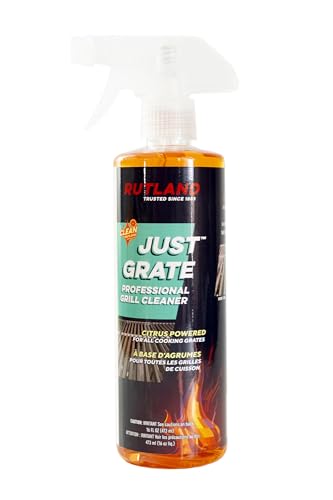
If you spend your weekends firing up the grill for burgers, brisket, or a full backyard party, you know that cleaning up is the least fun part of the whole experience. The Rutland Just Grate Grill Cleaner takes the hassle out of scrubbing greasy grates and grimy interiors. This citrus-based degreaser is designed specifically for barbecue grills, including gas, charcoal, and pellet models, and it handles cast iron grids like a champ.
What makes this cleaner stand out for outdoor cooks is how it cuts through the sticky, baked-on residue that builds up after hours of low-and-slow smoking or high-heat searing. I've used it on my propane grill after a tri-tip session, on my camp stove after a weekend of bacon and eggs, and even on my smoker's drip tray. In every case, the grease lifted off with minimal scrubbing. The citrus scent is a nice bonus – it doesn't smell like a chemistry lab, which is important when you're cleaning right before the next cook.
The formula is safe for cast iron, stainless steel, and porcelain-coated surfaces, so it won't strip seasoning from your prized cast iron skillet or damage the finish on your kettle grill. And because it rinses clean without leaving behind any chemical taste, your next batch of burgers or smoked chicken will taste exactly how they should – smoky, savory, and pure. For tailgaters and campers, this versatility means you can clean your grill at the campsite without worrying about leftover soap ruining your dinner.
Build quality is straightforward: a sturdy 16-ounce spray bottle with a trigger that delivers a consistent mist. While the bottle itself is nothing fancy, the product inside does its job reliably. The degreaser works equally well on the inside of your grill lid, where grease vapor condenses into sticky tar, and on the exterior, where fingerprints and splatters accumulate. It's not a heavy-duty oven cleaner, so you might need to reapply for truly neglected grates, but for regular maintenance after every few cooks, it's more than sufficient.
One realistic limitation: if you let your grates go for a season or two without cleaning, this cleaner alone won't magically melt off thick carbon crust. You'll still need a brush and some elbow grease. Also, the spray nozzle can clog if you leave it sitting with residue, so a quick rinse of the nozzle after each use helps.
For backyard grillers, BBQ enthusiasts, campers, and anyone who loves outdoor cooking, the Rutland Just Grate Grill Cleaner is a practical addition to your cleaning kit. It makes post-cook cleanup faster, keeps your cooking surfaces fresh, and ensures your food tastes like the smoke and seasonings you intended, not leftover grease. At this price, it's an easy buy that saves you time and frustration.

Pros
- Solid stainless steel build provides practical corrosion resistance compared to chipped porcelain or rusted iron
- Includes two modular sections that combine for a 16 1/2 by 22 3/4 inch total cooking area
- Broad compatibility across numerous Kenmore, Vermont Castings, Hamilton Beach, and ProChef grill models
- Straightforward maintenance with no pre-seasoning required compared to bare cast iron
Cons
- Requires precise measuring of existing grill boxes and old grates prior to ordering to avoid fit issues
- Lacks interlocking tabs, requiring stable ledge support inside the grill firebox
The Htanch SF8252 replacement cooking grate set is a dedicated two-piece grilling surface engineered to fit specific gas grill models from brands like Vermont Castings, Kenmore, ProChef, and Hamilton Beach. For backyard grillers dealing with pitted, flaking, or corroded original grids, this pair provides a practical refresh. It caters directly to homeowners and outdoor cooking enthusiasts who want to revive an existing outdoor cooker rather than spend significantly more money replacing the entire barbecue station.
In everyday outdoor cooking scenarios, stainless steel grids deliver dependable heat transfer for staples like burgers, hot dogs, chicken breasts, and sliced vegetables. The rod layout allows direct heat from the burners below to interact cleanly with food, helping achieve classic sear marks when the grill is properly preheated. Because the set splits into two separate 16 1/2-inch by 11 3/8-inch sections, it supports standard dual-zone cooking setups, allowing you to manage searing on one side while holding items over indirect heat on the other.
Built from stainless steel, these replacement grates provide durable structural integrity designed to withstand high outdoor cooking temperatures. Unlike porcelain-coated steel wire which can chip over time, or untreated cast iron that demands continuous oiling to prevent rust, stainless steel provides resilient day-to-day operation. The welded rod structure creates a rigid cooking platform that supports heavier cuts of meat, cast-iron skillets, or loaded vegetable baskets without sagging under regular backyard use.
Installation requires zero tools; users simply lift out the degraded cooking grids and set these two sections directly onto the internal firebox ledges. Daily maintenance is similarly low effort. After cooking, a warm grill brush or nylon scraper cleans the smooth stainless surfaces without requiring the delicate handling needed for seasoned iron. For deeper seasonal cleaning, the individual sections are compact enough to be soaked in a utility sink or washed down with warm water and degreasing soap.
While compatibility spans a long list of Kenmore, Vermont Castings, and ProChef models, proper fit relies entirely on exact cookbox dimensions. Grill manufacturers frequently altered internal dimensions across model years, so relying solely on model numbers can occasionally lead to mismatched sizing. Backyard cooks must take careful measurements of their current firebox ledges or original grates before purchasing to ensure the 16 1/2 by 22 3/4 inch total footprint sits flush without sliding.
If your current grill body and burners remain in solid working order but the cooking surfaces have deteriorated, this Htanch two-pack offers an efficient, budget-conscious solution. It delivers reliable stainless steel durability, straightforward cleanup, and immediate renewal of your cooking surface for family weeknight grilling and weekend gatherings.
Crafted from welded stainless steel rods, the Htanch SF8252 grids are structured to handle everyday outdoor cooking demands. The rigid construction supports heavy cuts of meat and cookware without bending, while the stainless material naturally resists the moisture and grease common to gas grill cookboxes.
Compared to porcelain-enameled steel surfaces that can crack and expose bare metal to oxidation, bare stainless steel provides consistent structural performance over multiple seasons of backyard cooking.
Maintaining stainless steel cooking grates is considerably easier than caring for traditional cast iron, as they do not require regular oil seasoning cycles to prevent deterioration. Routine post-cooking cleanings with a standard wire or bristle-free grill brush while the grates remain warm will dislodge grease and food residue efficiently.
Because the set is split into two manageable panels measuring 16 1/2 by 11 3/8 inches each, removing them for thorough soaking or seasonal scrubbing in a utility sink requires minimal effort.

Pros
- Effective on heavy grease and charred food residue from low-and-slow smokes
- Works well on both cold and warm surfaces for flexible cleaning after grilling
- Economical - a little goes a long way for multiple cleaning sessions
- Rinses clean without leaving sticky residue that could affect food flavor
Cons
- May require multiple applications for heavily caked-on grime from years of use
- Strong chemical smell during application - use in well-ventilated area
- Not recommended for aluminum surfaces or painted grills
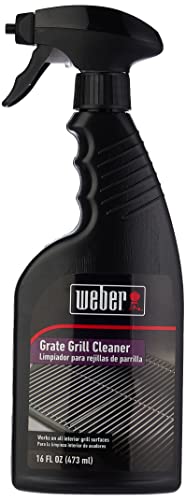
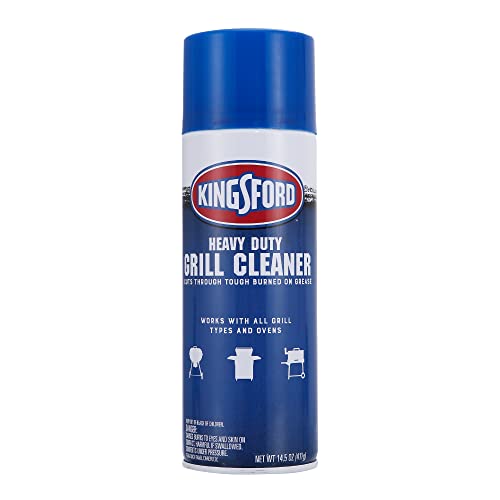
If you spend any time grilling, smoking, or cooking outdoors, you know the cleanup is the least fun part. This heavy-duty grill cleaner is designed to tackle exactly that chore, making it a solid addition to any outdoor cooking setup. It's a spray-on degreaser that works on BBQ grills, smokers, ovens, flat top griddles, and even camping stoves - basically anything that gets coated in grease and carbon after a cookout.
This cleaner is best suited for backyard grillers who fire up their gas or charcoal grills weekly, BBQ enthusiasts who smoke brisket low and slow, campers who need to clean their portable stove after a trip, and tailgaters who want their gear ready for the next game. If you own an RV and cook inside or outside, this is also handy for keeping the oven and grill grates spotless.
In real-world use, the cleaning performance is impressive. It cuts through baked-on grease and charred food residue without requiring heavy scrubbing. After a long smoking session where the grates are covered in black carbon, a few sprays and a short wait let you wipe it away. It doesn't completely eliminate scrubbing, but it reduces elbow grease significantly. The formula works on both warm and cold surfaces, so you can spray right after cooking or let it sit overnight on tough buildup.
Build quality is straightforward - it comes in a standard spray bottle with a trigger nozzle that delivers a wide or narrow stream. The nozzle doesn't clog easily, which is a common issue with thick cleaners. It's safe on porcelain, stainless steel, and cast iron grates, but you should avoid aluminum and painted surfaces. The spray can reach into tight corners of smoker racks and between grates, making it easier to clean those hard-to-reach spots.
Setup and use are simple: spray on, let it sit for a few minutes, scrub if needed, then rinse with water. Cleanup is quick, and the cleaner rinses away without leaving a sticky film that could affect your next meal's flavor. Storage is easy - just keep the bottle in your garage or under the sink. One limitation is that heavily caked-on grime from years of neglect may require multiple applications. Also, the chemical smell is strong, so you'll want good ventilation when using it.
Overall, this is a practical buy for anyone who cooks outdoors regularly. It saves time and effort on cleanup, which means more time enjoying your backyard parties, tailgates, or campsite meals. If you're tired of scrubbing forever after a great cookout, this cleaner makes the after-work much easier. Just remember to wear gloves and work in a well-ventilated area, and your grills and smokers will look like new after each use.
Pros
- Effectively removes stubborn baked-on grease and carbon deposits
- Biodegradable and food-surface safe (non-toxic when rinsed properly)
- Foam clings to grates and vertical surfaces, reducing waste
- Works on pellet smokers, gas grills, and electric smokers
- Helps reduce flare-ups by removing grease buildup
Cons
- Spray nozzle can be inconsistent; some users report clogging or poor spray pattern
- Foam may struggle to coat thin, closely spaced grate rods without pooling
- Do not use on aluminum or faux stainless steel surfaces (may cause damage)
- Requires thorough rinsing to avoid residue that could affect food taste
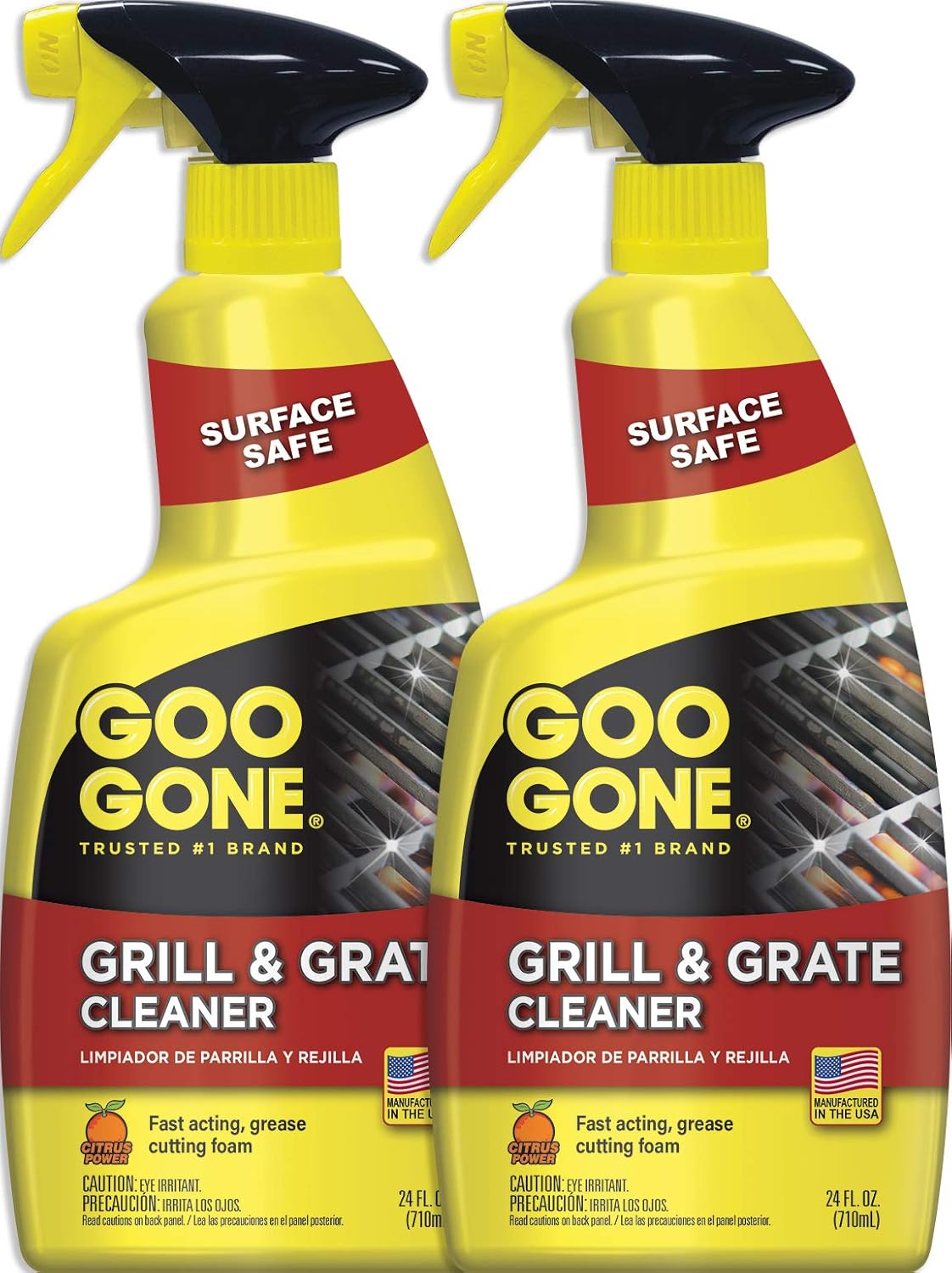
If you've ever faced down a crusty, grease-laden grill grate after a long summer of burgers, steaks, and slow-smoked ribs, you know the struggle is real. The Goo Gone Grill and Grate Cleaner Spray (2 Pack) is designed for exactly that scenario. This super-strength gel foam targets baked-on deposits, carbon, and grease that accumulate on your cooking surfaces. It's not a replacement for a good brush, but it's a powerful pre-treatment that cuts your scrubbing time drastically.
This cleaner is best suited for backyard grillers who own gas grills, pellet smokers (like Traeger), electric smokers, or even charcoal kettles. If you're a tailgater who wants to refresh your portable griddle or a home cook who hates scrubbing drip pans, this product will make your life easier. The biodegradable formula is a plus for eco-conscious outdoor cooks, and the citrus scent is a welcome change from harsh chemical smells.
In real-world use, the foam clings well to vertical surfaces—important for cleaning the inside of your smoker lid or the sides of your grill grates. After letting it sit for a few minutes (the instructions recommend 2 to 10 minutes, depending on how caked-on the grime is), a plastic brush or a stiff grill brush will lift the softened debris. Many users report success even with heavy carbon buildup, and the product helps reduce future flare-ups by removing grease that can ignite.
Build quality is straightforward: two 24-ounce bottles with trigger sprayers. The spray nozzles can be finicky—some reviewers mention they don't produce a consistent foam stream, which can make coating narrow grate rods tricky. A workaround is to pour the cleaner into a spray bottle with a better nozzle, or even soak a cloth and wipe it on. The product is safe on most metals (steel, cast iron, porcelain-coated grates) but avoid aluminum and faux stainless steel as the formula can damage them.
Ease of use is the main selling point. Remove your grates, spray on the foam, wait, scrub, rinse, and dry. For interior grill surfaces, you can spray and wipe with a cloth. The cleaner does need to be rinsed thoroughly—leftover residue could affect the taste of your next meal, so a quick rinse with water is essential. Storage is simple; the bottles stand upright and the foam doesn't separate.
A realistic limitation is that very heavy buildup may require multiple applications or a longer soak. Also, if you're cleaning a large smoker with lots of nooks and crannies, you'll use a fair amount of product. Some users with thin, closely spaced grill rods find that the foam doesn't coat evenly unless they apply it carefully. For best results, consider wearing gloves and working in a well-ventilated area. Overall, this is a reliable, affordable cleaner for regular grill maintenance. If you want to keep your outdoor cooking equipment in top shape without spending hours scrubbing, the Goo Gone Grill and Grate Cleaner is a solid choice.
Pros
- Excellent heat retention for consistent grilling results on steaks, burgers, and veggies
- Durable cast iron with porcelain coating provides rust resistance and easy maintenance
- Universal fit adjusts easily to most grills without tools, saving setup time
Cons
- At over 6.5 pounds, it's heavy for backpacking or frequent transport
- Porcelain coating can chip if dropped or scraped against metal surfaces
- Only 7.75 inches deep, which may be too narrow for larger grills with wide cooking chambers
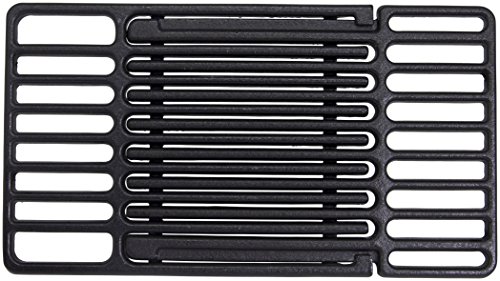
This Char-Broil Universal Cast Iron Grate is a replacement or upgrade grate designed for a wide range of outdoor cooking equipment. It's perfect for backyard grillers, campers, tailgaters, and RV owners who want better heat retention and searing performance from their existing gas or charcoal grill. The adjustable width lets it fit grills from 14 to 19.5 inches across, so it can revive an old kettle or upgrade a portable tailgating setup.
When it comes to real-world cooking performance, this grate shines. Cast iron holds heat like no other material, giving you steady, even temperatures across the cooking surface. That means perfect sear marks on steaks, even browning for burgers, and consistent heat for veggies. The grate gets hot quickly and stays hot even when you load it with food, which helps reduce temperature drops when cooking for a crowd. It also works great for low-and-slow smoking setups on charcoal grills, as the cast iron absorbs and radiates heat gently.
Build quality is solid. The grate is made from heavy-duty cast iron with a porcelain coating that resists rust and makes cleaning easier than bare cast iron. The coating is smooth, so food releases well and you can wipe it down with a stiff brush after grilling. Weights just over six and a half pounds, so it feels sturdy on the grill grates. The adjustable design uses simple sliding brackets, so you can set it to the exact width needed without any tools.
Setup is straightforward: just adjust the two ends to match your grill's side rails and drop it in place. For cleanup, let it cool, then scrub with a wire brush or scrape off residue. The porcelain coating helps prevent sticking and rust, but you should still dry it thoroughly after washing. It stores easily in a garage or shed, though its weight means you probably won't take it on backpacking trips. For car camping, tailgating, or patio cooking, it's a breeze to carry from the car to the campsite or tailgate lot.
Realistic limitations include the weight and the coating's durability. If you drop the grate on concrete or scrape it aggressively with metal tools, the porcelain can chip, exposing the bare iron underneath. That can lead to rust over time if not dried and oiled. Also, the grate is only 7.75 inches deep, which might be a bit narrow for extra-wide grills or for cooking large quantities of food at once. For most standard backyard grills and camp stoves, it fits well.
Overall, this is a practical upgrade for anyone who uses a gas or charcoal grill and wants better heat performance without buying a whole new grill. Backyard cooks will appreciate the even cooking and easy cleanup. Campers and tailgaters will like the universal fit and sturdy build. Just handle it with care to avoid chipping the coating. If you're looking to improve your grilling game for weekend BBQs or campsite meals, this grate is a solid choice.
Cast iron grates are known for superior heat retention, and this Char-Broil model delivers exactly that. It heats up quickly and maintains steady temperatures even when you flip multiple burgers or steaks at once. The surface gets hot enough for a strong sear, locking in juices and creating those desirable grill marks. For charcoal setups, the cast iron absorbs radiant heat and helps manage flare-ups by distributing heat evenly across the cooking area. For gas grills, it enhances the recovery time after opening the lid. Whether you're doing fast grilling for a crowd or slow cooking ribs with indirect heat, this grate performs consistently.
Complete Step-by-Step Guide to Resurfacing Grill Grates
Resurfacing grill grates requires stripping away oxidized metal and burnt grease down to raw metal before applying a protective barrier. The exact technique changes depending on whether your cooking grids are raw cast iron, stainless steel, or porcelain-coated steel. While bare cast iron requires mechanical rust removal followed by immediate oil polymerizing, stainless steel demands heavy degreasing and polishing without a seasoning layer. Understanding the specific metallurgical properties of your grates ensures that you restore food release properties safely while avoiding permanent damage.
Assessing Grate Material and Surface Condition
Before taking a wire brush or chemical solvent to your grill, you must identify what your grates are made of. Bare cast iron feels heavy, has a slightly rough matte texture, and oxidizes into orange rust quickly when left unseasoned. Stainless steel grates feature smooth, silver rods that rarely rust deeply but can develop stubborn golden-brown heat discoloration and carbon buildup. Porcelain-enameled grates consist of steel or cast iron cores coated with a smooth, glossy ceramic glaze designed to prevent sticking.
Inspecting the depth of surface degradation determines whether resurfacing is even possible. Light surface rust on cast iron looks powdery or flaky, sitting on top of solid, stable metal that rings when gently tapped. In contrast, severe corrosion causes deep pitting, cratering, and significant loss of metal thickness across the individual bars. If surface oxidation wipes away or abrades off without compromising the structural integrity of the bars, the grid is a prime candidate for restoration.
Porcelain-coated grids require a completely different assessment because ceramic glaze cannot be resurfaced once broken. If the porcelain has chipped, cracked, or peeled away from the underlying metal, microscopic ceramic shards can loosen during cooking and contaminate food. Also, moisture penetrates beneath cracked porcelain, allowing rust to spread hidden beneath the remaining ceramic layer. Whenever porcelain enamel is significantly compromised, resurfacing is unsafe, and replacing the grids is the only responsible option.
Essential Tools and Cleaners for Grate Restoration
Gathering the appropriate abrasive tools ensures effective rust removal without gouging the underlying metal. Coarse steel wool, wire cup brushes for power drills, and heavy-duty brass wire hand brushes work well for scraping down bare cast iron. For stainless steel bars, non-scratch scouring pads, nylon abrasive wheels, and pumice grill stones provide friction without carving deep scratches where food can stick. Always inspect manual wire brushes before use to ensure bristles are firmly anchored and do not detach onto the cooking surface.
Chemical degreasers help dissolve thick layers of petrified grease so mechanical abrasives can contact raw rust. Products such as the Rutland Just Grate Grill Cleaner utilize citrus-based degreasing formulas designed to cut through stubborn residue on barbecue grids without leaving chemical flavor on food. Citrus formulations offer a user-friendly cleaning method for both bare cast iron and exterior grill components while avoiding harsh industrial caustic odors. Applying a specialized degreaser softens thick carbon deposits, significantly reducing the amount of manual elbow grease required to reach bare metal.
Thick gel formulas provide another effective chemical solution for vertical surfaces and round grate bars. The Goo Gone Grill and Grate Cleaner Spray (2 Pack) is designed as a super-strength, biodegradable gel that clings to grates and cuts through baked-on carbon deposits. This cleaner is listed for use on metals, cooking racks, and interior grill surfaces across brands like Weber, Traeger, and Char-Broil. Manufacturer instructions warn against applying this particular gel to aluminum or faux stainless steel surfaces, emphasizing the importance of verifying your grill construction before application.
Step-by-Step Process for Resurfacing Bare Cast Iron Grates
Begin the cast iron restoration by removing the grates from the grill firebox entirely and laying them on a flat, protected work surface. Spray the grates thoroughly with a dedicated grill degreaser to dissolve grease, allowing the solution to dwell for ten to fifteen minutes. Scrub away the softened carbon using a stiff scraper or abrasive nylon pad, rinsing with warm water to expose the bare rust underneath. Taking the time to remove greasy residues first ensures that your abrasive sanding tools do not become gummed up with old fats.
Once grease is eliminated, attack the oxidation using coarse steel wool, sandpaper, or a drill-mounted wire wheel. Work methodically down each individual grate bar, paying special attention to the undersides and corner joints where moisture collects. For heavily corroded iron, soaking the grates in a fifty-fifty solution of white vinegar and water for up to two hours dissolves stubborn rust pockets. Avoid soaking cast iron in vinegar for longer than two hours, as prolonged acid exposure can begin eating into sound underlying metal.
Immediately after scrubbing, wash the bare iron thoroughly with mild dish soap and warm water to neutralize any remaining acid or cleaning solution. Bare iron begins to develop flash rust within minutes of exposure to air and moisture, making rapid drying imperative. Wipe the grates down with clean shop towels, then place them in a warm grill or kitchen oven at two hundred degrees Fahrenheit for ten minutes. This heat step evaporates all microscopic moisture trapped within the iron pores before you begin the seasoning phase.
Seasoning and Curing Cast Iron Cooking Grids
Seasoning is the chemical process of baking oil into iron pores until it polymerizes into a hard, slick protective coating. Choosing the right oil makes a substantial difference in durability and smoke generation during future cooks. Neutral oils with high smoke points, such as canola oil, refined grapeseed oil, or vegetable shortening, work best for building a resilient seasoning foundation. Avoid unrefined olive oil or animal fats with low smoke points, as they can burn into a sticky, bitter residue rather than forming a slick polymer.
Apply a modest amount of your chosen cooking oil onto a clean paper towel or lint-free cotton cloth. Rub the oil across every surface of the grate, including the top cooking rails, sides, underside bars, and outer framing. Use a dry cloth to buff away excess oil until the metal looks nearly dry, leaving only a microscopic film behind. Leaving visible puddles or thick wet drops of oil creates a gummy, uneven surface that flakes away under direct flame.
Place the lightly oiled grates back onto your outdoor barbecue, close the lid, and ignite the burners or charcoal bed. Bring the grill temperature to approximately four hundred to four hundred fifty degrees Fahrenheit and maintain that heat for one full hour. The oil will smoke lightly as heat bonds the fatty acids to the iron, producing a darkened, satin-like finish. Allow the grates to cool slowly inside the grill, repeating the oiling and heating cycle two to three times for optimal nonstick performance.
How to Resurface and Polish Stainless Steel Grates
Stainless steel grates do not rust under normal atmospheric conditions because chromium in the alloy forms an invisible, self-healing oxide barrier. However, extreme heat combined with burnt sugars and animal fats creates baked-on carbon crusts that mimic rust. Unlike cast iron, stainless steel does not require seasoning, so resurfacing focuses purely on removing carbon deposits and restoring the smooth metal finish. Applying oil seasonings to stainless steel is unnecessary and simply leads to sticky buildup that ruins the sleek aesthetic of the metal.
To resurface stained stainless rods, begin by soaking the grates in warm water mixed with an alkaline degreaser or dish detergent. Scrub the rods firmly along the length of each bar using a non-scratch abrasive pad, fine steel wool, or a brass wire brush. Avoid using carbon steel wire brushes on stainless grids, as tiny carbon steel particles can embed in the stainless metal and cause surface rust blooms. For stubborn brown stains, a paste made from baking soda and water provides gentle abrasive action that lifts discoloration without gouging.
Rinse the cleaned stainless grids thoroughly with fresh water to wash away all abrasive residue and loosened debris. Dry the metal completely using microfiber towels, then inspect the surface for any remaining rough spots. Once clean, exposing the stainless rods to outdoor air allows oxygen to naturally re-passivate the chromium oxide layer. This natural oxidation layer ensures ongoing resistance to future corrosion while providing a smooth rail system for your food.
Handling Porcelain-Enameled and Coated Grates Safely
Porcelain-enameled grates require gentle cleaning methods because the glossy ceramic layer is essentially a specialized glass fused to metal. Power tools, coarse wire wheels, and aggressive scrapers can crack or scratch this protective glass glaze. Once the ceramic finish develops micro-fractures, moisture creeps behind the glass and causes the metal substrate to rust from underneath. Because you cannot re-fire liquid porcelain enamel in a home kitchen or backyard, preserving the factory coating is paramount.
Clean intact porcelain grates using soft-bristled nylon brushes, warm soapy water, and non-abrasive degreasers. Soaking the grids in warm water with a dishwashing detergent loosens carbonized grease without requiring extreme mechanical force. If stubborn spots remain, use a wooden scraper or a brass brush, checking frequently to ensure the bristles do not scratch the smooth coating. Never plunge hot porcelain grates into cold water, as rapid thermal shock can cause immediate shattering of the ceramic glass.
Inspect porcelain grates under bright light after cleaning to check for chipped edges or hairline fractures. If the porcelain has chipped away in areas where food makes direct contact, stop cooking on those grids immediately. Ceramic chips that break off into burgers or steaks pose a severe dental and digestive hazard to your guests. Attempting to paint over broken porcelain with high-heat grill paint is dangerous because spray paints are not certified food-contact surfaces.
Knowing When Replacement Grates Make More Sense
While restoring old cooking surfaces is satisfying, certain types of physical damage cannot be repaired through cleaning or re-seasoning. When cast iron bars lose a significant portion of their original thickness, they become brittle and can snap under the weight of a roast. Similarly, warped cooking grids that wobble unevenly across the firebox ledge lead to dangerous flare-ups and poor pan stability. Investing time and materials into resurfacing heavily deteriorated grids often yields diminishing returns compared to installing fresh hardware.
If your existing cast iron is crumbling, versatile replacement options can restore cooking capabilities across many traditional barbecue pits. The Char-Broil Universal Cast Iron Grate features porcelain-coated cast iron construction that adjusts from fourteen inches to nineteen and a half inches in length. Measuring seven and three-quarters inches wide, this adjustable unit can adapt to various grill dimensions when exact original factory parts are discontinued. When selecting universal replacement parts, carefully measuring your grill firebox ledge ensures that the adjustable segments rest securely without slipping.
For grillers seeking dedicated stainless steel options, aftermarket grids offer targeted compatibility for specific firebox designs. The Htanch SF8252 (2-Pack) 16 1/2″ Stainless Steel cooking grid set provides a total cooking surface measuring sixteen and a half inches by twenty-two and three-quarters inches. Manufacturer specifications list compatibility with select Kenmore, Vermont Castings, Ellipse, Hamilton Beach, and ProChef models, serving as a replacement for original part numbers such as 50001314. Verifying your original part dimensions before purchasing ensures proper clearance above the burner tubes and shields.
Safe Outdoor Grill Operation and Ongoing Grate Maintenance
Operating your barbecue safely must always take precedence over cooking performance and equipment maintenance. Fuel-burning grills using propane, natural gas, charcoal, or wood pellets must never be used indoors, inside a garage, or within an enclosed porch. Even with garage doors or windows wide open, dangerous carbon monoxide fumes can accumulate rapidly and create fatal poisoning hazards alongside severe fire risks. Always position your grill outdoors on a stable, level surface clear of overhead overhangs and flammable building materials, following local fire codes and manufacturer clearance instructions.
Maintaining a clean surface after each cook prevents heavy grease accumulation that necessitates frequent deep resurfacing. Once your cooking session finishes, let the grill run on high heat for ten minutes to carbonize residual food juices into light ash. This burnout technique works across gas models as well as advanced pellet platforms like wood pellet grills, where managing burn pots and deflector plates keeps cooking clean. A light brushing while the metal remains warm strips away this ash easily, leaving a clean surface ready for a light protective oil wipe.
Outdoor storage conditions play a major role in how quickly moisture oxidizes raw metal bars and degrades seasoning. Using water-resistant grill covers protects internal cooking surfaces from humidity, rain, and winter snow during inactive months. When experimenting with wood smoke using dedicated barbecue smoker boxes, remember that wood creosote can cling to cool grates and attract environmental moisture if left uncleaned. Keeping a thin film of cooking oil on cast iron bars between uses acts as a reliable shield against rust, preserving your hard work for seasons to come.
Resurfacing worn grill grates revitalizes cooking performance while extending the working life of your outdoor equipment. By identifying your grate material, removing oxidation thoroughly, and re-establishing a durable nonstick barrier, you protect both food flavor and structural metal. Regular post-cook brushing and routine light oiling eliminate the need for frequent aggressive restoration projects. Take time to inspect your grids at the start of each grilling season so you can cook with confidence, safety, and excellent heat distribution.






Write Your Review
No reviews yet. Be the first to share your experience!