


Uncovering an outdoor cooker after damp weather or months in storage often reveals an unwelcome layer of orange, flaky oxidation across the cooking surface. Learning how to clean rusty bbq grill grates is essential not only for flavor and presentation, but also for food safety and grate longevity. When surface corrosion takes hold, food sticks stubbornly to the metal, heat transfers unevenly, and loose oxide particles can contaminate your favorite grilled meals.
Restoring metal surfaces requires identifying your grate material, choosing effective cleaning solutions, and executing a safe scrubbing technique. Setting up your workspace on a rolling bbq prep table gives you plenty of room to stage cleaning supplies, brushes, and protective gear away from high-traffic patio areas. With the right combination of degreasers, mechanical agitation, and protective re-seasoning, you can revive your cooking grids and extend the lifespan of your outdoor barbecue setup.


Pros
- All-natural, plant-based formula is safer for you and the environment compared to harsh chemical cleaners.
- Effectively removes grease and residue while building a natural seasoning layer on grates.
- Light citrus scent is pleasant and does not affect food flavor.
- Works well on multiple surfaces including stainless steel, making it versatile for grill maintenance.
Cons
- May require more effort for heavily charred residue compared to abrasive chemical cleaners.
- Only available in an 8-ounce bottle, which may not last frequent grillers as long as larger sizes.
If you are a backyard BBQ enthusiast or a weekend camper who enjoys cooking over an open flame, you know that cleaning the grill is often the least fun part of the experience. The CARON & DOUCET BBQ Grill Cleaner Oil offers a refreshingly natural approach to this chore. Made from 100% plant-based refined coconut oil and scented with citrus essential oils, this product is designed to remove grease and residue from your grates without the need for harsh, corrosive chemicals.
This cleaner is best suited for backyard grillers, patio cooks, and tailgaters who want a safer option for maintaining their gear. It works wonderfully with wooden scrapers or non-abrasive brushes, allowing you to gently scrub away buildup while conditioning the metal. Many grillers find that after a few uses, it helps build a natural seasoning on the grates, reducing food sticking and enhancing overall cooking performance on gas, charcoal, or pellet grills.
In terms of real-world cooking performance, this oil does not directly affect heat consistency or searing ability but indirectly improves them by keeping your grates clean and well-maintained. A clean grate ensures better heat transfer and prevents old residue from burning onto fresh food. For low-and-slow smoking or fast grilling, having a clean cooking surface is key to avoiding off-flavors. The light citrus scent is pleasant and does not transfer to your burgers, steaks, or vegetables, so your food tastes exactly as it should.
Build quality of the product itself is solid; the bottle is simple but functional, with a secure cap that prevents leaks during storage or transport. The oil is stable and will not go rancid thanks to the refined coconut oil base. This makes it a great option for campers or RV owners who want a compact, spill-proof cleaner that can be tossed into a gear bin without worry. While it does not offer wind resistance or temperature control like a grill might, it does keep your equipment in top shape for many outdoor cooking sessions.
Ease of use is straightforward: apply a small amount to a cool or warm grate, let it sit for a minute, then scrub with a scraper or brush. The oil breaks down grease effectively, and cleanup is done with a simple wipe. One realistic limitation is that for very heavy, baked-on carbon, you may need to repeat the process or use a bit more elbow grease compared to stronger chemical degreasers. Additionally, the 8-ounce bottle is compact, which is great for portability but might not last heavy users very long. Overall, this is a practical, eco-friendly tool for any outdoor cook who values natural ingredients and wants to keep their grill in great condition without the toxic stuff.
Citrusafe BBQ Grill Grate Cleaner
Pros
- Cuts through tough baked-on grease quickly with minimal scrubbing effort
- Pleasant citrus scent makes grill cleanup less of a chore
- Safe on various grate materials including porcelain and stainless steel
- Rinses clean without leaving residue that could affect food flavor
Cons
- Liquid formula may require multiple applications for heavily neglected grills
- Not a spray – you need to apply with a cloth or brush
- Some users might prefer a foam or spray applicator for easier coverage
If you're a backyard griller or BBQ enthusiast who loves cooking over open flame but hates the cleanup, Citrusafe BBQ Grill Grate Cleaner might be exactly what you need. This 23 oz liquid cleaner is designed to break down grease, carbon, and residue on grill grates using a natural citrus-based formula. Unlike many harsh chemical cleaners, it relies on the grease-cutting power of citrus solvents and leaves behind a fresh, clean scent – not the smell of bleach or ammonia.
Citrusafe works well on a variety of outdoor cooking equipment: gas grills, charcoal grills, pellet smokers, and even flat top griddles. The liquid can be applied with a sponge, brush, or cloth, then allowed to sit for a few minutes before wiping or scrubbing away. It's especially effective on porcelain-covered grates, where it lifts burnt-on food without damaging the coating. Several verified buyers mention using it on smoker glass doors and interior surfaces with great results – a big plus for anyone who likes to keep their rig looking sharp.
One of the biggest advantages this cleaner offers is peace of mind. Because it's non-toxic and biodegradable, you can use it without worrying about chemical residue contaminating your next batch of burgers or brisket. That's a real benefit for tailgaters and campers who cook in close quarters and want a safe product that won't leave off-flavors on the next cook. The citrus scent also makes the cleaning process far more pleasant, especially when you're scrubbing down a grill after a big backyard party.
In terms of real-world performance, Citrusafe holds its own against more abrasive or toxic alternatives. On a moderately soiled grill grate, a single application with some elbow grease removes most of the gunk. For neglected grates with years of buildup, you might need to apply twice or let it soak longer. Even then, it's much easier than scrubbing with vinegar and baking soda or risking wire brush bristles. Users report that it even makes 20-year-old grates look nearly new – a testament to its grease-lifting power.
Cleanup is straightforward: after the cleaner has done its work, rinse thoroughly with water and dry. There's no sticky residue left behind, which is a common complaint with some citrus cleaners. The bottle is large enough to handle multiple deep cleans, making it a good value for regular grillers who cook several times a week. For RV owners or campers, the compact size slips easily into a storage bin without taking up too much space.
The main limitation is the liquid form – it's not a spray, so you have to apply it manually. Some users prefer a trigger sprayer for easier coverage, but that's a minor trade-off given the product's effectiveness and safety. Overall, Citrusafe BBQ Grill Grate Cleaner is a reliable, user-friendly choice for anyone who grills or smokes outdoors. It's especially well-suited for health-conscious backyard cooks, families that cook near kids or pets, and anyone who wants a cleaner that actually makes the chore less of a hassle.

Pros
- Effective on heavy grease and charred food residue from low-and-slow smokes
- Works well on both cold and warm surfaces for flexible cleaning after grilling
- Economical - a little goes a long way for multiple cleaning sessions
- Rinses clean without leaving sticky residue that could affect food flavor
Cons
- May require multiple applications for heavily caked-on grime from years of use
- Strong chemical smell during application - use in well-ventilated area
- Not recommended for aluminum surfaces or painted grills
If you spend any time grilling, smoking, or cooking outdoors, you know the cleanup is the least fun part. This heavy-duty grill cleaner is designed to tackle exactly that chore, making it a solid addition to any outdoor cooking setup. It's a spray-on degreaser that works on BBQ grills, smokers, ovens, flat top griddles, and even camping stoves - basically anything that gets coated in grease and carbon after a cookout.
This cleaner is best suited for backyard grillers who fire up their gas or charcoal grills weekly, BBQ enthusiasts who smoke brisket low and slow, campers who need to clean their portable stove after a trip, and tailgaters who want their gear ready for the next game. If you own an RV and cook inside or outside, this is also handy for keeping the oven and grill grates spotless.
In real-world use, the cleaning performance is impressive. It cuts through baked-on grease and charred food residue without requiring heavy scrubbing. After a long smoking session where the grates are covered in black carbon, a few sprays and a short wait let you wipe it away. It doesn't completely eliminate scrubbing, but it reduces elbow grease significantly. The formula works on both warm and cold surfaces, so you can spray right after cooking or let it sit overnight on tough buildup.
Build quality is straightforward - it comes in a standard spray bottle with a trigger nozzle that delivers a wide or narrow stream. The nozzle doesn't clog easily, which is a common issue with thick cleaners. It's safe on porcelain, stainless steel, and cast iron grates, but you should avoid aluminum and painted surfaces. The spray can reach into tight corners of smoker racks and between grates, making it easier to clean those hard-to-reach spots.
Setup and use are simple: spray on, let it sit for a few minutes, scrub if needed, then rinse with water. Cleanup is quick, and the cleaner rinses away without leaving a sticky film that could affect your next meal's flavor. Storage is easy - just keep the bottle in your garage or under the sink. One limitation is that heavily caked-on grime from years of neglect may require multiple applications. Also, the chemical smell is strong, so you'll want good ventilation when using it.
Overall, this is a practical buy for anyone who cooks outdoors regularly. It saves time and effort on cleanup, which means more time enjoying your backyard parties, tailgates, or campsite meals. If you're tired of scrubbing forever after a great cookout, this cleaner makes the after-work much easier. Just remember to wear gloves and work in a well-ventilated area, and your grills and smokers will look like new after each use.

Pros
- Safe cleaning without wire bristles, protecting your family from accidental ingestion.
- Powerful citrus-based cleaner easily cuts through baked-on grease and carbon buildup.
- Kit includes everything you need: spray, brush, scrubber pads, scraper, and towel, no extra purchases required.
- Works on both hot and cool grills, offering flexibility for different cleaning routines.
Cons
- For extremely charred grates, some elbow grease may still be needed; the cleaner alone won't dissolve heavy creosote instantly.
- Scrubber pads are refillable but replacements are sold separately, adding ongoing cost over time.
- The cookbox scraper is best used on cool surfaces; it may scratch delicate porcelain coatings if used aggressively.
The Citrusafe Complete Grill Cleaning Kit is not your average grill cleaner. It is a thoughtfully assembled set designed to replace the dangerous wire brushes and harsh chemical sprays that many BBQ enthusiasts rely on. Instead, this kit uses a citrus-based degreaser, a nylon brush, heavy-duty scrubber pads, a cookbox scraper, and a microfiber towel to clean your grill safely and effectively. Whether you own a charcoal kettle, a propane gas grill, a smoker, or even a flat top griddle, this kit has the tools to handle the mess.
This kit is built for anyone who takes outdoor cooking seriously. Backyard grillers who fire up the Weber every weekend, campers who throw a grate over an open fire, tailgaters who need a quick cleanup between games, and RV owners who don't want wire bristles scratching their portable grills will all appreciate the safety-first approach. The stars are the Citrusafe Grill Cleaner spray, which uses natural degreasing power from citrus peels to break down grease, and the nylon brush and scrubber pads that work on a cool grill. No more burning off residue or worrying about stray bristles in your burger.
In real-world use, this cleaner shines on moderately soiled grates and cookboxes. Spray it on, let it sit for a few minutes, then scrub with the nylon brush or the heavy-duty pads. The grime dissolves quickly, and the included cookbox scraper reaches into corners that brushes miss. For a neglected grill that has months of caked-on grease, you may need to repeat the process, but the result is a cookbox that looks nearly new. The microfiber towel lifts away remaining residue without scratching porcelain or stainless steel surfaces.
Build quality of the tools is solid. The nylon brush handle is heavy-duty plastic with a comfortable grip, and the scrubber holder accepts the replaceable pads firmly. The scraper has a slim profile that fits into the tight gaps of most grills and smokers. The spray bottle has a trigger that produces a fine mist, covering grates evenly without waste. Everything in the kit is designed to be reused, cutting down on disposable grill wipes and paper towels.
Setup is simple: unpack the items and start cleaning. The spray works right out of the box, and all tools are ready to go. Transport is not an issue since it is a cleaning kit, but the spray bottle and tools fit easily in a garage cabinet or a camping tote. Storage is straightforward: keep the spray away from direct sunlight, and hang the brush and scraper to dry.
Limitations are minor. For grills with extremely heavy carbon buildup (think years of neglect), you may still need to use a metallic scraper or a second application. The scrubber pads are effective but wear out after several uses, and replacement packs are sold separately. Additionally, the nylon brush is not as stiff as wire, so it may take a bit more scrubbing on stubborn spots. Nonetheless, for routine maintenance and even deep-cleaning, this kit is a safe and effective choice. It earns a strong recommendation for any outdoor cook who wants to eliminate the risk of wire bristles and keep their cooking gear in top shape.
The Citrusafe Complete Grill Cleaning Kit comes with five essential items to tackle every part of your grill or smoker. You get a 16oz bottle of Citrusafe Exterior Grill Cleaner (also safe for interior use), a heavy-duty nylon brush with an integrated cookbox scraper, a scrubber handle plus three replaceable scrubber pads, a separate cookbox scraper for tight areas, and a premium microfiber cleaning towel (color may vary). Together, they cover cleaning from grates to hoods to side tables. Everything is manufactured in the USA by Bryson Brothers, a brand focused on safer outdoor cooking products.
For best results, clean your grill when it is cool to the touch. Spray the Citrusafe cleaner liberally onto grates and cookbox surfaces, let it sit for 3-5 minutes to loosen grease, then scrub with the nylon brush or scrubber pads. Use the cookbox scraper for baked-on residue in corners. Wipe away residue with the microfiber towel, then rinse with water if desired. For routine maintenance after each cook, a quick spray and wipe keeps grates looking new. The scrubber pads can be replaced when they become worn; replacement pads are available separately. The spray lasts through many cleanings, making this kit a great value for frequent grillers.
Pros
- Effectively removes stubborn baked-on grease and carbon deposits
- Biodegradable and food-surface safe (non-toxic when rinsed properly)
- Foam clings to grates and vertical surfaces, reducing waste
- Works on pellet smokers, gas grills, and electric smokers
- Helps reduce flare-ups by removing grease buildup
Cons
- Spray nozzle can be inconsistent; some users report clogging or poor spray pattern
- Foam may struggle to coat thin, closely spaced grate rods without pooling
- Do not use on aluminum or faux stainless steel surfaces (may cause damage)
- Requires thorough rinsing to avoid residue that could affect food taste
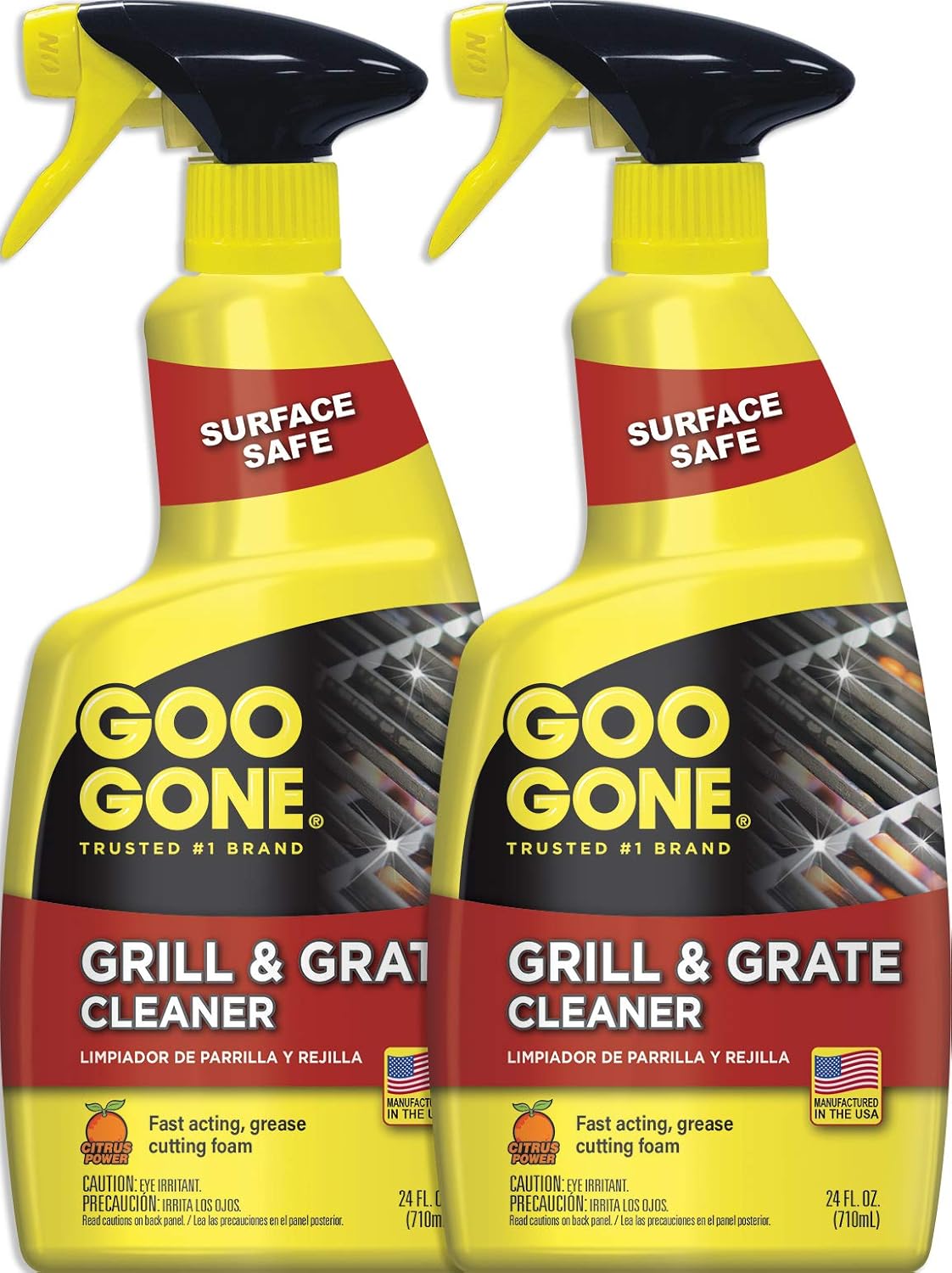
If you've ever faced down a crusty, grease-laden grill grate after a long summer of burgers, steaks, and slow-smoked ribs, you know the struggle is real. The Goo Gone Grill and Grate Cleaner Spray (2 Pack) is designed for exactly that scenario. This super-strength gel foam targets baked-on deposits, carbon, and grease that accumulate on your cooking surfaces. It's not a replacement for a good brush, but it's a powerful pre-treatment that cuts your scrubbing time drastically.
This cleaner is best suited for backyard grillers who own gas grills, pellet smokers (like Traeger), electric smokers, or even charcoal kettles. If you're a tailgater who wants to refresh your portable griddle or a home cook who hates scrubbing drip pans, this product will make your life easier. The biodegradable formula is a plus for eco-conscious outdoor cooks, and the citrus scent is a welcome change from harsh chemical smells.
In real-world use, the foam clings well to vertical surfaces—important for cleaning the inside of your smoker lid or the sides of your grill grates. After letting it sit for a few minutes (the instructions recommend 2 to 10 minutes, depending on how caked-on the grime is), a plastic brush or a stiff grill brush will lift the softened debris. Many users report success even with heavy carbon buildup, and the product helps reduce future flare-ups by removing grease that can ignite.
Build quality is straightforward: two 24-ounce bottles with trigger sprayers. The spray nozzles can be finicky—some reviewers mention they don't produce a consistent foam stream, which can make coating narrow grate rods tricky. A workaround is to pour the cleaner into a spray bottle with a better nozzle, or even soak a cloth and wipe it on. The product is safe on most metals (steel, cast iron, porcelain-coated grates) but avoid aluminum and faux stainless steel as the formula can damage them.
Ease of use is the main selling point. Remove your grates, spray on the foam, wait, scrub, rinse, and dry. For interior grill surfaces, you can spray and wipe with a cloth. The cleaner does need to be rinsed thoroughly—leftover residue could affect the taste of your next meal, so a quick rinse with water is essential. Storage is simple; the bottles stand upright and the foam doesn't separate.
A realistic limitation is that very heavy buildup may require multiple applications or a longer soak. Also, if you're cleaning a large smoker with lots of nooks and crannies, you'll use a fair amount of product. Some users with thin, closely spaced grill rods find that the foam doesn't coat evenly unless they apply it carefully. For best results, consider wearing gloves and working in a well-ventilated area. Overall, this is a reliable, affordable cleaner for regular grill maintenance. If you want to keep your outdoor cooking equipment in top shape without spending hours scrubbing, the Goo Gone Grill and Grate Cleaner is a solid choice.

Pros
- Portable and easy to carry for camping, tailgating, or RV trips
- Flat top surface provides excellent searing and even cooking
- Simple to clean with minimal grease buildup
- Versatile for cooking a variety of foods from breakfast to dinner
Cons
- Limited cooking capacity may not suit large gatherings or big families
- Lacks precise temperature control, which can affect delicate cooking tasks
- Build quality may feel less sturdy compared to larger, more expensive griddles
This portable flat top griddle is designed for outdoor cooking enthusiasts who value versatility and convenience. Whether you are a backyard griller looking to expand your cooking options, a camper needing a compact solution for campsite meals, or a tailgater wanting to whip up burgers and hot dogs before the game, this griddle fits the bill. Its flat cooking surface allows you to sear steaks, fry eggs, cook pancakes, or stir-fry vegetables with ease, making it a great addition to any outdoor cooking setup.
In terms of real-world cooking performance, this griddle delivers even heat distribution across its surface, which is crucial for consistent results. You can achieve a nice sear on burgers without hot spots, and the flat top prevents flare-ups common with open grates. However, it lacks precise temperature control, so you will need to manage heat manually by adjusting the burner or moving food to cooler areas. For low-and-slow cooking, this is not ideal, but for fast grilling and frying, it performs well.
Build quality is decent for the price point. The griddle surface is made from materials that resist rust, though it is not indestructible. The legs fold for easy transport, and the overall weight is light enough to carry in a backpack or store in a car trunk. Weather resistance is adequate for occasional outdoor use, but prolonged exposure to rain or moisture may cause wear. The griddle is easy to set up and clean, with a smooth surface that wipes down quickly after cooking.
One realistic limitation is the cooking capacity. This griddle is best for small groups of 2-4 people. If you are hosting a large backyard party or cooking for a crowd, you might find it too small. Additionally, the lack of a lid means you cannot trap smoke or heat for smoking or roasting, so it is strictly a flat top cooking tool. Grease management is handled by a small drip tray, but it can fill up quickly with fatty foods.
Overall, this portable griddle is a practical choice for campers, tailgaters, and patio cooks who need a lightweight, versatile cooking surface. It is not a replacement for a full-sized grill or smoker, but it excels at quick, high-heat cooking tasks. If you prioritize portability and ease of use over capacity and advanced features, this griddle is worth considering for your outdoor cooking adventures.
The flat top surface heats evenly, allowing you to sear burgers, cook eggs, and fry vegetables without hot spots. It performs best for high-heat cooking like searing and frying, but lacks the temperature control needed for low-and-slow smoking or precise simmering. The open design means no smoke flavor infusion, so it is ideal for quick meals rather than BBQ-style cooking.
Weighing just a few pounds and featuring folding legs, this griddle is easy to pack for camping trips, tailgates, or RV adventures. Its compact size fits in most car trunks or storage bins, making it a convenient option for outdoor cooks on the move. Setup takes minutes, and cleanup is straightforward with a quick wipe down.
Complete Guide to Restoring and Protecting Rusty BBQ Grill Grates
Rust on barbecue grates forms when iron or steel meets moisture, oxygen, and acidic food residues. Learning how to manage this oxidation safely lets you reclaim your cooking surface without causing permanent damage. Different grate alloys require distinct cleaning approaches to preserve their finish and cooking performance. Matching your cleaning method to your specific grate construction eliminates stubborn surface rust while restoring a smooth, reliable cooking area.
Identifying Grate Materials Before Beginning the Cleaning Process
Every restoration project begins by identifying whether your grates are bare cast iron, porcelain-enameled, or solid stainless steel. Bare cast iron is heavy, dark, and porous, making it vulnerable to moisture and rapid oxidation when left unprotected. This metal tolerates firm scrubbing but requires immediate heat curing to establish a fresh seasoning barrier. Failing to dry bare cast iron immediately after washing will cause flash rust to develop within minutes.
Porcelain-enameled grates feature a metal core coated in a smooth ceramic shell that shields raw iron from air and humidity. This finish resists rust effectively until chips or hairline cracks expose the metal underneath. You should never attack porcelain surfaces with steel wool, harsh scrapers, or abrasive pads, as scratches create new paths for rust to spread. Cleaning enameled surfaces requires gentle degreasing, non-scratch scouring, and chemical dissolution rather than aggressive mechanical abrasion.
Stainless steel grates consist of solid rods that resist corrosion through a natural chromium oxide film. While high-grade stainless steel rarely rusts through completely, trapped salt and damp outdoor air can create unsightly surface discoloration. Pitting can also occur if harsh chlorides sit undisturbed on the metal for long periods. Identifying your specific grate construction ensures you choose the safest tools and cleaning agents for the job.
Selecting Safe Tools and Avoiding Wire Brush Hazards
Traditional wire bristle brushes pose significant safety hazards during heavy rust removal on barbecue grates. Thin steel or brass bristles can snap off under firm pressure, lodging between grate bars or inside stubborn grease deposits. If a loose wire attaches to your food during a subsequent meal, it can cause severe internal injuries when swallowed. Safety organizations and medical experts consistently advise using safer cleaning alternatives that eliminate the danger of stray metal fragments.
Heavy-duty nylon bristle brushes provide a dependable alternative when cleaning completely cooled cooking grids. Nylon bristles flex into tight corners to lift loosened rust scale without scratching protective coatings or shedding sharp wires. Dense synthetic scrubbing pads designed for grills also offer firm friction without breaking down into dangerous fragments. Wooden scrapers made of cedar or oak represent another excellent option, slowly forming custom grooves that fit your specific grate spacing.
Along with scrubbing tools, you will need microfiber towels, rubber gloves, and a large wash basin. Microfiber towels lift fine rust residue from metal pores without leaving loose cotton lint behind. Heavy rubber gloves protect your hands from cleaning agents, acidic soaks, and rough metal edges. A dedicated wash basin allows you to submerge the grates completely, keeping chemical runoff and greasy sludge off your patio stones.
Comparing Chemical Cleaners and Natural Rust Dissolvers
Commercial grill degreasers and specialty cleaning sprays are formulated to break down carbonized grease while penetrating oxidation. Formulas that use citrus extracts offer dependable grease-cutting power alongside natural degreasing action without harsh synthetic fumes. Specialized gel degreasers cling directly to vertical grate bars, giving active ingredients extended contact time to dissolve baked-on oils. These products excel when you need to strip away thick, greasy coatings that shield underlying rust from removal.
Natural household solutions provide a reliable, low-cost option for dissolving rust through mild chemical reactions. Standard white distilled vinegar contains acetic acid, which actively reacts with iron oxide to convert it into a water-soluble compound. Submerging rusty steel or cast iron grates in an equal mixture of white vinegar and warm water loosens heavy oxidation within several hours. Baking soda can be mixed with water into a paste that neutralizes lingering acids while polishing away softened scale.
Thorough rinsing is an indispensable safety requirement whether you choose a commercial degreaser or an acidic vinegar soak. Chemical residues and acidic solutions can impart bitter flavors to cooked food if allowed to remain on the metal. Washing the grates thoroughly with clean, warm water and mild dish soap neutralizes chemical activity and prepares the metal for seasoning. Skipping the rinse cycle leaves contaminants behind that degrade food taste and accelerate metal wear.
Step-by-Step Rust Removal for Cast Iron Grates
The first step in rehabilitating rusty cast iron involves removing loose surface debris before introducing any moisture. Place the cool grates on a flat work surface and gently scrape the bars with a wooden scraper or stiff nylon brush. Working in dry conditions allows powdery rust and charred food particles to fall away freely without creating muddy sludge. Tapping the grates lightly on a solid wood block dislodges internal scale from corners and joints.
Next, apply your chosen cleaner or place the grates inside a soaking tub filled with a mild vinegar and water solution. Allow the grates to soak for sixty to ninety minutes, checking periodically to monitor how quickly the rust softens. Do not leave bare cast iron in vinegar for more than a few hours, as prolonged acid exposure will pit the metal. If using a commercial degreasing spray, coat all sides generously and let the foaming formula work for fifteen minutes.
Once the soaking period ends, scrub each grate rod vigorously using a coarse synthetic scour pad or stiff nylon cleaning tool. Focus your efforts on the junctions where grate bars meet the outer frame, as moisture and grease collect in those recessed joints. Dip your pad frequently into fresh water or additional degreaser to carry away loosened orange residue as you work. Continue scrubbing until the powdery orange color disappears and you can see solid, dark iron underneath.
Immediately wash the scrubbed grates in warm, soapy water to remove all traces of acid, dissolved iron, and cleaning chemicals. Rinse the metal thoroughly with clean water, then dry every surface instantly using absorbent lint-free microfiber towels. Place the grates into a warm grill or kitchen oven set to low heat for fifteen minutes to evaporate deep-seated moisture. Complete dryness is essential before beginning the oiling process.
Restoring Stainless Steel and Porcelain-Coated Surfaces
Porcelain-enameled grates require a cautious touch to avoid cracking the brittle glass coating that protects the steel core. Apply a generous coating of a food-safe citrus degreaser and allow it to penetrate burnt grease for twenty minutes before wiping with a soft sponge. If rust appears around chipped areas, gently polish the exposed metal using a non-scratch synthetic scrubber soaked in baking soda paste. Avoid using excessive mechanical force that could cause remaining porcelain to flake away from the metal core.
Solid stainless steel cooking grids can handle firmer scrubbing, but you should still avoid carbon steel wire brushes. Carbon steel bristles can shed tiny iron particles that embed into the stainless steel, causing rust spots to form on an otherwise corrosion-resistant bar. Instead, use stainless steel wool pads or non-metallic scrubbing pads combined with a dedicated stainless cleaner. Working along the length of each rod rather than across the grain maintains a smooth, clean finish that prevents food from clinging.
After cleaning enameled or stainless surfaces, inspect each bar carefully under bright daylight or direct outdoor lighting. Look closely for hairline fractures in porcelain coatings where moisture might seep beneath the surface during your next outdoor cooking session. On stainless steel, verify that all discoloration has been buffed smooth and no pitting has penetrated deeply into the metal rods. A clean, smooth surface ensures that future grease deposits can be wiped away easily during routine maintenance.
The Critical Re-Seasoning Process to Prevent Flash Rust
Stripping rust from metal leaves raw iron and steel directly exposed to oxygen, initiating rapid surface oxidation known as flash rust. The re-seasoning process creates a protective polymer barrier by baking thin layers of edible oil directly into the pores of the metal. This microscopic shield repels moisture, stops oxygen from contacting the metal, and develops a slick non-stick surface over time. Skipping this step ensures that your newly cleaned grates will turn orange again after the next rainstorm.
Choose a food-grade oil with a high smoke point and good polymerizing properties, such as refined coconut oil, canola oil, or grapeseed oil. Apply a very light coating of oil across all surfaces of the grate using a clean microfiber cloth or basting brush. Buff the grates thoroughly with a dry towel afterward so only an ultra-thin sheen remains on the metal. Excessive oil creates a sticky, gummy residue rather than a hard, protective glaze.
Place the oiled grates inside your barbecue, close the lid, and ignite the burners to medium-high heat, targeting roughly four hundred degrees Fahrenheit. Maintain this temperature for forty-five to sixty minutes to allow the fatty acids to cross-link into a hard, protective patina. Turn off the heat source and let the grates cool down slowly inside the closed cookbox to set the seasoned finish. Repeating this oiling and heating cycle two or three times establishes a durable foundation that resists both rust and food adhesion.
Routine Grilling Habits That Stop Rust Before It Starts
Consistent post-cook maintenance represents your best defense against recurring corrosion on both gas and charcoal cookers. After removing your food, close the lid and let the burners run on high for ten minutes to carbonize leftover drippings and sticky marinades. When preparing heavily glazed foods like a seasoned barbecue wings recipe, sugar residues will attract ambient humidity if left sitting on cool grates overnight. Once residues turn to brittle ash, brush the warm grates with a safe nylon or wooden tool to clear the cooking area.
While the cooking grid is still warm but no longer blistering hot, wipe each bar with an oiled paper towel held in long barbecue tongs. This simple routine replenishes the protective seasoning layer that high cooking temperatures naturally wear away. The microscopic film of fresh oil seals microscopic pores against damp outdoor air, fog, and evening condensation. Grates that receive this regular maintenance stay naturally slick and require only minimal effort to clean prior to your next meal.
Moisture management across your entire cooking space is equally critical, especially when operating versatile backyard equipment. Outdoor cooks managing combo griddle and smoker equipment understand that ambient humidity easily corrodes internal metal shelves and flat-top surfaces alike. Storing your clean equipment under a breathable, waterproof cover with proper air circulation prevents damp conditions from undoing your restoration work. Keep vents open slightly under covers to allow trapped condensation to evaporate freely.
Knowing When to Replace Severely Compromised Grates
Although most surface rust can be remedied through patient cleaning and re-seasoning, extensive oxidation can compromise structural safety. Deep pitting that eats halfway through a solid metal bar weakens the grid, creating points where heavy roasts or cast iron skillets could cause sudden failure. If scrubbing reveals deep gouges, thinned metal struts, or crumbling welds, the grate has reached the end of its useful lifespan. Continuing to cook on structurally compromised metal risks dropping food into direct flames.
Porcelain-enameled grates require prompt replacement if large sections of ceramic coating have peeled away from the metal substrate. As the underlying steel rusts beneath damaged enamel, moisture causes additional ceramic shards to detach during the expansion and contraction of heating cycles. These sharp ceramic fragments can adhere to cooking meat, presenting severe digestive and dental hazards to anyone eating from your grill. When porcelain begins flaking across multiple cooking zones, investing in replacement grids is the only responsible decision.
When replacement becomes necessary, measure your grill firebox carefully from front to back and side to side to verify exact dimensions. Many manufacturers produce upgraded heavy-gauge stainless steel rods or thick cast iron replacement grids designed to fit specific cookbox models. Installing fresh cooking grids restores optimal heat performance and provides a clean, safe foundation for every upcoming barbecue gathering. High-quality replacement grids offer superior heat retention and dependable corrosion resistance when maintained properly.
Restoring rusty barbecue grates requires patience, the proper combination of non-destructive tools, and a reliable seasoning technique. Taking the time to strip away oxidation, neutralize residual acids, and establish a fresh oil patina transforms an unusable grill into a dependable cooking surface. Practicing consistent warm-grate brushing and oiling after every cookout will keep your cooking grids clean, safe, and ready for years of outdoor cooking.


Write Your Review
No reviews yet. Be the first to share your experience!