


Getting a grill ready involves three core steps: clearing debris, verifying fuel levels, and pre-heating to the target temperature. The process for how to get a grill ready varies slightly by fuel type, but the safety principles remain consistent across gas, charcoal, and pellet models. A clean cooking surface prevents flare-ups and ensures even heat distribution, which is critical for food safety and flavor. Taking these few minutes before ignition can prevent common issues like uneven cooking or grease fires.
Many new owners skip the cleaning step, assuming the factory finish is sufficient for first use. However, manufacturing oils and protective coatings must be burned off or scrubbed away before cooking food. This initial seasoning process protects the grates and removes any residual chemicals. For gas grills, checking the propane tank valve and hose connection is essential to avoid leaks. For charcoal users, ensuring the vent system is unobstructed allows for proper airflow and temperature control. Proper preparation turns a potentially hazardous setup into a safe, efficient cooking environment.

Pros
- Safe and effective cleaning without bristle concerns - ideal for families and health-conscious grillers.
- Steam-cleaning action tackles burnt-on residue quickly, even after high-heat searing or low-and-slow smoking sessions.
- Replaceable head design offers long-term value and reduces plastic waste compared to single-use brush heads.
- Works on all grill types and grate materials, making it a versatile addition to any outdoor cooking arsenal.
- Heat resistance up to 600°F allows you to clean while grates are still hot, speeding up the cleaning process.
Cons
- Requires preheating the grill and dipping the brush in water, which adds a step compared to traditional dry scraping.
- The initial purchase price is higher than many basic wire brushes, though the replaceable head offsets long-term cost.
- Some users may find the brush head becomes less effective over time as the padding wears, requiring replacement heads.
The Grill Rescue BBQ Replaceable Cleaning Head is a bristle-free grill brush designed for safe, effective cleaning on all types of grates. It uses steam-cleaning technology - simply heat your grill, dip the brush in water, and scrub away grease and residue without the risk of wire bristles breaking off into your food. This makes it an excellent choice for backyard grillers, BBQ enthusiasts, campers, tailgaters, and RV owners who want peace of mind while cooking outdoors.
In real-world use, this brush performs admirably on both high-heat searing and low-and-slow smoking setups. The steam action lifts burnt-on gunk from cast iron and stainless steel grates, leaving them clean with minimal effort. While it doesn't directly affect heat consistency or smoke flavor, a clean grate is essential for good searing and preventing flare-ups, which indirectly improves your cooking results. The heat resistance up to 600°F means you can clean while the grill is still hot, saving time between cooks.
Build quality is solid - the cleaning head uses a high-temperature Aramid Fiber layer that withstands repeated use, and the polypropylene handle offers a comfortable, non-slip grip. The replaceable head extends the brush's lifespan, making it a more sustainable and cost-effective option compared to disposable brushes. It's also dishwasher safe, so cleanup after a long tailgate or camping trip is as simple as tossing it in the machine.
Setup and storage are straightforward: the brush is ready to use out of the box, and its compact size (5 x 4 x 18 inches) fits easily in a grill caddy or camping gear bag. The only limitation is the extra step of preheating and dipping in water, which might feel unnecessary to those used to a quick dry scrape. Also, the upfront cost is higher than basic wire brushes, but the replaceable head design saves money over time.
Overall, this brush is a practical investment for anyone who grills frequently - whether you're hosting a backyard party, smoking brisket on a weekend, or cooking burgers at a campsite. It prioritizes safety without sacrificing cleaning power, and its compatibility with all grate materials adds versatility. If you value a bristle-free, low-maintenance cleaning routine, the Grill Rescue system is worth considering.
To get the most out of your Grill Rescue brush, follow these simple care tips. After each use, allow the brush head to cool slightly, then rinse it under warm water or place it in the dishwasher for a thorough clean. The head is dishwasher safe, but avoid using abrasive cleaners that could wear down the padding.
When the brush head becomes less effective at removing residue - typically after several months of regular use - simply replace it with a new Grill Rescue cleaning head. The handle is designed to snap on and off easily, so swapping heads takes seconds. Store the brush in a dry place away from direct heat to prolong its lifespan. Regular replacement ensures optimal cleaning performance and safety.

Pros
- Super convenient setup and no cleanup required
- Lightweight and easy to carry anywhere
- Heats up quickly with even cooking performance
- Great for small gatherings or solo grilling
Cons
- Single-use only, so not suitable for regular backyard cooking
- Limited cooking space – best for 2-4 burgers or a few skewers
- Charcoal burns for about 1 hour, so longer cooks aren't possible
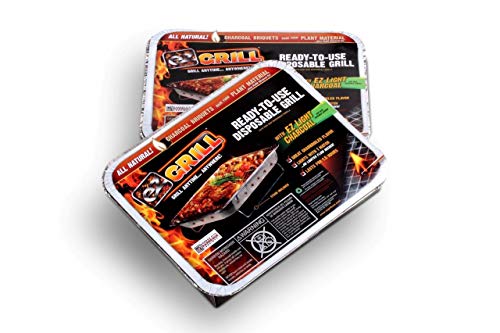
If you've ever found yourself craving a grilled burger at a campsite or tailgate but didn't want to haul a full-size charcoal grill, the Oppenheimer USA Disposable Charcoal Grill is exactly what you need. This is a lightweight, portable, single-use grill that comes pre-loaded with easy-light charcoal – just remove the wrapper, light the corners, and you're ready to cook in minutes. It's designed for outdoor enthusiasts who value convenience above all else.
This grill is best suited for campers, tailgaters, RV owners, and anyone who enjoys spontaneous outdoor cooking without the hassle of cleanup. It's also a solid pick for beach days, park picnics, or even emergency cooking during power outages. The 9x13 inch cooking grate gives you enough space for a few burgers, hot dogs, or skewers – perfect for 2-4 people. Just don't expect to smoke a brisket or feed a crowd.
In terms of real-world cooking performance, the easy-light charcoal lights quickly and reaches a decent grilling temperature within 10-15 minutes. The heat distribution is fairly even across the grate, though you might notice slightly cooler spots near the edges. Searing is possible for thin cuts like burgers and chicken thighs, but you won't get the same crust as a heavy cast-iron grate. Smoke flavor is present but mild – it's enough to satisfy a casual griller but not a BBQ purist. The fuel burns for about an hour, which is fine for quick grilling sessions but not low-and-slow cooking.
Build quality is what you'd expect from a disposable product – sturdy enough to hold up during cooking, but not meant for long-term use. The aluminum tray feels solid, and the wire grate supports food without sagging. There are no wheels, folding legs, or weather-resistant features because this grill is designed to be used and tossed. Portability is its strong suit: at 3.5 pounds and dimensions of 9x13x2 inches, it slips into a backpack or car trunk easily.
Setup is incredibly simple – no tools, no assembly, no charcoal to pour. Just remove the plastic wrap, place the grill on a non-flammable surface, and light the corners through the designated ignition strips. Cleanup is even easier: once the charcoal has cooled completely, you can dispose of the entire grill. Just make sure to follow local disposal guidelines for charcoal and ash. The biggest limitation is that it's single-use, so if you grill often, the cost adds up compared to a reusable portable grill.
Overall, the Oppenheimer USA Disposable Charcoal Grill is a fantastic solution for outdoor cooks who prioritize convenience and portability. It's not meant to replace your backyard kettle grill, but it's a lifesaver for camping, tailgating, or any on-the-go cooking scenario. If you're looking for a no-mess, no-fuss way to enjoy grilled food anywhere, this pack of two is a smart buy.
At just 3.5 pounds and 9x13x2 inches, this grill is incredibly easy to transport. It fits in a backpack, car trunk, or even a large tote bag. No need to worry about charcoal bags or lighter fluid – everything is built in. The lightweight design makes it a top choice for hikers, campers, and tailgaters who want to travel light.
This grill shines in scenarios where convenience and portability matter most. Use it for camping trips, tailgate parties, beach outings, park picnics, or even as a backup grill during power outages. It's also great for small gatherings where you only need to cook a few items. Not ideal for large BBQs or smoking.


Preparation Steps for Safe and Effective Grilling
Preparation is not just about lighting the fire; it is about verifying that every component is functioning correctly before heat is applied. The primary goal is to establish a stable thermal environment and ensure the cooking surface is free of contaminants.
Different fuel sources require specific checks that address their unique mechanical or chemical risks. Gas grills rely on pressurized tanks and electronic ignition, while charcoal depends on airflow and ember bed stability. Understanding these distinctions helps you avoid common startup errors that can lead to wasted fuel or safety hazards.
| Fuel Type | Primary Check | Pre-Heat Time | Key Risk |
|---|---|---|---|
| Propane Gas | Hose and valve leaks | 10-15 mins | Gas leaks, flare-ups |
| Natural Gas | Line connection integrity | 10-15 mins | Line pressure issues |
| Charcoal | Vent airflow and ember bed | 20-30 mins | Inconsistent heat, ash buildup |
| Pellet | Auger feed and hopper fill | 15-20 mins | Feed jams, smoke buildup |
Before you even touch the ignition, inspect the exterior and interior of the grill for any visible damage. Look for rust on the firebox, cracks in the glass lids, or loose mounting brackets. If you have a gas grill, apply a soapy water solution to the hose connections and valve joints to check for bubbles, which indicate a leak.
Never use open flame to check for leaks; a leak can ignite instantly. For charcoal grills, ensure the ash catcher is empty and the vent dampers move freely. A blocked vent can cause the coals to smother, leading to poor heat control and excessive smoke. These visual and physical checks take only a few minutes but can prevent significant damage or injury.
- Inspect the grill body for rust, cracks, or loose hardware before ignition.
- Apply soapy water to gas connections to detect any active leaks.
- Ensure charcoal vents are open and unobstructed for proper airflow.
- Clear the drip tray to prevent grease from accumulating and igniting.
- Verify the fuel tank is at least one-quarter full for gas models.
- Check that the grate is stable and sits flush within the firebox.
Cleaning the Cooking Surface and Grates
The condition of your grates directly impacts food safety and flavor. Old grease and carbon buildup can harbor bacteria and cause uneven heat transfer. For new grills, the manufacturer often applies a protective oil that must be burned off. Pre-heat the grill to its highest setting for 15 to 20 minutes to burn away these residues.
Once the heat has cycled, use a grill brush or scraper to remove any remaining flakes. For established grills, cleaning should happen after every use to prevent caked-on residue. A clean grate allows juices to drain properly, reducing the risk of flare-ups that can char the exterior of your food while leaving the interior raw.
Brushing technique matters as much as the tool you use. Wire brushes are common, but they can shed bristles that stick to food. Bristle-free alternatives, such as steam-cleaning pads or scraper tools, offer a safer option for maintaining hygiene. When using a scraper, work in the direction of the grate bars to avoid bending them.
After cleaning, wipe the grates with a paper towel soaked in vegetable oil. This thin layer of oil prevents rust and creates a non-stick surface for your next cook. This step is particularly important for cast iron grates, which are porous and prone to oxidation if left bare. Regular maintenance extends the life of your grill and ensures consistent cooking results.
Fuel Specific Checks for Gas and Charcoal
Gas grills require attention to the fuel source, whether it is a portable propane tank or a fixed natural gas line. For propane, ensure the tank valve is fully open and the hose is not kinked or crushed. A kinked hose can restrict gas flow, causing the burners to sputter or fail to ignite. If your grill has an electronic ignition, test the spark generator before lighting.
If the spark is weak, the battery may need replacement, or the ignition module may be dirty. Manual ignition with a long lighter is a reliable backup if the electric system fails. Always light the grill with the lid open to prevent gas from accumulating inside the chamber, which can cause a dangerous flash fire.
Charcoal preparation focuses on building a stable ember bed. Light the coals in a chimney starter or directly in the grill, allowing them to ash over before arranging them. For direct grilling, spread the coals evenly across the cooking area. For indirect grilling, push the coals to one side to create a cool zone. The vent system is your primary control for temperature.
Opening the bottom vents increases oxygen flow, raising the temperature. Closing the top vent restricts exhaust, also increasing heat. Mastering this airflow dynamic is key to controlling the cooking environment. If the coals burn out too quickly, the vents may be open too wide, or the charcoal may be of lower quality. Adjusting these variables takes practice but leads to more predictable results.
Pre-Heating and Temperature Stabilization
Pre-heating is the final step before adding food, and it serves two purposes: reaching the target temperature and seasoning the cooking surface. Most gas grills reach their operating temperature within 10 to 15 minutes. Charcoal grills take longer, often 20 to 30 minutes, as the coals need to reach a uniform ember state.
Use a grill thermometer to verify the temperature, as built-in lid thermometers can be inaccurate. The thermometer should be placed over the cooking area, not over the flame, to get an accurate reading. Once the target temperature is reached, let the grill sit for another five minutes to stabilize. This ensures that the heat is distributed evenly across the grates, preventing hot spots that can burn food.
Stabilization is critical for precise cooking, especially when using techniques like searing or smoking. A fluctuating temperature can lead to uneven doneness and compromised texture. If you are cooking delicate items like fish or shrimp, a stable, moderate heat is essential to prevent sticking and falling apart.
For thicker cuts, a high initial heat followed by a lower hold temperature works best. Monitor the temperature with a reliable probe thermometer if available. This allows you to track the internal temperature of the meat without opening the lid, which causes heat loss. Proper pre-heating and stabilization turn the grill from a simple heat source into a controlled cooking instrument.
Safety Checks and Fire Prevention
Safety is the non-negotiable foundation of grilling preparation. Ensure the grill is placed on a flat, non-flammable surface at least 10 feet away from structures, overhangs, or combustible materials. Never use a grill in an enclosed space like a garage or basement, as carbon monoxide can accumulate to lethal levels.
Check that the area around the grill is free of leaves, paper, or other flammable debris. Keep a fire extinguisher rated for Class B fires nearby, as water can spread grease fires. Know how to shut off the gas supply quickly in case of an emergency. For propane tanks, the main shutoff is on the tank itself, not just the grill valve. Familiarizing yourself with this control is a vital safety skill.
Grease management is another critical safety aspect. Grease can ignite and cause flare-ups, especially if it pools in the drip tray. Clean the drip tray before every cook to prevent this. If a flare-up occurs, close the lid to cut off oxygen and move the food to a cooler zone.
Do not throw water on a grease fire, as this can cause the burning grease to splash and spread. Use a lid or a fire extinguisher to smother the flames. If the fire does not go out immediately, evacuate the area and call emergency services. Preventive cleaning and proper placement are the most effective ways to avoid fire-related incidents during grilling.
- Place the grill at least 10 feet from walls, fences, and overhangs.
- Keep a Class B fire extinguisher within arm’s reach of the grill.
- Never use the grill in enclosed spaces to prevent carbon monoxide buildup.
- Clean the drip tray before lighting to prevent grease ignition.
- Know the location of the propane tank shutoff valve for emergencies.
- Keep children and pets at a safe distance from the hot cooking area.
Common Mistakes to Avoid During Setup
One common error is skipping the leak check on gas grills. Many owners assume the connection is tight because it was recently serviced. However, hose fittings can loosen over time due to thermal expansion and contraction. A slow leak can go unnoticed until it becomes a significant hazard.
Always perform the soap-and-water test before lighting. Another mistake is lighting the grill with the lid closed. This traps unburned gas inside, which can explode when the burners ignite. Always keep the lid open during the ignition process to allow gas to dissipate safely. These simple oversights can lead to serious accidents.
For charcoal users, a frequent mistake is arranging the coals before they are fully ashed over. If you place the coals in the grill while they are still burning brightly, the heat will be uneven and intense. This can char the exterior of the food while leaving the center raw. Wait until the coals are covered in white ash before spreading them.
Another error is ignoring the vent settings. Closing both vents can smother the fire, while opening them too wide can cause the coals to burn out too quickly. Experiment with vent adjustments to find the balance that maintains your desired temperature. Avoiding these mistakes ensures a smoother and safer grilling experience.
Proper preparation sets the stage for successful grilling. By following these steps, you ensure that your grill is safe, clean, and ready to perform. Take the time to check your fuel, clean your grates, and verify your temperature controls. This investment of a few minutes pays off in better food and peace of mind.
Whether you are a seasoned grill master or a beginner, these fundamentals are essential for every cook. Safe grilling is not just about following rules; it is about understanding how your equipment works and respecting the power of heat. Use this knowledge to enjoy your outdoor cooking with confidence.


Write Your Review
No reviews yet. Be the first to share your experience!