


Opening an outdoor cooker after a damp season only to find orange flaking corrosion across the cooking surface can halt dinner plans immediately. Knowing how to clean rust from a grill is essential for restoring sanitary cooking conditions, protecting metal components, and extending the operational life of your outdoor equipment. Surface oxidation commonly attacks cast-iron grates, carbon-steel cooktops, and even stainless-steel exterior panels when moisture mixes with residual grease and salt. Setting up a dedicated workstation beside a rolling BBQ prep table gives you adequate space to safely disassemble, inspect, and treat oxidized grill components without damaging patio surfaces.
Different grill surfaces demand distinct rehabilitation techniques to strip iron oxide without destroying the underlying metal or non-stick seasoning layers. Cast iron requires gentle abrasion followed by immediate oil seasoning, whereas stainless steel demands non-scratch chemical cleaners that preserve factory passivation layers. Cooks managing multi-zone gear like a griddle and smoker combo often encounter different corrosion patterns across flat-top griddles compared to internal smoker chambers. Understanding the exact metal composition of your cooking grids and firebox helps you choose effective, food-safe cleaning compounds and bristle-free scrubbers to restore peak performance safely.


Pros
- Safe alternative to wire brushes - no bristle hazard
- Works on cool grills, so you can clean anytime without preheating
- Citrus scent leaves a fresh smell after cleaning
- Effective on grease and burnt-on food with minimal scrubbing
- Made in the USA with biodegradable ingredients
Cons
- Spray bottle may be prone to breaking after a few uses (reported by some users)
- May not remove very heavy, baked-on deposits without extra effort
- Scrubber pads may wear out faster on rough grates
If you've ever worried about wire bristles from a grill brush ending up in your food, the CitruSafe Grill Cleaning Kit is a breath of fresh air. This kit combines a 16-ounce citrus-powered spray cleaner with a heavy-duty scrubber handle and three replaceable pads, all designed to clean your grill while it's cool. No more burning off residue or risking stray bristles. It's a simple, safe approach that works on gas grills, charcoal grills, pellet grills, smokers, and even flat-top griddles.
This kit is perfect for backyard grillers who want a hassle-free cleanup after weekend BBQs, as well as campers and tailgaters who need a portable cleaning solution. The spray uses natural citrus degreasers to break down grease and burnt-on food, and the scrubber pads are tough enough to handle the job without scratching your grates. Just spray it on, let it sit for a minute, scrub, and wipe clean. Then preheat your grill for 15 minutes to burn off any residue. It's that straightforward.
In real-world use, the CitruSafe cleaner does a great job on moderately soiled grills. It cuts through grease and food residue quickly, leaving a pleasant citrus scent behind. For heavy, baked-on deposits, you might need to let the spray sit a bit longer or give it an extra scrub. But for regular maintenance cleaning, it's very effective. The scrubber handle feels sturdy, and the pads are thick enough to handle multiple uses before needing replacement.
Build quality is solid for a cleaning kit. The spray bottle is functional, though a few users have reported the nozzle breaking after a few sprays. The scrubber handle is made of heavy-duty plastic with a comfortable grip, and the pads are recyclable. The kit is compact and easy to store in your grill cart or camping gear. Since you clean the grill cool, there's no need to wait for it to heat up, which saves time and fuel.
One limitation is that the spray bottle could be more durable. If you're rough on gear, you might want to transfer the cleaner to a sturdier bottle. Also, for very heavy grease buildup, you may need to repeat the process or use a bit more elbow grease. But for most home cooks and outdoor enthusiasts, this kit offers a safe, effective way to keep your grill clean without the worry of wire bristles.
Overall, the CitruSafe Grill Cleaning Kit is a practical choice for anyone who grills regularly. It's especially good for families with kids, where food safety is a top concern. Whether you're cleaning a Traeger smoker, a Weber kettle, or a Blackstone griddle, this kit makes the job easier and safer. If you want a bristle-free, eco-friendly cleaning method that actually works, this is a solid investment for your outdoor cooking setup.

Pros
- Safe cleaning without wire bristles, protecting your family from accidental ingestion.
- Powerful citrus-based cleaner easily cuts through baked-on grease and carbon buildup.
- Kit includes everything you need: spray, brush, scrubber pads, scraper, and towel, no extra purchases required.
- Works on both hot and cool grills, offering flexibility for different cleaning routines.
Cons
- For extremely charred grates, some elbow grease may still be needed; the cleaner alone won't dissolve heavy creosote instantly.
- Scrubber pads are refillable but replacements are sold separately, adding ongoing cost over time.
- The cookbox scraper is best used on cool surfaces; it may scratch delicate porcelain coatings if used aggressively.
The Citrusafe Complete Grill Cleaning Kit is not your average grill cleaner. It is a thoughtfully assembled set designed to replace the dangerous wire brushes and harsh chemical sprays that many BBQ enthusiasts rely on. Instead, this kit uses a citrus-based degreaser, a nylon brush, heavy-duty scrubber pads, a cookbox scraper, and a microfiber towel to clean your grill safely and effectively. Whether you own a charcoal kettle, a propane gas grill, a smoker, or even a flat top griddle, this kit has the tools to handle the mess.
This kit is built for anyone who takes outdoor cooking seriously. Backyard grillers who fire up the Weber every weekend, campers who throw a grate over an open fire, tailgaters who need a quick cleanup between games, and RV owners who don't want wire bristles scratching their portable grills will all appreciate the safety-first approach. The stars are the Citrusafe Grill Cleaner spray, which uses natural degreasing power from citrus peels to break down grease, and the nylon brush and scrubber pads that work on a cool grill. No more burning off residue or worrying about stray bristles in your burger.
In real-world use, this cleaner shines on moderately soiled grates and cookboxes. Spray it on, let it sit for a few minutes, then scrub with the nylon brush or the heavy-duty pads. The grime dissolves quickly, and the included cookbox scraper reaches into corners that brushes miss. For a neglected grill that has months of caked-on grease, you may need to repeat the process, but the result is a cookbox that looks nearly new. The microfiber towel lifts away remaining residue without scratching porcelain or stainless steel surfaces.
Build quality of the tools is solid. The nylon brush handle is heavy-duty plastic with a comfortable grip, and the scrubber holder accepts the replaceable pads firmly. The scraper has a slim profile that fits into the tight gaps of most grills and smokers. The spray bottle has a trigger that produces a fine mist, covering grates evenly without waste. Everything in the kit is designed to be reused, cutting down on disposable grill wipes and paper towels.
Setup is simple: unpack the items and start cleaning. The spray works right out of the box, and all tools are ready to go. Transport is not an issue since it is a cleaning kit, but the spray bottle and tools fit easily in a garage cabinet or a camping tote. Storage is straightforward: keep the spray away from direct sunlight, and hang the brush and scraper to dry.
Limitations are minor. For grills with extremely heavy carbon buildup (think years of neglect), you may still need to use a metallic scraper or a second application. The scrubber pads are effective but wear out after several uses, and replacement packs are sold separately. Additionally, the nylon brush is not as stiff as wire, so it may take a bit more scrubbing on stubborn spots. Nonetheless, for routine maintenance and even deep-cleaning, this kit is a safe and effective choice. It earns a strong recommendation for any outdoor cook who wants to eliminate the risk of wire bristles and keep their cooking gear in top shape.
The Citrusafe Complete Grill Cleaning Kit comes with five essential items to tackle every part of your grill or smoker. You get a 16oz bottle of Citrusafe Exterior Grill Cleaner (also safe for interior use), a heavy-duty nylon brush with an integrated cookbox scraper, a scrubber handle plus three replaceable scrubber pads, a separate cookbox scraper for tight areas, and a premium microfiber cleaning towel (color may vary). Together, they cover cleaning from grates to hoods to side tables. Everything is manufactured in the USA by Bryson Brothers, a brand focused on safer outdoor cooking products.
For best results, clean your grill when it is cool to the touch. Spray the Citrusafe cleaner liberally onto grates and cookbox surfaces, let it sit for 3-5 minutes to loosen grease, then scrub with the nylon brush or scrubber pads. Use the cookbox scraper for baked-on residue in corners. Wipe away residue with the microfiber towel, then rinse with water if desired. For routine maintenance after each cook, a quick spray and wipe keeps grates looking new. The scrubber pads can be replaced when they become worn; replacement pads are available separately. The spray lasts through many cleanings, making this kit a great value for frequent grillers.



Restoring Rusted Grill Surfaces and Grates Safely
Rust forms when bare iron or steel reacts with ambient oxygen and moisture, creating iron oxide that flakes and degrades cooking metal. Cleaning oxidized grill surfaces requires matching the cleaning technique to the specific metal alloy, whether you are dealing with cast iron, porcelain enamel, or stainless steel. Taking a methodical approach ensures you eliminate surface corrosion without scratching factory protective finishes or leaving hazardous chemical residues where your food cooks.
Evaluating Rust Depth and Grate Integrity
Before applying cleaners or scrubbing tools, you must determine whether the corrosion is superficial surface oxidation or deep structural pitting. Light surface rust appears as a powdery reddish-orange haze that wipes away with mild friction, leaving the underlying metal smooth and intact. In contrast, advanced rust penetrates deep into the metal matrix, causing structural flaking, large gouges, and crumbling edges that compromise grate strength.
Cast-iron grates can tolerate substantial surface oxidation because the metal is dense and thick throughout its cross section. You can almost always restore solid cast iron unless the bars have rusted completely through or cracked along stress lines. Stainless-steel grates with heavy pitting pose a different challenge, as corrosion can breach the protective chromium oxide skin and cause permanent localized weak points.
Porcelain-coated grates require a cautious inspection before any restoration attempt. If the glass-like porcelain enamel has chipped, cracked, or peeled away, rust will form directly underneath the coating and lift larger chunks into your food. Grates with extensive porcelain chipping must be replaced rather than cleaned, because loose porcelain shards create an immediate food safety hazard during cooking.
Removing Corrosion from Cast-Iron Grates and Griddles
Cast-iron cooking surfaces require specialized care because harsh household detergents can strip away years of polymerized seasoning and expose raw iron to rapid flash rusting. Begin by removing the cooled grates from the cookbox and laying them flat on a protected work surface. A specialized plant-based formula like Outset Cast Iron Soap helps lift stubborn food grease and surface rust particles while remaining gentle on the underlying iron pores.
Apply a moderate amount of cast-iron soap along the length of each grate bar using a stiff non-metal scrubber pad or a firm nylon brush. Scrub along the contours of the bars, applying consistent pressure to break apart the flaky orange oxidation without gouging the iron. Rinsing the grates with hot water quickly washes away suspended rust debris before the particles can resettle onto the porous metal.
Using an all-natural, detergent-free solution such as Heritage Products Cast Iron Soap provides an eco-friendly way to eliminate unwanted food odors alongside surface corrosion. This style of plant-based cleaning compound is compatible with flat-top griddles as well as traditional cooking grids. Once you complete the scrub, wipe every section dry immediately with clean cotton rags or paper towels, as lingering moisture will spark fresh rust within minutes.
Reseasoning Bare Iron to Build a Hydrophobic Barrier
Stripping away rust leaves cast iron completely exposed to ambient humidity, making an immediate reseasoning session mandatory. Place the thoroughly dried grates into an oven or back inside your grill, then warm them gently over low heat to drive out any moisture trapped deep inside the microscopic pores. Once the metal feels warm to the touch, apply a very thin coat of high-smoke-point cooking oil, such as canola, grapeseed, or avocado oil.
Use clean shop towels to buff the grates until the metal looks nearly dry, ensuring that no pooled oil remains to turn gummy or sticky. Heat the grates to approximately four hundred degrees Fahrenheit and maintain that temperature for at least forty-five to sixty minutes. This heat trigger initiates oil polymerization, transforming the liquid fatty acids into a hard, slick plastic-like coating that repels moisture.
Allow the grates to cool completely inside the closed cooking chamber before handling them or cooking your next meal. Repeating this oiling and heating cycle two or three times builds a deep black patina that prevents future oxidation and provides natural non-stick performance. Maintaining this protective layer eliminates the environment that allows rust to take hold during humid outdoor storage.
Restoring Stainless-Steel Components and Exterior Panels
Stainless steel relies on a microscopic layer of chromium oxide to resist atmospheric corrosion, but heat, salt, and acidic marinades can compromise this defensive barrier over time. When flash corrosion or tea staining appears, standard kitchen scouring pads should never be used because they scratch the finish and deposit microscopic carbon steel particles that foster deeper rust. Instead, apply a dedicated polishing cream designed specifically to dissolve metal oxidation on contact.
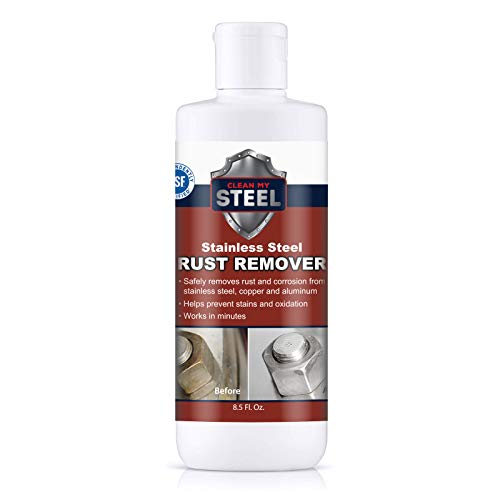
A fast-acting compound like CLEAN MY STEEL Stainless Steel Rust Remover Cream provides an NSF-certified, food-safe option that dissolves stubborn rust spots without mechanical scratching. Spread a small portion of the cream over the affected grates, warming racks, or lid surfaces using a soft sponge. Work the polishing cream smoothly along the natural grain of the steel, allowing the active ingredients to chemically dissolve surface oxidation without aggressive scrubbing.
For vertical surfaces such as grill hoods, cart doors, and side burner shelves, a thicker clinging formula like CLEAN MY STEEL Stainless Steel Rust Stain Remover keeps the active cleaning agents in place rather than dripping away. Wipe the treated areas clean with a damp microfiber cloth to remove all dissolved oxidation and chemical residue. Once dry, the metal retains a factory-like luster along with a clean surface ready to rebuild its passive chromium oxide barrier naturally.
Deep-Cleaning Cookbox Residue and Heat Deflectors
Corrosion inside the lower cookbox often hides beneath thick accumulations of carbonized grease, ash, and sauce drippings. Leaving this greasy sludge in place traps moisture directly against the metal floor and burner brackets, accelerating rust through structural walls. Start the cleaning process by scraping heavy debris toward the grease discharge funnel using a blunt plastic or composite cookbox scraper.
Applying a natural citrus degreaser like CitruSafe BBQ Grill Cleaner breaks down tough grease bonds on cold cookbox surfaces without toxic fumes or caustic chemicals. Allow the citrus-based spray to penetrate the greasy crust for one to two minutes before scrubbing with a heavy-duty non-wire pad. Lifting away the greasy slurry exposes any underlying rust spots on the burner tents and firebox walls so you can evaluate their structural condition.
Maintaining clean internal cookbox surfaces is particularly critical when your cooker is integrated into an outdoor barbecue island setup, where enclosed cabinetry can trap condensation and accelerate metal decay. Inspect the burner tubes, crossover channels, and carryover tubes for rust scale that might obstruct gas ports. Clean clogged burner ports gently with a small wooden toothpick or soft brass brush to restore even flame distribution across the entire cooking zone.
Safe Alternatives to Traditional Wire Bristle Brushes
Wire bristle grill brushes present serious physical dangers because thin steel bristles frequently break free during aggressive scrubbing, lodge in cooking grates, and stick to food. Medical centers and public health agencies report hundreds of internal injuries annually from ingested metal bristles that puncture the throat, stomach, or intestines. Choosing modern bristle-free cleaning tools completely removes this risk while delivering thorough cleaning action across all grate designs.
The CitruSafe Grill Cleaning Kit utilizes heavy-duty recyclable scrubber pads mounted to an ergonomic handle, combining citrus cleaning chemistry with dense synthetic fibers. Because these pads work on cool grill surfaces, you do not need to risk burns or inhale acrid smoke from the traditional high-heat burn-off method. The abrasive texture of the pads cuts through softened grease and surface rust flakes without scattering sharp metal fragments across your cooking grid.
For broader maintenance tasks, a package like the Citrusafe Complete Grill Cleaning Kit includes specialized nylon bristle brushes, cookbox scrapers, and absorbent microfiber towels. Nylon bristles flex easily into tight spaces between grate rods and around burner brackets on cold grills without scratching delicate coatings. Wiping surfaces down with plush microfiber towels afterward picks up loose rust dust, leaving clean cooking surfaces that are entirely safe for family meals.
Rehabilitating Hardware, Warming Racks, and Rotisserie Parts
Small hardware pieces such as hinge pins, handle brackets, warming racks, and lid thermometer bezels often rust faster than heavy cooking grids due to thinner metal gauges. Inspect these secondary components carefully during your seasonal maintenance routine to ensure rust does not freeze moving hinges or weaken structural screws. Removable warming racks can be soaked in warm water with a mild citrus degreaser or cast-iron soap to soften baked-on splatter and light oxidation.
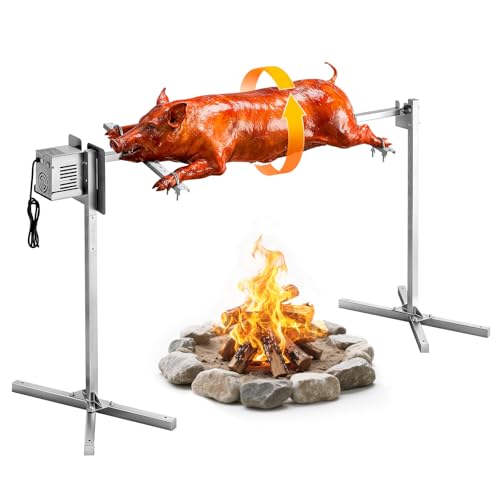
Specialized cooking accessories require equal care, especially spit rods and meat forks used with electric rotisserie kit attachments that hold roasts directly over open heat. Wipe these stainless-steel or chrome-plated accessories with food-safe rust removal cream, rinse them thoroughly in clean water, and dry them completely before storing them in a moisture-free pantry. Inspecting rotisserie forks and collar thumbscrews ensures that rust never binds the threads or contaminates delicate meats during slow roasting.
Apply a tiny drop of food-grade mineral oil to clean pivot points, hinge joints, and threaded adjustment screws to lubricate moving parts and block airborne humidity. Avoid using automotive penetrating oils or industrial lubricants anywhere on or near cooking equipment, as these chemicals emit toxic vapors when exposed to grill temperatures. Food-grade mineral oil remains stable, odorless, and completely safe for cooking hardware.
Critical Ventilation Rules and Gas Grill Safety
Restoring and maintaining your outdoor cooking equipment must always be balanced with strict operating safety practices. Fuel-burning grills powered by propane, natural gas, charcoal, or wood pellets produce lethal quantities of carbon monoxide, an odorless and invisible toxic gas. You must never operate a grill inside a garage, breezeway, carport, screened porch, or any enclosed indoor space, even if the overhead garage door is rolled fully open.
Authoritative fire safety guidelines require outdoor fuel-burning grills to be positioned well clear of combustible walls, wooden railings, overhangs, and patio roofs. Opening a garage door does not create adequate cross ventilation to prevent dangerous pockets of carbon monoxide from accumulating or to eliminate catastrophic fire risks from sudden grease flare-ups. Always wheel your cooker onto an open, non-combustible outdoor surface before lighting the burners or igniting coals.
Following rust removal, always conduct a thorough gas leak check before firing up your cooker for the season. Inspect flexible gas hoses and brass regulator fittings for signs of corrosion, cracking, or insect nesting. Applying a simple soapy water solution to the hose connections while the propane cylinder valve is open will produce bubbling at any point where gas escapes, alerting you to replace faulty lines before igniting the burners.
Long-Term Storage Strategies to Prevent Rust Formation
Preventing rust from returning requires controlling moisture, air exposure, and grease accumulation between cooking sessions. After each cookout, brush the warm grates lightly with a bristle-free tool and wipe them down with a lightly oiled cloth to replenish the hydrophobic protective film. Leaving a clean, micro-thin oil coating on warm metal prevents airborne humidity and morning dew from making direct contact with bare steel or cast iron.
Invest in a heavy-duty, water-resistant grill cover that features built-in ventilation flaps along the sides. Solid plastic tarps or poorly ventilated vinyl covers often trap rising ground moisture inside the cooker cart, creating a humid greenhouse effect that accelerates metal oxidation. Breathable vents allow trapped condensation to evaporate quickly while shielding your equipment from rain, snow, and harsh ultraviolet sun exposure.
If you store your grill in an unheated garden shed or sheltered patio alcove during winter months, remove the internal grates, wrap them in clean butcher paper, and store them indoors in a dry closet. Removing the propane cylinder and keeping it outdoors in an upright, well-ventilated location ensures compliance with municipal fire safety codes. Taking these proactive storage measures keeps your grill surfaces clean, sanitary, and completely rust-free for every cooking season ahead.





Write Your Review
No reviews yet. Be the first to share your experience!