


Scraping away charred marinades and sticky grease remains one of the toughest parts of outdoor cooking. Learning how to clean off grill grates properly protects the quality of your food, prevents bitter carbon deposits from ruining fresh meats, and reduces sudden grease flare-ups. Glazes high in sugar, such as a sweet cranberry barbecue sauce, can bake onto metal rods within minutes of hitting direct flame. Removing that blackened layer keeps heat radiating evenly across the entire cooking surface.
Modern cleaning methods focus on surface safety and food security rather than brute force. Traditional wire bristle brushes carry serious health risks from stray metal bristles breaking off into food, prompting many grillers to adopt bristle-free scrapers, steam cleaners, and specialized degreasing sprays. Different grate materials also require distinct approaches, since heavy cast iron demands moisture protection while stainless steel tolerates more aggressive chemical degreasers. Establishing a reliable cleaning routine ensures your barbecue equipment lasts longer and stays ready for every meal.

Pros
- Effective on heavy grease and charred food residue from low-and-slow smokes
- Works well on both cold and warm surfaces for flexible cleaning after grilling
- Economical - a little goes a long way for multiple cleaning sessions
- Rinses clean without leaving sticky residue that could affect food flavor
Cons
- May require multiple applications for heavily caked-on grime from years of use
- Strong chemical smell during application - use in well-ventilated area
- Not recommended for aluminum surfaces or painted grills
If you spend any time grilling, smoking, or cooking outdoors, you know the cleanup is the least fun part. This heavy-duty grill cleaner is designed to tackle exactly that chore, making it a solid addition to any outdoor cooking setup. It's a spray-on degreaser that works on BBQ grills, smokers, ovens, flat top griddles, and even camping stoves - basically anything that gets coated in grease and carbon after a cookout.
This cleaner is best suited for backyard grillers who fire up their gas or charcoal grills weekly, BBQ enthusiasts who smoke brisket low and slow, campers who need to clean their portable stove after a trip, and tailgaters who want their gear ready for the next game. If you own an RV and cook inside or outside, this is also handy for keeping the oven and grill grates spotless.
In real-world use, the cleaning performance is impressive. It cuts through baked-on grease and charred food residue without requiring heavy scrubbing. After a long smoking session where the grates are covered in black carbon, a few sprays and a short wait let you wipe it away. It doesn't completely eliminate scrubbing, but it reduces elbow grease significantly. The formula works on both warm and cold surfaces, so you can spray right after cooking or let it sit overnight on tough buildup.
Build quality is straightforward - it comes in a standard spray bottle with a trigger nozzle that delivers a wide or narrow stream. The nozzle doesn't clog easily, which is a common issue with thick cleaners. It's safe on porcelain, stainless steel, and cast iron grates, but you should avoid aluminum and painted surfaces. The spray can reach into tight corners of smoker racks and between grates, making it easier to clean those hard-to-reach spots.
Setup and use are simple: spray on, let it sit for a few minutes, scrub if needed, then rinse with water. Cleanup is quick, and the cleaner rinses away without leaving a sticky film that could affect your next meal's flavor. Storage is easy - just keep the bottle in your garage or under the sink. One limitation is that heavily caked-on grime from years of neglect may require multiple applications. Also, the chemical smell is strong, so you'll want good ventilation when using it.
Overall, this is a practical buy for anyone who cooks outdoors regularly. It saves time and effort on cleanup, which means more time enjoying your backyard parties, tailgates, or campsite meals. If you're tired of scrubbing forever after a great cookout, this cleaner makes the after-work much easier. Just remember to wear gloves and work in a well-ventilated area, and your grills and smokers will look like new after each use.
Pros
- Works quickly – cuts through carbonized grease in minutes
- Multi-purpose: use on grills, ovens, broilers, and stainless steel parts
- Simple application – no scrubbing or complicated steps
- Lemon scent helps reduce chemical odor during cleaning
- Effective on both warm and cold surfaces for flexibility
Cons
- Strong chemical fumes require good ventilation – best used outdoors or with open windows
- Not for everyday use; it's a heavy-duty cleaner for occasional deep cleaning
- Can be harsh on skin – gloves are recommended when applying
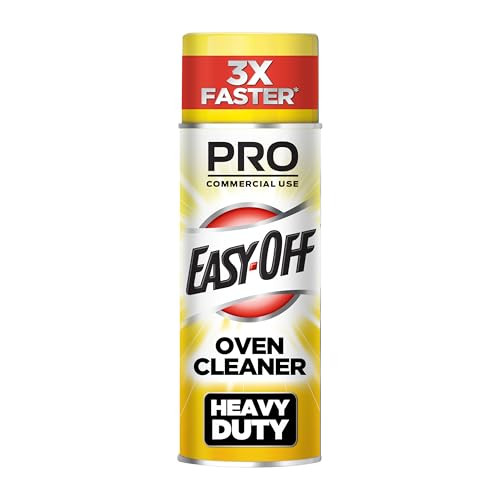
If you've ever spent a Saturday afternoon scrubbing caked-on grease off your grill grates, you know the struggle. The Easy-Off Professional Oven & Grill Cleaner is designed to take that hassle out of your post-BBQ routine. This heavy-duty formula is specially made to penetrate tough burnt-on food and grease in as little as three minutes, making it a solid addition to any outdoor cook's cleaning arsenal.
This cleaner isn't just for ovens – it's marketed as a multi-purpose spray that works on barbecue grills, broilers, broiler pans, and stainless-steel surfaces. That makes it perfect for backyard grillers, BBQ enthusiasts, and anyone who regularly uses a smoker or flat top. If you're a tailgater who brings a portable grill or a camper with a camping stove, you'll appreciate being able to tackle grime without hours of scrubbing.
In real-world use, the biggest advantage is the speed. Spray it on the greasy areas – whether the grate, the inside lid, or the drip tray – wait a few minutes, and wipe away the dissolved gunk. It works on warm or cold surfaces, so you can either clean right after cooking while the grill is still warm (but not hot) or the next day. The lemon scent is a nice touch, cutting down on the harsh chemical smell that often comes with heavy-duty cleaners.
Build quality is straightforward – it's an aerosol can with a standard spray nozzle. There's nothing fancy here, but it gets the job done. The cleaner is made in the USA, which is a plus for those who prefer domestic products. The 24-ounce size is generous enough for multiple deep-cleaning sessions on a typical backyard grill or smoker.
However, there are a few realistic limitations. This is an occasional deep cleaner, not a daily wipe-down spray. The fumes are potent – you'll definitely want to use it in a well-ventilated area, ideally outdoors. Wearing gloves is a good idea because the chemicals can irritate skin. And while it's great for greasy metal surfaces, you should avoid using it on painted or porous areas that could get damaged.
For anyone who loves hosting backyard parties, smoking brisket, or grilling burgers for a crowd, keeping your equipment clean is part of the deal. This Easy-Off cleaner simplifies that chore significantly. It's not a replacement for regular scraping or a grill brush, but for that occasional deep clean when grease has built up into stubborn carbon, it's a practical, time-saving tool. If you're serious about outdoor cooking and hate scrubbing, give this one a shot.
Keeping your grill or smoker clean is key to great flavor and long equipment life. This Easy-Off Professional cleaner is designed for that occasional deep clean when everyday scraping isn't enough. For best results, make sure the surface is warm (not hot) or cold – both work. Spray the affected areas, let it sit for 3 to 5 minutes, then wipe away the dissolved grease with a damp cloth or sponge. For stubborn spots, a second application may help. Always rinse thoroughly with water afterwards, especially on surfaces that will contact food. Use in a well-ventilated area – outdoors is ideal – and wear rubber gloves to protect your hands. Avoid spraying on painted, plastic, or aluminum parts, as the chemicals may cause damage. This cleaner is not meant for daily use; pair it with regular brushing and wiping to keep your cooker in top shape between deep cleans.

Pros
- Safe alternative to wire brushes - no bristle hazard
- Works on cool grills, so you can clean anytime without preheating
- Citrus scent leaves a fresh smell after cleaning
- Effective on grease and burnt-on food with minimal scrubbing
- Made in the USA with biodegradable ingredients
Cons
- Spray bottle may be prone to breaking after a few uses (reported by some users)
- May not remove very heavy, baked-on deposits without extra effort
- Scrubber pads may wear out faster on rough grates
If you've ever worried about wire bristles from a grill brush ending up in your food, the CitruSafe Grill Cleaning Kit is a breath of fresh air. This kit combines a 16-ounce citrus-powered spray cleaner with a heavy-duty scrubber handle and three replaceable pads, all designed to clean your grill while it's cool. No more burning off residue or risking stray bristles. It's a simple, safe approach that works on gas grills, charcoal grills, pellet grills, smokers, and even flat-top griddles.
This kit is perfect for backyard grillers who want a hassle-free cleanup after weekend BBQs, as well as campers and tailgaters who need a portable cleaning solution. The spray uses natural citrus degreasers to break down grease and burnt-on food, and the scrubber pads are tough enough to handle the job without scratching your grates. Just spray it on, let it sit for a minute, scrub, and wipe clean. Then preheat your grill for 15 minutes to burn off any residue. It's that straightforward.
In real-world use, the CitruSafe cleaner does a great job on moderately soiled grills. It cuts through grease and food residue quickly, leaving a pleasant citrus scent behind. For heavy, baked-on deposits, you might need to let the spray sit a bit longer or give it an extra scrub. But for regular maintenance cleaning, it's very effective. The scrubber handle feels sturdy, and the pads are thick enough to handle multiple uses before needing replacement.
Build quality is solid for a cleaning kit. The spray bottle is functional, though a few users have reported the nozzle breaking after a few sprays. The scrubber handle is made of heavy-duty plastic with a comfortable grip, and the pads are recyclable. The kit is compact and easy to store in your grill cart or camping gear. Since you clean the grill cool, there's no need to wait for it to heat up, which saves time and fuel.
One limitation is that the spray bottle could be more durable. If you're rough on gear, you might want to transfer the cleaner to a sturdier bottle. Also, for very heavy grease buildup, you may need to repeat the process or use a bit more elbow grease. But for most home cooks and outdoor enthusiasts, this kit offers a safe, effective way to keep your grill clean without the worry of wire bristles.
Overall, the CitruSafe Grill Cleaning Kit is a practical choice for anyone who grills regularly. It's especially good for families with kids, where food safety is a top concern. Whether you're cleaning a Traeger smoker, a Weber kettle, or a Blackstone griddle, this kit makes the job easier and safer. If you want a bristle-free, eco-friendly cleaning method that actually works, this is a solid investment for your outdoor cooking setup.


Pros
- Safe cleaning without wire bristles, protecting your family from accidental ingestion.
- Powerful citrus-based cleaner easily cuts through baked-on grease and carbon buildup.
- Kit includes everything you need: spray, brush, scrubber pads, scraper, and towel, no extra purchases required.
- Works on both hot and cool grills, offering flexibility for different cleaning routines.
Cons
- For extremely charred grates, some elbow grease may still be needed; the cleaner alone won't dissolve heavy creosote instantly.
- Scrubber pads are refillable but replacements are sold separately, adding ongoing cost over time.
- The cookbox scraper is best used on cool surfaces; it may scratch delicate porcelain coatings if used aggressively.
The Citrusafe Complete Grill Cleaning Kit is not your average grill cleaner. It is a thoughtfully assembled set designed to replace the dangerous wire brushes and harsh chemical sprays that many BBQ enthusiasts rely on. Instead, this kit uses a citrus-based degreaser, a nylon brush, heavy-duty scrubber pads, a cookbox scraper, and a microfiber towel to clean your grill safely and effectively. Whether you own a charcoal kettle, a propane gas grill, a smoker, or even a flat top griddle, this kit has the tools to handle the mess.
This kit is built for anyone who takes outdoor cooking seriously. Backyard grillers who fire up the Weber every weekend, campers who throw a grate over an open fire, tailgaters who need a quick cleanup between games, and RV owners who don't want wire bristles scratching their portable grills will all appreciate the safety-first approach. The stars are the Citrusafe Grill Cleaner spray, which uses natural degreasing power from citrus peels to break down grease, and the nylon brush and scrubber pads that work on a cool grill. No more burning off residue or worrying about stray bristles in your burger.
In real-world use, this cleaner shines on moderately soiled grates and cookboxes. Spray it on, let it sit for a few minutes, then scrub with the nylon brush or the heavy-duty pads. The grime dissolves quickly, and the included cookbox scraper reaches into corners that brushes miss. For a neglected grill that has months of caked-on grease, you may need to repeat the process, but the result is a cookbox that looks nearly new. The microfiber towel lifts away remaining residue without scratching porcelain or stainless steel surfaces.
Build quality of the tools is solid. The nylon brush handle is heavy-duty plastic with a comfortable grip, and the scrubber holder accepts the replaceable pads firmly. The scraper has a slim profile that fits into the tight gaps of most grills and smokers. The spray bottle has a trigger that produces a fine mist, covering grates evenly without waste. Everything in the kit is designed to be reused, cutting down on disposable grill wipes and paper towels.
Setup is simple: unpack the items and start cleaning. The spray works right out of the box, and all tools are ready to go. Transport is not an issue since it is a cleaning kit, but the spray bottle and tools fit easily in a garage cabinet or a camping tote. Storage is straightforward: keep the spray away from direct sunlight, and hang the brush and scraper to dry.
Limitations are minor. For grills with extremely heavy carbon buildup (think years of neglect), you may still need to use a metallic scraper or a second application. The scrubber pads are effective but wear out after several uses, and replacement packs are sold separately. Additionally, the nylon brush is not as stiff as wire, so it may take a bit more scrubbing on stubborn spots. Nonetheless, for routine maintenance and even deep-cleaning, this kit is a safe and effective choice. It earns a strong recommendation for any outdoor cook who wants to eliminate the risk of wire bristles and keep their cooking gear in top shape.
The Citrusafe Complete Grill Cleaning Kit comes with five essential items to tackle every part of your grill or smoker. You get a 16oz bottle of Citrusafe Exterior Grill Cleaner (also safe for interior use), a heavy-duty nylon brush with an integrated cookbox scraper, a scrubber handle plus three replaceable scrubber pads, a separate cookbox scraper for tight areas, and a premium microfiber cleaning towel (color may vary). Together, they cover cleaning from grates to hoods to side tables. Everything is manufactured in the USA by Bryson Brothers, a brand focused on safer outdoor cooking products.
For best results, clean your grill when it is cool to the touch. Spray the Citrusafe cleaner liberally onto grates and cookbox surfaces, let it sit for 3-5 minutes to loosen grease, then scrub with the nylon brush or scrubber pads. Use the cookbox scraper for baked-on residue in corners. Wipe away residue with the microfiber towel, then rinse with water if desired. For routine maintenance after each cook, a quick spray and wipe keeps grates looking new. The scrubber pads can be replaced when they become worn; replacement pads are available separately. The spray lasts through many cleanings, making this kit a great value for frequent grillers.
Pros
- Effectively removes stubborn baked-on grease and carbon deposits
- Biodegradable and food-surface safe (non-toxic when rinsed properly)
- Foam clings to grates and vertical surfaces, reducing waste
- Works on pellet smokers, gas grills, and electric smokers
- Helps reduce flare-ups by removing grease buildup
Cons
- Spray nozzle can be inconsistent; some users report clogging or poor spray pattern
- Foam may struggle to coat thin, closely spaced grate rods without pooling
- Do not use on aluminum or faux stainless steel surfaces (may cause damage)
- Requires thorough rinsing to avoid residue that could affect food taste
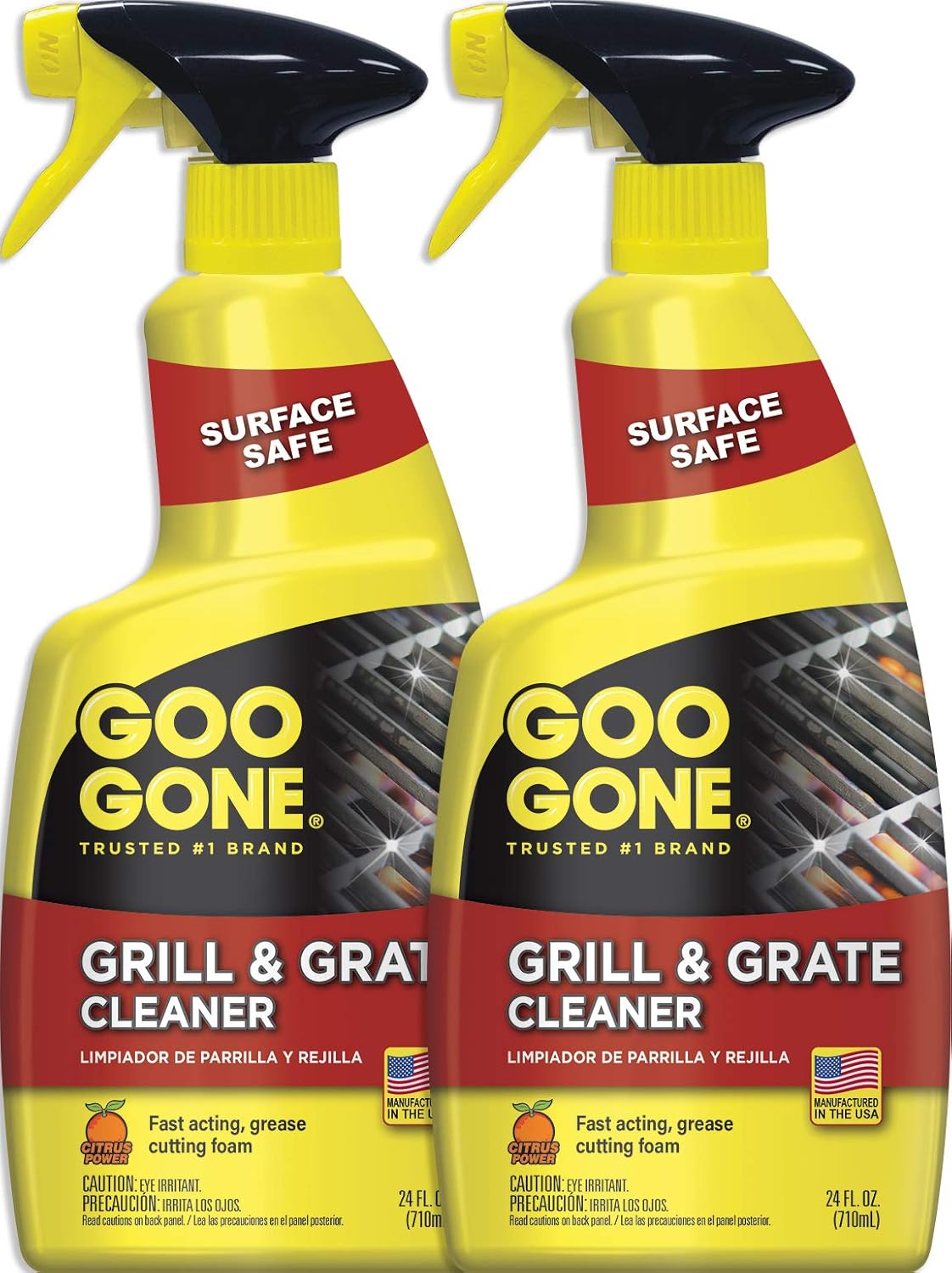
If you've ever faced down a crusty, grease-laden grill grate after a long summer of burgers, steaks, and slow-smoked ribs, you know the struggle is real. The Goo Gone Grill and Grate Cleaner Spray (2 Pack) is designed for exactly that scenario. This super-strength gel foam targets baked-on deposits, carbon, and grease that accumulate on your cooking surfaces. It's not a replacement for a good brush, but it's a powerful pre-treatment that cuts your scrubbing time drastically.
This cleaner is best suited for backyard grillers who own gas grills, pellet smokers (like Traeger), electric smokers, or even charcoal kettles. If you're a tailgater who wants to refresh your portable griddle or a home cook who hates scrubbing drip pans, this product will make your life easier. The biodegradable formula is a plus for eco-conscious outdoor cooks, and the citrus scent is a welcome change from harsh chemical smells.
In real-world use, the foam clings well to vertical surfaces—important for cleaning the inside of your smoker lid or the sides of your grill grates. After letting it sit for a few minutes (the instructions recommend 2 to 10 minutes, depending on how caked-on the grime is), a plastic brush or a stiff grill brush will lift the softened debris. Many users report success even with heavy carbon buildup, and the product helps reduce future flare-ups by removing grease that can ignite.
Build quality is straightforward: two 24-ounce bottles with trigger sprayers. The spray nozzles can be finicky—some reviewers mention they don't produce a consistent foam stream, which can make coating narrow grate rods tricky. A workaround is to pour the cleaner into a spray bottle with a better nozzle, or even soak a cloth and wipe it on. The product is safe on most metals (steel, cast iron, porcelain-coated grates) but avoid aluminum and faux stainless steel as the formula can damage them.
Ease of use is the main selling point. Remove your grates, spray on the foam, wait, scrub, rinse, and dry. For interior grill surfaces, you can spray and wipe with a cloth. The cleaner does need to be rinsed thoroughly—leftover residue could affect the taste of your next meal, so a quick rinse with water is essential. Storage is simple; the bottles stand upright and the foam doesn't separate.
A realistic limitation is that very heavy buildup may require multiple applications or a longer soak. Also, if you're cleaning a large smoker with lots of nooks and crannies, you'll use a fair amount of product. Some users with thin, closely spaced grill rods find that the foam doesn't coat evenly unless they apply it carefully. For best results, consider wearing gloves and working in a well-ventilated area. Overall, this is a reliable, affordable cleaner for regular grill maintenance. If you want to keep your outdoor cooking equipment in top shape without spending hours scrubbing, the Goo Gone Grill and Grate Cleaner is a solid choice.

The Complete Guide to Cleaning and Maintaining Grill Grates
Grill grates form the direct bridge between fuel heat and food, accumulating layers of rendered animal fats, charred spices, and ambient soot with every cook. Understanding how to break down these bonded residues without damaging underlying metal coatings keeps outdoor cooking both hygienic and enjoyable. Whether you operate a propane cooker, a charcoal kettle, or a wood pellet unit, matching your cleaning tools to your grate construction prevents premature rusting and equipment breakdown. This guide details effective cold degreasing, steam lifting, mechanical scraping, and safe grate restoration.
Why Grate Cleanliness Directly Impacts Flavor, Heat, and Safety
Baked-on food residues degrade grill performance far beyond simple visual mess. Old grease contains rancid fat compounds that vaporize during preheating, depositing acrid smoke and stale flavors onto fresh poultry, steaks, and vegetables. Thick carbon buildup also acts as a thermal insulator, preventing cast iron or steel bars from absorbing heat and searing distinct grill marks. Clean rods transfer radiant energy directly, creating crisp exterior caramelization while keeping delicate ingredients from sticking.
Safety concerns provide an even stronger motivation for regular grate maintenance. Dripping grease that clings to the undersides and sides of cooking rods often ignites during high-temperature searing, creating uncontrolled flare-ups that can scorch dinner and singe arm hair. Over multiple sessions, heavy grease accumulation in the firebox and on lower grate surfaces increases the risk of a dangerous grease fire. Keeping cooking rods clear of heavy deposits drastically reduces fuel hazards across all outdoor cookers.
The Danger of Wire Bristle Brushes and Safer Alternatives
Wire bristle grill brushes were the backyard standard for decades, but medical reports have highlighted severe risks associated with their use. Thin steel or brass bristles easily dislodge from aged brush heads, adhering invisibly to greasy grate bars and transferring directly into cooked burgers or hot dogs. Ingesting a stray metal wire can puncture the mouth, throat, stomach, or intestines, frequently requiring emergency surgical intervention. Because of these documented hazards, many grillers now choose bristle-free alternatives that eliminate loose wire fragments completely.
Safer cleaning tools fall into three primary categories: mechanical scrapers, steam pads, and abrasive synthetic scrubbers. Form-fitting metal tools like the Grill Floss Premium Grill Scraper for Outdoor use contoured stainless blades to scrape round bars cleanly without shedding parts. Steam cleaning heads, such as the Grill Rescue Grill Brush with Scraper, employ thick heat-resistant foam and woven fabric that wipe hot bars using boiling water vapor. Replaceable scrubbing pads made from durable non-metal fibers provide another reliable choice when paired with spray cleaners.
Tailoring Your Cleaning Method to Grate Material
Different grate metals react distinctively to heat, moisture, and chemical cleaners. Cast iron grates provide exceptional heat retention, but they rely on a cured oil patina to prevent corrosion and sticking. Harsh caustic cleaners, prolonged soaking in water, or acidic sprays can strip this protective seasoning and trigger rapid surface rust. Cleaning cast iron requires gentle scraping, mild degreasers formulated for food surfaces, and prompt re-oiling while the metal remains warm.
Stainless steel grates feature strong corrosion resistance and can tolerate more vigorous scrubbing. Solid stainless rods withstand moisture, specialized degreasing gels, and heavy scraping tools without losing their structural integrity. However, using steel wool or ultra-aggressive abrasive pads can leave micro-scratches that attract future carbon deposits and make food cling more stubbornly. Soaking stainless grates in warm soapy water or applying focused degreasing sprays easily lifts tough charred remnants.
Porcelain-enameled steel and porcelain-coated cast iron present a delicate glass-like ceramic surface that demands gentle handling. Metal chisels, sharp scrapers, or harsh wire scouring pads can easily chip or crack the porcelain veneer, exposing the raw steel underneath to moisture and rust. Once the porcelain finish chips, rust spreads rapidly beneath the surrounding enamel, causing the coating to peel away into your food. For porcelain-coated bars, soft nylon bristle brushes, microfiber polishing towels, and citrus cleaners offer the safest approach.
Step-by-Step Cold Cleaning with Citrus Degreasers
Cold grill cleaning allows you to work thoroughly on metal surfaces without battling searing heat or noxious burning fumes. Kits such as the CitruSafe Grill Cleaning Kit rely on natural citrus peel extracts to break down heavy grease bonds at ambient temperatures. This method avoids the waste of burning fuel solely to incinerate food residue, making it an economical and eco-friendly choice for routine upkeep. Cool-surface cleaning also lets you inspect every angle of the grate in bright daylight.
To start a cold clean, ensure the grill has cooled down completely from any previous cooking session. Spray the citrus cleaner liberally across the cooking grates, making sure the liquid coats both the top surfaces and the sides of each bar. Allow the degreaser to dwell on the metal for one to two minutes so the citrus enzymes can soften hardened oils. Avoid letting the cleaner dry out completely on the grates before you begin scrubbing.
Attach a heavy-duty scrubbing pad to an ergonomic handle and scrub firmly along the length of each grate rod. Comprehensive kits like the Citrusafe Complete Grill Cleaning Kit supply specialized nylon brushes and cookbox scrapers alongside scrubbing pads to tackle tight corners and burner shields. Wipe loosened grease and dissolved residue away using clean, damp paper towels or an absorbent microfiber cloth. Once clean, preheat the grill for approximately fifteen minutes before your next cookout to burn off any microscopic residue.
Deep Restoration for Neglected Grates and Baked Carbon
Grills left outdoors through wet winters or neglected over dozens of cooking sessions often develop thick carbon crusts that simple wiping cannot penetrate. Heavy gel degreasers, including Goo Gone Grill and Grate Cleaner Spray (2 Pack), cling directly to vertical and rounded surfaces without immediately dripping into the firebox. These biodegradable formulas target caked-on food deposits, carbonized sauces, and baked grease on steel, cast iron, and cooking racks. Note that manufacturers advise avoiding gel application on aluminum parts or faux stainless steel finishes.
For severe carbonization on removable grates, specialized foaming cleaners deliver deep penetrating action. Products like Easy-Off Professional Oven & Grill Cleaner penetrate tough, burned-on grease in as little as three minutes, making them useful for occasional seasonal resets. Place the removed grates on heavy plastic sheeting or inside a durable contractor trash bag in a well-ventilated outdoor area. Spray the grates evenly, let the foam dissolve the baked deposits, and rinse thoroughly with high-pressure hose water before drying completely.
Outdoor cooks who frequently burn aromatic hardwood chips inside smoker boxes face an additional layer of stubborn creosote buildup. Creosote forms a shiny, tar-like film that bonds firmly to metal when smoke condenses on cooler surfaces. Foaming degreasers break through this sticky resin much faster than dry heat or plain water. Thoroughly washing and rinsing after deep chemical treatments ensures that no lingering chemical odor transfers to your smoked brisket or ribs.
The Steam Cleaning Technique for Hot Grates
Steam cleaning harnesses thermal shock and vapor expansion to lift carbonized food particles without relying on chemical detergents. By applying water to hot grill rods, liquid instantly flashes into high-pressure steam beneath the grease layer, popping charred crusts off the metal. This approach works well for grillers who prefer cleaning immediately after cooking while the grill remains hot. Steam leaves behind zero chemical residue, which means your grill stays food-safe and ready for immediate reuse.
Executing this technique safely requires a dedicated steam tool rather than damp cloth rags that could scald your hands. The Grill Rescue Grill Brush with Scraper combines a heavy-duty stainless scraper with a heat-retardant steam pad designed to submerge in cold water. You simply fire the grill until grates reach operating temperatures, dip the pad into water, and glide the head across the hot cooking surface. The stainless front scraper breaks up baked solids while the trailing steam head sanitizes and lifts residual oils.
Thermal shock requires caution when dealing with certain grate materials. Applying cold water to extremely hot cast iron or ceramic-coated grates can induce sudden contraction, leading to hairline fractures or chipped enamel. Always allow scorching cast iron to settle down to moderate temperatures around three hundred degrees Fahrenheit before introducing water. Stainless steel handles thermal swings easily, making steam cleaning an exceptionally fast method for high-end stainless rod grids.
Mechanical Scraping: Cleaning Rod Circumferences Without Lifting
Standard flat grill scrapers only make contact with the uppermost curve of round grate rods, cleaning roughly twenty percent of the metal surface. Grease and sauce inevitably drip down the sides and pool beneath the bars, forming dense carbon beads that harbor bitter tastes. Over time, these bottom deposits attract mold during humid storage periods and create stubborn smoke when flames lick the underside. Cleaning the entire circumference of each rod ensures consistent hygiene and proper air circulation across the burner box.
Specially engineered tools solve this problem by wrapping around the contour of round rods. The Grill Floss Premium Grill Scraper for Outdoor features a grooved stainless steel head that slides down between bars, reaching under the lower curve without forcing you to lift greasy, heavy grates. Rotating the tool around each rod strips away underside drippings quickly while the grill is warm or cold. Its all-stainless construction eliminates replacement head costs and avoids the wear issues common with wooden notch scrapers.
High-heat searing recipes that use sugary, soy-rich marinades demand thorough bar-by-bar mechanical scraping. Cooking a flavorful Korean beef barbecue recipe often leaves thick, sticky char that clings tenaciously to both the top and sides of the rods. Gliding a contoured scraper along each bar immediately after removing the meat clears away caramelized soy sugars before they harden into rock-like carbon. Following up with a quick wipe keeps your cooking surface pristine for subsequent batches of meat.
Routine Maintenance: A Five-Minute Post-Cook Habit
Establishing a brief routine after every cooking session eliminates the need for grueling seasonal deep cleans. Many backyard cooks rely on the burn-off method, closing the grill lid and cranking burners to maximum for half an hour. However, excessive prolonged heating wastes fuel, weakens grate welds, and bakes residues into glassy carbon that becomes harder to dislodge. A gentle mechanical scrape while the grates remain warm proves far more effective and preserves metal integrity.
Cast iron grates require a quick re-seasoning step before you close the lid for storage. Once you scrape away loose debris, dip a folded paper towel in a high-smoke-point cooking oil like canola or grapeseed and rub a very thin coat over the warm rods. The residual heat polymerizes the oil, refreshing the slick nonstick finish and creating a barrier against atmospheric humidity. Never leave bare, washed cast iron grates wet, as surface rust can begin forming within hours.
Proper grill storage complements your grate maintenance routine. Keep the grill hood closed and use a breathable, water-resistant grill cover to protect internal components from rain, snow, and pollen. Ensure that grease drip trays beneath the firebox are cleared periodically so insects and rodents are not drawn into your cooking chamber. A well-protected grill keeps your cooking grates dry, sanitary, and ready for your next outdoor gathering.
Essential Outdoor Safety and Placement Rules
Safe grill operation requires strict adherence to outdoor placement guidelines. You must never operate any fuel-burning barbecue grill inside a garage, carport, storage shed, or enclosed patio, even if the garage doors and exterior windows are wide open. Charcoal, propane, and wood pellets generate lethal amounts of carbon monoxide, an odorless, invisible gas that rapidly accumulates to fatal concentrations in semi-enclosed spaces. Furthermore, open flames and flare-ups present an immediate fire hazard to overhead rafters, stored vehicles, and adjacent combustible building walls.
Outdoor grills should always sit on a flat, noncombustible surface at least ten feet away from house siding, wooden deck railings, and overhanging tree branches. Keep a multi-purpose fire extinguisher or a bucket of baking soda nearby to smother sudden grease fires quickly. Never toss water onto a raging grease fire in a hot grill, as the water will instantly vaporize, aerosolizing burning grease into a dangerous fireball. Closing the grill lid and shutting off the burner valves or oxygen vents remains the safest method to suffocate flames.
Handling chemical degreasers and cleaning sprays also requires practical personal precautions. Always apply strong chemical cleaners in an open outdoor environment while standing upwind to avoid inhaling irritating mist or fumes. Wear protective nitrile gloves and safety glasses when applying heavy-duty foaming sprays to prevent skin burns and eye irritation. Take care never to spray corrosive degreasers directly onto gas burner tubes, pilot igniters, or electrical wiring inside pellet grill hoppers.
Final Verification Before Your Next Cookout
Before placing fresh food on cleaned grates, perform a quick visual and physical inspection. Wipe a clean, slightly damp paper towel across the cooking rods to check for any residual black carbon, dislodged scraper fragments, or chemical films. If the paper towel picks up excessive grime or smells of cleaning solvents, give the grates a thorough warm-water rinse or another wiping pass. Taking sixty seconds to verify clean surfaces guarantees that your meats cook over pure heat without contamination.
Finish your preparation by preheating the grill on medium-high heat for ten to fifteen minutes with the lid closed. This thermal cycle sanitizes the metal, vaporizes any lingering moisture, and completes the burn-off of mild citrus or soapy residues. Once preheated, lightly oil the grates with a high-heat cooking oil immediately before loading your ingredients to ensure effortless food release. Consistent attention to cleaning and verification delivers great tasting food and preserves your grilling investment for years to come.


Write Your Review
No reviews yet. Be the first to share your experience!