


Food sticking to hot metal is one of the most frustrating obstacles when firing up your cooker for dinner. Learning how to season grill racks transforms sticky, raw grates into an ultra-smooth cooking surface that releases burgers, fish fillets, and delicate vegetables effortlessly. Proper seasoning also establishes a durable moisture barrier that stops surface rust from degrading your equipment between backyard cookouts. Whether you are working with bare cast iron, porcelain-coated metal, or heavy-duty stainless steel, taking time to cure the metal creates a resilient layer of polymerized oil that stands up to intense heat. Having a sturdy rolling BBQ prep table nearby makes it easy to organize your cleaning brushes, lint-free towels, and high-smoke-point oils before you begin.
Many outdoor cooks mistakenly assume that new grates arrive ready for searing straight out of the box. In reality, factory-fresh racks often carry protective shipping oils that must be thoroughly scrubbed away before applying food-grade fats. Once bare metal meets heat and oil, the fats break down and bond chemically with the grates to build a slick, nonstick patina. Skipping this foundational maintenance routine leads to frustrating food tears, stubborn cleanup sessions, and rapid oxidation caused by ambient moisture. A disciplined seasoning technique keeps your grill grates performing consistently across seasons while protecting your outdoor cooking investment.

Pros
- Adjustable width fits a wide range of flat tops, charcoal kettles, and pellet smokers
- Heavy-duty 304 food-grade stainless steel resists warping and backyard weather exposure
- Folds flat in seconds for effortless packing during RV trips, tailgating, and camping cookouts
- Elevates food to prevent soggy burger buns and scorched tortillas while freeing up griddle surface space
Cons
- Sliding rails can stiffen if heavy grease and marinade splatters build up between cleanings
- Elevated height may prevent low-profile hinged griddle hoods from closing completely while in use
- Reduces direct searing surface area when placed on compact 17-inch tabletop units
Flat top griddles excel at cranking out smash burgers, fajitas, and morning breakfasts, but managing griddle surface space can get chaotic when feeding a crowd. The Unidanho Adjustable Grill Rack functions as an elevated secondary warming tier built specifically for flat tops and traditional grills. Geared toward backyard cooks, campsite chefs, RV travelers, and parking lot tailgaters, this rack provides the staging space needed to keep completed items warm while you finish cooking on the main plate below.
The standout feature of this accessory is its telescoping frame, which adjusts smoothly between 16 and 25 inches in width. That flexibility allows it to straddle everything from portable 17-inch and 22-inch tabletop units up to full-size 28-inch and 36-inch patio griddles from brands like Blackstone, Weber, Pit Boss, and Nexgrill. It can also sit comfortably over charcoal kettles or pellet smokers, offering pitmasters a simple resting shelf no matter what outdoor cooking setup they run.
Managing heat zones is critical on steel griddles, where direct heat can burn finished food quickly. Raising items off the griddle surface onto this open-wire grid lets gentle rising convective heat surround hot dogs, sliders, bacon, or roasted peppers without scorching the bottoms. Hot dog buns and burger buns toast lightly in the ambient steam without turning soggy, solving the constant timing challenge of searing food on high while keeping early batches hot for serving.
Crafted from rust-resistant 304 stainless steel rods, the rack handles grease splatter, intense heat, and humid outdoor environments without chipping or flaking. Unlike bulky fixed warming trays that take up too much storage space, the support legs collapse flat in seconds. Campers and tailgaters can slip it into an equipment tub or RV drawer without hassle. Food residue washes off easily with warm water and a scrubbing pad, and the stainless material stays dependable across long seasons of use.
There are a few practical considerations to keep in mind. If your griddle features a tight-fitting hinged lid, the upper shelf height may prevent the hood from closing all the way during cooking. It is also worth noting that on compact tabletop griddles, the support footprint occupies valuable direct cooking real estate. For anyone who routinely cooks multi-item meals, toasts batches of buns, or feeds a hungry crew at weekend tailgates, this durable stainless rack makes griddle workflow noticeably smoother.
Proper food staging is the secret to a stress-free flat top session. This upper grid serves as an indirect holding zone, letting you sear smash patties on high heat below while keeping pancakes, cooked sausage, and hash browns warm above.
The open stainless wire construction also works well for gentle toasting and melting. Set your brioche buns on the upper grate to catch rising griddle heat, or use the wire gaps to steady taco shells and hot dogs while you finish sauces and toppings below.
Packability is essential for camp cooking, tailgating lots, and RV travel. The Unidanho rack folds down into a slim, flat profile that packs alongside your spatulas, grease trays, and prep boards without wasting bin space.
Setup takes seconds with no tools required. Swing out the folding leg supports, slide the telescoping rails to match the width of your griddle plate or charcoal grate, and place it directly over your cooktop to immediately double your vertical cooking utility.
Pros
- Versatile 3-in-1 functionality replaces three separate racks, saving money and space
- Stainless steel construction holds up to high heat and frequent use without warping or rusting
- Easy to use and clean – dishwasher safe with no complicated assembly
- Foldable design stores flat, perfect for campers, RV owners, and anyone with limited storage
Cons
- May not fit extra-large whole chickens or very thick racks of ribs due to fixed slot sizes
- Vertical rib slots can be tricky to load if ribs are unevenly cut or heavily seasoned
- Some users report slight wobble when fully loaded; careful placement on grill grates helps
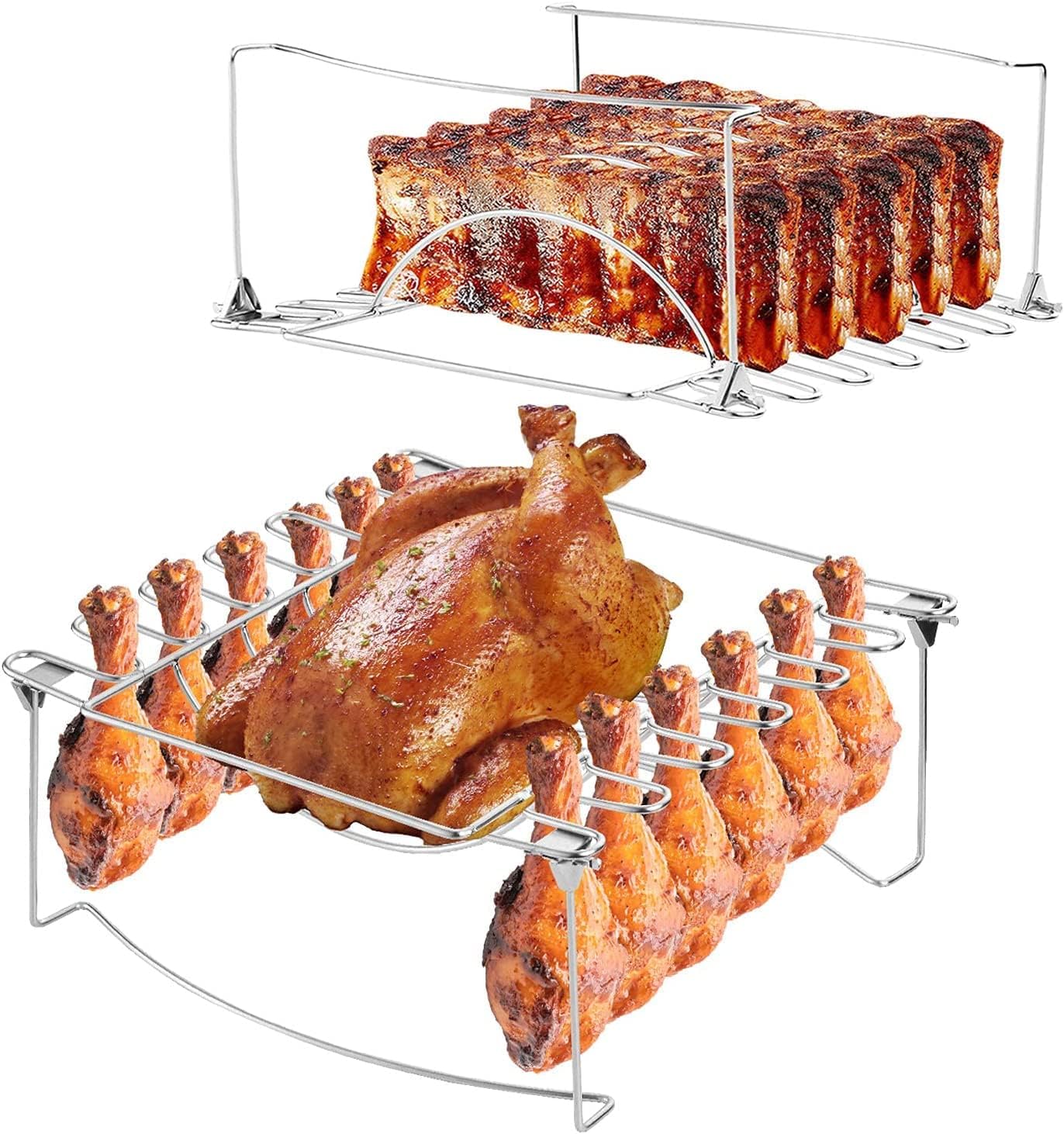
If you re serious about outdoor cooking, you know that the right tools can make or break a backyard BBQ session. The RTT 3-in-1 Rib Rack for Smoking & Chicken Leg Rack is a clever accessory that combines three common grilling needs into one compact, foldable unit. Instead of buying separate racks for ribs, chicken legs, and a whole bird, this single stainless steel rack handles them all. It s designed to fit standard ovens, grills, and smokers, making it a versatile addition for anyone who loves smoked ribs, crispy chicken wings, or a whole beer can chicken style roast.
This rack is best suited for backyard grillers who want to maximize cooking capacity without cluttering their grates. It s also a great choice for campers, tailgaters, and RV owners who need gear that packs small and performs big. The foldable design collapses to a flat 13x12x1.5-inch package, so it slides easily into a camping tote or drawer. When you unfold it, you get a sturdy holder that can support up to six large ribs, 12 chicken legs or wings, or one whole chicken in the center section.
Real-world cooking performance is where the RTT rack shines. The hanging method for chicken legs and wings allows hot air and smoke to circulate around every side, resulting in evenly cooked meat with a nice crispy skin. For ribs, simply flip the rack upside down and slide the ribs into the vertical slots. This upright position ensures smoke bathes all surfaces, giving you that tender, fall-off-the-bone texture without needing to flip halfway through. During my backyard smoke session with a charcoal smoker at 225°F, a full rack of baby back ribs came out juicy and full of smoky flavor after about five hours. The whole chicken holder worked well too, keeping the bird stable and allowing even roasting.
Build quality is solid for the price. The rack is made from stainless steel that feels thick enough to resist warping under high heat. I tested it in a gas grill at 400°F and in a pellet smoker, and it held its shape with no issues. The surface is non-corrosive and fade-resistant, which is important for outdoor gear exposed to weather and grease. There are no moving parts except the folding hinges, which lock into place securely. Cleanup is easy since the rack is dishwasher safe, but a quick soak in hot soapy water takes care of any stuck-on bits. After several uses, I haven t seen any rust or pitting.
One realistic limitation is that the rack s slots are fixed in size. If you have an extra-large whole chicken or very thick beef ribs, they might not fit comfortably. The rib slots are designed for standard pork ribs, so spare ribs trimmed to about 6 inches wide work best. Also, when fully loaded with six ribs and chicken legs, the rack can feel a bit top-heavy. I recommend placing it on a sturdy grate and not overcrowding your smoker or grill. The foldable design is convenient, but the hinges can feel a little loose if not fully locked.
Overall, the RTT 3-in-1 rack is a practical buy for anyone who grills or smokes frequently and wants to simplify their setup. It saves space in your gear bag and on the grill, while delivering consistent results for ribs, chicken parts, and whole birds. For weekend backyard BBQs, tailgate parties, or camping trips where you want to cook multiple proteins at once, this rack earns a spot in your outdoor cooking kit. Just be mindful of slot sizes and loading balance, and you ll enjoy many flavorful cooks with less clutter.
Pros
- Durable 304 stainless steel resists corrosion and stands up to intense grilling heat
- Telescoping frame adjusts smoothly to fit various cooking surface widths
- Legs fold flat for painless transport to campsites and tailgates
- Dishwasher safe build makes post-cookout cleanup quick and effortless
Cons
- Requires adequate grill hood clearance to ensure the lid closes completely
- Adjustable sliding rails can become stiff if grease accumulates between cleanings
- Limits direct spatula access to the food situated immediately underneath the rack
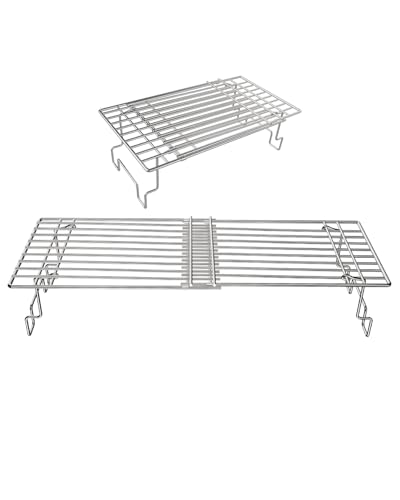
Backyard grillers, tailgaters, and outdoor entertainers frequently run out of grate real estate when cooking for hungry crowds. The BBQ Future Universal Adjustable Warming Rack solves this bottleneck by adding an elevated second tier directly above your main cooking surface. Designed to stand freely on primary cooking grids or griddle plates, it fits popular cookers including Weber gas grills, Traeger and Pit Boss pellet smokers, and Blackstone flat tops without requiring tools or permanent modifications.
Managing heat zones is essential for consistent barbecue, and an elevated rack provides the indirect heat needed to finish a meal together. Positioned above the hottest zone of your burners or griddle plate, this upper rack warms burger buns, roasts foil packs of vegetables, or holds smoked sausages at serving temperature without burning the bottoms. For pellet grill enthusiasts, elevating chicken thighs or pork ribs into the upper chamber allows circulating wood smoke to wrap around the meat evenly while shielding it from direct heat below.
Durability matters for outdoor accessories, and BBQ Future built this rack from solid 304 stainless steel. Unlike cheaper chrome-plated wire shelves that peel, flake, and rust after a single humid season, 304 stainless stands up against ambient moisture, acidic marinades, and high grilling temperatures. The folding legs lock firmly into position, providing steady balance even when loaded with heavy baked potatoes or a rack of ribs.
Portability and maintenance fit right into the routines of RV campers and backyard cooks alike. The telescoping frame slides between 15.5 inches and 22 inches, matching your cooker profile before you start grilling. After dinner, the legs fold flat so the rack slips neatly into a gear tote, grill cabinet, or RV storage compartment. Cleaning is simple because the entire rack is dishwasher safe, saving you from scraping baked-on grease by hand over the sink.
Before setting it up, make sure to measure your grill hood height to confirm adequate vertical clearance above your main grates. For patio cooks, campers, and BBQ enthusiasts looking to maximize their grill capacity and stage multiple courses efficiently, this expandable stainless steel rack delivers great utility and lasting outdoor value.
Adding an elevated tier transforms the way you control cooking zones on your grill or flat top. Rather than shuffling food to cooler perimeter spots on the main grate, you can transfer seared burgers, chicken breasts, and hot dogs to this rack to stay hot while fresh items hit the high-heat zone below.
The open stainless wire grid promotes steady convective airflow, making it useful for slow-roasting corn, toasting garlic bread, or resting steaks off direct fire so juices redistribute properly. On pellet smokers, it places food squarely in the rising convection currents for deep smoke flavor infusion.
Because this rack is made entirely of 304 stainless steel, upkeep is straightforward. For everyday maintenance, brush off food residues with a standard grill brush while the rack is still warm, or wipe it down with a damp cloth and mild degreaser.
When heavily coated with grease or barbecue sauce, collapse the legs and slide the entire unit into your household dishwasher. Periodically rinsing the sliding adjustment tracks keeps the telescoping mechanism smooth and free of sticky residue over years of outdoor cooking.
Mastering the Science and Technique of Seasoning Grill Racks
Seasoning grill racks is the deliberate process of baking cooking oils onto bare metal until they transform into a hardened, slick barrier. This chemical change creates a reliable nonstick surface while safeguarding vulnerable metal against oxidization and ambient humidity. When grillers understand how fats cross-link under heat, maintaining grates becomes straightforward. Developing this disciplined routine ensures your cooker stays ready for searing tender proteins whenever outdoor cooking plans arise.
The Science of Oil Polymerization on Grate Surfaces
Understanding the chemistry behind seasoning helps demystify why heat and fat interact so effectively with cooking grates. When liquid vegetable oil is heated past its smoke point, fatty acids break apart and bond with oxygen in a process called polymerization. These individual molecules link into dense, durable chains that settle deep within the microscopic pores of the metal. As the coating cools, it hardens into an impenetrable shield that prevents raw food from grabbing onto surface imperfections.
Many backyard cooks confuse genuine seasoning with leftover cooking grease and carbonized sauce. Burnt food debris is brittle, dirty, and prone to flaking off into future meals while imparting bitter flavors. In contrast, true polymerization produces a smooth, dry glaze that will not wipe away or transfer black soot onto food. Building this smooth coating requires clean metal, thin coats of clean oil, and steady heat sustained over a dedicated curing period.
Selecting the Best High-Smoke-Point Oils for Grill Racks
Selecting the right cooking fat is essential for creating a durable seasoning layer that can endure outdoor cooking temperatures. High-smoke-point oils with high concentrations of unsaturated fats bond most effectively during thermal curing. Canola oil, grapeseed oil, refined peanut oil, and avocado oil represent excellent choices because they tolerate heat above four hundred degrees Fahrenheit without scorching. Vegetable shortening also works well, providing consistent coverage that clings readily to textured cast surfaces during application.
Low-smoke-point fats such as extra virgin olive oil, unrefined coconut oil, and dairy butter should always be avoided during seasoning. These delicate fats break down too quickly, leaving behind sticky, acrid deposits rather than hard polymer films. Animal lards can serve as traditional seasoning options, but unsalted plant-based oils offer greater stability during extended storage. Choosing a neutral, refined oil ensures your protective layer remains resilient against intense charcoal fires and high-output gas burners.
Step 1: Thorough Deep Cleaning and Pre-Seasoning Prep
Every successful seasoning project begins with an immaculate foundation free from grease, dust, and manufacturing debris. Brand-new racks frequently ship with protective mineral oils designed to prevent rust during transit. These industrial coatings must be scrubbed away using warm water, grease-cutting dish soap, and a stiff nylon brush. If you are refurbishing older grates, use a brass brush to remove loose rust flakes and old carbon deposits.
Rinsing the racks thoroughly removes loosened grit and soap residue that could interfere with the oil bonding process. Once cleaned, drying the grates completely is a critical step that must never be rushed. Trapped moisture underneath an oil coat will boil during heating, causing pitting and rapid rust formation beneath the fresh patina. Placing the grates on a warm grill for fifteen minutes evaporates hidden water droplets from deep within the metal seams.
Step 2: Applying the Oil in Thin, Uniform Layers
Applying oil too heavily is the single most common mistake cooks make when seasoning their barbecue equipment. Thick puddles of oil cannot polymerize evenly, turning into a gummy, sticky varnish that catches debris and resists heat. The ideal technique involves saturating a lint-free cotton cloth or paper towel with a small amount of oil. Wipe down every bar, corner, and weld joint until the entire assembly displays a faint, even sheen.
After coating the metal, take a completely clean, dry towel and wipe the entire rack as if trying to remove all the oil. Enough microscopic oil molecules will remain bound to the metal pores to create the desired polymer layer. This thorough wipe-down prevents excess fat from running down into burner tubes or accumulating on heat deflectors. Uniform, whisper-thin applications are the secret to building a dark, glass-smooth cooking plane that lasts.
Step 3: Managing Heat and Curing Temperatures
Once the racks are oiled, placing them over steady heat allows the polymerization process to take hold. Close the grill lid and raise the ambient cooking temperature to between four hundred and four hundred fifty degrees Fahrenheit. Maintain this temperature steady for forty-five minutes to an hour, allowing the oil to smoke lightly and gradually cross-link with the metal. As the oil cures, you will observe the shiny surface shifting into a darker, semi-matte bronze or black finish.
Always execute this curing cycle in a well-ventilated outdoor setting away from combustible patio walls and overhangs. Operating any charcoal, gas, or pellet grill inside an enclosed garage poses severe carbon monoxide and fire risks that no open door can eliminate. Authoritative fire safety agencies explicitly mandate keeping outdoor cooking equipment outside in open air with ample clearance from structures. Once the heating hour concludes, shut off the fuel or vents and allow the grates to cool completely before handling.
Building a robust protective patina rarely finishes after a single heating cycle on bare or restored metal. Repeating the wipe-down and heating sequence two or three consecutive times lays down successive micro-layers of polymer. Each additional coat fills in microscopic valleys, dramatically improving nonstick performance and weather defense. Taking the extra time to repeat this cycle transforms average cooking grids into resilient surfaces ready for high-heat searing.
Material Differences: Cast Iron vs Stainless Steel vs Porcelain Grates
Different grate compositions demand tailored maintenance approaches based on their unique thermal and structural characteristics. Cast iron features exceptional heat retention and thermal mass, making it a favorite for distinct steakhouse sear marks. However, raw iron is exceptionally porous and oxidizes rapidly when exposed to humidity without an intact oil barrier. For cast iron components, regular seasoning is mandatory preventive care that preserves structural integrity over decades of use.
Stainless steel racks present a completely different set of metallurgical properties for outdoor cooks to navigate. Heavy-duty stainless steel contains chromium, which naturally forms an invisible oxide film that resists corrosion without seasoning. While stainless steel will not rust like raw iron, wiping it with oil before high-heat cooking creates a temporary nonstick barrier that minimizes protein sticking. Heat eventually tints stainless steel rods with golden or bronze hues, but this discoloration represents normal oxidation rather than a defect.
Porcelain-enameled grates feature a glass-like ceramic glaze bonded directly over an iron or steel core. This glassy coating provides inherent rust protection and food release right out of the box, requiring zero initial seasoning cycles. In fact, attempting to cure oil on intact porcelain can create a cloudy, sticky film that proves difficult to scour clean. Your primary focus with porcelain racks should be gentle cleaning with soft-bristle brushes to avoid chipping the delicate vitreous barrier.
Integrating Warming Racks and Multi-Level Cooking Accessories
Modern outdoor cooking setups frequently incorporate secondary tiers, warming shelves, and specialized roasting holders to expand usable grate space. The Unidanho Grill Rack for Blackstone Griddle Warming illustrates how upper shelves provide gentle holding heat for buns and vegetables. Built from stainless steel 304 rod with an expandable length from 16 to 25 inches, this rack uses an open-grid design that promotes airflow above direct heat. Because it is fabricated from rust-resistant stainless steel, basic washing and an occasional light oil wipe keep it spotless.
Dedicated roasting frames also simplify batch cooking when managing complex menus on your patio cooker. The RTT 3-in-1 Rib Rack for Smoking & Chicken Leg Rack provides multi-functional capacity, holding six large rib racks, twelve chicken legs or wings, or a whole bird. Made from stainless steel designed to withstand high smoking temperatures, this accessory fits inside standard ovens, grills, and large pellet smoker cabinets to maximize vertical space. Keeping stainless meat racks clean with warm soapy water preserves hygiene without worrying about delicate patinas stripping away.
Upper warming grids also benefit from straightforward maintenance when switching between gas grills, flat-top griddles, and charcoal cookers. The BBQ Future Universal Adjustable Warming Rack expands from 15.5 to 22 inches in length and features folding legs that collapse flat for storage. Its 304 stainless steel construction provides dependable corrosion resistance while remaining dishwasher safe after intense family barbecues. Wiping upper warming racks with a clean paper towel after washing prevents water spots and ensures ready deployment for your next cookout.
Common Mistakes That Ruin a Seasoned Patina
Even experienced backyard pitmasters occasionally make maintenance missteps that degrade their hard-earned protective coatings. Applying harsh chemical oven cleaners or lye-based sprays onto seasoned grates immediately strips away polymerized fat layers down to raw metal. These corrosive cleaners etch the underlying iron, creating rough surface textures that encourage severe sticking during subsequent cooks. Stick to warm water, mild soap, and mechanical scraping tools to preserve the integrity of your cured surface.
Another frequent error involves soaking cast metal components in standing water inside sinks or tubs overnight. Submerged cast iron absorbs water into microscopic hairline crevices, initiating rapid oxidation beneath existing seasoning layers within hours. When water sits trapped against bare iron, orange surface rust quickly bubbles upward and flakes off the surrounding seasoning. Always wash grates promptly, dry them immediately over direct heat, and store them in dry environments sheltered from rain.
Using metal scrapers too aggressively can also chip away cured oil coatings, leaving raw spots exposed to moisture. Twisted wire brushes pose additional risks if loose metal bristles detach and adhere to cooking surfaces or food. Using wood scrapers, brass-bristle brushes, or crumpled aluminum foil held by tongs offers safer alternatives that clean effectively without gouging the patina. Gentle, consistent cleaning habits protect both the cooking surface and the safety of your dining guests.
Ongoing Maintenance and Routine Post-Cook Touch-Ups
Maintaining seasoned grill racks requires far less effort when you incorporate quick habits at the conclusion of every cooking session. While the grill is still warm, use a dedicated grill brush to scrub away residual food bits and rendered fats. Follow this immediate brushing with a light swipe of cooking oil using a folded paper towel held firmly in long barbecue tongs. This simple post-cook step re-coats the hot metal, replenishing oil burned off during cooking and safeguarding the grates while the unit cools.
Outdoor cooks who utilize smoker boxes for outdoor cooking often generate additional wood smoke residues and flavorful condensates across upper and lower grids. While wood smoke enhances barbecue flavor, sticky creosote deposits should be wiped down before they harden into tacky glazes. Keeping a clean surface ensures that future smoke profiles remain crisp, clean, and appetizing rather than stale or bitter. Inspecting your grates before closing the cooker hood preserves ideal cooking conditions for your next session.
Seasonal storage also demands thoughtful preparation to prevent dormant grates from developing surface mold or rust during damp winter months. Before putting your cooker into storage, clean the racks thoroughly, apply a fresh thin layer of oil, and run a full curing cycle. Store the seasoned components inside a dry garage or shed, keeping them elevated away from damp concrete floors. A well-maintained seasoning layer protects your grates through winter freezes, guaranteeing effortless performance when spring grilling returns.
Consistent care transforms your outdoor cooking grates into durable, high-performing tools that elevate every backyard meal. Taking the time to understand oil polymerization, proper curing temperatures, and material-specific maintenance prevents frustrating food sticking and premature replacements. With clean metal, thin oil applications, and steady heat, your grill racks will reward you with pristine sear marks and dependable nonstick performance for countless seasons to come.




Write Your Review
No reviews yet. Be the first to share your experience!