


Placing delicate food onto a hot grill often brings the frustrating worry that half of your dinner will stick to the metal bars. Many backyard cooks wonder if stainless steel cooking surfaces require the same continuous seasoning rituals that traditional cast-iron grates demand. When asking yourself do you need to oil stainless steel grill grates, the technical answer is that stainless steel does not require seasoning to protect against rust, but strategic lubrication plays an active role in non-stick cooking. Grilling delicate fish fillets or lean poultry can quickly turn messy if bare metal grips the proteins before a proper sear develops.
Applying oil directly to the food rather than drenching the cooking grid is often the most effective way to prevent sticking and control unwanted grease fires. Even when cooking sticky glazes or preparing rich dishes like marinated Korean barbecue beef, proper temperature management works alongside light lubrication to create a clean release. Understanding the microscopic structure of stainless steel helps cooks get pristine sear marks while keeping cleanup quick and hassle-free.

Pros
- Solid stainless steel build provides practical corrosion resistance compared to chipped porcelain or rusted iron
- Includes two modular sections that combine for a 16 1/2 by 22 3/4 inch total cooking area
- Broad compatibility across numerous Kenmore, Vermont Castings, Hamilton Beach, and ProChef grill models
- Straightforward maintenance with no pre-seasoning required compared to bare cast iron
Cons
- Requires precise measuring of existing grill boxes and old grates prior to ordering to avoid fit issues
- Lacks interlocking tabs, requiring stable ledge support inside the grill firebox
The Htanch SF8252 replacement cooking grate set is a dedicated two-piece grilling surface engineered to fit specific gas grill models from brands like Vermont Castings, Kenmore, ProChef, and Hamilton Beach. For backyard grillers dealing with pitted, flaking, or corroded original grids, this pair provides a practical refresh. It caters directly to homeowners and outdoor cooking enthusiasts who want to revive an existing outdoor cooker rather than spend significantly more money replacing the entire barbecue station.
In everyday outdoor cooking scenarios, stainless steel grids deliver dependable heat transfer for staples like burgers, hot dogs, chicken breasts, and sliced vegetables. The rod layout allows direct heat from the burners below to interact cleanly with food, helping achieve classic sear marks when the grill is properly preheated. Because the set splits into two separate 16 1/2-inch by 11 3/8-inch sections, it supports standard dual-zone cooking setups, allowing you to manage searing on one side while holding items over indirect heat on the other.
Built from stainless steel, these replacement grates provide durable structural integrity designed to withstand high outdoor cooking temperatures. Unlike porcelain-coated steel wire which can chip over time, or untreated cast iron that demands continuous oiling to prevent rust, stainless steel provides resilient day-to-day operation. The welded rod structure creates a rigid cooking platform that supports heavier cuts of meat, cast-iron skillets, or loaded vegetable baskets without sagging under regular backyard use.
Installation requires zero tools; users simply lift out the degraded cooking grids and set these two sections directly onto the internal firebox ledges. Daily maintenance is similarly low effort. After cooking, a warm grill brush or nylon scraper cleans the smooth stainless surfaces without requiring the delicate handling needed for seasoned iron. For deeper seasonal cleaning, the individual sections are compact enough to be soaked in a utility sink or washed down with warm water and degreasing soap.
While compatibility spans a long list of Kenmore, Vermont Castings, and ProChef models, proper fit relies entirely on exact cookbox dimensions. Grill manufacturers frequently altered internal dimensions across model years, so relying solely on model numbers can occasionally lead to mismatched sizing. Backyard cooks must take careful measurements of their current firebox ledges or original grates before purchasing to ensure the 16 1/2 by 22 3/4 inch total footprint sits flush without sliding.
If your current grill body and burners remain in solid working order but the cooking surfaces have deteriorated, this Htanch two-pack offers an efficient, budget-conscious solution. It delivers reliable stainless steel durability, straightforward cleanup, and immediate renewal of your cooking surface for family weeknight grilling and weekend gatherings.
Crafted from welded stainless steel rods, the Htanch SF8252 grids are structured to handle everyday outdoor cooking demands. The rigid construction supports heavy cuts of meat and cookware without bending, while the stainless material naturally resists the moisture and grease common to gas grill cookboxes.
Compared to porcelain-enameled steel surfaces that can crack and expose bare metal to oxidation, bare stainless steel provides consistent structural performance over multiple seasons of backyard cooking.
Maintaining stainless steel cooking grates is considerably easier than caring for traditional cast iron, as they do not require regular oil seasoning cycles to prevent deterioration. Routine post-cooking cleanings with a standard wire or bristle-free grill brush while the grates remain warm will dislodge grease and food residue efficiently.
Because the set is split into two manageable panels measuring 16 1/2 by 11 3/8 inches each, removing them for thorough soaking or seasonal scrubbing in a utility sink requires minimal effort.
Pros
- High-quality 304 stainless steel offers excellent rust resistance and food safety
- Mesh design allows even heat and smoke flavor to reach food from all angles
- Lightweight and easy to carry - perfect for camping, tailgating, or RV trips
- Easy to cut or trim to fit non-standard grill sizes or portable stoves
- Quick cleanup - a quick soak and scrub is all it takes
Cons
- Thinner mesh may warp under very high heat if not properly supported
- Not as heavy-duty as cast iron or thick steel grates - can bend under excessive weight
- May require extra securing to prevent sliding on some grill surfaces
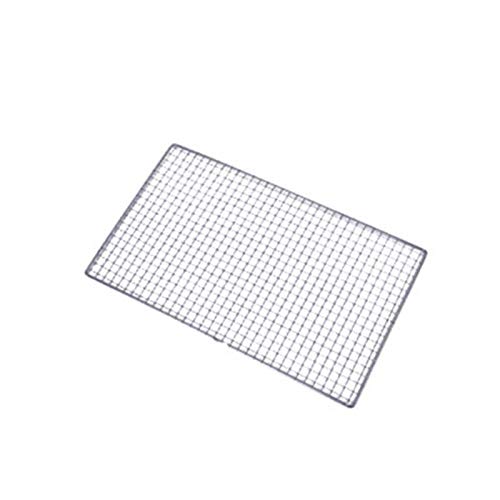
The Faddare Stainless Steel BBQ Mesh Grill Grate is a practical replacement or add-on for any outdoor cooking enthusiast. Measuring 11.8x17.7 inches, this lightweight grate is made from 304 stainless steel, ensuring it won't rust or flake after repeated use. It's designed specifically for campers, tailgaters, RV owners, and backyard grillers who need a portable, easy-to-clean surface that keeps smaller foods from falling through to the flames.
In terms of performance, the mesh offers excellent heat consistency. The evenly spaced wires promote good airflow which helps you achieve those desirable grill marks while also circulating smoke for richer flavor. Whether you're searing burgers over high heat or slow-smoking vegetables, this grate handles the job. It works well on standard charcoal and gas grills, as well as camp stoves and fire pits, making it a versatile companion for weekend trips or patio parties.
Build quality is solid for the price point. The 304 stainless steel stands up to moisture and frequent cleaning, but it's not as rigid as a thick cast iron grate. The flexibility is actually a plus for portability - you can roll or fold it slightly to fit into a backpack. Just be careful not to overload it with heavy cuts of meat, as the mesh can sag under extreme weight. Cleanup is straightforward: a quick soak in warm water followed by a scrub with a brush, then store in a dry place.
One of the standout features is how easy it is to customize. You can cut the mesh with heavy-duty scissors or tin snips to fit almost any cooking surface. This makes it ideal for adapting to older grills, small portable units, or even as a heat diffuser for smoking setups. The silicone brush mentioned in some product descriptions might be included but is not essential - the grate itself does most of the heavy lifting.
On the downside, because the mesh is thin, it can warp if exposed to prolonged high heat without proper support. Also, it's best to ensure it sits securely on your grill grates or has a non-slip surface underneath to prevent sliding. For most backyard and camp cooking, these are minor concerns. The grate's ability to let small foods like shrimp, diced veggies, or fish fillets cook without dropping into the coals is a huge bonus for outdoor cooks.
Overall, the Faddare Stainless Steel BBQ Mesh Grill Grate is a smart, affordable addition to your outdoor cooking gear. It's especially suited for campers, tailgaters, and RV owners who value portability and easy cleanup. Backyard grillers will also appreciate it as a complement to their main grates for delicate items. If you're looking for a lightweight, durable, and versatile cooking surface that won't break the bank, this is a solid choice.

Pros
- Heavy 6mm solid-rod SUS304 stainless steel resists corrosion and flaking
- Direct drop-in replacement fit for popular Weber Spirit and Genesis 300 series models
- Simple post-cook maintenance with no seasoning required compared to cast iron
- Substantial 9.9-pound total weight promotes stability and steady heat retention
Cons
- Compatibility is limited to specific Weber dimensions and requires careful measurement before ordering
- Stainless steel does not retain dense heat in quite the same way as thick seasoned cast iron
- Polished silver surface naturally discolors and develops heat tint after repeated high-temperature cooks
The Eosphora 17.5-Inch Replacement Grill Grate set is an aftermarket cooking grid upgrade designed specifically for owners of Weber gas grills looking to restore or improve their cooking surface. Sized to fit Weber Spirit 300 and Spirit II 300 series grills along with select older Genesis, Silver, and Gold models, this two-piece set offers a practical solution for backyard cooks dealing with rusted, chipped, or worn-out original grates. It suits regular weeknight grillers, weekend steak cooks, and patio entertainers who want a dependable cooking surface without having to replace an entire barbecue.
In real-world backyard cooking, the 6mm solid-rod construction provides consistent contact across the 23.8-inch by 17.5-inch total grilling footprint. Solid stainless steel rods absorb heat directly from the burners below, helping reduce isolated cold spots across the cooking area. Whether you are searing beef patties for a game-day cookout, grilling bone-in chicken thighs over medium heat, or charring sweet corn and bell peppers, the rods transfer heat steadily to produce distinct grill marks while supporting both direct and indirect cooking layouts in your grill cookbox.
Build quality is centered on food-grade SUS304 stainless steel, which is non-magnetic and inherently resistant to corrosion. Unlike porcelain-enameled cast iron grates that can chip over time and expose bare metal to outdoor moisture, solid stainless steel will not peel or flake into your food. The rods feature smooth exterior finishing with rounded perimeter framing, contributing to the set's substantial 9.9-pound total weight. This hefty build ensures the panels sit flat and stay firmly positioned on internal grill ledges without wobbling under heavy roasts or loaded cooking pans.
Setup is completely tool-free, requiring you to simply lift out your old grates and drop the two 11.9-inch wide panels side-by-side into the cookbox. Daily handling and maintenance are noticeably easier than cast iron. Because 304 stainless steel does not require routine oil seasoning to prevent rust, cleanup generally involves letting the grates burn off residue after cooking and brushing them with a standard grill brush. Food residue releases easily from the smooth rod finish, and the individual panels fit comfortably in a utility sink or outdoor wash basin if deep scrubbing is needed.
While this stainless steel replacement offers exceptional durability, it does have realistic limitations. The most critical factor is fit; these grates are engineered for specific Weber models, so backyard cooks must measure their existing grill box to avoid ordering mistakes. Additionally, stainless steel behaves differently than heavy cast iron; while it heats evenly and cleans effortlessly, it does not hold dense thermal mass quite as stubbornly as thick iron. The polished silver finish will also naturally darken, discolor, and show golden-brown heat tint after its first few high-heat grilling cycles.
For outdoor cooks seeking a durable, low-fuss replacement for deteriorating Weber cooking grids, the Eosphora 304 Stainless Steel Grates provide solid everyday value. They eliminate concerns over chipping porcelain enamel, simplify post-dinner cleanup, and restore dependable heat performance to your favorite backyard gas grill. If your compatible Weber grill frame and burners remain in solid working order, investing in this heavy-duty stainless grate set is a smart, budget-friendly way to extend the life of your barbecue.
One of the primary reasons grillers switch from factory porcelain-coated or cast iron grates to SUS304 stainless steel is ease of upkeep. Unlike cast iron, which requires continuous seasoning and careful moisture control to avoid rust, stainless steel is non-porous and handles outdoor humidity with minimal fuss.
Routine cleanup after family burger dinners or barbecue chicken is straightforward. Simply run your burners on high for a few minutes after removing the food to carbonize surface drippings, then brush the grates with a standard stainless steel or nylon grill brush. For deeper cleaning between seasons, both 11.9-inch panels lift out easily for a warm soapy soak in a sink or tub without worrying about stripping off a delicate seasoning layer.
The Eosphora grate set is constructed using 6mm thick solid rods made from high-grade SUS304 stainless steel. The solid core provides rigidity and strength, preventing the warping that often occurs with cheaper hollow or thin-gauge aftermarket replacements under repeated thermal expansion.
This two-panel set is precision-sized to measure 17.5 inches in depth and 23.8 inches in total width (11.9 inches per grate). It is engineered to fit Weber Spirit 300 series grills (including E-310, E-320, E-330, S-310, S-320, S-330), Spirit II 300 series models, Genesis Silver and Gold B/C, and select 2007 through 2016 Genesis 300 series gas grills. Checking your existing grate measurements before ordering ensures an exact drop-in fit.

Pros
- Sturdy stainless steel build resists rust far better than chrome-plated alternatives
- Built-in handle makes lifting off hot fireboxes or campfires much more manageable
- Dishwasher-safe design saves time when scraping and cleaning grease after family cookouts
- Extra thick bar layout provides dependable structural rigidity across the 16-inch surface
Cons
- Specific 16-inch circular footprint requires precise measuring before purchase to ensure proper fit
- Integrated metal handle gets hot during cooking and requires heat-resistant gloves for safe handling
- Solid one-piece design lacks a hinged access flap for adding charcoal without lifting the entire grate
The SHITOOMFE 16-Inch Round Stainless Steel Grill Grate is designed as a direct replacement surface for outdoor charcoal grills, vertical smokers, and open-fire camp cooking setups. Whether an existing factory grate has succumbed to rust or an outdoor enthusiast needs a dedicated cooking platform for portable fire pits, this grate targets backyard cooks, campers, and patio barbecue fans who want a straightforward, heavy-duty stainless cooking area.
In practical outdoor cooking scenarios, a grate must maintain steady contact with heat while supporting everything from burgers and sausages to cast-iron skillets. The extra thick stainless steel wire layout described by the manufacturer helps distribute heat effectively across the surface while resisting the sagging or warping that often plagues thin wire racks under high direct coals. The open grate pattern permits direct heat exposure for searing while allowing rendered fat and charcoal aroma to circulate evenly around your food.
Build quality centers on solid stainless steel construction, which provides long-term resistance against rust, corrosion, and flaking coatings. Unlike porcelain-enameled steel that can chip over time or bare steel that demands continuous oiling to prevent oxidation, stainless steel tolerates outdoor moisture and repeated scrubbings. The standout design feature is the integrated lifting handle, which offers a secure anchor point when setting the grate into a smoker body or resting it over a stone campfire circle.
Day-to-day handling and cleanup remain straightforward. Thanks to its smooth stainless steel finish, charred residue can typically be loosened with a standard grill brush during preheat, or the entire grate can be washed in the dishwasher after heavy cooking sessions. The single-piece construction drops directly onto internal grill tabs or campfire stands without requiring any tools, brackets, or assembly.
There are realistic limitations to keep in mind. At 16 inches in diameter, this grate is tailored for specific compact kettle cookers, bullet smokers, or campfire rings, meaning it will not fit standard 18-inch or 22-inch kettle grills without falling through. Additionally, because the handle is fixed directly to the steel frame, it conducts heat readily while positioned over coals, necessitating the use of heavy heat-resistant barbecue gloves whenever lifting or repositioning the grate.
For outdoor cooks seeking an affordable, rust-resistant replacement for a 16-inch smoker or a rugged cooking platform to pack along for campsite fire pits, the SHITOOMFE round grate represents a practical, functional upgrade. Just be sure to measure your cooker interior carefully to confirm diameter compatibility before ordering.
The cooking grate features stainless steel wire construction engineered to withstand outdoor weather exposure and high grilling temperatures. Stainless steel eliminates the common peeling and flaking issues associated with low-cost chrome-plated alternatives, reducing long-term corrosion risks.
Its extra thick wire framework enhances structural rigidity, helping the grid carry heavier cooking loads such as cast-iron pans or large roasts without bending. The welded lifting handle is anchored directly to the perimeter wire to provide a sturdy grip during handling.
Routine maintenance is simple due to the stainless steel cooking surface. Grease, carbon, and food residue release more readily than on porous materials, allowing for quick brushing while the grill is warm.
For deep cleaning after smoking or fatty cooks, the grate is dishwasher safe and can also be soaked in warm, soapy water. Unlike bare cast iron, there is no requirement for tedious seasoning cycles to maintain its rust-resistant finish.
Stainless steel remains one of the most durable and corrosion-resistant materials used in modern outdoor grills. Knowing precisely how and when to apply oil ensures your food glides off the metal without tearing, while also protecting the cooking grid from stubborn carbon buildup. By understanding how heat and metal interact, you can keep your cooking surface clean and achieve perfect sear marks on every cut of meat.
The Science and Practice of Oiling Stainless Steel Grill Grates
The Direct Answer: Do Stainless Steel Grates Need Regular Oiling?
Stainless steel grill grates do not require ongoing seasoning or continuous coats of oil to remain rust-free. The metal alloy contains chromium, which naturally forms an invisible layer of chromium oxide that protects the underlying steel from oxygen and moisture. This passive shield means you never need to bake layers of fat into stainless steel to prevent rust, unlike bare cast iron. Applying oil serves strictly as an operational technique to reduce friction and minimize food adhesion during an active cook.
Many cooks mistakenly believe that coating a cold stainless grate with oil before lighting the burners protects the metal. In reality, baking cold oil onto an empty grate creates sticky, gummy resin deposits that attract dust and make food stick worse during future meals. Oil should only be applied immediately before food touches the hot metal, or even better, applied directly to the ingredients themselves. Treating stainless steel as an alloy that requires targeted lubrication rather than protective seasoning keeps the bars clean and shiny for years.
Stainless Steel Versus Cast Iron: Understanding Material Properties
The microscopic structure of stainless steel differs fundamentally from cast iron, dictating completely different maintenance routines. Cast iron features a rough, porous surface filled with micro-fissures that absorb cooking oils to form a slick, polymerized patina over repeated high-heat cooks. Stainless steel, particularly food-grade 304 alloy, possesses a dense, smooth grain structure that cannot absorb oils in that manner. Any heavy oil layer heated onto bare stainless steel will simply burn, smoke, and leave a dark, uneven varnish rather than a functional non-stick coating.
Because stainless steel cannot develop a traditional baked-on seasoning layer, trying to treat it like a cast-iron skillet is counterproductive. The smooth surface of stainless steel already offers natural food release when brought up to the correct cooking temperature. Cooking grids such as the solid rod Grill Grates 17.5″ for Weber Replacement,Stainless rely on dense 304 stainless steel construction to deliver corrosion resistance without requiring heavy grease layers. Understanding this material distinction saves maintenance time and prevents sticky polymer buildup across your grill.
Oiling the Food Versus Oiling the Grate
Grillers frequently debate whether lubricating the cooking grate or lubricating the ingredient produces better cooking results. Coating the food directly with a light film of high-heat cooking oil is almost always the superior method for several practical reasons. Food-applied oil stays in contact with the protein where it is needed most, filling microscopic surface gaps as the meat contracts under heat. When you wipe or pour oil across hot grill bars, much of it drips down into the burners or flame tamers before food ever touches the metal.
Dripping oil creates sudden flare-ups that scorch food with bitter carbon soot and produce unpleasant chemical smoke. Wiping oil onto the food also uses considerably less oil overall, saving kitchen supplies and reducing burner mess. When cooking thick steaks or lean poultry, a light brush of neutral oil accompanied by dry seasoning creates an ideal barrier against sticking. Oiling the grate directly should generally be reserved for delicate, un-oiled foods like skinless fish or soft dough that cannot easily be tossed in oil beforehand.
Step-by-Step Method for Safely Oiling Hot Stainless Grates
If your recipe requires oiling the cooking surface directly, doing it safely and sparingly is paramount. Never spray aerosol cooking oils onto an active grill, as aerosolized propellants can ignite instantly and cause severe flash fires. Instead, fold a clean, heavy paper towel into a tight, two-inch pad and hold it firmly with long-handled barbecue tongs. Dip the paper towel pad lightly into a small bowl containing neutral cooking oil, letting any excess oil drip off before moving toward the firebox.
Quickly and evenly glide the oiled towel pad across the hot stainless steel bars in long, steady strokes. You only want a microscopic sheen across the contact surface, not puddles of grease that seep between the gaps. Work swiftly and maintain a safe distance to prevent hot vapors or stray flare-ups from reaching your hands. Grates with tight spacing, such as the replacement Htanch SF8252 (2-Pack) 16 1/2″ Stainless Steel grids, benefit from this controlled wiping technique because it coats the upper curve of the rods without flooding the firebox below.
Selecting High-Smoke-Point Oils for Outdoor Cooking
Using the proper type of oil makes a dramatic difference between clean searing and acrid smoke. Outdoor grills frequently operate at temperatures between 400 and 600 degrees Fahrenheit, which exceeds the breakdown threshold of many common household fats. Extra virgin olive oil and unclarified butter have low smoke points around 350 degrees, causing them to decompose rapidly into burnt acrid compounds that taste bitter and promote sticking. You need neutral cooking oils that feature smoke points above 450 degrees Fahrenheit to endure direct grilling heat.
Refined avocado oil, canola oil, grapeseed oil, and peanut oil are all practical options for stainless steel cooking grids. Refined avocado oil is particularly heat-tolerant, boasting a smoke point near 520 degrees Fahrenheit that easily withstands high-heat steak searing. Canola and peanut oils offer cost-effective, dependable performance for everyday chicken, pork, and vegetable grilling sessions. Choosing a high-smoke-point oil ensures the protective film remains slick rather than turning into sticky, scorched carbon when your ingredients contact the metal.
Why Preheating and Heat Control Prevent Sticking
Many backyard cooks blame un-oiled grates when sticking occurs, but inadequate preheating is usually the real culprit. When cold meat touches cool or lukewarm metal, the proteins bind chemically to the microscopic irregularities in the steel bars. If the grate is fully preheated to high heat, the moisture in the meat vaporizes instantly upon contact, creating a microscopic steam cushion that physically lifts the food off the metal. This thermal reaction, combined with rapid protein denaturation, produces clean grill marks and allows natural food release.
Patience during the first few minutes of cooking is equally critical for achieving clean release. If you attempt to flip a burger, chicken breast, or steak too early, the natural crust has not yet set, causing the exterior to tear away and cling to the rods. When the Maillard reaction completes its initial browning phase, the meat will naturally release its grip on the stainless steel. When pairing this technique with rich barbecue sauce recipes, wait until the final five minutes of cooking to brush on sugary glazes so they caramelize without scorching or fusing to the bars.
Grate Construction: Solid Rods Versus Fine Wire Mesh
The physical construction of your stainless steel cooking surface influences how you should manage heat and lubrication. Heavy solid-rod grates, like the Grill Grates 17.5″ for Weber Replacement,Stainless set, hold substantial thermal energy and create wide, defined contact points that produce bold sear lines. These solid bars are easy to scrape clean between cooks and require only minimal surface oiling. Conversely, fine mesh nets like the Stainless Steel BBQ Grill Grates Replacement mesh wire net are designed with narrow wire gaps that keep small vegetables, shrimp, and diced meats from dropping into the coals.
Because wire mesh mats have thinner wire gauges, they respond rapidly to heat shifts but hold less internal heat than thick rods. When using fine mesh wire racks, lightly oiling the food becomes even more important because the woven wire intersections offer numerous small points where proteins can snag. For campfire cooking or charcoal kettle setups, circular grates like the Grill Grates Replacement featuring a built-in handle allow cooks to adjust grate height or reposition food away from direct hot spots. Choosing the right grate profile for your typical menu keeps maintenance manageable and cooking predictable.
Cleaning and Long-Term Maintenance of Stainless Steel Grids
Maintaining clean stainless steel cooking grids is the most effective long-term defense against food sticking. After completing your cook, leave the grill on high for ten minutes with the lid closed to incinerate leftover food debris into loose ash. While the grates are still moderately warm, use a bristle-free stainless steel scraper, brass brush, or crumpled aluminum foil ball to knock away lingering particles. Avoid using cheap carbon steel wire brushes or steel wool pads, as microscopic iron particles can shed from the brush and cause superficial rust spots on your 304 stainless steel.
For deep seasonal cleaning, soak removable grids in a tub of warm water mixed with dish soap and baking soda. Tough carbon buildup can be scrubbed away using nylon scouring pads and non-abrasive stainless steel cleaners without scratching the polished finish. If you utilize specialized smoker attachments or stainless steel smoker boxes during long sessions, keeping the adjacent grates scrubbed prevents wood sap and smoke residues from forming sticky resins. Storing clean, completely dry grates inside a covered grill ensures your stainless steel stays pristine across all seasons.
Essential Safety Guidelines: Flare-Ups and Enclosed Spaces
Safe oiling habits protect both your equipment and your personal well-being during outdoor grilling. Excess oil applied to grates invariably drips down toward burner tubes, heat diffusers, or charcoal embers, where it accumulates as flammable grease sludge. Periodically inspect and scrape your grill grease tray to prevent catastrophic grease fires that can damage burners and warp internal components. Keeping a box of baking soda or an approved dry chemical fire extinguisher near your outdoor cooking station ensures you can manage sudden flare-ups safely without spraying water on hot oil.
Location safety is another vital consideration that every backyard pitmaster must take seriously. Fuel-burning outdoor grills, whether powered by propane, natural gas, charcoal, or wood pellets, must never be operated inside a garage, breezeway, carport, or enclosed patio, even if the overhead garage door is wide open. Burning fuel produces lethal carbon monoxide gas that accumulates swiftly in enclosed spaces, creating a fatal hazard alongside significant structural fire risks. Always operate your grill outdoors in an open, well-ventilated area placed safely away from building walls, wooden railings, and overhanging roof eaves.
Practical Steps for Routine Grilling Success
Mastering stainless steel cooking grids requires consistent preheating and selective lubrication rather than heavy seasoning rituals. Always inspect the grates for carbon deposits before firing up the burners, giving the metal a quick brush once hot to remove residual ash. Coat your food directly with high-smoke-point oil and proper seasonings while the grill reaches its target temperature. This simple routine protects food texture, prevents sticking, and keeps your stainless steel looking great for many barbecue seasons to come.




Write Your Review
No reviews yet. Be the first to share your experience!