

Managing heat on an outdoor charcoal cooker often feels unpredictable when fuel is dumped into the firebox without a deliberate strategy. Learning how to place charcoal in grill basins transforms uneven scorching into predictable, zone-controlled cooking. Whether searing steaks over blazing embers or roasting poultry away from direct flames, the physical configuration of the charcoal bed dictates ambient temperatures, surface char, and radiant heat transfer across the cooking grates.
Different recipes call for distinct fire configurations, ranging from tight, blazing focal points to broad, low-temperature rings. Understanding how coal placement interacts with airflow allows outdoor cooks to prepare delicate foods or rich dishes like Korean beef barbecue without burning marinades or drying out meats. Selecting the right arrangement before striking a match establishes total control over your grill from the opening sizzle to the final resting stage.

Pros
- Super convenient setup and no cleanup required
- Lightweight and easy to carry anywhere
- Heats up quickly with even cooking performance
- Great for small gatherings or solo grilling
Cons
- Single-use only, so not suitable for regular backyard cooking
- Limited cooking space – best for 2-4 burgers or a few skewers
- Charcoal burns for about 1 hour, so longer cooks aren't possible
If you've ever found yourself craving a grilled burger at a campsite or tailgate but didn't want to haul a full-size charcoal grill, the Oppenheimer USA Disposable Charcoal Grill is exactly what you need. This is a lightweight, portable, single-use grill that comes pre-loaded with easy-light charcoal – just remove the wrapper, light the corners, and you're ready to cook in minutes. It's designed for outdoor enthusiasts who value convenience above all else.
This grill is best suited for campers, tailgaters, RV owners, and anyone who enjoys spontaneous outdoor cooking without the hassle of cleanup. It's also a solid pick for beach days, park picnics, or even emergency cooking during power outages. The 9x13 inch cooking grate gives you enough space for a few burgers, hot dogs, or skewers – perfect for 2-4 people. Just don't expect to smoke a brisket or feed a crowd.
In terms of real-world cooking performance, the easy-light charcoal lights quickly and reaches a decent grilling temperature within 10-15 minutes. The heat distribution is fairly even across the grate, though you might notice slightly cooler spots near the edges. Searing is possible for thin cuts like burgers and chicken thighs, but you won't get the same crust as a heavy cast-iron grate. Smoke flavor is present but mild – it's enough to satisfy a casual griller but not a BBQ purist. The fuel burns for about an hour, which is fine for quick grilling sessions but not low-and-slow cooking.
Build quality is what you'd expect from a disposable product – sturdy enough to hold up during cooking, but not meant for long-term use. The aluminum tray feels solid, and the wire grate supports food without sagging. There are no wheels, folding legs, or weather-resistant features because this grill is designed to be used and tossed. Portability is its strong suit: at 3.5 pounds and dimensions of 9x13x2 inches, it slips into a backpack or car trunk easily.
Setup is incredibly simple – no tools, no assembly, no charcoal to pour. Just remove the plastic wrap, place the grill on a non-flammable surface, and light the corners through the designated ignition strips. Cleanup is even easier: once the charcoal has cooled completely, you can dispose of the entire grill. Just make sure to follow local disposal guidelines for charcoal and ash. The biggest limitation is that it's single-use, so if you grill often, the cost adds up compared to a reusable portable grill.
Overall, the Oppenheimer USA Disposable Charcoal Grill is a fantastic solution for outdoor cooks who prioritize convenience and portability. It's not meant to replace your backyard kettle grill, but it's a lifesaver for camping, tailgating, or any on-the-go cooking scenario. If you're looking for a no-mess, no-fuss way to enjoy grilled food anywhere, this pack of two is a smart buy.
At just 3.5 pounds and 9x13x2 inches, this grill is incredibly easy to transport. It fits in a backpack, car trunk, or even a large tote bag. No need to worry about charcoal bags or lighter fluid – everything is built in. The lightweight design makes it a top choice for hikers, campers, and tailgaters who want to travel light.
This grill shines in scenarios where convenience and portability matter most. Use it for camping trips, tailgate parties, beach outings, park picnics, or even as a backup grill during power outages. It's also great for small gatherings where you only need to cook a few items. Not ideal for large BBQs or smoking.


Pros
- Innovative trapdoor trigger drops lit fuel accurately into charcoal grates or fire baskets
- Effective ventilation pulls draft quickly for rapid, even coal lighting
- Sturdy heat shield provides safe barrier against high radiant heat
- Eliminates the need for foul-smelling lighter fluids that spoil food flavor
Cons
- Trapdoor release mechanism requires occasional ash brush-out to maintain smooth operation
- Rigid cylinder body takes up more trunk space than collapsible fabric or folding starters
- Bare steel cylinder naturally discolors after regular exposure to high flames
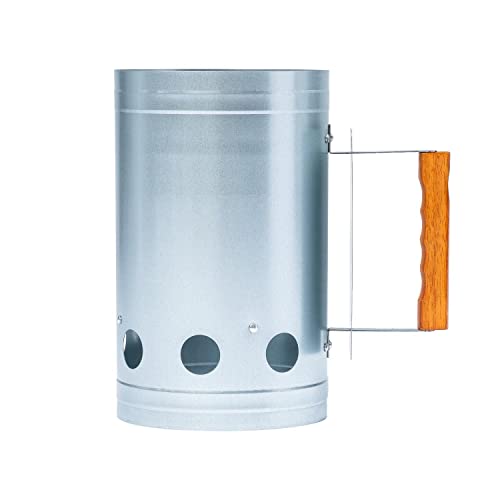
Lighting charcoal without lighter fluid petroleum odors is essential for authentic barbecue, and the Char-Griller Charcoal Grill Chimney Starter with Quick Release Trigger makes coal ignition both faster and substantially safer. Designed as a dedicated charcoal firing canister, this 12-inch accessory is built for backyard grillers, weekend BBQ enthusiasts, tailgaters, and campsite pitmasters who want ready-to-cook coals without hassle. Rather than lifting and inverting a top-heavy cylinder of flaming embers, this model uses a bottom trapdoor trigger that drops the fuel right where you want it.
In real-world barbecue setups, dependable fuel management sets the tone for your cook. This chimney utilizes natural vertical convection to draw oxygen upward from a single fire starter cube or crumpled paper base. Within fifteen to twenty minutes, an entire load of briquettes or lump charcoal glows with an even grey ash layer. Fast startup times mean you reach searing temperatures quickly for thick steaks and smash burgers, or establish a clean-burning coal bed for smoking ribs and brisket without chemical contamination.
Build quality focuses heavily on operator safety and heat management. The steel body measures 12 inches tall by 7.75 inches wide, holding sufficient fuel to power a two-zone kettle arrangement or prime an offset smoker firebox. A heavy-duty heat shield is placed between the metal barrel and the molded ABS handle, preventing skin exposure to blistering radiant temperatures. The trigger mechanism functions securely, ensuring the bottom grate stays shut while carrying coals and drops open cleanly upon trigger squeeze.
Handling and cleanup remain straightforward. Operation takes zero assembly: place a paraffin cube or wood wool on your grill grate, fill the chimney with charcoal, light the base, and let physics do the rest. Once lit, position the cylinder over your fuel grate and pull the handle trigger. Cleaning only requires tapping out leftover ash and keeping the hinge free of debris. While its fixed cylindrical shape does not fold flat for ultra-compact packing, the 2.9-pound weight transports effortlessly inside an outdoor gear bin or grill cart shelf.
A practical limitation involves the moving release door, which needs a quick visual check before loading unlit coals to ensure the latch is fully caught. For patio pitmasters, offset smoker fans, and tailgaters seeking a cleaner and far less clumsy way to dump red-hot coals, this Char-Griller quick-release chimney is an affordable, practical upgrade for your outdoor cooking routine.
Efficient charcoal management begins with an even, thorough burn. The Char-Griller chimney relies on continuous bottom-to-top airflow that accelerates combustion across every piece of fuel. Whether you prefer dense hardwood lump charcoal for high-heat searing or uniform briquettes for consistent kettle cooking, the chimney ensures uniform ember development across the entire load.
Lighting fuel without petroleum accelerants preserves pure wood smoke flavor on poultry, pork, and beef. Because the unit drops fuel straight down through the bottom door, you can easily target charcoal baskets, vortex funnels, or split fire zones without scattering hot ashes across your clean grilling grates.
Traditional charcoal chimneys require twisting your wrists and inverting an open canister of thousand-degree coals, which frequently produces floating sparks and erratic spills. The integrated trigger release on this model keeps the canister oriented upright at all times, drastically reducing flare-up hazards and accidental coal scatter.
A thick metal heat shield blocks direct thermal radiation from reaching your fingers, while the ergonomic ABS handle provides a confident grip even while wearing heavy leather barbecue gloves. This stable design makes pouring fuel into deep smokers, ceramic cookers, or small portable tailgating grills far safer and more predictable.

Pros
- Extremely high heat output (up to 1,200°F) for excellent searing
- Long burn time (up to 4 hours) with steady infrared heat
- Clean burning with minimal smoke and no chemical taste
- Reusable multiple times with simple care—eco-friendly and cost-effective
Cons
- Requires a chimney starter or long lighter to fully ignite (not instant-light)
- Higher upfront cost compared to standard charcoal briquettes
- 11-pound bag is moderate weight—may need more for large gatherings
The Bincho Grill Binchotan Charcoal is a premium Japanese hardwood lump charcoal designed for serious outdoor cooks who value precision heat and clean flavor. Unlike standard charcoal, this binchotan is made from White Oak fired in traditional kilns to achieve around 95% carbon purity. It burns at temperatures up to 1,200°F, delivering intense, steady infrared heat that's perfect for yakitori, steaks, seafood, and vegetables. The virtually smokeless and odorless burn means your food tastes exactly like it should—no chemical aftertaste or overwhelming smoke.
This charcoal is ideally suited for backyard grillers, BBQ enthusiasts, and patio cooks who want restaurant-quality results at home. It's also a great choice for tailgaters and campers who value portability and efficiency, though you'll need a proper starter method like a chimney or electric lighter. The 11-pound bag provides enough fuel for several cooks, and because it's reusable, you can extinguish partially used coals and relight them later—a real money-saver over time.
In real-world use, the heat consistency is outstanding. Once lit, binchotan holds a stable temperature for up to 4 hours, which makes it excellent for both fast grilling (burgers, hot dogs) and low-and-slow cooking (kebabs, whole fish). The high heat creates a beautiful sear on meats while keeping the interior juicy. Because it burns so cleanly, you can grill on a patio or balcony without bothering neighbors with excessive smoke or odor.
Build quality is top notch—the charcoal pieces are dense and uniform, breaking down slowly compared to typical lump charcoal. There's no dust or small fragments that waste fuel. However, lighting does take patience. You'll need a chimney starter or a long-handled lighter; binchotan isn't self-lighting. Once lit, it glows evenly and produces minimal ash, making cleanup easy. Just let the coals cool, shake off the ash, and store them for the next cook.
One realistic limitation is that binchotan is more expensive per pound than standard charcoal. But given its reusability and superior performance, many outdoor cooks find it worth the investment. Another consideration: the 11-pound bag is a moderate size. For large backyard parties or cooking for a crowd, you might need two bags. For everyday grilling or small gatherings, it's plenty.
Overall, The Bincho Grill Binchotan Charcoal is a top-tier fuel for anyone serious about grilling. If you enjoy the art of yakitori, want clean heat for delicate proteins, or simply appreciate a longer-lasting, hotter-burning charcoal that's reusable, this is an excellent choice. It pairs beautifully with Japanese-style grills but works equally well on standard kettle grills or kamado cookers. Just give yourself extra time for lighting, and you'll be rewarded with some of the best grilling results you've ever had.

Pros
- 100% natural hardwood with no fillers or chemicals for clean flavor.
- Easy to light even without lighter fluid, saving time and hassle.
- Consistent heat distribution helps avoid hot spots and uneven cooking.
- Low smoke production means less irritation and better visibility while grilling.
Cons
- The 5 lb bag is relatively small, so it may not be enough for large gatherings or long smoking sessions.
- Log style pieces can vary in size, which might require breaking for smaller grills or fire pits.
- Some users may prefer lump charcoal over log style for faster ignition and higher heat output.
TEK All Natural Hardwood Charcoal is a solid choice for anyone who values clean, natural fuel for their outdoor cooking. This log-style charcoal is made from 100% hardwood with no additives, binders, or chemicals. It's designed to light easily, burn hotter, and last longer than standard briquettes while producing minimal smoke. Whether you're firing up a backyard grill, packing for a camping trip, or tailgating before the big game, this charcoal aims to deliver consistent performance without the fuss.
For backyard grillers and BBQ enthusiasts, the even heat distribution is a standout feature. You can sear steaks with confidence, grill burgers for a crowd, or set up a two-zone fire for low-and-slow cooking. The low smoke output means fewer flare-ups and a more pleasant cooking experience, especially when entertaining guests on the patio. The 5-pound bag is lightweight and easy to carry, making it a practical option for quick weeknight dinners or weekend cookouts.
Campers and RV owners will appreciate the portability and ease of lighting. No need for lighter fluid or a chimney starter if you're in a hurry – just light a few pieces and you're ready to cook. The long burn time of up to five hours means you can grill a full meal or even do some foil-packet cooking without constantly adding more charcoal. It's also a great fit for portable grills and fire pits where space and fuel efficiency matter.
Build quality is straightforward – it's natural hardwood, so what you see is what you get. The log style pieces are sturdy and hold their shape during burning, which helps maintain airflow and heat consistency. There are no grates or moving parts to worry about, and cleanup is as simple as disposing of ash. The bag itself is resealable, which keeps the charcoal dry and ready for your next cookout.
One realistic limitation is the bag size. At 5 pounds, it's best suited for smaller grills or shorter cooking sessions. If you're planning to smoke a brisket or feed a large party, you'll likely need multiple bags. Also, the log shape may not fit neatly into all charcoal baskets or small grills, so you might need to break a few pieces. But for most everyday grilling, camping, or tailgating needs, this charcoal performs admirably.
Overall, TEK All Natural Hardwood Charcoal is a reliable, eco-friendly fuel option that balances convenience with performance. It's ideal for backyard cooks who want natural flavor without chemical aftertaste, campers who need a hassle-free fire, and tailgaters who value portability and quick heat. If you're looking for a clean-burning charcoal that delivers consistent results, this bag is worth adding to your outdoor cooking gear.
Pros
- All-stainless steel build withstands high heat and resists rust far better than painted steel chimneys.
- Heat-shield handle stays cooler during use, though heat-resistant gloves are still recommended for safety.
- Works with all charcoal types, especially effective for lighting stubborn binchotan without lighter fluid.
- Compact and well-balanced design fits easily on camping stoves or grills, with good airflow for quick ignition.
Cons
- At 3.5 pounds, it's a bit heavier than some aluminum chimneys, which may matter for ultralight campers.
- No included lid or cover for storing charcoal inside; it's strictly a lighting tool.
- The size may be too small for large backyard grills that need a full chimney of briquettes for high-heat searing.
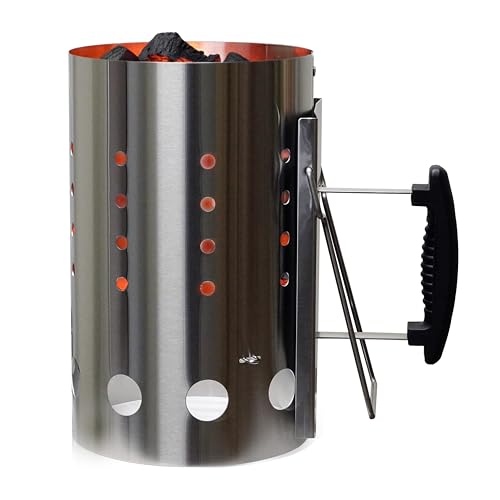
If you've ever struggled to light binchotan or dense lump charcoal without lighter fluid, you already know the frustration. The Bincho Grill Stainless Steel Charcoal Chimney Starter is built specifically to solve that problem. Unlike typical painted steel chimneys, this one is made from uncoated, unplated stainless steel that resists rust and won't peel or burn off over time. It handles the extreme heat of binchotan without warping or degrading, which is a major advantage for anyone who cooks with high-temperature Japanese charcoal.
This chimney is best suited for backyard grillers who want cleaner-tasting food, BBQ enthusiasts who prefer lump charcoal, and campers or tailgaters who need fast, reliable ignition without liquid starters. The heat-resistant handle with an integrated metal shield helps cut down on radiant heat, making it safer to shake and pour hot coals. That said, you'll still want a good pair of heat-resistant gloves for double protection. The secondary metal handle on the side gives you extra control when transferring coals, which reduces the chance of spills near your cooking area.
In real-world use, the chimney lights charcoal evenly and quickly. The 7.5-inch diameter and 11.75-inch height provide enough airflow to get a full load of coals glowing in about 15-20 minutes, depending on the type. For binchotan, you'll need a bit more patience, but it works far better than stacking them in a grill without a chimney. The stainless steel retains heat well, so the coals stay hot as you pour them into your cooker. That means consistent searing temperatures for steaks or burgers on a weekend BBQ, and even heat for low-and-slow cooks if you're using lump charcoal in a kamado or offset smoker.
Build quality stands out here. The stainless steel is thick enough to resist dents from routine use, and the bottom grate is welded securely. Because it's unpainted, there's no risk of toxic fumes from burning paint, which is a common issue with cheaper chimneys. The rust resistance makes it a good choice for outdoor storage, though you'll still want to keep it dry between uses. There are no wheels or folding legs on this chimney, but that's not expected for a tool this size. Portability is decent, as it fits easily into a camping bin or tailgate kit alongside your grill and tongs.
Setup is straightforward: fill the top with charcoal, crumple newspaper or use a fire starter in the bottom chamber, and light. Cleanup involves dumping ash and occasionally brushing out the interior. The chimney has no moving parts, so maintenance is minimal. One limitation is its capacity. At 7.5 inches wide, it holds enough for a small to medium-sized grill session, but if you're cooking for a crowd on a large kettle or offset, you may need to run two loads. Also, the lack of a bail handle means you have to grip the main handle and the secondary handle for stable pouring, which can feel awkward at first.
Overall, this is a well-built, purpose-driven chimney for anyone serious about using quality charcoal without chemical starters. It excels with binchotan and lump, which many grills struggle to light evenly. If you're a backyard griller who appreciates durability and clean flavor, or a camper who wants a reliable fire-starting tool, The Bincho Grill chimney is a practical investment. Pair it with a good set of long tongs and heat-resistant gloves, and you'll have a fast, safe charcoal-lighting setup for years of outdoor cooking.

Pros
- Classic Weber kettle design delivers great charcoal flavor in a portable package
- Solid build with porcelain-enameled steel resists rust and weather
- 22-inch grate offers enough space for 13 burgers using a Weber press
- Two dampers allow excellent temperature control for searing or smoking
Cons
- No built-in thermometer means you'll need an external one for accurate temps
- Relatively heavy at 28.5 lbs, not ideal for long hikes
- A bit small for cooking for large parties of more than 6-8 people
The Weber Jumbo Joe Premium Charcoal Grill is essentially a portable version of the legendary Weber kettle, and that alone makes it a compelling option for outdoor cooks who value real charcoal flavor on the go. With a 22-inch diameter cooking grate, it bridges the gap between a full-sized backyard grill and a small portable unit, making it perfect for tailgating, camping, patio dinners, or weekend BBQs. If you've ever wished you could take that classic kettle experience with you, this is the grill you've been waiting for.
Who is the Jumbo Joe built for? Honestly, it suits a wide range of outdoor enthusiasts. Backyard grillers will appreciate the familiar Weber cooking performance, while campers and RV owners will love the portability and durable build. Tailgaters can fire it up in the parking lot and serve up burgers and brats for a crowd, and patio cooks can keep it handy for quick weeknight dinners without needing a massive grill setup. The 22-inch grate holds up to 13 burger patties (using a Weber press) or a small brisket, so it's practical for small gatherings and family meals.
In terms of real-world cooking performance, the Jumbo Joe delivers the same heat consistency and smoke flavor you'd expect from a larger Weber kettle. The porcelain-enameled lid and bowl retain heat exceptionally well, which means you can sear steaks hot and fast or close the dampers down for low-and-slow smoking. The rust-resistant aluminum dampers allow precise airflow control, so managing temperatures for different cooking styles is straightforward. Expect good charcoal efficiency too - with proper damper management, a single load of charcoal will handle most cooking sessions without needing to add more fuel. Flare-ups are generally manageable with the adjustable dampers, though as with any charcoal grill, keep a close eye on fatty meats.
Build quality here is typical Weber: sturdy, weather-resistant, and built to last. The porcelain-enameled steel lid and bowl resist rust and peeling, so the grill can sit outside in the elements without falling apart quickly. The plated steel cooking grate is durable and easy to clean, and the aluminum ash catcher makes ash disposal tidy and efficient. The lid hook is a nice touch - slide the lid onto it instead of laying it on the ground, which keeps dirt and debris away. The heat shield on the lid handle is practical for adjusting or checking food without burning yourself. Portability is aided by all-weather wheels, but note that at nearly 29 pounds, it's not a lightweight backpacking grill. It rolls easily on level ground, so moving it around the patio or rolling it to the car is manageable.
Setting up the Jumbo Joe is straightforward - it comes mostly assembled, with just a few parts to attach. Transport is aided by the two wheels and a sturdy handle, but you'll need some space in your vehicle for the 24 x 38 x 10 inch box. Cleanup is largely thanks to the removable ash catcher and the smooth porcelain surfaces that wipe down easily. Storage isn't too demanding either; it can be left on the patio or stored in a garage or shed without taking up a huge footprint. Realistically, the main limitation is the lack of a built-in thermometer, so you'll want to invest in a quality external thermometer to monitor cooking temperatures, especially for smoking. Also, while it's portable, it's not ideal for backpackers or long hikes due to the weight. For car camping, tailgating, or patio use, though, it's perfect.
Overall, the Weber Jumbo Joe Premium Charcoal Grill offers a fantastic balance of cooking performance and portability. It's a versatile tool that can handle everything from quick burgers to a slow-smoked pork shoulder, and its build quality means it will serve you for many seasons. If you love the flavor of charcoal and want a grill that can travel with you, this is a smart investment. It's not the cheapest option out there, but for the combination of Weber reputation, heat retention, and durable construction, it's well worth the price. Whether you're tailgating at the game, camping at the lake, or just cooking on the patio, the Jumbo Joe delivers real BBQ results.
The Jumbo Joe excels at high-heat searing - the porcelain-enameled bowl and lid hold heat well, and with the dampers fully open, you can get the coals roaring hot for a perfect crust on steaks and burgers. For low-and-slow cooking, close the dampers down to about a quarter open; the grill will maintain a steady 250-300F range suitable for ribs, chicken, or a small brisket. Smoke flavor is excellent because you're using real charcoal, and you can add wood chunks for extra aroma. The 22-inch grate gives you a two-zone cooking setup - pile coals on one side for direct heat and leave the other side cooler for indirect cooking. This flexibility lets you sear then finish, or cook larger items like a whole chicken without direct flame. Fuel efficiency is good; with a full chimney of charcoal, you can cook for 2-3 hours at low temps before needing to add more briquettes.
Essential Strategies for Charcoal Placement and Fire Management
Arranging charcoal correctly is the single most important mechanical factor in controlling fire intensity, radiant heat, and cooking speed. Rather than viewing the firebox as a uniform heating element, skilled grillers treat charcoal placement as a way to engineer distinct temperature zones across the cooking grate. Matching the physical distribution of glowing embers to your target ingredients ensures that delicate items cook thoroughly without scorching while steaks receive the blistering contact needed for a crisp crust. Mastering these fundamental coal layouts gives outdoor cooks complete control over both rapid sears and lengthy barbecue sessions.
The Physics of Direct and Indirect Heat Zones
Direct heat occurs when food rests immediately above glowing charcoal, absorbing intense radiant heat alongside rising convective currents. This intense thermal contact produces rapid surface browning and caramelizes outer marinades, making it ideal for thin steaks, burger patties, and skewers. Leaving delicate ingredients over direct embers for too long inevitably causes scorching and bitter carbonization before the interior cooks through. Managing direct heat requires constant monitoring because rendered meat fats dripping directly onto red-hot coals can trigger sudden grease flare-ups.
Indirect heat shifts ingredients away from the active charcoal bed, relying on circulating air currents trapped beneath the closed grill lid. This convective flow functions much like an outdoor oven, transferring gentle thermal energy without exposing proteins to blistering radiant hotspots. Whole chickens, thick pork roasts, and bone-in ribs thrive in indirect zones where collagen breaks down smoothly without drying out outer layers. Establishing both direct and indirect zones on the same fuel grate gives cooks an immediate escape route whenever searing meat threatens to burn.
Engineering the Two-Zone Fire Configuration
The two-zone fire setup remains the most practical and versatile arrangement for everyday backyard cooking. To construct this layout, bank all preheated charcoal tightly against one half of the lower fuel grate while leaving the opposite half completely bare. This intentional asymmetry divides the cooking surface into a high-heat searing station on one side and a gentle convection zone on the other. A two-zone arrangement eliminates the guesswork of heat management because moving food across the grate instantly raises or lowers cooking intensity.
Thick steaks benefit greatly from a reverse-sear technique executed entirely within a two-zone configuration. The meat cooks gently on the indirect side until internal temperatures approach the desired target, and then shifts over the hot coals for a final sear. Cookers featuring generous bowl dimensions, such as the Weber Jumbo Joe Premium Charcoal Grill, provide ample lateral separation between the glowing coals and the cooler indirect area. Keeping a safe buffer zone between your food and the fuel prevents stray embers from scorching delicate edges during the indirect phase.
Spreading an Even Coal Bed for High-Heat Direct Searing
An even charcoal bed serves cooks best when every square inch of the cooking grate requires consistent, aggressive heat. Spreading preheated coals in a uniform layer across the lower fuel grate creates a balanced thermal field from edge to edge. This arrangement suits quick-cooking foods that require ten minutes or less, including thin skirt steaks, hot dogs, and sliced vegetables. Because the entire basin generates radiant heat, food must be turned frequently to promote balanced browning without localized burning.
Creating this uniform layer requires pouring hot coals into the center of the grate and leveling them with long-handled tongs. Charcoal pieces should touch lightly to maintain thermal transfer while leaving small air gaps that allow oxygen to rise from below. Overfilling the grate with multiple stacked layers of fuel can restrict airflow and produce excessive surface temperatures that incinerate food. A single, tightly consolidated layer of briquettes or lump fuel provides plenty of searing energy for batches of burgers or flatbreads.
The Charcoal Snake and Ring Methods for Low and Slow Smoking
Smoking large roasts, briskets, and pork shoulders requires stable low temperatures that standard charcoal piles cannot sustain without constant intervention. The charcoal snake method solves this problem by arranging unlit briquettes in a curved chain along the outer edge of the fuel grate. Stacking the briquettes two rows wide and two rows high creates a continuous semicircular fuse that burns gradually over several hours. Placing a small cluster of lit coals at one end of the chain starts a slow, progressive burn that creeps steadily around the perimeter.
As glowing embers slowly ignite adjacent unlit coals, ambient grill temperatures remain steady between low smoking thresholds without sharp spikes. Placing a water pan in the empty center of the grate stabilizes chamber humidity and catches dripping drippings before they cause flare-ups. Outdoor cooks seeking rich aromatic profiles during these extended cooks can place smoker boxes for outdoor grills or seasoned hardwood chunks directly on top of the unlit snake. This setup releases steady, measured smoke during the initial hours of cooking while avoiding the acrid soot caused by unventilated wood fires.
Fuel Geometry and Packing Density Across Different Charcoal Types
The physical shape and composition of your charcoal dictate how tightly individual pieces should sit within the grill bowl. Standard manufactured briquettes feature uniform pillow shapes that pack evenly, establishing predictable airflow channels and consistent burn times. In contrast, natural lump charcoal such as TEK All Natural Hardwood Charcoal consists of irregular carbonized timber chunks that burn hotter and light faster than pressed briquettes. When arranging natural lump fuel, place larger dense chunks near the bottom intake and pack smaller pieces above to maintain open draft channels.
Ultra-dense fuels such as The Bincho Grill Binchotan Charcoal possess high carbon density and generate steady, flameless infrared heat for hours. Because binchotan charcoal produces minimal smoke and burns with intense radiant efficiency, chefs arrange the logs tightly in compact yakitori-style troughs. When grilling delicate appetizers such as marinated pork skewers, a concentrated, tight row of embers provides blistering infrared heat without burning sweet basting glazes. Matching coal spacing to fuel density ensures optimal oxygen exposure while preventing fuel from burning out prematurely.
Lighting Fuel and Transferring Coals with Chimney Starters
Chimney starters offer the cleanest and most dependable method for igniting charcoal without volatile lighter fluids. Models like the BBQGuys Signature Chimney Starter utilize a vertical cylinder design that channels rising heat from bottom starter cubes directly through the charcoal column. As air pulls upward through bottom intake perforations, the entire fuel charge ignites evenly from the bottom layer to the top embers. Once the top coals display a delicate dusting of light gray ash, the fuel has reached optimal temperature and is ready for transfer.
Pouring glowing charcoal requires firm handling, heat-resistant gloves, and clear focus to keep the fuel bed consolidated. Modern starters equipped with trigger releases, including the Char-Griller Charcoal Grill Chimney Starter, drop lit coals straight downward onto the fuel grate without tipping. Heavy-duty units crafted from unplated stainless steel, such as The Bincho Grill Stainless Steel Charcoal Chimney, withstand extreme temperatures while secondary handles provide two-handed pouring control. Depositing lit coals directly into your planned configuration avoids unnecessary rearranging and preserves the organized structure of your fire bed.
Managing Draft and Air Vent Alignment Relative to Coals
Charcoal placement works in close partnership with incoming oxygen flow and outgoing combustion draft. Ambient air enters through the lower bowl intake vents, feeds the burning coals, and escapes through the upper exhaust damper on the grill lid. Positioning the lid exhaust directly above the indirect cooking zone forces heated air and wood smoke to sweep across the food before venting. This directional drafting maximizes convective heat transfer around roasting meats while preventing heat from escaping prematurely over the active fire.
Regulating the lower intake damper controls overall fire temperature, while the upper exhaust vent governs draft velocity. Opening the bottom damper invites fresh oxygen and causes the coals to burn hotter, whereas closing it down restricts combustion and lowers temperatures. Cooks should avoid closing the top exhaust damper completely during an active cook, as trapped combustion gases impart an unpleasant creosote flavor to food. Make minor damper adjustments and wait ten to fifteen minutes to observe how the temperature responds before altering vent openings further.
Outdoor Safety Protocols and Strict Garage Warnings
Fire safety and toxic gas prevention must guide every phase of charcoal handling, placement, and cooking. Burning charcoal produces significant volumes of carbon monoxide, an odorless and invisible gas that quickly accumulates to lethal levels in enclosed structures. Never operate a charcoal grill inside a garage, carport, shed, camper, or enclosed patio, even if roll-up garage doors and side windows are wide open. An open garage door does not provide sufficient ventilation to disperse toxic carbon monoxide gas or prevent airborne embers from igniting structural materials.
Charcoal grills belong exclusively outdoors on stable, non-flammable ground situated at least ten feet away from combustible exterior walls and wooden railings. Compact cookers such as portable tabletop charcoal grills or disposable trays still require flat, heat-resistant surfaces to prevent scorch damage to patio furniture. Flying sparks and grease flare-ups can occur unexpectedly, making it essential to keep long tongs, heat-resistant gloves, and a fire extinguisher nearby. Establishing clear outdoor clearances protects your household and surrounding property from preventable fire hazards.
Fuel Replenishment Techniques and Ash Clearance During Long Cooks
Extended barbecue sessions often require introducing fresh fuel to maintain target grate temperatures as the original coals degrade. In a two-zone setup, push spent coals together with metal tongs before adding new briquettes along the active edge of the bed. Adding preheated coals from a secondary chimney starter prevents sudden chamber temperature drops and avoids the sour smoke produced by cold fuel. If adding unlit charcoal directly, incorporate small batches gradually so the glowing embers ignite new coals without smothering the fire.
Fine ash inevitably accumulates beneath the fuel grate as charcoal burns, forming an insulating blanket that blocks incoming air vents. Restricted bottom airflow starves glowing coals of oxygen, leading to sluggish temperatures and premature fire extinction. Grills equipped with integrated aluminum ash sweeps allow outdoor cooks to clear debris into lower collection buckets without removing the hot cooking grate. For basic charcoal basins, gently tapping the fuel grate with fire-safe tongs dislodges settling ash and restores vital oxygen pathways to the coal bed.
Safe Post-Cook Shutdown and Fuel Preservation Protocols
Safely shutting down your charcoal cooker protects your surroundings and preserves unburned fuel for upcoming grilling sessions. When cooking finishes, close both the upper lid exhaust damper and the lower intake vents completely to cut off all oxygen supplies. Depriving the firebox of fresh air suffocates the embers naturally, extinguishing the fire without washing away ash or causing steam burns. Dense hardwood lump charcoal and high-carbon binchotan can be smothered, cooled, and reused during your next outdoor barbecue.
Never pour cold water directly over hot coals inside a ceramic or enameled metal grill, as rapid thermal shock can crack the finish or warp the bowl. Keep the grill lid securely latched and allow the cooker to cool undisturbed for at least twenty-four to forty-eight hours before handling internal components. Transfer thoroughly cooled, inert ash into an airtight metal container and moisten it lightly with water before final outdoor disposal. Proper post-cook protocols ensure your grilling station remains safe, orderly, and primed for dependable performance during your next meal.




Write Your Review
No reviews yet. Be the first to share your experience!