
Mastering heat balance transforms fresh chili peppers from fiery raw bites into tender, smoky appetizers with the right amount of char. Learning how to grill jalapenos requires paying close attention to direct versus indirect heat zones so the skins blister without scorching the flesh. Backyard cooks often face flare-ups or messy cheese spills when preparing stuffed variations over open flames. Choosing the right cooking surface or rack stabilizes the peppers and prevents filling loss during prolonged roasting.
Whether you cook on a gas setup, a pellet smoker, or a traditional charcoal grill setup, managing airflow and temperature keeps your cookout running smoothly. Dedicated accessories like upright stainless steel roasters help keep fillings upright while circulating heat evenly around each pepper. Understanding pepper prep, heat settings, and proper coring tools makes it simple to turn out consistent results for family meals or weekend patio gatherings.
Pros
- Large 36-hole capacity lets you cook a full batch of stuffed peppers or wings in one go
- Stainless steel build is durable and easy to clean after greasy cooks
- Curved handles stay cool enough to grip with mitts for safe transport
- Includes a handy corer tool that saves time on prep
Cons
- Smaller drumsticks or wings may wobble in the holes if not positioned carefully
- Rack is not non-stick, so some foods may stick if not oiled or preheated
- Only one size available; may not fit very small or very large grills
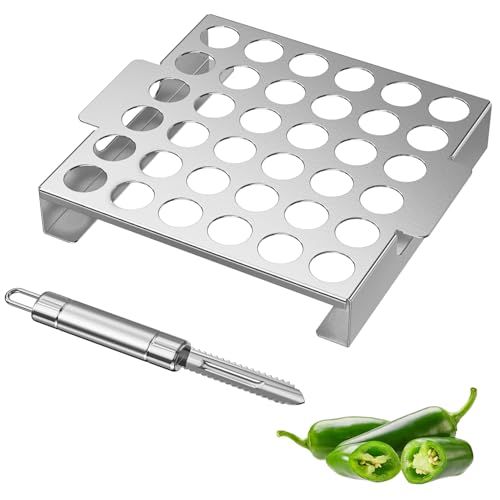
If you love grilling stuffed jalapeno poppers or want to cook a dozen chicken drumsticks without flipping each one individually, the Skyflame Jalapeno Grill Rack is a smart add-on for your outdoor cooking setup. This stainless steel rack holds up to 36 pieces upright, letting heat and smoke circulate evenly around every pepper or drumstick. It works on charcoal grills, gas grills, pellet smokers, and even in your oven, so it's versatile enough for backyard BBQs, tailgating parties, or campsite cooking.
This rack is best suited for backyard grillers who like to entertain, tailgaters who want to serve a crowd quickly, and campers who want a compact way to cook multiple items at once. It's also great for RV owners who have limited grill space but still want to make stuffed peppers or party wings. The included chili pepper corer tool makes prep fast and clean, so you can focus on seasoning and stuffing.
In real-world use, the rack performs well for even cooking. The upright design allows heat to circulate around each piece, so you get consistent doneness without having to rotate. For jalapeno poppers, the peppers stay upright and hold their filling nicely. For drumsticks, the meat cooks evenly and the skin crisps up. The stainless steel material heats up quickly and doesn't warp, even on high heat. Cleanup is straightforward: a quick soak and scrub, or a trip through the dishwasher, removes most residue.
Build quality is solid for the price. The stainless steel feels sturdy and resists rust, though it's not heavy-gauge. The curved handles stay cool enough to grab with a mitt, making it easy to move the loaded rack from prep table to grill. The rack is lightweight at just one pound, so it's easy to pack for camping or tailgating. It doesn't fold, but its compact size (9 x 9 x 1.7 inches) fits in most coolers or storage bins.
One realistic limitation is that smaller drumsticks or wings may not sit perfectly upright in the holes. You might need to adjust them or use a bit of foil to keep them stable. Also, the rack is not non-stick, so a light oil spray before cooking helps prevent sticking. The rack is designed for 36 pieces, but if you're cooking for a small group, you can fill fewer holes without issue.
Overall, the Skyflame Jalapeno Grill Rack is a practical tool for anyone who loves making stuffed peppers, chicken wings, or drumsticks on the grill. It's affordable, easy to use, and cleans up well. If you regularly cook for a crowd at backyard parties, tailgates, or campsites, this rack will save you time and effort. Just keep in mind the size of your pieces and give it a quick oil before loading.
Mastering Grilled Jalapenos: Preparation, Heat Control, and Technique
Achieving the ideal texture and smokiness when cooking peppers over open fire comes down to deliberate temperature management and proper physical support. When discovering how to grill jalapenos, outdoor cooks must balance high surface heat to blister tough exterior skins against gentle ambient roasting to soften the interior walls. Stuffed recipes introduce further complexity because melting cheeses and dripping fats can trigger flame bursts that taint the food with bitter soot. Approaching the cook with a clear process protects your appetizers from scorching and preserves bright chili flavor.
Grilling fresh chilis also provides a versatile side dish that complements grilled steaks, smash burgers, and smoked briskets. The natural sugars inside the pepper caramelize under indirect convection heat, mellowing aggressive raw sharpness into savory sweetness. Understanding the specific heating zones of your grill helps you transition smoothly between whole charred peppers and intricate stuffed creations.
Selecting and Prepping Jalapenos for the Grill
Firm, smooth peppers with thick walls offer the greatest structural integrity on hot grill grates. Thin-skinned or soft specimens tend to collapse prematurely under heat, causing savory fillings to spill into the firebox. Look for medium to large chilis of uniform size so that every item cooks at the same rate across your grate. Slight white striations, often called checking or corking, indicate mature peppers that usually carry higher natural sweetness and balanced heat.
Washing and drying the peppers thoroughly prevents surface moisture from creating steam pockets during the initial roasting stage. Inspect the stem ends to ensure they remain intact, as leaving the top cap attached provides a natural barrier when roasting whole. If preparing stuffed peppers, slicing the stem top evenly creates a clean opening for scooping out interior ribs. Always handle peppers with kitchen gloves to keep potent capsaicin oils from contacting sensitive skin or eyes.
Preparing a cold water rinse station for trimmed peppers also helps flush out residual loose seeds before stuffing begins. Shaking out remaining droplets and blotting the chili cavities with paper towels ensures dairy fillings adhere cleanly to inner walls. Taking time during prep prevents soggy interiors and guarantees consistent browning once the heat is applied.
Safe Coring and Deseeding Methods
Capsaicin concentrates primarily in the interior white pith and placenta rather than the green outer flesh. Removing the interior ribbing with a specialized chili corer tool enables quick, clean extraction without puncturing the bottom or sides of the pepper. Serrated coring blades slice through connective fibers cleanly, leaving an intact pepper shell capable of holding cheeses, meats, or seasonings. Standard paring knives can also work, though they increase the risk of piercing delicate chili walls.
Controlling the spice level of the finished dish depends largely on how thoroughly you clear the internal membranes. Scraping away all white ribs produces a mild, roasty pepper that highlights the rich flavor of dairy or pork fillings. Leaving thin strips of placenta behind preserves noticeable heat for diners who enjoy spicy appetizers. Discard the core and seeds immediately into a waste bowl to prevent accidental contact with prep cutting boards or kitchen towels.
Direct Blistering versus Indirect Roasting Techniques
Direct heat cooking suits whole, unpeeled peppers intended for salsas, sauces, or quick charred side dishes. Placing whole chilis directly over glowing charcoal or medium-high gas burners blisters the waxy outer skin rapidly. Turning the peppers every two minutes with long tongs ensures even blackening without burning the tender pulp underneath. Once the skin puffs and chars across all sides, transferring the chilis to a covered bowl traps steam to loosen the skins for effortless peeling.
Indirect heat cooking is the superior method when preparing stuffed jalapenos or bacon-wrapped appetizers. Exposing stuffed chilis to direct flame causes the exterior to burn long before dense cream cheese or ground sausage reaches a safe internal temperature. Establishing a two-zone fire allows you to position peppers away from the heat source where circulating warm convection air cooks them thoroughly. This gentle method renders bacon fat slowly, creating a crisp wrap while preserving the structural form of the pepper.
Managing Fillings and Bacon Wraps Without Flare-Ups
Dense, rich fillings like cream cheese, cheddar, and spiced pork require controlled heat to melt evenly without expanding excessively. Overfilling the chili cavity creates pressure as the dairy warms, forcing hot cheese out of the opening and directly onto your burner guards. Leave approximately one-quarter inch of space below the rim when stuffing peppers to account for thermal expansion. Chilling stuffed peppers in the refrigerator for thirty minutes before placing them on the grate firms the filling and delays rapid melting.
Bacon-wrapped jalapenos present an additional challenge due to rendering pork fat dripping into the fire. Direct exposure to flare-ups deposits acrid soot onto the bacon, ruining the flavor profile of the dish. Wrapping each pepper tightly with a single half-strip of thin-cut bacon provides sufficient pork flavor without excessive grease accumulation. Securing the bacon ends with wooden toothpicks soaked in water prevents curling and keeps the wrap firmly anchored throughout cooking.
Using Vertical Pepper Racks for Superior Stability
Cooking peppers horizontally on flat grates frequently results in rolling, leaking fillings, and uneven charring. Utilizing a dedicated vertical roasting rack solves this problem by holding each pepper upright above the primary cooking grate. A design such as the Skyflame Jalapeno Grill Rack with Handle and Chili corer tool features a 36-hole capacity constructed from stainless steel to resist warping under high temperatures. Its curved side handles make transporting a full batch of peppers to and from a hot cooker straightforward and secure.
Vertical racks also improve heat distribution by allowing hot air to circulate freely around the full perimeter of each chili. Because the peppers stand upright, liquid fillings remain contained inside the cavity rather than draining across your flavorizer bars or burner assemblies. The stainless steel build keeps food from sticking and stands up to repeated scrubbings after grease and cheese exposure. In addition to roasting chilis, multi-hole racks can support chicken drumsticks and wings, making them a versatile roasting platform for busy backyard gatherings.
Temperature Targets Across Gas, Charcoal, and Pellet Smokers
Dialing in the correct ambient cooker temperature ensures that pepper walls tenderize while wraps crisp properly. For indirect roasting on gas or charcoal cookers, aim for an ambient temperature range between 350 and 375 degrees Fahrenheit. At this moderate heat level, bacon renders cleanly within twenty-five to thirty-five minutes while the pepper softens to a tender bite. Monitoring cooking chamber heat using a remote BBQ smoker thermometer helps you verify grate-level temperatures without constantly lifting the lid.
Pellet smokers offer an exceptional opportunity to infuse wood smoke into your peppers prior to crisping the exterior. Setting your pellet grill to 225 degrees Fahrenheit for the first thirty minutes bathes the peppers in clean hardwood smoke. After this smoking stage, increasing the controller setting to 375 degrees Fahrenheit finishes rendering the bacon and browns the exposed cheese. Keeping the cooker lid closed throughout the process prevents heat loss and maintains consistent convection airflow.
Wood Smoke Profiles for Grilled and Smoked Jalapenos
Pairing the right wood smoke with grilled jalapenos creates complex flavor layers that complement rich fillings. Mild fruitwoods like apple and cherry impart a subtle sweetness that balances chili heat without overwhelming delicate dairy. Pecan wood offers a rich, nutty smoke profile that pairs exceptionally well with bacon-wrapped peppers and melted cheddar.
Stronger hardwoods such as hickory and oak deliver bold, traditional barbecue character suited for beef- or sausage-stuffed chilis. Mesquite should be used cautiously, as heavy exposure can turn spicy pepper skins bitter over longer cooking cycles. Adding just one or two small hardwood chunks to charcoal coals provides sufficient aromatic smoke during the half-hour roasting window.
Flat Top Griddle Options for Whole Charred Chilis
Cooking peppers on an outdoor plancha or flat cooking plate provides continuous contact searing that yields incredible blistered flavor. Using a flat top grill with lid lets you press whole chilis flat against seasoned steel while capturing heat under the dome. A splash of neutral oil with high smoke point helps transfer conductive heat evenly across the uneven pepper contours. Covering the sizzling chilis with a basting dome for three minutes traps steam, accelerating internal softening while maintaining a dark, flavorful crust.
Flat top cooking also eliminates the risk of dropped food slipping through cooking grates into the grease tray. You can toss whole chilis with sliced onions, garlic, and coarse salt for authentic street-taco style garnishes. When using a griddle for stuffed halves, placing peppers cut-side down for just ninety seconds before flipping gives the cheese a caramelized crust. Managing griddle surface zones allows you to push finished peppers to a cooler perimeter area while higher-heat searing continues elsewhere.
Troubleshooting Uneven Cooking and Burnt Bottoms
Uneven cooking usually stems from inconsistent pepper sizing or localized hot spots across your grill surface. If the bottoms of your peppers blacken while the upper portions remain raw, the vertical rack may be positioned directly above an active burner. Reposition the rack toward the indirect side of the firebox or place an aluminum heat shield underneath to diffuse direct radiant energy. Rotating the rack halfway through cooking compensates for temperature differentials between the front and back of the cooking chamber.
Burnt or bitter pepper tips occur when small chilis sit too deeply in the rack holes, exposing their tapered ends to direct flame. Selecting uniform peppers that measure at least three inches in length ensures they seat firmly in the rack without protruding excessively below. If cheese filling fails to brown while the bacon finishes crisping, briefly moving the rack toward direct heat can caramelize the tops. Keep a watchful eye during this final browning step, as high sugar or dairy content can scorch within seconds.
Cleaning and Maintaining Stainless Steel Pepper Racks
Cooked cheese, caramelized sugar rubs, and rendered bacon fat naturally bake onto metal roasting racks over high heat. Letting the rack cool completely before handling protects you from serious burns from hot stainless steel. Soaking the cooled rack in warm water with standard dish detergent softens baked residues within twenty minutes.
Using a nylon bristle brush or non-scratch scouring pad removes softened grease from the circular holes without scratching the metal finish. Stainless steel construction tolerates dishwasher cycles well, which strips away lingering oils that could smoke during future cooks. Storing the clean, dried rack alongside your other outdoor grill tools prevents bending and keeps it sanitary for drumsticks or peppers during the next barbecue session.
Post-Grill Resting and Peeling Procedures
Proper resting allows molten cheese fillings to set so they do not squirt out when served. Stuffed peppers removed straight from the heat remain dangerously hot inside and easily burn unexpecting diners. Allow stuffed jalapenos to rest on a heatproof cutting board for five to seven minutes before plating. This brief cooling window stabilizes the interior filling and lets the bacon contract, producing a firm, easy-to-handle finger food.
For whole charred chilis meant for salsas, place the hot peppers into a sealed paper bag or covered glass dish immediately. Trapped residual steam condenses against the blistered skins, softening the outer epidermal layer within ten minutes. Once cooled sufficiently to handle, slip the blackened skins off under a gentle stream of cool water or wipe them with paper towels. The roasted flesh underneath retains deep smokiness and a velvety consistency ready for chopping into salsas or layering onto burgers.
Mastering the art of grilled jalapenos elevates any backyard cookout from ordinary fare to memorable barbecue dining. Whether you prefer quick whole-charred chilis for zesty table salsas or bacon-wrapped stuffed appetizers held firmly in an upright stainless steel rack, steady temperature control remains the cornerstone of success. Investing in proper coring tools, managing two-zone heating setups, and giving cooked appetizers time to rest ensures delicious, mess-free results every time you fire up your grill.




Write Your Review
No reviews yet. Be the first to share your experience!