


Starting an outdoor grill on a windy patio can test anyone’s patience when traditional pocket matches flicker out instantly. A dedicated long-reach grill lighter solves that problem by positioning the flame source far from your hands while delivering a reliable burst of heat. Understanding how does a grill lighter work reveals why these specialized tools manage gas ignition and charcoal lighting far better than everyday fire starters. The core design pairs a mechanical or electrical spark generator with a controlled fuel release, keeping your knuckles safe from sudden flare-ups during ignition.
Whether you are firing up gas burners, lighting charcoal chimneys, or adding wood chips inside dedicated smoker boxes, having the right ignition tool makes backyard cooking safer and smoother. Most utility lighters rely on either pressurized butane gas or rechargeable battery power to create their initial spark. Modern options also feature flexible wands, flame adjustment sliders, and safety locks to handle outdoor weather conditions. Exploring the internal mechanics helps you diagnose lighting issues and pick the most dependable design for your backyard cooking station.



The Mechanics, Physics, and Safe Operation of Grill Lighters
At its core, understanding how does a grill lighter work comes down to coordinating three essential elements: an ignition spark, a controlled fuel discharge, and an extended delivery channel that protects the cook. Unlike pocket lighters designed for close-up use, grill lighters prioritize reach and user safety around combustible gas or charcoal starter fluid. Pressing the trigger initiates a mechanical or electronic sequence that releases fuel a fraction of a second before generating a high-voltage spark. That immediate timing creates a sustained flame at the tip of the barrel while keeping your hands clear of sudden flare-ups.
The Piezoelectric Effect and Mechanical Spark Generation
Most traditional butane utility lighters operate without any batteries, relying instead on a physical principle known as the piezoelectric effect. Inside the handle housing sits a small assembly containing a spring-loaded miniature hammer and a specialized ceramic crystal, typically lead zirconate titanate or quartz. When you pull the trigger, the internal mechanism tensions the spring until a catch releases the hammer with significant force against the crystal face. This sudden mechanical impact alters the internal electrical charge distribution of the crystal lattice, generating a voltage spike that often reaches several thousand volts.
This electric potential travels through an insulated wire running the entire length of the metal stem toward the tip. At the end of the nozzle, the wire terminates just fractions of an inch away from a grounded metal component, creating a tiny discharge gap. When the high voltage reaches this open space, the electrical energy ionizes the surrounding air and jumps across the gap as an electric spark. Models like the VIP Home Essentials – Handi Flame BBQ Grill Click and the Click N Flame BBQ Kitchen Long Reach Lighter utilize this exact mechanical system to generate instantaneous sparks without needing batteries. That mechanical simplicity ensures a reliable spark even after the lighter sits stored across seasons.
Butane Fuel Delivery and Metering Systems
A spark alone cannot maintain a sustained fire, which is where the internal fuel reservoir becomes essential. Grill lighters store liquid butane inside a molded nylon or polycarbonate plastic chamber inside the handle. Butane remains in a liquid state under relatively low pressure, making it safe and compact to store within lightweight handheld tools. The pressure inside the reservoir stays balanced between the liquid fuel at the bottom and a vapor cushion occupying the empty space above.
As you depress the ignition trigger, a mechanical lever lifts the spring-loaded release valve atop the fuel reservoir just a millisecond before the spark triggers. Opening this valve allows the pressurized liquid to vaporize instantly into gas as it escapes into the lower-pressure atmosphere. The gaseous butane travels through a narrow feed tube extending through the metal barrel toward the burner nozzle, mixing with ambient air at the tip. Flame height adjustments are managed by a sliding lever or thumbwheel that compresses an internal needle valve to restrict or expand fuel flow.
Torch Flames Versus Standard Diffusion Soft Flames
Outdoor cooks often encounter two distinct flame styles when selecting a butane lighter: standard soft flames and pressurized torch flames. Soft flame lighters work via a diffusion combustion process, where pure butane gas exits the nozzle at gentle pressure and relies entirely on surrounding air for oxygen. This produces the familiar yellow, candle-like flame that burns relatively cool and moves freely with air currents. Soft flames are well suited for reaching into enclosed burner tubes where high gas velocity might otherwise extinguish the initial spark.
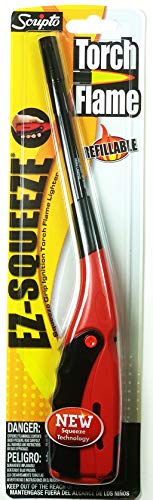
Torch flame models, such as the Scripto Ez Squeeze Torch Flame BBQ Utility Lighter, function on a premixed combustion principle similar to a miniature blowtorch. These tools draw air into the fuel stream through specialized side vents before the gas reaches the combustion orifice, utilizing the Venturi effect. The gas and oxygen mix thoroughly inside an internal mixing chamber under higher pressure before meeting the ignition spark. This engineered mixture burns with a fierce, concentrated blue cone that resists strong wind gusts, although it consumes fuel faster than a standard soft flame.
Flameless Plasma Arc Technology and Battery Operation
Electronic flameless lighters represent a modern departure from traditional fuel-based ignition tools. Instead of relying on butane gas, a model like the GRILLMATIC Windproof, Rechargeable, Flexible Neck houses a compact lithium-ion battery pack and a solid-state circuit board. When activated, the circuit steps up the low battery voltage to several thousand volts at high frequency. This intense electric current is routed to ceramic electrode posts positioned at the tip of the wand.
The high-voltage differential between the electrode tips ionizes nitrogen and oxygen atoms in the air gap, forming an ultra-hot stream of luminous plasma. This electric plasma arc burns significantly hotter than a conventional chemical flame and cannot be blown out by wind, rain, or gusty outdoor conditions. You can use these electric tools to ignite gas burners, campfires, and compact backpacking camping stoves without worrying about running out of liquid fuel on the trail. Built-in microcontrollers automatically cut power after several seconds of continuous ignition to prevent the ceramic tips from overheating and preserve battery life.
Barrel Engineering and Reach Mechanics
The defining structural feature of any grill lighter is its extended barrel, which separates the user from the ignition point. Standard rigid barrels are manufactured from extruded stainless steel or aluminum alloys that shield the internal fuel line and spark wire from thermal damage. This physical separation is vital when lighting large gas grills where lingering gas can cause a sudden ignition burst when sparked. A long shaft ensures your fingers, wrists, and clothing remain safely outside the combustion zone.
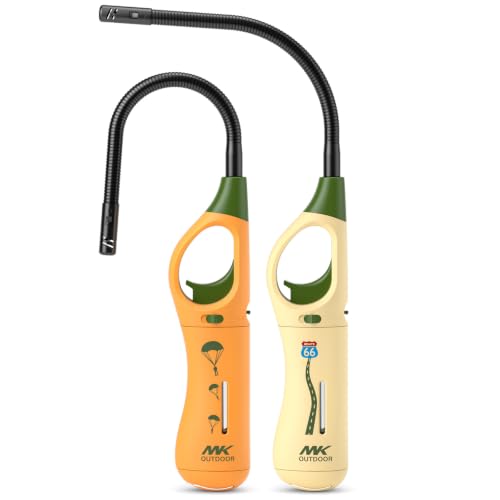
Flexible-neck designs bring another level of mechanical utility to tricky outdoor cooking setups. Units like the MK Lighter, 2-Pack Lighters Long incorporate an articulated metal gooseneck that can bend and hold angles through 360 degrees of rotation. The internal components inside these flexible stems are designed to flex repeatedly without crimping the internal gas line or snapping the high-voltage wire. In addition, heat-resistant ceramic spacers at the tip prevent radiant grill heat from conducting backward into the plastic handle assembly.
Proper Lighting Sequences for Gas and Charcoal Grills
Operating a grill lighter safely requires following a disciplined ignition protocol tailored to your specific fuel source. For gas grills, the single most critical safety step is opening the grill lid completely before attempting ignition. Trapped propane or natural gas beneath a closed lid can accumulate within seconds, creating a dangerous explosive hazard when sparked. Position the lighter tip directly adjacent to the designated burner ignition port before turning the burner control knob to the high position.
Once the burner knob is turned, strike the grill lighter immediately to ignite the escaping gas without delay. If the burner fails to catch within five seconds, turn the control knob back to the off position immediately and wait five minutes with the lid open before trying again. Practicing this patient routine ensures you can safely fire up your cooktop for dishes like authentic Korean beef barbecue without dangerous flare-ups. When lighting charcoal chimneys, insert the long barrel through the lower ventilation holes to ignite starter cubes while keeping your hands clear of rising heat and ash.
Critical Fire Safety and Enclosed Space Hazards
Every outdoor cook must understand the non-negotiable safety boundaries regarding grill placement and ignition. Fuel-burning cooking appliances, including propane, natural gas, charcoal, and wood pellet grills, must never be operated inside a garage, breezeway, carport, or enclosed porch. Operating a fuel grill in an enclosed area creates two severe life-safety threats: rapid carbon monoxide accumulation and intense structural fire hazards. Carbon monoxide is an invisible, odorless gas produced by incomplete combustion that can quickly incapacitate humans and pets.
Many homeowners mistakenly assume that opening a roll-up garage door or running an exhaust fan provides enough ventilation to safely grill indoors. Authoritative safety guidance from fire protection agencies confirms that an open garage door does not provide adequate air exchange to prevent toxic gas buildup or heat accumulation. Rising flare-ups can easily ignite drywall paper, overhead storage items, garage door tracks, and structural rafters within seconds. Grills must always be positioned outdoors in open air, well away from combustible overhangs, vinyl siding, deck railings, and wooden fences.
Troubleshooting and Refilling Butane Utility Lighters
When a butane lighter produces a loud click but fails to produce a flame, the issue usually stems from trapped air, low fuel, or electrode misalignment. Refilling a depleted lighter requires purging old air pockets that block incoming liquid fuel. Turn the lighter upside down to locate the brass inlet valve situated at the base of the handle. Use a small screwdriver or pen tip to press the center pin gently until the hissing sound stops completely, bleeding off all residual air pressure.
Once the chamber is purged, shake a refined butane canister and press its nozzle straight down into the lighter fill valve. Hold the canister firmly in a vertical position for five to ten seconds while observing the fuel window to monitor the rising liquid level. After refilling, do not attempt to ignite the lighter immediately. The rapid expansion of butane causes the handle and internal mechanisms to drop to freezing temperatures, lowering the vapor pressure of the fuel. Wait three to five minutes for the lighter to return to room temperature before testing the ignition.
If a filled lighter still refuses to light, inspect the spark gap at the tip of the metal nozzle. Grease splatter, charcoal dust, and cobwebs can foul the delicate wire electrode or bridge the spark gap. Gently clean the nozzle opening with a dry cotton swab or a quick burst of compressed air to clear obstructions. If the spark wire has been bent out of place, use non-conductive tweezers to reposition the tip roughly an eighth of an inch from the brass fuel jet.
Temperature Sensitivity and Cold Weather Operation
Butane lighters behave very differently depending on the outdoor ambient temperature, which can catch winter grillers by surprise. Pure butane has a boiling point of approximately thirty-one degrees Fahrenheit, meaning it struggles to vaporize into a flammable gas when temperatures dip toward freezing. If you store your lighter outside in a cold deck box during autumn or winter, the liquid fuel will sit sluggishly in the tank without producing sufficient vapor pressure to sustain a flame. Warming the lighter handle in your coat pocket for five minutes before cooking typically restores proper internal pressure.
Torch lighters and electronic plasma units handle frigid winter conditions with far greater reliability. Torch models mix fuel at higher internal velocities, enabling them to ignite colder gas mixtures more readily than standard diffusion wands. Plasma arc models bypass chemical vapor physics altogether, as lithium-ion cells operate effectively in cool air without relying on ambient evaporation. For year-round outdoor cooks living in cooler climates, keeping a reliable electric or torch lighter on hand eliminates cold-weather ignition headaches entirely.
Understanding the mechanical operation behind your grill lighter turns an everyday tool into an easily maintained asset for your outdoor cooking setup. Whether your preferred setup relies on mechanical piezoelectric sparks, pressurized torch jets, or modern flameless plasma arcs, each design fulfills the same primary role of keeping you safe while generating dependable ignition. Inspecting fuel levels, keeping burner tips free of debris, and observing fundamental outdoor safety protocols will ensure smooth, reliable startups for every backyard barbecue session.





Write Your Review
No reviews yet. Be the first to share your experience!