


Uncovering a backyard cooker after a damp winter often reveals flaky orange oxidation across the cooking surface. Many backyard cooks wonder how do you clean a rusty bbq grill without ruining the metal underneath or exposing family meals to toxic chemical residue. Surface corrosion forms quickly when moisture interacts with bare iron, oxygen, and residual salts left over from past cooking sessions. Addressing this buildup promptly keeps the cookbox functional and ensures your food cooks over clean, reliable grates.
Restoring your cooking grates requires understanding the exact metal you are treating, whether you have bare cast iron, porcelain-enameled steel, or stainless bars. Scraping aggressively with improper metal tools can scratch delicate protective coatings, which invites even deeper corrosion down the road. Once you strip away loose flakes and re-season the raw metal, preparing outdoor favorites like a flavorful Korean beef BBQ recipe becomes enjoyable again. Taking the time to restore your grill box preserves your equipment and protects the authentic flavors of your favorite meats.

Pros
- Safe cleaning without wire bristles, protecting your family from accidental ingestion.
- Powerful citrus-based cleaner easily cuts through baked-on grease and carbon buildup.
- Kit includes everything you need: spray, brush, scrubber pads, scraper, and towel, no extra purchases required.
- Works on both hot and cool grills, offering flexibility for different cleaning routines.
Cons
- For extremely charred grates, some elbow grease may still be needed; the cleaner alone won't dissolve heavy creosote instantly.
- Scrubber pads are refillable but replacements are sold separately, adding ongoing cost over time.
- The cookbox scraper is best used on cool surfaces; it may scratch delicate porcelain coatings if used aggressively.
The Citrusafe Complete Grill Cleaning Kit is not your average grill cleaner. It is a thoughtfully assembled set designed to replace the dangerous wire brushes and harsh chemical sprays that many BBQ enthusiasts rely on. Instead, this kit uses a citrus-based degreaser, a nylon brush, heavy-duty scrubber pads, a cookbox scraper, and a microfiber towel to clean your grill safely and effectively. Whether you own a charcoal kettle, a propane gas grill, a smoker, or even a flat top griddle, this kit has the tools to handle the mess.
This kit is built for anyone who takes outdoor cooking seriously. Backyard grillers who fire up the Weber every weekend, campers who throw a grate over an open fire, tailgaters who need a quick cleanup between games, and RV owners who don't want wire bristles scratching their portable grills will all appreciate the safety-first approach. The stars are the Citrusafe Grill Cleaner spray, which uses natural degreasing power from citrus peels to break down grease, and the nylon brush and scrubber pads that work on a cool grill. No more burning off residue or worrying about stray bristles in your burger.
In real-world use, this cleaner shines on moderately soiled grates and cookboxes. Spray it on, let it sit for a few minutes, then scrub with the nylon brush or the heavy-duty pads. The grime dissolves quickly, and the included cookbox scraper reaches into corners that brushes miss. For a neglected grill that has months of caked-on grease, you may need to repeat the process, but the result is a cookbox that looks nearly new. The microfiber towel lifts away remaining residue without scratching porcelain or stainless steel surfaces.
Build quality of the tools is solid. The nylon brush handle is heavy-duty plastic with a comfortable grip, and the scrubber holder accepts the replaceable pads firmly. The scraper has a slim profile that fits into the tight gaps of most grills and smokers. The spray bottle has a trigger that produces a fine mist, covering grates evenly without waste. Everything in the kit is designed to be reused, cutting down on disposable grill wipes and paper towels.
Setup is simple: unpack the items and start cleaning. The spray works right out of the box, and all tools are ready to go. Transport is not an issue since it is a cleaning kit, but the spray bottle and tools fit easily in a garage cabinet or a camping tote. Storage is straightforward: keep the spray away from direct sunlight, and hang the brush and scraper to dry.
Limitations are minor. For grills with extremely heavy carbon buildup (think years of neglect), you may still need to use a metallic scraper or a second application. The scrubber pads are effective but wear out after several uses, and replacement packs are sold separately. Additionally, the nylon brush is not as stiff as wire, so it may take a bit more scrubbing on stubborn spots. Nonetheless, for routine maintenance and even deep-cleaning, this kit is a safe and effective choice. It earns a strong recommendation for any outdoor cook who wants to eliminate the risk of wire bristles and keep their cooking gear in top shape.
The Citrusafe Complete Grill Cleaning Kit comes with five essential items to tackle every part of your grill or smoker. You get a 16oz bottle of Citrusafe Exterior Grill Cleaner (also safe for interior use), a heavy-duty nylon brush with an integrated cookbox scraper, a scrubber handle plus three replaceable scrubber pads, a separate cookbox scraper for tight areas, and a premium microfiber cleaning towel (color may vary). Together, they cover cleaning from grates to hoods to side tables. Everything is manufactured in the USA by Bryson Brothers, a brand focused on safer outdoor cooking products.
For best results, clean your grill when it is cool to the touch. Spray the Citrusafe cleaner liberally onto grates and cookbox surfaces, let it sit for 3-5 minutes to loosen grease, then scrub with the nylon brush or scrubber pads. Use the cookbox scraper for baked-on residue in corners. Wipe away residue with the microfiber towel, then rinse with water if desired. For routine maintenance after each cook, a quick spray and wipe keeps grates looking new. The scrubber pads can be replaced when they become worn; replacement pads are available separately. The spray lasts through many cleanings, making this kit a great value for frequent grillers.
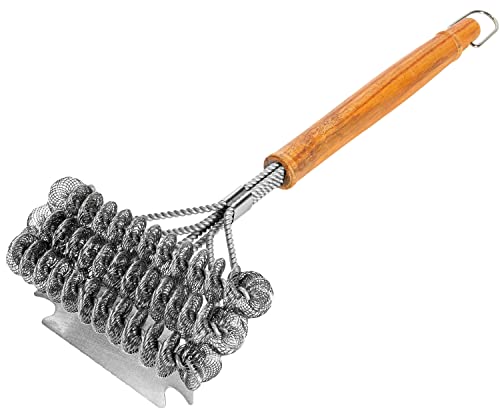
Pros
- Bristle-free design significantly improves safety compared to traditional wire brushes
- 17-inch handle offers good reach and keeps hands away from hot grates
- Works effectively on a variety of grill surfaces without scratching
- High-quality stainless steel bristles and scraper hold up well over time
Cons
- Some users may prefer a shorter handle for more control on small grills
- Wood handle requires occasional oiling to prevent drying out if left in weather
- Does not include a cover or protective sleeve for storage, so bristles may get bent if tossed in a drawer
If you spend weekends grilling burgers for the family or tailgating before the big game, you know that a clean grill is key to great-tasting food. The BBQ-AID bristle free grill brush is a solid choice for anyone who wants to ditch the worry of stray wire bristles ending up on their next steak. This brush uses a dense stainless steel cleaning head that scrapes off burnt-on residue without the safety risks of traditional wire brushes.
This tool is built for the outdoor cook who values both safety and efficiency. The wooden handle gives it a classic look and feels comfortable in your hand, even after scrubbing several grills at a campout. At 17 inches, the length lets you hold the brush with both hands for extra pressure, while keeping your knuckles and fingers a safe distance from the hot grates. That’s a nice feature when you’re cleaning a charcoal grill right after the last burger comes off.
During my uses on a Weber kettle and a gas grill, the brush removed grease and charred bits quickly. The built-in scraper at the end works well on the heavy stuff that gets baked on from low-and-slow smoking sessions. It’s also safe for porcelain and ceramic coated grates, so you don’t have to worry about scratching them. The bristles are stiff enough to do the job but not so harsh that they damage the surface.
Durability wise, the stainless steel part seems solid and rust resistant, and the wood handle feels sturdy. However, because it’s wood, you’ll want to avoid leaving it outside in the rain. A quick wipe down after use and storing it in a dry place will keep it looking good. The brush isn’t the lightest option out there, but the weight gives you confidence that it can handle tough jobs.
For campers and RV owners, this brush is a practical addition to your outdoor cooking kit. It travels well and works on small camping stoves as well as full-size backyard grills. The bristle-free design is especially appealing for families with kids, since you don’t have to worry about loose wires falling into the food. Cleanup after a weekend cookout becomes simpler when you can trust your brush to do the job without leaving behind a mess.
On the downside, the wood handle may need occasional care to prevent cracking if you live in a very dry climate. Also, the brush head is not removable, so if the bristles wear out after a couple of seasons, you’ll need to replace the whole unit. Still, given the reasonable price and the peace of mind from a bristle-free design, this is a smart pick for any outdoor cook who wants a reliable, safe way to keep their grill clean.
A Complete Guide to Removing Rust from Grill Surfaces
Restoring a rusted barbecue requires a systematic approach that balances physical agitation with metal preservation. Surface corrosion occurs naturally when exposed iron binds with ambient oxygen and moisture, creating a brittle layer of iron oxide that interferes with even heat distribution and food safety. Rushing the restoration process with overly aggressive tools can permanently ruin the protective finishes on your grates or puncture thinning burner tubes. By assessing the underlying metal and applying the correct sequence of cleaning, degreasing, and seasoning, you can return most weathered cookers to reliable working order.
Identifying Grate Materials Before Cleaning
Different metals react uniquely to abrasives and acidic cleaning solutions, making material identification your crucial initial step. Bare cast iron grates are heavy, dark, and slightly porous, which makes them highly prone to red rust if left unseasoned. Porcelain-enameled cast iron or stamped steel features a glossy ceramic outer shell designed to seal out oxygen. Stainless steel grates generally resist corrosion, but heat-stressed welds or low-grade alloys can still develop brown surface oxidation over time.
Applying stiff metal scrapers to porcelain grates can cause irreversible damage by cracking the glass-like coating. Once that ceramic layer chips, moisture seeps behind the porcelain, causing the underlying metal to expand with rust and push off larger chunks of enamel. Bare cast iron, conversely, tolerates aggressive wire scrubbing and coarse sandpaper because you can continually rebuild its protective patina. Inspecting your grates under direct sunlight helps you spot chipped enamel or reveal whether the surface is solid metal throughout.
Distinguishing Surface Rust from Structural Failure
Not every rusty component should be salvaged, so a thorough safety inspection must precede any cleaning effort. Light surface rust appears as a powdery, reddish-orange film that brushes away with mild pressure, leaving solid metal beneath. Deep structural oxidation, however, causes metal to flake off in thick sheets, creates visible pitting, or eats entirely through tubular burner walls. Using a dull screwdriver to gently tap suspicious areas helps you gauge the integrity of the underlying steel.
Cooking grates that have developed deep pitting can harbor bacteria and moisture, making sanitary food preparation difficult even after cleaning. If grate rungs have thinned to the point where they sag under weight, replacing them is the safest path forward. Burner tubes demand even stricter scrutiny because small rust perforations disrupt gas flow and cause dangerous flare-ups or delayed ignition. Discarding structurally compromised parts protects your safety and guarantees consistent culinary results.
Mechanical Scraping and Scrubbing Techniques
Mechanical removal provides the fastest way to strip away loose oxidation and carbonized grease from neglected grates. Working outdoors over a drop cloth or old cardboard keeps rust dust off your lawn and patio paving stones. Beginning with a rigid metal putty knife or specialized grill scraper allows you to plane off thick crusts along each grate rung. Applying steady, even pressure along the length of the bars removes the bulk of the debris before you introduce finer abrasives.
Selecting safe scrubbing tools is critical for protecting both your grill components and your family. Tools like the BBQ-AID Grill Brush for Outdoor Grill Bristle Free offer an ergonomic wooden handle and stainless steel scraping power without the health hazards of loose wire bristles shedding into food. The extended handle length provides solid two-handed leverage for stubborn spots while keeping your knuckles safe from sharp grate edges. Pairing a dedicated scraper with abrasive scouring pads allows you to clear the contoured corners between individual rungs.
Severely corroded bare cast iron can benefit from medium-grit sandpaper or a coarse brass wire wheel attached to a cordless drill. Always wear safety goggles and a particulate dust mask during motorized rust removal to avoid inhaling iron oxide particles. Move methodically along every face of the grate until you expose raw, unblemished gray metal across all cooking surfaces.
Chemical Dissolvers, Citrus Cleaners, and Household Solutions
Stubborn rust often clings inside microscopic metal pores where dry scraping tools cannot reach. Chemical conversion and natural acidic baths break the bond between iron atoms and oxygen, turning stubborn rust into a soft slurry that wipes away easily. Standard household white vinegar contains acetic acid, making it an accessible, food-safe bath for submerged cast iron or stainless steel grates. Soaking grates in a shallow plastic tub filled with equal parts water and vinegar for several hours loosens deep oxidation.
Prolonged acid exposure can etch raw metal, so monitor soaking parts closely and avoid leaving cast iron in pure vinegar overnight. Once the rust softens, neutralize the acid immediately by rinsing the grates in a solution of warm water and baking soda. For larger grills where removing parts is impractical, specialized degreasers offer a convenient alternative for breaking down grime before rust treatment. Formulations like the Citrusafe Complete Grill Cleaning Kit utilize citrus peel extracts as natural degreasers that clean surfaces cool without harmful fumes.
Commercial citrus sprays allow you to lift old grease deposits that often shield rust spots from abrasive pads. The accompanying nylon brushes and specialized cookbox scrapers help clear tight corners without scratching sensitive metal coatings. Thoroughly degreasing the cookbox ensures that subsequent rust removers or sandpaper make direct contact with oxidized iron rather than sliding over sticky fat residue.
Re-Seasoning Bare Cast Iron to Prevent Flash Rust
Stripping away rust leaves bare iron completely exposed to ambient air, causing delicate orange flash rust to reappear within minutes. Immediate drying and thermal seasoning are essential to seal the porous iron matrix against moisture. Towel-dry the washed grates vigorously, then place them over low grill heat or inside a household oven set to warm to evaporate residual droplets trapped in the pores. Once the metal is completely dry and warm, it is ready to absorb protective cooking oil.
Choose high-smoke-point cooking oils such as canola, grapeseed, or refined peanut oil to build an enduring non-stick patina. Apply a very thin, uniform coat of oil across every surface using a lint-free rag or paper towel, then wipe away any excess so the grate appears dry. Heating the oiled grates gradually to four hundred degrees Fahrenheit for approximately one hour polymerizes the fatty acids into a durable, slick black finish. Repeating this oiling and baking cycle two or three times establishes a thick defense that halts rust formation entirely.
Neglecting the underside of the grates is a common mistake that invites hidden corrosion beneath an otherwise beautiful cooking top. Moisture and corrosive drippings pool on lower rung surfaces, weakening the metal out of sight. Coating all facets of the casting ensures comprehensive defense and guarantees that your grates remain non-stick and durable across many grilling seasons.
Restoring Stainless Steel and Porcelain Surfaces
Porcelain and stainless steel components demand gentle restoration techniques to preserve their specialized protective layers. Stainless steel relies on a microscopic chromium oxide barrier that passivates the metal against oxidation. Scrubbing stainless grates with non-metallic nylon pads and a mild paste of baking soda and water removes surface discoloration without scratching the chromium shield. Rinse the metal thoroughly with fresh water and dry it with a soft microfiber cloth to prevent water spots.
Porcelain enamel requires even greater care because hard impacts or abrasive scrapers can shatter the glass matrix. If you notice rust weeping from hairline cracks in porcelain grates, scrub the rust away using a soft brass or nylon brush dipped in mild soapy water. While chipped porcelain cannot be re-melted at home, coating the exposed raw spots with edible cooking oil before every cook slows further corrosion. Never plunge hot porcelain grates into cold water, as thermal shock produces extensive fractures that ruin the coating permanently.
Rehabilitating the Cookbox, Burners, and Flame Tamers
Corrosion rarely stops at the cooking grates, often migrating downward into the cookbox interior and gas distribution hardware. Cast aluminum cookboxes resist true red rust but produce white aluminum oxide powder that traps moisture against steel burner mounting hardware. Use a plastic scraper to peel charred grease sheets and oxidation from the cookbox walls into a disposable collection tray. Vacuuming the empty chamber removes loose debris and prevents fine ash from clogging burner ports during reassembly.
Gas burner tubes require careful attention because small rust flakes can obstruct the tiny fuel outlet holes. Detach the burners according to manufacturer guidelines, then gently clean the outer tubes with a soft wire brush to dislodge crust without enlarging the ports. Probing individual clogged holes with a straightened paperclip or a small drill bit held by hand restores balanced flame patterns. Cooks who enhance their setups with add-ons like smoker boxes should remember to clean and dry these metal inserts after every cook, as trapped wood ash absorbs moisture and accelerates local rust.
Inspect the crossover channels and igniter brackets to confirm that corrosion has not compromised electrical grounding or flame transfer between burners. Wipe the exterior surfaces of cleaned burners with a light coat of high-heat cooking oil to repel humidity before reinstallation. Reconnecting burner tubes securely and checking burner alignment ensures safe ignition and uniform cooking temperatures across the entire grill surface.
Preventing Future Rust and Environmental Protection
Preventative maintenance eliminates the need for repeated deep restorations and significantly prolongs the operational lifespan of your barbecue. The primary enemy of outdoor metal is standing moisture combined with atmospheric salts and acidic combustion residues. Brushing grates clean while they are still warm after cooking and wiping them with an oiled rag forms a protective seal that repels humidity between meals. This brief post-cook routine takes less than two minutes and stops oxidation before it can establish a foothold.
Investing in a heavy-duty, water-resistant grill cover shields your equipment from torrential rain, harsh snow, and ultraviolet degradation. Ensure the grill cools down completely before draping a cover over the hood to avoid trapping humid condensation inside the cookbox. Outdoor cooks operating pellet cookers fitted with pellet hopper extension kits or standard hoppers must also monitor moisture levels, since humidity compromises wood fuel and damp pellets rust internal metal auger assemblies. Placing moisture-absorbing desiccant canisters beneath the hood during long winter storage provides an extra safeguard against damp conditions.
Store your cooker under a covered porch or inside a dry garden shed during extreme winter months whenever feasible. Maintaining good airflow around the grill base prevents rising dampness from ground puddles from attacking the lower cart legs and grease trays. Consistent environmental defense keeps your restored barbecue pristine and ready for your next outdoor gathering.
Critical Safety Warnings and Safe Operation
Grill restoration involves mechanical dust, degreasing chemicals, and open flames, requiring adherence to strict safety standards. Never attempt to use toxic industrial chemical rust removers or automotive primers on cooking grates or cookbox interiors. Ingesting toxic chemical residues or chemical fumes baked into food poses severe health hazards to your guests. Rely exclusively on mechanical scraping, food-grade acids like vinegar, citrus degreasers, and edible vegetable oils for any component that contacts food or cooking air.
Gas and charcoal grills must never be operated inside a garage, carport, breezeway, or any enclosed indoor space, even if the overhead doors are wide open. Incomplete fuel combustion produces invisible, odorless carbon monoxide gas that accumulates rapidly to lethal levels in enclosed structures. Intense heat and unexpected grease flare-ups from newly seasoned cookboxes also present severe structure fire hazards near drywall or wooden garage framing. Always wheel your cooker outdoors to an open area at least ten feet away from combustible walls, deck railings, and overhanging tree branches.
Inspect all gas hose connections with a soapy water leak test after reassembling your cleaned burner assembly before firing the grill. Bubbles forming around brass fittings or rubber lines signal a gas leak that requires immediate tightening or hose replacement. Following safe ignition procedures and respecting fire clearances ensures your restored barbecue provides safe, dependable outdoor cooking for years to come.
Restoring oxidized grates and clearing internal cookbox corrosion transforms an uninviting, weathered barbecue back into a dependable culinary centerpiece. Taking time to correctly identify your grate alloy, remove flaky scale with proper non-wire scrapers, and establish a baked oil patina stops decay in its tracks. With regular post-cook cleaning and reliable shelter from outdoor humidity, your grill will deliver clean, exceptional barbecue flavor season after season.




Write Your Review
No reviews yet. Be the first to share your experience!