


Firing up the barbecue often brings immediate excitement, but facing burnt-on grease from a previous cookout can stop dinner preparations in their tracks. Learning how to clean grill grates while hot allows backyard cooks to take advantage of radiant heat to break down stubborn grease before it solidifies into hardened carbon. Whether finishing burgers or scrubbing sauce remnants from sticky glazed barbecue wings, high temperatures help loosen residue before it bonds tightly to cast iron or stainless steel bars. Using the right techniques during warm-up or right after shutdown keeps cooking surfaces sanitary without damaging grate coatings.
Heat makes burnt proteins pliable, yet scraping scorching metal also introduces real safety risks if you rush the process. Keeping cleaning tools, water spray bottles, and heat-resistant gloves arranged on a rolling prep table setup makes it easy to maintain grates right after cooking. Understanding which tools work under high thermal loads and which items melt on contact prevents ruined equipment and keeps stray debris away from food. With a straightforward routine, keeping your barbecue grates spotless becomes a quick, dependable habit every time you cook.

Pros
- Effectively cuts through tough, baked-on grease and char from grills and smokers
- Non-toxic, plant-based formula is safe for use around food and family
- Works on multiple surfaces including grates, stovetops, and ovens
- Pleasant citrus scent instead of harsh chemical odors
Cons
- May require extra scrubbing or soak time for heavily caked-on residue on grill grates
- Spray bottle could be more durable for repeated use in outdoor environments
If you spend any time firing up a grill or smoker in your backyard, you know the drill: great food, great flavor, but eventually a sticky, charred mess on the grates. The CITRATIDE Grill and Oven Cleaner Spray is built to tackle that exact problem. It's a heavy-duty, plant-based citrus degreaser that breaks down baked-on food, grease, and char without the harsh chemical fumes you get from traditional oven or grill cleaners.
This cleaner is powered by natural d-limonene, a citrus solvent that's been used for decades in industrial degreasers. It works by dissolving tough grime on contact, so you can spray it on your BBQ grates, smoker racks, or even your stovetop and let it do the heavy lifting. Because it's non-toxic and free from caustic chemicals, it's safe to use in kitchens and around food prep areas. That's a big plus for anyone who cooks a lot and doesn't want chemical residue near their next meal.
The 32-ounce spray bottle is a practical size for regular use. It's not a one-and-done cleaner; you'll likely need it after every few cooking sessions, especially if you're a fan of low-and-slow smoking or high-heat searing. The spray nozzle delivers a good, even mist that covers grates and surfaces without wasting product. For heavily caked-on residue, you may want to let it sit for a few minutes or give it a light scrub, but it definitely cuts the work time down compared to scrubbing with just soap and water.
This cleaner is best suited for backyard grillers, BBQ enthusiasts, and anyone who owns a pellet smoker, electric smoker, or flat top griddle. It's also a solid choice for campers and RV owners who want a non-toxic option to clean their portable grills and cooktops. The plant-based formula means you're not dealing with harsh chemical smells or fumes, which is a relief when you're cleaning in a small space like a camper or on a patio near where you're about to eat.
Build quality is solid for a cleaner: the bottle is a standard HDPE plastic, and the label is clear and informative. It's made in the USA, which adds a layer of trust for those who prefer American-made products. The only real limitation is that for extremely heavy, baked-on carbon buildup, you might need a bit more elbow grease or a longer soak, but that's true of most non-toxic cleaners. For regular maintenance and routine degreasing, it works great.
Overall, this is a practical, everyday cleaner for anyone who takes their outdoor cooking seriously. Whether you're cleaning up after a weekend brisket smoke, a tailgate burger session, or a weeknight pizza on the grill, CITRATIDE makes the job easier and safer. It's a smart addition to your cleaning kit, especially if you value non-toxic, plant-based solutions.

Pros
- Effective on heavy grease and charred food residue from low-and-slow smokes
- Works well on both cold and warm surfaces for flexible cleaning after grilling
- Economical - a little goes a long way for multiple cleaning sessions
- Rinses clean without leaving sticky residue that could affect food flavor
Cons
- May require multiple applications for heavily caked-on grime from years of use
- Strong chemical smell during application - use in well-ventilated area
- Not recommended for aluminum surfaces or painted grills
If you spend any time grilling, smoking, or cooking outdoors, you know the cleanup is the least fun part. This heavy-duty grill cleaner is designed to tackle exactly that chore, making it a solid addition to any outdoor cooking setup. It's a spray-on degreaser that works on BBQ grills, smokers, ovens, flat top griddles, and even camping stoves - basically anything that gets coated in grease and carbon after a cookout.
This cleaner is best suited for backyard grillers who fire up their gas or charcoal grills weekly, BBQ enthusiasts who smoke brisket low and slow, campers who need to clean their portable stove after a trip, and tailgaters who want their gear ready for the next game. If you own an RV and cook inside or outside, this is also handy for keeping the oven and grill grates spotless.
In real-world use, the cleaning performance is impressive. It cuts through baked-on grease and charred food residue without requiring heavy scrubbing. After a long smoking session where the grates are covered in black carbon, a few sprays and a short wait let you wipe it away. It doesn't completely eliminate scrubbing, but it reduces elbow grease significantly. The formula works on both warm and cold surfaces, so you can spray right after cooking or let it sit overnight on tough buildup.
Build quality is straightforward - it comes in a standard spray bottle with a trigger nozzle that delivers a wide or narrow stream. The nozzle doesn't clog easily, which is a common issue with thick cleaners. It's safe on porcelain, stainless steel, and cast iron grates, but you should avoid aluminum and painted surfaces. The spray can reach into tight corners of smoker racks and between grates, making it easier to clean those hard-to-reach spots.
Setup and use are simple: spray on, let it sit for a few minutes, scrub if needed, then rinse with water. Cleanup is quick, and the cleaner rinses away without leaving a sticky film that could affect your next meal's flavor. Storage is easy - just keep the bottle in your garage or under the sink. One limitation is that heavily caked-on grime from years of neglect may require multiple applications. Also, the chemical smell is strong, so you'll want good ventilation when using it.
Overall, this is a practical buy for anyone who cooks outdoors regularly. It saves time and effort on cleanup, which means more time enjoying your backyard parties, tailgates, or campsite meals. If you're tired of scrubbing forever after a great cookout, this cleaner makes the after-work much easier. Just remember to wear gloves and work in a well-ventilated area, and your grills and smokers will look like new after each use.

Pros
- Safe cleaning without wire bristles, protecting your family from accidental ingestion.
- Powerful citrus-based cleaner easily cuts through baked-on grease and carbon buildup.
- Kit includes everything you need: spray, brush, scrubber pads, scraper, and towel, no extra purchases required.
- Works on both hot and cool grills, offering flexibility for different cleaning routines.
Cons
- For extremely charred grates, some elbow grease may still be needed; the cleaner alone won't dissolve heavy creosote instantly.
- Scrubber pads are refillable but replacements are sold separately, adding ongoing cost over time.
- The cookbox scraper is best used on cool surfaces; it may scratch delicate porcelain coatings if used aggressively.
The Citrusafe Complete Grill Cleaning Kit is not your average grill cleaner. It is a thoughtfully assembled set designed to replace the dangerous wire brushes and harsh chemical sprays that many BBQ enthusiasts rely on. Instead, this kit uses a citrus-based degreaser, a nylon brush, heavy-duty scrubber pads, a cookbox scraper, and a microfiber towel to clean your grill safely and effectively. Whether you own a charcoal kettle, a propane gas grill, a smoker, or even a flat top griddle, this kit has the tools to handle the mess.
This kit is built for anyone who takes outdoor cooking seriously. Backyard grillers who fire up the Weber every weekend, campers who throw a grate over an open fire, tailgaters who need a quick cleanup between games, and RV owners who don't want wire bristles scratching their portable grills will all appreciate the safety-first approach. The stars are the Citrusafe Grill Cleaner spray, which uses natural degreasing power from citrus peels to break down grease, and the nylon brush and scrubber pads that work on a cool grill. No more burning off residue or worrying about stray bristles in your burger.
In real-world use, this cleaner shines on moderately soiled grates and cookboxes. Spray it on, let it sit for a few minutes, then scrub with the nylon brush or the heavy-duty pads. The grime dissolves quickly, and the included cookbox scraper reaches into corners that brushes miss. For a neglected grill that has months of caked-on grease, you may need to repeat the process, but the result is a cookbox that looks nearly new. The microfiber towel lifts away remaining residue without scratching porcelain or stainless steel surfaces.
Build quality of the tools is solid. The nylon brush handle is heavy-duty plastic with a comfortable grip, and the scrubber holder accepts the replaceable pads firmly. The scraper has a slim profile that fits into the tight gaps of most grills and smokers. The spray bottle has a trigger that produces a fine mist, covering grates evenly without waste. Everything in the kit is designed to be reused, cutting down on disposable grill wipes and paper towels.
Setup is simple: unpack the items and start cleaning. The spray works right out of the box, and all tools are ready to go. Transport is not an issue since it is a cleaning kit, but the spray bottle and tools fit easily in a garage cabinet or a camping tote. Storage is straightforward: keep the spray away from direct sunlight, and hang the brush and scraper to dry.
Limitations are minor. For grills with extremely heavy carbon buildup (think years of neglect), you may still need to use a metallic scraper or a second application. The scrubber pads are effective but wear out after several uses, and replacement packs are sold separately. Additionally, the nylon brush is not as stiff as wire, so it may take a bit more scrubbing on stubborn spots. Nonetheless, for routine maintenance and even deep-cleaning, this kit is a safe and effective choice. It earns a strong recommendation for any outdoor cook who wants to eliminate the risk of wire bristles and keep their cooking gear in top shape.
The Citrusafe Complete Grill Cleaning Kit comes with five essential items to tackle every part of your grill or smoker. You get a 16oz bottle of Citrusafe Exterior Grill Cleaner (also safe for interior use), a heavy-duty nylon brush with an integrated cookbox scraper, a scrubber handle plus three replaceable scrubber pads, a separate cookbox scraper for tight areas, and a premium microfiber cleaning towel (color may vary). Together, they cover cleaning from grates to hoods to side tables. Everything is manufactured in the USA by Bryson Brothers, a brand focused on safer outdoor cooking products.
For best results, clean your grill when it is cool to the touch. Spray the Citrusafe cleaner liberally onto grates and cookbox surfaces, let it sit for 3-5 minutes to loosen grease, then scrub with the nylon brush or scrubber pads. Use the cookbox scraper for baked-on residue in corners. Wipe away residue with the microfiber towel, then rinse with water if desired. For routine maintenance after each cook, a quick spray and wipe keeps grates looking new. The scrubber pads can be replaced when they become worn; replacement pads are available separately. The spray lasts through many cleanings, making this kit a great value for frequent grillers.

The Complete Guide to Cleaning Grill Grates While Hot
Cleaning grill grates while they remain hot is the most effective way to eliminate stubborn carbon and burnt grease. Thermal energy softens animal fats, charred marinades, and food fragments that otherwise harden into an abrasive glaze once the metal cools down completely. By tackling this residue while the cooking surface is between three hundred and five hundred degrees Fahrenheit, you can brush away debris in seconds rather than spending hours scrubbing cold iron. Taking advantage of heat simplifies routine grill care, protects cooking performance, and readies your cooker for your next cookout.
The Thermal Physics of Hot Grate Cleaning
Metal grates expand slightly when exposed to open flame or radiant burner heat. This microscopic expansion creates subtle shifts along the surface boundary, loosening the grip of baked-on food particles. Grease deposits liquefy under direct heat, converting sticky residue into a softer layer that lifts away easily with gentle friction. If you let the grates cool down completely before cleaning, the liquefied fat congeals and binds tightly with the carbonized soot.
Hot cleaning also eliminates the need for aggressive solvent degreasers during daily maintenance. High temperatures effectively perform the bulk of the breakdown through carbonization, turning sticky sauces into brittle ash. Sugary marinades caramelize quickly on scorching metal, which is why cooking marinated meats with sugary sauces often creates a thick layer of carbon that responds best to steam cleaning. Brushing this ash off while hot leaves the cooking rails smooth and ready for a fresh coating of cooking oil.
Step-by-Step Procedure for Cleaning Grates While Hot
The standard process begins as soon as the last piece of food leaves the fire. Close the grill lid and adjust your burners or fire dampers to maintain medium-high heat for approximately five to ten minutes. This short burn-off phase dries out remaining meat fibers and converts sticky grease into dry, flaky carbon. Keep a watchful eye on your grill during this stage to ensure excess grease pooling below the grates does not ignite into an uncontrolled grease fire.
Put on a pair of heat-resistant grilling gloves to protect your hands and wrists from sudden heat blasts. Grip a sturdy, heat-safe scraper or bristle-free brush and work from the back of the grill toward the front, moving parallel to the grate bars. Use steady, moderate downward pressure so the tool tracks cleanly across each bar without slipping between the gaps. Knock the loosened debris down through the grates into the burner shields or drip pan below.
Once you finish scraping the dry carbon, dip a heat-safe cleaning pad or damp towel into clean water and swipe across the hot metal. The resulting steam flash instantly lifts remaining grease films and washes away tiny particles of charred soot. Finish the routine by dipping a folded paper towel in high-smoke-point cooking oil, holding it securely with long grilling tongs, and wiping a thin film over the bars. This light oil coat acts as a protective shield against moisture and keeps raw proteins from sticking during your next session.
Steam Cleaning Methods and Water-Based Tools
Steam cleaning has quickly gained favor because it harnesses the power of rapid vaporization rather than relying on harsh scrubbing abrasives. Specialized cleaning tools such as the Grill Rescue brush utilize foam or fabric heads wrapped in heat-resistant aramid material. When you submerge the head in water and press it against grates exceeding four hundred degrees Fahrenheit, the water flashes instantly into high-pressure steam. This sudden vapor burst penetrates beneath charred residue, lifting stuck grease off the metal surface in a single stroke.
Water-based steam cleaning also reaches deeper into the crevices of rounded grate bars than flat scrapers. As the damp cleaning head glides along the rails, the steam expands downward and wraps around the sides of each bar. This action dislodges grease drips that cling underneath the cooking surface where standard tools cannot reach. Because water evaporates completely within seconds, this method leaves zero chemical residues or foul tastes that could taint delicate food.
Thermal shock remains the primary risk to manage when applying moisture to hot metal. Pouring cold liquid directly from a cup or bucket onto scorching grates can warp thin stainless steel bars or crack cast iron. Using a damp pad or a light water mister provides sufficient moisture for cleaning without creating extreme thermal stress. Controlled steam application cleans the metal thoroughly while preserving the structural integrity of your cookbox components.
Grate Material Differences: Cast Iron, Stainless Steel, and Porcelain
Different grate alloys react differently to heat, moisture, and friction, requiring tailored cleaning techniques. Heavy cast iron excels at retaining heat, but bare iron relies entirely on a seasoned layer of polymerized oil to prevent oxidation. Scraping hot cast iron with aggressive metal blades can gouge the seasoning, exposing raw iron to ambient humidity. When cleaning hot cast iron, stick to wooden scrapers or steam pads, and always reapply a thin coat of canola or avocado oil before shutting the grill vents.
Stainless steel grates feature outstanding rust resistance and can tolerate firm mechanical scraping without surface damage. Stainless steel does not rely on delicate seasoning, so you can apply vigorous pressure with stainless steel notched scrapers or steam tools while the cooker is hot. However, stainless bars can develop amber discoloration under extreme heat, which is normal and does not impair cooking efficiency. Hot scraping easily removes surface carbon from stainless steel without stripping protective coatings.
Porcelain-enameled steel and porcelain-coated cast iron require the gentlest touch of all common grate types. The vitreous enamel coating forms a glass-like barrier over the core metal that resists sticking and prevents corrosion. Banging or dragging hard steel scrapers across hot porcelain grates can create microscopic fractures or chip the enamel. Once porcelain chips away, moisture enters the core metal beneath, leading to hidden corrosion and flaking.
Tool Selection: Heat Resistance Versus Cool-Grill Accessories
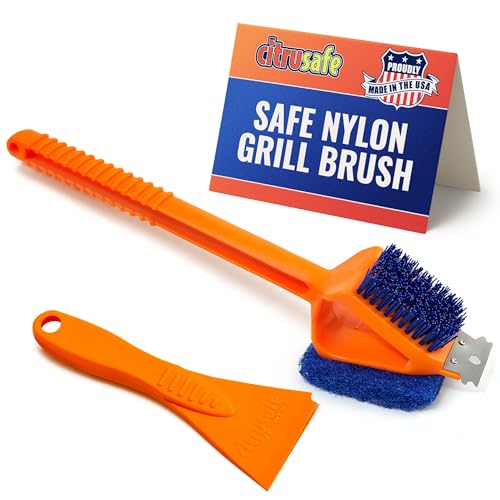
Choosing the correct tool is vital when working above open burners because several popular brush types are strictly designed for cold metal. Nylon-bristle brushes, such as the CitruSafe 3-in-1 tool, provide exceptional scrubbing safety on cold surfaces, but nylon will melt instantly upon touching hot iron. Melting synthetic bristles create a sticky plastic mess across your grates that ruins food surfaces and releases hazardous fumes. Always verify the manufacturer heat rating on your brush before bringing it near a warm grill.
Traditional wire brushes made with thin brass or steel bristles also introduce serious health risks that have led many grillers to abandon them. Under repeated scraping, thin metal bristles weaken, snap off, and become lodged in grate crevices or sticky grease. These stray wire shards can transfer to meat and cause severe internal injuries if ingested by guests. Opting for bristle-free steam tools, stainless scrapers, or shaped wooden paddles removes this hazard completely.
Custom wooden scrapers offer an organic, bristle-free alternative that performs exceptionally well on hot grates. Made typically from hard cedar, oak, or pine, a wooden paddle slowly chars to match the exact spacing of your grill bars during use. As you rub the wood across hot metal, the grates burn custom grooves into the leading edge. These tailored grooves allow the tool to scrape the top and sides of each bar simultaneously without scratching porcelain or stripping seasoning.
Timing Your Clean: Pre-Cook Warm-Up Versus Post-Cook Shutdown
Backyard cooks frequently debate whether to clean grates immediately after cooking or during the preheat phase before the next meal. Cleaning immediately after cooking captures grease at its warmest and most pliable state, requiring minimal scraping effort. Removing food remnants right away also prevents grease from sitting on grates for days, reducing mold growth and deterring foraging pests. However, guests may already be waiting for dinner, making immediate post-cook cleaning feel inconvenient.
Cleaning during preheating offers a practical compromise that fits smoothly into standard meal preparation. Firing the burners up to high for ten minutes before cooking incinerates leftover juices and sterilizes the metal surfaces thoroughly. The high preheat temperature dries out residual debris, allowing a quick pass with a scraper or steam pad to wipe the bars clean. Once the bars are swept clear, a light application of cooking oil seasons the metal right before food hits the grate.
Combining both approaches produces the cleanest and most consistent results across seasons. Conducting a quick post-cook scrape removes the heaviest food deposits before you close the lid for the evening. Following up with a brief brush pass during the subsequent preheat cycle removes ambient dust or pollen that settled between cooks. This two-step habit takes less than two minutes per session and keeps your cooking surface in prime culinary shape.
Critical Safety Practices and Flare-Up Management
Working around open flames and hot metal demands deliberate focus to prevent burns and accidental fires. Steam produced during wet cleaning expands rapidly and can cause severe thermal burns on unprotected skin. Always wear heavy barbecue gloves rated for high contact temperatures, and keep your face back from the grill opening when applying water. Utilize tools with handles measuring twelve inches or longer to maintain a safe distance from rising heat plumes.
Scraping hot grates also dislodges grease clusters that can fall directly onto active burners or glowing charcoal, triggering sudden flare-ups. If a flare-up erupts while your grill lid is open, step back immediately and close the lid to starve the fire of oxygen. Turning off gas control knobs or closing charcoal intake dampers brings sudden grease flames under control quickly. Never squirt water directly into a grease fire, as aerosolized water spreads burning grease and creates an explosive fire hazard.
Safe grill operation requires proper outdoor positioning away from enclosed areas. Gas, pellet, and charcoal grills must never be operated inside a garage, breezeway, or enclosed porch, even with the vehicle door or windows left wide open. Fuel combustion generates deadly, odorless carbon monoxide gas and creates severe structural fire hazards that claim lives each year. Always position your grill outdoors on a stable, level surface, maintaining safe clearances from vinyl siding, wooden deck railings, and low overhangs.
When to Transition from Hot Scraping to Cool Chemical Cleaning
Hot grate scraping handles daily maintenance, but heavy grease accumulation inside the cookbox eventually demands a thorough cool clean. Liquid degreasers and specialty cleaning sprays must never be applied to hot grates or active burners. High temperatures cause cleaning chemicals to vaporize abruptly, generating noxious fumes and creating dangerous flash fires. Citrus-based cleaners, including plant-based formulas like CITRATIDE or CitruSafe, are designed specifically for cool metal application.
Similar maintenance routines apply across standard open cookers and versatile combination griddle and smoker units, though flat surfaces require scrape-and-oil methods rather than wire-free grate scrubbing. When conducting deep seasonal maintenance on grates and flavorizer bars, wait until the unit has cooled down to room temperature. Spray a citrus degreaser liberally across the surfaces and allow the natural d-limonene solvents several minutes to break down polymerized grease. Scrub with a cool-rated nylon brush or textured scouring pad, then rinse thoroughly with warm water.
A balanced cleaning schedule pairs hot mechanical scraping after every cookout with an occasional cool deep soak every few months. Hot scraping keeps cooking bars free of char and prevents bitter flavors from transferring into fresh ingredients. Cool chemical cleanings remove built-up sludge from the firebox, burner tubes, and grease trays, preventing hazardous grease fires and extending appliance longevity. Establishing this two-tiered routine ensures optimal cooking performance and long-term grill reliability.
Mastering the technique of cleaning hot grill grates transforms outdoor cooking from a tedious chore into a seamless culinary routine. By harnessing thermal energy, choosing bristle-free steam tools, and respecting metal coatings, you keep your cooker sanitary and ready for immediate action. Prioritize personal safety with protective gloves, maintain outdoor clearance, and avoid using melting nylon tools on hot metal. With these practical principles in place, your barbecue surfaces will consistently deliver excellent grill marks and outstanding flavor.





Write Your Review
No reviews yet. Be the first to share your experience!