


Freezing cabin drafts and dead emergency gear create serious headaches when winter storms knock out the local power grid. Traditional heating units keep living quarters warm, but managing off-grid power requires a completely independent solution. Setting up a dependable wood burning stove with electricity generator solves two problems simultaneously by turning common biomass and dry wood scraps into clean thermoelectric energy while pushing out serious heat. Based on manufacturer specifications and technical feedback, modern thermoelectric modules convert excess firebox thermal output into usable wattage to keep essential phones and headlamps fully powered.
Cooking dinner over an erratic open flame often leads to scorched cookware or painfully slow water boiling times. A well-designed biomass burner solves this with regulated internal combustion and variable fan speeds that deliver steady flame control. Matching burner airflow to log capacity makes all the difference when preparing hot meals in remote environments. Many outdoor enthusiasts even pair their gear with a portable grill stove combo for tent camping to handle versatile wilderness meal preparation without relying on expensive disposable gas canisters.

Pros
- Runs entirely on free, gathered biomass like twigs, wood chips, and pinecones
- Thermoelectric generator powers an onboard fan and charges USB electronics
- Internal fan produces a hot, smokeless flame with four controllable speeds
- All-in-one bundle nests neatly together for organized campsite storage
- Grill attachment delivers genuine wood-fired smoke flavor on meats
Cons
- Small fire chamber requires frequent stick feeding during cooking sessions
- Grill surface area is limited to three or four burger patties at a time
- At roughly five pounds for the full bundle, it is heavy for ultralight backpacking
The BioLite CampStove 2+ Complete Kit is a versatile off-grid biomass cooking system engineered for campers, tailgaters, backpackers, and outdoor adventurers who value self-reliance. Instead of relying on disposable propane canisters or bulky bags of charcoal, this system harnesses sticks, twigs, wood pellets, and pinecones gathered directly around your campsite. It redefines open-fire cooking by combining outdoor campfire culture with practical electricity generation.
Cooking performance on this unit is driven by an internal micro-fan powered by its thermoelectric generator. The fan forces air into the burn chamber across four speed settings, producing an intense, nearly smokeless vortex of heat. When you mount the Portable Grill attachment, the flame diffuser directs balanced, radiant heat across the steel grate. It sears four burger patties, sausages, or skewers with authentic wood-fired flavor, while the KettlePot boils a full liter of water in under five minutes for fast dehydrated meals.
Managing heat on the CampStove 2+ requires active involvement. Because the fuel chamber is relatively compact, you need a steady supply of dry twigs and sticks broken down to roughly four to six inches. High fan settings churn out serious searing temperatures, while dialing down the fan reduces the burn rate for simmering stews or steeping hot water. Low-and-slow cooking is not practical given the small fuel reserve, but the wood smoke profile on quick-searing proteins is unmistakable and deeply flavorful.
BioLite constructed the entire kit from durable stainless steel and heat-resistant plastics built to survive harsh outdoor environments. Sturdy aluminum folding legs provide solid footing on rough campsite soil or picnic tables. The standout feature is the onboard thermoelectric system, which converts cooking heat into electricity, routing 3 watts of live power to an external USB port while banking surplus energy in an internal 3,200 mAh battery. The included flexible LED light plugs directly into the stove to illuminate your cooking grate after sunset.
Cleanup and packdown are refreshingly simple once the ashes cool down. You can tip out the spent ash chamber cleanly, wipe down the grill grate, and nest the entire kit inside the KettlePot for transport. While it demands more attention to fuel management than a standard propane burner, the BioLite CampStove 2+ Complete Kit is an outstanding solution for outdoor cooks who love real wood fires and off-grid utility.
The forced-air injection system inside the CampStove 2+ creates combustion conditions that rival small jet burners. By pre-mixing oxygen with wood gas before it leaves the chamber, the stove produces very little soot or smoke once fully ignited. This clean burn ensures that meats grilled on the portable grate pick up clean wood-smoke notes rather than acrid, sooty off-flavors.
The included KettlePot fits securely on the scalloped burner ring, preventing accidental spills on uneven ground. When paired with the coffee press accessory, the pot transitions quickly from boiling water for breakfast oats to brewing rich French press coffee for your crew. With the grill attachment in place, heat distribution across the cooking surface is surprisingly even, making it easy to achieve distinct sear marks on burgers and brats.
Pack efficiency is one of the strongest attributes of this complete cooking bundle. The CampStove 2+ slides directly inside the KettlePot, while the grill attachment sits flush alongside your pack or camp bin. This nesting design prevents residual camp smoke and grease from transferring onto your sleeping bag, clothing, or other gear.
At just over five pounds for the full kit, it fits best in car camping setups, canoe trips, basecamps, or short backpacking treks. Gathering fuel at the site eliminates the hassle of measuring remaining propane levels or carrying empty metal fuel canisters out of the backcountry. As long as you have dry twigs and forest debris, your kitchen and charging station are fully operational.

Pros
- Produces up to 54,000 BTUs to heat living areas up to 900 square feet
- Zero electrical requirements allow total heating independence during winter grid failures
- Clean-burning non-catalytic secondary combustion system requires no catalytic combustor replacements
- Durable cast iron construction absorbs and radiates warmth long after the fire recedes
Cons
- This is a dedicated wood space heater, not a kitchen cooking range, and cannot be installed inside standard kitchen cabinetry
- Compact 1.2-cubic-foot firebox requires shorter wood logs and periodic manual refueling
- Venting pipe, chimney adapter, and non-combustible floor hearth pad are not included and must be sourced separately
The US Stove US1261E is a traditional freestanding cast iron log wood stove engineered for supplemental space heating rather than residential kitchen food preparation. Sporting a rugged black cast-iron exterior and heavy-duty stance, it fits naturally into cabins, rustic homes, workshops, garages, and rural homesteads. This model is tailor-made for homeowners preparing for winter power outages, off-grid dwellers seeking total independence from electrical utilities, and property owners who need an economical, heavy-duty wood heater for rooms or outbuildings up to 900 square feet.
In terms of thermal performance, the US1261E produces up to 54,000 BTUs of radiant heat. Its 1.2-cubic-foot firebox is scaled for medium-sized wood logs, delivering steady thermal delivery across its rated footprint. A primary engineering highlight is its non-catalytic secondary burn system. By introducing preheated air into the top of the firebox, this system ignites unburned gases and smoke before they escape into the flue. This results in cleaner combustion and improved fuel efficiency without the delicate maintenance or ongoing replacement expenses associated with catalytic combustors.
Build quality centers on time-tested cast iron construction. Unlike thin stamped sheet-metal space heaters, cast iron provides exceptional thermal mass. It slowly absorbs heat from the firebox and continues to radiate gentle warmth well after the firewood has burned down to embers. The heavy cast door features a secure mechanical latch and adjustable draft control, allowing users to fine-tune airflow into the combustion chamber manually without relying on electronic switches, control boards, or fragile touchscreens.
Installation requirements differ significantly from standard kitchen appliances because this stove requires no electricity whatsoever. There are no 120-volt cords, 240-volt dedicated circuits, or municipal gas lines to connect. However, proper solid-fuel stove setup requires strict adherence to local building codes, including a certified non-combustible floor protector (hearth pad) and adequate clearance from combustible walls. Buyers should note that venting components, such as 6-inch stovepipe, chimney adapters, and wall pass-through thimbles, are not included in the box and must be sourced separately based on your specific room layout.
Prospective buyers must keep realistic operational limitations in mind. Because this is a dedicated wood-burning heating appliance, it cannot function as a kitchen range with an oven cavity or burner grates for meal prep, nor can it be built into standard 30-inch cabinet openings. The compact 1.2-cubic-foot firebox requires wood to be cut to proper lengths, and solid-fuel heating inherently demands manual ash removal, regular chimney sweeping, and attentive damper adjustment to maintain a balanced burn.
For rural homeowners, cabin owners, and anyone seeking a durable backup heat source during severe winter ice storms, the US Stove US1261E offers dependable value. Its blend of 54,000 BTU thermal capability, solid cast-iron heat retention, clean-burning non-catalytic technology, and zero electrical reliance makes it a stalwart heating companion when utility grids fail.
With an output rating of up to 54,000 BTUs, the US Stove US1261E is built to warm living areas up to 900 square feet effectively. The cast iron body works as a heat sink, transferring warmth smoothly into the surrounding air through natural convection and radiant emission.
The non-catalytic secondary burn mechanism channels preheated oxygen across the upper firebox to re-burn combustible particulates. This secondary combustion maximizes the heat extracted from each log while minimizing creosote buildup in the chimney system.
Safe operation of the US1261E requires placement on an approved, non-combustible hearth pad with proper floor protection extending beyond the front loading door and sides. Clearances to combustible wall materials must strictly follow manufacturer guidelines and local building codes.
Because the unit operates entirely without electricity, it eliminates breaker load concerns and utility wiring. Proper venting requires standard 6-inch diameter stovepipe connected to a code-compliant chimney system with adequate draft.

Pros
- Includes both adjustable legs and a pedestal base for flexible aesthetic placement
- Comes with a 100 CFM electric blower to actively circulate warm air across the room
- Non-catalytic secondary combustion meets EPA guidelines without expensive combustor replacements
- Accepts standard firewood logs up to 18 inches in length
- Removable ash pan helps make hearth maintenance and cleanout faster
Cons
- Venting pipe and 6-inch chimney connectors are not included and must be purchased separately
- Requires a nearby standard electrical outlet to power the active 100 CFM blower fan
- At 258 pounds, curbside LTL freight delivery requires multiple people and proper equipment to maneuver indoors
The United States Stove Company US1100E-BL is a dedicated freestanding wood-burning stove engineered to deliver auxiliary or primary space heating for single-family residences, off-grid cabins, workshops, and certified manufactured homes. Built around a heavy steel frame with a classic matte black finish, this unit provides a traditional hearth aesthetic while incorporating modern secondary combustion engineering. For homeowners seeking an independent heat source during extreme winter storms or looking to lower seasonal heating bills, this stove presents a practical, cordwood-fueled heating platform.
Thermal performance centers on a 1.3-cubic-foot firebrick-lined combustion chamber capable of accepting logs up to 18 inches long. The stove generates up to 68,000 BTUs of heat, rated to warm living spaces up to 1,200 square feet under proper insulation conditions. To maximize efficiency without the maintenance demands of a delicate catalytic combustor, the US1100E-BL utilizes an advanced secondary combustion air tube design that re-ignites unburned gases and smoke before they exit the flue. This process satisfies EPA clean-air emission standards while maximizing the thermal energy extracted from every load of cordwood.
Material construction is oriented around heavy-duty durability. The front door is cast iron, ensuring structural rigidity under intense cycling heat, and features air-washed ceramic glass that directs a sheet of air across the viewing pane to minimize creosote and soot accumulation. Internally, high-density firebrick lines the floor and side walls to reflect heat back into the firebed, protecting the outer steel shell from premature burn-through. Below the firebox, an integrated slide-out ash pan collects fallen debris, making daily cleanout significantly more manageable compared to flat-bottomed fireboxes that require hand-shoveling.
Installation flexibility is a key design advantage of this model, as it ships with both classic four-leg supports and a clean pedestal base, letting owners select the look that best suits their hearth pad. Exterior measurements run 21.3 inches wide, 24.5 inches deep, and 30.9 inches tall, with an overall weight of 258 pounds. It connects to a standard 6-inch chimney connector pipe. For mobile home installations in the United States and Canada, the unit requires the addition of an external fresh air intake kit (model 4FAK, sold separately). Active convective airflow is assisted by an included 100 CFM blower, which plugs into a standard 120V household wall outlet.
Prospective buyers must consider several operational factors before ordering. Because the unit ships via LTL freight with curbside or driveway drop-off only, uncrating and transporting the 258-pound stove into the home requires adequate assistance and a heavy-duty dolly. Chimney pipe, ceiling support boxes, flashing, and hearth protection pads are not included and must be sourced based on local building codes and clearance-to-combustible requirements. Additionally, while the stove will continue radiating heat passively during power outages, the active 100 CFM blower requires electricity to operate.
Overall, the US Stove US1100E-BL represents a solid, reliable choice for homeowners seeking supplemental heat for spaces up to 1,200 square feet. Its EPA certification, dual-base mounting versatility, included circulation blower, and non-catalytic design deliver high utility and straightforward maintenance, making it an excellent heating investment for rural homes, hunting cabins, and cold-climate living areas.
Rated at up to 68,000 BTUs, the US Stove US1100E-BL provides steady thermal output for medium-sized footprints up to 1,200 square feet. The 1.3-cubic-foot firebox is proportioned to take cordwood logs up to 18 inches long, allowing users to pack a solid fuel bed for sustained burns through chilly nights.
The secondary combustion system uses precision air tubes above the primary fire zone to introduce preheated oxygen, igniting residual particulates before they escape up the chimney. This non-catalytic approach complies with EPA emission guidelines while eliminating the regular inspection, cleaning, and replacement expenses associated with catalytic honeycombs.
To assist with heat distribution throughout adjacent rooms, the stove includes a rear-mounted 100 CFM blower. This fan pulls cooler room air across the heated outer baffles of the firebox and discharges warm air outward, enhancing overall thermal efficiency compared to strictly radiant cast-iron units.
The US1100E-BL requires a standard 6-inch diameter chimney connector and a certified residential chimney system or relined masonry flue. All chimney piping, wall thimbles, roof flashing, and chimney caps must be purchased separately to fit the specific ceiling height and roof pitch of your structure.
This stove is approved for transportable buildings and mobile homes in both the United States and Canada when paired with an approved fresh air intake kit (model 4FAK, sold separately), ensuring the firebox draws combustion air directly from the outdoors without depleting indoor air quality.
Delivery is handled via LTL curbside freight, meaning the carrier drops the pallet at the curb or driveway edge. Given its 258-pound weight and heavy steel firebox, planning the indoor installation path and verifying proper floor protector hearth pad dimensions in advance is essential.
Constructed with a heavy-gauge steel body and a solid cast-iron front door, this stove is built to withstand high continuous firing temperatures. The firebrick-lined combustion zone insulates the firebed to maintain the high internal temperatures required for complete secondary combustion while prolonging overall appliance life.
Daily maintenance is streamlined thanks to the air-washed ceramic door glass, which uses natural internal airflow drafts to keep soot from coating the window. This allows homeowners to monitor the fuel bed and enjoy hearth ambiance without having to wipe down the glass after every fire.
Ash removal is facilitated by an integrated slide-out ash pan located beneath the door. Sliding the tray out permits clean transfer of cold ashes into a dedicated metal ash bucket (such as model 1508, sold separately), preventing messy ash clouds across the living room carpet or hardwood floors.

Pros
- Durable iron furnace body provides solid heat retention for outdoor cooking and shelter warmth
- Includes seven stainless steel chimney pipes with an adjustable damper for regulated drafting
- Flame-retardant silicone fiber viewing window lets you monitor the fire without losing heat
- All accessories, including fire tongs, brush, and gloves, pack conveniently inside the firebox
- Lightweight 15.35-pound build facilitates straightforward transport to campsites or ice shanties
Cons
- Not suitable for indoor residential kitchen installations, lacking standard oven cavities and automated thermostat controls
- Requires regular manual ash cleanup and chimney maintenance using the included tools
- Demands an outdoor cure burn before initial use to temper materials and eliminate manufacturing residues
The AVOFOREST Wood Burning Stove is a compact, portable solid-fuel appliance built for outdoor cooking and shelter heating during hunting, ice fishing, and cold-weather camping trips. Unlike freestanding gas ranges or slide-in front-control electric stoves designed for indoor kitchen cabinetry, this unit operates completely off-grid without municipal natural gas, liquid propane tanks, or high-voltage electrical circuits. It does not fit into standard residential 30-inch cabinet openings or under kitchen countertops, serving instead as a self-contained, transportable heating and surface-cooking solution for outdoor recreation and emergency off-grid preparedness.
Cooktop utility is centered on a flat top heating surface directly over the firebox rather than multiple gas burners or electric heating elements. Because this is a solid-fuel wood stove, there are no BTU ratings, electric element wattages, or induction boost zones. Heat is conducted directly through the iron plate to cookware placed on top, making it practical for boiling water, preparing hot coffee, or cooking straightforward meals in a skillet. It does not include an enclosed oven cavity, meaning there is no cubic-foot baking capacity, rack positioning, or convection airflow mechanism such as fan-assisted or true European convection with a third heating element. Heat management is entirely manual, regulated by opening or closing the door damper and the inline chimney damper.
Build quality relies on a heavy-duty iron furnace body that offers dependable structural strength under high firebox temperatures. The chimney system comprises seven stainless steel pipe sections measuring 12 inches each, offering rust resistance and simple modular assembly. In place of electronic touchscreens or weighted rotary knobs, the stove features manual physical dampers, including an airflow control beneath the front door and a dedicated flue damper installed in one of the chimney pipes. A viewing window made of flame-retardant silicone fiber material lets you monitor the fuel burn without opening the door. Maintenance does not involve high-heat pyrolytic self-clean cycles or steam-clean modes; instead, cleanup is performed manually with the included fire tongs, ash brush, and internal drain screen once the iron has cooled completely.
Regarding dimensions and setup, the stove measures 17.8 by 11 by 9.73 inches and weighs approximately 15.35 pounds. It requires no 120-volt household outlets for electronic ignition, no dedicated 240-volt 40-amp or 50-amp branch circuits, and no 3-prong or 4-prong range power cords. Likewise, gas supply lines, shutoff valves, and rear gap filler strip kits do not apply. The package includes seven chimney pipe sections, fire tongs, an ash brush, woven safety gloves, and an ash filter screen, all of which pack directly into the firebox for convenient vehicle transport. Installation requires a dedicated tent stove jack with proper clearance from shelter walls, and the manufacturer explicitly instructs conducting a thorough burn outdoors before the first use.
Operational trade-offs stem directly from its manual solid-fuel format. Temperature output cannot be adjusted with the click of a digital thermostat or an instant turn of an electric dial, requiring continuous monitoring of firewood consumption and draft velocity. There are no automated cooling fans to circulate air post-cooking, and the iron body remains hot to the touch during operation, requiring the use of protective gloves. Furthermore, it cannot be operated in unvented indoor domestic spaces, as safe wood burning requires clear outdoor venting through the stainless chimney pipes to prevent smoke and carbon monoxide buildup.
For winter campers, ice anglers, and outdoors enthusiasts seeking a self-contained heating and cooking package, the AVOFOREST Wood Burning Stove represents a functional and budget-friendly choice. It bypasses grid dependency, utility hookups, and complex electronics in favor of sturdy iron construction, basic top-plate cooking utility, and portable multi-section drafting. While it is strictly an outdoor wood-burning stove rather than an indoor kitchen cooking appliance, it provides dependable off-grid heat and campfire cooking convenience.
The main furnace body is constructed from iron, providing structural durability and solid heat retention during active wood fires. The chimney assembly utilizes seven stainless steel sections, each 12 inches in length, ensuring resistance to moisture and corrosion during winter outings.
The front door features a visual inspection window crafted from flame-retardant silicone fiber material. This transparent panel allows you to monitor the internal firebox without opening the door and releasing smoke or heat into your shelter.
All included components, including the stainless chimney pipes, fire tongs, brush, and gloves, nest directly inside the 17.8-inch by 11-inch furnace cavity. This self-contained packability makes transportation straightforward and protects smaller parts from damage during travel.
This unit requires zero residential utility hookups, eliminating the need for 120-volt electrical outlets, 240-volt range power cords, gas shutoff valves, or flexible gas lines. It operates entirely on dry split firewood or kindling.
The package includes a comprehensive tool set: seven 12-inch stainless steel chimney pipes, an inline flue damper, fire tongs for repositioning wood, a cleaning brush for ash removal, woven safety gloves to prevent cuts, and an internal ash drain screen.
Initial setup requires an outdoor burn-in cycle prior to using the stove inside a hot tent. This initial cure burn tempers the iron furnace body and burns off any residual factory oils in an open-air environment.
Pros
- Functional top cooking surface accommodates pots and pans for boiling water and frying meals
- Durable galvanized steel firebox paired with a sturdy cast-iron front door
- Self-contained design allows chimney pipe sections and legs to store inside the firebox
- Provides off-grid cooking and outdoor heating utility without needing gas or electricity
Cons
- Strictly rated for outdoor environments and cannot be used inside residential kitchens or enclosed spaces
- Requires manual fire tending, kindling wood fuel, and ongoing ash removal rather than push-button temperature control
- At 42.4 pounds, the solid steel and cast-iron assembly requires deliberate effort to transport and store
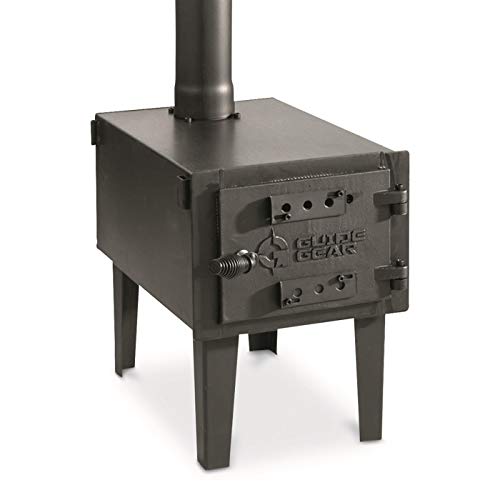
While typical residential cooking ranges rely on standard 30-inch cabinetry cutouts and municipal gas lines or 240-volt electrical circuits, the Guide Gear Outdoor Wood Burning Stove serves a distinct role for off-grid cooking and emergency readiness. Engineered specifically for outdoor open-air environments, this solid-fuel unit provides a dedicated heating and cooking platform for camping excursions, backyard use, and emergency preparedness. It is strictly built for outdoor operation and cannot be installed inside a residential kitchen or enclosed structure due to ventilation requirements and open-combustion safety codes.
Cooktop functionality centers around the flat top steel platform, which absorbs thermal energy directly from the firebox below. This smooth surface accommodates flat-bottom cookware, allowing users to boil water, fry eggs and bacon in a skillet, or simmer stews. Thermal output is governed entirely by the volume and quality of kindling and split wood fed into the firebox rather than calibrated dial controls or measured BTU power burners, requiring hands-on attention to manage cooking heat.
Physical construction focuses on practical durability, utilizing a galvanized steel firebox treated with a heat-resistant black finish alongside a heavy-duty cast-iron front door. The front door incorporates integrated air vent holes to regulate combustion airflow, helping users sustain steady draft levels. Five interlocking stove pipe sections attach to the flue collar to channel exhaust upward away from the cooking plane, while detachable tubular legs elevate the hot body away from ground surfaces.
Measuring 20 by 11 by 13 inches and weighing 42.4 pounds, the stove is sized for manageable outdoor portability without requiring permanent installation. The modular design enables the five chimney pipe lengths and detachable legs to disassemble and pack neatly inside the firebox cavity for transport or off-season garage storage. Because it relies exclusively on wood kindling, it eliminates any need for electrical supply lines, gas flex pipes, or liquid propane regulator hookups.
Operating a solid-fuel outdoor stove involves practical trade-offs compared to modern indoor appliances. There are no electronic thermostats, oven cavities, or automated cleaning cycles; soot accumulation, ash cleanout, and manual draft regulation are part of regular operation. Exterior surfaces and pipe assemblies become exceptionally hot during use, requiring generous clearance from combustible tents, tarps, or patio awnings, and safe handling using heat-resistant gloves.
For homeowners assembling an outdoor emergency cooking setup or campers needing reliable camp heat and stove boiling performance, the Guide Gear Wood Burning Stove offers a practical and durable choice. It delivers solid-fuel versatility and self-contained portability, providing valuable outdoor cooking capability when conventional kitchen utilities are inaccessible.
The upper surface of the stove functions as a conductively heated griddle and pot warmer. By positioning heavy cookware directly on the flat plate, users can heat water, fry meats, and keep kettles hot during cold-weather outings.
Because wood fire temperatures fluctuate naturally, heat management relies on adjusting fuel intake and controlling the cast-iron door vent holes. This manual approach provides dependable outdoor cooking performance without relying on electrical outlets or propane canisters.
Constructed with a galvanized steel firebox and finished with heat-resistant coating, this stove is designed to withstand high-temperature wood fires. The cast-iron door adds structural rigidity and resists heat warping across repeated heating and cooling cycles.
Assembly requires attaching the detachable support legs and interlocking the five included chimney pipe sections. Between uses, all external components pack inside the 20 by 11 by 13-inch firebox, minimizing storage footprint and simplifying transport.
Pros
- Eliminates the ongoing expense and pack weight of disposable gas canisters
- Internal fan system creates an intense, clean flame with virtually zero lingering smoke
- Onboard 3,200 mAh battery stores power to charge small electronics even after the fire burns down
- Compact vertical design packs neatly to the size of a standard water bottle
Cons
- Requires constant feeding of small fuel pieces to maintain consistent high heat
- Compact pot stand is designed for small camp cookware rather than multi-serving pans
- At just over two pounds, it is heavier than ultralight titanium canister burners
The BioLite CampStove 2+ is a specialized biomass camp stove designed for outdoor enthusiasts who want off-grid versatility without relying on fossil fuel canisters. Utilizing twigs, dry wood scraps, or wood pellets found around the campsite, this compact unit bridges the gap between traditional campfire cooking and modern outdoor technology. It is specifically suited for backpackers, solo campers, hunters, and emergency preparedness kits where self-sufficiency and packable utility are top priorities.
In terms of cooking performance, the stove relies on an internal four-speed fan that injects oxygen into the burn chamber. This airflow produces hyper-efficient combustion, creating a focused, high-heat vortex that boils a liter of water in approximately four and a half minutes. The intense flame functions exceptionally well for boiling water, rehydrating meals, and searing proteins in a compact cast-iron or stainless camp pan. Because the combustion is so complete, you get clean heat with almost no stinging smoke, making cooking over the burner significantly more comfortable than tending a smoky open campfire.
Fuel efficiency is tied directly to how you manage the fire chamber. Because the burn area is compact, small dry twigs and pinecones burn quickly under the forced air. You will need to feed small handfuls of fuel regularly to maintain maximum boiling temperature. However, for low-heat simmering, dialling the fan back to its lowest speed tempers the flame nicely. Switching to compressed hardwood pellets also extends burn time and provides steady, unattended heat for longer cooks like hearty backcountry stews.
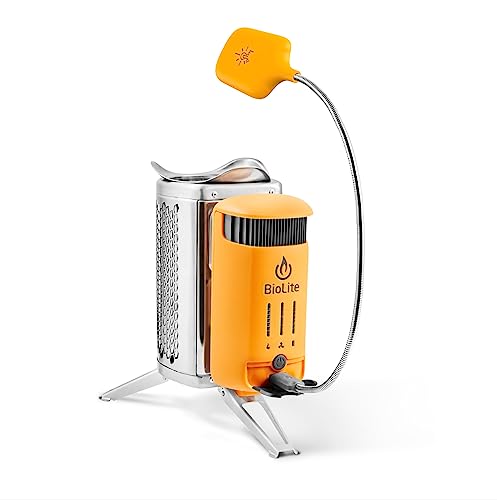
Build quality is rugged, featuring a heat-resistant stainless steel body paired with lightweight folding aluminum legs. The scalloped pot stand accommodates standard camp kettles and small frying pans securely. The orange power pack houses the thermoelectric generator, four-speed airflow controls, LED output meters, and an integrated 3,200 mAh battery. Packing down to roughly the size of a 32-ounce wide-mouth bottle, the entire assembly nests together cleanly inside the included stuff sack without rattling.
While the stove shines for solo adventurers and trail pairs, it has natural limitations for larger group feeds. The single vertical burner restricts you to one piece of cookware at a time, and the relatively narrow flame pattern requires attentive pan movement when frying delicate foods like eggs or pancakes. If you need to cook burgers or steaks for an entire family at once, a multi-burner propane camp stove remains more practical.
For remote campsites, off-grid weekend trips, and survival readiness, the BioLite CampStove 2+ offers unmatched reliability. Freeing yourself from half-empty gas canisters while generating real-time charging power for your headlamps and phones makes it a valuable asset for any self-reliant outdoor cook.
The forced-air injection system dramatically accelerates wood combustion, delivering heat output comparable to standard canister camp stoves. Direct flame contact allows for quick water boils, making morning coffee and trail meals fast and effortless.
Heat is concentrated directly over the center of the pot stand, which is optimal for rapid boiling and quick sears. Using cookware with reasonable heat distribution helps spread that energy when sauteing backcountry ingredients or browning meats.
Setting up takes under a minute by folding out the three aluminum legs, clipping the power module securely to the burn chamber, and placing the stove on a level patch of ground or a heat-safe camp table.
Starting the fire requires only a small wad of tinder or the included firestarter along with a few small dry sticks. Once lit, turning the fan on low feeds the nascent flame with oxygen, rapidly building up to a roaring fire ready for cooking.
Frequently Asked Questions
How does a wood burning stove with electricity generator generate usable electricity?
Thermoelectric generator modules convert the temperature difference between the inner fire chamber and an external cooling heatsink directly into electrical voltage via the Seebeck effect. As dry sticks burn inside the firebox, the internal generator powers an onboard combustion fan and routes surplus energy to an integrated USB port. This design optimizes burn efficiency while generating charging current simultaneously.
Can a wood burning stove with electricity generator run large household appliances during a power outage?
No, portable thermoelectric stoves produce low-wattage direct current intended strictly for compact electronics like mobile phones, GPS units, and rechargeable headlamps. Most compact camp models generate around 3 watts of electricity under normal fire conditions. They do not have the high output capacity needed for heavy kitchen ranges, full-size refrigerators, or high-draw power tools.
What fuel types provide the best thermal efficiency?
Dry kindling, dense hardwood twigs, commercial wood pellets, and dry pinecones yield the hottest and cleanest combustion inside biomass burn chambers. High moisture content lowers combustion temperatures and creates excessive smoke, which directly impairs thermoelectric efficiency. Feeding seasoned, moisture-free biomass ensures faster heating and reliable power conversion.
How should you clean and maintain the firebox after use?
Wait until the unit cools completely before removing internal grates and emptying ash accumulations. Soot buildup on heat probes can insulate thermal surfaces and degrade electrical generation over time. Using an insulated ash can or a specialized pellet grill ash vacuum cleaner lets you safely collect fine residue without spreading airborne dust across your shelter.
Do thermoelectric wood stoves require a built-in battery?
Most advanced models incorporate an integrated lithium-ion battery bank to bank excess energy while the fire burns. This internal reserve provides sustained device charging even after the firebox dies down. It also powers the combustion fan immediately upon startup to build strong draft before the thermal generator kicks in.
How fast do compact biomass stoves boil water outdoors?
A standard high-efficiency biomass stove typically boils one liter of water in four to five minutes under mild weather conditions. Electric blower fans force direct airflow into the core, producing intense, smokeless flames that rival canister stoves. Windy days or wet kindling can slightly extend boiling times, but sheltered placement keeps performance steady.




Write Your Review
No reviews yet. Be the first to share your experience!