


Setting up an outdoor cookout requires steady heat and reliable fuel before lighting the burners. Figuring out what propane tank to buy for grill cooking can feel confusing when facing different cylinder capacities, specialized valves, and adapter hoses. Most backyard cooks default to the standard twenty-pound cylinder, but portable tabletop cookers and compact camping stoves often rely on tiny one-pound disposable canisters. Choosing the right tank size ensures you do not run out of fuel halfway through searing steaks or smoking ribs. If you are designing an outdoor barbecue island setup, knowing your fuel supply needs helps you plan proper ventilation and secure tank storage beneath your cooking station.
Matching your fuel source to your specific appliance prevents gas leaks, burner surges, and mid-cook interruptions. Modern cylinders feature mandatory overfill prevention device valves and standardized connectors that keep backyard grilling safe and straightforward. Understanding how pressure gauges, conversion hoses, and brass fittings interact gives you the flexibility to fuel full-size carts or compact portable burners with equal confidence. This practical guide walks through tank sizes, hardware connections, refilling logistics, and outdoor safety practices so you can choose the ideal propane solution for your cooking routine.



Everything You Need to Know About Grill Propane Tanks
Choosing the correct propane cylinder comes down to matching fuel capacity, burner demands, and physical space to your outdoor cooking habits. While most freestanding backyard grills connect directly to twenty-pound containers, specific cooking styles and travel setups require different configurations. Grasping the trade-offs between standard tanks, larger thirty-pound cylinders, and compact one-pound bottles prevents wasted fuel and unexpected flameouts. Let us examine each tank classification, valve type, hardware accessory, and safety protocol so you can set up your grill with complete certainty.
Standard Propane Tank Sizes for Backyard and Portable Grills
Propane cylinders for residential cooking fall into three primary size categories based on their liquefied petroleum gas weight capacity. The smallest format is the disposable one-pound canister, widely used for camping stoves, tabletop burners, and compact tailgating griddles. In contrast, the standard twenty-pound cylinder serves as the universal benchmark for residential freestanding carts and outdoor kitchens across North America. For extended run times or multi-appliance setups, heavier thirty-pound and forty-pound cylinders offer significantly more cooking hours between refills.
Selecting among these dimensions depends primarily on the total heat output of your burners, measured in British Thermal Units per hour. A standard three-burner gas grill consumes approximately thirty thousand to forty thousand BTUs per hour on high heat. At that consumption rate, a single pound of propane provides less than an hour of continuous cooking, making small bottles impractical for large family gatherings. A standard twenty-pound cylinder, holding roughly four point seven gallons of liquid fuel, delivers between eighteen and twenty-four hours of dependable cooking time.
Understanding the Standard 20-Pound LP Cylinder
The twenty-pound propane tank remains the undisputed king of backyard barbecue for clear practical reasons. Grill manufacturers design their carts, mounting brackets, and regulator hoses specifically around the physical dimensions of this cylinder. Standing roughly eighteen inches tall and twelve inches in diameter, it nests cleanly beneath the grill chassis without interfering with grease trays. Its empty weight sits near seventeen pounds, resulting in a total filled weight around thirty-seven pounds that most adults can lift and transport safely.
Availability represents another major advantage of the standard twenty-pound size. Nearly every hardware store, grocery market, gas station, and home improvement warehouse stocks pre-filled replacement cylinders. If you run out of fuel during an evening cookout, locating an exchange kiosk takes only a few minutes in suburban or urban neighborhoods. Municipal refilling stations also prioritize this size with standardized scale brackets, making routine top-offs quick and economical.
For regular backyard enthusiasts, keeping two twenty-pound cylinders on hand represents the single best logistical strategy. When your active tank runs out mid-cook, swapping in a full backup takes less than two minutes. You can finish your dinner without stress and take the empty cylinder for a refill during your regular weekend errands. This two-tank rotation completely eliminates the anxiety of guessing how much propane remains before inviting guests over.
Larger Capacity Options: When a 30-Pound Cylinder Makes Sense
Dedicated grillers who host frequent parties or operate multi-burner rotisseries often look toward thirty-pound steel cylinders for extra longevity. A thirty-pound container holds about seven gallons of propane, extending burner runtime by fifty percent compared to standard options. Models like the Flame King YSN330 30lb Steel Propane Tank Cylinder offer durable welded steel construction with protective powder coating designed to resist outdoor moisture. These larger cylinders frequently feature integrated gas meters to give continuous readings on fuel availability.
Before purchasing a thirty-pound tank, you must verify the clearance dimensions beneath your grill cart. Because thirty-pound cylinders measure approximately twenty-four inches tall, they often stand too high to fit within the lower cabinet of standard enclosed barbecue carts. Trying to force a taller tank into a restricted compartment can kink the flexible regulator hose or pinch vital gas fittings. If your grill features an open frame or an external tank hanger rated for extra weight, a thirty-pound unit provides exceptional uninterrupted runtime.
These larger tanks also shine when fueling versatile outdoor kitchens or dual-purpose setups that run multiple appliances from a shared manifold. If you frequently connect a high-output burner alongside your primary barbecue, the increased vapor space inside a thirty-pound cylinder helps prevent regulator freeze-up during prolonged high-demand cooking. Adding an auxiliary smoker box for gas grills allows you to infuse authentic wood flavor into poultry and brisket across extended sessions without worrying about running out of heat halfway through the process.
Small 1-Pound Canisters and Portable Grilling Needs
Small one-pound green canisters provide unmatched portability for beach trips, tailgates, and remote camping spots. Because they weigh barely over a pound when full, tossing a couple of canisters into a storage tote requires minimal physical effort. Compact tabletop grills, portable camping griddles, and handheld torches connect directly to the male threaded neck of these miniature cylinders without requiring bulky regulators. For quick hot dogs or burgers at a campsite, these convenient bottles handle the job effortlessly.
Despite their convenience, relying solely on disposable bottles brings distinct drawbacks during extended cooking sessions. Small canisters chill rapidly under continuous fuel draw, leading to pressure drops that cause burners to sputter in cool weather. Tossing empty steel cylinders into municipal waste streams also creates unnecessary clutter and ongoing expense. If you frequently cook on portable griddles or tabletop burners in your backyard, adapting your equipment to draw from larger tanks offers far greater value and consistent flame performance.
Essential Valves and Connectors: OPD and Type 1 QCC
Safety engineering on propane cylinders has advanced significantly, centered around the triangular handle of the Overfill Prevention Device valve. Modern fire safety standards require all consumer cylinders from four to forty pounds to incorporate an internal float mechanism that closes the fill port when liquid propane reaches eighty percent capacity. This remaining twenty percent vapor space allows liquid propane to expand safely as ambient temperatures rise in direct sunlight. Refilling stations are prohibited by law from filling older cylinders that lack this recognizable three-lobed OPD valve handle.
The external connection port on modern consumer tanks features standard Type 1 QCC threads, recognizable by large external plastic hand nuts. Unlike vintage POL fittings that required a wrench and turned counterclockwise with internal threads, Type 1 couplers tighten clockwise by hand without specialized tools. These fittings include internal thermal shutoffs that halt gas flow if temperatures around the connector rise excessively during an exterior fire. They also house excess flow safety valves that immediately restrict gas output if a hose ruptures or tears.
Adapter Hoses and Solid Brass Fitting Converters
Connecting portable appliances to larger tanks is simple when using certified conversion accessories. An extension line like the 4ft Propane Hose Adapter 1lb to 20lb by Alloxity or the 6 Feet Propane Hose Adapter 1lb to 20lb by Alloxity replaces the need for disposable canisters entirely. These hoses feature heavy-duty brass couplers, weather-resistant PVC, and internal cotton braiding to bridge a large twenty-pound cylinder to portable griddles and camp stoves. Using a six-foot hose provides greater freedom to position your tank a safe distance from portable table legs.
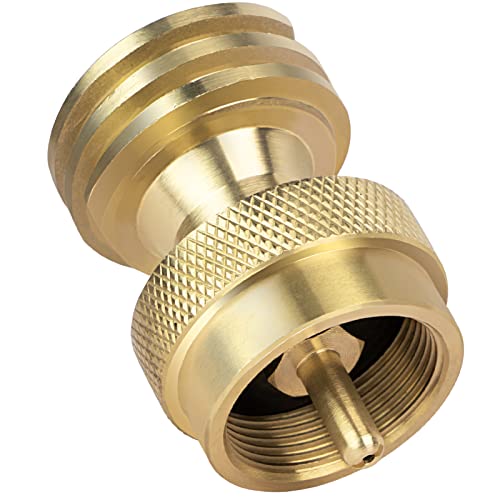
When your main twenty-pound cylinder runs out unexpectedly during a backyard party, solid brass hardware can save your meal. Compact converters such as the BEEDEFUL 1lb Propane Tank Adapter and the GASPRO 1lb Propane Tank Adapter allow full-size grill regulator hoses to draw fuel from emergency one-pound canisters. Because these fittings feature straight-through brass construction without internal shutoff pins, proper installation order is vital. You must always secure the adapter to the grill appliance hose first before threading on the small canister to prevent accidental gas venting.
Monitoring Fuel Levels: Tank Gauges and Weight Methods
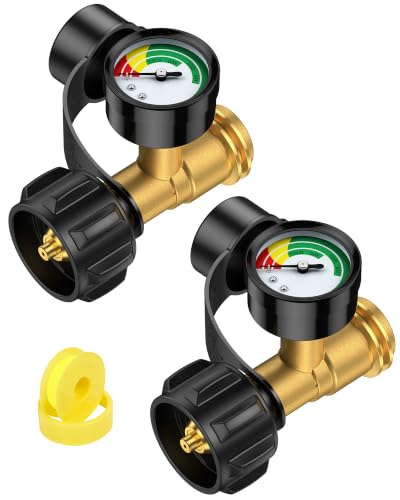
Unlike clear water tanks, opaque steel propane cylinders conceal their internal fuel levels, making external monitoring tools valuable for grillers. Inline pressure monitors like the GasXpert 2 Pack Propane Tank Gauge Level Indicator screw directly between the tank valve and your grill regulator. Featuring color-coded dials and temperature-compensating scales, these solid brass gauges read vapor pressure changes to indicate when fuel drops into caution and replacement zones. They also function as instant system leak detectors when you pressurize the line with the grill burners turned off.
Pressure gauges provide quick visual updates, but physical weight remains the absolute most accurate method for measuring remaining fuel. Liquid propane vaporizes inside the tank, meaning internal pressure stays relatively flat until the liquid is almost completely depleted. Every certified steel cylinder features a tare weight stamped onto its protective collar, typically reading around sixteen to seventeen pounds. Placing your tank on a standard bathroom scale and subtracting the stamped tare weight reveals the exact pounds of usable liquid propane remaining inside.
A simple warm water trick also serves as a handy zero-tool field check on warm afternoons. Slowly pour a cup of warm tap water down the side of your cylinder and wait thirty seconds. Slide your hand down the steel surface; the metal feels warm above the fuel line but noticeably cold where liquid propane absorbs ambient heat below. This tactile boundary gives you an immediate estimation of your tank capacity before you start searing a flavorful kalbi beef bbq recipe for your guests.
Exchanging Versus Refilling Your LP Gas Cylinder
Backyard grill masters face a consistent choice between utilizing automated retail tank exchanges and visiting professional bulk refilling stations. Retail exchange kiosks provide maximum convenience, allowing you to swap an empty tank for an inspected, repainted cylinder in minutes outside regular retail stores. However, most pre-packaged exchange cages supply cylinders filled to fifteen pounds rather than the full twenty-pound capacity for transport margin reasons. This standard practice means you receive slightly less fuel per trip than a complete refill provides.
Dedicated bulk propane stations, found at hardware centers, farm co-ops, and rental yards, fill your existing cylinder to its true eighty percent limit. Because refilling technicians charge by the gallon or actual dispensed weight, you pay only for the gas required to top off your tank. If you bring in a partially full container before hosting a holiday gathering, refilling avoids sacrificing the leftover fuel you would lose at an exchange depot. Maintaining your own clean cylinder also allows you to keep reliable built-in gauges and pristine exterior paint.
Crucial Outdoor Safety, Placement, and Storage Practices
Propane is heavier than air and pools near the ground if allowed to leak, requiring strict adherence to outdoor safety guidelines. Fuel-burning gas grills and propane storage cylinders must never be operated inside a garage, porch enclosure, breezeway, or residential living space. Even leaving an overhead garage door wide open fails to provide adequate ventilation to clear accumulating vapors or prevent dangerous carbon monoxide buildup. Grills should always sit outdoors on a stable, non-combustible surface well clear of overhangs, wooden railings, and exterior vinyl siding.
Storing spare cylinders requires equal vigilance regarding temperature exposure and proximity to home openings. Keep reserve tanks outdoors in an upright, shaded location where ambient heat cannot trigger the internal pressure relief valve. Never store spare cylinders underneath the grill firebox, inside crawlspaces, or near basement window wells where heavier-than-air propane could collect undetected. If transporting a tank inside your vehicle for refilling, secure it upright in the trunk or truck bed with windows vented, and drive directly home without running secondary errands.
Step-by-Step Leak Detection and Maintenance Routine
Performing a quick five-minute safety inspection before each grilling season protects your family and equipment from gas-related mishaps. Prepare a fifty-fifty solution of liquid dish soap and water in a small spray bottle or bowl. Apply the soapy mixture generously over the tank valve stem, connection threads, regulator body, and all along the flexible rubber hose line. Turn the tank valve on slowly while keeping all grill burner control knobs in their off positions.
Watch the coated connections carefully for any expanding soap bubbles, which indicate an active escaping gas leak. If bubbles appear, shut the cylinder handwheel immediately, loosen the Type 1 plastic nut, inspect the internal rubber O-ring for dirt or cracks, and re-tighten the assembly. If bubbling persists after reseating the coupler, the hose or tank valve is compromised and must be replaced before operating the grill. Checking connections regularly keeps your outdoor cooking setup running smoothly, safely, and ready for memorable backyard meals.


Write Your Review
No reviews yet. Be the first to share your experience!