


Achieving a steakhouse-quality sear on a standard wood pellet cooker has traditionally challenged backyard pitmasters who love hardwood flavor but miss high-heat cast iron grates. Standard convection pellet barrels circulate hot air efficiently between 180 and 425 degrees Fahrenheit, yet direct radiant heat is essential when you want crisp crusts on thick ribeyes or burgers. Anyone shopping for maximum heat output naturally wonders what is the hottest pellet grill currently available for high-temperature cooking. Modern designs bridge this gap by incorporating specialized sliding deflector plates that expose cooking grates directly to the roaring firepot beneath. If you regularly run low-and-slow cooks alongside high-heat sessions, pairing your setup with hopper extension kits for long smoking sessions can keep your fuel supply steady across changing temperature profiles.
Direct flame searing systems allow specific pellet grills to reach surface temperatures up to 1,000 degrees Fahrenheit directly over the firepot, even while the closed chamber maintains an ambient reading of 500 degrees Fahrenheit. Brands like Pit Boss utilize sliding flame broiler levers on models such as the Navigator 850 and the FB2 series, letting cooks switch instantly from indirect convection baking to direct flame grilling. In contrast, standard indirect cookers or dedicated vertical pellet smokers focus exclusively on gentle convection smoke and rarely exceed 400 to 450 degrees Fahrenheit. Understanding how open-flame diffusers, cast iron grates, and charcoal-hardwood pellet blends work together ensures you select a cooker capable of true high-heat grilling.

Pros
- Exceptional temperature control with digital interface and automatic startup/cool down.
- High-heat searing capability via Flame Broiler for restaurant-quality sears.
- Portable and sturdy construction: lock-tight latches and compact footprint.
- Versatile cooking: smoke low-and-slow or grill hot and fast.
- Porcelain-coated grates are durable and easy to clean.
Cons
- No built-in carrying handles; requires separate carrier or tote for transport.
- Small cooking surface (256 sq in) limits capacity for large groups.
- Pellet consumption can be higher when searing at high temperatures.
The Pit Boss PB150PPG is a tabletop wood pellet grill that brings the full versatility of a pellet smoker and a high-heat searing station to small spaces. It's designed for backyard cooks who want to experiment with smoking, but it really shines for campers, tailgaters, and RV owners who need a compact yet powerful grill that delivers real smoke flavor and impressive heat output. With a 256-square-inch cooking surface and a 7-pound hopper, it comfortably handles meals for 2 to 6 people.
Cooking performance is where this little grill punches above its weight. The digital controller maintains set temperatures with impressive accuracy, so you can set it and forget it for low-and-slow smoking of ribs, pork shoulder, or chicken. When you want a sear, the Flame Broiler feature opens a direct flame path to the grates, reaching up to 1000°F. That's hot enough for a perfect crust on steaks without needing a separate grill. The convection cooking system distributes heat evenly across the cooking surface, and the back-side vent exhaust helps manage airflow. Pellet efficiency is decent for the size, though high-heat searing does consume more fuel.
Build quality feels solid for a portable unit. The heavy-duty steel body with a powder coat finish is built to handle outdoor use, and the porcelain-coated cast iron grates retain heat well. The lock-tight latches secure the lid for transport, and the automatic startup and cool-down cycles add convenience. At 43.4 pounds, it's not the lightest tabletop grill, but it's manageable for car camping or tailgating. One realistic limitation is that this model doesn't have built-in carrying handles, so you may want a tote or a pair of oven mitts to move it after it cools.
Setting up the PB150PPG is straightforward. Assembly is minimal, and the initial burn-off and auger priming are simple with clear instructions. Cleaning is made easier by the simple-access grease tray, though you'll need to supply your own disposable foil liners. The porcelain-coated grates wipe clean with a brush, and the interior ash can be vacuumed out regularly. Storage is simple thanks to its compact dimensions; it fits easily in a camper storage compartment or a plastic tote between uses.
For the outdoor cook who values smoke flavor and portable versatility, this Pit Boss model delivers. It's a great match for campers who want to smoke brisket at the campsite, tailgaters who want to sear burgers before the game, or backyard cooks with limited space who still want the benefits of a pellet grill. The 5-year warranty adds peace of mind. Just be realistic about the cooking capacity and the lack of handles, and you'll love the performance this little grill offers.
The Pit Boss PB150PPG excels at both low-and-slow smoking and high-heat grilling. Its digital temperature controller holds a steady temp from 180°F upward, making it reliable for smoking ribs, chicken, or a small brisket. The Flame Broiler feature is a standout: it lets you sear directly over the firepot for a steakhouse-quality crust. The convection cooking system, aided by the back-side vent, ensures even heat distribution across the 256-square-inch cooking surface. Pellet efficiency is good for smoking, but searing at 1000°F will use pellets faster. Overall, it delivers consistent results for small-batch outdoor cooking.
Weighing 43.4 pounds and measuring 24.8 x 18.7 x 14.2 inches, the PB150PPG is compact enough for car camping, tailgating, or RV trips. Lock-tight latches keep the lid secure during transport, and the sturdy steel body handles bumps from travel. A notable drawback is the absence of built-in carrying handles. You'll want to pack it in a plastic tote or use heavy-duty gloves to move it. Once on a tabletop or tailgate, it's stable and ready to cook. The small footprint makes it easy to store in a camper compartment or garage shelf.
Cleaning the PB150PPG is manageable thanks to the simple-access grease tray. The tray slides out for easy disposal of drippings; you'll need to line it with foil liners (not included) for quicker cleanup. The porcelain-coated cast iron grates resist sticking and scrub clean with a grill brush or sponge. After several cooks, vacuum out the ash from the firepot and interior to maintain airflow. The exterior powder coat finish can be wiped down with a damp cloth. Regular maintenance includes checking the auger and cleaning the temperature probe. Overall, it's straightforward to keep in good shape for many seasons.

Pros
- Accurate PID controller keeps temps stable for low-and-slow smoking or hot grilling
- Good value compared to higher-end pellet grills, offering similar features at a lower price
- Decent cooking capacity for family meals or small gatherings
- Easy to assemble and operate, even for beginners
- Wheels and side shelf add convenience for backyard mobility and prep
Cons
- At 86 pounds, it's not truly portable for camping or tailgating without a vehicle
- Some users report difficulty regulating temperature for very large roasts or in windy conditions
- The hopper is relatively small (11 lbs) compared to larger models, requiring more frequent refills on long cooks
The KingChii Electric Wood Pellet Grill & Smoker is a solid entry in the mid-range pellet grill market, blending convenience, capacity, and wood-fired flavor for a variety of outdoor cooking scenarios. Whether you're a backyard BBQ enthusiast, a weekend camper, or someone who loves hosting tailgates, this unit aims to deliver true wood-smoked taste without the babysitting required by traditional offsets or charcoal smokers.
At the heart of this grill is its PID temperature controller, which keeps the cooking chamber within 15°F of your set point between 180°F and 425°F. That's accurate enough for overnight brisket smokes or hot-and-fast chicken grilling. The 456-square-inch main grilling area gives you room for 12 burgers, four racks of ribs, or a couple of whole chickens - enough for a family dinner or small backyard party. The included side shelf adds valuable prep space, though it's not foldable, so factor that into your patio layout.
Pellet feeding is handled by KingChii's D2 technology, which automatically augers pellets from the 11-pound hopper into the burn pot. The liftable hopper design saves storage space and makes emptying unused pellets easier. In real-world use, the grill produces good smoke flavor on low settings, but like most pellet grills, it won't match the intense smokiness of a stick burner. For most backyard cooks and campers, the balance of convenience and taste is a win. The temperature range goes up to 425°F, which is hot enough for searing steaks or grilling burgers, though it won't reach the extreme heat of a dedicated propane or charcoal grill.
Build quality is decent for the price point. The alloy steel body feels sturdy, and the black powder-coat finish should hold up to occasional rain if covered. The two wheels are solid and roll smoothly over grass or pavement, making it easy to reposition. However, at nearly 87 pounds, it's not something you'd toss in the back of an RV for a weekend trip - it's best suited for stationary patio or backyard use. Assembly is straightforward, with clear instructions, though you'll need a second person to lift the main body onto the legs.
Cleanup is a strong point thanks to the partitioned grease management system. There's a removable oil drum that catches drips, keeping the interior fairly tidy. The grates are simple to scrape, and the ash cleanout is accessible enough for regular maintenance. A minor limitation: some heavy users report that the temperature can struggle to recover quickly when the lid is opened frequently on larger roasts, so avoid peeking too much. Also, in windy conditions, you may see slight temperature swings, so consider a windbreak if you cook in open areas.
Overall, the KingChii is a practical choice for budget-conscious grillers who want wood-fired flavor without a steep learning curve. It works well for low-and-slow smoking, baking, roasting, and basic grilling. If you're a beginner or an experienced outdoor cook looking for a secondary smoker for camp or patio, this unit delivers reliable temperature control and solid build quality at a fair price. Just keep in mind its weight and the need for occasional temperature babysitting on large loads.
The KingChii does a fine job across a range of outdoor cooking methods. For low-and-slow smoking, the PID controller holds steady temps around 225°F to 250°F with minimal drift, producing a pleasant wood smoke ring and good bark on pork shoulders or briskets. The 456 sq. in. grate allows for multiple racks of ribs or a whole turkey. For grilling, reaching 425°F is enough to get a nice sear on steaks and burgers, though it won't give you the intense char of a direct flame. The D2 feeding system keeps pellets flowing evenly, so you won't get sudden temperature drops unless the hopper runs empty. Overall, it's a versatile performer for backyard cooks and small gatherings.
The PID (Proportional-Integral-Derivative) controller is the star here. It maintains the set temperature within ±15°F, which is impressive for a grill in this price range. You set the temp digitally, and the auger adjusts pellet feed automatically. The range of 180°F to 425°F covers smoking, baking, roasting, and grilling. One note: opening the lid frequently does cause temperature swings, and the recovery isn't instant - about a minute or two - so try to limit peeking. The digital display is clear and easy to read, even in direct sunlight. Overall, this control system makes the KingChii a set-and-forget option ideal for beginners or anyone who wants consistent results without constant adjustment.
Keeping the KingChii clean is relatively painless thanks to its grease management design. The oil drips through a sloped channel into a removable metal drum, so you don't have to mess with messy drip trays. Just take the drum out, dump the grease, and wipe it down. The cooking grates are porcelain-coated? (not specified, but based on typical construction) and can be scraped or washed. For ash removal, there's a cleanout door near the burn pot; a simple vacuum or scraper does the job. The hopper is easy to empty if you need to switch pellet flavors. Overall, expect about 10-15 minutes of cleanup per cook, with a deeper cleaning every few uses to keep the auger and fire pot clear.

Pros
- Easy assembly and straightforward operation with digital controls and auto-igniter.
- Excellent smoke flavor from hardwood pellets, with the ability to sear directly over flame.
- Solid build quality with heavy-gauge steel at a lower price than similar Traeger models.
- Versatile cooking capacity suitable for both quick weeknight dinners and long smoking sessions.
Cons
- Displayed temperature can be 100-120 degrees hotter than actual chamber temp, requiring an external thermometer.
- Hopper is on the smaller side; may need refilling for very long cooks like overnight brisket.
- Not truly portable for camping or off-grid use as it requires a 120V power source.
The Pit Boss PB440D2 is a wood pellet grill that combines smoker and grill functions in one compact unit. It's designed for backyard cooks who want the convenience of set-it-and-forget-it smoking along with the ability to sear steaks or burgers over direct heat.
This grill shines for BBQ enthusiasts who love low-and-slow cooking like brisket or pork shoulder, but it's also great for tailgaters and patio entertainers who need a versatile cooker for everything from ribs to grilled vegetables. The Flame Broiler Lever allows you to slide a plate open for direct flame grilling, so you can get a nice crust on a steak after smoking it.
In real-world use, the digital control board holds temperatures reasonably well, though some users note the displayed temp can be 100-120 degrees hotter than actual chamber temperature. An external thermometer helps. The smoke flavor from all-natural hardwood pellets is excellent, and the 40,000 BTU burner heats up quickly. The 465 square inches of cooking space can handle a full family meal or a party's worth of burgers.
Build quality is solid with heavy-gauge steel and a powder-coated mahogany finish. The two large wheels make it easy to move around the patio or pack for tailgating. Assembly is straightforward, and cleaning is manageable thanks to the porcelain-coated grates and a grease management system that channels drips into a bucket. The side shelf and bottle opener are nice touches.
One limitation is the hopper size – it's on the smaller side, so for very long smokes you may need to refill. The temperature discrepancy can be a minor annoyance, but many users find it easy to adjust. Overall, this grill offers fantastic value for the price, especially compared to similar Traeger models.
If you're a backyard griller looking to step into pellet smoking without breaking the bank, or a tailgater who wants a versatile setup, the Pit Boss PB440D2 is a smart choice. It's not perfect, but it delivers great results for the money.
This grill excels for backyard smoking sessions where you want to cook multiple racks of ribs or a whole brisket over several hours. The digital control and automatic pellet feed let you focus on family and friends instead of managing the fire.
Tailgaters will appreciate the sturdy wheels and the ability to sear burgers or brats quickly after a long smoke. The side shelf provides prep space, and the built-in bottle opener is a fun touch. However, note that it needs a wall outlet, so plan for a power source at the tailgate lot.
For patio cooks who like to try different recipes, the 8-in-1 versatility means you can bake a pizza, roast vegetables, or even braise a pot roast without needing multiple appliances. It's a true all-in-one outdoor cooker for the adventurous home chef.
Pros
- Charcoal and hickory blend brings authentic pit flavor to modern pellet grills
- Burns hot for high-heat steak searing while holding steady for overnight pork butts
- Uniform pellet size promotes smooth auger feeding with minimal sawdust in the bag
- Larger 30-pound bag size offers extra cook time before needing a refill
Cons
- Charcoal base produces slightly lighter fly ash that requires regular fire pot vacuuming
- Heavy 30-pound bag demands moisture-proof container storage to prevent humidity damage
- Bold smoke character may overpower mild foods like white fish if not managed carefully
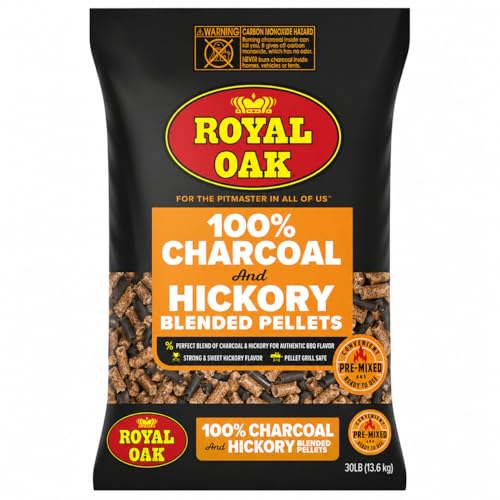
Royal Oak 100% Charcoal and Hickory Pellets offer a versatile fuel solution engineered specifically for pellet smokers and automated grills. While standard barbecue pellets rely solely on compressed hardwoods, this blend infuses real charcoal pellets alongside genuine hickory. It is tailored for backyard grillers, weekend tailgaters, and serious BBQ enthusiasts who appreciate the high-heat potential and time-tested aroma of charcoal cooking but prefer the hands-off convenience of a digital pellet hopper.
Flavor development and thermal output are where this combination excels during both low-and-slow smoking and high-temp searing. The hickory hardwood contributes a sweet, robust smoke that penetrates deep into pork ribs, briskets, and chuck roasts. Meanwhile, the dense charcoal component burns clean and hot, making it much easier to hit elevated searing temperatures for ribeye steaks, smash burgers, and chicken wings. Hopper temperature stability remains rock-solid, allowing your grill controller to maintain precise heat settings even during windy afternoon cookouts.
Packaged in a sturdy 30-pound bag, this fuel delivers noticeable burn efficiency for extended barbecue sessions. The pellet manufacturing shows good structural density with minimal dust or crushed fines in the bag, which helps prevent auger jams and hopper voids. Because wood and charcoal pellets naturally absorb ambient humidity, outdoor cooks and RV travelers should transfer open bags into sealed waterproof buckets or airtight bins, especially if grilling in damp patio environments or coastal campsites.
Cleanout and routine maintenance require standard attention. Charcoal naturally yields a different ash texture than pure oak or fruitwood, generating a slightly lighter, powdery ash that settles into the bottom of the fire pot and cookbox. While ash levels remain well within normal operational parameters for pellet cookers, giving your fire pot a quick vacuum after every couple of long smoking sessions keeps airflow unobstructed and ensures trouble-free ignition.
If you want the convenience of set-it-and-forget-it pellet cooking without sacrificing the rich taste and searing capability of classic charcoal, this 30-pound Royal Oak blend is an exceptional upgrade. It delivers bold smoke rings on weekend briskets and provides the extra sizzle needed for fast weeknight dinners, making it a reliable staple for any outdoor cooking setup.
The combination of dense charcoal and aromatic hickory creates an exceptional heat profile that outpaces conventional hardwood pellets. When running low at 225 degrees Fahrenheit, the hickory components smolder gently to lay down a thick, rosy smoke ring on briskets and pork shoulders without tasting bitter.
Cranking your pellet grill up to 450 or 500 degrees activates the full potential of the charcoal pellets. The resulting heat output is noticeably drier and hotter, creating the intense radiant floor needed to sear steak crusts, crisp up chicken wings, and blister burger patties without flame blowouts.
These pellets are engineered with tight diameter tolerances to work seamlessly across Traeger, Pit Boss, Camp Chef, Weber Smokefire, RecTeq, and Green Mountain Grills. The uniform length prevents bridging inside narrow hoppers and reduces motor strain on the feeder auger.
To maintain peak performance in backyard and campsite environments, store unused pellets in a dry bucket with a gasket seal. Keeping the charcoal mix free of moisture guarantees rapid hot-rod ignitions and keeps temperature swings to an absolute minimum during your cooks.

Pros
- Excellent temperature consistency with digital control and 5°F adjustments
- Flame Broiler lever adds real searing capability not found on many pellet grills
- Compact footprint fits small patios but still offers generous cooking area
- Solid build with alloy steel construction and a 5-year warranty
Cons
- Some users report missing parts upon delivery, requiring customer service contact
- May need an aftermarket heat deflector for more even temps across the cooking surface
- 5 lb hopper is small for long overnight smokes, requiring refills for extended cooks
The Pit Boss 500FB2 is a wood pellet grill that brings serious versatility to your backyard. It's not just a smoker — it's an 8-in-1 cooking machine that can smoke brisket low and slow, grill burgers hot and fast, and even sear steaks with direct flame. If you're a backyard griller or BBQ enthusiast who wants one appliance that does it all without taking over your patio, this is a solid pick.
In real-world use, the digital control board holds temperatures steady from 180°F to 500°F in 5°F increments. That means you can set it for a 225°F smoke session overnight and trust it won't wander. The Flame Broiler lever is a standout feature — slide it open and you get direct flame contact that hits up to 1000°F, giving you real sear marks and crust on steaks or chops. That's rare for a pellet grill at this price point.
Build quality is good for the price. The alloy steel body feels solid, and the matte black finish looks sharp on any patio. The 518 square inches of cooking space is enough for a whole brisket or a couple of racks of ribs, plus the two-tiered grates let you cook different items at once. The 5 lb hopper is on the smaller side — you'll need to refill it for long overnight cooks, but for weekend BBQs or tailgating, it's fine. The solid bottom shelf is handy for storing extra pellets or tools.
Assembly is straightforward, though some users have reported missing grates or parts. Pit Boss customer service seems responsive based on reviews, but it's something to watch for. Also, a few owners mention that adding an aftermarket heat deflector helps even out temperature across the cooking surface — something to consider if you're picky about consistent heat.
Cleanup is manageable. The grease management system works well, and the porcelain-coated grates are easy to scrub. The grill isn't super portable at 136 pounds, but it has wheels for moving around the patio. It's not a camping grill, but it's great for backyard parties, tailgating in the driveway, or patio cooking where you want real smoke flavor without tending a charcoal fire.
Overall, the Pit Boss 500FB2 offers a lot of cooking flexibility for the money. If you want a pellet grill that can smoke, grill, and sear without breaking the bank, and you're okay with a smaller hopper and potential part issues, this is a strong contender. It's best for backyard cooks who want to experiment with different cooking styles and don't need a massive capacity.
The Pit Boss 500FB2 delivers impressive cooking performance for a pellet grill in this price range. The digital control board maintains temperatures within a reasonable range, so you can set it for low-and-slow smoking at 225°F and walk away. The Flame Broiler lever is the real star — it lets you create an open flame searing zone that hits up to 1000°F, giving steaks and chops a proper crust. The 518 square inches of cooking space is enough for a full brisket or a couple of racks of ribs, and the two-tiered grates let you cook different items at different heights. Smoke flavor is authentic and rich, thanks to the 100% all-natural hardwood pellets. For backyard BBQs, tailgating, or patio parties, this grill handles everything from burgers to brisket with ease.
The digital control board on the Pit Boss 500FB2 allows you to set temperatures from 180°F to 500°F in 5°F increments. This gives you fine control over your cooking, whether you're smoking at low temps or grilling hot. In practice, the grill holds temperature well once it stabilizes, though some users note that adding an aftermarket heat deflector can improve consistency across the entire cooking surface. The LCD screen is easy to read, and the controls are straightforward. The 5 lb hopper is adequate for most cooks, but for long overnight smokes you'll need to refill it. Overall, the temperature control is reliable and user-friendly, making it a good choice for both beginners and experienced grillers.
The Pit Boss 500FB2 is built with alloy steel and finished in a matte black coating that looks great and resists rust. The lid seals well, and the porcelain-coated grates are durable and easy to clean. The grill sits on sturdy wheels that make it easy to move around the patio, though at 136 pounds it's not something you'll want to carry. The solid bottom shelf adds storage for pellets and tools. Some users have reported missing parts upon delivery, but Pit Boss customer service seems responsive. The 5-year warranty is a nice peace of mind. Overall, the build quality is solid for the price, and with proper care, this grill should last for years of backyard cooking.
Pros
- Versatile 8-in-1 cooking: smoke, bake, braise, roast, grill, barbecue, char-grill, and sear
- Flame Broiler Lever offers a true open-flame searing experience not common on pellet grills
- Digital controller holds temperature well with minimal fluctuation, even in breezy conditions
- Large cooking capacity relative to footprint -- fits well on most patios or decks
Cons
- At 119 pounds, it's heavy and not easily portable for camping or tailgating without a vehicle
- Pellet consumption can be high when searing at max temperatures, requiring frequent hopper checks
- Grease management could be better -- the drip tray collects well but the bucket location can be awkward to access
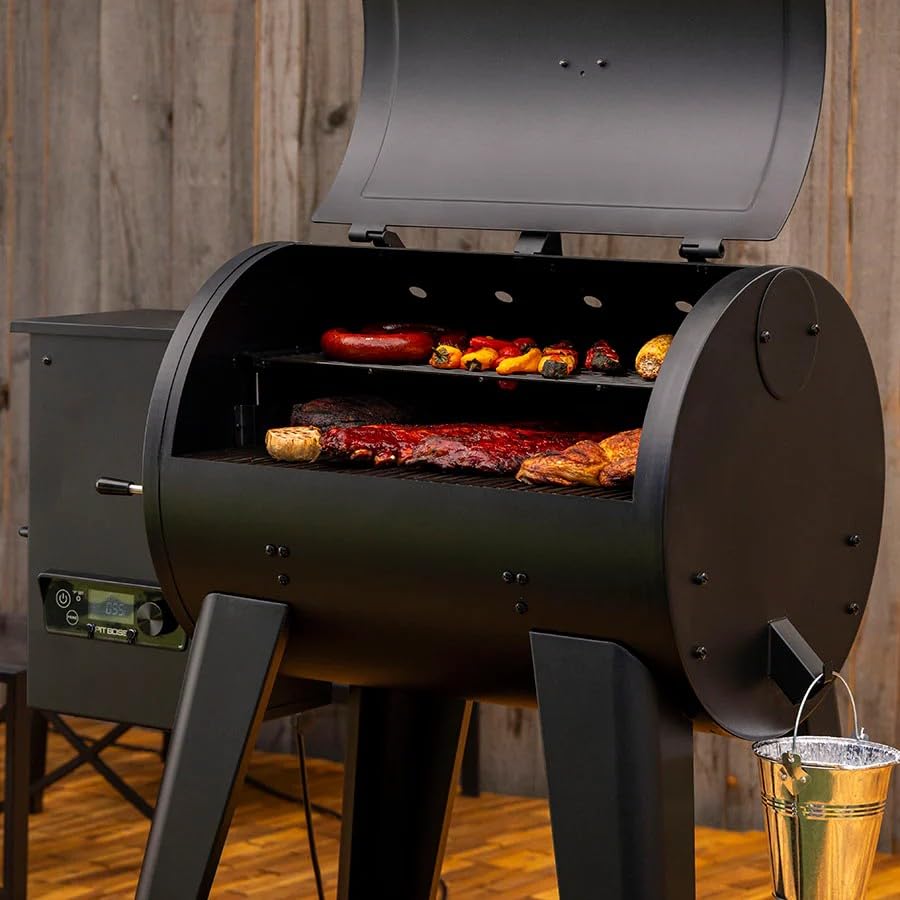
The Pit Boss 700FB2 is a wood pellet grill designed for the backyard cook who wants the convenience of set-it-and-forget-it smoking with the option to get a screaming hot sear. This isn’t a lightweight tailgater or camper-friendly rig — at 119 pounds, it’s a stationary patio performer. But if you have a deck or concrete pad, this grill rewards you with generous cooking space and real versatility.
Best suited for backyard grillers and BBQ enthusiasts who love low-and-slow smoking but also crave a proper crust on steaks. The Flame Broiler Lever is the standout feature: flip it open and you’re grilling directly over the fire pot, hitting temperatures up to 1,000°F. That’s rare on a pellet grill and delivers a sear that rivals a dedicated gas grill or charcoal kettle. For weekend BBQs with burgers, dogs, and chicken, the 747 square inches of porcelain-coated steel racks handle a big crowd easily. Two tiers let you smoke two full racks of ribs or a brisket and a pork butt at the same time.
Temperature control is solid. The digital control board adjusts in 5°F increments and holds steady from 180°F (great for overnight cooks) up to 500°F for hot grilling. In my experience, it recovers quickly after opening the lid. The 21-pound hopper means you can smoke a brisket for 12-14 hours without refilling, which is a genuine convenience. One note: if you’re searing frequently at high heat, pellet consumption goes up noticeably, so keep an eye on the hopper window.
Build quality is decent for the price point. The alloy steel body is sturdy, and the porcelain-coated grates resist rust well. The legs have locking casters for mobility, though the overall weight makes it a two-person job to move over uneven ground. The solid bottom shelf is handy for storage. Grease management uses a drip tray that channels into a bucket; it works but the bucket placement means you’ll likely need to empty it mid-cook if doing fatty meats. Weather resistance is acceptable — the matte black finish holds up, but like any outdoor gear, covering it when not in use extends its life.
Setup is straightforward: the grill comes mostly assembled, requiring attachment of legs, shelf, and handles. Expect about 30-45 minutes. Cleaning is manageable — the drip tray and fire pot need periodic vacuuming, and the grates scrub up fine with a brush. The included meat probe is a nice touch for monitoring internal temps without opening the lid.
Realistically, this grill isn’t for campers or RV owners due to its size and weight. But for the patio cook who wants one machine that does it all — from smoking a brisket overnight to searing steaks for a backyard party — the Pit Boss 700FB2 delivers impressive versatility. At its price point, it’s a strong contender if you prioritize searing ability in a pellet grill. Just be ready for the weight and occasional pellet-hogging at high heat.
The Pit Boss 700FB2 excels at two extremes: low-and-slow smoking and high-heat searing. The Flame Broiler Lever is the key differentiator, letting you expose meat directly to the fire pot. This gives you a real flame-kissed char that most pellet grills lack. For smoking, the digital controller holds temps within a 10-15°F range, which is plenty stable for brisket, pork shoulder, or ribs. The 21-pound hopper means you can sleep through an overnight cook without waking up to refill. One trade-off: when you crank it to 500°F for searing, pellet burn rate increases significantly, so plan accordingly. Overall, the cooking performance is versatile and reliable for most backyard scenarios.
The digital control board offers precise setpoints in 5°F increments from 180°F to 500°F. The LCD screen displays current temperature and setpoint clearly. In practice, the grill holds its target temperature well, even in mild wind. The auger feeds pellets consistently, and the fan maintains airflow. It takes about 10-15 minutes to come up to smoking temps and a bit longer to reach 500°F. The included meat probe lets you monitor internal meat temperature without opening the lid, which helps maintain heat consistency. For low-and-slow cooking, this grill is a set-it-and-forget-it machine.
At 119 pounds, the Pit Boss 700FB2 is not a portable grill. It has two locking casters and two fixed wheels, so you can roll it around on a flat patio, but don’t plan on taking it to a campsite or tailgate unless you have a truck and a strong friend. The compact footprint (26.8”D x 43.7”W x 47”H) fits in most backyard spaces, but it’s best considered a stationary setup. The solid bottom shelf is handy for storing pellets or tools, but adds to the overall heft. If portability is your priority, look for a smaller, lighter pellet grill. This one is for dedicated patio or deck use.

Pros
- Smart connectivity lets you monitor and control the grill from anywhere via the Pit Boss app.
- Large cooking area (932 sq in) handles briskets, multiple racks of ribs, or burgers for a crowd.
- Flame Broiler lever adds direct searing capability for high-heat grilling.
- Tall, tapered legs make access easier on the back while standing.
Cons
- Reported pellet bridging in hopper leaves unused fuel, risking shutdown during long cooks.
- Some users experienced auger motor failure and paint peeling on burn box after a month of use.
- Heavy at 175 pounds, making it less ideal for portability or tailgating.
The Pit Boss Navigator 850 (model PB850M) is a wood pellet grill and smoker that tries to combine smart technology with generous cooking capacity. With 932 square inches of cooking space and a 30-pound hopper, it's aimed squarely at backyard grillers and BBQ enthusiasts who want to smoke brisket, pork shoulder, or ribs for long sessions without constant refueling. The addition of Wi-Fi and Bluetooth means you can monitor and adjust temperatures from your phone, which is a nice convenience for anyone who likes to multitask while hosting a weekend gathering.
In terms of real-world cooking performance, this grill offers a temperature range of 180F to 500F, which covers low-and-slow smoking as well as moderate grilling. The Flame Broiler lever adds a searing option that can reach up to 1000F, giving you the ability to char steaks or burgers directly. However, early user experiences highlight potential heat consistency issues due to the hopper design: some report that pellets on the sides don't feed into the auger, causing the grill to run out of fuel and let food go cold. That's a significant drawback for a pellet smoker, especially during long cooks like a 14-hour pork shoulder.
Build quality appears mixed based on early reviews. The unit features a stainless steel exterior and porcelain-coated steel cooking grids, but some users noted paint peeling on the burn box and rust forming after a few weeks of use. At 175 pounds, this grill is heavy and best suited for a permanent spot on a patio or deck rather than tailgating or camping. The tall, tapered legs are a thoughtful ergonomic addition for easier access, and the folding front and side shelves provide decent prep space. Wheels are included for moving short distances, but you won't want to haul this to a campsite.
Cleanup is addressed with a simple grease tray and an easy-to-access ash cleanout via the removable burn pot. The hopper cleanout is located underneath, using gravity to empty leftover pellets. That said, if pellets bridge inside the hopper, you might still need to manually break them up. The two probe ports allow temperature monitoring of meats, with one probe included.
Some realistic limitations to consider: the pellet feeding issue could be a dealbreaker for those who want reliable long cooks without supervision. While the smart app is a modern touch, it doesn't compensate for inconsistent fuel delivery. The price point around $730 places it against competitors like Traeger and Camp Chef, where build quality and reliability are often more proven. If you're a backyard cook who values tech and large capacity over proven durability, this might still be worth a look, but those who want a grinder that just works may want to explore other options.
Overall, the Pit Boss Navigator 850 offers smart features and generous space for smoking and grilling, but mixed early reliability brings some caution. If you decide to buy, keep a close eye on pellet flow and be prepared for potential issues. For backyard BBQ enthusiasts who are tech-savvy and willing to tinker, it could work, but for cook-it-and-forget-it smokers, it may fall short.
Understanding Heat Capabilities and High-Temperature Searing on Pellet Grills
Determining the hottest pellet grill requires separating ambient cooking chamber temperatures from direct surface grate heat. Most standard residential pellet cookers operate primarily as indirect convection ovens, circulating hot air around a solid metal drip shield. Under normal conditions, these standard barrels top out between 425 and 500 degrees Fahrenheit, which works well for roasting poultry but falls short of steakhouse searing. Grills equipped with direct flame sliding diffusers fundamentally alter this equation by allowing unshielded radiant energy to strike the cooking surface directly.
Direct Flame Exposure Versus Indirect Convection Heat
Pellet cookers generate thermal energy inside a compact burn pot where an electric auger feeds wood pellets and a fan stokes the fire. In conventional setups, a solid deflector plate rests directly over the firepot, channeling rising heat around the perimeter of the barrel. This indirect method creates remarkably even convection temperatures across the primary grate, preventing hot spots and eliminating grease flare-ups. However, this same deflection barrier shields your food from infrared radiation, capping searing capability at the grill’s ambient dial setting.
Models designed for true high-heat grilling bypass this limitation by incorporating perforated sliding sear plates directly above the burn pot. Sliding the flame broiler open exposes slots situated inches above the roaring combustion zone. This open firepot delivers radiant energy exceeding 1,000 degrees Fahrenheit directly to the grates overhead. While the digital hood thermometer may register 500 degrees Fahrenheit ambient chamber heat, the cooking surface directly above that open portal experiences searing heat comparable to live charcoal.
Choosing between direct and indirect heat profiles depends heavily on your primary grilling preferences. Cooks who focus on pulled pork, whole beef briskets, and smoked poultry rarely require temperatures above 275 degrees Fahrenheit. In contrast, cooks who love thick bone-in ribeyes, smash burgers, and charred steaks benefit immensely from open-flame access. Recognizing this mechanical difference helps buyers distinguish between grills that only bake at moderate temperatures and grills engineered for aggressive surface browning.
Comparing Temperature Capabilities Across Prominent Models
Pit Boss has built much of its reputation around high-temperature versatility by integrating its signature Flame Broiler system across multiple lines. The Pit Boss Navigator 850 stands out among large-capacity options, combining 932 square inches of cooking space with a digital range of 180 to 500 degrees Fahrenheit. Its externally operated slide lever lets cooks open the flame broiler without lifting the lid, allowing grids above the firepot to reach 1,000 degrees Fahrenheit. With a 30-pound hopper, the Navigator 850 provides the extended fuel reserve required for high-heat sessions.
Mid-sized units such as the Pit Boss 700FB2 and Pit Boss 500FB2 offer identical direct flame searing mechanics in more compact footprints. The 700FB2 provides 747 square inches of cooking area and a 21-pound hopper, while the 500FB2 delivers 518 square inches alongside a 5-pound hopper. Both models feature digital control boards adjustable up to 500 degrees Fahrenheit, alongside the sliding deflector plate that reaches 1,000 degrees Fahrenheit of direct flame contact. These matching searing ratings demonstrate that high heat output stems from firepot access rather than barrel volume.
High-heat capability is also available in portable configurations suitable for tailgating and small patios. The Pit Boss PB150PPG Table Top Wood Pellet Grill features a 7-pound hopper, porcelain-coated cast iron grates, and the same 1,000-degree direct flame broiler design seen on larger platforms. Compact portable cookers concentrate radiant heat quickly because the cooking grate sits close to the internal burn chamber. Cooks who travel can achieve aggressive sear marks without sacrificing the automated convenience of electric pellet delivery.
In contrast, units like the KingChii Electric Wood Pellet Grill focus strictly on controlled indirect convection cooking. Featuring an intelligent PID controller, the KingChii regulates chamber heat within a 15-degree variance across an operating range of 180 to 425 degrees Fahrenheit over 456 square inches. Because it utilizes a solid deflector partition to route drippings into a removable oil drum, it avoids open flame contact altogether. This design excels at roasting and baking, illustrating that not every pellet grill is built for scorching surface heat.
Fuel Composition and Heat Potential: Hardwood Versus Charcoal Blends
The chemical composition and moisture content of your pellet fuel play an enormous role in determining peak thermal output. Standard barbecue pellets consist of compressed hardwood sawdust, such as oak, hickory, or fruitwood, bound naturally by the wood’s inherent lignin without additives. Hardwood pellets burn clean and steady, typically producing between 8,000 and 8,500 BTUs per pound under forced-air combustion. While this energy density easily maintains standard smoking levels, specialized fuel blends can elevate overall firepot intensity.
Blended specialty fuels, such as Royal Oak 100% Charcoal and Hickory Pellets, combine processed lump charcoal with authentic hickory hardwood. Charcoal possesses a higher carbon concentration than raw timber, allowing the compressed pellets to ignite into glowing coals that radiate intense, uniform thermal energy. Using a charcoal blend inside compatible pellet cookers increases surface heat generation at the grate while imparting a classic charcoal flavor profile. These pre-mixed fuels remain compatible with popular brand augers, making them a practical upgrade for high-heat cooking.
Pellet storage and moisture exposure also dictate whether your firepot reaches its rated temperature potential. Wood pellets naturally absorb atmospheric humidity if left in open bags or stored inside unsealed hoppers during wet weather. Damp pellets crumble into powdery sawdust within the auger tube, leading to sluggish ignition, reduced airflow, and lower cooking temperatures. Storing your fuel in airtight containers ensures optimal dryness, allowing the combustion fan to generate maximum heat when you dial the controller to its highest setting.
Cooking Surface Dynamics: Cast Iron Versus Steel Grates
The thermal conductivity and mass of your grill grates determine how effectively firepot heat transfers into the surface of your meat. Porcelain-coated steel wire grates, found on many standard models, heat up rapidly and clean easily due to their smooth finish. However, steel wire possesses relatively low thermal mass, meaning it drops in surface temperature the instant cold meat makes contact. As a result, thin steel grates produce thin sear marks rather than the continuous mahogany crust prized on steaks.
Cast iron cooking surfaces provide far superior heat retention and conduction when searing at high temperatures. The dense molecular structure of cast iron allows the metal to store massive amounts of thermal energy from rising flames. When meat touches preheated cast iron, stored energy conducts immediately into the proteins, creating rapid browning without dropping grate temperature. The porcelain-coated cast iron grates on models like the Pit Boss PB150PPG combine this superior thermal mass with rust resistance, making high-temperature searing easier to achieve.
Allowing adequate preheat time is critical when preparing any cooking surface for maximum heat transfer. Even after your digital controller indicates that the barrel has reached 500 degrees Fahrenheit, heavy grates often need an extra ten to fifteen minutes to become thoroughly heat-soaked. Opening the flame slider during the final minutes of preheating ensures that the metal directly over the firepot absorbs peak radiant energy. Testing the grate with an infrared surface thermometer provides an accurate assessment of true surface heat before you begin cooking.
Managing Smoke Flavor and Wood Aroma at High Temperatures
Pellet grills produce significantly less visible wood smoke as operating temperatures climb toward their maximum limits. In a clean-burning pellet combustion system, high dial settings trigger continuous auger feed and rapid fan rotation, creating a roaring fire that consumes wood gases almost completely. At temperatures between 400 and 500 degrees Fahrenheit, the grill produces minimal smoldering smoke, functioning largely like an outdoor convection oven. This clean burn prevents bitter creosote deposits, but it also reduces the intense wood aroma characteristic of low-and-slow barbecue.
Pitmasters overcome this high-heat limitation by utilizing the reverse-sear technique on thick cuts of beef and pork. During a reverse sear, you place seasoned meat on the indirect side of the barrel at 225 degrees Fahrenheit for the initial cooking phase. This low-temperature window exposes the meat to gentle hardwood smoke while slowly bringing the internal temperature close to your target doneness. Once the interior reaches the desired threshold, you slide open the direct flame deflector and finish the exterior with a rapid ninety-second sear per side.
Cooks who want intense wood notes during quick high-heat sessions often supplement their setup with dedicated accessories. Incorporating heavy-duty smoker box accessories for added wood aroma allows you to introduce smoldering wood chips alongside the main firepot. The supplemental wood chips smolder independently of the grill’s automated auger, generating steady plumes of rich vapor even when the main chamber burns clean and hot. This dual-source approach delivers the best of both worlds by combining wood flavor with high-heat surface caramelization.
Culinary Applications and Food Safety Guidelines
High-temperature pellet grilling opens up a wide array of culinary possibilities beyond traditional slow-smoked barbecue. Thin proteins, such as burger patties, flank steaks, and pork chops, require rapid surface browning before their centers overcook. Exposing these items directly to open flames creates defined grill marks and caramelized crusts within minutes. Similarly, flatbreads, artisan pizzas, and charred garden vegetables thrive under intense direct heat that crisps crusts without leaving dough soggy.
Careful heat management becomes especially important when cooking foods coated in sweet marinades, sauces, or sugar-heavy rubs. Sugars begin caramelizing around 320 degrees Fahrenheit and turn bitter and scorched above 375 degrees Fahrenheit. When preparing sweet regional styles or skewered pork barbecue recipes, cooks should begin on the indirect side of the grates to cook the meat thoroughly. Moving glazed meats over the open flame broiler should happen only during the final moments of cooking, monitoring the surface closely to develop color without burning.
Regardless of whether you cook at low smoke settings or searing heat, verifying internal doneness with a digital meat thermometer remains essential for food safety. The United States Department of Agriculture recommends cooking whole cuts of beef, pork, and lamb to an internal temperature of 145 degrees Fahrenheit, followed by a three-minute rest. Ground meats must reach 160 degrees Fahrenheit to eliminate harmful bacteria, while all poultry products require a safe internal threshold of 165 degrees Fahrenheit. Relying on verified core temperatures rather than visual surface char ensures that your meals are safe to serve.
Operational Safety, Grease Fire Prevention, and Clearances
Operating a wood pellet grill at maximum temperature introduces specific safety considerations, particularly regarding grease accumulation. Over extended low-temperature cooks, rendered fats coat the heat diffuser plate, drip tray, and lower barrel walls. When you suddenly raise the controller to 500 degrees Fahrenheit and open the flame broiler, this pooled grease can vaporize and ignite into an aggressive flare-up. Routine maintenance, including scraping diffuser plates and vacuuming cold ash from the firepot every few cooks, prevents grease fires and keeps airflow unobstructed.
Grill placement demands absolute adherence to fire safety protocols, especially when running equipment capable of 1,000-degree flame exposure. Pellet grills must always be operated outdoors in well-ventilated open spaces, positioned safely away from combustible walls, wooden railings, and overhanging structures. Never operate a wood pellet grill inside a garage, breezeway, screened porch, or any partially enclosed space, even with the overhead door open. Burning hardwood pellets produces colorless, odorless carbon monoxide gas, which accumulates rapidly in enclosed areas and poses severe health risks.
Proper shutdown procedures are equally vital for maintaining equipment longevity and preventing hopper burn-back after high-heat cooking. High dial settings leave a substantial bed of glowing embers inside the burn chamber when your cook concludes. Always utilize your grill’s automated shutdown cycle, which keeps the induction fan running to burn off residual fuel while the auger halts delivery. This automated airflow prevents embers from slowly migrating backward through the auger tube toward the main pellet storage hopper.
Selecting the Best High-Heat Pellet Setup for Your Backyard
Identifying the hottest pellet cooker ultimately comes down to matching open-flame hardware with your patio space and cooking ambitions. If searing power is your primary priority alongside extensive capacity, full-sized models featuring sliding flame broilers, such as the Pit Boss Navigator 850 or 700FB2, provide surface heat up to 1,000 degrees Fahrenheit. For smaller spaces or mobile adventures, tabletop units like the PB150PPG deliver that same direct radiant flame in a compact chassis. Choosing a grill with heavy cast iron grates and feeding it high-density charcoal-hardwood pellet blends gives you a versatile cooker capable of both delicate smoking and restaurant-grade searing.





Write Your Review
No reviews yet. Be the first to share your experience!