


Starting a propane gas grill safely requires verifying the tank connection, ensuring the regulator is seated, and following the manufacturer’s ignition sequence. The process begins with a leak check and ends with the burners reaching a stable, blue flame. Understanding how to start a gas grill with propane prevents common issues like weak flames, sputtering, or failure to ignite, which often stem from improper setup rather than equipment failure.
Many owners struggle with the initial lighting phase, particularly when using a new tank or after storage. The key lies in managing gas flow and ignition timing. By checking the hose integrity, confirming the tank valve is fully open, and holding the ignition button for the required duration, you can achieve a consistent start.
This approach applies to both portable tabletop models and larger stationary units, ensuring a safe and efficient cooking session every time. For those interested in broader cooking techniques, our BBQ wings recipe guide offers ideas for what to cook once the grill is ready.

Pros
- Excellent heat output and even distribution for its size – sears well without hot spots
- Solid stainless steel construction feels premium and should resist corrosion outdoors
- Dual side shelves provide valuable prep space that folds away when not needed
- Cast iron griddle and grill grate included right out of the box – great value
- Grease management system with rear-angled drip tray keeps mess contained and cleanup fast
Cons
- At 29 pounds it's portable but on the heavier side for backpacking or long carries
- No built-in lid lock or carry handle makes transporting one-handed a bit awkward
- Burner control knobs could be more responsive at low settings for delicate foods like fish or veggies
The Cowsar Premium Dual-Burner Tabletop Gas Grill is a compact propane grill built for folks who love cooking outside but don't want to haul around a massive rig. Whether you're a backyard griller who needs a supplemental searing station, a camper who wants real flame-grilled flavor at the campsite, or a tailgater looking for a portable cooker that fits in the trunk, this grill checks a lot of boxes. It's also a solid match for RV owners and patio cooks who value space efficiency without sacrificing cooking performance.
Cooking performance is where this little grill shines. With 16,000 BTU (and a peak of 17,000), it gets hot fast and holds heat well thanks to the double-layered lid. The two burners distribute heat evenly across the cooking surface, so you can sear burgers and steaks with confidence or cook veggies without worrying about hot spots. The integrated thermometer reads from 0 to 1000°F, giving you real-time feedback for everything from low temp smoked cheese to screaming hot sears. While it won't deliver the deep smoke flavor of a dedicated smoker, you can add wood chips in a smoker box for a subtle smoky touch – perfect for gas grill fans who want a hint of smoke.
Build quality feels legit for the price. The grill uses a mix of SUS201 and SUS304 stainless steel, which resists rust and withstands weather far better than basic coated steel. The burners are thickened for durability, and the side shelves are sturdy enough to hold plates, sauces, or a beer. At 29 pounds, it's not ultralight, but the compact folded dimensions (48 x 15 x 21 inches) make it manageable for car camping and tailgate setups. There are no wheels or folding legs, so you'll need to set it on a table or flat surface, which is standard for tabletop models.
Setup is straightforward – attach the propane tank (1 lb or 20 lb via included regulator), turn on the gas, and light it. The ignition is reliable, and the burner control knobs let you dial in flame height without fuss. Cleanup is a standout feature here: the slide-out angled grease tray directs drips to a removable oil collection box, keeping flare-ups minimal and the grill tidy. The cast iron griddle and grate are preseasoned and easy to wipe down, though they benefit from a light oil after each use to prevent rust.
Realistically, this grill isn't ideal if you need to cook for a crowd of more than 6-8 people at once – the cooking area is generous for a tabletop but not huge. Also, wind can affect performance on breezy days, so a windscreen or sheltered spot helps. But for backyard dinner parties, campsite dinners, or pregame tailgates, it delivers honest, reliable heat and great taste.
If you're after a sturdy, well-equipped portable gas grill that won't break the bank, the Cowsar dual-burner is a smart buy. It combines solid construction, versatile cooking accessories, and easy cleanup in a size that fits most outdoor lifestyles. Whether you're flipping burgers at the RV park, grilling brats on the patio, or cooking breakfast on a camp table, this grill handles the job with confidence.
The dual burners produce 16,000 BTU total, which is plenty for fast searing on steaks and chops. Heat distribution is even across the 304 stainless steel grate and cast iron griddle, so you can cook different foods at different zones. The lid thermometer helps you maintain consistent temps without guesswork. For low-and-slow cooking, you can dial down the burners to hold around 250-300°F, making it possible to smoke small cuts or even a rack of ribs with indirect heat. This grill excels at quick, high-heat grilling and versatile flat-top style cooking – perfect for backyard parties and campsite meals.
Weighing 29 pounds and folding to 48 x 15 x 21 inches, this grill is portable enough for car camping, RV trips, and tailgates. It needs a flat table or stand – no legs or wheels, but the side shelves fold down for compact storage. The universal regulator works with both 1 lb disposable cylinders and 20 lb bulk tanks, giving you flexibility for short trips or long weekends. Setup takes just a few minutes: unfold shelves, connect tank, open lid, and light. No tools required.
Grease management is a strong point. The slide-out angled drip tray funnels oil into a removable collection box, so you can empty and wipe it quickly after each use. The stainless steel exterior wipes clean with a damp cloth, and the cast iron griddle and grate need only a quick scrape and light oiling. The rear-angled design prevents spills onto your table or ground, keeping your cooking area tidy. Overall, this grill makes post-cook cleanup far easier than many portable competitors.

Pros
- Four independently controlled 10,000 BTU burners make two-zone direct and indirect cooking simple
- Porcelain-coated cast iron cooking surfaces resist rust and clean up faster than bare iron
- Perforated pan accessory expands your menu to smaller foods that normally fall through grill grates
- Folding side tables save valuable floor space on compact balconies and crowded patios
- Convenient accessory touches include an onboard bottle opener and utensil hooks
Cons
- Lightweight sheet metal frame requires protection from harsh winter weather and high winds
- Compact firebox depth means you need to watch greasy foods closely to avoid sudden flare-ups
- Assembly requires extra attention to ensure all side shelf bolts and burner tubes align properly
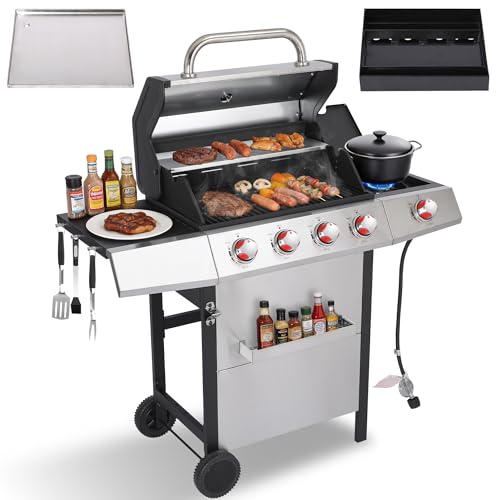
The GRILL DEPOTS 4-Burner Propane Gas Grill is a full-sized backyard cooking station tailored for everyday patio cooks, weekend barbecue hosts, and outdoor entertainers who need real cooking real estate. Running on standard liquid propane, it bridges the gap between undersized entry-level units and bulky luxury cart grills, offering a responsive cooking platform that easily keeps up with hungry family gatherings, neighborhood block parties, and game-day cookouts.
Heat output is anchored by four independently controlled stainless steel tube burners generating 10,000 BTUs each for a combined 40,000 BTUs. That spread makes multi-zone grilling genuinely practical. You can sear thick ribeyes over high direct flames on the left while slowly roasting bone-in chicken breasts or keeping barbecue sides warm over low indirect heat on the right. The porcelain-enameled cast iron grates store heat effectively, stamping bold char marks onto burgers and steaks. An included perforated griddle pan opens up options for breakfast hashes, shrimp, and seasonal vegetables, letting heat and wood smoke drift upward without losing smaller bites between the grate bars.
Constructed in a sharp black-and-silver finish, the cart is optimized for outdoor convenience. The hood features a built-in temperature gauge so you can monitor internal chamber heat without constantly opening the lid and bleeding thermal energy. Fold-down side tables offer critical workspace for raw meat platters, cutting boards, and seasoning rubs during active cooking, then tuck flat against the cart frame when the meal wraps up. Hanging tool hooks keep your grill tongs and spatula off dirty patio tables, while an integrated bottle opener keeps cookout hosts refreshed while tending the fire.
Transport and clean-up require minimal fuss. Tipping the scales at a manageable 35 pounds, the cart rolls smoothly across concrete patios, wooden decks, or grass on its two large wheels, making it easy to tuck under an awning when foul weather strikes. The slide-out drip tray catches escaping juices, while the slick porcelain finish on the grates reduces stuck-on food residue so a standard nylon or brass grill brush can wipe the surface clean in minutes.
Because the unit uses a relatively lightweight metal frame, it will lose heat faster in freezing or breezy winter conditions than heavy double-walled cast aluminum hoods. Keeping the lid shut and sheltering the cart from direct wind gusts solves this easily. For homeowners, weekend grillers, and patio hosts searching for a capable four-burner propane setup with multi-surface cooking versatility, this grill delivers outstanding utility and reliable everyday grilling performance.
With 40,000 total BTUs distributed across four distinct burners, this grill gives outdoor cooks exact control over their heat zones. You can easily set up a blistering direct searing station next to a gentle indirect holding zone, which is vital for reverse-seared steaks, slow-cooked bratwurst, and delicate poultry pieces.
The combination of porcelain-coated cast iron grates and the perforated griddle pan lets you handle complete meals simultaneously. While burger patties and hot dogs sizzle over the primary grates to capture that classic barbecue char, peppers, onions, and sliced potatoes can roast on the perforated pan right alongside them without dropping through the flames.
Routine maintenance is straightforward thanks to the porcelain enamel finish on the cooking grates, which prevents food juices from baking deep into raw iron pores. A quick post-cook brushing while the grates are still warm is typically all that is needed to maintain an ideal non-stick patina.
Underneath the burners, the removable grease collection tray catches falling drippings and channels them away from the firebox. Regularly sliding out and lining this grease tray with aluminum foil or replacing the drip liner cuts clean-up time down to seconds and prevents grease buildup that could cause unwanted flare-ups.


Pros
- Compact and portable with removable legs for easy transport and storage
- Dual burners with 20,000 BTU total output provide ample heat for fast grilling
- Built-in thermometer helps monitor cooking temperature without lifting the lid
- Dishwasher-safe cooking grates and removable grease tray simplify cleanup
- Stainless steel build offers good rust resistance for outdoor use
Cons
- With no reviews yet, long-term durability and performance are unverified
- 20,000 BTU total is moderate - may struggle with large cuts or cold weather compared to higher-output grills
- No side table or storage shelf included, which could be inconvenient during cooking
The BESTFIRE Tabletop 2-Burner Gas Grill is a compact propane grill designed for outdoor cooking enthusiasts who need portability without sacrificing performance. It's built for campers, tailgaters, RV owners, and backyard patio cooks who want a reliable grill that can handle everything from quick weeknight dinners to weekend BBQ gatherings.
In terms of real-world cooking performance, the dual burners put out 20,000 BTU total - enough to sear steaks, cook burgers, and even handle medium-sized cuts like chicken halves. The stainless steel grates heat up evenly, reducing hot spots that can lead to uneven cooking. The high dome lid is a nice touch, giving you room to cook thicker items like pork chops or whole chickens without them touching the grates. Temperature control is straightforward thanks to independent burner valves and the built-in lid thermometer, which helps you monitor the heat without constantly lifting the lid and losing warmth.
Build quality is solid for the price point. The stainless steel construction resists rust and weather damage, making it suitable for outdoor storage with a cover. The removable legs attach easily without tools, and the locking lid with a sturdy handle ensures safe transport. At about 22 x 20 x 13 inches, it's truly tabletop-sized - perfect for a picnic table or RV counter. The grill is lightweight enough to carry by hand but stable once set up.
Setup and cleanup are highlights. Assembly is tool-free - legs snap into place, the gas hose connects securely, and you're ready to cook in minutes. After grilling, the removable grease tray catches drips and is easy to empty. The cooking grates are dishwasher-safe, which is a real time-saver. The push-button ignition fires up reliably, so no need for lighters or matches even in breezy conditions.
There are some realistic limitations. With no existing customer reviews, you're buying based on specs alone - though the feature set looks solid. The 20,000 BTU output is adequate for most portable grilling needs but won't compete with larger backyard grills for searing power or recovery time when cooking for a crowd. Also, there's no built-in side table or storage shelf, so you'll need a separate surface for your tools and plates.
Overall, the BESTFIRE Tabletop 2-Burner Gas Grill is a practical choice for outdoor cooks who value portability and simplicity. It's best for small groups, camping trips, tailgate parties, or as a secondary grill on the patio. If you need a no-fuss propane grill that heats evenly, cleans up easily, and travels well, this is worth considering - especially at its price point.
The BESTFIRE grill's two burners distribute heat evenly across the 265 square inch cooking surface. With 20,000 BTU total, it reaches high temperatures quickly - great for searing burgers or hot dogs. The built-in thermometer lets you track internal grill temp without lifting the lid, helping you maintain consistent heat for longer cooks. The stainless steel grates hold heat well and produce decent sear marks. While not ideal for low-and-slow smoking, it handles direct grilling and medium-heat cooking with ease. Wind can affect the flame on a tabletop grill, but the burner shields offer some protection.
This grill is designed for on-the-go cooking. The removable legs snap on and off without tools, reducing setup time to under two minutes. The locking lid and secure handle make it easy to carry from your car to the campsite. At just over 13 inches tall and 20 inches wide, it fits on most tables or RV countertops. The included gas hose connects to a standard propane tank (not included) with a secure fit. The compact footprint means it stores easily in a car trunk or RV compartment. Just remember to let it cool completely before packing up.

Pros
- Hefty 30,000 BTUs across three burners provide plenty of heat for searing and high-temp grilling
- Cast iron grates hold heat well and create nice grill marks on burgers, chops, and veggies
- Folding side tables and compact collapsed size are great for small patios, balconies, or RV trips
- Warming rack is handy for keeping buns or side dishes hot without overcooking
- Solid build with four wheels – two lockable – for easy repositioning without heavy lifting
Cons
- At 75 pounds it's not ultra-portable for frequent camping; better suited for backyard or occasional tailgate use
- Side tables are functional but not super sturdy – heavier items may feel a bit wobbly
- Some users report uneven heat across the three burners, so you may need to rotate food for even cooking
The Kenmore 3-Burner Propane BBQ Grill is a versatile outdoor cooking machine aimed at backyard grillers, patio entertainers, and tailgaters who want a solid mid-sized gas grill without breaking the bank. With its 30,000 BTUs of total output and three independently controlled burners, this grill gives you direct control over your cooking zones. Whether you're searing steaks on high, cooking chicken on medium, or keeping veggies warm on low, you get a decent range of temperature options for most outdoor meals.
Where this grill shines is its cast iron cooking grates. They heat up evenly and hold onto that heat nicely, which means better searing and fewer cold spots compared to cheaper steel grates. You can fit up to 20 burgers at once on the 381 square inches of primary cooking area, and the warming rack adds another 131 square inches for buns or bacon. That's enough capacity for a small backyard party of four to six people, or a tailgate gathering with friends.
For portability, the Kenmore folds down to just 32.5 inches wide when the side tables are collapsed, which is a real plus for storage in a garage, shed, or RV compartment. The four caster wheels with two locking ones make it easy to roll across your patio or driveway and lock it in place while cooking. However, at 75 pounds it's not something you'll want to carry long distances, so it's more of a backyard-roller than a campsite-portable grill.
Durability-wise, the grill's lid and body feel sturdy enough for regular backyard use. The cast iron grates are heavy and should hold up well if you keep them seasoned and cleaned after each cook. The built-in lid thermometer is a nice touch for monitoring temperature without lifting the lid, though like most budget grills it's not perfectly accurate — but it gives you a useful ballpark. The one-button ignition works reliably most of the time, though you may occasionally need to light a burner manually if the electrode gets greasy.
As for limitations, the side tables are functional but not rock solid — you can set a platter of meat or a sauce bottle on them, but they might flex under heavier loads. Some users also note that heat distribution across the three burners can be a little uneven, so you'll want to rotate your food occasionally for consistent cooking. Cleanup is straightforward: brush the grates, empty the grease tray, and wipe down the exterior. No complex disassembly needed.
Overall, the Kenmore 3-Burner Propane Grill is a practical choice for home grillers who want a decent gas grill with folding convenience and solid heat retention from cast iron grates. It's good for weekend BBQs, patio dinners, and tailgating at the stadium. If you need a super-portable grill for backpacking or frequent camping, look elsewhere. But for backyard use and occasional outdoor entertaining, this Kenmore delivers reliable performance at a fair price.
The three stainless steel burners put out enough heat for direct grilling of burgers, chicken, and hot dogs. The cast iron grates get hot quickly and maintain temperature well, giving you good sear marks on steaks. Because the burners are individually controlled, you can set up a two-zone cooking area: high heat on one side for searing and lower heat on the other for indirect cooking. The warming rack is handy for keeping finished items warm without drying them out. Just be aware that the grill isn't designed for low-and-slow barbecue smoking — it's a gas grill, so don't expect deep smoke flavor unless you add a smoker box. For fast, everyday grilling, performance is solid.
The folding side tables are the standout feature for portability. When collapsed, the grill measures just 32.5 inches wide, making it easy to store in a garage corner or slide into a small RV storage bay. The four wheels with two locking casters let you roll it around your yard or driveway without much effort. At 75 pounds, it's not lightweight enough for tossing in the back of a car for a campsite — but it's perfectly manageable on flat ground for tailgating or patio use. The tool hooks are a nice touch for keeping grilling tools organized while moving it around.
Cleanup is relatively simple. After cooking, let the grill cool slightly, then scrub the cast iron grates with a grill brush while they're still warm. The grease tray slides out for easy disposal. The exterior can be wiped down with mild soap and water. To keep the cast iron grates in top shape, season them with a light coat of oil after each deep clean. The electronic ignition may need occasional cleaning if it fails to spark. Overall, daily maintenance is quick and doesn't require special tools.
Pros
- Universal QCC1 compatibility saves hassle of searching for the right part
- Sturdy PVC hose and brass connectors feel durable and weather-resistant
- Easy to install without any tools – great for quick replacements at the campsite or backyard
Cons
- 3-foot hose length may be too short for some larger grill or fire pit setups
- Low-pressure design only – not suitable for high-pressure appliances like propane torches
- No built-in shut-off valve; relies on tank valve for gas control
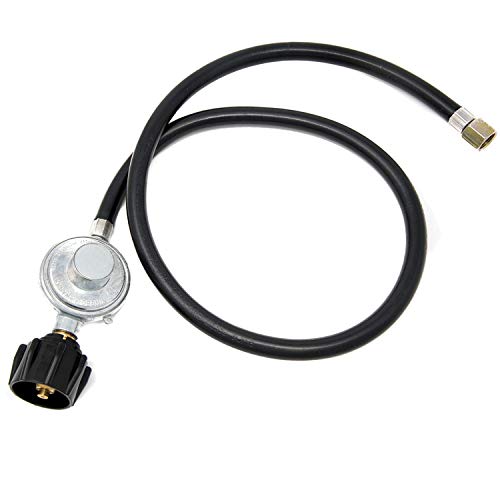
The GasOne 3-Foot Propane Regulator and Hose is a straightforward replacement part that keeps your outdoor gas gear running safely. This low-pressure regulator connects directly to standard QCC1 propane tanks and works with most grills, fire pit tables, patio heaters, and camp stoves. If you’re a backyard griller, camper, tailgater, or RV owner who needs a reliable gas connection, this hose gets the job done without any fuss.
Performance-wise, the regulator is rated for up to 80,000 BTU, which covers the needs of a typical gas grill or a medium-sized fire pit. The fiber reinforcement inside the hose helps maintain consistent gas flow, so you can expect steady heat whether you’re searing burgers or keeping a campfire going. Just keep in mind that this is a low-pressure regulator – it’s not meant for high-pressure applications like propane torches or some outdoor cookers.
Build quality is solid for the price. The PVC hose feels flexible yet tough, and the brass fittings create a tight, leak-free seal. Out of the box, it’s ready to hook up with zero tools – just screw the regulator into the tank and attach the 3/8-inch female flare nut to your appliance. That simplicity is a big plus when you’re setting up at a crowded tailgate or after a long drive to the campground.
On the downside, the 3-foot length might be too short for some larger grill layouts or if your propane tank sits far from the appliance. You’ll also need to rely on the tank’s valve for gas shutoff, since this hose doesn’t include its own valve. For most backyard setups, though, it’s a practical replacement that restores your grill or fire pit quickly.
Overall, this GasOne regulator is a solid choice for anyone needing a dependable propane connection. It’s especially handy for weekend BBQ cooks, campers, and patio entertainers who want a no-hassle fix. Just measure your setup to ensure the 3-foot length works, and you’ll be back to cooking in minutes.
Proper ignition of a propane grill involves a specific sequence of actions that ensures gas reaches the burners before ignition is attempted. Skipping steps or rushing the process can lead to gas accumulation, which poses a safety risk. The following procedure outlines the standard method for most consumer-grade propane grills, focusing on safety and reliability. Always refer to your specific owner’s manual for model-specific variations, as ignition systems and valve types can differ between brands.
| Step | Action | Key Detail |
|---|---|---|
| 1 | Open Tank Valve | Turn counter-clockwise until fully open |
| 2 | Check Connections | Ensure hose is tight and regulator is seated |
| 3 | Open Burner Valves | Turn all knobs to high or ignition position |
| 4 | Ignite | Press and hold ignition button for 5-10 seconds |
| 5 | Adjust Heat | Reduce knobs to desired cooking temperature |
Before turning on the gas, inspect the area for any visible damage to the propane hose or regulator. A cracked hose or loose fitting can cause gas leaks, which are dangerous and must be addressed before use. The tank valve should be opened fully to ensure adequate gas flow to the regulators. If the grill has a side burner, ensure its valve is closed during the initial ignition of the main burners to prevent gas from escaping through an unlit port.
Once the tank is open, turn the main burner control knobs to the high or ignition position. This allows gas to flow through the burner tubes. Do not light the grill yet. Wait for a few seconds to allow the gas to fill the lines.
Then, press and hold the electronic ignition button, or use a long-reach lighter if your model lacks electronic ignition. Keep the button pressed for at least five to ten seconds after the flame catches. This ensures the gas flow stabilizes and prevents the flame from going out immediately after release.
If the grill does not ignite on the first attempt, do not keep pressing the button repeatedly, as repeated attempts can lead to a dangerous gas buildup.
- Instead, turn off the tank valve, wait for one minute to allow any accumulated gas to dissipate, and then retry the ignition sequence.
- Once the burners are lit, adjust the knobs to the desired heat level, noting that medium-high is sufficient for most cooking tasks.
- Searing requires the highest setting, and you should allow the grill to preheat for 10-15 minutes to ensure even heat distribution across the cooking grates.
Checking the Propane Connection and Regulator
The connection between the propane tank and the grill is the most critical point for safety and performance. A loose connection can cause gas leaks or inconsistent fuel flow, leading to weak flames or failure to ignite. The regulator, which controls the gas pressure, must be properly seated on the tank valve. If the regulator is not fully tightened, the grill may not receive enough gas to ignite, or it may sputter under load.
Use a soap and water solution to check for leaks at the connection points, applying it to the tank valve, regulator inlet, and hose connections.
- If bubbles form, there is a leak, so tighten the connection carefully and do not use the grill if the leak persists.
- Instead, shut off the tank and contact a professional if the leak persists after tightening the connection carefully.
- Many grills come with a universal regulator that fits standard QCC-1 tank connections, but always verify compatibility with your specific tank type.
- Some older tanks may require different fittings, so ensure the hose and regulator are designed for your equipment.
Regulator performance can also be affected by the tank’s fill level. A nearly empty tank may not provide sufficient pressure to ignite the burners, especially in cold weather. If the grill struggles to light, check the tank gauge or weigh the tank to estimate the remaining propane. Refilling the tank often resolves ignition issues related to low fuel levels. Additionally, ensure the hose is not kinked or crushed, as this can restrict gas flow and prevent proper ignition.
Ignition Techniques and Common Mistakes
Electronic ignition systems are convenient but can fail if the battery is dead or the spark plug is dirty. If the ignition button does not produce a spark, check the battery compartment and replace the battery if necessary.
Clean the spark electrode with a dry cloth to remove any debris or grease that may interfere with the spark. For grills with manual ignition, use a long-reach lighter to avoid burns. Hold the lighter near the burner opening while turning the gas valve to high. Keep the flame steady until the burner ignites.
One common mistake is turning the gas on before opening the lid. This can cause gas to accumulate inside the grill chamber, leading to a large flare-up when ignited. Always open the lid before turning on the gas. Another mistake is not holding the ignition button long enough.
Releasing the button too soon can cause the flame to go out, leaving unburned gas in the lines. Wait until the flame is stable before releasing the button. If the flame goes out immediately, turn off the gas and wait a minute before retrying.
Weather conditions can also affect ignition. In windy conditions, the flame may be blown out. Use a windbreak or grill in a sheltered area. In cold weather, the propane vaporization rate decreases, which can make ignition more difficult. Let the grill preheat for a longer period to compensate for the lower vapor pressure. If the grill still does not ignite, check the tank level and ensure the regulator is functioning correctly. These adjustments can help ensure reliable ignition in various environmental conditions.
Troubleshooting Failure to Ignite
If the grill fails to ignite after following the correct procedure, several issues may be at play. First, verify that the tank contains propane. A low tank level is a common cause of ignition failure. If the tank is full, check the regulator and hose for leaks or blockages. A blocked gas line can prevent fuel from reaching the burners. Inspect the burner tubes for any obstructions, such as insect nests or debris, which can restrict gas flow.
Check the ignition system. If the electronic ignition is not sparking, replace the battery or clean the spark electrode. If the manual ignition is used, ensure the lighter is functioning properly. If the burners ignite but go out immediately, the issue may be with the regulator or gas flow. Adjust the regulator or replace it if necessary. If the problem persists, consult the manufacturer’s troubleshooting guide or contact customer support for further assistance. These steps can help identify and resolve common ignition issues.
Another potential cause is a faulty control valve. If the valve does not open fully, gas flow will be restricted, preventing ignition. Test the valve by listening for a hissing sound when turned to high. If no sound is heard, the valve may be stuck or damaged. In such cases, professional repair or replacement is recommended. Do not attempt to disassemble the valve yourself, as this can be dangerous. Always prioritize safety when troubleshooting ignition problems.
Safety Precautions During Startup
Safety is paramount when handling propane. Always work in a well-ventilated area, away from open flames or sparks. Keep the grill at least 10 feet away from structures, overhangs, or flammable materials. Ensure the grill is on a stable, non-flammable surface. Never use a propane grill indoors, in a garage, or in an enclosed space, as carbon monoxide buildup can be fatal. Follow the manufacturer’s safety guidelines for placement and operation.
Wear appropriate protective clothing, such as long sleeves and closed-toe shoes, to prevent burns from hot surfaces or flare-ups. Keep a fire extinguisher or bucket of sand nearby in case of emergencies. If you smell gas after ignition, turn off the tank valve immediately and move away from the grill. Do not attempt to relight the grill until the smell has completely dissipated. If the smell persists, contact your propane supplier or a professional for inspection. These precautions help prevent accidents and ensure a safe grilling experience.
Regular maintenance also contributes to safe startup. Clean the burner tubes and grates regularly to remove grease and debris, which can cause flare-ups or block gas flow. Inspect the hose and regulator for wear or damage, and replace them if necessary. Store the grill in a dry, covered area to protect it from the elements. Proper maintenance extends the life of your grill and ensures reliable ignition every time. For more on maintaining your equipment, see our rolling BBQ prep table guide for complementary storage solutions.
Optimizing Heat Control After Ignition
Once the grill is ignited, adjusting the heat is crucial for even cooking. Most propane grills have independently adjustable burners, allowing you to create direct and indirect heat zones. For direct heat, turn all burners to high and preheat the grill for 10-15 minutes. This is ideal for searing steaks, burgers, and vegetables. For indirect heat, turn off the outer burners and keep the center burner on medium. This setup is better for larger cuts of meat or foods that require longer cooking times.
Use the built-in lid thermometer to monitor the cooking temperature. Adjust the burner knobs as needed to maintain the desired heat level. If the temperature drops, increase the gas flow by turning the knobs to a higher setting. If the temperature is too high, reduce the gas flow. Consistent heat control ensures even cooking and prevents burning. Allow the grill to stabilize before placing food on the grates. This gives the heat time to distribute evenly across the cooking surface.
For grills with multiple burners, you can also use a combination of direct and indirect heat. For example, turn on all burners for preheating, then turn off one or two burners to create an indirect zone. This allows you to sear the food on the direct heat side and finish cooking on the indirect heat side.
This technique is particularly useful for thick cuts of meat, such as ribeyes or pork chops. Experiment with different heat settings to find the optimal configuration for your cooking style. Proper heat management is key to achieving delicious results.
Maintenance Tips for Reliable Future Starts
Regular maintenance ensures your grill starts reliably and performs well over time. After each use, clean the grates with a grill brush to remove food debris. Wipe down the exterior of the grill with a damp cloth to remove grease and dirt. Empty the grease tray and clean it with hot, soapy water. A full grease tray can cause flare-ups and smoke, which can affect the taste of your food and pose a fire risk.
Inspect the burner tubes for any blockages or damage. Use a wire brush to clear any debris from the ports. Check the hose and regulator for signs of wear, such as cracks or leaks. Replace these components if necessary. Store the grill in a dry, covered area to protect it from rain and snow. Cover the grill when not in use to prevent dust and debris from accumulating. These simple maintenance tasks can extend the life of your grill and ensure reliable ignition.
Before the grilling season, perform a thorough inspection of the grill. Check the propane tank, hose, and regulator for any issues. Clean the interior and exterior of the grill. Test the ignition system to ensure it is working properly. If you notice any problems, address them before using the grill. Regular maintenance not only ensures reliable startup but also enhances the overall cooking experience. By taking care of your grill, you can enjoy safe and delicious meals for years to come.
Mastering the startup process for a propane gas grill is essential for safe and enjoyable outdoor cooking. By following the correct ignition sequence, checking connections, and maintaining your equipment, you can avoid common issues and achieve consistent results. Always prioritize safety and refer to your owner’s manual for model-specific instructions. With practice, starting your grill will become a quick and effortless part of your grilling routine.


Write Your Review
No reviews yet. Be the first to share your experience!