


Seasoning creates a polymerized oil layer that protects metal and reduces sticking. To achieve this, you apply a thin coat of high-smoke-point oil to clean, dry grill grates and heat it until it cures. This process is essential for cast iron, carbon steel, and some stainless steel grates to ensure longevity and non-stick performance.
Many owners skip this step or use the wrong oil, leading to sticky residues or rust. Understanding the specific material of your grate is key to choosing the right method. Whether you are dealing with porcelain-coated steel or raw cast iron, the goal is a smooth, dark surface that releases food easily. Proper preparation also extends the life of your equipment and makes cleaning significantly simpler after each use.

Pros
- Excellent heat retention and even cooking across the entire surface.
- Porcelain coating resists rust much better than bare cast iron or stainless steel.
- Non-stick surface simplifies post-cook cleanup – no scrubbing required.
- Affordable price point for a high-quality replacement part.
Cons
- Porcelain coating can chip if dropped or scraped with metal tools – use wooden or silicone utensils.
- Not compatible with all grill brands – only fits specific 3-burner Expert Grill models, so measure carefully.
- Slightly smaller than some original grates, which may leave a small gap around the edges.
If you own a 3-burner Walmart Expert Grill and the original grates are starting to rust or lose their non-stick surface, the Outdoor Bazaar Replacement Porcelain Cooking Grid is a smart, budget-friendly upgrade. This grid is designed specifically for models like GBC1916WRS, GBC1716W, GBC2016W, and XG10-101-002-02, so you can get back to grilling without buying a whole new grill.
This replacement grate is made from heavy-duty porcelain-coated steel, which gives you the best of both worlds: the heat retention of cast iron without the constant rust worries. Porcelain coating is naturally non-stick and resists corrosion, making it ideal for backyard cooks who leave their grill uncovered or deal with humid weather. The grid measures roughly 22 11/16 inches by 13 5/16 inches, so it fits the cooking area snugly, and the black finish looks clean on any grill.
When it comes to cooking performance, this grate delivers even heat across the entire surface, which means fewer hot spots and more consistent results. It retains heat well, so you can get a solid sear on steaks, burgers, or chicken breasts, and the porcelain surface creates those appealing sear marks that scream backyard BBQ. Whether you're tailgating before the big game, cooking for a crowd at a campsite, or just firing up the patio grill on a Saturday afternoon, this grid handles fast grilling and low-and-slow cooking alike.
Cleanup is where this grate really shines. The non-stick porcelain surface releases food easily, so you can wipe it down with a paper towel or give it a quick scrape with a wooden spatula. No more wrestling with stuck-on grease or scrubbing rust spots. That said, you'll want to avoid using metal brushes or scrapers, as they can chip the coating over time. A soft brush or cloth is all you need.
One thing to keep in mind: this replacement grid is designed for specific Expert Grill models, so measure your original grate before ordering. The fit is precise, but if your grill is a different brand or size, it may not sit properly. Also, the porcelain coating, while durable, can chip if you drop the grate or bang it against hard surfaces, so handle it with care during cleaning and storage.
Overall, the Outdoor Bazaar Replacement Porcelain Cooking Grid is a solid choice for anyone who wants to revive their 3-burner Expert Grill without spending a lot. It's great for weekend warriors, tailgaters, campers, and anyone who values easy cleanup and even cooking. If you're tired of rusty grates and uneven heat, this replacement will get you back to grilling with confidence.


Pros
- Solid stainless steel build provides practical corrosion resistance compared to chipped porcelain or rusted iron
- Includes two modular sections that combine for a 16 1/2 by 22 3/4 inch total cooking area
- Broad compatibility across numerous Kenmore, Vermont Castings, Hamilton Beach, and ProChef grill models
- Straightforward maintenance with no pre-seasoning required compared to bare cast iron
Cons
- Requires precise measuring of existing grill boxes and old grates prior to ordering to avoid fit issues
- Lacks interlocking tabs, requiring stable ledge support inside the grill firebox
The Htanch SF8252 replacement cooking grate set is a dedicated two-piece grilling surface engineered to fit specific gas grill models from brands like Vermont Castings, Kenmore, ProChef, and Hamilton Beach. For backyard grillers dealing with pitted, flaking, or corroded original grids, this pair provides a practical refresh. It caters directly to homeowners and outdoor cooking enthusiasts who want to revive an existing outdoor cooker rather than spend significantly more money replacing the entire barbecue station.
In everyday outdoor cooking scenarios, stainless steel grids deliver dependable heat transfer for staples like burgers, hot dogs, chicken breasts, and sliced vegetables. The rod layout allows direct heat from the burners below to interact cleanly with food, helping achieve classic sear marks when the grill is properly preheated. Because the set splits into two separate 16 1/2-inch by 11 3/8-inch sections, it supports standard dual-zone cooking setups, allowing you to manage searing on one side while holding items over indirect heat on the other.
Built from stainless steel, these replacement grates provide durable structural integrity designed to withstand high outdoor cooking temperatures. Unlike porcelain-coated steel wire which can chip over time, or untreated cast iron that demands continuous oiling to prevent rust, stainless steel provides resilient day-to-day operation. The welded rod structure creates a rigid cooking platform that supports heavier cuts of meat, cast-iron skillets, or loaded vegetable baskets without sagging under regular backyard use.
Installation requires zero tools; users simply lift out the degraded cooking grids and set these two sections directly onto the internal firebox ledges. Daily maintenance is similarly low effort. After cooking, a warm grill brush or nylon scraper cleans the smooth stainless surfaces without requiring the delicate handling needed for seasoned iron. For deeper seasonal cleaning, the individual sections are compact enough to be soaked in a utility sink or washed down with warm water and degreasing soap.
While compatibility spans a long list of Kenmore, Vermont Castings, and ProChef models, proper fit relies entirely on exact cookbox dimensions. Grill manufacturers frequently altered internal dimensions across model years, so relying solely on model numbers can occasionally lead to mismatched sizing. Backyard cooks must take careful measurements of their current firebox ledges or original grates before purchasing to ensure the 16 1/2 by 22 3/4 inch total footprint sits flush without sliding.
If your current grill body and burners remain in solid working order but the cooking surfaces have deteriorated, this Htanch two-pack offers an efficient, budget-conscious solution. It delivers reliable stainless steel durability, straightforward cleanup, and immediate renewal of your cooking surface for family weeknight grilling and weekend gatherings.
Crafted from welded stainless steel rods, the Htanch SF8252 grids are structured to handle everyday outdoor cooking demands. The rigid construction supports heavy cuts of meat and cookware without bending, while the stainless material naturally resists the moisture and grease common to gas grill cookboxes.
Compared to porcelain-enameled steel surfaces that can crack and expose bare metal to oxidation, bare stainless steel provides consistent structural performance over multiple seasons of backyard cooking.
Maintaining stainless steel cooking grates is considerably easier than caring for traditional cast iron, as they do not require regular oil seasoning cycles to prevent deterioration. Routine post-cooking cleanings with a standard wire or bristle-free grill brush while the grates remain warm will dislodge grease and food residue efficiently.
Because the set is split into two manageable panels measuring 16 1/2 by 11 3/8 inches each, removing them for thorough soaking or seasonal scrubbing in a utility sink requires minimal effort.
Pros
- Safe bristle-free cleaning prevents health hazards
- Reusable pads with 5 replacements offer great value
- Built-in scraper handles tough, stuck-on grease
- Easy to use with simple heat-and-scrub method
Cons
- Requires heating grill to 400°F before cleaning, which uses extra fuel
- Pads may wear out faster on heavily caked grates
- Handle length may feel short for larger grills
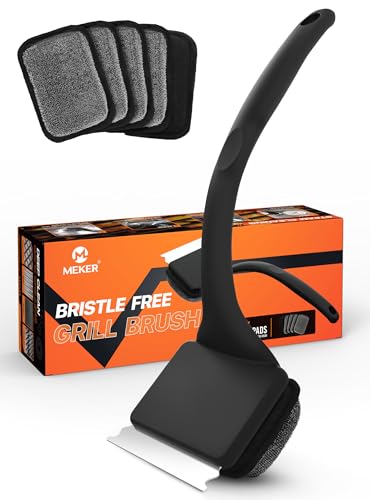
If you love firing up the grill for weekend BBQs or tailgating, you know the struggle of cleaning those grates. The MEKER Grill Brush is a bristle-free cleaner designed to make that job safer and simpler. Instead of metal bristles that can break off and end up in your food, this brush uses a flexible steel fiber woven pad and a cleaning cloth to lift grease and grime. It's a practical tool for backyard grillers, campers, RV owners, and anyone who wants to avoid the risks of traditional wire brushes.
Using the MEKER brush is straightforward. Heat your grill to at least 400°F for about 15 minutes, scrape off any large debris with the built-in scraper, then soak the pad in cold water and gently wipe the grates. The combination of heat and the damp pad creates steam that loosens stubborn buildup. I found it works well on both cast iron and stainless steel grates, leaving them clean without scratching. The scraper is handy for reaching between square or round bars, which is a common pain point with other brushes.
Build quality is decent for the price. The handle feels sturdy, and the upgraded adhesion system with eight screw-locked points keeps the pad firmly attached during scrubbing. The brush comes with five replacement pads, so you're set for several grilling seasons. The pads are dishwasher-safe, making cleanup after cleaning even easier. Just remember to let the pad cool down before pulling it off to replace it.
One limitation is that you need to preheat the grill to get the best results. That uses extra propane or charcoal, which might be a consideration if you're trying to conserve fuel. Also, if your grates have years of caked-on residue, you might need to scrub a bit harder or repeat the process. The handle is about 13.8 inches long, which is fine for most grills but might feel short for larger models.
Overall, the MEKER Grill Brush is a solid choice for anyone who prioritizes safety and ease of use. It's especially good for families with kids, where the risk of bristle ingestion is a real concern. For campers and tailgaters, it's compact enough to toss in a bag, and the reusable pads mean you won't need to buy replacements often. If you're a backyard BBQ enthusiast who grills regularly, this brush will help keep your grates clean without the worry.

Pros
- Comfortable ergonomic handle reduces hand fatigue during thorough cleaning
- Replaceable pads offer long-term value and consistent scrubbing performance
- Heavy-duty design tackles baked-on residue without scratching porcelain or stainless steel grates
- Affordable price point makes it a smart addition to any griller's toolkit
Cons
- Pads may need frequent replacement if used on heavily charred grates after every cook
- Not ideal for cleaning griddle surfaces or ceramic grills; best suited for standard wire or rod grates
If you've spent any time grilling burgers, chicken, or steak for a weekend BBQ, you know that cleaning the grates is the least glamorous part of the cook. The Weber Grill Grate Scrubber aims to change that. This heavy-duty scrubber is built specifically for outdoor cooking enthusiasts who want to keep their grill in top shape without wrestling with flimsy brushes or disposable pads.
This scrubber is designed for backyard grillers, tailgaters, and anyone who fires up a gas or charcoal grill regularly. It's not a cooking appliance itself, but it plays a critical role in maintaining your grill's performance. A clean grate means better heat transfer, fewer flare-ups, and that perfect sear on your steaks. The contoured handle feels natural in your hand, giving you a firm grip even when you're scrubbing away stubborn residue after a long cook.
In terms of real-world use, this scrubber does exactly what it promises. The three included pads are easy to swap out, so you always have a fresh scrubbing surface. The heavy-duty construction handles the kind of baked-on grease and carbon that builds up after smoking ribs or grilling a big batch of burgers. While it won't replace a deep cleaning with a wire brush for extremely caked-on grates, it's perfect for regular maintenance after each cook.
Durability is solid for a tool in this price range. The plastic handle holds up well to repeated use and exposure to outdoor elements, though you'll want to store it in a dry place to extend its life. The pads are the main consumable, and you'll get several uses out of each one depending on how dirty your grates get. For most backyard cooks, a single pack will last through a season of weekend grilling.
Cleanup is straightforward: just rinse the scrubber after use and let it dry. The compact size makes it easy to tuck into a grill cart or drawer, so it's always handy when you need it. One realistic limitation is that it's not designed for flat top griddles or ceramic grills, but for standard wire or rod grates, it works great.
Overall, the Weber Grill Grate Scrubber is a practical, no-nonsense tool for anyone who takes their outdoor cooking seriously. Whether you're a weekend BBQ enthusiast or a tailgater who wants quick cleanup before packing up, this scrubber delivers reliable performance at a fair price. It's a smart addition to any grill setup.
Keeping your grill grates clean is essential for great cooking results and extending the life of your grill. The Weber Grill Grate Scrubber makes this task straightforward. After each cook, allow the grates to cool slightly, then scrub with the pad to remove food residue and grease. The contoured handle gives you good leverage, so you don't have to scrub too hard.
For best results, rinse the scrubber with water after each use and let it air dry. The replaceable pads should be swapped out when they become worn or lose their scrubbing power. Depending on how often you grill, a single pad can last several sessions. Store the scrubber in a dry place to prevent any mold or mildew on the pad.
This scrubber is compatible with most standard gas and charcoal grill grates, including porcelain-coated, stainless steel, and cast iron. Avoid using it on non-stick surfaces or delicate ceramic grills, as the abrasive pads may cause scratching.

Pros
- Zero cleanup hassle – simply discard the grate after use
- Even cooking surface delivers consistent results across burgers, veggies, and seafood
- Lightweight and compact – easy to pack for any outdoor adventure
- Compatible with most grill types, including charcoal, gas, and portable smokers
- Affordable multipack provides multiple uses for frequent grillers
Cons
- Single-use design may not appeal to eco-conscious buyers or those seeking long-term durability
- Not as heavy-duty as permanent grates – may require careful handling with sharp tools
- Size may be slightly small for extra-large grills, limiting coverage on bigger cooking surfaces
The ciAmore Grill Topper is a set of 10 disposable grill grates designed to simplify your outdoor cooking experience. Measuring 11.8 x 15.7 inches each, these grates sit on top of your existing grill grates, providing a fresh cooking surface for every use. They're made for backyard grillers, campers, tailgaters, and RV owners who value convenience and quick cleanup over permanent hardware.
When it comes to real-world cooking performance, these grates deliver even heat distribution that helps prevent hot spots. You can get a decent sear on steaks or burgers, and the grid pattern keeps smaller items like shrimp or sliced veggies from falling through. While they won't produce the same smoke flavor as a heavy cast iron grate, they work well for fast grilling and medium-heat cooking. They're also great for high-volume cooking during parties or campsite meals because you can cook multiple items at once without worrying about cross-contamination between batches.
Build quality is solid for a disposable product. The material resists corrosion and withstands typical grilling temperatures without warping. Each grate weighs only 4.5 ounces, making the entire pack extremely portable. You can toss them in a camping bin, RV storage, or tailgating cooler without adding bulk. They fit most standard charcoal and gas grills, though you might need to trim them for smaller portable grills.
Setup is as easy as placing the grate onto your existing grates and lighting the grill. After cooking, you simply let it cool, then discard it. This eliminates the need for scraping, soaking, or scrubbing – a huge time saver after a long cookout. However, the disposable nature means you can't reuse them, so you'll need to stock up for multiple grilling sessions. Also, they are less sturdy than permanent grates, so avoid using heavy cast iron cookware or cutting directly on them.
Overall, the ciAmore Grill Topper is a practical solution for outdoor cooks who prioritize convenience. It's perfect for camping trips where cleaning supplies are limited, for tailgating where time is short, or for backyard parties when you want to spend more time with guests. If you prefer long-lasting, heavy-duty grates or are eco-conscious about disposables, this might not be your first choice. But for anyone who wants to skip the cleanup and keep grilling fun, this pack delivers real value.
These disposable grates shine in scenarios where cleanup is a hassle or water is scarce. For campers, they allow you to enjoy grilled meals without scrubbing soot off your camping stove's grates. Tailgaters can swap grates between meats and veggies to avoid flavor transfer without extra washing. Backyard cooks hosting large parties can rotate fresh grates for successive rounds of burgers and hot dogs. RV owners with limited water tanks will appreciate being able to toss the grate after cooking. They also work well on portable charcoal grills at the beach or park, letting you pack up quickly once the meal is done.

Pros
- Large, flat cooking area accommodates a whole meal for a crowd
- Heavy-duty steel construction feels sturdy and should last through many seasons
- Even heat distribution thanks to the diamond mesh pattern – no more burnt spots
- Portable and tool-free setup – just drop it over the fire and cook
Cons
- Non-folding design can be a bit bulky to store in tight spaces
- Painted finish may chip over time if exposed to high direct flame for long periods
- No adjustable height – you’re limited to the fire’s distance from the grate
The VEVOR X-Marks Fire Pit Grill Grate is exactly what you need if you love cooking over an open fire but don’t want to mess with a bulky tripod or complicated setup. This is a simple, rectangular grate that sits right over your fire pit or campfire, giving you a solid cooking surface for all kinds of outdoor meals. Whether you’re a weekend camper, a tailgater, or just someone who enjoys a backyard fire with the family, this grate brings real cooking convenience to the flames.
Right out of the box, the grate feels sturdy. It’s made from heavy-duty Q235 steel with a painted black finish that’s meant to resist rust and handle high heat. The diamond-shaped mesh top is the real star here – it lets heat flow up evenly from the fire below, so you don’t get those annoying hot spots that char one side of your burger while the other stays raw. I’ve used it for steaks, fish, grilled veggies, and even eggs in a cast iron skillet, and the heat distribution was consistent enough to get a nice sear without constant flipping.
Portability is a strong point. The two handles are welded on and feel secure, making it easy to lift the grate off the fire or move it around the campsite. It doesn’t fold, but at 32 inches long and only 6.6 pounds, it’s manageable to store in a car trunk or an RV compartment. Setup couldn’t be simpler – no assembly, no tools. Just place it over your fire pit or a ring of rocks, and you’re cooking. That kind of convenience is huge when you’re at a campsite after a long day of hiking.
In terms of cooking performance, this grate handles direct flame well. The high-density mesh means smaller foods like sliced vegetables or bacon won’t fall through, which is a common annoyance with wider grates. The load capacity is rated at 44 pounds, so you can pile on a good amount of food for the whole gang. Just keep in mind that the grate doesn’t adjust in height – you control cooking temp by managing your fire’s intensity. That’s standard for open-fire cooking, but something to think about if you prefer precise temperature control.
Durability wise, the heavy steel feels like it will hold up to plenty of campfire seasons. However, the painted finish will eventually show wear if you constantly expose it to direct flame for hours. A little care – like not leaving it in the rain and cleaning off ash after use – will extend its life. The grate is easy to clean: a quick scrub with a stiff brush after it cools down, and you’re done. No fancy grease management system here, just good old elbow grease.
Overall, the VEVOR X-Marks Fire Pit Grill Grate is a solid buy for anyone who cooks outdoors over a fire. It’s versatile enough for campers, tailgaters, RV owners, and backyard fire pit users. If you already have a fire ring or a portable fire pit, this grate turns it into a serious cooking station for a fraction of the cost of those fancy grill attachments. For $27, you get a well-built, no-fuss cooking surface that delivers reliable results for your outdoor meals.
Pros
- Solid cast iron build feels reassuringly heavy-duty and won't bend under weight
- Leather lanyard prevents misplacing the lifter - easy to hang on your smoker or grill
- Works equally well on gas grills and charcoal kettles, including kamado-style cookers
- Pair of lifters makes grate handling much safer and more controlled than using tongs or a single hook
Cons
- Cast iron can get hot if left near the fire - you'll need to store it away from direct heat
- Hooks may be slightly thick for very thin or wire-style grates - best for heavy-duty grids
- No rubberized grip means the handle can become slippery when greasy - use with a glove
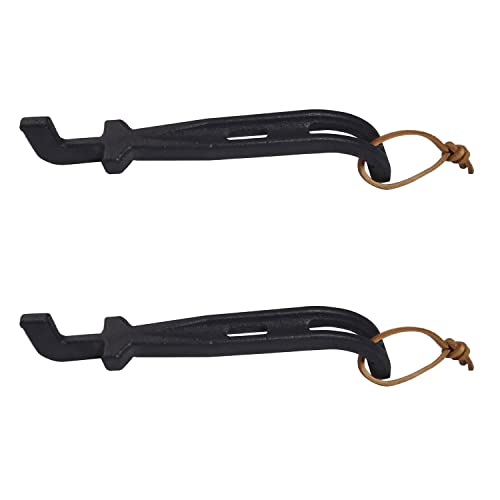
The DELSbbq Grill Grate Lifter is the kind of simple accessory that makes a real difference during a long cook. It is a pair of cast iron hooks designed to safely lift your cooking grid off the grill. Whether you are managing a low-and-slow brisket on a charcoal smoker or flipping burgers on a gas grill during a backyard party, these lifters keep your hands away from hot surfaces. For anyone who spends weekends tailgating or camping, having a reliable way to adjust your grate without burning yourself is a must.
These lifters are best suited for backyard grillers, BBQ enthusiasts, campers, tailgaters, RV owners, and anyone who regularly cooks outdoors. The 8-inch length gives you enough reach to grab a hot grate firmly while keeping your knuckles clear of the heat. They work with most heavy-duty cast iron and steel grates, so you can use them on everything from a Weber kettle to a propane flat top. The cast iron construction is tough and resists warping, even after repeated exposure to high heat.
From a cooking performance perspective, these lifters do not directly affect heat consistency, searing ability, or smoke flavor. But they do let you adjust your grate height quickly, which is critical when you need to move coals or add wood chunks during a long smoke. For fast grilling, you can remove the grate to access the burners for cleaning or to add a smoker box. The real-world advantage is safety and convenience - no more using heavy oven mitts or tongs that slip.
Build quality is straightforward. The cast iron is heavy and feels solid. Each lifter has a small hole for the included leather lanyard, which lets you hang them on your grill cart or a hook. That is a nice touch because it keeps the tools handy and prevents them from getting lost in a messy backyard shed. The black finish is simple and should hold up well to weather, though like any cast iron, it can rust if left out in the rain. A quick wipe and storing them inside or under a cover will keep them looking good.
Setup is instant - these are not complicated tools. You just grab, hook under the grate, and lift. Cleanup is easy; a quick rinse or wipe with a cloth is usually enough. One limitation is that the hooks are best for thicker, bar-style grates. They may be too chunky for very thin wire grates, but those are less common on serious outdoor cookers. Also, the handle does not have a rubber sleeve, so if your hands are greasy, it can slip. A simple grill glove solves that.
Overall, the DELSbbq Grate Lifter is a practical buy for any outdoor cook who values safety and convenience. It is affordable, built to last, and makes grate handling much easier during camping trips, tailgate parties, or weekend backyard sessions. If you have a heavy cast iron grate on your smoker or grill, these hooks will quickly become a go-to tool.
The cast iron build of these lifters gives them excellent heat resistance and long-term durability. They are not going to flex or break under the weight of a standard cooking grid. The leather lanyard is a thoughtful addition for storage - you can hang them on your grill cart, a pegboard, or even the side shelf of a patio cooker. This keeps them off the ground and dry, which helps prevent rust. Just make sure to dry them thoroughly after cleaning, and store them indoors if you live in a humid climate.
These lifters are perfect for charcoal grills where you need to adjust the grate height for direct or indirect cooking. They also work great on gas grills when you want to remove the grate for deep cleaning or to access the flavorizer bars. Campers and tailgaters will appreciate how easy they are to pack - just hook them on your grill bag or strap. For RV owners with a portable propane grill, these lifters add an extra layer of safety when cooking over an open flame.
The core objective is to build a durable, non-stick barrier through polymerization. This chemical reaction occurs when oil is heated beyond its smoke point, causing it to harden into a plastic-like coating. The process protects the underlying metal from moisture and rust while creating a surface that food slides off rather than sticking to. Success depends on using the correct oil and applying it in thin, even layers.
| Grate Material | Seeding Requirement | Recommended Oil Type | Cleaning Note |
|---|---|---|---|
| Cast Iron | Essential for new and reconditioned grates | High smoke point (Flax, Canola, Vegetable) | Brush while warm; avoid soaking |
| Stainless Steel | Optional; improves non-stick properties | Light, neutral oils (Grapeseed, Canola) | Can be washed with soap |
| Porcelain-Coated | Not required; coating is pre-finished | None (do not oil) | Wipe clean; avoid abrasive pads |
| Carbon Steel | Essential to prevent rust | High smoke point (Flax, Linseed) | Brush immediately after use |
Before applying any oil, the grate must be thoroughly clean and completely dry. Any existing rust, debris, or old seasoning must be removed to ensure the new layer bonds correctly. Start by scrubbing the grate with a grill brush while the surface is warm, which helps lift carbonized food particles.
Then, wash the grate with warm soapy water to remove grease and grime, followed by a thorough rinse. Allow the grate to air dry completely or dry it with a towel to prevent water spots from interfering with the oil application.
Choose an oil with a high smoke point to ensure it cures properly without becoming rancid or sticky. Low-smoke-point oils like olive oil or butter can burn into a gummy residue that attracts more dirt. Ideal choices include flaxseed oil, canola oil, vegetable oil, or grapeseed oil. These oils polymerize effectively at the temperatures used for seasoning. Apply the oil using a lint-free cloth, paper towel, or basting brush, ensuring an even, thin coat across the entire surface, including the edges and underside.
Heat the grill to a moderate temperature, typically around 400-500 degrees Fahrenheit, to cure the oil layer. Place the oiled grate inside the closed grill and let it heat for 20 to 30 minutes. You may see some smoke, which is normal as the oil begins to polymerize.
After the heating period, turn off the grill and let it cool completely. Check the surface; it should appear slightly darker and have a smooth, matte finish. If the surface feels sticky or looks uneven, wipe it down with a clean cloth and repeat the process with another thin coat.
Repeat the oiling and heating process two to three times for best results. Each layer adds to the durability of the seasoning. The first coat creates the base, while subsequent coats build up a thicker, more resilient barrier. This multi-step approach is particularly important for new cast iron grates, which are porous and require more layers to become fully seasoned. Avoid using excessive oil in a single application, as this leads to pooling and uneven curing. Patience during this initial setup pays off in long-term performance and easier maintenance.
Identifying Your Grate Material and Needs
Not all grill grates require the same treatment, so identifying the material is the first critical step. Cast iron and carbon steel grates are uncoated metals that are susceptible to rust if not protected. These materials benefit significantly from a robust seasoning layer that acts as a waterproof barrier.
Stainless steel grates are more resistant to rust but can still develop a non-stick layer that improves cooking performance. Porcelain-coated grates, often found on budget gas grills, have a factory-applied enamel finish that does not need seasoning and can be damaged by excessive oil or heat.
Check the manufacturer’s documentation or the product listing to confirm the material. Some replacement grates, like those designed for specific models, may be labeled as porcelain-coated steel or stainless steel. If the grate is black and heavy, it is likely cast iron. If it is silver and lightweight, it is probably stainless steel.
If it has a glossy black finish that chips rather than rusts, it is likely porcelain-coated. Misidentifying the material can lead to unnecessary work or damage. For example, seasoning a porcelain-coated grate with oil can cause it to become sticky and difficult to clean, negating the benefits of the factory coating.
Selecting the Right Oil for Polymerization
The choice of oil determines the quality of the final seasoning layer. High-smoke-point oils are preferred because they can withstand the high temperatures needed for curing without breaking down into harmful compounds. Flaxseed oil is often cited as the best option because it dries to a hard, durable finish. However, it can be expensive and prone to going rancid if not applied in very thin layers. Canola and vegetable oils are more affordable and widely available, making them practical choices for most home grill owners.
Avoid using oils that contain added flavors, such as infused olive oils or butter, as these additives can burn and create a sticky residue. The oil should be pure and neutral. When applying the oil, use a paper towel or cloth dampened with a small amount of oil.
Wipe the grate thoroughly, then use a dry paper towel to wipe off any excess. The goal is to leave a microscopic film, not a visible layer of wet oil. This thin application is crucial for achieving a smooth, non-stick surface rather than a greasy, sticky one.
Step-by-Step Curing Process
Follow these specific steps to ensure a successful seasoning process. Each step builds upon the previous one to create a stable coating. Skipping steps or rushing the cooling phase can result in an uneven or incomplete seasoning. The process takes time, but the results are worth the effort for improved cooking performance and grate longevity. Keep a towel and a pair of heat-resistant gloves nearby for safety and convenience.
- Clean the grate thoroughly with a brush and soapy water.
- Dry the grate completely to remove all moisture.
- Apply a thin, even coat of high-smoke-point oil.
- Wipe off any excess oil with a dry paper towel.
- Place the grate in a preheated grill at 400-500°F.
- Close the lid and let it heat for 20-30 minutes.
- Turn off the heat and let the grate cool inside.
- Repeat the oiling and heating process two more times.
During the heating phase, monitor the grill for excessive smoke. A small amount of smoke is normal, but heavy, dark smoke indicates too much oil was applied. If this happens, turn off the heat and let the grate cool before wiping off the excess and starting over. The curing process transforms the liquid oil into a solid polymer layer. This layer bonds to the metal surface, filling in microscopic pores and creating a smooth finish. The more coats you apply, the thicker and more durable the seasoning becomes.
Maintaining the Seasoning Layer
Seasoning is not a one-time task; it requires ongoing maintenance to remain effective. After each grilling session, clean the grate while it is still warm to remove food particles easily. Use a grill brush to scrape off debris, then wipe the surface with a paper towel dampened with a small amount of oil. This light oiling replenishes the seasoning layer and prevents rust from forming. Avoid using harsh soaps or abrasive scrubbers on cast iron and carbon steel grates, as these can strip away the seasoning.
If you notice the seasoning becoming worn, patchy, or sticky, it is time to re-season the grate. This usually happens after heavy use or if the grate was not cleaned properly. To re-season, follow the same process as for new grates: clean, dry, oil, and heat. Regular maintenance ensures that your grill grates stay in top condition, providing consistent non-stick performance and protecting the metal from corrosion. A well-maintained grate can last for many years, serving as a reliable part of your grilling setup.
Proper storage also plays a role in maintaining the seasoning. Store the grate in a dry place, ideally inside the grill or in a covered area, to protect it from moisture and humidity. If you live in a humid climate, consider applying a thin coat of oil before storing the grate for an extended period.
This extra layer of protection helps prevent rust from forming during storage. By combining regular cleaning, light oiling, and proper storage, you can keep your grill grates seasoned and ready for use throughout the grilling season. This routine care extends the life of your equipment and enhances your overall grilling experience.
For those interested in optimizing their grilling setup, understanding how different grate materials interact with heat is also useful. Our guide to smoker boxes provides context on how accessories can complement your primary cooking surface. Ensuring your grates are well-seasoned is a foundational step that supports all other grilling techniques, from searing steaks to grilling vegetables. Take the time to get this right, and you will enjoy better results and less hassle every time you fire up the grill.
Remember, the goal of seasoning is to create a protective, non-stick surface that makes cooking easier and cleaning simpler.
- By following the steps outlined here and maintaining your grates regularly, you can achieve this goal and extend the life of your equipment.
- Whether you are using cast iron, carbon steel, or stainless steel, the principles of proper seasoning remain the same.
- Start with a clean, dry surface, use the right oil, and apply it in thin layers.
- With consistent care, your grill grates will perform reliably and look great for years to come.





Write Your Review
No reviews yet. Be the first to share your experience!