
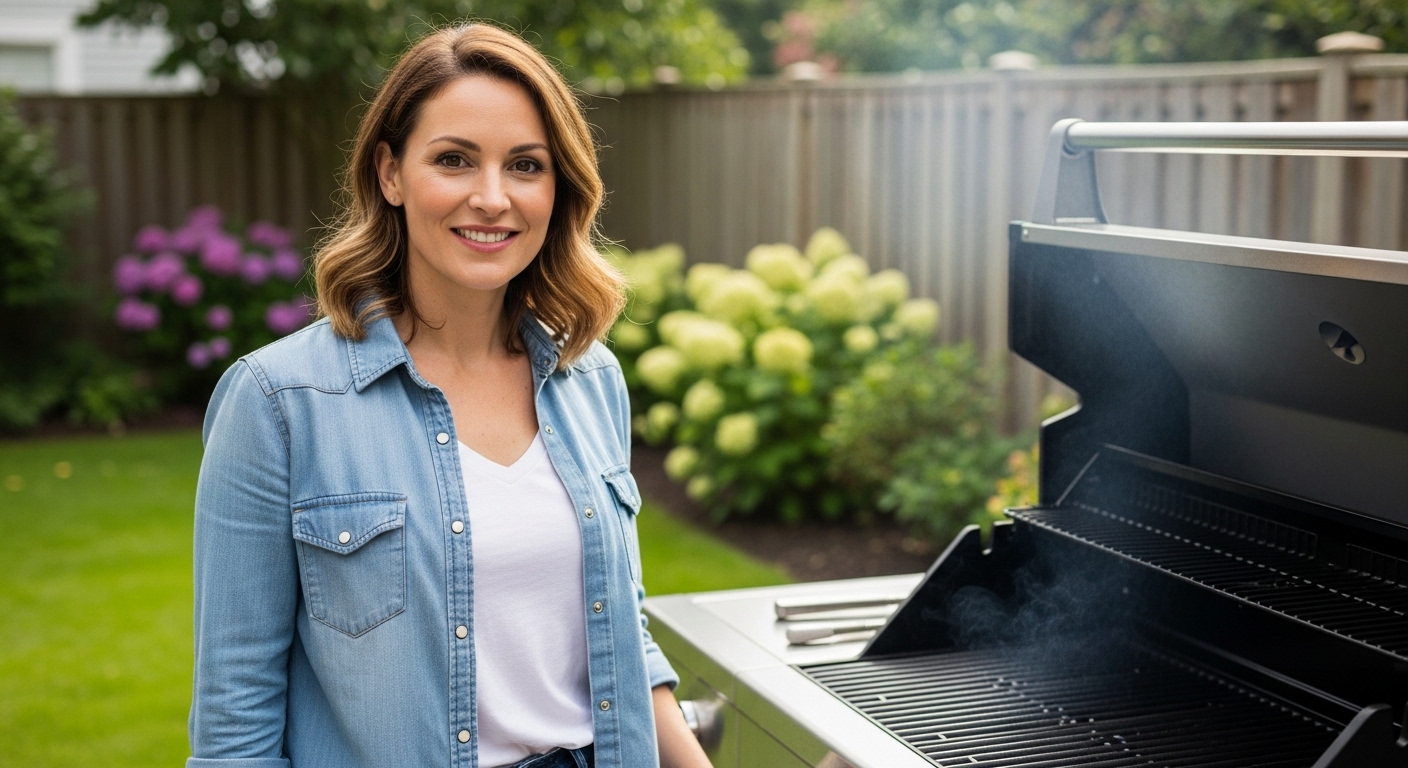

Achieving the right cooking heat separates soggy, gray meat from an incredible, caramelized sear. When outdoor cooks struggle with how to increase grill temperature, the problem usually stems from restricted airflow, low fuel delivery, or a faulty lid thermometer that misreports the actual cooking environment. Understanding how fuel and oxygen interact inside the firebox allows you to diagnose why a grill stalls at low temperatures. In many cases, adding accessories such as smoker box options or searing plates changes air movement, requiring quick adjustments to restore high heat.
Different grill types require distinct troubleshooting paths to reach maximum cooking temperatures safely. A propane grill might suffer from a tripped safety regulator, while a charcoal kettle could simply be suffocating from closed bottom intake dampers or damp fuel. Furthermore, stock dome thermometers frequently lose calibration after exposure to weather and grease smoke, leading users to believe their equipment is failing when the fire is actually roaring. Mastering temperature management requires examining your air vents, inspecting your fuel feed, and verifying your gauge readings before altering your cooking method.


Pros
- Simple, tool-free installation with included wing nuts fits most grill and smoker lids.
- Large 2-inch dial with clear markings makes temperature monitoring easy from a distance.
- Waterproof and fog-proof design works reliably in rain, snow, or humid conditions.
- Affordable 2-pack provides great value for dual-zone cooking or as a backup.
Cons
- Dial markings may not be as precise as digital probes for exact low-and-slow temps.
- Mounting hole size is fixed, so it may not fit all grill lids without drilling or adapting.
- Stainless steel finish can show fingerprints and smudges after heavy grease exposure.
If you've ever grilled a steak only to find it charred on the outside and raw in the middle, you know the value of a good thermometer. The YOTOM 2-Pack BBQ Grill Temperature Gauge is a straightforward, no-fuss tool that helps you keep an eye on your cooking temperature without breaking the bank. Whether you're manning a charcoal kettle, a gas grill, or a dedicated smoker, this 2-inch dial thermometer gives you a clear read on what's happening inside your cooker.
This thermometer is built for backyard grillers, BBQ enthusiasts, campers, and tailgaters who want better heat control. If you're the type who loves smoking brisket low and slow on a Saturday, or you're flipping burgers for a crowd at a tailgate, this gauge helps you avoid guesswork. It's also a solid upgrade for older grills or smokers that lack a built-in thermometer, giving you a reliable way to monitor temperature without spending a lot.
In real-world use, the 2-inch dial is easy to read from a few feet away, which is handy when you're juggling tongs, a beer, and a conversation. The surface is waterproof and fog-resistant, so even on a damp evening or during a sudden rain shower, you won't lose sight of your target temp. That's a big plus for outdoor cooking where weather can change fast. The gauge responds reasonably quickly to temperature changes, though it's not as instant as a digital probe. For most grilling and smoking tasks, it provides enough accuracy to keep you in the right zone.
Build quality is solid for the price. The stainless steel casing resists rust and handles the heat of a lid-mounted position without warping or discoloring. Installation is simple: drill or use an existing hole, insert the threaded stem, and tighten the wing nut from inside. It fits most grill lids, smoker doors, and even oven panels. Just make sure your mounting hole is the right size, as the stem is a fixed diameter. If you're mounting on a very thick lid, you might need a longer stem, but for standard grills it works fine.
One realistic limitation is that the dial markings are printed and not as fine as those on premium thermometers. For precise low-and-slow cooking around 225°F, you'll still want a digital probe for accuracy. But for general grilling, smoking, and oven use, this gauge gives you a reliable ballpark reading. The 2-pack is a nice bonus, letting you monitor two cooking zones or keep a spare for your camping setup. Cleanup is easy, just wipe the face with a damp cloth, but avoid submerging it.
Overall, the YOTOM BBQ Grill Temperature Gauge is a practical, affordable addition to any outdoor cooking setup. It's best for backyard cooks and campers who want a simple, durable thermometer that mounts easily and works in all weather. If you're looking for a budget-friendly way to improve your heat control for weekend BBQs, tailgating, or patio cooking, this 2-pack delivers solid value without any frills.
Pros
- Accurate and wide temperature range covers both low-and-slow and high-heat searing.
- Easy to install - just unscrew old gauge and screw in this replacement with the included M10 nut.
- Stainless steel face and stem hold up well to outdoor conditions and high heat.
- Compatible with many popular grill models, making it a versatile replacement part.
Cons
- Limited to grills with a 2-inch stem and M10 mounting nut - may not fit all hoods.
- No backlight or digital display, so reading in low light requires a flashlight.
- Basic black round design may not match all grill aesthetics.
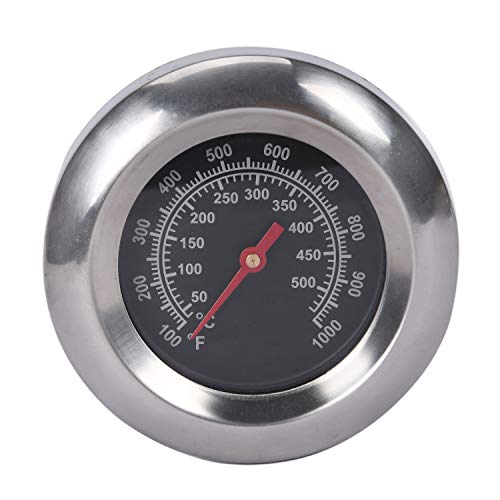
If you've ever had a gas grill thermometer go bad in the middle of a cookout, you know how frustrating it is to guess the temperature. The GasSaf 3-inch BBQ temperature gauge is a solid replacement that brings back accurate heat monitoring without the need for a new grill. Designed to fit a wide range of gas grills from Master Forge to Cuisinart, this stainless steel thermometer is a practical fix for backyard grillers who want consistent cooking results.
This thermometer is best suited for home cooks who regularly fire up their gas grill for weekend BBQs, tailgating sessions, or patio dinners. It's also handy for campers with portable gas grills that have a hood-mounted thermometer. The 100F to 1000F range means you can use it for everything from slow-smoking brisket at 225F to searing burgers at 500F plus. While it's not a digital probe, the analog dial gives you a reliable real-time readout that helps you avoid flare-ups and keep your cooking temp steady.
Installation is straightforward - just remove your old broken thermometer and screw this one in with the M10 nut. The 2-inch stem is a common length for many gas grill lids, and the 3-inch face is easy to read from a few feet away. The stainless steel construction holds up well against rust and weather, so you can leave it on the grill year-round without worrying about corrosion. That said, the stem length and nut size are specific, so check your grill's specifications before ordering to ensure a proper fit.
In terms of performance, the GasSaf gauge gives you enough accuracy to manage your grill's heat zones effectively. It won't replace a digital probe for precise internal meat temps, but for monitoring overall grill temperature, it does the job well. The black round face is simple and functional, though it might not be the most stylish option for high-end grills. Realistically, if your original thermometer failed, this replacement will get you back to grilling with confidence for under ten dollars.
One limitation is the lack of a backlight, making it harder to read at dusk or night without a grill light. Also, the dial's markings are clear but not overly detailed, so you'll need to take a close look at high heat ranges. Overall, for backyard grillers who want a quick, affordable fix to restore temperature control on their gas grill, this GasSaf thermometer is a practical choice. Just double-check your grill's mounting specs, and you'll be back to cooking burgers, steaks, and chicken with better heat awareness.

Pros
- Clear, color-coded face simplifies temperature monitoring for different cooking styles
- Waterproof and fog-resistant design performs well in outdoor conditions
- Easy to install on most grills and smokers with simple screw-and-nut mounting
Cons
- May not fit all grill lid holes due to standard thread size - check compatibility before purchase
- Accuracy could vary at extreme ends of the range based on user feedback
- Limited to 100-550°F scale, not suitable for very low-temperature cold smoking
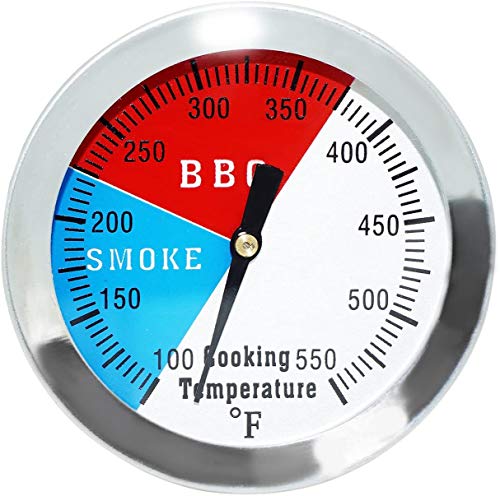
If you've ever tried to guess the temperature inside your charcoal grill or smoker by holding your hand over the grate, you know it's not exactly reliable. The NEWSTART BBQ Thermometer Gauge is here to fix that. This is a simple, no-frills analog thermometer designed to replace or upgrade the stock temperature gauge on your pit, smoker, or charcoal grill. It reads from 100 to 550 degrees Fahrenheit and uses color-coded zones - Smoke, BBQ, and Grill - so you can quickly tell where you're cooking without squinting or guessing.
This thermometer is best suited for backyard grillers who want better heat awareness, BBQ enthusiasts who smoke brisket or ribs, and campers or tailgaters who use a portable charcoal setup. It's not a high-tech digital probe, but it gives you a solid ballpark reading that's way better than nothing. The large dial and bold numbers are easy to read from a few feet away, which is handy when you're juggling tongs, a beer, and a plate of burgers.
Build quality is decent for the price. The outer housing is stainless steel, and the face is advertised as waterproof and fog-resistant - a nice touch for those rainy backyard parties or humid camping mornings. The mounting hardware includes a screw thread and wing nut, so installation takes about two minutes. Just drill or enlarge a hole in your grill lid, slide it through, and tighten. No special tools needed.
One realistic limitation is compatibility - the thread size might not match every grill or smoker lid out there, so check your existing hole diameter before ordering. Also, like most analog thermometers, the accuracy could be a little off at the very top or bottom of the range, but for typical grilling and smoking temps (225-400°F), it should serve you well. It's no substitute for a dual-probe digital thermometer if you're doing precise overnight smokes, but for everyday BBQ, it does the job.
Cleanup is simple - just wipe the face with a damp cloth. There's no grease management needed since it's mounted on the lid, not near direct flame. The gauge feels durable enough to survive a few camping trips bouncing around in the truck bed. Overall, it's a practical, budget-friendly upgrade that helps you cook with more confidence, whether you're searing steaks for a crowd or slowly smoking pork shoulder for a Sunday get-together.

Pros
- Simple, no-nonsense installation fits most grill and smoker lids with a standard hole punch or included hardware
- Stainless steel body stands up to outdoor weather, grease splatter, and repeated heat cycles without fading or warping
- Large dial with color zones helps you quickly see if you're in the ideal smoking or grilling range
- Affordable price makes it a budget-friendly upgrade for older grills or replacement for broken gauges
Cons
- Dial and stem length may not be suitable for very thick smoker lids or insulated cabinets without an adapter
- Only one mounting option (rear 1/4-inch NPT thread) — not compatible with all aftermarket brackets
- Accuracy at extreme ends of the scale (below 100°F or above 700°F) may be slightly less consistent than premium digital probes
If you've ever cooked on a grill or smoker that came with a cheap, fogged-up thermometer that reads “smoke” or “hot” instead of an actual number, you know how frustrating guessing temps can be. The DOZYANT BBQ Charcoal Grill Smoker Temperature Gauge is a straightforward fix for that problem. This stainless steel dial thermometer replaces or upgrades the built-in gauge on most charcoal grills, gas grills, smokers, and even ovens. It's aimed squarely at backyard grillers, BBQ enthusiasts, campers, and tailgaters who want a reliable, easy-to-read heat indicator without spending a lot of money.
In real-world use, the large 2-3/8-inch dial is a clear highlight. The markings run from 50°F up to 800°F, with color-coded zones for different cooking styles. You can quickly see when your smoker is holding a steady 225°F for brisket or when your charcoal grill has hit 500°F for searing steaks. The 2-7/8-inch stem reaches into the cooking chamber just enough to get an accurate reading, and the stated 2% measurement accuracy is good enough for most backyard cooks. It's not as precise as a digital probe, but for monitoring ambient temps inside a covered grill or smoker, it does the job well.
Build quality feels solid for a $10 thermometer. The case is made from stainless steel that resists rust and corrosion—handy when you're dealing with rain, grease splatter, and the constant heat of a summer cookout. The lens is waterproof and doesn't fog up even when you're smoking in damp weather or after a heavy spray of water to control flare-ups. Installation is simple: if your grill or smoker has a 1/4-inch NPT threaded hole, you can screw this in directly. If not, you'll need to drill a hole or use an adapter. It's a five-minute job that immediately gives you a more functional temperature gauge than most stock units.
For portability and outdoor practicality, this gauge is small and lightweight (just 0.13 pounds). It works great on a portable charcoal kettle for tailgating or a camping smoker at a campsite. That said, it's a permanent-mount accessory — not a probe you can carry in your pocket. You install it once and it stays put. Cleanup is easy: a wipe with a damp cloth keeps the stainless face and bezel looking fresh. The dial doesn't have a digital display or Bluetooth, which some high-tech users might miss, but for the price, reliability is what you get.
There are limitations to be aware of. The stem is only 2-7/8 inches long, so if your smoker or grill has a very thick lid or an insulated cabinet, the tip might not extend far enough into the chamber. In that case, you'd need a longer stem model. Also, the accuracy might drift at the very top or bottom of the scale — it's a mechanical bimetallic coil, not a precision digital sensor. For low-and-slow smoking (225-275°F) or fast grilling (350-500°F), it's plenty reliable. But if you're running an exacting competition cook, you'll still want a separate digital probe for meat internal temps.
Overall, the DOZYANT BBQ Temperature Gauge is a solid, affordable upgrade for anyone who cooks outdoors. Whether you're a weekend backyard griller who wants to stop guessing your grill temp, a camper using a small offset smoker, or a tailgater with a portable charcoal grill, this gauge gives you useful, repeatable readings. It's not a flashy gadget, but it does exactly what it's supposed to do — tell you the heat inside your cooker so you can focus on the food. If your current thermometer is fogged, broken, or just inaccurate, swapping it out for this stainless steel dial is a cheap and effective fix for better outdoor cooking results.
Pros
- Fast temperature readout helps maintain consistent heat for low-and-slow smoking or direct grilling
- Large, easy-to-read dial with colored zones simplifies temperature management for beginners
- Stainless steel probe resists rust and corrosion for long-term durability
- Affordable price makes it a great replacement or backup thermometer
Cons
- Analog accuracy may drift over time and requires occasional calibration check
- Designed for external mounting – exposure to excessive steam or liquid can cause temporary fogging
- Single-pack only; if you're monitoring multiple grill zones you'll need to buy more
The DOZYANT 2 Inch BBQ Thermometer is a straightforward, no-nonsense temperature gauge built for charcoal smokers, offset pits, and outdoor grills. If you're the type of backyard cook who likes to keep things simple – no Bluetooth, no apps, just a reliable needle on a dial – this thermometer delivers exactly that. It's designed to mount on the exterior of your grill or smoker, with a long stainless steel probe that reads the internal air temperature near the cooking grate.
This thermometer is best suited for BBQ enthusiasts, weekend backyard grillers, and anyone who owns a charcoal or wood-fired smoker. It's also handy for DIY pit builders or those replacing a worn-out factory gauge. Campers and tailgaters who use portable charcoal grills might appreciate the analog simplicity, though it's not intended for direct contact with food – it measures ambient pit temperature, not internal meat temp.
In real-world cooking, the DOZYANT gauge shines during low-and-slow sessions like smoking brisket or pork shoulder. The 3-4 second response time means you get a quick idea of temperature changes after adding charcoal or adjusting vents. The large 2-inch face with three color-coded zones (green, yellow, red) helps you stay within your target range without squinting. It reads from 100 to 550 degrees Fahrenheit, which covers most smoking and grilling needs. That said, analog thermometers often lag slightly compared to digital probes, and this one is no exception – it's best used as a reference alongside a quality instant-read thermapen for spot checks.
Build quality is decent for the price. The stainless steel probe and housing resist rust and corrosion, which is critical for outdoor gear exposed to rain, humidity, and grease. The mounting nut and washer feel basic but do the job. Just be aware that the instructions warn about condensation fogging if the gauge is installed in a location with heavy steam or liquid exposure – for example, directly above a water pan in a smoker. The fog clears on its own, but it's something to consider when choosing where to drill your hole.
Setup is as easy as it gets: drill or find a 1/2-inch hole in your grill lid or side, insert the probe from the outside, and tighten the lock nut from the inside. No wiring, no batteries, no calibration out of the box. Cleanup is just a wipe of the dial face and probe. Because it's so small and lightweight (0.04 pounds), it won't affect portability, and it stores easily in a drawer or tool bag.
Honestly, this thermometer isn't going to blow you away with precision, and the potential for fogging in high-moisture environments is a real limitation. But for around ten bucks, it's a practical upgrade for any charcoal grill or smoker that came with a flimsy or broken stock gauge. If you're a backyard BBQ enthusiast who values simplicity, or you're building a custom smoker on a budget, the DOZYANT gives you a functional, easy-to-read temperature window without frills. Just pair it with a good meat probe for best results.
Mastering Heat Management and Troubleshooting Low Temperatures
Pinpointing why an outdoor cooker fails to get hot enough requires a systematic look at combustion mechanics, fuel delivery, and temperature monitoring. A grill that will not rise past a moderate heat level cannot sear steaks, crisp poultry skin, or maintain steady cooking conditions. Learning the mechanical factors behind temperature control prevents food waste and keeps outdoor cooking safe.
The Combustion Mechanics: Balancing Airflow and Fuel Supply
Fire requires heat, fuel, and oxygen to generate sustained high temperatures. When an outdoor grill stalls below your target cooking heat, one of those core components is restricted. Charcoal, propane, and wood pellets all produce heat through rapid oxidation, which means adequate airflow is just as vital as the fuel supply itself. Closing off air passages or letting ash accumulate chokes the flame, reducing overall heat output regardless of the fuel type.
Thermal mass within the cookbox also plays an understated role in how hot a cooking surface feels. Heavy cast iron grates absorb immense heat over time, releasing it directly into food to create deep char marks. Lighter stamped steel or thin wire grates lose surface temperature rapidly whenever cold food touches them. Allowing sufficient preheating time ensures that internal metal surfaces reach equilibrium before cooking begins.
Wind and ambient weather conditions can further sap heat away from thin grill lids. A brisk breeze pulls hot air through exhaust vents faster than burners can replenish it, effectively cooling the chamber. Positioning the cooker in an outdoor area shielded from direct wind gusts stabilizes internal air currents. This simple placement change often recovers several dozen degrees of lost heat without mechanical modifications.
Diagnosing and Fixing Low Heat on Propane and Natural Gas Grills
Propane grills feature a built-in safety mechanism within the pressure regulator known as a bypass valve. When a gas tank valve opens too quickly while the grill burner knobs are already turned on, the regulator interprets the sudden pressure drop as a gas leak. This safety trigger drops fuel flow down to a low simmer, capping cooker temperatures well below normal operating levels. Resetting the regulator by turning everything off, disconnecting the tank, reconnecting, and opening the valve slowly restores full gas pressure.
Burner tube blockages represent another frequent reason for sluggish heat output in gas systems. Small insects, such as spiders, often build nests inside burner venturi tubes during periods of disuse. These obstructions disrupt the air and gas mixture, resulting in weak, yellow flames rather than crisp, roaring blue jets. Cleaning burner ports with a small wire brush or pipe cleaner clears pathways for uniform gas distribution.
Low propane tank levels also cause noticeable drops in operating temperature. As liquid propane vaporizes inside a nearly empty cylinder, the tank temperature drops, sometimes creating frost along the outer steel shell. This drop in container temperature reduces internal vapor pressure, limiting fuel flow to the manifold. Keeping a spare, fully filled cylinder on hand prevents unexpected temperature drops halfway through a cook.
Natural gas installations require adequate line diameter and proper supply pressure from the residential meter. If flexible quick-connect hoses are undersized or pinched, burners cannot draw enough volume to achieve high-temperature searing. Checking hose connections and avoiding excessive line lengths helps maintain the manifold pressure specified by the manufacturer. If flame height remains stunted after checking lines, consulting a qualified gas technician is the safest course of action.
Maximizing Air Intake and Draft on Charcoal Grills
Charcoal kettles and barrel pits rely entirely on natural air drafting to increase internal heat. Fresh air enters through bottom intake vents, feeds the glowing coals, and exits through top exhaust dampers. Opening both dampers fully provides the fire with unrestricted oxygen, causing charcoal to burn hotter and faster. If you want to study classic high-heat fire setups, reviewing charcoal grilling for Korean beef bbq illustrates how intense direct heat transforms thin cuts quickly.
Ash buildup directly underneath the charcoal grate blocks intake airflow and starves the fire. As briquettes burn down, fine powdery residue falls into the ash catcher or settles over bottom vent openings. Clearing out cold ash before every cooking session prevents these air channels from clogging during preheating. A clear airway allows natural convection to pull cool air upward, turning dark coals into white-hot embers.
Fuel selection directly influences the maximum temperature your charcoal cooker can reach. Hardwood lump charcoal generally burns hotter and ignites faster than standard compressed briquettes due to its lack of mineral binders. Damp charcoal that absorbed atmospheric moisture during humid storage will waste thermal energy evaporating water instead of radiating heat. Storing fuel in a sealed, dry container ensures rapid ignition and maximum heat output on demand.
Lighting charcoal in a dedicated chimney starter creates an established coal bed far more effectively than lighter fluid. Piling unlit coals around ignited ones allows the heat to radiate outward in a tight, concentrated cluster. Spreading coals too thinly across the base dissipates energy into the firebox walls rather than directing it upward toward the grate. Concentrating the fuel bed delivers the concentrated thermal column necessary for high-heat searing.
Overcoming Temperature Limits on Pellet Grills and Smokers
Pellet grills rely on an automated motor-driven auger, combustion fan, and digital control board to regulate firepot temperature. When a pellet unit struggles to reach high heat settings, a layer of fly ash inside the burn pot is often the primary cause. Ash accumulation isolates the hot rod igniter and smothers incoming combustion air from the induction fan. Vacuuming out the firebox before long cooking runs restores efficient pellet burning.
Pellet quality and moisture content play a major role in combustion efficiency. Hardwood pellets stored in open bags absorb moisture from outdoor humidity, which causes them to swell, crumble, and produce low heat. Swollen pellets also increase mechanical resistance inside the auger tube, reducing fuel feed rates to the fire. When planning extended cooks, using a bbq pellet hopper extension kit keeps dry fuel feeding continuously without constant hopper lid openings.
The internal resistance temperature detector, or RTD probe, measures air temperature inside the cookbox to guide controller output. When soot, caramelized grease, and smoke residue coat this stainless steel sensor, it reads temperatures inaccurately. A dirty probe might tell the controller the chamber is hotter than it actually is, causing the unit to restrict pellet feed. Wiping the probe gently with a cloth soaked in warm soapy water keeps internal sensor readings accurate.
The Inaccurate Gauge Dilemma: Upgrading and Calibrating Thermometers
Many grillers believe their equipment cannot reach high temperatures when the problem is simply an inaccurate analog dome gauge. Factory bi-metal thermometers mounted on grill lids endure severe weather, grease splatter, and corrosive smoke. Over several seasons, internal coiled springs lose tension or get gummed up with residue, causing the needle to stick or read significantly lower than actual grate levels. Checking the gauge in boiling water helps verify whether the needle reflects real thermal conditions.
Replacement temperature gauges offer a practical way to regain reliable monitoring across gas, charcoal, and smoker units. Standard replacement dials usually feature 2-inch, 2 3/8-inch, or 3-inch faces made of stainless steel with waterproof glass covers to prevent fogging. Stem lengths vary, commonly ranging from 1.75 inches to 2 7/8 inches, which positions the sensing tip directly inside convective heat streams. Mounting hardware often utilizes universal 3/8-inch or M10 threaded stems with wing nuts for straightforward installation through existing lid holes.
Dials with expanded temperature scales up to 800°F or 1000°F provide clear visibility for high-heat pizza baking and steak searing. Units with color-coded zones indicating smoke, barbecue, and grill ranges help cooks recognize cooking stages at a glance. When selecting a replacement indicator, confirming the hole diameter on your grill hood prevents mounting issues. A secure seal against the grill hood stops hot air and moisture from escaping around the thermometer housing.
Keep in mind that lid thermometers measure air near the top of the cooking chamber, not the cooking grate itself. Grate temperatures can sit between twenty-five and fifty degrees hotter than dome air due to radiant heat from below. Using an accurate dome gauge alongside an independent grate-level probe provides a full picture of cooking conditions. This dual-reading approach prevents overcorrecting heat inputs based on misleading single-point measurements.
Cooking Surface Optimization and Heat Retention Techniques
Lid discipline remains one of the simplest yet most overlooked techniques for preserving cooking heat. Every time a cook lifts the hood to inspect meat, accumulated hot air escapes instantly into the surrounding atmosphere. In gas and pellet grills, recovery can take several minutes, during which food cools and moisture escapes. Keeping the lid closed preserves convective thermal cycles and allows the internal chamber to build maximum heat.
Grill grate material substantially affects heat transfer into food surfaces. Cast iron grates hold onto heat exceptionally well, making them ideal for heavy searing, though they require routine oil seasoning to prevent rust. Stainless steel grates heat up rapidly, resist corrosion, and clean easily, but they do not store quite as much thermal energy. Choosing the right grate material depends on whether your priority is sustained thermal mass or low-maintenance cleaning.
Two-zone cooking configurations help cooks use high temperatures without burning delicate ingredients. By banking charcoal to one side or turning on only half of the gas burners, you create an intense direct sear zone and a gentler indirect convection zone. Food can be seared quickly over the direct heat zone and then slid over to the indirect side to finish cooking through gently. This method eliminates the frustration of managing an all-or-nothing firebox.
Clean cooking surfaces also conduct heat into proteins much faster than grates caked in carbonized residue. Charred food deposits act as thermal insulators that prevent direct contact between metal and raw meat. Brushing the grates thoroughly while they are hot during preheating strips away old grease and debris. A clean, slick grate immediately produces crisp grill marks without sticking or temperature drops.
Crucial Safety Boundaries: Avoiding Enclosed Spaces and Fire Hazards
Striving for higher grill temperatures requires strict adherence to outdoor fire safety practices. Grills must never be operated inside a garage, breezeway, shed, or enclosed patio, even if doors or windows are propped wide open. Fuel combustion produces carbon monoxide, an odorless, invisible gas that quickly accumulates to hazardous or lethal concentrations in enclosed spaces. Outdoor cooking appliances are strictly designed for open-air environments with unobstructed ventilation.
High heat also increases the risk of grease fires if drippings have accumulated along the firebox bottom. Vaporized grease ignites easily at elevated temperatures, leading to uncontrollable flames that can damage equipment and cause serious burns. Scraping grease trays and replacing drip pans regularly prevents sudden flare-ups when driving temperatures upward. Keep baking soda or a Class B fire extinguisher nearby whenever running high-heat cooking sessions.
Maintain safe clearance distances between your grill and combustible materials such as vinyl siding, wooden railings, and low-hanging tree branches. Radiated heat from a grill running at extreme temperatures can warp siding or ignite dry exterior materials without direct flame contact. Following manufacturer clearance specifications keeps your home safe while you push your cooker to its maximum potential. Inspecting fuel lines, hoses, and venting channels before lighting ensures that high-temperature cooking remains controlled from start to finish.
Restoring maximum cooking power to your outdoor grill comes down to clear airflow, clean burners, dry fuel, and verified temperature readings. Once you clear out mechanical obstructions and confirm that your lid thermometer reflects actual conditions, you can manage heat with confidence. Checking your equipment before each cook ensures reliable results, perfectly seared meals, and a safe grilling environment throughout every season.







Write Your Review
No reviews yet. Be the first to share your experience!