


Firebox buildup, charred grease, and black flakes on your cooking grates can ruin a weekend cookout before the fire even starts. Months of high-heat cooking leave behind carbonized sauce, animal fat, and soot that regular preheat brushing simply cannot dislodge. Tackling this thick, baked-on layer requires knowing how to clean a very dirty barbecue grill without scratching delicate coatings or spending hours scrubbing with ineffective tools. Setting your supplies on a sturdy outdoor rolling prep table keeps your scraper, gloves, and degreaser close at hand while keeping outdoor messes off your patio furniture.
Neglected cookboxes and grates do more than just make your food taste bitter; they also create serious grease fire hazards and attract pests. Fortunately, breaking through heavy carbon crust does not require harsh industrial solvents if you pair mechanical scraping with heat, steam, or targeted citrus degreasers. Choosing between traditional wire heads, bristle-free stainless steel mesh, or chainmail scrubbers depends largely on your grate material and safety preferences. A methodical, top-to-bottom teardown will bring your outdoor cooker back to life and make routine maintenance much simpler for future cooks.

Pros
- Long 17-inch handle provides excellent reach and heat protection
- Replaceable bristle head adds long-term value and reduces waste
- Safe for all grill surfaces including porcelain and ceramic
- Comfortable wooden handle with good grip even when wet
- Lightweight at just 0.22 pounds, easy to carry to campsite or tailgate
Cons
- Maximum recommended cleaning temperature of 250°F may require cooling down after high-heat searing
- Wooden handle may need occasional oiling to prevent drying or cracking over time
- Bristle head replacement availability could be limited depending on retailer
If you've ever spent a beautiful Saturday afternoon scrubbing a dirty grill with a flimsy wire brush, you know the struggle. The BBQ-Aid Grill Brush and Scraper aims to change that. This is a purpose-built cleaning tool for outdoor grills, smokers, and flat tops, designed to make post-cook cleanup as painless as possible. With a 17-inch wooden handle and replaceable stainless steel bristles, it's built for backyard grillers, campers, tailgaters, and anyone who values a clean cooking surface without the hassle.
In real-world use, this brush shines on hot grates. It's rated for surfaces up to 250°F, so you can scrape away grease and charred bits while the grill is still warm, not blazing hot. The long handle keeps your hands safely away from the heat, and the wooden grip feels solid and comfortable. Whether you're cleaning a Weber kettle after a burger cookout or a portable camping grill after a weekend trip, the brush's head reaches into corners and between grates effectively. The stainless steel bristles are stiff enough to remove stubborn residue but gentle enough not to scratch porcelain or ceramic coatings.
Build quality is a strong point here. The wooden handle is thick and well-shaped, offering a secure grip even with greasy hands. The bristle head attaches firmly and can be replaced when it wears out, which extends the brush's life significantly. At just 0.22 pounds, it's lightweight and easy to toss into a camping bin or tailgate kit. The brush also rinses clean quickly under running water, so you're not left with a greasy mess to store.
One realistic limitation is the temperature cap. If you like to sear steaks at 500°F+, you'll need to let the grill cool down before using this brush. That's a minor inconvenience but worth noting for high-heat cooks. Also, the wooden handle, while comfortable, may require occasional maintenance to prevent drying or cracking if left in the elements. Storing it indoors or in a dry shed will keep it in good shape.
For backyard entertainers who host weekend BBQs, this brush is a practical upgrade from cheap wire brushes that shed bristles or bend after a few uses. Campers and RV owners will appreciate its portability and the fact that it works on various grill surfaces. Tailgaters can toss it in the truck without worrying about rust or damage. The replaceable head also means you're not throwing away the whole handle when bristles wear out, which is a nice nod to durability and value.
Overall, the BBQ-Aid Grill Brush and Scraper is a solid choice for anyone who takes grill maintenance seriously. It's not flashy, but it does its job well. If you're tired of scrubbing with undersized or poorly made brushes, this one offers a comfortable, effective, and long-lasting solution for keeping your outdoor cooking equipment clean and ready for the next meal.
Keeping the BBQ-Aid brush clean is straightforward. After each use, rinse the bristle head under warm water to remove grease and food particles. The stainless steel bristles resist rust, but it's best to dry the brush before storing it. The wooden handle should be wiped clean and kept in a dry place to prevent cracking. If the bristles become worn or bent, simply replace the head instead of buying a whole new brush. This design reduces waste and saves money over time. For deep cleaning, you can soak the head in warm soapy water for a few minutes, then rinse thoroughly.
Pros
- Steam cleaning action reduces scrubbing time and effort on greasy grates
- Bristle-free design eliminates risk of wire bristles ending up in food
- Flexible sponge head cleans between grates and around curved surfaces easily
- Works on hot grills for immediate cleaning after cooking
Cons
- Requires a hot grill to activate steam – not ideal for cold cleaning
- Sponge head may wear out faster than traditional brush bristles with heavy daily use
- Scraper is effective but can be less precise on intricate grate patterns
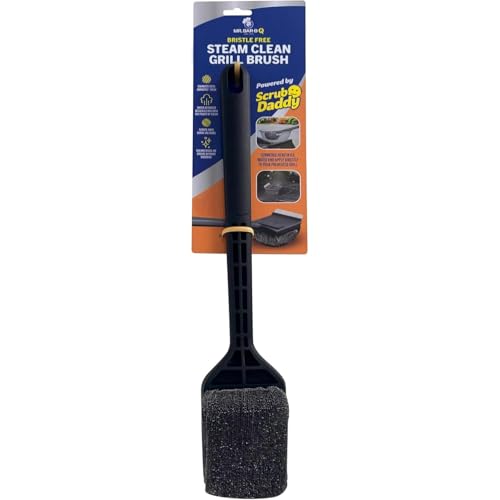
If you’ve ever spent a Saturday afternoon scraping crusted grease off a gas grill or fighting with bristles that shed onto your burgers, you’ll appreciate what the Mr. Bar-B-Q Steam Clean Grill Brush brings to the table. This isn’t your standard wire brush – it’s a water-activated steam cleaner combined with a Scrub Daddy sponge head and a bristle-free stainless steel mesh. Designed for backyard grillers, campers, tailgaters, RV owners, and anyone who cooks outdoors regularly, it promises a faster, safer way to get your cooking surface ready for the next meal.
The key feature is the steam action. You dip the brush head in cold water, then run it across a hot grill – the water instantly turns to steam, lifting burnt-on food and grease without aggressive scrubbing. This is especially handy after a long low-and-slow smoke session or a high-heat sear on a charcoal kettle. The steam does the heavy lifting, so you spend less time elbow-greasing and more time enjoying your backyard party. It works on any grill type: gas, charcoal, electric, smokers, kamado, and even flat tops.
Safety is a big deal here. Traditional wire brushes can leave behind metal bristles that end up in your food – a real concern for anyone who’s had a close call. The ArmorTec mesh is bristle-free and won’t shed. It’s tough enough to scrape off thick carbon deposits but gentle on porcelain-coated grates. The Scrub Daddy sponge head adds flexibility, letting you clean between grates and around curved surfaces. The built-in scraper handles the really stubborn buildup, like the crust on a grill that’s been used for tailgating all season.
Build quality feels solid for the price. The handle is 17 inches long, giving you safe distance from the heat, and the whole brush weighs just over half a pound, so it’s easy to maneuver. The sponge head is replaceable, though you’ll need to buy refills separately. One limitation: the steam activation only works on a hot grill. If you prefer cleaning a cold grill, you lose that benefit, though the mesh and scraper still work. Also, the sponge may wear faster than traditional bristles if you’re cleaning heavily charred grates every day.
Cleanup is simple – rinse the brush under water after use, and it’s ready for next time. It stores easily hung on a hook or in a drawer. For campers and RV owners, this brush is a great space-saving tool that eliminates the need for chemical cleaners. Tailgaters will love how quickly it preps a grill between rounds of burgers and brats. Overall, this brush is a practical upgrade for anyone who wants a safer, more efficient way to keep their outdoor cooking gear clean.
Keeping the Mr. Bar-B-Q Steam Clean Grill Brush in good shape is straightforward. After each use, rinse the sponge head and mesh under warm water to remove any grease residue. Let it air dry completely before storing to prevent mildew on the sponge. The sponge head is replaceable – when it starts to wear out or lose its scrubbing power, simply swap in a new one (sold separately). Avoid using abrasive cleaners or metal scouring pads on the brush itself, as they can damage the sponge. For deep cleaning, you can soak the head in warm soapy water occasionally. Store the brush in a dry place, like a hook on your grill cart or in a drawer, to keep it ready for your next cookout.
This brush shines in a variety of outdoor cooking scenarios. For backyard grillers, it’s perfect for quick cleanups after weeknight burgers or weekend steaks – just steam and scrape. Campers and RV owners will appreciate its lightweight, compact design and the fact that it uses only water, no chemicals, so it’s safe for campsite cooking. Tailgaters can use it between rounds of cooking to keep grates clean without hauling heavy cleaning gear. It also works well on kamado grills and smokers where bristle safety is a concern. The steam action is especially effective on greasy residue from low-and-slow cooks. For anyone who entertains often, this brush makes post-party cleanup less of a chore, so you can spend more time with guests.


Pros
- Safe cleaning without wire bristles, protecting your family from accidental ingestion.
- Powerful citrus-based cleaner easily cuts through baked-on grease and carbon buildup.
- Kit includes everything you need: spray, brush, scrubber pads, scraper, and towel, no extra purchases required.
- Works on both hot and cool grills, offering flexibility for different cleaning routines.
Cons
- For extremely charred grates, some elbow grease may still be needed; the cleaner alone won't dissolve heavy creosote instantly.
- Scrubber pads are refillable but replacements are sold separately, adding ongoing cost over time.
- The cookbox scraper is best used on cool surfaces; it may scratch delicate porcelain coatings if used aggressively.
The Citrusafe Complete Grill Cleaning Kit is not your average grill cleaner. It is a thoughtfully assembled set designed to replace the dangerous wire brushes and harsh chemical sprays that many BBQ enthusiasts rely on. Instead, this kit uses a citrus-based degreaser, a nylon brush, heavy-duty scrubber pads, a cookbox scraper, and a microfiber towel to clean your grill safely and effectively. Whether you own a charcoal kettle, a propane gas grill, a smoker, or even a flat top griddle, this kit has the tools to handle the mess.
This kit is built for anyone who takes outdoor cooking seriously. Backyard grillers who fire up the Weber every weekend, campers who throw a grate over an open fire, tailgaters who need a quick cleanup between games, and RV owners who don't want wire bristles scratching their portable grills will all appreciate the safety-first approach. The stars are the Citrusafe Grill Cleaner spray, which uses natural degreasing power from citrus peels to break down grease, and the nylon brush and scrubber pads that work on a cool grill. No more burning off residue or worrying about stray bristles in your burger.
In real-world use, this cleaner shines on moderately soiled grates and cookboxes. Spray it on, let it sit for a few minutes, then scrub with the nylon brush or the heavy-duty pads. The grime dissolves quickly, and the included cookbox scraper reaches into corners that brushes miss. For a neglected grill that has months of caked-on grease, you may need to repeat the process, but the result is a cookbox that looks nearly new. The microfiber towel lifts away remaining residue without scratching porcelain or stainless steel surfaces.
Build quality of the tools is solid. The nylon brush handle is heavy-duty plastic with a comfortable grip, and the scrubber holder accepts the replaceable pads firmly. The scraper has a slim profile that fits into the tight gaps of most grills and smokers. The spray bottle has a trigger that produces a fine mist, covering grates evenly without waste. Everything in the kit is designed to be reused, cutting down on disposable grill wipes and paper towels.
Setup is simple: unpack the items and start cleaning. The spray works right out of the box, and all tools are ready to go. Transport is not an issue since it is a cleaning kit, but the spray bottle and tools fit easily in a garage cabinet or a camping tote. Storage is straightforward: keep the spray away from direct sunlight, and hang the brush and scraper to dry.
Limitations are minor. For grills with extremely heavy carbon buildup (think years of neglect), you may still need to use a metallic scraper or a second application. The scrubber pads are effective but wear out after several uses, and replacement packs are sold separately. Additionally, the nylon brush is not as stiff as wire, so it may take a bit more scrubbing on stubborn spots. Nonetheless, for routine maintenance and even deep-cleaning, this kit is a safe and effective choice. It earns a strong recommendation for any outdoor cook who wants to eliminate the risk of wire bristles and keep their cooking gear in top shape.
The Citrusafe Complete Grill Cleaning Kit comes with five essential items to tackle every part of your grill or smoker. You get a 16oz bottle of Citrusafe Exterior Grill Cleaner (also safe for interior use), a heavy-duty nylon brush with an integrated cookbox scraper, a scrubber handle plus three replaceable scrubber pads, a separate cookbox scraper for tight areas, and a premium microfiber cleaning towel (color may vary). Together, they cover cleaning from grates to hoods to side tables. Everything is manufactured in the USA by Bryson Brothers, a brand focused on safer outdoor cooking products.
For best results, clean your grill when it is cool to the touch. Spray the Citrusafe cleaner liberally onto grates and cookbox surfaces, let it sit for 3-5 minutes to loosen grease, then scrub with the nylon brush or scrubber pads. Use the cookbox scraper for baked-on residue in corners. Wipe away residue with the microfiber towel, then rinse with water if desired. For routine maintenance after each cook, a quick spray and wipe keeps grates looking new. The scrubber pads can be replaced when they become worn; replacement pads are available separately. The spray lasts through many cleanings, making this kit a great value for frequent grillers.

Pros
- Complete bristle-free safety prevents dangerous metal wires in burgers and steaks
- Dual-action steam and chainmail friction loosen carbon faster than dry brushing
- Removable head offers excellent leverage for hand-scrubbing Dutch ovens and griddles
- Extended handle length keeps hands clear of radiant heat on hot grill surfaces
Cons
- Not suitable for use on delicate ceramic-coated cooking grates
- Requires water nearby to activate the high-heat steam sponge feature
- Slightly heavier in hand than standard thin wire brushes
Keeping cooking grates spotless is essential for clean grill marks and pure smoke flavor, but stray wire bristles are a genuine hazard at any backyard barbecue. The Cuisinart 3-in-1 Chainmail Grill Cleaner tackles grate maintenance with a heavy-duty, bristle-free approach. Designed for backyard grillers, patio cooks, campers, and flat top enthusiasts, this tool relies on stainless steel chainmail interlocking rings rather than thin wire needles, ensuring complete peace of mind whenever you scrape down the grill.
Burnt sugars from mop sauces and sticky glazes routinely turn into rock-hard carbon that ruins grill performance and creates acrid smoke during subsequent cooks. This cleaner solves that issue by integrating a heat-resistant sponge beneath the chainmail mesh. Dunking the head in water before running it across hot grates generates instant steam, softening baked-on grease so the chainmail and the front scraper edge can peel it off effortlessly. The chainmail wraps slightly around round grate bars, cleaning top and side surfaces simultaneously.
Versatility is a major strength for anyone who cooks beyond a standard grill grate. The scrubbing head unlatches from the long handle, turning into a handheld chainmail scrubber. This makes it a fantastic accessory for outdoor cooking enthusiasts who pack cast-iron skillets, Dutch ovens, or carbon steel woks on camping trips. You get the aggressive scouring power needed to strip off charred meat without stripping your carefully built seasoning.
Durability stands up to outdoor life on the patio. The stainless steel chainmail will not rust, snap, or degrade when exposed to grease and water. At nearly 18 inches in overall length, the handle gives you substantial leverage to lean into tough spots while keeping your arms safely away from heat and rising grease smoke. It stores easily on grill tool hooks and withstands heavy post-cook scrub downs after smoking pork shoulders or searing steaks.
Keep in mind that the aggressive stainless steel mesh is not recommended for delicate ceramic grill grates, as it can scratch the coating. You will also want to keep a small container of water on your grill prep cart to get the most out of the steam sponge. For outdoor cooks seeking a tough, reliable, and entirely safe way to maintain grates, griddles, and cast-iron cookware, this cleaner is a smart addition to your outdoor grilling arsenal.
Caring for the cleaner itself is straightforward and requires minimal effort after a messy cookout. After scrubbing hot grates, simply rinse the chainmail head under warm running water with mild dish soap to wash away trapped grease and food residue.
Because the head is fully detachable, you can slide off the chainmail and sponge component to thoroughly wash out accumulated grease from the internal reservoir. Letting the sponge dry completely in a well-ventilated area prevents odor buildup, ensuring your scrubber is fresh and ready for the next weekend barbecue session.
This tool excels in high-heat outdoor cooking environments where thick grease and sticky marinades are common. It is particularly effective on stainless steel rod grates and heavy cast-iron grill grates found on charcoal kettles, pellet smokers, and propane grills.
Outdoor cooks who use flat top griddles or cook over campfires with Dutch ovens will appreciate the detachable head. Using the chainmail as a handheld scrubber allows controlled, circular cleaning on flat steel surfaces and seasoned cookware without gouging metal or shedding bristles into food prep zones.

Step-by-Step Restoration Guide for Heavily Soiled Grills
Restoring an outdoor cooker covered in baked-on grease, flaky ash, and burnt sauce requires a structured approach rather than haphazard scrubbing. When carbon deposits harden over multiple cooking sessions, light brushing will not remove the grime embedded between grate rungs or inside the firebox. A proper deep clean protects your cooking surfaces, eliminates foul odors that taint fresh food, and lowers the risk of dangerous grease fires. Taking your grill apart systematically ensures you clean every component without damaging sensitive parts like igniters or burner ports.
Understanding Grate Materials and Protective Finishes
Different cooking surfaces react differently to cleaning friction and chemical degreasers, making material identification your first critical step. Stainless steel grates handle intense mechanical scraping, rigid wire bristles, and abrasive pads without losing structural integrity. These durable steel rods resist corrosion well, but aggressive scouring with metal tools can cause micro-scratches that attract future grease deposits. Taking care during cleaning preserves their smooth surface and keeps food from sticking during subsequent cooks.
Cast iron grates deliver excellent heat retention and searing capabilities, but they demand delicate handling to protect their cured seasoning layer. Scrubbing cast iron with harsh synthetic detergents or soaking it in plain water for extended periods will strip the protective oil and cause rapid rusting. If you must clean heavily encrusted cast iron, rely on heat, steam, or stiff bristle-free scrubbers rather than chemical strippers. Applying a fresh layer of high-smoke-point cooking oil immediately after cleaning prevents moisture from degrading the iron surface.
Porcelain-enameled steel and cast iron grates feature a glass-like ceramic coating that prevents rust while offering non-stick properties. You must never hit porcelain grates with sharp metal scrapers, hard wire brushes, or high-impact chipping tools because cracked enamel exposes the underlying metal to corrosion. Once porcelain chips, rust spreads quickly beneath the ceramic surface and compromises the grate permanently. Nylon brushes, specialty pads, and citrus degreasers offer the safest way to lift baked residue from porcelain surfaces without scratching the coating.
Essential Safety Precautions and Workspace Setup
Safety must remain your top priority whenever you clean outdoor cooking appliances. Never attempt to clean a fuel-burning barbecue grill inside an enclosed garage, shed, or screened patio, even if the doors remain open. Outdoor cookers produce hazardous fumes and carbon monoxide when hot, while flammable grease runoff creates an immediate fire hazard on indoor flooring. Choose a well-ventilated outdoor workspace away from exterior walls, wooden railings, and overhanging trees before starting your cleaning session.
Shut off and disconnect all fuel sources completely before touching internal components. For propane units, close the cylinder valve and disconnect the regulator hose, while natural gas setups require shutting the inline supply valve. If you are cleaning a pellet cooker or an electric model, disconnect the power cord from the wall outlet to eliminate shock risks. Wear sturdy work gloves to protect your hands from sharp metal edges, along with safety glasses to keep caustic grease flakes and chemical splatter away from your eyes.
Protecting your surrounding patio or deck surface saves significant cleanup time once the grease starts flying. Place a heavy-duty vinyl tarp, cardboard sheets, or a specialized oil-resistant grill mat directly underneath the cooker. If you have an outdoor barbecue island with stone counters, cover adjacent surfaces with towels or plastic wrap to shield porous masonry from oily drips. Having a dedicated trash bag and a plastic bucket nearby makes disposing of scraped carbon simple and tidy.
Dry Scraping the Primary Grates and Cookbox
Beginning your cleaning with dry mechanical scraping removes the thickest layer of loose carbon without creating a muddy grease slurry. Take a rigid tool with a dedicated notch, such as the Grill Floss Premium Grill Scraper for Outdoor, to strip carbon from individual round grate rods. This tool wraps around curved bars to scrape both the top and underside of the grate without requiring you to flip greasy metal panels. Working along each rod from back to front pushes loose soot down into the firebox where it can be collected easily.
If you prefer a wide-profile tool with leverage, an extended option like the BBQ-Aid Grill Brush and Scraper for Barbecue helps apply two-handed downward pressure. Its built-in steel scraper blade shears off thick, burnt-on grease crusts across broad grate sections in swift passes. The extended handle keeps your hands clear of dirty residue while providing the necessary torque to dislodge stubborn charred sauce. Once the top surface is free of crust, remove the grates and set them aside on your protective tarp.
With the cooking grates removed, inspect the heat tents, flavorizer bars, or ceramic briquettes resting above the burners. These angled metal deflectors catch intense heat and direct grease away from burner ports, accumulating thick layers of carbonized drippings over time. Use a flat putty knife or a dedicated cookbox scraper to knock dried crust off both sides of each deflector. Place the scraped heat shields into a wash bin for secondary cleaning so you can access the lower burner assembly unhindered.
Harnessing the Power of Steam for Stubborn Grease
Steam cleaning provides an exceptionally effective way to melt oily residue without dumping harsh chemicals onto food-contact surfaces. When water droplets hit a hot grate or heated metal surface, the liquid expands instantly into steam that penetrates microscopic crevices beneath baked-on fat. This rapid vaporization softens hard carbon, breaking its bond with the metal and allowing scrubbers to sweep it away effortlessly. Steam is especially useful for loosening hardened sugars from barbecue glazes that resist dry scraping.
A dedicated tool like the Grill Stripper Bristle Free Grill Brush leverages this exact steam mechanism to clean hot grates thoroughly. By dunking its flame-resistant sponge in cold water and running it across preheated grates, steam vaporizes grease while the integrated triple scraper attacks multiple rod angles simultaneously. The rugged sponge lifts the emulsified fat from the rods rather than smearing it around like a traditional dry broom. This method cleans efficiently without forcing you to dismantle the grates for routine deep cleans.
Another clever steam option is the Mr. Bar-B-Q Steam Clean Grill Brush Powered by Scrub Daddy, which incorporates flexible foam wrapped in protective mesh. Dipping the head in cold water and pressing it against warm grates releases steam while the texture of the head adapts to the contours between the bars. The outer stainless steel mesh provides aggressive friction without shedding loose wires onto your cooking surface. This steam action cuts down on scrubbing fatigue and loosens thick carbon deposits in a matter of minutes.
Targeted Degreasing with Citrus-Based Cleaners
While steam excels at hot surface maintenance, stubborn cold-cooker grime often requires a targeted liquid degreaser to break down congealed animal fat. Traditional household oven cleaners contain strong sodium hydroxide, which can permanently etch cast aluminum fireboxes and generate toxic fumes. Plant-based degreasers formulated with natural citrus terpenes provide a safer, highly effective alternative that dissolves grease without harming delicate metal alloys. Citrus compounds penetrate sticky oils, transforming stubborn grease into a water-soluble rinse that wipes away cleanly.
A specialized system such as the Citrusafe Complete Grill Cleaning Kit includes citrus spray, heavy-duty pads, and a specialized cookbox scraper designed specifically for cold surfaces. Spray the cleaner generously across cool grates, heat tents, and interior firebox walls, allowing the solution to sit for several minutes without drying out. The active citrus solvents work into thick grease crusts, softening the material so non-scratch pads can lift it cleanly. Because the formula relies on food-contact safe cleaning principles, it avoids the safety hazards associated with harsh industrial chemicals.
For components coated in thick, multi-year grease layers, soaking them in warm water mixed with citrus degreaser yields remarkable results. Place your removable grates and flavorizer bars inside a large plastic storage bin or heavy-duty trash bag filled with warm water and degreaser. Allow the parts to soak for at least an hour while you turn your attention to scraping the inner grill body. After soaking, the softened carbon rinses off under a standard garden hose nozzle with minimal physical resistance.
Scouring Grates Safely with Bristle-Free Technology
Loose wire bristles from cheap grill brushes present a known medical risk when swallowed, leading many cooks to seek safer bristle-free scrubbing tools. Thin steel wires can snap off under heavy pressure, lodge themselves in sticky grate residue, and end up inside grilled meat unnoticed. Modern bristle-free tools use tightly woven wire mesh, heavy chainmail, or abrasive non-metal pads to eliminate this hazard completely. Switching to durable mesh or interlocking steel rings provides aggressive scouring power while keeping your family safe from stray metal fragments.
The Cuisinart 3-in-1 Chainmail Grill Cleaner offers an exceptional example of heavy-duty, bristle-free scouring using interlocking stainless steel rings. The flexible chainmail fabric wraps naturally around curved grate bars, scraping off baked carbon without degrading or losing small parts. Its high-heat resistant inner sponge holds water for simultaneous steam cleaning, while the removable head can be washed directly in a sink. The sturdy design works across stainless steel and cast iron cooking surfaces, delivering continuous friction without shedding loose components.
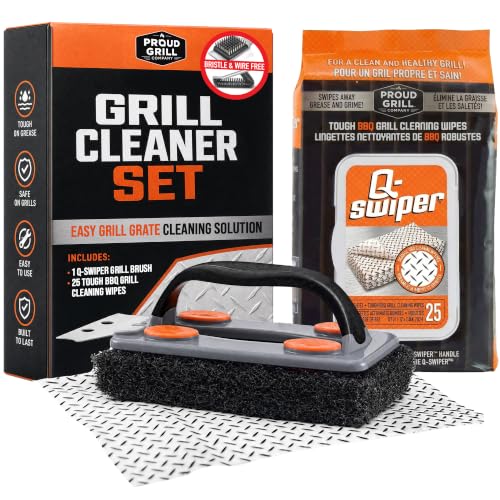
For cool-grate touch-ups and final residue removal, the Proud Grill Q-Swiper Easy-Clean Grill Cleaner Set combines a scraper head with textured cleaning pads. The disposable pads feature raised nodules and food-contact safe degreasers that absorb grease instead of smearing oily residue over clean metal. When running out of pads, you can restock with the Proud Grill Q-Swiper Easy-Clean Moist wipes container to maintain a sanitary cleaning routine. Using fresh wipes prevents cross-contamination from old rancid grease and ensures your grates are truly clean before your next cook.
Cleaning Burner Tubes, Flame Carryover, and the Cookbox
A thoroughly cleaned cooking grate means little if your burner tubes remain clogged with spiders, insects, and carbonized drippings. Gas grill burners feature rows of tiny fuel exit ports that must stay clear to deliver an even flame across the cooking chamber. Use a small wire detail brush or an unwound paperclip to poke gently through each burner port, clearing away obstructions that cause yellow flame flare-ups. Brush across the ports rather than lengthwise to avoid pushing loosened debris deeper into the gas supply channel.
Inspect the air shutters at the front of each burner tube where the venture tubes connect to the control valves. Spiders frequently spin dense webs inside these dark cavities, restricting airflow and causing dangerous backflashes behind the front control panel. A long pipe cleaner, flexible vent brush, or blast of compressed air quickly clears out these narrow passageways. If your burners show deep rust holes or structural cracks, replace them immediately rather than trying to salvage damaged metal.
Next, scrape down the angled walls of the lower cookbox toward the central grease drain funnel. Sludge accumulates heavily along the bottom corners, creating a primary fuel source for dangerous grease fires if left unaddressed. Use a plastic putty knife or blunt cookbox scraper to push this greasy sludge down into the slide-out catch tray. Remove the disposable foil liner from your drip cup, wipe down the metal bracket with citrus cleaner, and insert a clean aluminum liner.
Reassembly, Burn-Off, and Re-Seasoning Protocols
Once all internal components are scraped, washed, and dried thoroughly, begin reassembling your grill in reverse order. Reinstall the burner tubes carefully, ensuring each venture opening seats snugly over its corresponding brass gas valve orifice. Place the heat deflectors back into their designated brackets, followed by your clean cooking grates and warming racks. Inspect every part to verify that it sits level and does not wobble before reconnecting your fuel lines or power cords.
Reconnect your fuel supply and ignite all burners on high heat with the lid closed for approximately fifteen minutes. This post-cleaning burn-off vaporizes any leftover cleaning agents, dries moisture trapped in small joints, and hardens newly exposed metal surfaces. You will likely see light white smoke rising from the exhaust vents as residual citrus oils and water evaporate completely. Once the smoke clears, turn off the burners and let the grates cool down to a warm, workable temperature.
If you have bare cast iron or cold-rolled steel surfaces, you must season them immediately to prevent surface flash rust. Wipe a very light coat of high-smoke-point oil, such as canola, grapeseed, or avocado oil, across the warm metal using a paper towel. This process is identical to maintaining a griddle and smoker combo where hot steel needs polymerizing oil to maintain non-stick seasoning. Let the cooker cool down completely before putting on a weather-resistant protective cover.
Routine Habits to Prevent Extreme Grease Buildup
Preventing severe carbon accumulation is far easier than performing an intensive teardown every few weeks. Establish a habit of preheating your grill on high for ten minutes before cooking to carbonize surface fats from prior sessions. Give the hot grates a quick pass with a steam scrubber or bristle-free brush right before oiling and placing your food. After taking dinner off the fire, another quick ninety-second brush removes fresh sauces before they harden into permanent crusts.
Empty the grease collection tray and inspect the lower firebox after every three to five prolonged cooking sessions. Fatty meats like pork shoulder, bacon burgers, and skin-on chicken deposit substantial oil into the drip pan that will ignite under sustained high temperatures. Keep an extra pack of foil drip liners on hand so swapping them out feels effortless rather than like an annoying chore. Consistent micro-cleaning keeps your outdoor cooker operating efficiently, protects your food flavor, and prolongs the lifespan of expensive internal hardware.
Restoring a heavily soiled cooker takes time and grease-cutting effort, but having the right tools turns an intimidating chore into a straightforward maintenance routine. Combining mechanical scraping, steam vapor, and non-caustic degreasers removes tough carbon without damaging protective grate finishes or risking loose bristle hazards. Once your burners, heat shields, and grates are clean and reassembled, regular post-cook brushing keeps heavy buildup from returning. A clean barbecue grill delivers consistent heat distribution, produces pure smoky flavor, and ensures a safer cooking environment for every outdoor meal.






Write Your Review
No reviews yet. Be the first to share your experience!