


Setting up an outdoor barbecue requires understanding both initial equipment expenses and ongoing fuel demands. Anyone planning their seasonal cookouts often asks how much is propane tank for grill operation when budgeting for fuel, empty cylinders, and replacement tanks. A standard twenty-pound cylinder forms the backbone of modern backyard cooking, but the overall investment varies depending on whether you purchase a brand-new cylinder, participate in a local cylinder exchange program, or simply refill an existing vessel. Pairing your setup with reliable accessories, such as a sturdy rolling prep cart for grilling setups, keeps your fuel tank properly secured and away from hot grease zones.
Evaluating fuel expenses involves separating the one-time tank hardware investment from recurring propane refills. Brand-new steel containers demand a higher initial expense upfront, while exchanging an empty cylinder at a retail depot trades a portion of that fuel volume for swift turnaround. Monitoring your fuel levels accurately with brass pressure indicators or magnetic strips prevents unexpected flameouts mid-cook while saving you from premature exchanges. Understanding the subtle differences between small portable canisters, twenty-pound patio vessels, and extended thirty-pound tanks ensures you choose the most economical approach for your outdoor culinary habits.




Understanding Propane Tank Costs, Refill Economics, and Sizing for Gas Grills
Determining the real expense of a propane tank requires distinguishing between purchasing the physical container and purchasing the liquified petroleum gas stored inside. When cooks search for fuel pricing, they encounter three distinct paths: purchasing a brand-new empty cylinder, exchanging an empty tank for a filled one at a retail cage, or taking an owned cylinder to a certified refilling station. Each route carries distinct budgetary trade-offs that influence long-term outdoor cooking expenses.
The upfront cost of an empty cylinder represents a durable asset that can remain in service for up to a decade before requiring recertification. In contrast, the recurring cost of fuel depends on local energy rates, the volume of propane purchased, and the operational efficiency of your grill burners. Navigating these options with clear expectations helps you manage fuel reserves efficiently without running out of gas during crucial family barbecues.
Initial Tank Purchases Versus Exchange Programs Versus Bulk Refills
Purchasing a brand-new, empty propane cylinder represents the highest initial acquisition cost, but it provides you with a pristine, freshly manufactured container. Factory-new steel cylinders, such as the pre-purged models from Flame King, arrive vacuum-ready for their first commercial fill and feature the full ten to twelve years of certified service life. Buying new allows you to retain ownership of an unblemished vessel, which is especially advantageous if your tank includes premium features like an integrated float gauge. Once purchased, the cylinder can be refilled repeatedly at bulk stations for a fraction of exchange pricing.
Retail cylinder exchange programs, represented by brands like AmeriGas, offer an alternative model centered entirely on rapid convenience. Instead of waiting for a certified technician to pump gas into your specific tank, you simply trade an empty, qualifying twenty-pound cylinder for a pre-filled, cleaned, and freshly inspected replacement. While the exchange fee is modest compared to buying an outright spare container, it carries a noticeable premium over bulk gas refilling. This program proves exceptionally useful when your existing cylinder nears its certified expiration date or develops surface wear that bulk refilling stations might reject.
Bulk refilling stations provide the most economical path for routine grilling fuel over the life of your equipment. Commercial propane distributors, farm supply cooperatives, hardware stores, and RV campgrounds dispense propane by the gallon or measured weight directly into your owned cylinder. Because you pay solely for the fuel pumped into the container rather than service labor and administrative handling, refilling costs significantly less per pound than cage exchange kiosks. Grilling enthusiasts who cook multiple nights per week save considerable money over an entire season by patronizing bulk dispensers.
Comparing Standard Tank Sizes and Capacities for Grilling Applications
The ubiquitous twenty-pound propane tank serves as the benchmark fuel source for residential gas barbecues across North America. Engineered to hold approximately 4.7 gallons of liquified petroleum gas when fully topped off, this container size fits neatly beneath the chassis of standard cart-style grills. On an average three-burner gas grill operating at medium heat, a full twenty-pound cylinder delivers between eighteen and twenty-four hours of continuous cooking time. The balanced weight and standardized dimensions make it easy to transport safely in an upright position inside a vehicle trunk.
Extended thirty-pound cylinders, such as the Flame King YSN330, offer roughly fifty percent greater fuel capacity for dedicated outdoor kitchens and high-output burners. These taller vessels hold approximately seven gallons of propane, drastically reducing the frequency of refill trips during busy summer entertaining months. However, their increased height prevents them from fitting inside standard enclosed grill storage cabinets designed strictly for twenty-pound tanks. Buyers must verify vertical clearances and verify that their regulator hoses reach the taller valve collar before upgrading to this larger vessel size.
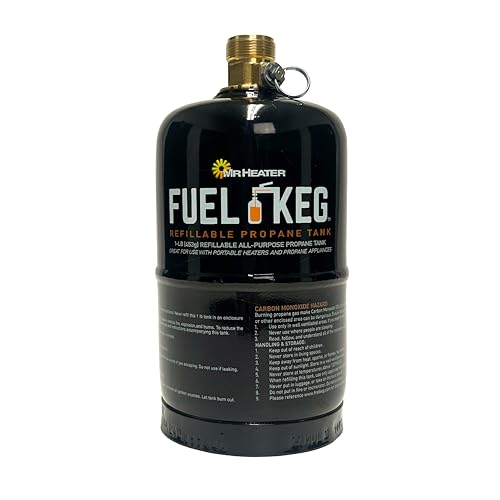
Portable cooking enthusiasts often turn toward smaller vessels ranging from one-pound disposable canisters to refillable three-pound containers. Empty refillable options like the Mr. Heater Fuel Keg or the Flame King 3LB empty cylinder provide sustainable alternatives to single-use green canisters for tailgating, tabletop grills, and camping trips. While these compact tanks carry a higher initial purchase price relative to their modest volume, they eliminate the recurring waste of disposable cylinders. Refilling smaller tanks from a primary bulk cylinder provides budget-friendly fuel for portable searing without hauling bulky twenty-pound hardware.
The Hidden Math Behind Exchange Fill Limits and Bulk Pumping
A crucial factor in fuel budgeting is understanding the net weight difference between retail cylinder exchanges and certified bulk refills. Standard retail exchange tanks, including AmeriGas exchange cylinders, are filled to a net weight of fifteen pounds of propane rather than the cylinder nameplate capacity of twenty pounds. Propane distributors established this fifteen-pound fill standard to provide an extra safety cushion for thermal expansion during high summer ambient temperatures. However, this practice means an exchange cylinder contains roughly twenty-five percent less fuel than a completely filled twenty-pound container.
Bulk refill dispensers, by comparison, fill cylinders up to the eighty percent liquid capacity limit permitted by safety codes and Overfill Prevention Devices. When you visit a hardware depot or propane dealer, a trained attendant fills a twenty-pound vessel to roughly nineteen or twenty pounds of actual fuel. Consequently, you receive several additional hours of grilling time from a bulk refill compared to an exchange tank. When you factor in the lower per-gallon rate alongside the greater fuel volume received, bulk refilling emerges as the undisputed value leader for frequent outdoor cooks.
Despite the fuel weight difference, exchange services maintain significant practical value for irregular grillers or time-strapped hosts. Home delivery exchange programs drop freshly inspected, clean tanks directly on your doorstep without requiring transport to a specialty fuel depot. Furthermore, exchange cages accept weathered, chipped, or outdated cylinders that are nearing their inspection deadlines, effectively swapping your aging tank for a freshly recertified unit. Viewing exchange programs as a periodic equipment rejuvenation service rather than a weekly refill source helps justify the convenience premium.
Safety Mandates: Overfill Prevention Devices and Cylinder Recertification
Safety regulations heavily dictate the manufacturing standards, operational features, and legal lifespan of consumer propane vessels. Under National Fire Protection Association guidelines and Department of Transportation mandates, all consumer propane tanks with capacities from four to forty pounds must feature an Overfill Prevention Device, commonly known as an OPD valve. The distinctive triangular valve handwheel signifies the presence of an internal float mechanism that automatically cuts off liquid flow when the cylinder reaches eighty percent capacity. This mandatory vapor space allows the liquid gas to expand safely under direct sun exposure without venting hazardous pressure.
Every steel propane tank bears stamped manufacturing markings on its protective collar indicating its original test date and tare weight. In the United States, steel cylinders are legally certified for twelve years from the original manufacture date, after which bulk refilling facilities cannot legally replenish them without formal requalification. Visual inspection requalification extends the service life for five years, while hydrostatic testing grants an additional seven to ten years of legal use. If your owned tank surpasses its certified date stamp, trading it into a retail exchange cage represents the easiest method to replace it with a newly certified vessel.
Modern grill tanks also feature standardized Type 1 QCC1 Acme threads that provide an external right-hand thread for tool-free hand tightening. This connection style incorporates an internal spring-loaded check valve that prevents gas from discharging if the grill hose is severed or unthreaded while the main handwheel is open. High-quality brass components, found on aftermarket adapters and gauges, resist corrosion and ensure an airtight metal-to-metal seal against rubber O-rings. Regularly inspecting these connection threads for grit, oxidation, or deformation prevents costly gas leaks and hazardous operating conditions.
Fuel Monitoring Tools: Dial Gauges, Strips, and Built-In Indicators
Running out of propane in the middle of preparing a family meal creates immense frustration and can ruin expensive cuts of meat. Because steel cylinders are opaque and heavy, guessing the remaining fuel volume by hand-lifting often yields inaccurate assumptions. Fortunately, outdoor cooks can install specialized monitoring tools ranging from threaded inline brass gauges to magnetic exterior indicators. Investing in a reliable monitoring tool eliminates the guesswork and prevents you from exchanging half-full containers prematurely.
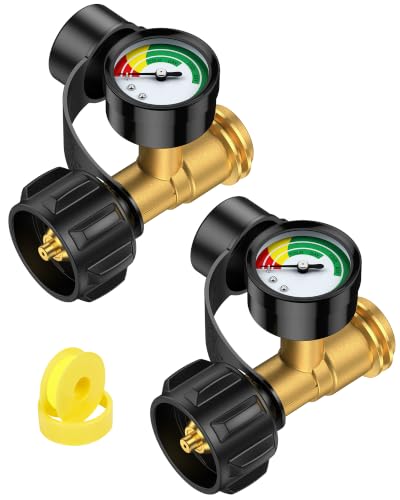
Inline brass gauges, such as the CALPOSE Propane Tank Gauge, the GasXpert 2 Pack Propane Tank Gauge Level, or the Aekops Propane Tank Gauge Level Indicator Leak Detector, install directly between the tank valve and your grill regulator. These solid brass fittings utilize Bourdon tube pressure mechanisms to indicate fuel levels through color-coded green, yellow, and red dials. Because internal propane vapor pressure fluctuates dramatically with ambient temperature, models from GasXpert integrate multi-temperature scales for cold, cool, and hot days to ensure accurate readings across changing seasons. Furthermore, these brass gauges double as static leak detectors by holding line pressure when the grill burners are shut off.
Alternative monitoring methods include magnetic strips and factory-integrated float meters that measure the physical liquid boundary inside the steel wall. The Oudain 2 Pieces Magnetic Propane Level Indicator utilizes thermo-sensitive liquid crystal technology that responds to the temperature drop created as liquid propane vaporizes during active grill operation. For integrated convenience, tanks like the Flame King YSN330 and Flame King 3LB empty cylinders feature built-in mechanical float gauges that display true liquid volume directly on the top collar. These direct float meters operate independently of ambient temperature shifts, providing reliable volume tracking whether the grill is firing or idle.
Safe Tank Placement, Ventilation Rules, and Garage Storage Hazards
Outdoor cooking safety demands uncompromising adherence to ventilation standards and spatial clearances. Propane gas is denser than ambient air, meaning that any escaping vapor sinks toward the ground and pools in low spots, basement stairwells, and floor drains rather than dispersing upward. Consequently, federal safety agencies and grill manufacturers uniformly mandate that propane tanks and gas grills must never be operated or stored inside an enclosed garage, breezeway, shed, or home. Even operating a grill with an overhead garage door fully open creates a hazardous pocket where toxic carbon monoxide and explosive vapor can accumulate.
Grills should always be positioned on a stable, level outdoor surface at least ten feet away from combustible siding, wooden railings, and overhanging roof eaves. Keep spare cylinders positioned upright in a shaded, well-ventilated outdoor location protected from direct summer sun and physical impact. Never expose cylinders to temperatures exceeding one hundred and twenty degrees Fahrenheit, as excessive ambient heat forces the internal relief valve to discharge flammable vapor into the surrounding air. When transporting cylinders for refills, secure them upright in the vehicle trunk or truck bed with windows cracked, and remove them immediately upon arriving at your destination.
Performing regular leak checks forms an essential maintenance habit whenever you reconnect a cylinder or install a new brass gauge. Apply a solution of equal parts mild liquid dish soap and warm water over the tank valve, QCC1 threaded collar, gauge fittings, and regulator hose joints. Slowly turn the main valve handwheel open with all grill burner controls set to off, observing the connections closely for expanding bubbles. If soap bubbles inflate or you detect the pungent rotten-egg odor of ethyl mercaptan odorant, immediately close the cylinder valve and tighten the connections before attempting to ignite the burners.
Optimizing Fuel Consumption Across Diverse Grilling Environments
Managing fuel costs over an entire grilling season involves cultivating sensible cooking techniques that maximize thermal efficiency. Preheating the cookbox with the lid closed requires only ten to fifteen minutes to achieve proper cooking temperatures, yet many cooks leave burners blazing on high for excessive periods before placing food on the grates. Once cooking begins, keeping the grill hood closed as much as possible traps convective heat, allowing lower burner output to maintain adequate searing temperatures. Clean burner ports and intact heat tents distribute energy evenly, reducing the total fuel required to prepare a meal.
Expanding your outdoor living space with sophisticated cooking appliances introduces varying fuel consumption dynamics. For instance, homeowners designing elaborate built-in patio cooking islands often integrate dedicated dual-tank manifold systems or hardline propane supplies to maintain uninterrupted heat across high-output side burners, rotisserie systems, and expansive cooking surfaces. Enclosing tanks within custom cabinetry requires compliant lower and upper ventilation cutouts to ensure any heavier-than-air vapor leaks vent safely out to open patio spaces. Thoughtful layout planning prevents fuel lines from running near grease drawers or excessive ambient heat sources.
Similarly, versatile culinary setups that pair traditional gas grills with modern combination griddle and smoker setups require strategic fuel management. Flat-top griddles consume fuel steadily across large surface areas to caramelize smash burgers and breakfast hash, while low-and-slow smoking functions demand a minimal, steady trickle of gas over many consecutive hours. Matching your tank capacity to the specific appliance prevents unexpected fuel depletion midway through a twelve-hour pork shoulder smoke. Maintaining a filled spare twenty-pound cylinder ensures you can transition between cooking styles without interruption.
Strategic Decisions for Backyard Barbecue Budgets
Choosing the ideal approach to propane management depends primarily on your cooking frequency, storage space, and proximity to commercial refill depots. Casual weekend cooks who fire up the barbecue once or twice a month often find the speed and accessibility of retail exchange programs well worth the small fuel volume trade-off. In contrast, serious barbecue practitioners who cook multiple times each week benefit immensely from purchasing two dedicated twenty-pound cylinders and refilling them at bulk stations. Having two tanks guarantees that you always have an immediate backup ready to swap in whenever the active container empties.
Equipping your primary cylinder with a reliable color-coded brass pressure gauge or an integrated float meter turns fuel management into a stress-free routine. Regular inspection of the tank collar dates, rubber connection seals, and valve threads safeguards your investment and ensures seamless compatibility with exchange kiosks and refilling depots alike. By balancing initial container purchases against bulk refilling rates and following strict outdoor ventilation protocols, you can enjoy dependable, economical gas grilling throughout the entire season.





Write Your Review
No reviews yet. Be the first to share your experience!