


Cold mornings in the backcountry quickly expose the flaws of gas canisters, which sputter and lose pressure as temperatures dip. Carrying heavy pressurized fuel tanks adds unnecessary bulk to your pack while leaving you stranded once the gas runs dry. A well-designed firetower compact rocket stove bypasses this headache completely by channeling dry twigs, kindling, and natural biomass through an efficient chimney draft. This vertical airflow accelerates combustion, focusing intense thermal output directly against your pot base for rapid boil times. Many outdoor cooks shifting away from disposable canisters prefer these compact wood burners for reliable boiling and cooking in windy conditions.
Careful analysis of manufacturer specifications and owner feedback reveals distinct trade-offs between ultralight Grade-1 titanium and heavy-gauge stainless steel. Titanium sheets shave pack weight down to under seven ounces, while rugged stainless steel grids provide rigid stability for heavier camp pots. If you frequently balance multi-course campsite meals alongside smaller trail stoves, comparing this setup to a portable grill stove combo for tent camping helps determine the right cooking footprint. Selecting the right biomass burner ultimately comes down to balancing fold-flat pack dimensions with dependable pot support and fuel efficiency.

Pros
- Weighs only 6.8 ounces and packs completely flat for maximum trail portability
- Runs on freely available campsite twigs and wood chips, saving fuel costs and pack space
- Titanium panels resist warping from high fire heat and will never rust or corrode
- Front cutout allows smooth wood feeding while your cookware stays firmly in place
- Protective storage sleeve effectively prevents soot contamination inside your pack
Cons
- Small combustion chamber requires frequent wood stoking to maintain consistent cooking heat
- Not designed to support heavy cast iron pans or large multi-person pots
- Exposed flames can be sensitive to strong gusty trail winds without a separate windscreen
The Kuvik Titanium Wood Stove is an ultralight, collapsible biomass burner built specifically for hikers, solo campers, bushcraft enthusiasts, and survival preppers. Instead of dragging pressurized gas canisters into the backcountry, this stove lets you prepare hot meals and boil drinking water using dry twigs, pinecones, bark, and sticks collected directly around your campsite. It brings reliable wood fire cooking down to a pocket-sized footprint that slips unnoticed into any pack.
In practical camp cooking scenarios, the stove performs remarkably well for quick water boils and one-pot trail meals. The lower cutouts draw air into the base of the fire box, feeding oxygen to the embers and generating a strong chimney effect. This design channels intense, focused heat directly to the bottom of your pot or camp cup. While you do need to actively feed small sticks into the front access door to keep the fire going strong, it delivers enough heat output to rapidly boil water for freeze-dried meals, brew trail coffee, or fry up foraging finds in a lightweight titanium skillet.
Build quality is where this little cooker truly shines. Crafted from Grade-1 titanium, the interlocking panels withstand intense flame temperatures without bending out of shape. Titanium also brings natural corrosion resistance, which is essential when cooking in damp, rainy, or snowy backwoods conditions. The cross-support bars on top provide a stable, level surface for standard backpacking mugs, nesting pots, and small mess tins.
Setting up the stove takes less than a minute once you understand how the tabs and slots mate together. After the metal cools, the panels unhook easily and stack together into a flat package barely 0.2 inches thick. The included carry pouch is an essential touch because natural wood fires produce soot; slipping the disassembled plates into the case keeps charcoal stains off your sleeping bag and clothing.
The obvious trade-off here is capacity and active cooking management. This is not meant for feeding a big group at a tailgating party or holding heavy Dutch ovens. You must continuously tend the fire since small twigs burn down quickly. However, for solo hikers, ultralight campers, and emergency pack builders who want an endless fuel supply and near-zero pack weight, the Kuvik Titanium Wood Stove is a reliable, high-value trail cooking tool.
Using a biomass stove requires a slightly different approach than turning a knob on a gas burner. The Kuvik stove thrives on dry, pencil-thick hardwood twigs, dry pinecones, and shaved kindling. Lighting from the top or through the front port gets draft circulation moving quickly through the bottom vents.
The dedicated front access port is a standout functional feature. You can feed fresh sticks directly into the heart of the coals without disturbing your boiling water or knocking a small skillet off balance. Keeping a small pile of pre-broken twigs within arm reach ensures you can maintain steady heat output throughout your cooking session.
For ounce-counting backpackers, every fraction of weight counts. At only 6.8 ounces, this stove eliminates both the base weight of a metal gas burner and the dead weight of empty fuel cans you have to pack out. It delivers true leave-no-trace self-sufficiency.
Its flat-pack profile allows it to slide cleanly into hydration sleeves, exterior backpack mesh, or directly inside an emergency bug-out bag. The compact footprint makes it equally useful as a backup stove for overlanders and truck campers who want a zero-fuel emergency cooking option on hand.
Pros
- Extremely portable – folds nearly flat and includes a carry bag for easy transport.
- Uses free, renewable fuel – find sticks and leaves anywhere, eliminating the need to haul heavy fuel canisters.
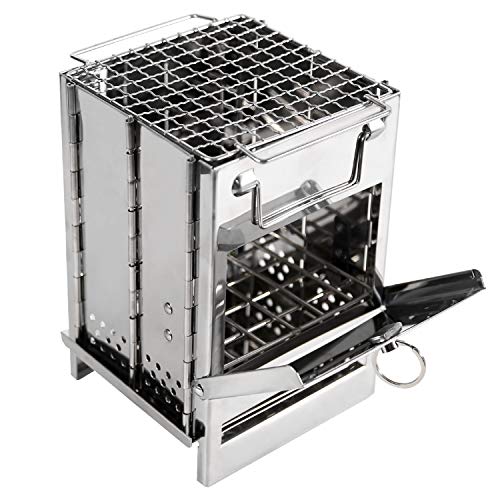
- Sturdy stainless steel grid and cuboid frame provide a stable cooking platform for various pot sizes.
- Simple, reliable design with no moving parts – won't break down on the trail.
Cons
- Requires constant feeding of small twigs – not ideal for sustained, low-and-slow cooking or long burn times.
- Open flame design is sensitive to wind; may struggle in breezy conditions without a windbreak.
- Smoke and soot from wood burning can blacken cookware – not as clean as propane or alcohol stoves.
The REDCAMP Wood Burning Folding Camp Stove is a compact rocket stove designed for outdoor enthusiasts who want to cook without carrying heavy fuel. Unlike propane or multi-fuel stoves, this model burns twigs, leaves, pinecones, and other natural debris you find on the trail. It's a true survival-style stove that appeals to backpackers, campers, tailgaters, and anyone who likes to cook off the grid.
In real-world camping scenarios, this stove shines for quick tasks like boiling water for coffee or rehydrating a freeze-dried meal. The feeding chamber is wide enough to accept small sticks, and the airflow design keeps a hot, efficient fire going. However, it's not a set-it-and-forget-it system – you'll need to add fuel every few minutes to maintain heat. That makes it less suitable for grilling burgers or slow-cooking stews, but perfect for a solo hiker looking to heat up a meal fast.
Build quality is solid for the price. The stainless steel grid and folding panels feel sturdy enough to support a small pot or camping kettle. The cuboid shape provides excellent stability on flat or slightly uneven ground. That said, the thin metal can get hot quickly, so you'll want to handle the stove carefully when it's in use. Rust resistance is decent for occasional use, but like any exposed steel, you should dry it thoroughly after exposure to rain or moisture.
Portability is the big selling point. Collapsed flat to 8.3 x 5.9 x 1.5 inches and weighing just 1.9 pounds, this stove slips into any backpack side pocket or even a large jacket pocket. The included carry bag adds convenience for storage and transport. Setup takes seconds: unfold, place on a fire-safe surface, and start feeding twigs. Cleanup is straightforward – shake out ash and wipe off soot; no complicated parts to disassemble.
One realistic trade-off is wind sensitivity. Because the stove is open-topped, a gust can blow smoke into your face or disrupt the fire. Using a windbreak or positioning it behind a rock helps. Also, because it burns wood, your cookware will accumulate black soot – not a dealbreaker for camp cooks, but worth noting if you like pristine gear. The stove is best enjoyed as a lightweight, no-fuss alternative for short camping trips, emergencies, or as a backup to your primary stove.
For backyard cooks or tailgaters, this stove is more a novelty than a daily driver. But for backpackers, bikepackers, and minimalist campers who love the idea of cooking with nature's fuel, the REDCAMP folding stove is a smart, affordable choice. It won't replace a pellet grill or propane stove for big meals, but for a hot meal on the trail with zero fuel cost, it's hard to beat the price and packability.
The REDCAMP wood stove delivers intense, direct heat from a small fire. Boiling two cups of water takes around 5-7 minutes with a steady supply of dry twigs. The open flame is great for searing small pieces of meat or toasting marshmallows, but it lacks even heat distribution – hot spots are common. For simmering or low-heat cooking, you'll need to feed the fire sparingly and move the pot around. This stove is best for quick-boil tasks and simple camp meals rather than complex recipes.
Setting up the REDCAMP stove couldn't be simpler: just unfold the four panels until they lock into a rectangular box shape. Place the wire grid on top, and you're ready to cook. No tools, no extra parts. Cleanup involves letting the stove cool, dumping out ash, and wiping the metal with a cloth. The stainless steel resists rust but can develop a patina over time. Store it dry to keep it in good shape for years of backcountry meals.
Frequently Asked Questions About the Firetower Compact Rocket Stove
How does a firetower compact rocket stove generate heat without gas canisters?
A firetower compact rocket stove relies on a natural vertical chimney effect to draw oxygen through bottom intake vents and fuel efficient wood combustion. Dry twigs, bark, and pine cones feed the lower firebox, concentrating heat straight into the cooktop. This draft design burns natural biomass completely with minimal smoke compared to an open campfire.
Can a firetower compact rocket stove withstand heavy cookware like cast iron skillets?
Cookware support depends on whether the stove uses stainless steel or ultralight titanium construction. Heavy-gauge stainless steel folding models feature rigid grid backing plates that easily support seasoned cast-iron pans. Ultra-thin titanium models prioritize pack weight and work best with lightweight titanium pots.
What natural fuel burns best in a firetower compact rocket stove?
Dry hardwood twigs, dense deadfall branches, and dry pine needles provide the cleanest and hottest burn. Hardwoods burn longer with less ash buildup, keeping the combustion chamber clear for continuous cooking. Damp wood and green leaves create excessive soot and reduce flame intensity.
How do you clean soot buildup off a collapsible firetower compact rocket stove?
Soot wipes away easily using dry camp soil, sand, or a scouring pad before packing the flat panels away. Regular maintenance prevents soot transfer to the interior of your backpack. While some campers clean their metal outdoor equipment using a pellet grill ash vacuum cleaner back home, simple trail brushing keeps panels clean in the field.
Does wind reduce boiling efficiency on a firetower compact rocket stove?
High winds can reduce heat transfer, but the enclosed firebox design acts as an integrated wind baffle. The solid metal sidewalls shield the fuel bed while forcing heated air upward toward the pot base. Positioning the air intake away from direct gale gusts maintains a steady draft.
How long does assembly take for a collapsible firetower compact rocket stove?
Assembly takes less than two minutes once you align the interlocking tabs with their corresponding slots. Both stainless and titanium collapsible units fold flat into slim carrying sleeves that slide directly into pack pockets. Disassembly takes equal time once the metal cools down completely after meal preparation.


Write Your Review
No reviews yet. Be the first to share your experience!