


Firing up an outdoor cooker brings wonderful aromas and attractive sear marks, but persistent grease buildup often prompts a fundamental question: do you clean a barbecue grill after every single session, or should you leave the residue as a protective barrier? Leaving heavy carbonized crust on your cooking grates degrades heat transfer, transfers rancid flavors to fresh cuts of meat, and creates a genuine fire hazard from trapped rendered fats. Keeping an organized cooking zone near your rolling BBQ prep table makes routine sanitation fast and manageable before and after cooking sessions. Routine maintenance does not require hours of laborious scouring every afternoon, but establishing basic habits protects your equipment and ensures appetizing meals.
A proper cleaning workflow balances daily surface scraping with periodic deep maintenance of burner tubes, heat deflectors, and bottom collection pans. Many backyard cooks wonder whether traditional wire scrapers remain safe, leading to rising interest in bristle-free scrubbers, steam cleaners, natural conditioning oils, and disposable aluminum liners. Choosing reliable maintenance accessories keeps carbon deposits from tainting delicate poultry or fish. Consistent upkeep also prevents grease flare-ups that can ruin expensive cuts of meat and pose unexpected safety hazards on your deck.

Pros
- All-natural, plant-based formula is safer for you and the environment compared to harsh chemical cleaners.
- Effectively removes grease and residue while building a natural seasoning layer on grates.
- Light citrus scent is pleasant and does not affect food flavor.
- Works well on multiple surfaces including stainless steel, making it versatile for grill maintenance.
Cons
- May require more effort for heavily charred residue compared to abrasive chemical cleaners.
- Only available in an 8-ounce bottle, which may not last frequent grillers as long as larger sizes.
If you are a backyard BBQ enthusiast or a weekend camper who enjoys cooking over an open flame, you know that cleaning the grill is often the least fun part of the experience. The CARON & DOUCET BBQ Grill Cleaner Oil offers a refreshingly natural approach to this chore. Made from 100% plant-based refined coconut oil and scented with citrus essential oils, this product is designed to remove grease and residue from your grates without the need for harsh, corrosive chemicals.
This cleaner is best suited for backyard grillers, patio cooks, and tailgaters who want a safer option for maintaining their gear. It works wonderfully with wooden scrapers or non-abrasive brushes, allowing you to gently scrub away buildup while conditioning the metal. Many grillers find that after a few uses, it helps build a natural seasoning on the grates, reducing food sticking and enhancing overall cooking performance on gas, charcoal, or pellet grills.
In terms of real-world cooking performance, this oil does not directly affect heat consistency or searing ability but indirectly improves them by keeping your grates clean and well-maintained. A clean grate ensures better heat transfer and prevents old residue from burning onto fresh food. For low-and-slow smoking or fast grilling, having a clean cooking surface is key to avoiding off-flavors. The light citrus scent is pleasant and does not transfer to your burgers, steaks, or vegetables, so your food tastes exactly as it should.
Build quality of the product itself is solid; the bottle is simple but functional, with a secure cap that prevents leaks during storage or transport. The oil is stable and will not go rancid thanks to the refined coconut oil base. This makes it a great option for campers or RV owners who want a compact, spill-proof cleaner that can be tossed into a gear bin without worry. While it does not offer wind resistance or temperature control like a grill might, it does keep your equipment in top shape for many outdoor cooking sessions.
Ease of use is straightforward: apply a small amount to a cool or warm grate, let it sit for a minute, then scrub with a scraper or brush. The oil breaks down grease effectively, and cleanup is done with a simple wipe. One realistic limitation is that for very heavy, baked-on carbon, you may need to repeat the process or use a bit more elbow grease compared to stronger chemical degreasers. Additionally, the 8-ounce bottle is compact, which is great for portability but might not last heavy users very long. Overall, this is a practical, eco-friendly tool for any outdoor cook who values natural ingredients and wants to keep their grill in great condition without the toxic stuff.

Pros
- Steam cleaning action reduces scrubbing time and effort on greasy grates
- Bristle-free design eliminates risk of wire bristles ending up in food
- Flexible sponge head cleans between grates and around curved surfaces easily
- Works on hot grills for immediate cleaning after cooking
Cons
- Requires a hot grill to activate steam – not ideal for cold cleaning
- Sponge head may wear out faster than traditional brush bristles with heavy daily use
- Scraper is effective but can be less precise on intricate grate patterns
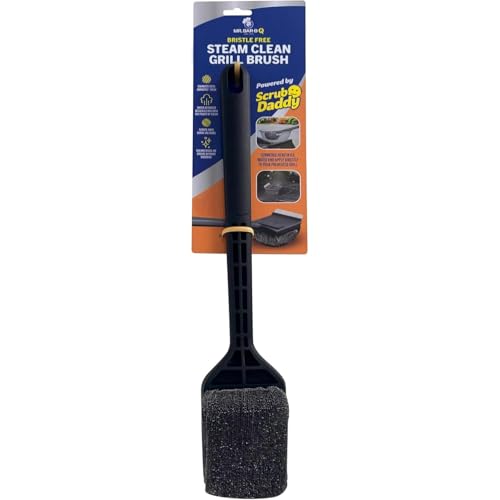
If you’ve ever spent a Saturday afternoon scraping crusted grease off a gas grill or fighting with bristles that shed onto your burgers, you’ll appreciate what the Mr. Bar-B-Q Steam Clean Grill Brush brings to the table. This isn’t your standard wire brush – it’s a water-activated steam cleaner combined with a Scrub Daddy sponge head and a bristle-free stainless steel mesh. Designed for backyard grillers, campers, tailgaters, RV owners, and anyone who cooks outdoors regularly, it promises a faster, safer way to get your cooking surface ready for the next meal.
The key feature is the steam action. You dip the brush head in cold water, then run it across a hot grill – the water instantly turns to steam, lifting burnt-on food and grease without aggressive scrubbing. This is especially handy after a long low-and-slow smoke session or a high-heat sear on a charcoal kettle. The steam does the heavy lifting, so you spend less time elbow-greasing and more time enjoying your backyard party. It works on any grill type: gas, charcoal, electric, smokers, kamado, and even flat tops.
Safety is a big deal here. Traditional wire brushes can leave behind metal bristles that end up in your food – a real concern for anyone who’s had a close call. The ArmorTec mesh is bristle-free and won’t shed. It’s tough enough to scrape off thick carbon deposits but gentle on porcelain-coated grates. The Scrub Daddy sponge head adds flexibility, letting you clean between grates and around curved surfaces. The built-in scraper handles the really stubborn buildup, like the crust on a grill that’s been used for tailgating all season.
Build quality feels solid for the price. The handle is 17 inches long, giving you safe distance from the heat, and the whole brush weighs just over half a pound, so it’s easy to maneuver. The sponge head is replaceable, though you’ll need to buy refills separately. One limitation: the steam activation only works on a hot grill. If you prefer cleaning a cold grill, you lose that benefit, though the mesh and scraper still work. Also, the sponge may wear faster than traditional bristles if you’re cleaning heavily charred grates every day.
Cleanup is simple – rinse the brush under water after use, and it’s ready for next time. It stores easily hung on a hook or in a drawer. For campers and RV owners, this brush is a great space-saving tool that eliminates the need for chemical cleaners. Tailgaters will love how quickly it preps a grill between rounds of burgers and brats. Overall, this brush is a practical upgrade for anyone who wants a safer, more efficient way to keep their outdoor cooking gear clean.
Keeping the Mr. Bar-B-Q Steam Clean Grill Brush in good shape is straightforward. After each use, rinse the sponge head and mesh under warm water to remove any grease residue. Let it air dry completely before storing to prevent mildew on the sponge. The sponge head is replaceable – when it starts to wear out or lose its scrubbing power, simply swap in a new one (sold separately). Avoid using abrasive cleaners or metal scouring pads on the brush itself, as they can damage the sponge. For deep cleaning, you can soak the head in warm soapy water occasionally. Store the brush in a dry place, like a hook on your grill cart or in a drawer, to keep it ready for your next cookout.
This brush shines in a variety of outdoor cooking scenarios. For backyard grillers, it’s perfect for quick cleanups after weeknight burgers or weekend steaks – just steam and scrape. Campers and RV owners will appreciate its lightweight, compact design and the fact that it uses only water, no chemicals, so it’s safe for campsite cooking. Tailgaters can use it between rounds of cooking to keep grates clean without hauling heavy cleaning gear. It also works well on kamado grills and smokers where bristle safety is a concern. The steam action is especially effective on greasy residue from low-and-slow cooks. For anyone who entertains often, this brush makes post-party cleanup less of a chore, so you can spend more time with guests.

Pros
- Adjustable handle saves space and gives you comfortable reach on different grill sizes.
- Stainless steel bristles and scraper handle heavy grease and char without scratching porcelain grates.
- Lightweight, easy to hang, and simple to rinse—ideal for quick post-cook cleanup at home or on the road.
- Affordable price makes it a practical gift for dads, grillers, and outdoor cooking fans.
Cons
- Some users may prefer a longer handle for tall grills or smokers with deep fireboxes.
- Bristles may wear over time with heavy daily use; occasional replacement recommended to maintain safety.
- Scraper edge works best on flat or slightly curved grates—less effective on round or highly contoured rods.
The TNTOR Grill Brush with Scraper is a no-nonsense cleaning tool built for anyone who spends time over hot coals, propane flames, or wood pellets. It’s designed to tackle the crusty grease, caramelized sauces, and burnt-on bits that accumulate after a weekend barbecue, a campsite cookout, or a full-day tailgate. If you’ve ever struggled with a flimsy brush that leaves gunk behind, this adjustable model offers a practical upgrade at a budget-friendly price.
This brush is best suited for backyard grillers, BBQ enthusiasts, campers, tailgaters, and RV owners who want an easy-to-store cleaning solution. The adjustable handle extends from 12.5 to 18 inches, which gives you better reach on larger gas grills or smokers without taking up extra space in a storage bin or RV cabinet. It’s light enough to toss in a camping tote or tailgate cooler, and the built-in hanging loop lets you hook it on a grill cart handle for quick access.
In real-world use, the three-layer stainless steel bristles do a solid job of dislodging charred food from grates, while the integrated scraper handles tough, baked-on residue. Whether you’re cleaning up after searing steaks at high heat or finishing a low-and-slow brisket, the brush works 360 degrees to get into the gaps between rods. It’s effective on gas, charcoal, smoker, and porcelain grates, and rinses clean with a quick spray from a hose or a dip in soapy water. That ease of cleanup means you can maintain a sanitary cooking surface without spending half an hour scrubbing.
Build quality is respectable for the price. The stainless steel bristles are firmly secured, and the scraper blade feels durable enough for regular use. The handle lock mechanism holds the extension securely during scrubbing, which reduces wrist strain. While the brush isn’t intended for heavy commercial use, it holds up well to weekly backyard cooking and occasional campsite trips. The light weight (0.66 pounds) is a plus for portability, but if you have a very deep smoker or a tall gas grill, you might wish the handle extended a few inches longer.
One realistic limitation: like any wire bristle brush, you’ll want to inspect it regularly for loose bristles to avoid any risk of metal fragments on your grates. The scraper works best on flat or gently curved grates; it’s less effective on round, tightly spaced rods. That said, for the vast majority of standard grills—Weber kettles, propane flat tops, camp stoves, and pellet grills—this brush gets the job done without scratching porcelain or enamel surfaces.
Overall, the TNTOR Grill Brush is a smart buy for outdoor cooks who want a reliable, space-saving cleaner that won’t break the bank. It’s especially handy for tailgaters and campers who need a compact tool that stows easily, and for backyard grillers who want to keep their grates in good shape for consistent heat and flavor. Paired with a routine of brushing after each cook, this brush helps you get the most out of your grill—whether you’re smoking ribs low and slow or flipping burgers for a crowd.

Pros
- Completely safe – no metal bristles to break off and end up in food
- Effective scraping and scrubbing action on most grill grate types
- Long 18-inch handle keeps hands away from heat while cleaning
- Lightweight and easy to store in a drawer or hang on a hook
Cons
- Less effective on heavily caked-on residue compared to traditional wire brushes – may need multiple passes
- Plastic handle, while heat-resistant, may not withstand direct flame contact if dropped on hot coals
- Some users report the scraper edge dulls over time with frequent heavy use
The Weetiee Bristle Free Grill Brush is a purpose-built cleaning tool for outdoor cooking enthusiasts who prioritize safety without sacrificing performance. Unlike traditional wire brushes that can shed metal bristles into your food, this brush uses a stainless steel scraper and a flexible triple-helix design to remove grease, char, and residue from grill grates. It is ideal for backyard grillers, BBQ enthusiasts, campers, tailgaters, RV owners, and anyone who cooks on gas, charcoal, smoker, or porcelain grills.
When it comes to real-world cleaning performance, the wide scraper does an excellent job on flat surfaces and between grates. The helix head reaches into crevices and cleans the sides of rods that often get neglected. For a bristle-free brush, it handles stuck-on food surprisingly well, though you may need a bit more elbow grease on heavily burned-on debris compared to a wire brush. It works best when the grates are still warm after cooking, loosening residue quickly.
Build quality is solid for the price point. The stainless steel scraper and helix resist rust, and the plastic handle is thick with a comfortable grip that stays cool during use. At 18 inches long, it provides good reach while keeping your hands away from heat. The handle is tough and won't bend or snap, making it suitable for regular use in a backyard or campsite setting. It is lightweight enough to pack for tailgating or camping trips without adding bulk.
Setup is straightforward – the brush comes ready to use (some packages may require a simple handle attachment). Cleanup is easy: just rinse the head under water and let it dry. Storage is simple thanks to the compact size and a hole for hanging. One realistic limitation is that because it relies on scraping and a plastic core, it won't last forever if used aggressively on very dirty grates every day. But for typical weekend cooks and outdoor gatherings, it holds up well.
Overall, the Weetiee Bristle Free Grill Brush is a smart choice for anyone who values food safety and wants a reliable grate cleaner for their outdoor cooking setup. It is especially recommended for families with young children, tailgaters who cook in groups, and campers who need a portable, safe cleaning tool. If you are willing to trade a bit of brute cleaning power for peace of mind, this brush delivers solid results without the worry of stray bristles.
Keeping your Weetiee grill brush in top shape is simple. After each use, rinse the scraper and helix head under warm water to remove grease and food particles. For stubborn residue, a quick scrub with a dish brush or sponge works well. Dry the brush thoroughly before storing to prevent any moisture buildup on the stainless steel parts. The plastic handle can be wiped clean with a damp cloth. Avoid soaking the brush or placing it in the dishwasher, as prolonged exposure to water may weaken the handle over time. Store it in a dry place, preferably hanging by the hole in the handle, to keep it ready for your next BBQ session.


Essential Steps for Barbecue Grill Sanitation and Maintenance
Yes, cleaning an outdoor cooking grill is an essential responsibility for every backyard cook. Neglecting your grill grates allows burnt food particles, old marinades, and rendered fat to accumulate into a thick carbon crust over time. This unmanaged buildup creates foul, bitter smoke that ruins fresh ingredients and transfers unpleasant odors into whatever you cook next. Excess grease also creates fuel for dangerous flare-ups that can quickly char food and ignite uncontrolled fires inside the firebox.
Regular maintenance also protects the expensive components of your cooking unit from premature structural decay. Cooking salts, acidic sauces, and ambient moisture combine with trapped grease to corrode metal grates, heat diffusers, and burner tubes. Cleaning away these caustic residues helps preserve the integrity of cast iron, porcelain, and stainless steel parts over many grilling seasons. Taking a few proactive minutes after each cooking session saves significant time and replacement costs down the road.
Daily Workflow: Pre-Heating Burn-Off and Post-Cook Scraping
A dependable daily cleaning routine starts well before raw meat touches the cooking surface. Firing up your burners on high or letting charcoal coals reach cooking temperature creates intense radiant heat that carbonizes leftover organic matter from your previous barbecue. Closing the grill hood for ten to fifteen minutes allows thermal energy to dry out sticky glazes and proteins into brittle ash. Once that carbon layer forms, a sturdy grate brush or scraper can sweep away debris with minimal physical effort.
Following up with a light post-cooking scrape seals the benefits of your daily routine while the grates remain warm. Cleaning warm grates requires far less elbow grease than trying to scrub congealed fat off ice-cold metal hours later. Giving the surface a quick brush right after taking meat off to rest removes fresh juices before they bond permanently to the grid. Posting a gentle reminder, such as a dedicated stainless steel grill etiquette plaque, can encourage everyone in a shared household or vacation rental to maintain these good habits.
Tailoring Cleaning Techniques to Different Grate Materials
Different cooking surfaces demand distinct cleaning protocols to avoid irreversible surface scratching or rust formation. Stainless steel grates provide exceptional durability and resist moisture damage, which allows cooks to use aggressive scrubbers and wet cleaning techniques without fear of oxidation. You can safely tackle stainless steel bars with stainless steel wool, steam scrapers, or brass tools when stubborn residue refuses to budge. Regular degreasing helps maintain that bright metallic sheen and ensures uniform thermal conductivity across the entire cooking zone.
Cast iron grates require a significantly gentler touch because their cooking performance relies entirely on a polymerised seasoning layer. Harsh chemical degreasers and abrasive scouring pads can strip away this slick barrier, leaving raw iron exposed to ambient moisture and rapid rust. Scraping cast iron while warm using a wooden scraper or soft bristle-free pad keeps the seasoning intact while dislodging food debris. After cleaning, applying a thin coating of neutral cooking oil shields the porous metal and reinforces non-stick qualities for subsequent meals.
Porcelain-enameled grates feature a glass-like ceramic coating over a steel or cast iron base that prevents corrosion and reduces food adhesion. Using sharp metal scrapers or overly stiff wire bristles on porcelain can chip or craze the ceramic layer, exposing the underlying metal to moisture. Once the porcelain chips away, moisture enters the crevices and creates hidden pockets of rust that will eventually cause the grate to fail. Soft-bristle nylon tools designed for warm surfaces or steam-activated sponge pads provide safe cleaning without marring delicate enamel.
Scraping Tool Safety: Moving Beyond Traditional Wire Brushes
Traditional wire grill brushes have faced intense scrutiny due to documented safety risks associated with shedding metal bristles. Loose steel wires can dislodge from aging brush heads, stick to greasy grill grates, and accidentally transfer directly into burgers or steaks. Ingesting a stray metal wire can lead to severe gastrointestinal perforations and emergency medical interventions. Because of these genuine hazards, many backyard cooks now transition toward safer, modern bristle-free cleaning options.
Bristle-free scrubbers utilize tightly wound stainless steel mesh coils or steam-activated pads that eliminate the danger of shedding loose wires. Modern innovations, such as steam-cleaning brushes powered by specialized sponge heads with protective outer mesh, harness the natural lifting power of vaporized water. Dipping a damp head onto scorching hot grates instantly generates steam that loosens baked-on sugars without scratching delicate finishes. Pairing a steam scrubber with a notched steel scraper blade lets you reach the sides and undersides of round grate bars effectively.
Solid wooden scrapers offer an all-natural, mechanical alternative that gradually customizes itself to the unique spacing of your grill. As you firmly press a cedar or hardwood scraper across hot grates, the metal bars slowly burn custom grooves into the wood edge. Over multiple cooking sessions, these grooves deepen, allowing the wooden tool to clean the top and sides of the rods simultaneously without any wire hazards. Wooden tools remain safe for virtually all grate types, including fragile porcelain coatings.
Conditioning Cooking Grates with Plant-Based Oils
Applying conditioning oil to bare metal and cast iron grates is an essential finishing step that many beginners mistakenly overlook. While conventional cooking oils like canola or vegetable oil provide temporary non-stick lubrication, their high concentration of polyunsaturated fats can spoil and turn rancid between uses. When rancid oils sit exposed to outdoor air and summer heat, they produce unpleasant stale flavors that absorb into fresh food. Using refined, solvent-less plant oils derived from coconut and blended with natural citrus extracts prevents this off-putting taste.
Natural citrus oils provide mild degreasing and deodorizing benefits while conditioning the metal surface against humidity. Buffing a small amount of plant-based conditioning oil onto clean, dry grates with a cotton cloth or basting tool seals microscopic pores against oxygen. This barrier slows atmospheric oxidation and makes food release easily during future high-heat cooking sessions. Unlike heavy petroleum distillates or harsh chemical oven cleaners, food-grade conditioning oils leave zero synthetic chemical residue behind.
Using Disposable Aluminum Liners for High-Sauce Cooks
Disposable aluminum grill liners offer an effortless alternative when preparing sticky marinades, barbecue glazes, or delicate fish fillets. Placing perforated aluminum topper sheets across hot grates prevents sugary sauces from dripping onto burner shields and baking into immovable carbon deposits. These heat-resistant sheets allow radiant heat and smoke to pass through small perforations while catching rendered grease and sauce drippings. Cleanup simply involves lifting the cooled aluminum sheet and disposing of it, leaving the underlying grates virtually spotless.
Aluminum grill toppers also provide an invaluable hygiene barrier when cooking on public park cookers or shared campground fire pits. Communal grates often harbor years of unknown food residues, grease accumulations, and environmental contaminants that are difficult to scrub away completely. Packing a stack of disposable aluminum liners ensures your burgers, steaks, and vegetables cook on an uncontaminated surface without touching questionable public metal. They fit neatly into portable barbecue gear bags for tailgates and family camping weekends.
Deep Cleaning Burner Tubes, Diffusers, and Smokers
While daily grate scrubbing keeps cooking surfaces sanitary, the inner firebox requires periodic deep cleaning once or twice each grilling season. Over months of use, marinades and meat fats fall beneath the grates, collecting onto heat tents, flavorizer bars, and burner tubes. This accumulated debris turns into dense, hardened carbon that impedes radiant heat transfer and creates uneven cooking zones across your grill. Taking the components out allows you to scrape the interior walls down to the bare metal using a flexible putty knife.
Gas burner tubes require careful inspection to ensure that fuel flows smoothly through every small combustion port. Insects, particularly small spiders, frequently crawl inside the venturi tubes of gas grills during periods of inactivity to spin dense webs. These miniature obstructions disrupt the fuel-to-air balance, causing weak yellow flames, delayed ignitions, or dangerous flashback fires behind the control knobs. Cleaning ports with a stiff wire or paperclip restores clean blue flame patterns and consistent cooking performance.
Similar deep cleaning protocols apply when operating modern wood-fired cooking appliances. When maintaining large pellet smokers, fine hardwood fly ash inevitably settles across the bottom barrel, grease drain pan, and internal thermocouple. If this fine ash accumulates too deeply around the combustion pot, it can smother ignition rods and cause unexpected operational errors during overnight briskets. Similarly, cooks who use dedicated smoker boxes to impart rich wood smoke should regularly empty spent wood ash to prevent moisture from causing premature rust inside the steel box.
Grease Management Systems and Flare-Up Control
The grease management system is the single most critical safety component on any outdoor barbecue cooker. Most modern gas and charcoal units feature an angled drip tray that channels liquid fats into a centralized collection pan or disposable foil cup. When this drainage pathway becomes clogged with carbon flakes and congealed grease, liquid fat pools inside the firebox near active flames. This pooled fat creates a severe fire risk that can easily trigger a raging, uncontrollable grease fire capable of melting internal components.
To maintain proper flow, inspect the collection trough and empty the drip cup after every few cooking sessions. Scraping the sloped pan with a plastic or wooden putty knife removes stubborn grease dams before they solidify into solid obstructions. Replacing disposable foil catch liners regularly ensures that rendered animal fats never overflow onto your patio stones or deck boards. Proper grease disposal also prevents curious neighborhood wildlife, rodents, and pets from prowling around your cooking station at night.
Fire Safety Boundaries: Why You Must Never Grill in a Garage
Operating any fuel-burning barbecue grill inside a garage, shed, covered breezeway, or enclosed space is extremely dangerous and strictly prohibited. Burning charcoal, propane, natural gas, or wood pellets produces significant quantities of carbon monoxide, a colorless, odorless, and potentially lethal gas. Carbon monoxide accumulates rapidly inside enclosed rooms, depriving the bloodstream of oxygen and causing disorientation, unconsciousness, or fatal poisoning within minutes. Opening a garage door or cracking a window does not provide sufficient ventilation to disperse these toxic fumes safely.
Enclosed spaces also amplify structural fire dangers due to radiant heat, popping embers, and flare-ups escaping the firebox. National fire safety organizations consistently recommend operating outdoor cooking equipment at least ten feet away from residential structures, wooden eaves, and vinyl siding. Storing dry combustible goods, lawnmowers, gasoline cans, and cardboard boxes in a garage creates an explosive environment when placed near high-temperature grills. Always position your outdoor cooking unit outside in an open, well-ventilated yard away from overhead structures.
Establishing an Easy Long-Term Maintenance Schedule
Building an effortless maintenance routine transforms grill sanitation from an intimidating chore into a quick, five-minute wrap-up habit. Treat the post-cook burn-off and gentle surface brush as a natural extension of preparing any family meal. Store your specialized scrapers, steam sponges, conditioning oils, and clean wiping cloths in a weather-resistant outdoor cabinet near your cooker. Having tools organized and accessible ensures that maintenance occurs immediately rather than being postponed until greasy residue hardens into stubborn crust.
Investing in a heavy-duty, waterproof grill cover protects your clean cooker from rain, windblown pollen, and winter snow. Ambient humidity quickly attacks metal surfaces and ignites corrosion if grease, salt, and water remain trapped under the lid for prolonged periods. Wiping down the exterior stainless steel panels with gentle soapy water and drying them with microfiber towels preserves that brand-new showroom shine. Consistent, thoughtful care ensures your outdoor cooking center stays clean, safe, and ready to deliver delicious meals for countless seasons ahead.


Write Your Review
No reviews yet. Be the first to share your experience!