


Backyard pitmasters frequently dream about turning weekend barbecue praise into a profitable outdoor food venture. Cooking for paying crowds requires far more than excellent smoke flavor and tender ribs; it demands dependable logistics, strict food sanitation, and smart capital planning. Learning how to start a grill business starts with choosing the right operational model, whether you plan to launch a pop-up stall, a mobile catering trailer, or an event-based barbecue service. Solid preparation helps aspiring operators avoid expensive startup missteps while building a sustainable brand within the outdoor cooking sector.
Success in this field relies heavily on matching your cooking style with the proper equipment footprint and workflow. Early investments often range from dedicated literature such as How to Start Your Own Barbecue Grill Business to durable commercial cookers and portable utility gear. Setting up a mobile prep station using a reliable rolling food preparation table can streamline on-site operations during long service hours. Examining your core menu, regulatory demands, and gear options will establish a clear foundation before you serve your very first paying customer.

Essential Blueprint for Launching a Successful Barbecue Venture
Launching a dedicated food enterprise centered on live-fire cooking requires combining culinary passion with disciplined business operations. Many talented cooks jump into commercial cooking assuming that great flavor alone creates customer loyalty, but profitability depends equally on supply chains, cost margins, and regulatory compliance. Exploring how to start a grill business means understanding that you are building an operational food system rather than simply grilling on a larger scale. Setting clear milestones for legal authorization, rig acquisition, and menu development will keep your venture solvent and focused during its crucial opening months.
Choosing Your Barbecue Business Model and Service Format
Every commercial outdoor cooking operation begins with selecting a service format that balances capital requirements with revenue potential. Pop-up stalls at farmers markets, breweries, and local festivals offer the lowest barrier to entry because they require minimal permanent infrastructure. A pop-up model lets you validate your recipes, build local brand recognition, and refine batch-cooking workflows without committing to vehicle leases or long-term facility rents. Mobile operators must transport equipment, water, and fuel to every gig, which demands rigorous physical stamina and precise packing routines.
Private event catering represents another popular path that generates predictable cash flow through pre-booked contracts and guaranteed guest counts. Catering operations typically avoid the unpredictable inventory waste associated with retail street vending because the client pays for a specific number of plates upfront. You can prepare bulk proteins in a licensed commissary kitchen ahead of time and finish them over live fire at the venue for visual theater. The primary trade-off involves seasonal booking fluctuations and the necessity of dependable transport vehicles capable of hauling heavy cookers and insulated food carriers.
Food trucks and custom mobile barbecue trailers require substantial initial investment but deliver unmatched operational flexibility. A self-contained trailer allows you to house prep sinks, refrigeration, and cookers in a unified mobile footprint that meets strict health department standards. This format opens opportunities for weekday lunch service at corporate parks alongside weekend festival appearances. Operators must account for ongoing vehicle maintenance, fuel expenses, generator upkeep, and parking permit restrictions that vary across different municipal jurisdictions.
Navigating Permits, Health Regulations, and Commissary Kitchens
Operating a legitimate food business requires strict adherence to local municipal regulations and public health ordinances. Before cooking for paying guests, you must form a legal business entity, obtain a federal tax identification number, and secure general liability insurance. Most counties mandate that mobile food vendors hold a certified food protection manager credential to prove thorough knowledge of sanitation standards. Local authorities will also inspect your cooking rig to verify safe separation between live embers, fuel storage, and food contact surfaces.
Public health inspectors rarely permit commercial food preparation in a residential kitchen regardless of your home setup cleanliness. Securing a formal written agreement with a licensed commissary kitchen is almost universally required for mobile barbecue operators. Commissary facilities provide certified commercial sinks, secure cold storage, grease disposal containers, and gray water dumping stations. Preparing your rubs, trimming large briskets, and cooking signature barbecue sauces inside a commissary ensures you comply with standard commercial food handling codes.
Fire safety compliance is equally critical when cooking over hardwood charcoal, split logs, or propane burners in public spaces. Many city fire marshals require an open-flame cooking permit and demand that vendors maintain commercial fire extinguishers rated for grease fires. Cookers must sit at safe distances from tents, structures, and vehicle fuel tanks to eliminate combustible hazards. Researching local fire codes early prevents unexpected event shutdowns on the morning of a major festival.
Selecting Commercial Smokers, Grills, and Live-Fire Equipment
Choosing the right cooking apparatus defines your daily production capacity, labor requirements, and final flavor profile. Traditional offset wood-fired smokers deliver authentic smoke rings and deep bark, but they demand constant fire management every thirty minutes throughout long cooks. Pellet-fired commercial units and rotisserie charcoal pits offer thermostatically controlled convection that frees your staff to manage food prep and customer service. Calculating your anticipated hourly meat output helps ensure your primary cooking chamber can handle peak lunch rushes without bottlenecks.
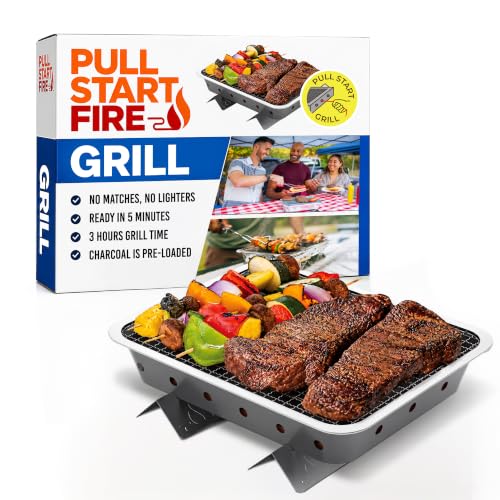
While primary commercial smokers handle large batches of brisket, pork shoulders, and ribs, secondary portable grills provide essential cooking versatility. Having a self-contained unit like the Pull Start Fire Grill, Natural Hardwood Charcoal gives operators an immediate, compact charcoal station for satellite warming or searing specialty skewers at remote pop-ups. Its rapid five-minute startup and self-igniting design allow mobile staff to establish a supplemental hardwood heat source without hauling bulky chimneys or lighter fluid. Compact backup grills ensure that unexpected equipment failures do not halt your live-fire service.
Fixed outdoor event spaces and permanent catering bases can benefit from built-in workstations rather than temporary tables. Designing a dedicated outdoor cooking station with durable counters and non-porous surfaces makes high-volume meat slicing significantly cleaner during lengthy service windows. You can examine our guide on the dedicated outdoor cooking station to understand how protective backsplashes and weatherproof enclosures improve sanitation in open-air environments. Durable surfaces resist grease accumulation and streamline end-of-day washdowns.
Menu Engineering, Meat Yields, and Food Cost Economics
Developing a profitable barbecue menu requires understanding how raw meat shrinkage impacts real portion margins. Whole beef briskets and bone-in pork butts routinely lose forty to fifty percent of their raw weight through fat trimming, moisture evaporation, and bone removal during prolonged smoking. If an operator bases plate pricing on raw wholesale poundage, the business will quickly lose capital on every order. Accurate yield testing must be conducted on every core protein before locking down retail price sheets.
Balancing high-margin side dishes alongside expensive smoked meats stabilizes overall operational profitability across busy shifts. Sides such as creamy coleslaw, pit beans, mac and cheese, and cornbread carry substantially lower ingredient costs than prime beef or pork ribs. Offering thoughtfully designed combination platters encourages customers to pair premium proteins with affordable sides, which protects your target food cost percentage. Crafting signature house-made pickles and distinctive barbecue sauces also adds high perceived value while keeping production costs low.
Limiting your core menu to a tightly focused selection reduces ingredient spoilage and streamlines order fulfillment during peak hours. Serving four primary proteins and four staple sides allows your line cooks to assemble plates in seconds, keeping customer wait times minimal. Daily specials can utilize leftover smoked meats for innovative dishes like pulled pork tacos, brisket chili, or loaded barbecue potatoes. This inventory discipline turns potential waste into profitable lunch items.
Workstation Layout, Temperature Control, and Food Holding
Maintaining proper holding temperatures is vital for preserving both succulent meat texture and strict food safety standards. Commercial barbecue relies heavily on insulated hot-holding cabinets that keep smoked briskets and pork shoulders resting at safe holding ranges above one hundred thirty-five degrees Fahrenheit. Extended holding allows collagen breakdown to continue while juices redistribute throughout the muscle fibers, yielding remarkably tender slices. Letting meat drop into the danger zone between forty-one and one hundred thirty-five degrees invites microbial growth and health code violations.
Operational efficiency depends on creating an ergonomic station flow that separates raw meat prep from cooked food slicing and plate assembly. Incorporating versatile cooking equipment such as hybrid smoker and griddle setups allows cooks to toast buns, grill onions, and warm barbecue glazes right alongside their smoking chambers. Keeping dedicated cutting boards, sanitized slicing knives, and digital meat thermometers within arm reach prevents accidental cross-contamination. Clear physical zoning ensures staff members never confuse raw poultry handling with ready-to-eat carving tasks.
Rapid chilling protocols are just as critical as hot holding when you batch cook proteins for future catering events. Large roasts must be portioned into shallow metal pans to cool from hot holding down to seventy degrees within two hours, and then below forty-one degrees within four additional hours. Investing in commercial blast chillers or ice-wand cooling baths protects meat quality and satisfies regulatory health standards. Proper labeling with preparation dates ensures strict first-in, first-out inventory rotation.
Sourcing Bulk Fuels, Hardwood Splits, and Commercial Supplies
Fuel represents a major recurring operating expense that directly affects cooking consistency and culinary reputation. Commercial barbecue demands seasoned hardwoods such as oak, hickory, pecan, or fruitwood with moisture levels consistently below twenty percent. Green wood produces bitter white smoke and creosote buildup that ruin meat flavors and irritate dining patrons. Establishing long-term supply arrangements with reputable local firewood suppliers guarantees steady access to kiln-dried splits throughout cold winter months.
Charcoal-fired operations must evaluate the trade-offs between natural hardwood lump charcoal and uniform charcoal briquettes. Lump charcoal ignites rapidly, burns exceptionally hot, and leaves minimal residual ash, making it ideal for high-heat grilling stations. Briquettes provide uniform burn rates and predictable temperatures across long cooking cycles, although they produce higher ash volumes that require regular cleanouts. Buying fuel in pallet quantities directly from industrial distributors reduces your unit cost compared to retail store bags.
Beyond fuel, commercial operators must budget for substantial quantities of heavy-duty aluminum foil, pink butcher paper, food-grade disposable gloves, and butcher twine. Wrapping briskets in breathable butcher paper during the stall preserves exterior bark while maintaining vital interior moisture. High-volume service demands dozens of glove changes per hour to maintain spotless hygiene between money handling and food assembly. Purchasing these operational disposables from commercial restaurant supply distributors keeps recurring overhead under control.
Marketing, Local Branding, and Pop-Up Launch Strategy
Building a recognizable brand within your local community starts well before you light your first commercial fire. Captivating social media content that documents wood sourcing, smoker lighting, and early morning slicing builds anticipation and authentic credibility. Visual imagery of rendered brisket bark and glistening pulled pork draws passionate barbecue enthusiasts directly to your pop-up locations. Announcing limited batch quantities creates healthy urgency that encourages patrons to arrive early before sellout notices go up.
Partnering with established craft breweries, neighborhood taprooms, and cideries provides immediate access to receptive, hungry audiences without rental overhead. Many beverage establishments lack internal food service and welcome licensed food vendors who keep patrons drinking longer. In exchange, vendors gain a reliable outdoor footprint, access to electrical connections, and cross-promotional exposure across the host venue marketing channels. These collaborative arrangements form the foundation of a successful launch schedule.
Executing several private soft-launch events for friends, family, and local influencers tests your timing under realistic service pressures. A soft launch reveals operational friction points such as slow register checkouts, awkward slicing layouts, or delayed side replenishment. Gathering honest feedback on seasoning balance, portion sizes, and service speed enables you to fine-tune operations before facing public reviews. Early community goodwill translates into organic word-of-mouth recommendations that drive sustainable growth.
Daily Operational Rhythm, Ash Disposal, and Business Maintenance
Sustaining a profitable barbecue business over many years demands exceptional physical discipline and methodical equipment maintenance. Long smoking cycles often begin before midnight or in pre-dawn darkness to ensure proteins reach tender doneness for afternoon lunch service. Developing strict checklists for pit cleanout, fuel staging, fire ignition, and meat loading prevents catastrophic oversights during exhausting shifts. Consistent rest schedules and efficient crew delegation keep owners from burning out during the busy summer catering rush.
Post-service cleanup protocols are critical for fire prevention and equipment longevity in commercial operations. Smoldering embers and hot ashes must always be shoveled into sealed steel ash cans with tight lids, never deposited into plastic dumpsters. Grease troughs, drip pans, and smoker baffles require scraping after every cook to eliminate combustible grease build-up that sparks dangerous pit fires. Pressure washing prep tables and sanitizing slicers at the end of every shift maintains the immaculate standards inspectors demand.
Mastering the business side requires diligent tracking of daily fuel costs, meat yields, labor hours, and event revenues. Successful operators review their financial metrics weekly to identify underperforming menu items and renegotiate wholesale purchasing rates. Reinvesting early profits into automated holding cabinets, larger cookers, or specialized transport vehicles systematically expands your catering capacity. Combining authentic pitmaster craft with solid business fundamentals ensures your barbecue venture achieves lasting commercial success.




Write Your Review
No reviews yet. Be the first to share your experience!