


Scraping hardened grease from a metal grill tray is easily one of the most frustrating chores in outdoor cooking. Many backyard cooks wonder, can i line my grill drip pan with foil to make cleanup effortless after an evening of barbecuing? While rolling a sheet of standard household foil across the grease tray might seem like a clever shortcut, doing so can actually introduce unexpected fire hazards and airflow issues depending on the specific tray design. Knowing the clear difference between lining a large slide-out grease funnel and placing a dedicated disposable foil liner inside the lower catch cup is essential for safe grilling.
Grill manufacturers design their drainage systems with precise angles to funnel rendered fat away from active burners and straight into a small catch basin. When you modify those channels improperly, grease can pool near high heat zones rather than draining safely away. Outdoor cooks who experiment with flavorful wood chips by using dedicated smoker boxes know that temperature stability and clean airflow matter just as much as basic maintenance. Evaluating whether to use roll foil or purpose-built pre-formed aluminum liners will protect your grill investment and keep your cookouts safe.

Pros
- Sturdy rolled rims maintain structural integrity when lifting hot drippings out of the bracket
- Direct fit for popular Weber gas grills, Q series portable units, and compact outdoor cookers
- Protects permanent metal grease trays from corrosive rendered fats and baked-on grease residue
- Generous 20-pack keeps a steady backup supply ready for the entire outdoor cooking season
Cons
- Sized strictly for 8.6" x 6" catch trays, making them too small for wide horizontal pellet grill grease troughs
- Requires steady hands and cooling time before removal to avoid accidental liquid grease spills
- Single-use aluminum design creates waste if local recycling options are limited
Managing drippings and rendered fat is one of the most overlooked parts of outdoor cooking, but it directly affects grill longevity and fire safety. The Matchwaves Disposable Aluminum Foil Drip Pans are engineered as direct-fit replacements for Weber 6415 grease catch trays. Measuring 8.6 by 6 inches, these liners drop right into the slide-out catch brackets of Weber Spirit, Genesis, and Q Series grills, as well as select Ninja outdoor appliances and compatible patio cooking setups.
This accessory is geared toward backyard grillers, patio cooks, RV owners, and tailgaters who love outdoor cooking but despise scraping hardened grease. Whether you are running quick weeknight dinners on a propane cart or searing smash burgers at a campsite tailgate, grease management is unavoidable. Having dedicated liners ready to catch oil, sauce runoff, and rendered tallow keeps your primary firebox clean and operational.
In real-world grilling scenarios, these drip pans pull double duty by maintaining steady cooking conditions and preventing flare-ups. When you are smoking a pork shoulder or grilling chicken thighs with the lid closed, melting fat funnels down into the tray instead of pooling near burner tubes. Keeping excess fat out of the direct heat zone prevents bitter acrid smoke from ruining your meat and avoids sudden flare-ups that can scorch expensive cuts.
Build quality is noticeably sturdier than standard kitchen foil pans. Matchwaves uses thickened aluminum foil backed by reinforced rolled rims. This structural reinforcement prevents the sides from collapsing or bowing outward when you slide the tray out of the grill bracket. The leak-resistant seams keep grease contained, shielding the underlying permanent metal catch tray from corrosive moisture, salt rubs, and acidic barbecue sauces.
Setup takes literally two seconds, requiring nothing more than dropping a fresh pan into the metal catch tray before lighting your burners. Cleanup is equally effortless: allow the grill to cool, slide the pan out, discard or recycle it, and replace it with a fresh liner. There is no soaking, scrubbing, or harsh degreaser required to keep your grease funnel clean.
While these liners are not designed to span wide pellet grill heat shields or giant offset smoker drip troughs, they fit their intended Weber footprint accurately. For any outdoor cook looking to extend grill life, streamline cleanup, and maintain a cleaner, safer cooking zone, keeping this 20-pack on your prep shelf is a smart, low-maintenance upgrade.
Routine grease disposal is essential for preventing grease fires, which can quickly ruin a weekend BBQ or damage grill components. These disposable foil pans make grease maintenance safe and routine by eliminating the need to scrape hardened fat from the bottom of your grill cabinet.
For best results, let your grill cool down completely after cooking before attempting to remove the liner. Once the rendered fat has congealed, lift the pan straight up by its reinforced rolled rims to avoid spilling liquid tallow onto your patio or deck. Discard the grease safely according to local waste guidelines or rinse the foil clean for aluminum recycling.
Dropping a fresh liner into place immediately after disposal ensures your grill is always primed and ready for the next firing. Keeping the permanent slide-out metal tray lined with these pans also prevents metal-on-metal corrosion caused by salty meat rubs and acidic marinades over extended outdoor storage.
These grease pans excel during high-fat, direct-heat grilling sessions like cooking batches of bacon-topped burgers, ribeye steaks, or skin-on chicken quarters for backyard gatherings. The deep reservoir catches heavy grease volume without overflowing onto burner components.
They are equally valuable for low-and-slow barbecue cooks on Weber gas setups using indirect heat zones. Catching hours of rendered fat from briskets, chuck roasts, and ribs protects your cookbox from sticky creosote buildup during long weekend smoke sessions.
Beyond grease management, the food-grade aluminum makes them handy on the patio for holding sliced peppers, resting cooked hot dogs before serving, or warming side dishes away from the main searing grates. Their stackable, compact profile also makes them an easy pack-in accessory for camper vans and portable tailgating grills.

Pros
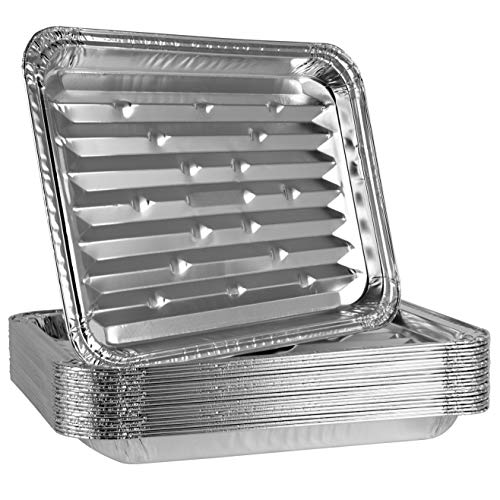
- Ribbed surface creates appealing grill marks without direct grate contact
- Disposable convenience saves time on cleanup after outdoor cooking sessions
- Multi-purpose use as drip pans, oven liners, or serving trays adds value
- Lightweight and compact pack of 10 is easy to store and take on camping trips
Cons
- Thin aluminum may tear under heavy loads or sharp utensils
- Not reusable, which may not suit eco-conscious users looking for permanent solutions
- Ribbed design may not provide the same sear as direct contact with hot grates
If you're a backyard griller or weekend tailgater who hates scrubbing burnt-on grease off your grill grates, the PLASTICPRO Aluminum Grill Pans might be exactly what you need. These disposable aluminum trays come in a pack of 10 and feature a ribbed bottom surface designed to give your burgers, chicken, or veggies that classic BBQ look without letting them fall through the grates. They're essentially a cross between a drip pan and a grill liner, and they work in both your outdoor grill and your indoor oven.
These pans are best suited for casual outdoor cooks who prioritize convenience. Backyard grillers will appreciate how they catch drippings and prevent flare-ups, while campers and RV owners can use them as portable cooking trays or serving dishes. Tailgaters will find them handy for prepping food at the parking lot and tossing the pan afterward. They're not meant for low-and-slow smoking or high-heat searing, but they do a solid job for everyday grilling and oven roasting.
In terms of real-world cooking performance, the ribbed bottom helps create those appealing grill marks, but don't expect the same crust or sear you'd get from direct contact with hot grates. Heat distribution is decent thanks to the aluminum material, but it's not as consistent as a heavy-duty cast iron or steel pan. For fast grilling like burgers or hot dogs, these pans work fine. For low-and-slow cooking, they can handle the heat but may warp if exposed to extreme temperatures for long periods.
Build quality is what you'd expect from disposable aluminum pans—lightweight and functional but not built to last. The aluminum is thin, so you'll want to handle them with care when they're loaded with food. They're not rust-resistant because they're meant for single use, and they don't have any special weather resistance. Portability is a strong point: the pans are light and stack flat, making them easy to toss in a cooler or camping bin.
Setup is as simple as placing the pan on your grill grates or oven rack. Cleanup is the main selling point—just toss the pan after cooking. No scrubbing, no soaking. Storage is easy since the pack of 10 takes up minimal space. A realistic limitation is that the pans can tear if you use metal tongs or spatulas aggressively, so stick to silicone or wooden utensils. Also, they're not reusable, so if you grill often, you'll go through the pack quickly.
Overall, the PLASTICPRO Aluminum Grill Pans are a practical buy for anyone who wants to simplify cleanup after outdoor cooking. They're ideal for backyard BBQs, camping trips, and tailgating events where convenience matters more than heavy-duty performance. If you're a serious smoker or searing enthusiast, you'll want to stick with your regular grates. But for everyday grilling and oven use, these pans deliver on their promise of less mess and more time enjoying your meal.
Complete Guide to Using Foil in Grill Drip Pans and Grease Trays
The short answer to whether you can line your grill drip pan with aluminum foil depends entirely on which part of the grease management system you are discussing. You should never line the large, slanted slide-out grease tray or cookbox funnel with sheets of roll foil. You can, however, safely use pre-formed disposable aluminum foil liners inside the lower catch pan or grease cup. Confusing these two distinct components creates widespread confusion and frequently leads to severe backyard grease fires.
The Vital Distinction Between Grease Trays and Catch Cups
Modern gas and pellet grills rely on a two-stage system to manage melting animal fats and liquid runoff. The upper stage consists of a broad, angled sheet metal tray or funnel positioned directly beneath the burners. This wide tray catches falling debris and directs hot liquid grease toward a central opening. The lower stage consists of a much smaller metal cup or catch basin hung beneath that opening to collect the runoff.
Many grill owners mistakenly refer to both of these parts interchangeably as the drip pan. Lining the small lower catch basin with a fitted disposable foil pan is standard practice and widely encouraged across the grilling industry. Problems arise when cooks attempt to cover the broad upper grease tray with rolls of standard kitchen foil. That simple misunderstanding disrupts the basic engineering that prevents high heat from igniting accumulated fat.
Understanding which part is which prevents costly damage to your cooking equipment. The upper tray needs a smooth, unobstructed metal surface so that hot grease glides downward without stopping. The lower cup simply serves as a holding container that remains relatively isolated from direct burner flames. Keeping this spatial difference in mind will help you maintain a clean, fire-safe outdoor cooking setup.
Why Wrapping the Large Grease Tray in Kitchen Foil Is Dangerous
Standard household aluminum foil from a roll crinkles, folds, and creases the moment it is pressed across a wide metal tray. Those tiny ridges and wrinkles act as miniature dams that trap liquid fat instead of letting it flow. As hot grease pools in those foil valleys, it sits directly underneath active gas burners or electric heating elements. Over a typical cooking session, pooled grease reaches its flashpoint and can suddenly ignite into a ferocious fire.
Aluminum foil also reflects radiant heat back up into the cookbox rather than allowing heat to dissipate naturally through designed vents. This concentrated thermal reflection can overheat burner tubes, warp the structural steel of the grill frame, and melt electronic ignition wires. In severe cases, extreme heat causes aluminum foil to degrade or stick permanently to the porcelain enamel or galvanized steel tray. Scraping baked-on foil fragments from a damaged tray takes far more time than simply washing the bare metal.
Another hazard occurs when loose foil shifts during cooking or preheating. High-velocity airflow from draft vents or windy weather can lift the edges of roll foil and drape them across open gas ports. When burner flames become obstructed by loose foil, gas accumulates beneath the cooking grates, posing an immediate flashover hazard upon ignition. Professional fire safety agencies consistently cite unapproved foil linings as a leading catalyst for catastrophic outdoor grill blazes.
How Grill Grease Drainage Systems Are Engineered to Work
Engineers design outdoor cooking appliances with carefully calculated slopes that leverage gravity to escort flammable oils away from heat sources. When fat renders from a steak or chicken thigh, it first hits the angled heat tents or flavorizer bars above the burners. Much of that liquid vaporizes to generate savory smoke, but the excess drips down to the bottom funnel. The slope of that bottom pan ensures that liquid fat moves swiftly toward the exit hole before reaching ignition temperature.
This flow dynamic changes dramatically when thick sauces or sugary marinades enter the equation. Backyard cooks who enjoy glazing ribs or chicken pieces with sweet concoctions like glazes like cranberry barbecue sauce know that melted sugars caramelize and thicken quickly upon contact with hot metal. If that sticky syrup encounters wrinkled foil in the grease pan, it forms a charred sludge that completely dams the drainage port. Once the drainage port clogs, fresh grease builds up into an expansive puddle that sits millimeters away from open flame.
Maintaining a clear path to the catch basin is your primary defense against flare-ups and grease fires. Bare painted or enameled metal allows both oils and caramelized drippings to slide toward the collection cup with minimal friction. Regular scraping with a plastic putty knife keeps that channel open without damaging the protective coating. Introducing loose roll foil into that precision channel undermines the exact drainage geometry the manufacturer engineered for your safety.
The Case for Pre-Formed Aluminum Catch Pan Liners
While wrapping the main grease funnel in roll foil is hazardous, using rigid pre-formed aluminum liners in the catch cup is both safe and convenient. Pre-shaped foil pans are pressed from heavy-gauge aluminum sheets that hold their shape under intense heat. Because they sit inside the dedicated catch cup well below the firebox, they do not impede internal combustion air or draft flow. Once full, you simply lift the rigid tray out and replace it with a fresh one without scrubbing messy residues.
Sizing matters significantly when selecting replacement catch cup liners for your grill model. Accessories like Matchwaves Drip Pans for Weber are designed to match standard eight-by-six-inch grease trays across popular mid-sized gas models. Their reinforced rolled edges prevent the liner from collapsing inward when lifted while full of warm liquid fat. Having rigid edges also ensures that the liner stays seated flush against the metal bracket without blowing away in strong breezes.
Larger cookers, griddles, and pellet grills require pans engineered with broader dimensions to handle higher volumes of rendered drippings. Liners such as 20 Pack Grill Drip Pans, Aluminum Foil Grease cater to larger multi-burner setups, griddle grease chutes, and wood-fired pellet units measuring eleven by five inches. For versatile backyard tasks, options like PLASTICPRO Aluminum Grill Pans, Broiler Pans offer textured ribbed bottoms that can catch drippings below cooking grids or hold side dishes directly on the grates. Investing in properly dimensioned trays eliminates the temptation to construct makeshift foil wraps that might leak or overflow.
Step-by-Step Method for Safe Catch Basin Management
Establishing a reliable maintenance routine ensures that your grease management system remains clean and safe throughout the entire grilling season. Begin by verifying that the grill is completely cool and that the fuel source is disconnected or turned off at the tank valve. Slide out the bottom grease tray and visually inspect the drainage funnel for any heavy carbon buildup or food chunks. Use a rigid plastic scraper to push loose debris down through the exit aperture into the catch cup area.
Next, pull the lower catch cup out from its mounting bracket underneath the cookbox. Discard the used disposable foil liner if it contains accumulated fat, food particles, or standing rainwater. Wipe down the interior of the permanent metal catch cup with warm soapy water to prevent grease from corroding the outer bracket. Drop a clean, pre-formed aluminum liner into the cup, ensuring it sits flat against the bottom and does not obstruct the funnel opening above.
Before sliding the entire assembly back into place, double-check that the drainage hole aligns directly over the center of your fresh foil liner. A misaligned catch cup allows scalding grease to drip onto your patio, deck boards, or propane tank storage area. Take a quick look under the cookbox with a flashlight to confirm that no spiders or debris have built nests inside the drainage chute. Reinstall the tray and catch cup securely so that vibrations during cooking cannot shake them loose.
Grease Fire Dynamics and the Science of Burning Fat
Animal fat renders into a complex mixture of triglycerides and fatty acids that become combustible at surprisingly low outdoor cooking temperatures. Most cooking oils and animal fats have a smoke point between three hundred fifty and four hundred degrees Fahrenheit. If fat is allowed to stagnate near active burners, its temperature rapidly climbs toward its flashpoint, typically between five hundred and six hundred degrees. At that threshold, grease vapors ignite spontaneously upon coming into contact with ambient oxygen.
Cooking rich proteins that release abundant fat increases the volume of liquid flowing through your drip management system. Preparing deeply seasoned, oil-rich proteins like marinated meats like Korean beef barbecue deposits high concentrations of sugar and rendered beef tallow into the drainage pan within minutes. When that volume drains freely into a clean foil-lined cup, the fire risk remains minimal because the fuel is removed from heat. If that fat gets trapped by wrinkled foil directly under the burner tubes, a small flame can transform into an uncontrollable inferno within seconds.
Grease fires burn with extraordinary intensity because vaporized fat supplies an enormous amount of chemical energy. Attempting to extinguish a grease fire with water causes an instantaneous steam explosion that sprays burning liquid grease in all directions. If a fire ignites in your drip pan, immediately shut off the burners, close the grill lid, and disconnect the gas supply if it is safe to reach. Keeping the lid closed cuts off fresh oxygen and suffocates the flames without damaging your cookbox or causing bodily injury.
What Major Manufacturers Say About Foil in Drip Systems
Leading grill manufacturers maintain explicit guidelines regarding the use of aluminum foil inside their cooking appliances. Companies like Weber, Traeger, and Napoleon state clearly in their operating manuals that users must never line the primary slide-out grease tray with foil. Their technical support documentation warns that doing so voids component warranties if heat reflection or a grease fire buckles the steel. They emphasize that while their customer support teams endorse disposable catch cup inserts, the main drip funnel must remain bare.
Pellet grill manufacturers frequently specify different rules for their specialized heat diffuser plates and grease drip pans. Some pellet smokers utilize a heavy steel heat shield positioned directly over the firepot that owners can wrap in heavy-duty foil. However, this allowance applies only when the manufacturer explicitly states it in the owner manual. Even in pellet cookers, the external grease bucket hanging from the side spout should always rely on fitted liners rather than loose foil wraps that could tear.
Gas grill producers face stricter safety scrutiny because gas burner tubes operate at much higher localized temperatures than electric smoldering elements. The proximity of the burner tubes to the grease tray means that any deviation in thermal conductivity can lead to catastrophic component failure. Checking your specific grill model manual before applying any foil ensures you comply with manufacturer safety listings. Adhering to these documented instructions protects your family and keeps your equipment running smoothly for many seasons.
Replacement Schedules and Inspection Frequency
Knowing how often to replace your aluminum catch pan liners depends on what you cook and how frequently you fire up the grill. Backyard cooks who host weekly gatherings and prepare fatty meats like burgers, pork chops, and bacon-wrapped appetizers should inspect their liners before every session. A liner that is more than half full of congealed grease should be swapped out immediately. Letting fat accumulate to the brim creates a severe spill hazard when you attempt to remove the cup for cleaning.
Environmental conditions also dictate how rapidly your disposable liners require replacement. Outdoor grills exposed to humidity or light rainfall can accumulate standing water inside the catch basin. Water does not mix with rendered fat, creating an unstable layered pool that can boil, splatter, and overflow once hot grease drips into it. If you notice cloudy water sitting inside your foil liner after a storm, dispose of it and place a dry liner in the cup before cooking.
Wildlife and common backyard pests present another compelling reason to change catch liners on a regular basis. Rodents, raccoons, and insects possess an acute sense of smell and are naturally drawn to pools of congealed grease beneath an unattended barbecue. Leaving an old liner filled with beef or poultry fat turns your cooking station into a magnet for unwanted garden pests. Swapping in a fresh liner and discarding the old grease in an outdoor trash bin keeps your outdoor kitchen clean and sanitary.
Safe Operating Boundaries and Outdoor Cooking Guidelines
Proper grease management is only one component of maintaining a safe outdoor cooking environment. Fuel-burning appliances like gas, charcoal, and pellet grills produce intense heat, open flames, and dangerous carbon monoxide fumes. You must never operate a grill inside a garage, breezeway, screened porch, or any other enclosed structure, regardless of whether doors and windows are left open. Carbon monoxide is an odorless, invisible gas that accumulates rapidly in confined areas and can cause fatal poisoning in humans and pets.
Position your grill on a stable, level outdoor surface well away from combustible walls, wooden railings, and overhanging tree branches. Maintaining at least ten feet of clear perimeter space around the cooking unit drastically reduces the risk of accidental structure fires. Always keep a Class B dry chemical fire extinguisher, a box of baking soda, or a bucket of dry sand near your cooking area. Having the right extinguishing agents readily accessible ensures you can handle an unexpected flare-up calmly without resorting to dangerous methods.
Taking a proactive approach to grill hygiene and drip management guarantees consistent cooking results while preserving equipment longevity. Use pre-shaped disposable liners exclusively inside the designated lower collection cup, and leave the broad upper grease funnel bare as intended by the manufacturer. By cleaning the main tray with a gentle scraper and replacing the catch cup insert regularly, you eliminate the threat of grease fires and enjoy worry-free outdoor cooking all year round.



Write Your Review
No reviews yet. Be the first to share your experience!