


Outdoor cooks often struggle to choose between the deep smoky profile of charcoal and the push-button convenience of propane. When evaluating outdoor cooking gear, deciding whether is a wood pellet grill worth it depends heavily on your preferred cooking rhythm and flavor expectations. Pellet cookers burn compressed hardwood sawdust fed by an electric auger, keeping chamber heat steady through automated digital controllers. This design delivers consistent convection heat and mild hardwood smoke without requiring you to nurse a fire box all afternoon. However, the reliance on electricity and specialized fuel introduces mechanical considerations that differ sharply from basic kettle grills or gas burners.
Cooks who prioritize tender brisket, pulled pork, and slow-roasted poultry frequently appreciate the hands-off automation of these systems. Accessories such as pellet hopper extension kits for longer smoking sessions demonstrate how cooks customize their setups for overnight smoking without frequent fuel refills. At the same time, high-heat searing requires specific hardware features, and fuel costs accumulate faster than standard propane tanks. Weighing the balance between temperature consistency, authentic hardwood smoke flavor, and regular cleanup requirements will help you decide if a pellet cooker fits your backyard patio or travel setup.

Pros
- Rich, full-bodied hickory flavor that's perfect for classic BBQ
- Clean, consistent burn with very little ash residue
- All-natural ingredients with no artificial additives or fillers
- Made in the USA with strict quality standards
Cons
- Price per pound is higher than some generic pellet brands
- Strong hickory flavor may overpower delicate foods like fish or poultry
- Only available in hickory flavor in this listing; variety pack not included
If you own a pellet grill or smoker, the fuel you choose directly affects the flavor of your food. Traeger Grills Hickory Wood Pellets are a top choice for backyard BBQ enthusiasts who want a bold, authentic smoke taste. These 100% all-natural hardwood pellets are designed to deliver a consistent burn and rich hickory flavor that pairs especially well with beef, pork, chicken, and even vegetables.
Who should buy these pellets? They are ideal for anyone who loves low-and-slow smoking or hot grilling on a pellet grill. Backyard grillers, tailgaters, and outdoor entertainers will appreciate the reliable performance and the deep, smoky aroma that fills the air. While campers and RV owners might find the 18 lb bag a bit bulky, it's still manageable for weekend trips if you have a portable pellet grill.
In terms of real-world cooking performance, these pellets shine. They burn evenly and produce a clean blue smoke without excessive soot or bitter flavors. The moisture content is carefully controlled to maintain a steady temperature, which is crucial for long smokes like brisket or pork shoulder. Even for quick grilling sessions like burgers or chicken thighs, the pellets ignite quickly and hold a consistent heat. The hickory flavor is assertive but not overpowering, adding a classic BBQ profile that enhances the natural taste of the meat.
Build quality here means how the pellets themselves are made. Traeger owns and operates its own mills in the USA, overseeing the entire process from sourcing hardwoods to final packaging. The pellets have a dense, compact structure that reduces dust and ensures a reliable feed through your grill's auger. They also produce noticeably less ash compared to some generic brands, which means fewer cleanups and less maintenance after each cook.
Setup and cleanup are straightforward. Just fill your hopper, start the grill, and let the pellets do the work. After cooking, you'll have minimal ash to vacuum out, saving time. The 18 lb bag is sealed to keep pellets dry and store easily in a garage or shed. One realistic limitation is that the hickory flavor might be too strong for delicate items like salmon or mild cheeses. In those cases, a fruit wood like apple or cherry would be a better match. Also, the price per bag is a bit higher than some store brands, but the consistency and clean burn justify the cost for dedicated BBQ fans.
Overall, these Traeger Hickory pellets are a smart choice if you want reliable, flavorful fuel for your pellet grill. They deliver the classic hickory taste that defines American barbecue, whether you're smoking a brisket for a backyard party or grilling burgers for a tailgate. For the best results, pair them with meats that can handle a bold smoke profile, and you'll get delicious, wood-fired flavor every time.
Hickory is one of the most popular woods for BBQ because of its strong, smoky flavor that complements meats like beef, pork, and poultry. Traeger's Hickory pellets are made from 100% natural hardwood with no fillers or binders, so what you taste is pure wood smoke. The moisture content is calibrated to produce a steady, clean burn with minimal ash, which means less maintenance and more consistent cooking temperatures.
These pellets work well for both low-and-slow smokes (225-275°F) and higher heat grilling (350-450°F). The flavor is bold enough to stand up to heavy marinades and rubs, yet balanced so it doesn't overpower the meat. You'll get a nice smoke ring on brisket and ribs, and chicken skin will crisp up with a pleasant smoky aroma. For vegetables like corn or peppers, the hickory adds a subtle backbone that makes them taste like they came off a live fire.

Pros
- Rich, balanced smoke flavor without overpowering the meat – great for long smokes and quick grills.
- Consistent burn and temperature stability thanks to optimized pellet density and moisture control.
- Low ash output compared to many competitors, making cleanup faster and less dusty.
- All-natural ingredients with no chemical additives, perfect for health-conscious outdoor cooks.
Cons
- Price per bag is higher than some store-brand pellets, but the quality and consistency justify the cost.
- Only compatible with pellet grills and smokers – not usable with charcoal, gas, or electric cookers.
- 18-pound bag can be heavy to carry and store, especially for campers or RVers with limited space.
Traeger Signature Blend wood pellets are the fuel of choice for anyone serious about outdoor cooking on a pellet grill or smoker. This 18-pound bag combines hickory, maple, and cherry hardwoods into a versatile blend that works across almost every protein and dish you can throw on the grates. Whether you are smoking a brisket low and slow, roasting vegetables for a patio dinner, or baking a pie in your Traeger, these pellets deliver consistent blue smoke and rich hardwood flavor without any chemical fillers or binders.
This product is best suited for backyard grillers, BBQ enthusiasts, tailgaters, and RV owners who own a pellet grill or smoker. Campers with portable pellet grills will also appreciate the dependable burn and low ash production, which makes cleaning up at the campsite much easier. The Signature Blend is a fantastic all-around choice for cooks who want one go-to pellet that can handle everything from burgers and steaks to fish and wild game.
In real-world cooking, these pellets shine with heat consistency and smoke quality. The moisture content is dialed in to produce clean blue smoke rather than thick white smoke that can impart a bitter taste. Temperature control stays tight through long cooks – we saw steady heat holding within a few degrees for over eight hours on a brisket. The blend also produces very low ash, so you can cook multiple meals before needing to vacuum out the firepot. That means less fuss during your weekend BBQ or tailgate party.
Build quality here is about pellet integrity. Traeger mills these pellets in the USA, and they have a compact cell structure that prevents excessive dust and breakage. The bag is sturdy and resealable, though the 18-pound size can be a bit heavy to lug around on a camping trip. Outdoors, the pellets hold up well if stored dry – moisture will ruin any pellet, so keep them in a sealed container. As a consumable, you do not have to worry about rust or grates, but the low-ash benefit is a real time-saver when cleaning out the grill after a long cook.
One realistic limitation is price: Traeger pellets cost more per pound than many generic brands. But that extra expense buys you consistency, flavor, and peace of mind that your cook will not be ruined by clumpy or dusty pellets. Also, remember these are only for pellet grills – they do not work in charcoal kettles or propane flat tops. If you own a Traeger or any quality pellet smoker, the Signature Blend is a smart everyday choice. For backyard entertaining, weekend brisket marathons, or bringing great barbecue to the campsite, this bag of pellets delivers the flavor and performance that outdoor cooks truly appreciate.
The Traeger Signature Blend combines three classic hardwoods to create a balanced, medium-intensity smoke flavor. Hickory provides the backbone with a robust, bacon-like smokiness that pairs perfectly with beef and pork. Maple adds a subtle sweetness that complements poultry and vegetables without masking their natural taste. Cherry rounds out the blend with a mild, fruity note that enhances fish, seafood, and even baked goods like cobblers or breads. The result is a versatile smoke that does not overwhelm any dish – ideal for cooks who serve a variety of meats and sides at backyard gatherings or tailgates. Unlike single-flavor pellets, this blend adapts to whatever you throw on the grate, making it a great all-in-one choice for pellet grill owners who want flexibility without stocking multiple bags.

Pros
- True wood-fired flavor with a mild, sweet apple profile that won't overpower lighter meats
- Consistent burn and smoke production throughout the cook, thanks to balanced moisture content
- Low ash means less mess and easier cleanup after grilling or smoking
- Versatile enough for smoking, baking, roasting, and grilling on any pellet grill
Cons
- Subtle flavor may not satisfy those seeking a more intense smoke profile like hickory or mesquite
- Limited to use in pellet grills and smokers; not suitable for charcoal or gas grills
- Price point is slightly higher compared to some generic pellet brands
Traeger Apple 100% All-Natural Wood Pellets are specifically designed for pellet grills and smokers, making them a top choice for outdoor cooking enthusiasts who want consistent, flavorful smoke. Whether you're a backyard BBQ lover, a weekend tailgater, or someone who loves hosting patio cookouts, these pellets bring a mild, sweet applewood essence to your food without overwhelming it. They work great for low-and-slow smoking, roasting, baking, and even fast grilling, so you can use them for brisket one day and burgers the next.
When it comes to real-world cooking performance, these pellets shine with steady heat and reliable smoke output. Traeger has put serious work into getting the moisture content just right, so you get a balanced burn-to-smoke ratio every time. That means fewer temperature swings and more predictable results, whether you're smoking chicken thighs or baking a batch of apple pie on the grill. The apple flavor pairs beautifully with poultry and pork, adding a touch of sweetness that doesn't mask the natural taste of the meat.
Build quality is solid across the board. These pellets are made in the USA from 100% all-natural hardwood with no binders, fillers, or artificial additives. They produce very low ash, which translates to less frequent cleaning and more time enjoying your cook. The 18-pound bag is easy to store and pour, and the pellets themselves are uniform in size, feeding smoothly through most pellet grill augers without jamming.
Setup and cleanup couldn't be simpler. Just fill your pellet hopper, set your temperature, and let the grill do the work. After cooking, the minimal ash means you can quickly vacuum out the burn pot and firebox. One realistic limitation is that apple pellets offer a milder smoke than stronger woods like hickory or mesquite, so if you're looking for a bold, in-your-face smoke flavor, you might want to mix these with another wood or go for something more intense.
Another consideration is that these pellets are designed exclusively for pellet grills and smokers, so they won't work with charcoal or propane setups. But if you own a Traeger or any other pellet cooker, they're an excellent fuel choice. The price is a bit higher than some generic store brands, but the consistent quality and clean burn make the cost worthwhile for serious outdoor cooks.
Overall, Traeger Apple Wood Pellets are a fantastic option for anyone who owns a pellet grill and loves experimenting with sweet, fruity smoke profiles. They're especially great for backyard entertaining, camping trips with a portable pellet grill, or tailgating sessions where you want reliable heat and great flavor. If you enjoy cooking chicken, pork, or even baked goods on your smoker, this bag is a no-brainer addition to your outdoor cooking arsenal.

Pros
- Exceptional temperature control with digital interface and automatic startup/cool down.
- High-heat searing capability via Flame Broiler for restaurant-quality sears.
- Portable and sturdy construction: lock-tight latches and compact footprint.
- Versatile cooking: smoke low-and-slow or grill hot and fast.
- Porcelain-coated grates are durable and easy to clean.
Cons
- No built-in carrying handles; requires separate carrier or tote for transport.
- Small cooking surface (256 sq in) limits capacity for large groups.
- Pellet consumption can be higher when searing at high temperatures.
The Pit Boss PB150PPG is a tabletop wood pellet grill that brings the full versatility of a pellet smoker and a high-heat searing station to small spaces. It's designed for backyard cooks who want to experiment with smoking, but it really shines for campers, tailgaters, and RV owners who need a compact yet powerful grill that delivers real smoke flavor and impressive heat output. With a 256-square-inch cooking surface and a 7-pound hopper, it comfortably handles meals for 2 to 6 people.
Cooking performance is where this little grill punches above its weight. The digital controller maintains set temperatures with impressive accuracy, so you can set it and forget it for low-and-slow smoking of ribs, pork shoulder, or chicken. When you want a sear, the Flame Broiler feature opens a direct flame path to the grates, reaching up to 1000°F. That's hot enough for a perfect crust on steaks without needing a separate grill. The convection cooking system distributes heat evenly across the cooking surface, and the back-side vent exhaust helps manage airflow. Pellet efficiency is decent for the size, though high-heat searing does consume more fuel.
Build quality feels solid for a portable unit. The heavy-duty steel body with a powder coat finish is built to handle outdoor use, and the porcelain-coated cast iron grates retain heat well. The lock-tight latches secure the lid for transport, and the automatic startup and cool-down cycles add convenience. At 43.4 pounds, it's not the lightest tabletop grill, but it's manageable for car camping or tailgating. One realistic limitation is that this model doesn't have built-in carrying handles, so you may want a tote or a pair of oven mitts to move it after it cools.
Setting up the PB150PPG is straightforward. Assembly is minimal, and the initial burn-off and auger priming are simple with clear instructions. Cleaning is made easier by the simple-access grease tray, though you'll need to supply your own disposable foil liners. The porcelain-coated grates wipe clean with a brush, and the interior ash can be vacuumed out regularly. Storage is simple thanks to its compact dimensions; it fits easily in a camper storage compartment or a plastic tote between uses.
For the outdoor cook who values smoke flavor and portable versatility, this Pit Boss model delivers. It's a great match for campers who want to smoke brisket at the campsite, tailgaters who want to sear burgers before the game, or backyard cooks with limited space who still want the benefits of a pellet grill. The 5-year warranty adds peace of mind. Just be realistic about the cooking capacity and the lack of handles, and you'll love the performance this little grill offers.
The Pit Boss PB150PPG excels at both low-and-slow smoking and high-heat grilling. Its digital temperature controller holds a steady temp from 180°F upward, making it reliable for smoking ribs, chicken, or a small brisket. The Flame Broiler feature is a standout: it lets you sear directly over the firepot for a steakhouse-quality crust. The convection cooking system, aided by the back-side vent, ensures even heat distribution across the 256-square-inch cooking surface. Pellet efficiency is good for smoking, but searing at 1000°F will use pellets faster. Overall, it delivers consistent results for small-batch outdoor cooking.
Weighing 43.4 pounds and measuring 24.8 x 18.7 x 14.2 inches, the PB150PPG is compact enough for car camping, tailgating, or RV trips. Lock-tight latches keep the lid secure during transport, and the sturdy steel body handles bumps from travel. A notable drawback is the absence of built-in carrying handles. You'll want to pack it in a plastic tote or use heavy-duty gloves to move it. Once on a tabletop or tailgate, it's stable and ready to cook. The small footprint makes it easy to store in a camper compartment or garage shelf.
Cleaning the PB150PPG is manageable thanks to the simple-access grease tray. The tray slides out for easy disposal of drippings; you'll need to line it with foil liners (not included) for quicker cleanup. The porcelain-coated cast iron grates resist sticking and scrub clean with a grill brush or sponge. After several cooks, vacuum out the ash from the firepot and interior to maintain airflow. The exterior powder coat finish can be wiped down with a damp cloth. Regular maintenance includes checking the auger and cleaning the temperature probe. Overall, it's straightforward to keep in good shape for many seasons.

Pros
- Versatile flavor that works with virtually any food - from brisket to cookies
- Consistent burn quality thanks to optimized moisture content and compact cell structure
- Low ash output means less cleanup and more time enjoying your cook
- Made in the USA with all-natural hardwood - no artificial additives or fillers
Cons
- Pecan flavor may be too mild for those who prefer bold hickory or mesquite smoke
- 18 lb bag might not be enough for very long cooks or frequent grilling sessions
- Not suitable for charcoal grills or propane smokers - designed exclusively for pellet grills
If you own a pellet grill or smoker, the fuel you choose plays a huge role in the final flavor of your food. Traeger's Pecan 100% All-Natural Wood Pellets are designed to deliver a consistent, mild nutty smoke that complements a wide range of ingredients. These aren't your average pellets - they're made in American mills using a specific hardwood with a compact cell structure that Traeger has refined over the years to hit the perfect moisture sweet spot. That translates to a steady burn and a reliable smoke-to-heat ratio cook after cook.
This bag is an excellent fit for backyard grillers and BBQ enthusiasts who like to experiment. Pecan smoke works beautifully with beef, poultry, pork, lamb, and even vegetables or baked goods - so you're not locked into just one style of cooking. Weekend brisket smokes, weekday chicken thighs, or a batch of wood-fired cornbread all benefit from that subtle, sweet nuttiness. For tailgaters and campers with a pellet grill in tow, these pellets offer a fuss-free fuel that lights easily and burns cleanly, letting you focus on feeding the crowd rather than managing the fire.
Performance-wise, these pellets hold up well in both hot-and-fast grilling sessions and low-and-slow smoking marathons. Because the pellet's internal structure is optimized for even burning, you get fewer temperature swings and more predictable heat. Ash production is low too, which means less time scraping out the firepot and more time enjoying your cook. That matters especially on long overnight smokes where you don't want to babysit the grill.
Build quality is exactly what you'd expect from Traeger - consistent pellet size, minimal dust at the bottom of the bag, and no signs of moisture damage when stored properly. The bag itself is sturdy enough to stack in a garage or shed, though you'll want to keep it dry. There's no special construction here, but the pellets deliver on their promise: all-natural hardwood with no binders or fillers. That's a big plus for anyone who wants authentic wood flavor without artificial additives.
One realistic limitation is that pecan is a milder smoke compared to hickory or mesquite. If you're after a bold, aggressive flavor, you might prefer a different wood. Also, the 18 lb bag is decent for a few big cooks, but frequent users may want to buy in bulk. Cleanup is straightforward - just empty the ash after each use and keep the pellet hopper dry. Storage in a cool, dry place is key to prevent pellets from absorbing moisture and swelling.
Overall, Traeger Pecan Pellets are a versatile, high-quality fuel choice for any pellet grill owner. Whether you're hosting a backyard party, tailgating at the stadium, or just cooking dinner on the patio, these pellets provide reliable heat and a pleasant smoke flavor that won't overpower your food. If you enjoy experimenting with different woods and want a well-rounded option that works with almost anything, this bag deserves a spot in your outdoor cooking arsenal.
Pros
- Consistent, balanced smoke flavor from a blend of three hardwoods
- Low ash output means less frequent cleaning and better heat efficiency
- All-natural with no binders or fillers - just pure hardwood
- Versatile enough for smoking, grilling, baking, and roasting
- Made in the USA with quality control you can trust
Cons
- Some users may prefer a stronger single-wood flavor like pure hickory or mesquite
- 30-pound bag can be heavy to carry and store for campers or tailgaters with limited space
- Price per pound is higher than some generic pellet brands
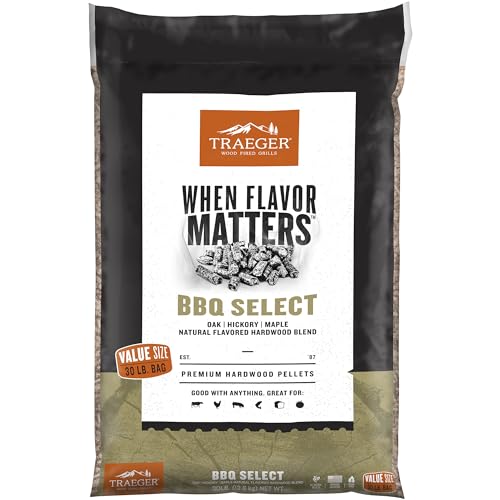
If you own a pellet grill, you already know the fuel you use makes or breaks your cook. The Traeger BBQ Select Wood Pellets are designed to give you a reliable, consistent burn with a balanced smoke flavor that works across a wide range of foods. This 30-pound bag contains a blend of oak, hickory, and maple hardwood - three classics that together create a mild-to-medium smoke profile that won't overpower your meat but still adds that authentic wood-fired taste.
These pellets are best suited for backyard grillers and BBQ enthusiasts who want a versatile fuel source for everything from low-and-slow brisket to high-heat burgers. They also work great for patio cooks who like to roast vegetables or bake desserts on their pellet grill. If you're a camper or tailgater with a portable pellet grill, the 30-pound bag might be a bit bulky, but the performance is worth the extra space in your truck or RV.
In real-world cooking, these pellets shine with heat consistency. Traeger has spent years perfecting the moisture content to hit that sweet spot where you get a steady burn without excessive smoke or temperature swings. The compact cell structure of the hardwood means each pellet burns evenly, so you don't get hot spots or sudden flare-ups. Whether you're smoking a pork shoulder at 225°F or grilling chicken at 400°F, the temperature control stays predictable. The smoke flavor is present but not aggressive - think of it as a background note that enhances the natural taste of your meat rather than covering it up.
Build quality is solid. These are all-natural pellets made in American mills with no binders or fillers. That means less ash in your firepot and fewer clogs in your auger system. Cleanup is straightforward - just vacuum out the ash after a few cooks. The low ash production is a real plus for anyone who hates spending time on maintenance. The 30-pound bag is sturdy and resealable if you use a clip, but it's not waterproof, so store it in a dry place to keep the pellets from absorbing moisture.
One realistic limitation is that the flavor profile is a blend, not a single wood. If you're a purist who wants the strong punch of straight hickory or the sweetness of pure maple, this might feel too balanced. Also, the price per pound is higher than some store-brand pellets, but you're paying for consistency and quality control. For most backyard cooks, the versatility of this blend makes it a smart choice - you can use it for everything without switching bags.
Overall, the Traeger BBQ Select Wood Pellets are a reliable, high-quality fuel for any pellet grill owner. They deliver steady heat, pleasant smoke, and minimal mess. If you want a no-fuss pellet that works for smoking, grilling, baking, and roasting, this is a solid pick. Just keep them dry and you'll be set for many weekends of outdoor cooking.
The Traeger BBQ Select pellets are engineered for consistent heat output and a balanced smoke profile. The blend of oak, hickory, and maple provides a medium smoke intensity that works well for both low-and-slow smoking and high-temperature grilling. The compact cell structure of the hardwood ensures each pellet burns evenly, reducing temperature fluctuations that can ruin a cook. You'll get reliable performance whether you're smoking a brisket at 225°F or searing steaks at 450°F. The low ash production means less time cleaning and more time cooking.
These pellets are designed to burn efficiently, giving you more cooking time per bag. The moisture content is carefully controlled to hit the sweet spot where you get maximum heat output with minimal waste. In practice, a 30-pound bag can last through several long smokes or multiple grilling sessions. The low ash content also means your firepot stays cleaner, which helps maintain consistent airflow and burn efficiency. For pellet grill owners who cook frequently, this translates to fewer bag changes and less downtime.
These pellets are versatile enough for almost any outdoor cooking scenario. Use them for low-and-slow smoking of pork shoulder, brisket, or ribs. They also work great for grilling burgers, chicken, and steaks at higher temperatures. The mild smoke flavor pairs well with seafood like salmon or trout, and even with baked goods like pizza or cobblers. For backyard parties, tailgates, or camping trips, this single bag covers all your cooking needs. Just keep in mind that the 30-pound size is best for stationary grills rather than portable setups.

Pros
- Clean combustion generates minimal ash for easy post-cook cleanup
- Mild to medium flavor works across nearly all meat cuts and barbecue styles
- Dependable pellet density ensures smooth auger feeding without jams
- Zero artificial binders, chemical additives, or filler woods
Cons
- Milder flavor profile than bold woods like hickory or mesquite
- Standard 20-pound bag can burn through quickly during cold-weather smoking sessions
- Requires dry, airtight storage after opening to prevent moisture absorption
Camp Chef Oak Flavor Hardwood Pellets serve as an all-natural fuel and smoke source engineered for all pellet grills and smokers. Whether you are running a standalone backyard pellet cooker, a patio smoker, or a portable tailgating grill, these pellets provide the steady thermal energy and clean wood smoke needed for serious outdoor cooking. Backyard grillers, weekend BBQ enthusiasts, and outdoor entertainers who want dependable performance without constant temperature swings will appreciate what this fuel brings to the table.
In real-world cooking situations, heat consistency makes or breaks a barbecue session. These pellets are kiln-dried to eliminate excess moisture, which helps the fire pot burn hot and efficiently. Maintaining a steady 225 degrees Fahrenheit for an overnight brisket or cranking the grill up past 400 degrees for crispy chicken skin happens smoothly because the pellets burn predictably. Because oak delivers a balanced, middle-of-the-road smoke intensity, it adds a rich mahogany bark and a classic smoke ring without the bitterness that heavier woods can sometimes produce.
Build quality in grilling pellets comes down to composition and density. Camp Chef uses pure virgin hardwood rather than recycled wood byproducts, avoiding the chemicals, oils, and artificial bonding agents found in bargain fuel options. The uniform shape and solid compression keep the pellets intact in the bag, which dramatically cuts down on sawdust and powder at the bottom of your hopper. That consistent shape ensures uninterrupted auger feeding, whether you are smoking ribs on a calm summer afternoon or fighting a stiff autumn breeze.
Ash management is another area where these oak pellets stand out. Low-moisture wood burns down to a very fine, light residue rather than clumping into heavy slag in your burner cup. Less ash means fewer airflow blockages during 12-hour brisket cooks and a faster vacuum-out routine once the grill cools down. It also minimizes fly ash, keeping your meats, vegetables, and pizza crusts clean and grit-free.
There are a few practical considerations to keep in mind. If you prefer a pungent, heavy smoke punch on pork shoulder or beef ribs, pure oak might feel slightly subdued compared to hickory or mesquite. Like all compressed wood pellets, they are sensitive to humidity and moisture once the bag is opened. Storing unused pellets in an airtight bucket with a sealed lid is essential if you live in a damp climate or keep your gear outdoors.
Overall, Camp Chef Oak Pellets represent a reliable everyday fuel choice for any backyard pitmaster. They balance clean heat production, dependable auger feed, and mild aromatic smoke into a package that handles low-and-slow briskets just as easily as quick weeknight burgers on the patio.
Oak is the gold standard wood for Texas-style barbecue because of its clean, balanced profile. These pellets produce a soft, aromatic smoke that lets the natural flavor of the meat shine through rather than overpowering it. Beef briskets develop a rich, dark bark, while delicate proteins like chicken thighs, turkey breast, and salmon pick up subtle wood notes without developing an acrid aftertaste.
Because the pellets burn thoroughly with high energy output, they adapt well across the entire temperature spectrum. You get rich smoke generation in the 180 to 225 degree range for slow smoking, along with the high-heat capability required for direct grilling and roasting. The stable combustion makes it easy for grill controllers to maintain set points without sudden temperature spikes or flameouts.
The kiln-drying process behind these pellets creates an exceptionally low moisture level, directly improving your burn rate. Less thermal energy is wasted boiling off trapped water, meaning more of the fuel converts directly into cooking heat. Your pellet grill burns fewer pounds per hour to hold target temperatures, extending cook times per bag.
Clean combustion also leaves behind a minimal amount of light ash. Burn pots stay clear longer during extended low-and-slow cooks, allowing for steady airflow and preventing the fire from choking out halfway through an overnight smoking session.
Evaluating Pellet Grills: Performance, Real-World Costs, and Cooking Style Fit
Deciding whether to buy a pellet cooker comes down to balancing convenience against fire management. For outdoor cooks who want the flavor of real hardwood without tending a firebox all afternoon, a pellet cooker offers a dependable solution. Digital controllers and automated fuel feeding transform slow smoking into a predictable process. Reviewing how these machines operate, what they cost to run, and their cooking limits will clarify if the investment fits your lifestyle.
How Pellet Grill Technology Works and Why It Matters
A pellet cooker functions much like an outdoor convection oven fueled by real wood. Hardwood pellets sit in a hopper before a motor-driven auger delivers them into an internal combustion pot. An electric heating rod ignites the pellets during startup, while a continuous fan stokes the fire and circulates heat throughout the chamber. This constant circulation prevents hot spots and cooks meat evenly on all sides.
The brain of the machine is its electronic control board, which monitors internal temperatures using a thermocouple sensor. When the sensor detects heat loss from opening the lid, the controller signals the auger to deliver more pellets. This automated loop provides the thermal stability required for tender brisket and pork shoulder. You can set the target temperature and attend to other tasks without adjusting dampers.
Because the system relies on mechanical components, operating a pellet grill requires access to a standard electrical outlet. An internal fan, an auger motor, and digital sensors introduce parts that do not exist on charcoal kettles or gas burners. If electrical power cuts out mid-cook, the fire extinguishes immediately. When maintained properly, however, this mechanical synergy delivers reliable temperature precision across long smoking sessions.
Flavor Profile Realities: Wood Smoke vs Traditional Charcoal and Gas
One primary reason cooks consider a pellet grill is authentic wood aroma. Pellet cookers burn dense hardwood sawdust that produces cleaner, lighter smoke than smoldering wood chunks. This clean burn creates an appealing smoke ring on meats without imparting harsh, bitter creosote flavors. The resulting flavor profile is richer than gas grilling, yet milder than an offset wood smoker.
Hardwood selection plays a major role in shaping the final flavor profile. For rich barbecue dishes like beef brisket and pork ribs, options like Traeger Grills Hickory 100% All-Natural Wood deliver an assertive, traditional smoke profile. Cooks preparing poultry or delicate baked items often prefer sweet fruitwoods, such as Traeger Grills Apple 100% All-Natural Wood Pellets, which yield a gentle aroma. Subtle, nutty blends like Traeger Grills Pecan 100% All-Natural Wood Pellets provide a versatile profile that complements pork chops, lamb, and roasted vegetables.
All-purpose cooking often calls for versatile blends like Traeger Grills Signature Blend 100% All-Natural, which combines hickory, maple, and cherry hardwoods into a balanced formulation. Larger format bags such as Traeger Grills BBQ Select 100% All-Natural Wood combine oak, hickory, and maple for extended cooking sessions. For a smooth, neutral hardwood base that will not overpower lighter proteins, Camp Chef Oak Flavor 100% All-Natural Wood Pellets provide clean-burning kiln-dried virgin hardwood. While offset smokers yield heavier smoke density, pellet cookers deliver a balanced, crowd-pleasing profile suited for routine dining.
Temperature Control, Versatility, and Direct Heat Limitations
Pellet cookers cover a broad operating range, typically running from 180 degrees Fahrenheit for smoking up to 500 degrees Fahrenheit for roasting. At low settings, continuous convection circulates gentle heat and wood smoke, tenderizing tough cuts over long hours. At higher temperatures, the indirect convection environment functions like an outdoor oven, roasting whole chickens and baking crisp flatbreads with ease.
Direct flame searing, however, remains a common challenge for standard pellet designs. Most units feature a large metal heat diffuser between the fire pot and grates to disperse heat evenly. While this plate prevents grease fires, it blocks direct contact with radiant open flames. As a result, surface crusting on quick-searing items like thin steaks or burgers can be less pronounced than on gas or charcoal grills.
Certain models solve this issue by incorporating adjustable flame deflectors. The portable Pit Boss PB150PPG Table Top Wood Pellet Grill features an integrated sliding flame broiler designed for direct flame searing up to 1,000 degrees Fahrenheit. Coupled with porcelain-coated cast iron grates, this setup allows cooks to reverse-sear steaks right over the fire pot. Choosing a model with a dedicated direct-flame option is vital if high-heat searing is a staple of your routine.
Ongoing Fuel Expenses and Pellet Quality Considerations
Ownership costs extend beyond the purchase price to ongoing fuel usage. A pellet cooker burns approximately one pound of pellets per hour at low smoking temperatures, and two to three pounds per hour during high-heat roasting. Cold ambient temperatures or windy conditions increase fuel consumption as the controller compensates for heat loss. Over a full season of regular cooking, pellet expenses outpace running an equivalent propane grill.
Fuel quality directly impacts thermal efficiency and equipment reliability. High-grade pellets manufactured from 100 percent natural hardwoods without synthetic binders produce minimal ash and maintain consistent heat. Bags of Camp Chef Oak Flavor 100% All-Natural Wood Pellets use kiln-dried virgin timber to maintain low moisture levels. Drier wood pellets burn cleaner and generate less residual ash, reducing cleanup intervals while maintaining steady temperatures.
Proper fuel storage is essential to keep pellets in prime working condition. Compressed wood pellets readily absorb moisture from humid air or rain, which causes them to swell and break down into fine dust. Swollen pellets can bind inside the auger tube, causing motor strain or stubborn mechanical jams. Keeping your fuel bags in sealed, waterproof storage buckets preserves clean feeding and prevents unexpected cooking delays.
Maintenance, Mechanical Complexity, and Long-Term Durability
Routine maintenance on a pellet cooker is straightforward but necessary for consistent operation. Every burn cycle leaves fine wood ash inside the fire pot and throughout the lower cooking barrel. Excessive ash buildup suffocates the electric igniter rod and restricts combustion airflow, causing failed starts or temperature swings. Vacuuming out the fire pot every two to three cooks preserves dependable ignition and keeps air channels open.
Grease management also requires regular attention to ensure safe backyard operation. Sloped drip trays channel hot grease into an external bucket away from the central combustion pot. When grease accumulates heavily along the drip shield and interior barrel walls, high-temperature cooking can ignite serious grease fires. Scraping down the drip deflector and replacing protective foil liners keeps the system clean and prevents flare-up hazards.
Because pellet cookers house electric induction fans, auger motors, and digital control boards, shielding them from moisture is critical. Rain and humidity can corrode electrical connections, damage hot-rod igniters, and promote barrel rust. Using a fitted, water-resistant grill cover and keeping portable models in sheltered outdoor spaces extends machine longevity. Basic cleaning and dry storage keep these automated cookers performing reliably season after season.
Portability, Tailgating, and Small-Space Cooking Scenarios
While full-sized backyard pellet cookers are heavy, compact tabletop options deliver wood-fired smoking to mobile setups. The Pit Boss PB150PPG Table Top Wood Pellet Grill offers a seven-pound hopper capacity, locking lid latches, and a compact steel body tailored for travel. It fits neatly into truck beds or RV storage compartments while providing convection smoking on the road. An included meat probe enables traveling cooks to monitor internal roast temperatures easily.
Mobile pellet cooking requires planning for off-grid electrical power. Because the internal auger, combustion fan, and igniter rod rely on electrical current, remote cooking demands a portable power station, vehicle inverter, or small generator. The initial startup cycle draws the most power, after which continuous operation requires modest wattage to sustain the fan and motor. Having a dependable power source ensures consistent cooking performance at campsites or tailgates.
Grill safety remains paramount across every setting, whether in a backyard or at a campsite. Never operate a pellet grill inside a garage, breezeway, camper, or enclosed space, even with doors or windows open. Burning wood pellets produces carbon monoxide, a dangerous toxic gas that accumulates swiftly indoors. Always set your cooker outdoors on a stable, non-combustible surface clear of overhangs, walls, and dry vegetation.
Pellet Grills Compared to Dedicated Smokers and Gas Grills
Deciding on a pellet cooker often involves comparing it against existing outdoor cooking platforms. Gas grills offer rapid lighting and high-heat convenience for fast dinners, but they produce minimal natural wood smoke flavor. Adding smoker boxes for traditional grills helps introduce wood chips, yet gas grill ventilation tends to disperse smoke quickly. A pellet cooker trades five-minute preheating for authentic wood flavor and hands-off thermal stability.
Compared to manual charcoal smokers or offset stick burners, pellet grills prioritize convenience over heavy smoke intensity. Traditional offset smokers require constant fire tending, damper tweaks, and wood feeding, which demands hours of active management. For cooks interested primarily in high-capacity smoking over horizontal grilling, exploring dedicated vertical pellet smokers illustrates how vertical layouts maximize rack space. Horizontal pellet grills provide a balanced alternative that handles baking, roasting, and smoking in one unit.
Charcoal kettles offer an affordable cooking format with strong searing capabilities and classic charcoal flavor. However, holding low cooking temperatures on charcoal for ten to twelve hours requires careful vent monitoring and practice. Pellet cookers remove that guesswork by automating fuel feeding and air circulation via internal sensors. If you want repeatable barbecue results without spending all day managing air dampers, a pellet grill provides significant practical value.
Making the Decision: Who Benefits Most from a Pellet Cooker
A pellet cooker provides outstanding value for cooks who want flavorful smoked barbecue without constant supervision. Busy homeowners can start a pork roast in the morning, dial in the desired temperature, and let the cooker run reliably while they focus on other activities. Convection airflow combined with clean wood combustion keeps meats tender and minimizes the risk of burning. For indirect low-and-slow cooking, this hands-off process delivers excellent results.
A pellet cooker may be less appealing for cooks whose primary interest is fast, high-heat searing for weeknight dinners. If your regular routine focuses on quick burgers, hot dogs, and thin cutlets, a conventional gas grill or charcoal kettle remains faster and simpler to operate. In addition, cooks who demand the intense, heavy smoke flavor of a traditional wood-fired pit may find clean pellet combustion somewhat subtle.
Reviewing your cooking style, storage space, and willingness to perform regular vacuum cleanouts will guide your final choice. If you appreciate push-button temperature control, mild hardwood flavor, and versatile roasting performance, a pellet grill is a worthwhile investment. Choosing clean, moisture-free hardwood pellets and understanding your searing needs ensures your cooker meets your outdoor dining expectations.
Adding a pellet cooker to your outdoor kitchen ultimately comes down to your cooking priorities. While electrical dependencies, ongoing pellet purchases, and ash cleanouts require routine commitment, the advantages of set-and-forget heat control and natural hardwood smoke are undeniable. Evaluating your favorite recipes, patio space, and travel needs will help you determine if a pellet grill earns a permanent spot in your cooking lineup.





Write Your Review
No reviews yet. Be the first to share your experience!