


Cooking with hardwood pellets transforms standard outdoor grilling into an automated, wood-fired convection experience. Digital controllers feed compressed sawdust through a motorized auger directly into a combustion pot, where an electric igniter creates steady heat and clean smoke. Learning how to cook on a pellet grill allows backyard cooks to prepare tender brisket, roasted vegetables, and crispy poultry with precise temperature management. Long low-and-slow sessions often require substantial fuel capacity, leading many pitmasters to invest in pellet hopper extension kits to run overnight cooks without manual refills.
Consistent airflow inside the cookbox eliminates large temperature swings that often plague traditional charcoal or stick-burning smokers. Direct heat shields disperse flame energy evenly across the grates, creating an indirect cooking environment similar to a domestic convection oven. Success on these cookers depends on understanding clean ignition, maintaining dry hardwood fuel, and monitoring the internal temperatures of your meat. Simple habits like regular burn pot clearing and proper shutdown cycles keep the equipment running safely for every barbecue session.
Pros
- Consistent, balanced smoke flavor from a blend of three hardwoods
- Low ash output means less frequent cleaning and better heat efficiency
- All-natural with no binders or fillers - just pure hardwood
- Versatile enough for smoking, grilling, baking, and roasting
- Made in the USA with quality control you can trust
Cons
- Some users may prefer a stronger single-wood flavor like pure hickory or mesquite
- 30-pound bag can be heavy to carry and store for campers or tailgaters with limited space
- Price per pound is higher than some generic pellet brands
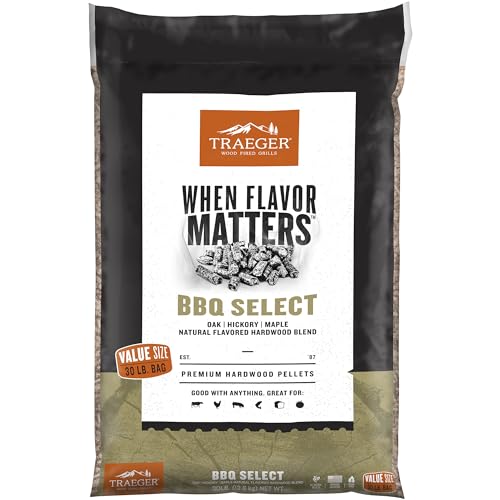
If you own a pellet grill, you already know the fuel you use makes or breaks your cook. The Traeger BBQ Select Wood Pellets are designed to give you a reliable, consistent burn with a balanced smoke flavor that works across a wide range of foods. This 30-pound bag contains a blend of oak, hickory, and maple hardwood - three classics that together create a mild-to-medium smoke profile that won't overpower your meat but still adds that authentic wood-fired taste.
These pellets are best suited for backyard grillers and BBQ enthusiasts who want a versatile fuel source for everything from low-and-slow brisket to high-heat burgers. They also work great for patio cooks who like to roast vegetables or bake desserts on their pellet grill. If you're a camper or tailgater with a portable pellet grill, the 30-pound bag might be a bit bulky, but the performance is worth the extra space in your truck or RV.
In real-world cooking, these pellets shine with heat consistency. Traeger has spent years perfecting the moisture content to hit that sweet spot where you get a steady burn without excessive smoke or temperature swings. The compact cell structure of the hardwood means each pellet burns evenly, so you don't get hot spots or sudden flare-ups. Whether you're smoking a pork shoulder at 225°F or grilling chicken at 400°F, the temperature control stays predictable. The smoke flavor is present but not aggressive - think of it as a background note that enhances the natural taste of your meat rather than covering it up.
Build quality is solid. These are all-natural pellets made in American mills with no binders or fillers. That means less ash in your firepot and fewer clogs in your auger system. Cleanup is straightforward - just vacuum out the ash after a few cooks. The low ash production is a real plus for anyone who hates spending time on maintenance. The 30-pound bag is sturdy and resealable if you use a clip, but it's not waterproof, so store it in a dry place to keep the pellets from absorbing moisture.
One realistic limitation is that the flavor profile is a blend, not a single wood. If you're a purist who wants the strong punch of straight hickory or the sweetness of pure maple, this might feel too balanced. Also, the price per pound is higher than some store-brand pellets, but you're paying for consistency and quality control. For most backyard cooks, the versatility of this blend makes it a smart choice - you can use it for everything without switching bags.
Overall, the Traeger BBQ Select Wood Pellets are a reliable, high-quality fuel for any pellet grill owner. They deliver steady heat, pleasant smoke, and minimal mess. If you want a no-fuss pellet that works for smoking, grilling, baking, and roasting, this is a solid pick. Just keep them dry and you'll be set for many weekends of outdoor cooking.
The Traeger BBQ Select pellets are engineered for consistent heat output and a balanced smoke profile. The blend of oak, hickory, and maple provides a medium smoke intensity that works well for both low-and-slow smoking and high-temperature grilling. The compact cell structure of the hardwood ensures each pellet burns evenly, reducing temperature fluctuations that can ruin a cook. You'll get reliable performance whether you're smoking a brisket at 225°F or searing steaks at 450°F. The low ash production means less time cleaning and more time cooking.
These pellets are designed to burn efficiently, giving you more cooking time per bag. The moisture content is carefully controlled to hit the sweet spot where you get maximum heat output with minimal waste. In practice, a 30-pound bag can last through several long smokes or multiple grilling sessions. The low ash content also means your firepot stays cleaner, which helps maintain consistent airflow and burn efficiency. For pellet grill owners who cook frequently, this translates to fewer bag changes and less downtime.
These pellets are versatile enough for almost any outdoor cooking scenario. Use them for low-and-slow smoking of pork shoulder, brisket, or ribs. They also work great for grilling burgers, chicken, and steaks at higher temperatures. The mild smoke flavor pairs well with seafood like salmon or trout, and even with baked goods like pizza or cobblers. For backyard parties, tailgates, or camping trips, this single bag covers all your cooking needs. Just keep in mind that the 30-pound size is best for stationary grills rather than portable setups.

Pros
- Simple, effective way to keep your pellet grill's burn pot clean without a vacuum.
- Stainless steel construction is durable and resists corrosion from heat and moisture.
- Fits a wide range of popular pellet grill brands like Traeger, Pit Boss, and Camp Chef.
- Lightweight and easy to store with other grilling accessories.
Cons
- Only works on the burn pot area, not a full grill cleaning tool for grates or grease tray.
- May not fit all pellet grill models exactly, so check your burn pot size before buying.
- Not a must-have for every grill session, but useful for regular maintenance to avoid ash buildup.
If you own a pellet grill like a Traeger, Pit Boss, or Camp Chef, you know that keeping the burn pot clean is key to getting consistent heat and smoke flavor. Ash buildup can choke the fire, cause temperature swings, and even lead to flameouts during a long brisket cook. This ash remover from JIN BETTER GRILL PARTS is a simple tool designed to make that cleanup a lot quicker and less messy.
It's a small stainless steel scraper or scoop that fits into the burn pot area of most popular pellet grills. The shape and size are meant to reach in and pull out the bulk of the ash without having to drag out a shop vac or get your hands dirty. For backyard BBQ enthusiasts who do a lot of low-and-slow smoking, this kind of regular maintenance can save you from having to deep-clean the whole grill as often.
The build quality is solid for the price. It's made from stainless steel, so it won't rust or warp when you're using it near hot coals. The handle is long enough to keep your hands away from the heat, and it's compact enough to store in a drawer or hang on a hook with your other grill tools. It feels like a tool that will last through many seasons of grilling.
In real-world use, it works best for those who are already doing routine ash removal after every few bags of pellets. If you're a tailgater or camper who uses a portable pellet grill, this is a handy item to keep in your kit so you can quickly clean out the burn pot at the campsite or before a big cook. It's not a full grill cleaning solution, but it does exactly what it's meant to do: get the ash out of that specific area.
One thing to note is that it might not fit every single model perfectly. Some burn pots have slightly different shapes or depths, so it's a good idea to check the dimensions against your grill before buying. But for most standard Traeger, Pit Boss, and Camp Chef models, it works well. It's a practical, no-fuss tool that makes a small but meaningful difference in how smoothly your pellet grill runs.
Overall, if you're a pellet grill owner who wants to keep your grill running efficiently and avoid the hassle of vacuuming out the burn pot every time, this ash remover is a worthwhile buy. It's not flashy, but it does the job and saves you time, especially if you cook frequently or do long smoking sessions.

Pros
- Large 9x12 inch format with bold typography makes key smoking temperatures visible at a glance
- Comprehensive 28-cut guide includes internal target temperatures, cook chamber ranges, approximate times, and wood pairings
- Durable waterproof vinyl material wipes down easily with a damp cloth after messy prep sessions
- Strong magnetic back holds firmly to the steel hopper or cabinet of popular pellet and electric smokers
Cons
- Cannot be mounted on hot smoker lids or firebox panels because high heat damages magnetic backings
- Will not adhere to non-magnetic surfaces such as ceramic kamado grills, aluminum bodies, or certain stainless steel finishes
- Approximate cook times serve as general estimates rather than exact timers, as meat thickness and weather will alter actual cook duration
The EASY FUNCTION 9x12 Meat Smoking Guide Magnet is a practical outdoor barbecue reference accessory designed to simplify low-and-slow cooking. Aimed at backyard grillers, pellet grill enthusiasts, electric smoker owners, and weekend barbecue cooks, this magnetic cheat sheet places critical cooking data right at the smoker. Instead of pulling out a smartphone with rub-coated fingers or thumbing through a barbecue book, cooks get an immediate visual guide to internal temperatures, smoker chamber settings, cook times, and wood choices.
In terms of practical reference utility, the chart provides structured data for 28 distinct cuts of meat. The layout spans traditional barbecue staples like beef brisket, pork shoulder, and baby back ribs, while also covering whole chicken, turkey, seafood, lamb, game birds, and venison. Each entry outlines the recommended smoking temperature range, the ideal target internal temperature for finished tenderness, an approximate cooking duration, and recommended wood pairings. Having these figures within eyesight helps cooks pace their cooks, plan meal timing for family gatherings, and choose hardwoods that complement specific cuts.
The build quality of the magnet reflects its intended role in outdoor cooking environments. Constructed from waterproof vinyl backed by a continuous magnetic sheet, the chart is made to withstand humidity, direct sun exposure, and grease splatters without peeling or fading prematurely. The print features bold, high-contrast lettering organized into clean, color-coded blocks. This visual separation helps you spot the numbers you need from several feet away across the patio or deck.
Using and maintaining the guide is straightforward. It is designed to mount onto magnetic steel surfaces, making the cool exterior wall of a pellet hopper on grills like Traeger, Pit Boss, or Weber an ideal location. It also attaches smoothly to steel tool cabinets, prep carts, or outdoor refrigerators. Safe placement is essential: the manufacturer advises placing the magnet on the cold side of the cooker rather than directly on hot cookbox lids or firebox chambers, as direct radiant heat can degrade magnetic materials. Routine cleaning requires nothing more than wiping down the vinyl face with a damp rag or soapy sponge when sauce or seasoning gets on the surface.
While this guide is a handy reference, it has natural physical limitations. It requires a ferrous steel surface to stick, meaning it will not mount magnetically to ceramic kamado shells, aluminum cookers, or non-magnetic stainless steel panels without external adhesives. Additionally, barbecue cooks must treat the listed cooking times as general approximations. Factors such as outdoor ambient temperature, wind, meat thickness, and stall phases will always influence exact cook times, meaning an accurate meat probe remains necessary for tracking true doneness.
For pellet grill operators, first-time smoker owners, and seasoned backyard cooks looking for a reliable, glanceable reference, the EASY FUNCTION Meat Smoking Guide Magnet offers solid everyday utility. It eliminates mid-cook guesswork, keeps cooking stations organized, and makes an easy, affordable gift for anyone managing low-and-slow barbecue cooks in the backyard.
The layout of the EASY FUNCTION chart prioritizes quick legibility in outdoor lighting. Measuring 9 by 12 inches, the magnet provides enough surface area to display detailed information without creating a cluttered appearance. Individual meat categories are grouped into color-coded blocks, allowing cooks to pinpoint specific beef, poultry, or pork cuts without searching line by line.
The magnetic backing adheres flat against steel panels, preventing corner curling that often affects thinner, paper-laminated guides. Because hands are frequently covered in dry rubs, marinades, or barbecue sauce during outdoor cooks, the smooth vinyl finish provides a practical barrier that can be wiped clean in seconds, keeping your mobile devices clean and stored safely out of the grease zone.
Smoking barbecue successfully depends heavily on maintaining proper cooking chamber heat and pulling meat at the right internal doneness. This magnet outlines target smoker chamber settings alongside final internal meat temperatures, helping cooks understand when to keep the heat low for rendering collagen versus when to pull cuts for resting.
In addition to temperature data, the guide incorporates wood pairing recommendations for all 28 cuts. Whether you are selecting hickory for ribs, oak for beef brisket, or fruitwoods like apple and cherry for poultry, having curated smoke profiles at hand makes fuel and pellet selection easier when prepping the firebox or hopper before a cook.

Pros
- Universal fit for most popular gas and pellet grills
- Cordierite stone promotes excellent crust texture
- Stainless steel construction resists rust and holds heat
- Thermometer included for precise temperature tracking
Cons
- Requires a grill with enough interior space to fit the 22x15 inch kit
- May need preheating time to reach optimal pizza-baking temperatures
- Not compatible with all charcoal grills without modification
If you love firing up the grill for backyard parties or tailgating, the Skyflame Universal Stainless Steel Pizza Oven Kit is a clever add-on that turns your gas or pellet grill into a dedicated pizza oven. Designed to fit a wide range of popular grills—including Weber, BGE, Kamado Joe Classic, Pit Boss, and Char Griller—this 22x15 inch kit brings the heat you need for restaurant-style pizza right to your patio or campsite. It's a practical upgrade for anyone who enjoys outdoor cooking and wants to expand their menu beyond burgers and steaks.
This pizza oven kit is best suited for backyard grillers, BBQ enthusiasts, tailgaters, and campers who already own a compatible grill. Instead of buying a separate pizza oven, you simply install the stainless steel housing and cordierite stone onto your existing setup. The stone pulls moisture from the dough, creating a crispy crust while keeping the inside soft and fluffy—exactly what you want from a homemade pizza. Cooking times range from 8 to 15 minutes, depending on how well-done you like your pie, and you can watch the process through the open design.
In terms of real-world cooking performance, the Skyflame kit excels at heat retention. The stainless steel housing traps heat effectively, while the cordierite ceramic stone distributes it evenly across the cooking surface. This prevents hot spots and ensures your pizza cooks uniformly. While this kit isn't designed for searing steaks or smoking brisket, it delivers consistent, high heat that's perfect for baking. The included thermometer helps you monitor the internal temperature, so you can dial in the ideal baking conditions without guesswork.
Build quality is solid for the price point. The stainless steel housing resists rust and holds up well to outdoor conditions, whether you're using it on a covered patio or taking it to a tailgate. The cordierite stone is durable and retains heat long after the burners are off. Installation is straightforward—just place the kit on your grill grates and you're ready to preheat. There are no complex tools or modifications required, which makes it easy to set up and remove for storage. Cleanup is simple too: let the stone cool, brush off any residue, and wipe down the housing.
That said, there are a few realistic limitations to consider. This kit requires a grill with enough interior space to accommodate the 22x15 inch dimensions—measure your grill before buying. It works best with gas and pellet grills, but may not fit all charcoal models without adjustments. Preheating can take some time, especially on pellet grills, so plan ahead for pizza night. Also, while the thermometer is helpful, it's not as precise as a digital probe, so you might want to use your own for accuracy.
Overall, the Skyflame Universal Pizza Oven Kit is a smart, affordable way to bring pizza-making into your outdoor cooking routine. Whether you're hosting a backyard BBQ, camping with friends, or tailgating before the big game, this kit lets you crank out delicious pizzas without cluttering your kitchen. It's a practical choice for grill owners who want more versatility from their existing equipment. Just make sure your grill can handle the size, and you'll be enjoying crispy, homemade pies in no time.
The Complete Operational Guide to Cooking on a Wood Pellet Grill
Operating a pellet grill successfully requires understanding how automated fuel delivery pairs with forced-air convection. The digital control board regulates heat by timing how often the auger drops fuel into the burn pot while the induction fan maintains continuous combustion. This automated balance delivers steady indirect heat across the grates, allowing you to smoke, roast, bake, or braise with minimal physical fire management. Mastering the process begins with selecting quality fuel and mastering basic firebox airflow.
How the Pellet Delivery and Combustion System Functions
Hardwood pellets rest inside a side-mounted hopper that funnels fuel directly into an auger tube. A low-speed electric motor turns the steel auger screw, moving precise amounts of compressed wood into the bottom fire pot. Inside that small combustion pot, an electric hot rod glows red hot to ignite the initial pellets during the startup cycle. Once the fire catches, the electric igniter turns off while the constant flow of incoming pellets keeps the flame alive.
Combustion relies entirely on the induction fan located beneath the hopper assembly. This fan forces fresh oxygen directly into the burn pot through specialized ventilation holes, feeding the fire and driving hot air upward. The resulting heat strikes a heavy metal deflector plate that shields the food from direct flame exposure. That moving volume of heated air and smoke circulates throughout the barrel, cooking foods evenly via forced convection rather than direct radiant heat.
Fuel composition directly impacts the heat output and flavor quality of your cook. Hardwood fuel like the Traeger Grills BBQ Select 100% All-Natural Wood blends oak, hickory, and maple hardwoods without chemical binders to ensure a clean, steady burn. Pure hardwoods produce dense, predictable heat while generating minimal ash compared to softwoods or filler-heavy alternatives. Moisture ruins compressed pellets quickly, so storing your fuel in dry, sealed containers prevents auger jams and flameouts.
Step-by-Step Startup Sequence and Temperature Stabilization
Starting a pellet grill safely requires following manufacturer protocols to avoid dangerous smoke build-up. Many older models require starting the ignition cycle with the grill lid completely open until the initial dense white smoke clears and a steady flame roars. Newer digital controllers allow closed-lid starts, but you must always verify that the fire pot is free of excessive ash before turning on the power dial. Trapped unburnt gases inside an unvented chamber can flash into a sudden flare-up if the ignition sequence stalls.
Set your target temperature on the controller once the initial startup smoke transitions into a light haze. The internal temperature sensor near the cooking grate communicates with the control board to feed fuel aggressively until the cookbox reaches the dialed setting. Allow the cooker to preheat for at least fifteen to twenty minutes so the steel walls, drip pan, and cooking grates absorb thermal energy. Loading cold meat onto cold metal surfaces drops chamber temperatures and extends cooking times unnecessarily.
Ambient environmental factors change how quickly your grill stabilizes and how much fuel it consumes. Cold breezes and winter temperatures pull heat directly through single-walled steel lids, forcing the controller to run the auger more frequently. Placing your grill in a sheltered outdoor spot away from strong wind currents helps maintain stable internal heat without burning through excess pellets. Insulated thermal grill blankets designed for your specific cooker can also stabilize internal temperatures during cold-weather cooking sessions.
Low-and-Slow Smoking vs High-Heat Grilling Mechanics
Pellet grills deliver different smoke intensities depending on the operational temperature you choose. Running the unit between 180 degrees and 225 degrees Fahrenheit forces the wood pellets to smolder slowly, generating rich wood flavor over extended periods. Temperatures above 325 degrees Fahrenheit burn the fuel much more efficiently, producing clean heat with very subtle wood accents suitable for roasting poultry or baking pies. Deciding on your cooking profile beforehand determines whether you achieve a pronounced smoke ring or a quick roast.
Thin blue smoke represents optimal combustion during long barbecue sessions. Thick, puffy white smoke indicates poor airflow or smoldering pellets that deposit bitter creosote onto your meat. Clean combustion occurs when the induction fan maintains the right air-to-fuel ratio inside the burn pot. If you notice persistent white smoke, inspect your fan intake vents and exhaust chimney to ensure clear exhaust pathways.
Indirect cooking means pellet grills do not sear steaks the same way charcoal or gas burners produce grill marks. Most standard models use solid heat diffuser plates that block direct fire from touching the food. You can achieve excellent crusts by smoking meat at 225 degrees Fahrenheit before finishing it on a cast-iron skillet or opening a sliding flame broiler plate if your model features one. That slow-smoked meat pairs exceptionally well with rich condiments like a tangy South Carolina mustard bbq sauce after resting.
Monitoring Internal Meat Temperatures and Target Benchmarks
Cooking meat by time alone frequently results in undercooked or dried-out barbecue. Variations in meat thickness, intramuscular fat content, and chamber airflow make clock-based estimates unreliable. Inserting an accurate leave-in probe thermometer into the thickest part of the muscle provides real-time data without opening the grill lid. Keeping the lid closed preserves the convective heat bubble that keeps cooking temperatures consistent.
Keeping target numbers readily visible prevents mistakes during long cooks on the patio. A reference like the 9×12 Meat Smoking Guide Magnet – Smoker placed on the cold hopper exterior provides immediate temperature benchmarks across beef, pork, and poultry. Always mount magnetic reference charts on cool surfaces rather than hot metal barrels to protect the vinyl backing from melting. Quick visual checks keep you focused on internal meat targets while preparing sides or basting liquids.
Target temperatures vary widely between tough barbecue cuts and lean dinner proteins. Beef brisket and pork shoulder require cooking until internal temperatures reach roughly 195 to 205 degrees Fahrenheit so tough collagen dissolves into gelatin. Conversely, poultry cuts must reach a safe internal temperature of 165 degrees Fahrenheit based on authoritative food safety standards. Whole beef steaks or pork chops can be removed at lower target temperatures depending on your preferred level of doneness.
Moisture Management, Spritzing, and the Stall
Large barbecue cuts often encounter a sudden plateau in temperature between 150 and 170 degrees Fahrenheit known as the stall. Evaporative cooling occurs as moisture rises to the surface of the meat and evaporates, halting internal temperature increases for hours. Beginners often panic and raise the grill temperature, which dries out the muscle fibers prematurely. Patience is vital because the temperature will climb naturally once surface moisture evaporates and the outer bark hardens.
Wrapping the meat during the stall helps push through the temperature plateau while preserving internal juiciness. Wrapping in heavy-duty aluminum foil traps steam aggressively, softening the bark but accelerating cooking speed significantly. Pink butcher paper offers a breathable barrier that holds in rendered fat while allowing some moisture to escape, preserving a firmer outer bark. Both methods protect the meat from drying out during the remaining hours of cooking.
Spritzing the surface of the meat with apple juice, cider vinegar, or water keeps the edges moist during the initial smoking hours. Cool, damp surfaces attract smoke compounds more effectively than dry meat, enhancing the outer smoke ring. Begin spritzing only after your dry rub has set firmly on the meat surface, typically two to three hours into the cook. Opening the lid too frequently releases hot air, so limit spritzing intervals to preserve chamber heat.
Expanding Cooking Versatility with Specialized Baking Attachments
A pellet grill doubles naturally as a wood-fired outdoor oven for baking breads, cobblers, and flatbreads. The indirect heat shield prevents burning on the bottom while the continuous convection fan circulates heat evenly across baking sheets. Setting the controller to 375 degrees Fahrenheit allows you to bake homemade biscuits or casseroles with subtle wood-smoke aroma. This versatility frees up domestic kitchen ovens during holiday cooking or hot summer months.
High-heat pizza cooking requires concentrating heat upward against a specialized baking stone. Accessories like the Skyflame Universal Stainless Steel Pizza Oven Kit route combustion energy directly through a stainless steel shroud onto a cordierite ceramic stone. This focused design mimics the intense baking dynamics of specialized wood ovens or dedicated vertical pellet smoker designs. Pizzas cook quickly on the scorching stone, producing bubbling cheese and crisp dough in minutes.
Ceramic stones pull excess moisture from the bottom of dough to create an airy, blistered crust. Preheating the stone inside the grill for at least thirty minutes ensures the cooking surface stores sufficient thermal energy for rapid baking. Dusting a wooden pizza peel with semolina flour or cornmeal prevents raw dough from sticking during transfer. Checking pizza progress through the front opening helps you rotate the pie halfway through cooking for even browning.
Burn Pot Maintenance and Preventing Flameouts
Every burned pellet leaves behind a fine mineral ash that settles directly into the bottom of the fire pot. Excessive ash build-up smothers the electric igniter and blocks incoming airflow from the induction fan holes. Poor airflow causes inefficient combustion, wild temperature fluctuations, and unexpected flameouts in the middle of long cooking sessions. Vacuuming or clearing out the burn pot after every two to three cooks prevents these frustrating performance issues.
Cleaning the fire pot quickly between cooking sessions saves substantial time on the patio. Using a specialized tool like the Ash Remover for Traeger Pit Boss Camp Chef Pellet lets you scrape out compacted ash without dragging out a workshop vacuum cleaner. Clearing the air holes around the combustion rim allows fresh oxygen to circulate freely beneath newly fed pellets. Inspecting the fire pot regularly also gives you an early warning if warped metal or unburnt pellets start collecting.
A flameout occurs when the fire goes out inside the pot while the auger continues pushing fresh pellets into the chamber. If your grill temperature drops suddenly and error codes flash, shut the grill down and disconnect the power cord immediately. Never restart the grill with a combustion pot overflowing with unburnt pellets, as reigniting that mass can cause a violent backdraft. Let the unit cool completely, remove the grates and drip pan, empty the fire pot completely, and restart the standard startup procedure.
Safe Outdoor Operation and Enclosed Space Hazards
Pellet grills produce real wood fire and must only be operated outdoors in open, well-ventilated areas. You must never operate a pellet cooker inside a garage, shed, breezeway, or enclosed porch, even if the overhead garage door is wide open. Carbon monoxide is an invisible, odorless, and deadly gas that accumulates rapidly in enclosed spaces. Fire risks also increase dramatically when burning wood fuel near structural framing, drywall, or ceiling joists.
Maintain clear physical separation between your cooker and combustible exterior surfaces. Position the grill at least ten feet away from vinyl siding, wooden deck railings, and low-hanging roof overhangs. Keep a dry chemical fire extinguisher rated for grease fires nearby whenever you operate outdoor cooking equipment. Grease fires inside the lower drum can ignite if dripping grease pools on uncleaned heat deflector plates.
Completing a proper shutdown cycle at the end of every cook protects your equipment from hopper fires. Switching the controller to shutdown mode leaves the induction fan running while turning off the fuel auger. This forced airflow burns off any remaining pellets inside the fire pot and cools the internal components down safely. Bypassing the shutdown cycle by unplugging the grill can cause fire to burn backward up the auger tube into your wood pellet hopper.
Key Verification Steps for Consistent Results
Successful pellet grilling comes down to establishing reliable pre-cook and post-cook routines. Before every lighting, confirm that your pellet hopper contains clean, dry wood fuel and verify that the burn pot is free of compacted ash. Monitor internal meat temperatures using calibrated digital probes rather than relying on guesswork or arbitrary cooking charts. Ending each cook with a full shutdown cycle and routine grease cleanup ensures your cooker stands ready for dependable performance on your next cook.




Write Your Review
No reviews yet. Be the first to share your experience!