

Cooking outdoors does not always require an expansive outdoor kitchen or a massive freestanding barbecue station. Many patio cooks, apartment dwellers with permitted outdoor space, and road travelers wonder how much is a small grill when looking for an efficient setup that balances footprint, heat retention, and overall affordability. Compact tabletop units, folding charcoal cookers, and small portable propane models offer flexible cooking without demanding much storage space. Pairing a compact cooker with a dedicated rolling BBQ prep table can keep your outdoor workstation tidy while staying within a realistic backyard footprint. Understanding realistic cost ranges means looking past the initial purchase and considering material quality, burner longevity, and fuel economy.
Budget tiers for smaller cookers range from entry-level folding charcoal options to fully featured tabletop propane units and specialized smoking inserts. Stamped metal cookers may appeal to weekend campers, but thicker steel bodies and stainless steel cooking grates often yield better heat distribution and superior longevity over multiple seasons. You must also factor in ongoing costs like fuel canisters, cleaning accessories, and safe storage covers that shield equipment from harsh weather. Examining how design features influence cooking performance will help you match your budget with your everyday cooking style.


Pros
- Excellent heat consistency for both low-and-slow smoking and high-heat searing
- Water reservoir helps maintain moisture and temperature during long cooks
- Stainless steel build is durable and resists rust and warping
- Easy to set up and clean, with minimal mess compared to traditional charcoal setups
Cons
- Only fits 22-inch kettle grills, limiting compatibility with other grill sizes
- Weighs 4.5 pounds, which may feel a bit heavy for some users during transport
- Water reservoir requires occasional refilling during very long smoking sessions
The SnS Grills Slow 'N Sear Original Insert is a purpose-built charcoal basket designed to transform your 22-inch kettle grill into a versatile two-zone cooking machine. Whether you're a backyard griller who loves hosting weekend BBQs or a dedicated BBQ enthusiast aiming for competition-level brisket, this insert delivers consistent heat and moisture control that makes a real difference in your cookout results.
This insert is best suited for anyone who owns a 22-inch Weber or similar kettle grill and wants to level up their outdoor cooking. It's perfect for tailgaters who need reliable performance at the stadium, campers who appreciate efficient charcoal use, and patio cooks who enjoy smoking ribs or searing steaks without juggling multiple grills. The built-in water reservoir adds moisture to the cooking environment, which helps keep meats tender and juicy during long low-and-slow sessions.
In real-world use, the Slow 'N Sear excels at heat consistency. You can pile charcoal on one side for direct high heat searing, while the other side stays cooler for indirect cooking. This two-zone setup is ideal for smoking a pork shoulder at 225°F or reverse-searing a thick ribeye. The water reservoir not only adds humidity but also acts as a heat sink, stabilizing temperature fluctuations. Fuel efficiency is solid too - you can get hours of steady heat without needing to add more charcoal, which is a huge plus for overnight cooks or lazy Sunday afternoons.
Build quality is a strong point here. The insert is made from heavy-gauge stainless steel that resists warping even under high heat. It's designed to withstand the elements, so you can leave it in your grill without worrying about rust. The basket is sturdy and fits snugly in the kettle, with no rattling or shifting during use. Cleanup is straightforward - just dump out the ash and give it a quick brush. The stainless steel wipes clean easily, and the water reservoir can be rinsed out after each cook.
One realistic limitation is that this insert is specifically sized for 22-inch kettles, so it won't work with smaller or larger grills. Also, while the water reservoir is great for moisture, you'll need to top it off during very long smokes (think 12+ hours). But for most backyard cooks and tailgating sessions, it's more than capable. The 4.5-pound weight is manageable, though it's not the lightest accessory if you're frequently moving your grill.
Overall, the SnS Grills Slow 'N Sear Original Insert is a practical upgrade for anyone serious about charcoal grilling and smoking. It simplifies charcoal management, improves heat control, and adds moisture for better results. If you own a 22-inch kettle grill and want to expand your cooking range without buying a separate smoker, this insert is a smart investment. It's especially valuable for backyard entertainers who love hosting parties with a mix of smoked meats and seared burgers, and for tailgaters who want consistent performance on game day.

Pros
- Ultra-portable and foldable – perfect for camping, tailgating, and small patios.
- Lightweight at 1.58 pounds, easy to carry anywhere.
- Adjustable air vents give you some temperature control for charcoal grilling.
- Durable metal build with heat-resistant materials for outdoor longevity.
- Quick setup and breakdown with no assembly, great for on-the-go cooking.
Cons
- Small cooking surface – only suitable for 2-4 people, not ideal for large gatherings.
- Chrome wire grate may not retain heat as well as cast iron, and can be tricky to clean after greasy cooks.
- No lid latch or built-in thermometer, so you'll need to monitor temperature manually and watch for flare-ups.
The Grill Trade Portable Charcoal Grill is exactly what it sounds like: a mini, foldable tabletop grill designed for folks who love cooking outdoors but don’t want to haul around a massive smoker or propane setup. It’s a compact charcoal grill that measures just 16.5 x 23.2 inches when set up, and it folds down flat for easy storage in a car trunk, RV cabinet, or even a large backpack.
This little grill is best suited for campers, tailgaters, RV owners, and backyard cooks who need a quick, portable solution for small meals. If you’re cooking for just two to four people, maybe some burgers, hot dogs, or skewers, this grill handles the job without any fuss. It’s also a solid choice for patio cooks or apartment dwellers with limited space who still want that authentic charcoal flavor.
When it comes to real-world cooking performance, the adjustable air vents make a noticeable difference. You can open them wide for a fast, searing heat perfect for burgers or steaks, or partially close them for a slower, smoky cook. The chrome wire grate does a decent job at heat retention and leaves decent sear marks, though it’s not quite as good as cast iron. Smoke flavor is present but not overwhelming, which is typical for a small charcoal grill. Temperature control is manual, so you’ll need to keep an eye on the vents and add charcoal as needed – it’s not set-and-forget like a pellet grill.
Build quality is solid for the price. The metal frame feels sturdy, and the chrome wire mesh grate resists rust reasonably well. The folding legs snap into place securely, and the whole grill feels stable on a flat surface. There are no wheels, but at 1.58 pounds you don’t need them – you just pick it up and go. Weather resistance is decent; if you leave it outside uncovered, expect some surface rust over time, but it’s easy to wipe down and store indoors.
Setup and transport are where this grill shines. It comes flat in the box, and you simply unfold the legs and lock the grate in place – takes about 30 seconds. Cleanup is straightforward: let it cool, dump the ash, and scrub the grate with a brush. The lack of a grease management system means you’ll get some drips, so using it on a non-flammable surface like a picnic table or a fireproof mat is wise. Storage is a breeze since it folds to a slim profile.
Realistically, this grill has limitations. The small cooking area won’t feed a crowd, and the thin wire grate can let small food items fall through. You also don’t get a built-in thermometer or lid latch, so you’ll want to bring a separate thermometer and be careful when opening the lid to avoid flare-ups. But if you’re looking for an affordable, portable charcoal grill that’s easy to take on a camping trip or set up on a tailgate, this is a practical, no-nonsense option that delivers real charcoal flavor without the bulk.
The Grill Trade Portable Charcoal Grill delivers a solid performance for its size. With adjustable air vents, you can control the heat for direct searing or slower cooking. The chrome wire grate heats up quickly and produces decent grill marks on burgers and steaks. Smoke flavor is present, though you won’t get the same depth as a larger smoker. Fuel efficiency is decent – a standard charcoal chimney load will last about 45-60 minutes, enough to cook a meal for 2-4 people. This grill is best for fast grilling rather than low-and-slow, but you can manage a small rack of ribs with careful vent control.
One of the biggest strengths of this grill is how easy it is to take anywhere. It weighs only 1.58 pounds and folds flat, fitting into a backpack or trunk. Setup takes less than a minute: unfold the legs, place the grate, and you’re ready to light charcoal. It’s perfect for campsite cooking, beach trips, picnics, or tailgating where space is tight. There’s no bulky stand or wheels to worry about – just a compact, lightweight design that’s ready to go.
Cleaning the Grill Trade portable grill is straightforward. After cooking, let it cool completely. Dump out the ash from the bottom pan, then scrub the chrome wire grate with a grill brush or steel wool. The metal frame can be wiped down with a damp cloth. Because there’s no grease trap, drippings will fall into the ash, so it’s best to grill over a non-flammable surface and avoid flare-ups. Store the grill in a dry place to prevent rust. Overall, maintenance is minimal, making it a low-fuss option for outdoor cooking.
This portable charcoal grill shines in situations where full-sized grills are impractical. Use it for camping trips to cook fresh meals at the campsite, for tailgating in a parking lot, or for backyard picnics on a patio table. It’s also great for RV owners who want a compact grill that doesn’t take up much storage space. If you’re cooking for just yourself or a small couple, it’s perfect for a quick burger or steak dinner. Avoid using it for large parties or very windy days, as the small size and open design can make temperature management tricky.
Pros
- Lightweight and compact: under 2 pounds and folds down to 17x11x3 inches for effortless transport
- Simple propane setup with a single burner gives you instant heat control for grilling, no charcoal hassle
- Solid build quality for the price, backed by a lifetime guarantee that adds real value
- Versatile legs let you use it as a tabletop grill or a freestanding unit on a picnic table
Cons
- Small cooking surface limits capacity to about 8 burgers, not ideal for large backyard parties
- No temperature gauge means you need to rely on experience or an external thermometer
- Wind can affect flame stability; using a windscreen or sheltered area recommended during camping trips
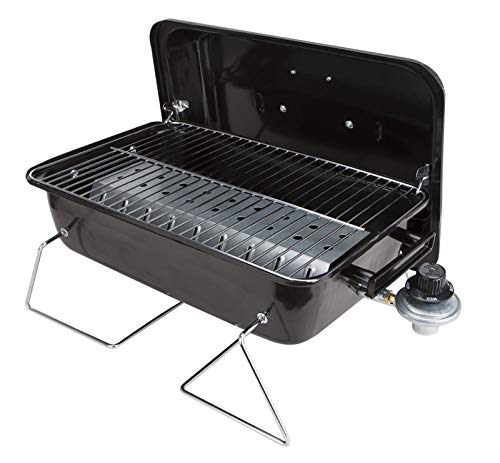
The Duke Grills Omaha Go Anywhere Portable Gas Grill is a no-fuss propane grill built for outdoor enthusiasts who want real grilled flavor without the bulk. This mini BBQ is designed to go with you wherever you cook, from a campsite in the woods to a tailgate parking lot or your own patio. With an 11,000 BTU burner and a 168-square-inch cooking surface, it packs enough heat to sear burgers, hot dogs, chicken breasts, and even small steaks in a compact package.
This grill is best suited for campers, RV owners, tailgaters, and backyard cooks who need a lightweight, portable option. If you're a weekend camper who craves flame-grilled dinners but can't lug a full-size smoker along, this is your perfect companion. It uses standard 16.4 oz or 14.1 oz propane cylinders, so you can pick up fuel at any gas station or camping supply store. The foldable legs are a smart touch – they lock into place for stable cooking and then fold down to become carrying handles, making the whole grill about the size of a small suitcase.
Real-world cooking performance is straightforward: the single burner heats up fast and evenly across the grates, though you won't get the same browning on every square inch as a larger grill. It manages okay in light wind, but a strong breeze can cause flare-ups or uneven temperatures – plan to use it in a sheltered spot or invest in a small folding windscreen. The cooking grate is basic but sufficient for burgers, hot dogs, and veggies. If you're patient, you can even do a quick low-and-slow cook for a few brats or chicken legs, but this grill is really built for fast grilling sessions.
Build quality is respectable given the price point. The steel body feels sturdy, and the legs are solid with no wobble. Duke offers a lifetime guarantee, which is rare for a grill in this price range and gives you confidence the unit won't rust out after one season. The cooking grate is easy to clean with a wire brush, and the burner can be wiped down after use. There's no grease tray or drip pan, so plan to cook on a surface that can handle a few drips or use a disposable foil pan underneath.
One realistic limitation is capacity – this grill handles about 8 hamburger patties or 4 hot dogs at once. If you're cooking for a crowd of more than four hungry adults, you'll be doing multiple rounds. Also, there's no built-in thermometer, so you'll want to bring your own to gauge doneness. Transport and setup are a breeze: unfold the legs, attach a propane cylinder, and light the burner. It's ready in under two minutes.
Overall, the Duke Grills Omaha Go Anywhere is a solid choice for anyone who wants a dependable, ultra-portable propane grill without spending a lot. It delivers on its promise of easy outdoor cooking at campsites, RV parks, tailgates, and patios. For solo campers or small families, this little grill is a practical buy that won't let you down.
When you're packing for a camping trip, every inch of space matters. The Duke Grills Omaha Go Anywhere folds down to just 17 by 11 by 3 inches and weighs barely over a pound, so it slides right into a duffel bag or cooler. The legs fold out and lock in seconds, and you can attach a standard propane cylinder without tools. For RV owners, this grill is small enough to store in a cabinet or under a bench seat. It's also safe to use with a camping table or any flat, heat-resistant surface. Just remember to bring a small lighter or match and a spatula – there are no extras included.
Cleaning this grill is simple because there aren't many parts. After cooking, let it cool completely, then brush the grate with a wire grill brush. Wipe down the interior with a paper towel or damp cloth – avoid harsh chemicals. The burner tube can be checked for clogs with a pipe cleaner if needed. Because there's no drip tray, you'll want to place it on a surface that's easy to clean or use a foil drip pan underneath. Store it indoors or in a dry place when not in use to keep the steel finish looking fresh.
Navigating Small Grill Costs, Categories, and Ownership Factors
Determining the real investment required for a compact cooker depends on how you balance physical size, fuel selection, and overall build quality. While base models in the compact category start at accessible price points, total expenditure often reflects whether a cooker is built for occasional tailgating or regular backyard meals. Reviewing what each category provides helps eliminate guesswork and keeps your expectations aligned with actual performance.
Entry-Level Tabletop and Folding Charcoal Grills
Foldable and tabletop charcoal grills represent the most budget-friendly pathway into outdoor live-fire cooking. Models such as the Grill Trade Portable Charcoal Grill highlight how collapsible legs and stamped metal frames create lightweight cooking stations suited for picnics, tailgating, or small patios. These units rely on solid metal fireboxes paired with chrome wire mesh grates to support straightforward direct-heat cooking. Because they lack complex mechanical assemblies or electronic ignition systems, manufacturing costs stay modest, passing those savings directly to the consumer.
Airflow control remains a vital feature even on smaller charcoal platforms. The inclusion of adjustable air vents allows cooks to regulate oxygen intake, which directly influences charcoal combustion and cooking temperature. Without adjustable dampers, a small charcoal cooker can burn through fuel rapidly or struggle to maintain the steady heat needed for thicker cuts. Stamped wire cooking surfaces work well for quick items like hot dogs, burger patties, and vegetable skewers, though they do not retain heat in the way heavier cast-iron surfaces do.
The primary trade-off with entry-level folding charcoal units centers on long-term weather resistance and metal gauge. Thinner steel components can warp under intense heat if overloaded with lump charcoal, and unpainted joints may succumb to corrosion if stored in damp outdoor environments. For cooks who only fire up a grill a few times every summer, these lightweight designs deliver practical convenience without demanding a significant upfront financial commitment. Routine cleaning and dry storage indoors will extend their working life considerably.
Portable Gas and Propane Cookers for Travel and Camping
Compact propane grills generally carry a slightly higher upfront cost than basic charcoal boxes because they incorporate pressure regulators, burner tubes, and control valves. The Duke Grills Omaha Go Anywhere Portable Gas Grill illustrates this design category, utilizing an 11,000 BTU burner alongside a 168 square-inch cooking surface. This configuration can accommodate roughly six burgers and several hot dogs simultaneously, making it suitable for campsite meals or small balcony settings where charcoal may be prohibited. Foldable legs that double as carrying handles demonstrate how manufacturers optimize these units for frequent mobility.
Convenience represents the main return on investment for small gas cookers. Propane ignites instantly, reaches target cooking temperatures in minutes, and eliminates the lingering coals and ash disposal chores associated with charcoal. Portable gas grills typically connect directly to small disposable cylinders, such as 14.1-ounce or 16.4-ounce canisters, which fit neatly into camping gear totes. Cooks who value quick weeknight dinners or spontaneous road trips often find that the operational ease of propane justifies the higher initial cost over a basic charcoal box.
Durability in small gas grills depends largely on burner material and hood construction. Stainless steel or painted steel bodies resist heat discoloration better than ultra-thin sheet metal, while reliable brass or cast valves ensure smooth flame modulation across low and high settings. While a standalone unit provides focused grilling, cooks seeking broader morning-to-night versatility sometimes compare portable grills against a griddle and smoker combo to evaluate whether a flat cooking surface fits their menu preferences better than standard grates.
Upgrading Standard Kettles with Specialized Charcoal Inserts
Cooks who already own a standard kettle grill often find that investing in an internal conversion accessory offers greater versatility than purchasing an entirely separate small cooker. The SnS Grills Patented Slow ‘N Sear Original Insert shows how a dedicated stainless steel charcoal basket can transform a standard 22-inch kettle into a precise two-zone cooking machine. By concentrating briquettes along one side of the kettle, this insert establishes an intense direct searing zone right next to a gentle indirect convective zone. This configuration allows cooks to roast large cuts or smoke delicate poultry without buying a bulky dedicated smoker.
An integrated water reservoir within the insert adds thermal mass while introducing moisture to the cooking chamber. This moisture helps stabilize low cooking temperatures over extended periods, keeping meats juicy and encouraging steady smoke ring formation on ribs or brisket cuts. Resilient stainless steel construction resists warping under high charcoal temperatures, ensuring long-term durability. For many backyard cooks, dedicating a modest sum to an engineered insert delivers dependable smoking results without taking up extra patio space.
Managing heat zones effectively also conserves fuel compared to scattering charcoal loosely across the entire bottom grate. By holding coals closely together, the basket promotes efficient fuel combustion, allowing extended low-and-slow sessions with fewer charcoal additions. This targeted approach mirrors traditional barbecue methods and gives outdoor cooks advanced temperature control without the significant expense of high-end ceramic kamado cookers or commercial offset smokers.
Hidden and Ongoing Costs of Small Grill Ownership
Evaluating the total cost of a small grill requires looking beyond the initial retail price tag to assess recurring operational expenses. Fuel economics vary significantly depending on whether you choose charcoal, disposable propane bottles, or refillable bulk tanks. Single-use 16.4-ounce propane cylinders offer convenience for travel, but their cost per hour of cooking is substantially higher than refilling a standard 20-pound tank. Frequent grillers often invest in an adapter hose, which connects their portable cooker to a refillable tank and lowers long-term fuel expenditure dramatically.
Charcoal enthusiasts face recurring costs for briquettes, lump charcoal, wood chunks, and fire starters. Quality lump charcoal burns hot and produces relatively little ash compared to economy briquettes, though it commands a higher price per bag. Chimney starters and heat-resistant gloves also represent sensible upfront accessory purchases that improve lighting safety. Over several seasons of frequent cooking, fuel and fire-starting supplies can easily exceed the original purchase price of a budget-friendly grill.
Maintenance tools and protective storage gear represent another essential budget category. A quality brass or nylon bristle grate brush, an instant-read meat thermometer, and a water-resistant cover protect your initial investment and enhance cooking safety. Leaving an unprotected metal cooker exposed to outdoor elements accelerates rust around fasteners and burner ports. Adding a durable cover helps ensure that your cooker remains reliable for years rather than needing early replacement.
Material Quality, Heat Retention, and Longevity Comparisons
The gauge and composition of metal components directly dictate how well a small cooker holds heat and resists structural degradation. Entry-level units frequently utilize lightweight stamped carbon steel with a thin enamel or powder-coated finish. While these lightweight materials keep shipping costs down and enhance portability, they lose internal heat quickly in breezy conditions. Wind stripping heat away from the lid forces cooks to use more fuel and extend cooking times to reach safe internal meat temperatures.
Mid-tier and higher-end compact cookers often feature cast aluminum lids and fireboxes, heavy porcelain enamel coatings, or resilient stainless steel hardware. Cast aluminum offers superb corrosion resistance because it cannot rust, making it an exceptional choice for coastal areas or RV travelers who encounter variable outdoor elements. Heavier steel bodies retain ambient heat efficiently, creating a stable thermal pocket that produces consistent sear marks and steady roasting temperatures without dramatic internal temperature fluctuations.
Cooking grates also reflect differences in product pricing and performance. Chrome-plated wire grates clean up easily when new, but the plating can chip or flake over time when exposed to metal scrapers and intense direct flame. Porcelain-coated wire or cast-iron grates deliver superior heat transfer, storing thermal energy to produce rich browning on steaks and burgers. Investing in robust grate materials minimizes replacement frequency and enhances your day-to-day cooking results.
Safe Operating Boundaries and Location Restrictions
Cost calculations should never take precedence over essential fire and carbon monoxide safety protocols. Operating any fuel-burning cooker indoors, inside a residential garage, under an enclosed breezeway, or within a screened porch is strictly hazardous. Charcoal and propane combustion produces carbon monoxide, an odorless and potentially lethal gas that rapidly accumulates in enclosed spaces. Opening an overhead garage door does not provide sufficient cross-ventilation to counteract this severe hazard, and stray heat can ignite nearby storage items.
Outdoor placement demands careful clearance from exterior walls, vinyl siding, low-hanging tree branches, and wooden deck railings. Manufacturers specify minimum clearance distances around the perimeter of their cookers to prevent thermal damage or accidental structure fires. High heat radiating from the back or bottom of a compact grill can warp vinyl siding or scorch composite decking if operated without proper clearance or a heat-resistant floor mat. Following manufacturer placement guidelines ensures your outdoor cooking remains enjoyable and hazard-free.
Apartment, condominium, and RV park regulations also introduce specific compliance rules that influence which small cooker you can legally use. Many residential complexes prohibit open-flame charcoal cookers on balconies, permitting only electric appliances or compact gas grills with small fuel cylinders. Before investing in a portable cooker, verifying local fire codes and property management rules prevents purchasing a grill that you cannot legally operate at home. Choosing an authorized cooker style upfront eliminates the frustration and financial waste of non-compliant equipment.
Matching Cooking Capacity and Heat Management to Your Menu
Matching grill dimensions to your typical meal size prevents the frustration of overcrowded grates and unevenly cooked food. A compact surface measuring between 150 and 200 square inches comfortably handles four to eight burger patties or a couple of large ribeye steaks. Overcrowding a small grate restricts hot air circulation, which causes meat to steam in its own moisture rather than developing a flavorful browned crust. Planning your meal rotation in successive batches preserves proper heat distribution across compact cooking surfaces.
Mastering two-zone cooking on a compact grate unlocks versatility for foods that require both high-heat searing and gentle roasting. Pushing charcoal to one side or managing a single low-set gas burner allows you to gently cook poultry through before finishing it over direct heat for crispy skin. If you want to prepare party favorites on a compact outdoor cooker, trying a crispy barbecue wings recipe demonstrates how indirect cooking renders fat effectively before a final high-heat crisping pass. Temperature control transforms even modest portable grills into capable backyard smokers.
Food safety verification requires monitoring internal temperatures with an accurate digital instant-read thermometer rather than relying on surface color. Poultry must reach a safe internal temperature of 165 degrees Fahrenheit, while ground meats require 160 degrees Fahrenheit for complete safety. Thicker cuts cooked over direct flame can appear fully browned on the exterior while remaining undercooked inside. Maintaining an accurate probe thermometer protects your guests and ensures consistent culinary results across every meal.
Practical Strategies for Maximizing Cooker Lifespan
Extending the lifespan of an affordable compact grill requires routine cleaning habits and disciplined seasonal storage. Leaving salty marinades, acidic barbecue sauces, and animal grease sitting on metal grates promotes accelerated oxidation and pit corrosion. Brushing the grates while they remain warm after a cookout lifts residue effortlessly without requiring harsh chemical degreasers. Emptying cold charcoal ash promptly after every session protects the lower firebox, as damp ash forms a corrosive lye paste that eats through painted steel.
Applying a thin coat of high-smoke-point cooking oil to bare metal cooking surfaces and internal vents creates a protective barrier against ambient atmospheric moisture. For seasonal downtime, storing a portable grill inside a dry shed or garage after a thorough end-of-season scrub keeps moisture away from critical burner tubes and moving airflow dampers. Make sure propane cylinders remain stored outdoors in well-ventilated exterior spaces rather than indoors, keeping your household safe while preserving equipment functionality.
Understanding what influences the cost of a compact cooker allows you to select an option tailored to your cooking ambitions, storage space, and travel needs. Whether you select a lightweight folding charcoal grill, a convenient tabletop propane burner, or a dedicated kettle smoking insert, focusing on durable materials, airflow control, and consistent maintenance delivers exceptional outdoor cooking value for many seasons ahead.



Write Your Review
No reviews yet. Be the first to share your experience!