


Setting up an outdoor cookout requires the right fuel supply to ensure your burners maintain consistent heat from start to finish. When planning your cooking station, many backyard cooks wonder what size propane tank does a grill use to avoid running out of fuel halfway through searing steaks or smoking ribs. Full-size freestanding patio grills overwhelmingly rely on standard 20-pound propane cylinders, which provide the ideal balance of fuel capacity, weight, and portability. If you are integrating your cooking equipment into an outdoor BBQ island setup, knowing your tank dimensions and valve connections ensures proper ventilation and safety clearances inside the cabinet.
Smaller portable tabletop models and camping stoves, on the other hand, frequently utilize compact 1-pound disposable or refillable canisters to stay lightweight and travel-friendly. Larger setups, including high-output multi-burner rigs or appliances that run for prolonged sessions, can sometimes accommodate 30-pound or even 40-pound cylinders where local codes and grill enclosures permit. Choosing the correct cylinder size depends on your grill’s burner output, the physical clearance of your grill cart, and how frequently you prefer refilling or exchanging tanks. Pairing your tank with a reliable propane tank gauge and understanding your appliance’s QCC1 connector specifications will keep your outdoor kitchen running smoothly without unexpected fuel interruptions.



Understanding Propane Tank Sizes for Outdoor Grills
The short answer for almost every residential full-size outdoor barbecue is a standard 20-pound propane cylinder. This tank size holds approximately 4.5 to 4.7 gallons of liquid propane when filled to eighty percent capacity, offering ample fuel for multiple family dinners or long smoking sessions. While the 20-pound cylinder represents the universal standard for freestanding patio carts, outdoor cooking equipment actually utilizes a diverse range of container sizes. Depending on whether you cook on a compact camping stove, a commercial-style flat-top griddle, or an oversized multi-burner station, matching your fuel supply to your appliance ensures safe operation, steady burner pressure, and fewer interrupted cookouts.
The Standard 20-Pound Cylinder for Backyard Grills
The 20-pound propane cylinder is the undisputed benchmark of residential outdoor cooking across North America. Grills from major manufacturers are specifically engineered with cart dimensions, mounting rings, and regulator hoses tailored to accommodate this specific tank profile. A standard 20-pound steel cylinder stands approximately 18 inches tall and measures roughly 12 inches in diameter. When empty, a typical steel tank has a tare weight between 16 and 18 pounds, meaning a full container weighs around 36 to 38 pounds. That total weight remains manageable for most adults to lift into a vehicle trunk or set securely into a patio grill cabinet.
Federal and state safety codes mandate that modern 20-pound cylinders incorporate an Overfill Prevention Device, commonly abbreviated as an OPD valve. You can easily identify an OPD valve by its distinctive triangular handwheel, which connects to an internal float mechanism designed to prevent liquid propane from exceeding eighty percent of total cylinder volume. That remaining twenty percent headspace is critical because liquid propane expands rapidly as ambient air temperatures increase during warm summer cookouts. Service stations and exchange retailers cannot legally refill tanks without certified OPD valves, making this mechanism a foundational safety feature for backyard grilling enthusiasts.
Portable Grill Tanks: 1-Pound and 3-Pound Cylinders
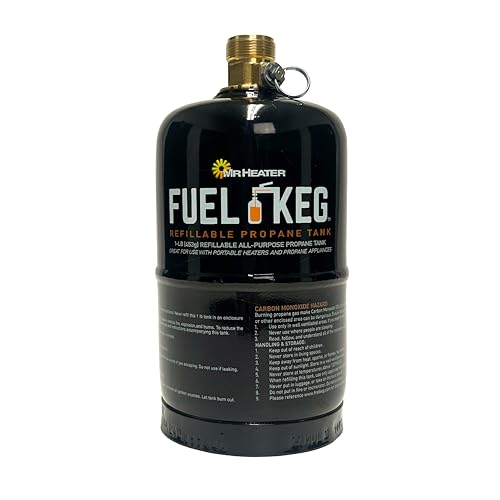
Tailgating setups, camping stoves, and compact tabletop grills usually operate on smaller, highly transportable fuel containers. The most ubiquitous portable option is the disposable 1-pound cylinder, which stands about 8 inches tall and threads directly into miniature regulators. While single-use green canisters offer exceptional convenience during beach trips or park picnics, frequent grillers often find throwing away empty metal canisters both environmentally wasteful and financially inefficient over a long season. Refillable solutions such as the Mr. Heater Fuel Keg. – 1 lb. / 16 oz. Empty provide a sustainable alternative, allowing users to safely refill their compact fuel kegs using dedicated filling systems.
For cooks who need greater capacity than a single-pound bottle without hauling a heavy 20-pound tank, intermediate containers bridge the gap. The Flame King 3LB EMPTY Steel Propane Tank Cylinder delivers an excellent balance for portable tabletop grills, fire pits, and mobile tailgaters. Holding three times the fuel of a standard disposable canister, a 3-pound cylinder includes a standard QCC1 valve and built-in OPD safety float. This intermediate size easily tucks into vehicle trunks, overlanding storage drawers, or beneath a rolling BBQ prep table without monopolizing valuable storage room.
Heavy-Duty Grilling: 30-Pound and 40-Pound Cylinders
Cooks who operate expansive outdoor kitchens, commercial-grade rotisseries, or high-capacity smoker units often require extended burn times between refills. Stepping up to a 30-pound or 40-pound propane cylinder significantly increases available fuel reserves, minimizing the frequency of trips to the refilling station. Options like the Flame King YSN330 30lb Steel Propane Tank Cylinder offer fifty percent more cooking time than a standard 20-pound unit while maintaining the identical valve diameter and QCC1 fitting. These larger cylinders are also standard equipment on travel trailers, allowing RV enthusiasts to run external grill connections directly from their camper fuel system.
Before purchasing a 30-pound or 40-pound container for a backyard grill, you must carefully evaluate physical clearance beneath your cooking box. A 30-pound cylinder stands roughly 24 inches high, while a 40-pound model reaches nearly 29 inches, which often prevents them from fitting inside standard enclosed grill carts. Attempting to force an oversized cylinder into a cramped cabinet can kink gas supply hoses or place dangerous stress on the regulator assembly. Additionally, a filled 40-pound tank weighs over 70 pounds, making manual transportation and lifting a significant physical consideration for the homeowner.
How Propane Tank Capacity and Grill BTU Ratings Determine Cook Time
Understanding how long a propane cylinder will last requires examining your grill’s British Thermal Unit rating against your tank’s fuel volume. One gallon of liquid propane contains approximately 91,500 BTUs of potential thermal energy. A completely filled 20-pound cylinder holds about 4.7 gallons of fuel, yielding roughly 430,000 total BTUs of heating capacity. If you operate a mid-sized three-burner grill rated at 30,000 BTUs per hour on high, that tank provides roughly 14 hours of continuous cooking. Running the burners on medium or low settings stretches that runtime well past 20 to 25 total cooking hours.
High-output cooking appliances consume fuel at substantially faster rates. Large four-burner grills, dual-fuel configurations, or specialized griddle and smoker combo appliances often feature aggregate outputs between 45,000 and 60,000 BTUs per hour across all active cooking zones. At maximum burner output, a 60,000 BTU setup will empty a standard 20-pound cylinder in roughly seven hours of continuous use. Weather conditions also play a measurable role in fuel consumption, as chilly outdoor temperatures require higher burner settings to maintain proper grate heat. Factoring in your typical cooking style allows you to project fuel consumption accurately and avoid unexpected mid-cook flameouts.
Tank Exchange Services Versus Professional Refills
Backyard grillers generally have two primary pathways for replenishing their fuel: retail exchange cages or dedicated refill stations. Exchange kiosks, such as the widely available AmeriGas 20 LB Propane Tank Exchange – Pre-Filled service, offer unmatched convenience at grocery stores, hardware centers, and gas stations. You simply trade in an empty, qualified cylinder and receive a fresh, pre-inspected, leak-tested tank ready for immediate attachment. This service proves especially helpful when your existing cylinder nears its certified requalification expiration date or shows exterior surface rust.
However, grillers should note that commercial tank exchange programs typically fill 20-pound cylinders with 15 pounds of propane rather than the full legal limit of 20 pounds. This standard net weight of 15 pounds leaves additional safety headspace for warehouse storage and outdoor cages, but it provides roughly twenty-five percent less cooking time per tank. Visiting a dedicated propane distributor or tractor supply dealer that fills tanks by weight allows you to purchase a true 20-pound fill. Refilling your existing tank is often more cost-effective per pound of gas, though it requires waiting for a certified technician to inspect and fill the vessel.
Monitoring Fuel Levels and Detecting Leaks
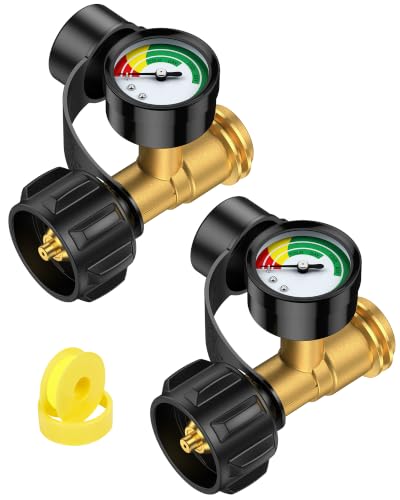
Because liquid propane boils into gas inside the sealed cylinder, the internal vapor pressure remains relatively steady until the liquid is almost completely exhausted. Shaking a heavy metal tank or guessing remaining volume based on lifting weight alone often yields frustratingly imprecise estimates. Installing a dedicated inline pressure gauge, such as the CALPOSE Propane Tank Gauge, provides a visual progress indicator that displays when fuel levels enter low or refill zones. These solid brass accessories screw directly between the cylinder collar and your grill hose without requiring tools or pipe sealant.
Ambient outdoor temperature significantly influences internal tank pressure, which can cause conventional single-needle gauges to read artificially low on chilly days. Advanced units like the GasXpert 2 Pack Propane Tank Gauge Level feature calibrated multi-temperature dials that account for hot, mild, or freezing weather conditions. For budget-conscious grillers, straightforward brass dials like the Aikyciu Propane Tank Gauge Level Indicator also double as effective leak detectors. By shutting off all grill burner knobs, opening the cylinder valve, and watching if the dial needle steadily drops, you can verify whether your connection maintains an airtight seal before lighting the burners.
Crucial Safety Rules: Placement, Transport, and Garage Warnings
Propane safety requires uncompromising vigilance, beginning with where and how you store your cylinders. Fuel-burning outdoor grills and loose propane cylinders must never be used, stored, or brought inside a garage, shed, carport, or enclosed living space under any circumstances. Even if the garage door is left wide open, heavy propane vapor is denser than air and pools invisibly along the floor, creating an acute risk of catastrophic explosion if ignited by a water heater pilot light or electrical switch. Furthermore, burning propane inside semi-enclosed spaces rapidly generates dangerous concentrations of carbon monoxide, a colorless, odorless gas that presents severe health hazards.
Always position your propane grill outdoors on a flat, non-combustible surface, maintaining generous clearance from vinyl siding, wooden deck railings, and low roof overhangs according to the manufacturer guidelines. When transporting cylinders for exchange or refilling, secure the tank in an upright, vertical position within your vehicle trunk or truck bed. Laying a cylinder on its side allows liquid propane to contact the pressure relief valve, which can compromise the safety vent and release flammable gas into an enclosed car interior. Once home, immediately remove the container from your vehicle and store it outdoors in a well-ventilated, shaded area away from direct heating sources.
Connecting Your Tank: Valves, Regulators, and QCC1 Fittings
Connecting a propane tank to your grill is a straightforward procedure designed around the standardized QCC1, or Type 1, valve system. These modern connectors feature large external Acme threads that mate with the plastic handwheel collar on your grill’s pressure regulator hose. Unlike older internal POL connectors that required a wrench and turned counterclockwise, standard QCC1 fittings tighten clockwise completely by hand. Inspect the rubber O-ring seal inside the valve seat before every connection to ensure it is free from cracks, debris, or excessive wear that could compromise the seal.
Modern grill regulators contain an internal excess-flow safety valve designed to restrict gas delivery if a hose ruptures or tears. If you open your propane tank handwheel too rapidly while burner knobs are active, this safety mechanism can inadvertently trip, reducing your grill flame to a weak, sputtering simmer. To prevent this common issue, ensure all grill control knobs are set to the complete off position before slowly turning the tank handwheel counterclockwise. Once the line has fully pressurized over five to ten seconds, ignite your primary burner according to the manufacturer lighting instructions to establish a clean, full-powered flame.
Selecting the proper propane cylinder size ensures your outdoor cooking station operates with dependable heat, ample fuel reserve, and verified safety. For the vast majority of patio grill owners, a standard 20-pound tank delivers the ideal balance of capacity, availability, and manageable physical weight. Portable tabletop units thrive on compact 1-pound or 3-pound bottles, while high-output outdoor kitchens may justify larger 30-pound tanks where space permits. By understanding your grill’s BTU consumption, monitoring tank pressure with an inline gauge, and adhering strictly to outdoor-only safety practices, you can enjoy worry-free cookouts every time you fire up your grates.





Write Your Review
No reviews yet. Be the first to share your experience!