


Searing a thick ribeye or charring pizza crust requires sustained high heat that many outdoor cooks struggle to maintain. When a grill stalls out at lukewarm temperatures, food often bakes or steams instead of developing a crisp, flavorful crust. Understanding how to keep grill temp high comes down to controlling the balance between combustion fuel, oxygen delivery, and chamber insulation. Simple adjustments to your equipment and cooking routine can quickly transform sluggish heat output into a reliable inferno.
Fuel supply issues and air leaks around the lid commonly steal thermal energy before it ever reaches your cooking grates. Setting up your workspace with rolling prep tables for outdoor cooking keeps tools organized so the grill lid stays shut where heat belongs. That heat discipline is especially crucial when crisping poultry during a smoked and grilled barbecue chicken wings session. By diagnosing draft issues and sealing thermal leaks, you can easily sustain searing temperatures across any cook.

Pros
- Rated for high heat up to 800°F, ideal for both hot grilling and low-and-slow smoking
- Adhesive holds well on clean metal surfaces and peels off cleanly when needed
- Comes in two rolls for a total of 15 feet, enough to seal multiple smokers or a large offset
- Easy to cut with scissors for custom lengths, no special tools required
Cons
- Surface must be thoroughly cleaned and degreased before application for best adhesion
- Felt material may compress over time and require reapplication after several cooks
- Not recommended for use on painted surfaces as the adhesive could remove paint upon removal
If you own a smoker or charcoal grill, you know how important a tight lid seal is. Even small gaps let heat and smoke escape, which throws off your temperature control and dilutes that rich smoky flavor. The Nonley Smoker Gasket Seal is a simple, effective fix. This 15-foot roll of high-temperature felt tape sticks right onto the rim of your smoker lid, creating a barrier that holds smoke in and keeps temps steady.
This gasket tape is designed for backyard BBQ enthusiasts who want better results from their existing setup. Whether you're running a Masterbuilt electric smoker, a Traeger pellet grill, a Char-Griller offset, or a Weber charcoal cooker, this universal tape fits the bill. It's especially useful for those who struggle with temperature swings or smoke leaking around the lid during long cooks like brisket or pork shoulder.
In real-world use, the difference is noticeable. Once applied, you'll see less smoke billowing from the lid edges, which means more smoke circulating around the meat. The heat retention also improves, so your smoker doesn't have to work as hard to maintain a steady 225°F. That translates to more consistent cooking and less fuel waste. For low-and-slow sessions, this kind of seal helps you achieve that steady temperature curve that brisket demands.
The build quality is solid for the price. The felt is made from polyacrylonitrile fiber that handles up to 800°F, so it won't melt or degrade during normal grilling or smoking. The self-stick adhesive is strong on clean metal surfaces, but you need to make sure the contact area is free of grease and residue. A quick wipe with alcohol before installation makes a big difference. Once it's on, it stays put through multiple cooks.
Installation is straightforward: measure your lid rim, cut the tape to length with ordinary scissors, peel the backing, and press it into place. No need for high-temp silicone or clamps. The two rolls give you enough length to seal both a lid and a side access door if needed. Cleanup is minimal since the tape peels off without leaving too much sticky residue, though on painted surfaces it might lift the paint.
Limitations are few but worth noting. The felt will compress over time, especially if your lid is heavy or slams shut. You might need to replace it after a season of heavy use. And if you apply it to a dirty surface, the adhesive won't bond well, leading to early peeling. But for under $7, this is a low-cost upgrade that delivers real cooking benefits. If you want tighter temperature control and richer smoke flavor without buying a new smoker, grab this gasket tape and seal the deal.
Smoke leakage is a common issue with many smokers, especially those with metal-to-metal lid contact. The Nonley gasket tape fills those tiny gaps effectively, keeping the smoke where it belongs. During a 12-hour smoke session, you'll notice less white smoke escaping around the edges and more continuous thin blue smoke rolling inside the cooking chamber. This improves the smoke flavor penetration into the meat. The seal also helps maintain a more stable internal temperature, which is crucial for tender results on long cooks. For backyard smokers who value consistency, this tape is a worthwhile addition.

Pros
- Wide temperature range suitable for both low-and-slow and high-heat cooking.
- Heavy-duty build with leak-free seal and thick glass for durability.
- Easy to read large black face with clear markings.
- Fully adjustable for precise calibration.
- Includes mounting hardware and fits standard grill openings.
Cons
- Mechanical thermometer may require initial calibration for best accuracy.
- Stem length may be too short for some deep smokers or offset grills.
- Black face can be harder to read in low light compared to white or illuminated thermometers.
The LavaLock Black Face BBQ Grill Thermometer is a solid upgrade for anyone serious about outdoor cooking. Whether you're a backyard griller, a dedicated BBQ enthusiast, or someone who loves tailgating and camping, this thermometer delivers reliable temperature monitoring for a wide range of cooking styles. With a range from 50F to 900F, it covers everything from low-and-slow smoking to high-temp searing, making it a versatile tool for your grill or smoker.
Performance-wise, this thermometer offers consistent and accurate readings once properly calibrated. The adjustable face screw lets you fine-tune the accuracy within +/- 1%, which is great for maintaining steady cooking temperatures. For low-and-slow smoking, you can trust it to keep your brisket or ribs at the right temp without constant fiddling. For high-heat searing, it handles the extreme temps without any issues, so you can get that perfect crust on steaks or burgers.
Build quality is impressive for the price. The heavyweight glass and heavy-duty housing feel robust, and the leak-free seal helps protect against moisture and grease buildup. The black face with white markings is easy to read, though it might be a bit harder to see in dim light compared to a white face. The included M8 nut makes installation straightforward on most grills and smokers that have a standard thermometer opening.
In terms of durability, this thermometer is built to withstand the elements. It resists rust and weather damage, so you can leave it on your grill or smoker without worry. The 3-inch stem length is adequate for most standard grills, but if you have a deeper smoker or an offset, you might want to check the fit. Cleaning is simple - just wipe the stem with a damp cloth and avoid submerging the face.
One realistic limitation is that mechanical thermometers like this one can be slightly less responsive than digital probes. You'll need to give it a moment to stabilize after opening the lid. Also, the black face may not be ideal for low-light conditions without a nearby light source. But for the price and reliability, these are minor trade-offs.
Overall, the LavaLock Black Face BBQ Grill Thermometer is a smart choice for outdoor cooks who want a dependable, heavy-duty thermometer without breaking the bank. It's perfect for backyard BBQs, tailgating, camping trips, or any outdoor cooking setup where accurate temperature control matters. I'd recommend it to anyone looking to upgrade their stock grill thermometer for better performance and durability.
Accurate temperature control is the heart of good BBQ, and the LavaLock thermometer delivers. With a range of 50F to 900F, you can monitor everything from a gentle 225F smoke to a blazing 700F sear. The adjustable calibration screw lets you dial in precision, so your low-and-slow cooks stay consistent and your high-heat grilling is on point. The large 3-inch face makes it easy to spot temperature changes at a glance, helping you avoid those frustrating temperature swings.
For tailgating or camping, where conditions can vary, having a reliable thermometer is key. This one responds quickly enough to let you adjust vents or burner settings without guesswork. Just remember to let it stabilize after opening the lid - a quick peek won't throw it off too much, but constant opening can affect accuracy. Overall, it's a solid tool for keeping your cook on track.
The LavaLock thermometer is built to last in the outdoor cooking environment. The heavyweight glass resists cracking from sudden temperature changes, and the heavy-duty housing holds up against rust and weather. The leak-free seal keeps moisture and grease out, which is a common failure point on cheaper thermometers. Installation is easy with the included M8 nut, and it fits most standard grill and smoker openings.
Whether you're using it on a pellet grill, propane grill, charcoal smoker, or even a flat top griddle, this thermometer is designed to handle the heat. The black finish looks sleek and blends well with most grill designs. For camping or tailgating, it's compact enough to carry as a backup or replacement. Just avoid dropping it - the glass can break if handled roughly, but under normal use, it's very durable.

Pros
- Superior heat retention for even cooking and smoky flavor
- Easy to install with no special tools needed
- Universal fit works on most grills and smokers
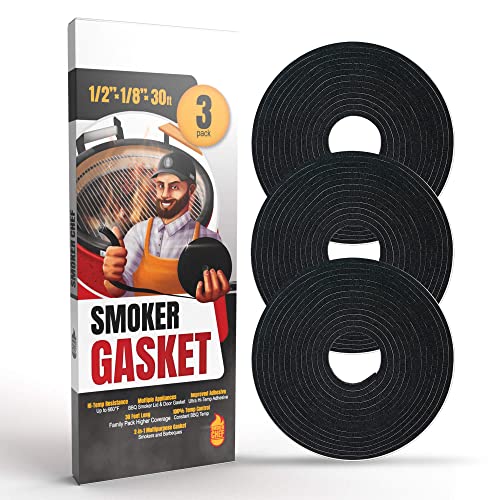
- Long length (30 feet total) provides great coverage
Cons
- Adhesive might be very strong and tricky to align on first try
- Requires 12-hour set time after installation before use
- Oblique cut needed to remove backing paper can be tedious
The Smoker Chef XXL 30 FT Grill Gasket is a practical upgrade for anyone serious about outdoor cooking, especially those who rely on smokers for low-and-slow BBQ. This kit includes three rolls of self-stick Nomex fire tape, each 10 feet long, giving you 30 feet total to seal multiple grills or a large lid like the XXL 30 model. Made from high-temperature resistant material rated up to 660F, it's designed to keep heat and smoke where they belong inside your cooker.
This gasket is best suited for backyard grillers, BBQ enthusiasts, campers, tailgaters, RV owners, patio cooks, and outdoor entertainers who want consistent results. If you've ever dealt with smoke leaking from a worn gasket, you know how it messes with temperature control and fuel efficiency. The Smoker Chef gasket solves that by creating a tight seal that reduces air leaks, so you get steady temps and better smoke flavor for brisket, ribs, or pork shoulder.
In real-world use, the heat retention is noticeable. On my smoker, the difference in temperature stability was immediate after installation. I didn't have to fiddle with vents as much, and the charcoal and wood chunks lasted longer. For weekend BBQs or overnight cooks, that means less babysitting and more time with family. The gasket also handles fast grilling sessions for burgers or chicken without any melting or peeling.
Build quality is solid. The Nomex material feels durable and resists wear from high heat. The adhesive backing is strong it sticks instantly to clean, degreased surfaces. However, the adhesive is so grabby that you need to be precise when applying. The manufacturer suggests making an oblique cut to remove the paper backing, which helps you position the tape accurately. Setup is straightforward: scrape off old gasket, clean, peel, stick, and cut. Let the lid closed for 12 hours before firing up for best adhesion.
One realistic limitation is the 12-hour set time it's not ideal if you need to cook right away. Also, the strong adhesive means you can't easily reposition the tape once it touches the metal. For outdoor durability, the gasket holds up well against weather and temperature cycles. I've used it through several hot days and light rain without issues. Cleanup during use is minimal since the gasket stays out of the way of grease and drips it's purely for sealing the lid.
Overall, the Smoker Chef XXL 30 FT Gasket is a smart buy for anyone with a smoker or grill who struggles with heat loss or smoke leaks. It's affordable and effective for backyard BBQ sessions, tailgating cookouts, or camping trips where you want consistent performance. If you want better temperature control and richer smoke flavor, this gasket delivers without breaking the bank.

Pros
- Improves heat retention and temperature consistency for low-and-slow cooks
- Simple peel-and-stick installation with no special tools needed
- Versatile fit for popular smokers like Masterbuilt, Traeger, and Weber
- Durable Nomex material resists high heat and lasts through heavy use
Cons
- Adhesive may require thorough surface cleaning for best grip
- Not ideal for grills with uneven or painted lid edges
- Needs 12-hour cure time after installation before use
If you have an older smoker or grill that's losing heat around the lid, the Smoker Chef XXL Grill Gasket is a simple fix that can make a real difference in your outdoor cooking. This 20-foot roll of high-temperature Nomex tape is designed to seal gaps between the lid and body of your smoker or BBQ, helping you keep heat and smoke where they belong. It's a practical upgrade for backyard grillers, BBQ enthusiasts, tailgaters, and even campers who want better control over their cooking temperature without replacing their whole rig.
When it comes to performance, this gasket shines in heat retention and smoke management. By sealing leaks, you'll notice your smoker holds a steadier temperature during long cooks like brisket or ribs, which means less fiddling with vents and more consistent results. The Nomex material is rated up to 660F, so it's tough enough for high-heat searing or low-and-slow smoking alike. You'll also get better smoke flavor since the smoke stays inside the cooking chamber instead of escaping into your backyard.
Build quality is solid for the price. The tape is 1/2 inch wide and 1/8 inch thick, which is a common size that fits most smokers and grills. The self-adhesive backing is strong, but you need to prep the surface well by scraping off old gasket material and cleaning with degreaser. Once applied, it sticks firmly, though the instructions recommend letting it cure for 12 hours before firing up. That's a minor wait for a long-term improvement.
Setup is straightforward and doesn't require any special tools. Just measure, cut, peel, and stick. The 20-foot total length (two 10-foot rolls) gives you plenty to cover a large smoker lid or even multiple grills. Cleanup after cooking is easier too, since the gasket helps prevent grease and smoke residue from building up around the lid edge. However, if your grill has chipped paint or uneven surfaces, the adhesive might not grab as well, so check your lid's condition before buying.
One realistic limitation is that this gasket is a maintenance item, not a permanent fix. Over time, extreme heat and weather can degrade the adhesive, especially if you grill in rainy or humid conditions. You may need to replace it after a season or two of heavy use. Also, the 12-hour cure time means you'll need to plan ahead before your next cookout.
Overall, the Smoker Chef XXL Grill Gasket is a worthwhile investment for anyone who wants to get the most out of their smoker or BBQ. Whether you're a weekend backyard cook, a tailgater who wants consistent temps for burgers and wings, or a camping enthusiast with a portable smoker, this gasket helps you cook better with less hassle. It's affordable, easy to install, and delivers a noticeable improvement in heat control and smoke flavor. If your lid is leaking, this is a smart fix.

Pros
- Affordable fix to improve heat retention and smoke flavor in smokers and grills
- Strong adhesive sticks well to metal surfaces and stays put during high-heat cooking
- Flexible material cuts easily with scissors to fit any lid size or shape
- Works for both backyard smokers and portable camping grills
Cons
- Adhesive may weaken over time with frequent high-heat exposure, requiring reapplication
- Not suitable for sealing large gaps or uneven surfaces without additional prep
- Thickness may not fully seal very warped or damaged lids
If you've been struggling with smoke leaking out of your smoker or grill lid, the GINOYA BBQ Smoker Gasket is a simple and affordable solution. This 17-foot roll of adhesive-backed seal tape is designed to fill gaps between the lid and body of your outdoor cooker, helping you keep heat and smoke where they belong. It's a practical upgrade for anyone who wants better temperature control and more consistent cooking results without buying a whole new grill.
This gasket is best suited for backyard grillers, BBQ enthusiasts, campers, tailgaters, and RV owners who use smokers or grills with removable lids. If you've noticed your smoker losing heat too quickly or smoke escaping from the edges, this tape can make a noticeable difference. It's especially useful for low-and-slow cooking like brisket or ribs, where steady temperature and smoke retention are key to getting that deep, smoky flavor.
In real-world use, the GINOYA gasket helps maintain a more stable cooking environment. By sealing the lid, you reduce heat loss and minimize temperature swings, which means less fiddling with vents or fuel adjustments. For fast grilling like burgers or steaks, it also helps keep the heat concentrated, improving searing performance. The material is rated to withstand up to 500°F, so it holds up well during both high-heat searing and long smoking sessions.
Build quality is decent for the price. The tape is made from polyacrylonitrile with a flame-retardant treatment, and it feels flexible yet durable. The adhesive backing is strong and sticks firmly to clean metal surfaces. However, if your lid is heavily warped or has large gaps, this thin 1/8-inch tape may not provide a perfect seal. It works best on relatively flat, smooth surfaces. Installation is straightforward: just clean the area, cut the tape to length, peel and stick. No special tools or skills are needed.
One realistic limitation is that the adhesive can degrade over time, especially if you frequently cook at very high temperatures or in direct sunlight. You might need to replace it after a season or two of heavy use. Also, this gasket is not designed for use on grills with complex hinge systems or where the lid needs to slide open. It's best for traditional hinged or lift-off lids.
Overall, the GINOYA BBQ Smoker Gasket is a practical, low-cost way to improve your outdoor cooking experience. Whether you're a weekend backyard BBQ enthusiast, a camper looking to get more out of a portable smoker, or a tailgater who wants consistent heat for game-day cooking, this tape delivers solid value. Just keep expectations realistic about its longevity and fit, and you'll enjoy better heat retention and smoke flavor for your next cookout.
Achieving and Sustaining Peak Heat on Outdoor Grills
Sustaining high heat inside an outdoor cooker requires continuous airflow, fresh fuel, and an airtight chamber that prevents thermal energy from escaping. When any of these three elements fails, internal temperatures plummet regardless of your burner settings or the amount of charcoal in your firebox. Diagnosing sluggish heat requires looking closely at fuel delivery, draft physics, and physical sealing around the lid. Once you address these foundational factors, holding temperatures above five hundred degrees becomes straightforward and predictable.
The Combustion Triangle: Fuel, Oxygen, and Heat Retention
Fire depends entirely on fuel and oxygen, meaning your grill acts like an industrial furnace in miniature. Charcoal and wood chunks generate thermal energy through solid combustion, while propane and natural gas rely on pressurized gas mixtures passing through burner orifices. If oxygen cannot reach the ignition source, combustion stalls and the fire simply chokes on its own exhaust gases. Conversely, excessive uncontrolled air entering from poorly sealed seams cools the cooking chamber rather than feeding the fire.
Heat retention forms the final piece of the thermal equation because thin metal quickly radiates BTUs into the surrounding atmosphere. Heavy steel cookers, ceramic kamados, and cast iron cooking grates absorb thermal energy and radiate it back onto food. Thin stamped-steel lids and warped fireboxes lose heat rapidly, especially on windy or cold afternoons. Sealing those heat leaks and allowing grates adequate time to heat-soak ensures that the entire cooking zone remains blazing hot throughout the cooking session.
Managing Airflow and Vent Dampers for Maximum Draft
The intake vent at the bottom of a charcoal grill serves as the primary gas pedal for heat production. Opening bottom dampers wide pulls fresh oxygen directly across glowing embers, accelerating combustion and raising chamber heat. Closing or partially restricting this bottom intake starves the coals of oxygen, bringing temperatures down within minutes. Cooks attempting to reach searing temperatures should keep the bottom intake completely open until the grill reaches its target.
The exhaust damper on the lid controls draft velocity and pulls combustion air upward through the fuel bed. Leaving the exhaust fully open creates a chimney effect that continuously draws fresh air through the lower vents while expelling spent combustion gases. Restricting the top vent traps moisture and smoke, which can extinguish charcoal by smothering it in carbon dioxide. For peak heat output, both intake and exhaust vents should remain unrestricted to maximize the volume of oxygen feeding the coals.
Wind exposure can severely disrupt this natural drafting process by blowing turbulent gusts directly into open vents. Strong crosswinds can push air backward down an exhaust stack or sweep heat away from burner tubes on gas units. Positioning your grill so the lid hinges block incoming gusts shields the cook chamber and stabilizes the convective draft. Outdoor cooks should also avoid placing cookers in deep wind tunnels between patio walls or fencing where erratic air pressure starves fireboxes.
Fuel Quality, Quantity, and Proper Loading Techniques
The type and quality of charcoal directly dictate the peak temperatures you can achieve inside your kettle or smoker. Dense lump charcoal generally burns hotter and faster than standard briquettes because it contains pure carbonized hardwood without chemical binders. Low-grade briquettes with high ash content can quickly clog lower air grates and choke oxygen flow before reaching peak heat. Investing in kiln-dried lump charcoal or high-density competition briquettes provides the intense energy required for high-heat searing.
Adequate fuel volume is just as critical as fuel type when building an intense cooking fire. Loading only half a chimney of charcoal will never generate enough thermal energy to heat a large steel barrel past moderate roasting temperatures. A full chimney starter of blazing coals poured over an unlit bed creates a sustained thermal core that holds high heat for hours. Raking the coals into a concentrated two-zone arrangement consolidates thermal radiation directly beneath your primary searing grates.
Gas grill owners face a different set of fuel delivery challenges that can drastically restrict burner output. Low propane tank levels reduce vapor pressure, especially during chilly weather when liquid propane evaporates sluggishly. Liquid propane tanks also feature internal safety bypass valves that accidentally trip into low-flow mode if burner valves are opened too quickly. Resetting your regulator by turning off the tank, disconnecting the fitting, and slowly repressurizing the line restores normal gas flow and high burner output.
Sealing Lid Gaps with High-Temperature Gaskets
Factory grill lids rarely form an airtight seal against the cooking body, allowing valuable heat and smoke to pour out around the rim. Installing self-adhesive felt or fire tape creates a firm barrier that forces heat to circulate over the grates before exiting the chimney. Replacement materials like polyacrylonitrile felt, found in rolls from Nonley, provide heat tolerance up to eight hundred degrees Fahrenheit. Applying these gaskets around lid perimeters or smoker doors prevents thermal loss and stabilizes internal temperatures under high burner output.
Alternative materials such as Nomex fire tape, offered by brands like Smoker Chef, deliver heat resistance up to six hundred and sixty degrees Fahrenheit. These products use specialized self-adhesive backings that bond directly to degreased metal rims on kettle grills, offset smokers, and pellet units. Another common option is polyacrylonitrile tape from makers like GINOYA, which handles temperatures up to five hundred degrees for standard grilling duties. Proper surface preparation with a degreaser and scraper is essential so the adhesive backing adheres securely during extreme thermal cycling.
Closing these perimeter air leaks significantly boosts thermal efficiency while reducing the total amount of fuel required for each cook. When heat cannot escape through loose lid tolerances, convective currents remain focused across the cooking surface. This seal is particularly beneficial when managing multi-tier setups or griddle and smoker combo setups where balanced heat distribution across wide cooking areas is vital. A tight lid seal also prevents unwanted cold air from leaking into the cook chamber and causing erratic temperature drops.
Accurate Temperature Monitoring and Calibration
Built-in dome thermometers on many grills are notoriously inaccurate and often read fifty to one hundred degrees off from the true grate temperature. Most factory gauges use low-cost bimetal coils positioned high inside the dome where ambient steam and rising smoke skew the readout. Upgrading to a heavy-duty mechanical dial, such as the LavaLock thermometer with its fifty to nine hundred degree range, provides much clearer visibility during high-heat cooks. These aftermarket units feature recalibration screws on the back of the housing to maintain precise dial accuracy over time.
Testing thermometer accuracy is simple and requires only a pot of boiling water or a calibrated digital probe. Immersing the thermometer stem into boiling water should yield a reading of two hundred and twelve degrees Fahrenheit at sea level. If the dial shows an incorrect reading, turning the calibration nut on the back of the stem aligns the needle back to baseline accuracy. Using a reliable dial prevents you from prematurely adjusting vents or burners based on faulty temperature feedback.
Keeping food spacing organized inside the chamber also preserves accurate airflow across your measurement points. Overcrowding cooking grates with oversized cuts blocks natural heat convection and produces false cold spots around thermometer stems. Employing vertical smoking accessories, such as vertical rib racks for smokers, lifts meat upward and allows hot air to circulate freely throughout the chamber. Proper airflow ensures that the internal air temperature displayed on your dial accurately reflects the heat searing your food below.
Thermal Mass and Preheating Discipline
Thin cooking grates lose their surface temperature the instant cold meat touches the metal, ruining your chances of developing deep grill marks. Heavy cast iron and thick-gauge stainless steel grates act as thermal batteries that store massive amounts of conductive heat. Allowing your grill at least fifteen to twenty minutes of closed-lid preheating lets these heavy grates absorb full combustion energy before cooking begins. Once thoroughly heated, heavy grates transfer heat directly into the meat even when surrounding air temperatures dip slightly during lid openings.
Constant lid lifting remains one of the fastest ways to kill internal cooker heat during critical cooking stages. Every time the lid swings open, hot convective air escapes instantly and is replaced by cool ambient outdoor air. In charcoal cookers, opening the lid too long can trigger massive oxygen spikes that ignite drippings, followed by severe heat drops once the lid closes. Keeping the lid shut traps infrared radiation and maintains the intense ambient heat needed for even roasting and crisping.
Inspecting Burners, Regulators, and Ash Buildup
Accumulated ash inside the belly of a charcoal grill acts like an insulating blanket that blocks intake dampers. As charcoal burns down, fine ash falls into the bowl and chokes the small perforations where intake air enters the firebed. Cleaning out cold ash before every cooking session clears these passages and allows incoming oxygen to sweep directly into the coals. Periodic inspection of ash sweeps and damper blades ensures they move smoothly without jamming on hardened grease or soot.
Gas grill owners should inspect burner tubes, venturi openings, and flame carryover channels at the start of each grilling season. Spiders, insects, and rust flakes frequently obstruct gas orifices, causing uneven yellow flames and low heat output. Scrubbing burner ports with a brass wire brush clears carbon buildup and restores the blue, sharp flames necessary for maximum heat. Verifying clean burner ports ensures that your propane burns cleanly and delivers the manufacturer’s rated heat output.
Safe Practices for High-Heat Grilling
Operating an outdoor cooker at temperatures exceeding five hundred degrees demands strict attention to basic fire safety. High heat liquefies grease deposits on flavorizer bars and drip trays, which can rapidly trigger dangerous, out-of-control grease fires. Scraping down grates and emptying drip pans before high-temperature sessions prevents excess grease from igniting unexpectedly. Having a kitchen fire extinguisher rated for grease fires nearby provides peace of mind whenever pushing your grill to its upper thermal limits.
Fuel-burning grills must always be operated exclusively outdoors in well-ventilated areas away from structures, eaves, and combustible materials. You must never operate a gas, charcoal, or pellet grill inside a garage, shed, or enclosed patio, even if doors and windows remain open. Combustion produces odorless carbon monoxide gas, which quickly accumulates to fatal concentrations in partially enclosed structures. Maintaining a clear safety perimeter outdoors protects your home while ensuring safe, enjoyable high-heat cooking throughout the season.
Sustaining Reliable High Heat for Every Cook
Maintaining blazing heat inside your cooker comes down to a well-maintained fuel supply, open draft vents, and a tightly sealed lid perimeter. Upgrading worn factory gaskets and calibrating your thermometer removes guesswork and keeps valuable heat inside the cooking zone. Routine burner maintenance and clearing ash deposits ensure that combustion air flows freely through the fire chamber without restriction. With disciplined preheating and minimal lid lifting, your grill will consistently deliver the intense heat required for perfect searing and charring.





Write Your Review
No reviews yet. Be the first to share your experience!