


Sticky grease, carbonized sauce, and charred bits inevitably build up across outdoor cooking grates after an active cooking session. When looking at what can i use to clean my bbq grill, choosing the right combination of tools and cleaning agents helps protect your cooking surface while keeping food free of unwanted residue. Many backyard cooks hesitate because wire bristles present ingestion hazards, while harsh chemical sprays can leave lingering noxious fumes. Establishing a regular routine keeps your grates sanitized, prevents bitter flare-ups, and extends the overall life of your equipment.
Keeping your outdoor cook station organized with a sturdy rolling bbq prep table makes managing scrapers, spray bottles, and cleaning pads much simpler. Whether your cookbox features porcelain-coated steel, heavy cast iron, or stainless steel rods, different materials require specific cleaning methods. Modern solutions include food-contact safe citrus degreasers, grooved rod scrapers, and textured disposable wipes that lift grime without relying on risky loose bristles. Understanding how these tools work ensures you maintain a clean cooking area every time you fire up your burners or charcoal bed.

Pros
- Long 17-inch handle provides excellent reach and heat protection
- Replaceable bristle head adds long-term value and reduces waste
- Safe for all grill surfaces including porcelain and ceramic
- Comfortable wooden handle with good grip even when wet
- Lightweight at just 0.22 pounds, easy to carry to campsite or tailgate
Cons
- Maximum recommended cleaning temperature of 250°F may require cooling down after high-heat searing
- Wooden handle may need occasional oiling to prevent drying or cracking over time
- Bristle head replacement availability could be limited depending on retailer
If you've ever spent a beautiful Saturday afternoon scrubbing a dirty grill with a flimsy wire brush, you know the struggle. The BBQ-Aid Grill Brush and Scraper aims to change that. This is a purpose-built cleaning tool for outdoor grills, smokers, and flat tops, designed to make post-cook cleanup as painless as possible. With a 17-inch wooden handle and replaceable stainless steel bristles, it's built for backyard grillers, campers, tailgaters, and anyone who values a clean cooking surface without the hassle.
In real-world use, this brush shines on hot grates. It's rated for surfaces up to 250°F, so you can scrape away grease and charred bits while the grill is still warm, not blazing hot. The long handle keeps your hands safely away from the heat, and the wooden grip feels solid and comfortable. Whether you're cleaning a Weber kettle after a burger cookout or a portable camping grill after a weekend trip, the brush's head reaches into corners and between grates effectively. The stainless steel bristles are stiff enough to remove stubborn residue but gentle enough not to scratch porcelain or ceramic coatings.
Build quality is a strong point here. The wooden handle is thick and well-shaped, offering a secure grip even with greasy hands. The bristle head attaches firmly and can be replaced when it wears out, which extends the brush's life significantly. At just 0.22 pounds, it's lightweight and easy to toss into a camping bin or tailgate kit. The brush also rinses clean quickly under running water, so you're not left with a greasy mess to store.
One realistic limitation is the temperature cap. If you like to sear steaks at 500°F+, you'll need to let the grill cool down before using this brush. That's a minor inconvenience but worth noting for high-heat cooks. Also, the wooden handle, while comfortable, may require occasional maintenance to prevent drying or cracking if left in the elements. Storing it indoors or in a dry shed will keep it in good shape.
For backyard entertainers who host weekend BBQs, this brush is a practical upgrade from cheap wire brushes that shed bristles or bend after a few uses. Campers and RV owners will appreciate its portability and the fact that it works on various grill surfaces. Tailgaters can toss it in the truck without worrying about rust or damage. The replaceable head also means you're not throwing away the whole handle when bristles wear out, which is a nice nod to durability and value.
Overall, the BBQ-Aid Grill Brush and Scraper is a solid choice for anyone who takes grill maintenance seriously. It's not flashy, but it does its job well. If you're tired of scrubbing with undersized or poorly made brushes, this one offers a comfortable, effective, and long-lasting solution for keeping your outdoor cooking equipment clean and ready for the next meal.
Keeping the BBQ-Aid brush clean is straightforward. After each use, rinse the bristle head under warm water to remove grease and food particles. The stainless steel bristles resist rust, but it's best to dry the brush before storing it. The wooden handle should be wiped clean and kept in a dry place to prevent cracking. If the bristles become worn or bent, simply replace the head instead of buying a whole new brush. This design reduces waste and saves money over time. For deep cleaning, you can soak the head in warm soapy water for a few minutes, then rinse thoroughly.


Pros
- Safe cleaning without wire bristles, protecting your family from accidental ingestion.
- Powerful citrus-based cleaner easily cuts through baked-on grease and carbon buildup.
- Kit includes everything you need: spray, brush, scrubber pads, scraper, and towel, no extra purchases required.
- Works on both hot and cool grills, offering flexibility for different cleaning routines.
Cons
- For extremely charred grates, some elbow grease may still be needed; the cleaner alone won't dissolve heavy creosote instantly.
- Scrubber pads are refillable but replacements are sold separately, adding ongoing cost over time.
- The cookbox scraper is best used on cool surfaces; it may scratch delicate porcelain coatings if used aggressively.
The Citrusafe Complete Grill Cleaning Kit is not your average grill cleaner. It is a thoughtfully assembled set designed to replace the dangerous wire brushes and harsh chemical sprays that many BBQ enthusiasts rely on. Instead, this kit uses a citrus-based degreaser, a nylon brush, heavy-duty scrubber pads, a cookbox scraper, and a microfiber towel to clean your grill safely and effectively. Whether you own a charcoal kettle, a propane gas grill, a smoker, or even a flat top griddle, this kit has the tools to handle the mess.
This kit is built for anyone who takes outdoor cooking seriously. Backyard grillers who fire up the Weber every weekend, campers who throw a grate over an open fire, tailgaters who need a quick cleanup between games, and RV owners who don't want wire bristles scratching their portable grills will all appreciate the safety-first approach. The stars are the Citrusafe Grill Cleaner spray, which uses natural degreasing power from citrus peels to break down grease, and the nylon brush and scrubber pads that work on a cool grill. No more burning off residue or worrying about stray bristles in your burger.
In real-world use, this cleaner shines on moderately soiled grates and cookboxes. Spray it on, let it sit for a few minutes, then scrub with the nylon brush or the heavy-duty pads. The grime dissolves quickly, and the included cookbox scraper reaches into corners that brushes miss. For a neglected grill that has months of caked-on grease, you may need to repeat the process, but the result is a cookbox that looks nearly new. The microfiber towel lifts away remaining residue without scratching porcelain or stainless steel surfaces.
Build quality of the tools is solid. The nylon brush handle is heavy-duty plastic with a comfortable grip, and the scrubber holder accepts the replaceable pads firmly. The scraper has a slim profile that fits into the tight gaps of most grills and smokers. The spray bottle has a trigger that produces a fine mist, covering grates evenly without waste. Everything in the kit is designed to be reused, cutting down on disposable grill wipes and paper towels.
Setup is simple: unpack the items and start cleaning. The spray works right out of the box, and all tools are ready to go. Transport is not an issue since it is a cleaning kit, but the spray bottle and tools fit easily in a garage cabinet or a camping tote. Storage is straightforward: keep the spray away from direct sunlight, and hang the brush and scraper to dry.
Limitations are minor. For grills with extremely heavy carbon buildup (think years of neglect), you may still need to use a metallic scraper or a second application. The scrubber pads are effective but wear out after several uses, and replacement packs are sold separately. Additionally, the nylon brush is not as stiff as wire, so it may take a bit more scrubbing on stubborn spots. Nonetheless, for routine maintenance and even deep-cleaning, this kit is a safe and effective choice. It earns a strong recommendation for any outdoor cook who wants to eliminate the risk of wire bristles and keep their cooking gear in top shape.
The Citrusafe Complete Grill Cleaning Kit comes with five essential items to tackle every part of your grill or smoker. You get a 16oz bottle of Citrusafe Exterior Grill Cleaner (also safe for interior use), a heavy-duty nylon brush with an integrated cookbox scraper, a scrubber handle plus three replaceable scrubber pads, a separate cookbox scraper for tight areas, and a premium microfiber cleaning towel (color may vary). Together, they cover cleaning from grates to hoods to side tables. Everything is manufactured in the USA by Bryson Brothers, a brand focused on safer outdoor cooking products.
For best results, clean your grill when it is cool to the touch. Spray the Citrusafe cleaner liberally onto grates and cookbox surfaces, let it sit for 3-5 minutes to loosen grease, then scrub with the nylon brush or scrubber pads. Use the cookbox scraper for baked-on residue in corners. Wipe away residue with the microfiber towel, then rinse with water if desired. For routine maintenance after each cook, a quick spray and wipe keeps grates looking new. The scrubber pads can be replaced when they become worn; replacement pads are available separately. The spray lasts through many cleanings, making this kit a great value for frequent grillers.

Choosing the Right Tools and Techniques to Clean an Outdoor BBQ Grill
Cleaning an outdoor barbecue grill requires balancing mechanical scraping force with safe, food-compatible degreasing agents. Cooking grates endure intense heat, sticky marinades, and rendered animal fats that bake into a hard carbon shell over time. The primary goal of any cleaning setup is to strip away burnt residue without damaging protective grate coatings or leaving behind loose debris. Selecting appropriate scrapers, natural degreasers, and dedicated wiping pads keeps your cooking system operating safely.
The Dangers of Traditional Wire Bristles and Modern Safety Alternatives
Traditional thin wire brushes have long caused concern among barbecue cooks due to shedding bristles. Heat and repeated pressure weaken thin metal strands, causing them to detach and cling to sticky cooking grates. When fresh food is placed onto the rack, loose wires can embed themselves into meat, creating a severe puncture hazard. Because of this documented risk, many grill owners and safety advocates encourage cooks to adopt safer physical cleaning designs.
Modern bristle brushes address these structural failures by utilizing reinforced brush blocks and replaceable heads. For example, the BBQ-Aid Grill Brush and Scraper for Barbecue uses a heavy wooden handle paired with tightly seated stainless steel bristles and a thick front-mounted scraper blade. The manufacturer specifies that this brush supports cleaning on warm surfaces up to 250 degrees Fahrenheit, allowing users to scrape loosened debris safely. Replaceable heads also allow you to swap out worn blocks before metal fatigue causes wire shedding.
For cooks who prefer to eliminate bristles entirely, custom-machined mechanical scrapers offer a dependable alternative. Tools like the Grill Floss Premium Grill Scraper for Outdoor grills feature an all stainless steel construction with a notched tip designed to wrap around round grate rods. Instead of merely scraping the top flat plane, this tool sweeps across the top, sides, and bottom curve of each rod without lifting grates from the cookbox. Solid metal scrapers have no individual wires that can break off.
Natural Enzymes Versus Harsh Chemical Cleaners
Standard commercial oven cleaners often rely on harsh caustic agents such as sodium hydroxide to dissolve baked grease. While these alkaline chemicals attack carbon deposits aggressively, they emit strong fumes that can irritate respiratory passages. Caustic chemicals can also pit aluminum fireboxes or leave bitter chemical residue on cooking grates if they are not thoroughly rinsed. Outdoor cooks increasingly look toward enzyme-based and plant-derived formulas to avoid these pungent chemical risks.
Enzyme cleaners break down baked grease through biological digestion rather than caustic chemical burns. The Absolutely Clean IT JUST WORKS GREAT as Grill cleaner spray uses a professional-strength natural enzyme formula designed to liquefy grease, marinades, and stubborn organic odors. Because the formula emits no harsh fumes and is veterinarian approved, you can apply it around residential patios without breathing toxic vapor. To use an enzyme spray effectively, remove loose debris, spray generously, let the formula sit for one to two minutes, and wipe grates clean with a damp scrubber.
Citrus-based degreasers represent another popular natural cleaning alternative for barbecue upkeep. Products such as the Citrusafe Complete Grill Cleaning Kit harness the natural degreasing properties of d-limonene, an active solvent extracted from citrus peels. This citrus formula targets cool cooking surfaces, which helps you conserve fuel by eliminating high-heat pre-burn routines. Using citrus cleaners on cold grates avoids smoke production, saves fuel, and cleans effectively when paired with specialized abrasive pads or nylon brushes.
Safe Cleaning by Grate Material: Cast Iron, Stainless Steel, and Porcelain
Porcelain-enameled grates require careful handling because their glass-like protective finish can chip when subjected to aggressive impacts. Once the porcelain coating chips away, moisture penetrates to the raw metal core, causing rapid rust formation beneath the enamel. For porcelain surfaces, abrasive nylon bristles, textured synthetic pads, or wooden scrapers work better than sharp steel scrapers. The Citrusafe Nylon Brush and scrubber pads are designed specifically for cool porcelain surfaces, providing sufficient friction to remove sticky residue without scratching delicate enamel.
Cast iron cooking grates deliver outstanding heat retention and searing capabilities, but they demand a dedicated maintenance strategy to protect their seasoned finish. Uncoated cast iron relies on a thin polymerized oil layer that shields raw metal from oxidation and prevents lean meats from sticking. Aggressive chemical degreasers can strip this essential seasoning, leaving bare iron susceptible to surface rust quickly when exposed to moisture. When cleaning cast iron, scrape away debris using a wooden tool or damp wipe, dry the metal thoroughly, and immediately rub a thin coat of cooking oil over the bars.
Solid stainless steel grates provide exceptional durability and can tolerate substantially more mechanical force than porcelain or cast iron. Thick stainless steel rods do not chip, rust easily, or rely on delicate surface coatings, which makes them compatible with heavy-duty scrapers and deep-cleaning degreaser sprays. When cleaning stainless grates, applying a targeted tool like the Grill Floss scraper allows you to remove stubborn carbon from the underside of the rods where dripping fats collect. Following up with an enzyme degreaser and a damp cloth restores the metal surface safely.
Deep Cleaning the Cookbox, Burner Tubes, and Drip Pans
Maintaining a clean barbecue grill involves far more than simply running a brush across the top cooking surface. Over several cooking sessions, grease, carbonized spice rubs, and loose charred flakes drop into the lower cookbox, accumulating across flavorizer bars. If left uncleaned, these oily deposits can ignite during high-heat preheating, resulting in dangerous grease fires that scorch burner controls. Utilizing a dedicated cookbox scraper, such as the composite tool included in the Citrusafe kit, allows you to safely scrape built-up gunk down toward the grease funnel without puncturing aluminum castings.
Gas burner tubes require routine inspection and gentle cleaning to maintain proper gas flow and balanced flame distribution. Small insects often build egg sacs inside burner venturi tubes during periods of storage, causing gas blockages that force flames backward toward the control panel. When inspecting burner tubes, turn off gas supplies completely, disconnect burner hardware according to manufacturer instructions, and use a soft brush to clear port holes. Never widen burner ports with oversized metal tools, as altered openings cause uneven flames and excessive soot buildup.
Drip pans and grease trays catch liquid fat and must be emptied frequently to prevent overflowing and pest infestation. Spraying the bottom tray with an all-purpose enzyme cleaner cuts through congealed grease, making it easy to wipe away sludge with heavy-duty paper towels. If you operate a larger cooking system, such as a versatile griddle and smoker setup, keeping collection cups clear is equally critical for preventing grease pooling during lengthy smoking sessions. Line disposal cups with heat-safe foil pans where supported to streamline grease disposal.
Wipe-Down Solutions and Pre-Cook Maintenance Systems
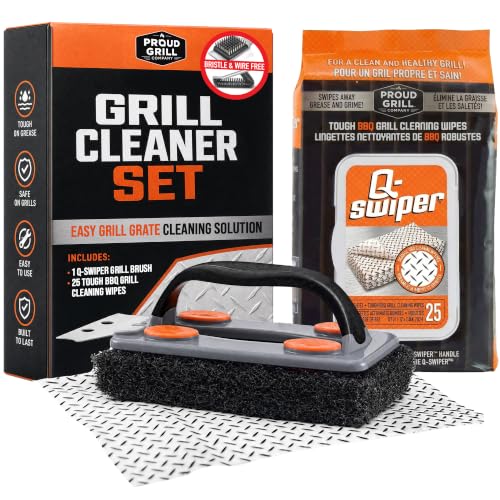
Using textured cleaning wipes has emerged as an efficient, mess-free method for maintaining cooking grates between heavy deep-cleans. The Proud Grill Q-Swiper Easy-Clean Grill Cleaner Set combines an ergonomic handle, a stainless steel scraper blade, and replaceable moist wipes. These thick wipes attach securely over the cleaning head, allowing you to apply firm downward pressure across the grates without getting grease on your hands. Raised three-dimensional cleaning nodules across each wipe grip sticky residue, lifting charred grease rather than merely smearing it across adjacent bars.
Pre-cook wiping is especially beneficial for removing airborne dust, pollen, and insect contaminants that settle on outdoor equipment between uses. Because Q-Swiper wipes use food-contact safe cleaning agents, they leave no hazardous chemical residues behind on the cooking grid. Wiping cold grates prior to lighting your burners cleans the contact zone, ensuring that the food you cook absorbs authentic wood and charcoal flavors rather than stale grease from past sessions. Discarding each single-use pad after cleaning also eliminates the task of storing a filthy cleaning brush in your patio cupboard.
To keep your wipe system ready for action throughout the grilling season, moist wipe refill containers should remain tightly sealed between cookouts. The Proud Grill Q-Swiper Easy-Clean Moist 40-count refill package features an airtight flip-top container designed to prevent the internal degreasing solution from evaporating. You can also fold individual wipes for manual hand-wiping across griddle plates, smoker racks, or warming shelves. Having disposable wipes readily available encourages consistent light cleaning, preventing the massive grease accumulation that makes seasonal barbecue maintenance difficult.
Step-by-Step Routine: Cleaning a Grill Before and After Cooking
A structured maintenance routine minimizes scrubbing effort by taking advantage of residual heat after each cookout. Immediately after transferring cooked meats to a serving platter, close the grill lid and allow the burners or coals to run for roughly five minutes. This short burn-off cycle turns sticky glazes and fat drippings into dry, brittle ash that scrapes away with modest physical force. Take your long-handled scraper or bristle brush and run it across the warm grates, removing the bulk of charred carbon before it cools and hardens onto the metal rods.
Once the cooking grate has cooled down completely, transition to liquid degreasers and wiping tools to remove remaining oily films. Apply an enzyme spray or citrus-based cleaner across the cool metal rods, making sure to coat both the top and underside of the cooking grid. Allow the active natural cleaning agents to dwell for a minute or two so they can penetrate grease deposits. Follow up by scrubbing the grates with a damp non-wire pad or wiping them clean with a fresh disposable grill wipe to lift emulsified grease.
Sticky sauces and sweet glazes require extra attention because high-sugar marinades rapidly caramelize into stubborn, glass-like coats. When preparing sticky foods like glazed ribs or crispy barbecue chicken wings, sugars drip down the rods and bake onto flavorizer shields beneath. If you do not clean sweet residue promptly, the sugar will burn during subsequent cooks, imparting an acrid, bitter smoke flavor into future meals. Using a stainless scraper edge followed by a damp microfiber towel keeps sweet residues from degrading your cooking performance.
Outdoor Grill Placement, Carbon Monoxide Hazards, and Operational Safety
Operational safety must always govern where and how you use and clean outdoor barbecue equipment. Under no circumstances should you ever operate a gas, charcoal, or pellet grill inside a garage, carport, enclosed porch, or utility shed. Some homeowners mistakenly believe that opening a large garage door provides sufficient ventilation to operate a grill safely during rainy weather. This assumption is dangerously false, as enclosed ceiling structures trap rising gases and rapidly collect heat against rafters and stored household items.
The primary hazard of operating fuel-burning grills in enclosed spaces is carbon monoxide poisoning alongside acute fire risks. Burning charcoal, wood pellets, propane, or natural gas produces carbon monoxide, an invisible and odorless gas that displaces oxygen in the bloodstream. In an enclosed garage, toxic carbon monoxide concentrations can reach lethal levels in just a few minutes. Additionally, unexpected grease flare-ups can send tall flames into overhead garage door tracks or stored combustible items, creating uncontrollable residential structure fires.
Always position your barbecue grill outdoors on an open, level surface well away from combustible building walls, low-hanging tree branches, and wooden deck railings. Review the clearance distances specified in your grill manufacturer instruction manual, as gas and charcoal units generally require ample clearance from residential structures. Perform all cleaning tasks outdoors in a well-ventilated space where cleaning sprays can dry naturally without accumulating fumes. Storing your grill under a breathable, weather-resistant cover protects clean grates from moisture and keeps pests from nesting inside the firebox.
Key Equipment Selection Factors for Everyday Grill Maintenance
When choosing grill cleaning tools, handle construction and length play an essential role in user safety and comfort. Long handles measuring 17 inches, such as the extended hardwood shaft found on the BBQ-Aid brush, provide vital leverage while keeping your hands away from hot grates. A sturdy wooden or rubberized handle allows you to exert two-handed downward force on stubborn carbon without flexing under pressure. Flimsy wire-handled brushes often bend easily, preventing you from applying the uniform scraping pressure needed to dislodge hardened grease.
Long-term durability and maintenance costs also distinguish dependable cleaning accessories from throwaway tools. Solid stainless steel scrapers, like the notched Grill Floss tool, feature heavy metal blades that resist rust, corrosion, and bending over years of use. Brushes featuring replaceable bristle blocks allow you to refresh worn scrubbing heads without discarding the durable handle, reducing long-term replacement expenses. Balancing durable mechanical tools with recyclable cleaning pads ensures you maintain a clean cooking surface without generating excessive non-recyclable waste.
Before laying raw meat onto your cleaned grill grates, perform a final physical check to confirm that no loose debris remains. Wipe down the cooking surface with a clean, damp paper towel or a fresh microfiber cloth to pick up loose carbon flakes or stray fibers. If you used a bristle brush on warm grates, inspect the rod intersections carefully to verify that no metal wires detached during scrubbing. Taking a moment to inspect your grates protects your family, maintains sanitary cooking conditions, and ensures every barbecue meal tastes fresh and clean.




Write Your Review
No reviews yet. Be the first to share your experience!