


Backyard cooks often face an enduring culinary debate when deciding which is better gas or charcoal grill for their outdoor cooking routine. Gas grills offer instant push-button ignition, steady heat output, and straightforward cleanup that fits hectic weeknight schedules. Charcoal units require manual fire management and patience, but they reward cooks with deep wood-fire aroma and intense searing temperatures. Choosing between these fuel options depends primarily on how much time you want to spend tending the fire and what flavor profile you expect from your food.
Setting up an efficient outdoor station with a rolling prep table for outdoor cooking helps streamline prep work regardless of your chosen fuel source. While purists argue that charcoal creates unmatched flavor through hardwood combustion, modern gas cookers utilize flavorizer bars to vaporize drippings into savory smoke. Many backyard chefs now look toward combination models that house both gas burners and charcoal fireboxes within a single cart. Understanding the practical trade-offs in startup speed, heat management, and ongoing maintenance ensures that your next cooker matches your culinary priorities.
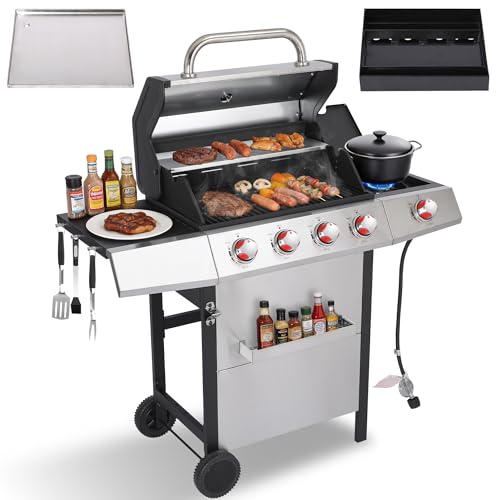


Pros
- Offers both propane speed and charcoal flavor side by side without needing two separate grills
- Integrated side burner expands outdoor prep options for sauces, glazes, and side dishes
- Height-adjustable charcoal tray gives hands-on temperature control without constantly adjusting vents
- Dedicated grease tray and ash pan keep cleanup manageable across both fuel types
- Narrow depth profile fits neatly on backyards, decks, and patio cooking stations
Cons
- Wide 58-inch cart profile requires ample horizontal deck or patio wall space
- Splitting the cart between two fuels yields smaller individual chambers than a dedicated full-size gas or charcoal grill
- Total weight of 73 pounds uses lighter-gauge sheet metal that may require careful weather protection
The GRILL DEPOTS Dual Fuel Propane Gas and Charcoal Combo Grill is built for backyard cooks who do not want to choose between the convenience of gas and the traditional character of charcoal. By placing two independent cooking chambers on one shared cart, this hybrid unit lets you grill quick burgers on the propane side while tending to slow-cooked meats or smoky poultry on the charcoal side. It is well suited for families, weekend entertainers, and couples who want outdoor cooking flexibility without crowding their deck with two distinct appliances.
Daily cooking performance benefits from the two distinct fuel configurations. The propane section is powered by four stainless steel burners rated at a collective 29,000 BTU output, providing direct heat across the cooking zone for fast preheating and weeknight family dinners. On the charcoal side, temperature management is handled through a height-adjustable fuel pan. Raising the tray brings the hot coals closer to the food for searing steaks, while lowering it provides the clearance and moderate heat needed for longer roasting. A built-in side burner adds practical utility, giving you a dedicated burner for simmering barbecue sauce, boiling corn, or warming beans without running back to the indoor kitchen.
In terms of construction, the grill features a black and silver finish with porcelain-enameled components engineered for heat resilience and simple wiping. The four main burners are made from stainless steel to resist premature corrosion from grease and flare-ups. Weighing 73 pounds, the cart is lighter than cast-iron hybrid units, which makes maneuvering easier but also means the metal is lighter gauge. Taking care to cover the grill between uses will help preserve the exterior finish across changing weather conditions.
Setting up and handling the grill around your patio is straightforward. Measuring approximately 14.77 inches deep, 58.05 inches wide, and 42.73 inches high, the unit has a slim profile that tucks neatly against an exterior wall or railing. Four swivel casters, including two locking wheels, allow you to roll the grill out for cooking and lock it safely in place. Post-cook cleanup is organized by fuel source: the gas chamber features a pull-out drip tray that collects runoff grease, while the charcoal chamber has a slide-out ash pan that lets you dump spent ashes without dirtying your hands inside the cookbox.
There are some realistic limitations to keep in mind before purchasing. Because the 58-inch width is divided between two separate fireboxes and a side burner, each individual cooking grate is narrower than what you would find on a dedicated full-size gas grill or standalone kettle. Cooks who regularly host massive gatherings and need to grill dozens of patties at once may find the divided layout restrictive. Additionally, the lighter construction means heat retention on the charcoal side can be influenced by windy or cold ambient conditions.
For homeowners and outdoor cooks who value versatility above all else, this GRILL DEPOTS combo grill offers strong everyday value. It combines the rapid startup of a 4-burner propane grill with the hands-on fun of adjustable charcoal cooking, making it an adaptable cooking center for any patio or backyard setting.
The standout feature of this grill is its side-by-side fuel layout, allowing you to use propane and charcoal simultaneously or independently. On busy weeknights, you can ignite the gas burners for a fast dinner of hot dogs, chicken breasts, or grilled vegetables without waiting for charcoal to ash over. When you have more time on weekends, you can fire up lump charcoal or briquettes to achieve the classic aroma and flavor that only real coals provide.
Having an integrated side burner further expands your outdoor cooking capability. Rather than occupying main grate space with pots and pans, you can prepare glazes, warm barbecue sauces, or saute side items right next to your grilling food. This self-contained setup minimizes trips back and forth between the kitchen and the backyard.
Cleaning dual-fuel grills can sometimes be tedious, but this unit addresses maintenance with dedicated pull-out systems for each side. The propane section is equipped with a slide-out grease drip tray that captures drippings beneath the burners, helping to prevent heavy grease accumulation in the base of the firebox.
For the charcoal chamber, a slide-out ash tray catches falling ash and spent coals. Once the grill has fully cooled, you can easily pull the tray out, empty it into a metal disposal container, and slide it back in without needing a vacuum or hand shovel. Routine brushing of the porcelain-enameled cooking surfaces and keeping the drip trays clean will help ensure consistent performance over time.

Pros
- Versatile dual-fuel design lets you choose gas convenience or charcoal flavor
- Solid triple-wall build retains heat and feels sturdy
- Easy-dump ash pan simplifies charcoal cleanup
- Electronic ignition lights the gas side reliably every time
Cons
- Weighs 116 pounds, so it's not easy to move around the yard
- Assembly can take a couple of hours and requires two people
- Side fire box sold separately if you want true offset smoking
The Char-Griller E5030 is a dual-function grill that combines a propane gas side with a charcoal cooking chamber, giving you the best of both worlds in one package. With 24,000 BTUs from two stainless steel burners and 870 square inches of total cooking space, this grill is built for backyard cooks who want flexibility. You can fire up the gas for a quick sear on steaks or burgers, then use the charcoal side for low-and-slow smoking of ribs or brisket. It's a practical choice for anyone who loves outdoor cooking but doesn't have room for two separate grills.
This grill is best suited for backyard grillers, BBQ enthusiasts, and patio cooks who like to entertain. If you're the type who hosts weekend cookouts or tailgates, the dual-fuel setup means you can handle everything from hot dogs to smoked chicken without switching equipment. It's also a solid option for RV owners or campers who want a versatile cooking rig at their campsite, though the 116-pound weight makes it more of a permanent patio fixture than a portable one.
In terms of real-world cooking performance, the gas side heats up fast and holds steady temperatures thanks to the two independent burners. You can sear a steak on one side while gently cooking veggies on the other. The charcoal side takes a bit longer to get going, but once it's lit, the triple-wall steel insulation helps maintain consistent heat for hours. Smoke flavor comes through nicely when you use charcoal, and you can add wood chunks for extra depth. The porcelain-coated cast iron grates retain heat well and leave beautiful sear marks on meat.
Build quality is solid for the price point. The lid is made from heavy-gauge steel with a powder-coated finish that resists rust, and the triple-wall construction helps with heat retention. The grates feel durable and should last several seasons with proper care. The grill sits on two fixed wheels and two swivel casters, so rolling it around a flat patio is manageable, but it's not something you'll want to move frequently. Assembly takes a couple of hours and is easier with a second person to hold parts in place.
Cleanup is straightforward thanks to the easy-dump ash pan on the charcoal side. You just pull it out and dump the ashes into a metal container. The gas side has a standard grease tray that catches drips and is easy to remove and wash. The side shelf gives you extra prep space and includes utensil hooks, which is handy when you're juggling multiple dishes. One limitation is that the side fire box for true offset smoking is sold separately, so if you want that extra smoky flavor, you'll need to buy it as an add-on.
Overall, the Char-Griller E5030 is a practical and versatile grill for anyone who wants the convenience of gas and the flavor of charcoal without taking up twice the space. It's ideal for backyard entertaining, weekend BBQs, and even tailgating if you have a way to transport it. The build is solid, the cooking performance is reliable, and the dual-fuel flexibility makes it a smart buy for outdoor cooking enthusiasts who like to experiment with different techniques.

Pros
- Ultra-portable and folds flat for easy storage and transport
- Sturdy metal build feels durable for its size and price point
- Simple design means no complicated parts or assembly hassles
- Versatile enough for camping, tailgating, or patio grilling
Cons
- Small cooking surface limits capacity for larger groups
- Charcoal management requires attention to maintain steady heat
- Lid not included, so wind can affect cooking temperature
The GasOne 15" Portable Charcoal Grill brings back the simplicity of cooking over an open fire. This foldable grill is designed for campers, tailgaters, and backyard cooks who value portability without sacrificing the classic charcoal flavor. At under 7 pounds, it's light enough to toss in the trunk or pack with camping gear, yet the heavy-duty metal construction feels solid enough for repeated outdoor use.
Setting up this grill is refreshingly straightforward. No tools required – just unfold the legs, place the grill grate, and you're ready to light the charcoal. That ease of assembly is a big win when you're at a campsite after a long hike or setting up for a last-minute tailgate. The compact footprint (about 15 by 11 inches) makes it a good fit for small patios, balconies, or even as a backup grill for RV trips.
When it comes to cooking performance, this grill delivers authentic charcoal flavor. The grate provides decent heat distribution for its size, letting you sear burgers, hot dogs, chicken thighs, or veggies. Since there's no lid, you'll want to manage flare-ups by adjusting the charcoal placement. It works best for direct-heat grilling – think quick-cooking items rather than low-and-slow smoking. For camp cooks, this is perfect for kebabs, foil packet meals, or toasting marshmallows over a bonfire.
Build quality is respectable for the price. The metal frame feels sturdy, and the powder-coated finish adds some weather resistance. The folding legs lock into place securely, so the grill stays stable on level ground. Cleanup is simple: let the ashes cool, dump them, and wipe down the grate. There's no grease management system, but for a small grill, that's not a dealbreaker – just keep a paper towel handy.
One realistic limitation is the cooking capacity. This grill is best for 2-4 people, not a big backyard party. The lack of a lid also means you lose some heat retention and smoke flavor concentration, but for casual camping or quick grilling, it's a trade-off many will accept. Wind can be an issue on breezy days, so try to set it up in a sheltered spot.
Overall, the GasOne 15" Portable Charcoal Grill is a smart buy for anyone who wants an affordable, lightweight, and easy-to-use grill for outdoor adventures. It's not designed for smoking brisket or feeding a crowd, but for campfire cooking, tailgating, or small patio BBQs, it gets the job done without fuss. If you're looking for a portable charcoal grill that packs down small and cooks well, this one is worth considering.
Weighing just under 7 pounds, the GasOne 15" Portable Charcoal Grill is incredibly easy to carry. The foldable legs collapse flat, reducing the grill's profile for storage in tight spaces like car trunks, RV compartments, or camping bins. The metal handle makes it simple to grab and go, whether you're heading to a campsite, the beach, or a friend's backyard. This is a grill designed for mobility, and it delivers on that promise.
This grill shines in scenarios where portability and simplicity matter most. Use it for camping trips, tailgating before the big game, picnics at the park, or as a secondary grill for bonfires. It's also a great option for small patios or apartment balconies where space is limited. The charcoal cooking method adds authentic smoky flavor to burgers, hot dogs, chicken, and veggies, making it a versatile tool for outdoor cooks who love the taste of open-fire grilling.

Pros
- Versatile dual fuel system lets you choose charcoal for smoke or gas for quick cooking.
- Large 823 sq in cooking area handles big meals for gatherings.
- Side burner adds extra cooking capacity for sauces or sides.
- Adjustable charcoal pan and dual thermometers enable better temperature management.
- Piezo ignition is reliable and battery-free.
Cons
- At 78 pounds, it's heavy and not easily portable for camping or tailgating.
- No reviews yet, so long-term durability is unproven.
- Assembly may take some time due to multiple components.
The Grills House ZH3005 is a dual fuel combo grill that combines a gas side and a charcoal side, plus a side burner. This setup is perfect for backyard grillers and BBQ enthusiasts who want the best of both worlds: the smoky flavor of charcoal and the convenience of gas. Whether you are hosting a weekend barbecue or cooking for a crowd, this grill offers flexibility to handle different dishes at once.
With two main burners delivering 12,000 BTU each and a 10,000 BTU side burner, the total 34,000 BTU output provides plenty of heat for searing steaks or grilling burgers. The charcoal side features an adjustable pan and side air vent, allowing you to control airflow for low-and-slow smoking or high-heat grilling. Dual lid-mounted thermometers let you monitor temperatures on each side in real time, so you can maintain consistent heat for everything from brisket to hot dogs.
The grill is built with a black steel body that feels sturdy, though at 78 pounds it is not lightweight. The cooking grates are likely porcelain-coated cast iron, offering good heat retention. The side shelf provides extra prep space, and the side burner lid doubles as a work surface. Wheels make it easy to move around the patio, but the weight means you will not want to take it camping or tailgating frequently.
Assembly is required and may take an hour or two, but instructions are straightforward. Cleanup involves brushing the grates and managing grease; the gas side has a drip tray, while the charcoal side requires ash disposal. One limitation is the lack of a dedicated grease management system for the charcoal side, so you will need to monitor flare-ups. Also, there are no reviews yet, so it is hard to gauge long-term reliability.
Overall, the Grills House ZH3005 is a solid choice for backyard cooks who want the flexibility of both gas and charcoal without buying two separate grills. It is best suited for patio cooking, weekend BBQs, and outdoor entertaining where you have space and do not need to move it often. If you are a tailgater or camper looking for portability, this grill is too heavy. But for home use, it offers good value at this price point.
This combo grill shines in a backyard setting where you have dedicated space. Use the gas side for quick weeknight dinners like burgers or chicken, and fire up the charcoal side on weekends for slow-smoked ribs or brisket. The side burner is great for heating BBQ sauce or sauteing onions. It is not ideal for camping or tailgating due to its weight, but for patio cooking and outdoor entertaining, it delivers versatile performance.

Pros
- Offers both charcoal smoking and gas grilling in one unit, maximizing cooking options
- Heats up quickly on the gas side with 36,000 BTU burners for fast searing
- Sturdy build with painted steel body and heavy-duty wheels for long-term use
- Easy ash removal system simplifies cleanup after smoking
Cons
- Very heavy at 196 pounds, making it difficult to move without help
- Some users report paint blistering on the smoker chamber after use, raising durability concerns
- Gas side lacks a removable grease tray, requiring manual drip pan management
If you're serious about outdoor cooking and want the flexibility to smoke brisket for 12 hours or throw burgers on a hot gas grill in minutes, the Oklahoma Joe's Canyon Combo is worth a close look. This 2-in-1 setup pairs a charcoal-fired smoker with a 3-burner gas grill, giving you two distinct cooking tools in one footprint. It's built for backyard grillers who appreciate real smoke flavor but also need the convenience of propane when time is tight.
In the real world, this combo delivers where it counts. The charcoal side runs low and slow with indirect heat, and the adjustable dampers let you dial in temperatures for consistent smoke rings on pork shoulders or ribs. You can add hardwood chunks or splits for extra flavor. The gas side fires up to 36,000 BTUs across three burners, getting hot enough for a solid sear on steaks or finishing a reverse-seared chop after a stint in the smoker. The primary cooking area spans 750 square inches, plus a 281 square inch firebox grate, so you have room for two pork shoulders and a dozen burgers at once.
Construction quality is decent for the price point. The painted steel body feels sturdy, and the rubber-treaded wagon wheels handle uneven patio stones or grass without bogging down. Pivoting cool-touch lids are a thoughtful touch when you're holding a platter of meat. However, some users have noted the paint on the smoker chamber can blister after exposure to high heat, which is a concern for long-term rust protection. It's worth keeping an eye on and possibly seasoning the paint before heavy use.
Assembly is manageable for two people, though at 196 pounds you'll want help lifting and moving it into place. The removable ash pan makes cleaning the firebox much less of a chore, and the flat bottom shelf with a raised edge holds your wood splits or propane tank securely. On the gas side, cleanup is a bit more involved since there's no removable drip tray, just a catch pan underneath. Plan to line that with foil for easier maintenance.
One realistic limitation is that the charcoal fire requires attention - you'll need to add fuel and adjust dampers every 20-30 minutes to maintain steady temps. This isn't a set-and-forget pellet grill, but for traditional smoking enthusiasts that's part of the appeal. Also, the grill's weight makes it a semi-permanent fixture rather than something you'd take tailgating easily. It's best suited for a dedicated spot on your patio or deck.
Overall, the Oklahoma Joe's Canyon Combo is a solid investment for backyard BBQ lovers who want one rig that does both smoking and grilling well. It's not perfect - the paint durability and gas side cleanup are valid drawbacks - but its cooking versatility and straightforward design make it a practical choice for weekend cooks who value authentic flavor and quick heat.
The Canyon Combo shines when you want to switch between smoking and grilling without switching cookers. On the charcoal side, the horizontal chamber and adjustable dampers give you good control for low-and-slow cooking - expect to hold 225-275°F with regular attention. The firebox can accommodate wood chunks or splits, adding robust smoke flavor to your meats. On the gas side, the three burners heat up fast and provide even heat across the primary area, perfect for burgers, hot dogs, or chicken. The gas grill can reach 500°F+ for searing, and the lid holds heat well even in cooler weather. Keep in mind that running both sides simultaneously will raise ambient temps, so plan your cooks accordingly.
Cleanup is mixed but manageable. The charcoal side has a removable ash pan that collects ash from the firebox - just pull it out and dump it when cool. The gas side lacks a removable grease tray, so you'll need to place a drip pan under the grates or line the bottom with foil to catch drips. The steel grates can be brushed after each use, and the painted steel body wipes down easily. Keep the dampers and smokestack clear of buildup for consistent airflow. Overall, the ash pan is a nice time-saver for charcoal users, but the gas side requires a bit more manual effort to keep clean.

Pros
- Versatile 2-in-1 design lets you enjoy gas convenience or charcoal smoke flavor without buying two grills.
- High heat capacity (700°F) delivers excellent searing for restaurant-quality crust on meats.
- Small footprint fits tight outdoor spaces, ideal for apartments, condos, or small backyards.
- Easy to clean stainless steel grates and simple ignition system save time and hassle.
Cons
- Primary cooking area (240 sq in) may be limited for large gatherings; better suited for 2-4 people.
- Switching to charcoal requires extra time to preheat coals; not as instant as pure gas grills.
- Compact size means no side burner or storage for grilling accessories; fuel tank sits on lower shelf.
The CharBroil Bistro Pro Gas Grill (model 25302161) is a clever 2-in-1 cooking solution designed for small outdoor spaces. It combines the quick convenience of gas grilling with the smoky flavor of charcoal in a single compact unit. This grill targets backyard grillers, tailgaters, campers, and patio cooks who want flexibility without sacrificing performance.
Real-world cooking performance is where this little grill shines. It cranks up to 700°F, giving you serious searing power for steaks, chicken, or burgers. The stainless steel grates hold heat well and produce even cooking while minimizing flare-ups. When you want that authentic smoke flavor, simply load charcoal onto the built-in rack and use the gas burner to light the coals. No lighter fluid is needed, and you can even toss in wood chunks for extra smokiness. This makes low-and-slow smoking possible for small cuts like pork chops or chicken thighs, though the limited space means you won’t fit a full brisket.
Build quality is solid for its price point. The lid-mounted temperature gauge lets you monitor heat without lifting the lid, and the heavy-duty wheels allow easy movement across a deck or patio. The stainless steel grates resist rust better than porcelain-coated options, and the overall construction feels sturdy. However, like many compact grills, it lacks a side burner or prep area, so you’ll need a nearby table for sauces and tools. The lower shelf holds the propane tank neatly, keeping things organized.
Ease of setup and cleanup is straightforward. The Piezo ignition lights reliably, and the grates are removable for quick scrubbing. Grease management is handled by the simple drip tray underneath, though you’ll want to empty it after a few cooks. Portability is decent thanks to the 6-inch wheels and manageable weight, but it’s not ultra-light for camping trips. It’s better suited for tailgating or moving around the backyard than hiking to a campsite.
Realistic limitations include the modest cooking area—240 square inches of primary space plus an 80-square-inch warming rack. That’s enough for about 12 burgers or a few steaks, but not for a large backyard bash. Charcoal mode also requires prepping the coals and waiting for them to ash over, so it’s not instant like pure gas. The grill is designed for small gatherings, romantic dinners, or weeknight cookouts where versatility matters more than capacity.
My practical recommendation: If you have a small patio, love both gas convenience and charcoal flavor, and cook for 2-4 people regularly, the CharBroil Bistro Pro is a smart buy. It performs well for searing and smoking small batches, and the 2-in-1 design saves space and money. For larger families or frequent party hosting, consider a bigger unit. But for compact grilling with flexibility, this one hits the mark.
The Bistro Pro excels at high-heat searing, reaching 700°F quickly on gas mode. That’s hot enough to get a beautiful crust on steaks or burgers in minutes. The stainless steel grates are spaced to give good grill marks while preventing smaller food from falling through. Heat distribution is fairly even across the primary cooking area, though the outer edges run slightly cooler—useful for indirect cooking.
Switching to charcoal mode takes a few extra minutes: load the charcoal basket, turn on the gas burner to ignite, then wait until coals ash over (about 10-15 minutes). Once ready, you get that classic smoky flavor. Adding wood chunks infuses extra aroma, perfect for chicken thighs or pork chops. For low-and-slow cooking, the grill can hold steady temps around 250-300°F with the lid closed, but you’ll need to monitor the charcoal carefully. The lid thermometer helps maintain consistency.
Weighing roughly 40-50 pounds, the Bistro Pro is portable enough to roll from garage to patio or toss in the back of a truck for tailgating. The two 6-inch wheels handle small bumps and grass okay, but it’s not off-road ready. Assembly took under an hour with basic tools—the instructions are clear. Cleaning involves brushing the grates and emptying the drip tray; the lower shelf keeps the propane tank secure. For camping, it fits in most car trunks, though you’ll need a stable surface. Overall, it’s a great companion for weekend cookouts, RV trips, or backyard entertaining.
Comparing Gas and Charcoal Grills: Performance, Flavor, and Practical Trade-Offs
Neither grill format is objectively superior across all cooking tasks, because each fuel source excels at fundamentally different operational strengths. Gas grills provide instant ignition, steady multi-zone temperature adjustments, and effortless weeknight usability. Charcoal grills generate searing radiant heat, authentic wood-smoke aromatics, and superior low-and-slow barbecue smoking capabilities. Choosing the right cooker comes down to balancing how much time you want to spend tending a fire against the depth of smoky flavor you expect on your plate.
Flavor Chemistry: Smoke Profiles, Dripping Vaporization, and Charcoal Combustion
Backyard cooks frequently cite flavor as the primary reason to choose charcoal over propane or natural gas. Charcoal briquettes and hardwood lump release organic combustion compounds, such as guaiacol and syringol, which impart the unmistakable wood-smoke aroma associated with traditional barbecue. When fat and meat juices drip onto white-hot coals, those liquids instantly vaporize into aromatic aerosol clouds that rise back up to coat the food. This dual action of solid fuel combustion gases and vaporized drippings creates a complex savory profile that gas burners struggle to duplicate completely.
Gas grills generate flavor through a different mechanical process that relies on heat deflectors and flavorizer bars. When meat juices splash against these angled metal shields above the gas tubes, the drippings sizzle and vaporize into savory steam. This process imparts a pleasant chargrilled taste that satisfies most casual backyard cookouts without overpowering delicate proteins like fish or poultry. Cooking dishes like a crispy barbecue wings recipe on a gas grill yields clean poultry flavors, whereas charcoal provides a deeper, campfire-like smokiness that penetrates the skin.
Temperature Control and Airflow Dynamics
Heat management represents one of the clearest dividing lines between gas valves and charcoal dampers. A propane or natural gas grill allows cooks to adjust burner dials instantly, dialing heat up or down in seconds with predictable mechanical consistency. Multi-burner gas configurations make it effortless to establish distinct direct and indirect heat zones, which is vital when searing steaks on one grate while gently roasting delicate sides on another. Gas burners maintain steady temperatures without requiring constant monitoring, making them forgiving for novice grillers.
Charcoal grills operate on the physics of airflow, requiring manual adjustment of intake and exhaust dampers to govern oxygen supply. Restricting airflow starves the coals of oxygen to lower the internal temperature, while opening dampers wide feeds the fire to produce intense, searing heat that can easily exceed seven hundred degrees. Mastering this airflow dynamic requires practice and active monitoring throughout the cook. Establishing two-zone cooking on charcoal demands physical arrangement of the fuel bed, banking glowing embers to one side of the kettle or firebox to create a dedicated cool zone.
Startup Speed, Workflow, and Fuel Handling
The practical workflow of lighting and preparing the cooker heavily influences how frequently you will actually grill outdoors. Gas grills excel at spontaneous cooking because they require only a turn of the fuel cylinder valve and the click of an ignition switch. Most gas units reach stable cooking temperatures within ten to fifteen minutes, allowing cooks to prepare dinner quickly after a long workday. You simply preheat the grates, scrape them clean with a grill brush, and start cooking immediately without getting soot on your hands.
Charcoal cooking requires a deliberate ritual that demands substantially more preparation time before the first piece of meat hits the grate. Lighting lump charcoal or briquettes safely typically calls for a chimney starter and natural fire starters, taking twenty to thirty minutes for coals to ash over. Pouring hot embers into the grill and waiting for grate preheating extends the total setup time to over half an hour. Managing heavy bags of charcoal, storing fuel in dry containers, and washing black soot off hands make charcoal a more involved, hands-on commitment.
Cleaning Demands, Grease Control, and Ash Management
Post-cooking cleanup differs dramatically between clean-burning gas burners and residue-heavy solid fuels. Gas grills channel liquid grease along sloped firebox floors into removable drip cups, keeping the primary cooking chamber relatively tidy. Maintaining a gas grill primarily involves brushing the grates while hot, occasionally wiping down grease deflectors, and emptying the grease collector once it cools. Because gas produces no solid combustion ash, the internal components remain free of gray residue between seasonal deep cleanings.
Charcoal grills produce a substantial volume of powdery ash that requires diligent removal after every cooking session. Leaving accumulated ash inside the bottom of a steel charcoal kettle traps ambient moisture, which can accelerate rust and corrode the metal bowl over time. Many modern charcoal units feature slide-out ash pans or bottom sweep levers to simplify dumping cold ash into metal disposal buckets. You must also allow coals to extinguish completely and cool for hours before attempting ash disposal, eliminating the possibility of quick cleanup right after eating.
Cooking Versatility, Searing Power, and Barbecue Smoking
Cooking versatility depends heavily on the specific culinary techniques you intend to practice in your backyard. Standard gas grills perform exceptionally well for direct high-heat grilling of burgers, hot dogs, chicken breasts, and sliced vegetables. However, gas grills struggle to maintain the stable, ultra-low temperatures needed for long-duration Texas-style barbecue smoking without specialized smoker boxes and wood chips. The high moisture content in gas combustion exhaust also produces a different crust formation compared to the dry heat of burning hardwood.
Charcoal grills naturally double as capable smokers, particularly kettle designs and models equipped with dedicated offset fireboxes. Adding hardwood splits, oak chunks, or hickory chips directly onto the glowing coals introduces authentic smoke that creates classic barbecue bark and deep smoke rings. Furthermore, charcoal can produce exceptionally concentrated radiant heat for high-temperature searing that locks in juices on thick steaks. For cooks seeking broader flexibility, exploring an outdoor griddle and smoker combo illustrates how modern multi-cooker setups attempt to unify smoking, searing, and flat-top frying in one station.
Grate Materials and Heat Retention: Cast Iron Versus Stainless Steel
The choice of cooking grates plays a major role in how both gas and charcoal heat transfers directly into your food. Porcelain-enameled cast iron grates excel at storing thermal energy, delivering intense contact heat that produces thick, defined grill marks on steaks and chops. Cast iron provides superior heat retention, which helps stabilize temperatures when grill lids are opened repeatedly during cooking. However, cast iron requires attentive cleaning and occasional seasoning to prevent surface rust if the enamel coating chips.
Stainless steel grates provide outstanding corrosion resistance and require far less upkeep than cast iron alternatives. High-grade stainless steel rods heat up quickly and resist peeling, making them easy to scrape clean with a wire brush or nylon scraper after every meal. While stainless steel does not retain as much thermal mass as thick cast iron, it responds much faster to burner adjustments on a gas grill. Matching heavy cast iron with charcoal can enhance searing capability, while stainless steel pairs smoothly with gas for low-maintenance weeknight cooking.
Dual-Fuel Hybrid Grills: Combining Gas and Charcoal on One Cart
Backyard cooks who refuse to compromise on either speed or flavor often turn toward hybrid combination grills. These dual-fuel units house independent gas burner chambers and charcoal basins side by side on a shared cart framework. A cook can quickly fire up the gas burners for weeknight hamburgers, while reserving the charcoal side for weekend pork shoulders and smoked ribs. Combination models eliminate the agonizing choice between fuel types by providing both options within a unified outdoor cooking footprint.
Operating a combination grill introduces unique physical considerations that buyers must evaluate before purchasing. Because the cooking area is divided between two distinct chambers, each individual grilling surface is typically smaller than what a dedicated single-fuel grill of similar exterior width offers. Dual-fuel combo grills also require managing two separate maintenance routines, including gas grease cups and charcoal ash pans on the same cart. Furthermore, these units occupy substantial patio space and possess significant weight, requiring heavy-duty casters for safe mobility across decks.
Critical Outdoor Safety Rules, Clearances, and Enclosed Space Hazards
Operating any fuel-burning outdoor cooking appliance demands strict adherence to fire safety protocols and manufacturer clearances. Fuel-burning grills must always be operated outdoors in open-air environments with unobstructed ventilation. You must never operate a gas grill, charcoal cooker, or combo unit inside a garage, breezeway, tent, or enclosed porch. Opening an overhead garage door does not provide adequate airflow to prevent the deadly accumulation of odorless, invisible carbon monoxide gas.
Fire hazards also require maintaining ample clearance distances between hot grill bodies and combustible residential structures. Position your outdoor cooker at least ten feet away from vinyl siding, wooden deck railings, overhangs, and dry foliage to prevent radiant heat damage or accidental ignition. Charcoal grills require extra vigilance because wind gusts can carry hot embers or sparks from open damper vents onto nearby flammable materials. Always keep a dry chemical fire extinguisher nearby and ensure hot grease never contacts open flames to prevent uncontrolled flare-ups.
Fuel Economics, Sourcing, and Long-Term Ownership Costs
Long-term fuel expenses and supply accessibility play a meaningful role in overall cooker satisfaction. Propane is widely available through exchange cages at hardware stores and supermarkets, providing multiple hours of cooking per twenty-pound cylinder. Operating a gas grill generally results in a lower cost per cookout compared to premium hardwood lump charcoal. Natural gas models connected directly to residential utility lines offer the lowest ongoing fuel cost and eliminate the inconvenience of tank refills altogether.
Charcoal fuel costs can accumulate rapidly for cooks who fire up their grills several times per week. Quality lump charcoal and premium briquettes burn relatively quickly, meaning long smoking sessions often consume entire bags of fuel. In addition to the charcoal itself, owners must factor in recurring purchases of fire starters, wood smoking chunks, and ash management accessories. However, basic charcoal kettle grills feature fewer mechanical parts, lacking burner tubes, valves, or electronic igniters that might corrode and require replacement down the road.
Practical Decision Framework: Matching Fuel to Your Cooking Lifestyle
Determining which grill is better ultimately depends on your personal lifestyle, cooking frequency, and culinary expectations. If your primary goal is serving dinner quickly on busy evenings with minimal cleanup, a multi-burner gas grill remains the most practical choice. The straightforward temperature dials and push-button reliability ensure that dinner is served without stress or extended waiting times. Families with packed schedules consistently find that gas grills fit their routine far better than solid-fuel alternatives.
If you view outdoor cooking as an enjoyable hobby centered on artisanal flavor, firecraft, and low-and-slow smoking, charcoal is the superior match. The process of arranging coals, balancing airflow dampers, and infusing meats with hardwood smoke transforms cooking into a rewarding outdoor craft. Alternatively, hybrid combo grills provide a compelling middle path for cooks with ample patio space who demand both weeknight speed and weekend barbecue authenticity. Review your weekly routine honestly, weigh the cleanup commitment, and select the fuel system that will inspire you to cook outdoors most often.


Write Your Review
No reviews yet. Be the first to share your experience!