


Cooking on a cold-rolled steel flat top creates exceptional flavor, but heavy grease and carbon buildup can challenge routine maintenance. Many griddle owners wonder about the safest method for scraping away stubborn residue without ruining months of careful seasoning. Knowing how to use a grill brick on a blackstone provides a reliable way to scour away hardened carbon deposits while keeping your cooking station smooth and sanitary. Having an organized rolling prep table for outdoor cooking nearby makes organizing your oil bottles, scrapers, and cleaning blocks far more convenient during maintenance.
A pumice grill brick works by gently scouring carbonized food particles as it molds to the flat metal surface. Unlike stiff wire bristles that can snap off and pose dangerous hazards in food, natural or manufactured pumice blocks disintegrate safely into a fine powder during friction. The scouring process requires proper lubrication, controlled pressure, and prompt debris removal to safeguard the protective steel patina underneath. When done correctly, routine brick cleaning restores heat transfer across your griddle plate and prepares the metal for fresh layers of protective cooking oil.


Pros
- 100% chemical free - no harsh cleaners near your food
- Safe on all grill surfaces including ceramic, porcelain, and stainless steel
- Ergonomic handheld design for comfortable grip and control
- Lifetime satisfaction guarantee backs your purchase with confidence
Cons
- Requires some elbow grease for heavy carbon buildup
- Not ideal for cleaning inside pellet grills or smokers with delicate surfaces
- Bricks may crumble slightly with heavy use, creating some dust
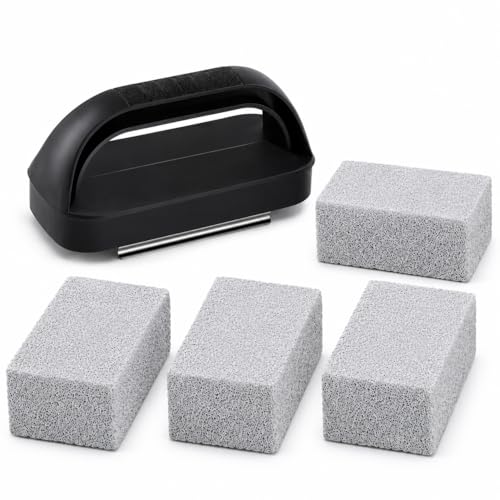
If you spend your weekends firing up the grill for backyard burgers or slow-smoking a brisket for the family, you know that cleaning up is the least fun part of outdoor cooking. The Avant Grub Grill Cleaning Brick 4 Pack is a simple, effective solution that skips the harsh chemicals and gets your flat top griddle or grill grates looking like new again. These pumice stones are designed for heavy-duty cleaning without scratching your precious cooking surfaces.
This product is best for backyard grillers, BBQ enthusiasts, campers, tailgaters, RV owners, and anyone who regularly cooks on a flat top grill or griddle. If you've ever worried about chemical residue from spray-on cleaners seeping into your food, these bricks offer peace of mind. They're also a solid choice for patio cooks who want a quick, portable cleaning tool that doesn't require electricity or batteries.
In real-world use, these bricks handle burnt-on grease and carbon buildup effectively. The pumice material is abrasive enough to scour away tough residue but gentle enough to avoid scratching porcelain, ceramic, or stainless steel grates. You won't get the same heat consistency or searing performance benefits as you would from a new grill, but the cleaning action is thorough. For flat top griddles, the brick shapes around the surface to lift grease and carbon from all sides, which is a big plus for maintaining even cooking performance.
Build quality is solid for a consumable cleaning tool. Each brick is about 8 x 4 x 3.5 inches and weighs around 1 pound, making it easy to grip and maneuver. There's no lid, grates, or wheels to worry about, but the bricks themselves are durable enough to last through multiple cleaning sessions. They resist crumbling better than some cheaper pumice stones, though heavy pressure can cause some dust. Portability is excellent - toss a brick in your camping kit or RV storage for on-the-go cleaning.
Setup and cleanup couldn't be simpler: just wet the brick, scrub your warm (not hot) grill surface, and rinse. No assembly, no batteries, no complicated instructions. Storage is straightforward - keep them dry and they're ready for next time. A realistic limitation is that these bricks work best on flat surfaces; for round grates or intricate smoker components, you might need a brush for tight spots. Also, they require some manual effort for heavy carbon buildup.
Overall, the Avant Grub Grill Cleaning Brick 4 Pack is a practical, eco-friendly choice for anyone who values chemical-free cleaning and wants to preserve their grill's seasoning and finish. Whether you're cleaning up after a tailgate party, a campsite breakfast, or a weekend BBQ, these bricks deliver a thorough clean without the worry. Backed by a lifetime satisfaction guarantee, they're a low-risk addition to your outdoor cooking toolkit.
Mastering Flat Top Maintenance with a Grill Cleaning Brick
Cleaning a heavy steel griddle plate requires balancing aggressive carbon removal with the long-term preservation of the cooking surface. A grill brick offers an abrasive yet gentle solution that shears away scorched sugars and burnt proteins without gouging cold-rolled steel. Learning proper technique prevents damage to your seasoning layer while eliminating unwanted grease buildup. The following guide details the complete process from initial surface lubrication to final post-clean seasoning.
Understanding How Pumice Stones Scour Steel Cooktops
Pumice stones consist of highly porous volcanic glass or engineered mineral foam that breaks down friably under friction. As you rub the block across flat steel, the abrasive stone continuously exposes fresh edges while contouring to the minor surface variations of the griddle. This friable property prevents deep gouging because the brick crumbles before it can scratch hardened steel plates. Unlike steel wool or wire grill brushes, pumice blocks eliminate the danger of loose wire bristles remaining on the cooktop.
The friction between the stone and the griddle plate turns carbon deposits into a fine slurry when combined with cooking oil. This mechanical scouring action lifts hardened carbon that standard flat metal scrapers simply glide over. Manufactured blocks such as the Commercial Grade, Heavy Duty Grill Cleaning Brick provide consistent density across the entire stone to scour evenly without harsh chemical degreasers. The residue gathers into an easy-to-remove paste that you can channel directly toward the rear grease gate.
Carbon buildup acts as a thermal insulator that impairs fuel efficiency and causes uneven heating zones across the griddle plate. Stripping away that scorched accumulation restores direct metal contact and improves overall heat distribution. Cooks who utilize versatile griddle and smoker combo stations often discover that routine griddle scouring helps maintain precise zone cooking. Keeping the steel clean allows the metal to heat predictably during every backyard cooking session.
When to Reach for a Grill Brick Versus Daily Scraping
Daily griddle maintenance should rely on warm water, a flat metal scraper, and a clean shop towel to preserve polymerized oil layers. Routine post-cook maintenance does not require heavy abrasion if you scrape the surface while the burners are still warm. You should reserve a grill stone for situations where food residue has baked into hard, glassy carbon spots that resist normal scraping. Reaching for a brick too frequently can wear down the base seasoning that gives cold-rolled steel its non-stick cooking qualities.
Deep restoration is another prime scenario where a cleaning brick proves invaluable for outdoor griddle owners. If a griddle sits through a wet winter season and develops surface rust, standard metal spatulas cannot lift the oxidation cleanly. A pumice stone strips away top-layer rust and loose seasoning scales without demanding chemical rust removers. Once the scouring reveals fresh, uniform steel, you can wipe the surface clean and rebuild your base seasoning from scratch.
Sticky marinades with high sugar contents, such as barbecue glazes or teriyaki sauces, frequently caramelize into stubborn patches that normal scraping cannot dislodge. These glassy deposits cause future meals to stick and tear when flipped with spatulas. Using a pumice block targets those localized problem spots quickly without requiring you to scrape the entire plate down to bare metal. Spot scouring restores smooth texture so delicate foods like eggs and pancakes release cleanly.
Surface Preparation and Temperature Guidelines
Temperature management represents one of the most critical factors when cleaning a flat top with a pumice stone. Never attempt to use a grill brick on a screaming hot griddle plate running at maximum burner output. Intense heat can scorch cleaning oils instantly, create heavy smoke, and pose significant burn hazards to your hands and arms. Turn off your burners and allow the steel surface to cool down until it feels pleasantly warm to the touch before starting.
Lubrication is strictly necessary whenever you rub a pumice stone against cold-rolled steel. Never run a dry grill brick across a dry griddle top because dry friction generates airborne mineral dust that can irritate your eyes and respiratory system. Pour a thin coating of neutral cooking oil, such as canola, vegetable, or peanut oil, over the entire cooking area. The liquid oil creates a smooth buffer, keeps the mineral dust trapped in a workable paste, and speeds up the removal of baked-on residue.
Avoid using water as a lubricant when scrubbing a warm griddle with a pumice block. Quenching hot steel with cold water can trigger thermal shock, which risks warping heavy griddle plates over extended use. In addition, water boils rapidly on warm surfaces and produces scalding steam that can burn your hands beneath the cleaning block. Stick with heat-tolerant cooking oils to ensure a consistent, safe cleaning environment across your entire patio workspace.
Step-by-Step Technique for Scouring the Steel Top
Begin by running your flat metal griddle scraper across the warm steel to lift all loose food debris and excess surface grease. Pushing loose debris into the grease trough first saves your pumice stone from clogging prematurely with soft food residue. Once the bulk debris is gone, apply two to three tablespoons of cooking oil directly onto the steel plate. Spread the oil evenly with your scraper or a folded paper towel held with grilling tongs.
Position your grill stone flat against the steel surface and grip it firmly by the dedicated handle or with heavy heat-resistant gloves. Options like the Pumice Stone with Handle for Blackstone Griddle feature ergonomic grips that keep your knuckles elevated away from hot metal and greasy slurry. Apply moderate, downward pressure while moving the block in small, circular motions across the surface. Let the natural abrasive grit of the stone do the cutting rather than bearing down with excessive force.
Work systematically in overlapping sections, beginning at the rear edge of the cooktop and moving toward the front. After working in circular patterns, switch to long, back-and-forth strokes that run parallel to the grain of the steel plate. This dual-motion technique ensures that the block shears off raised carbon edges from multiple angles. As you scrub, you will notice the oil transforming into a dark gray sludge composed of pulverized pumice and loose carbon.
Focus extra attention on the high-heat cooking zones, which typically sit directly above the internal burner tubes. These central zones usually collect the densest carbon accumulation compared to the cooler perimeter corners. Blocks like the Wzporzst Pumice Grill Brick with Handle contour smoothly along the side splash guards to tackle grease buildup in tight corners. Continue scouring until the underlying metal feels completely smooth under the block with no raised bumps or rough texture.
Clearing Sludge and Removing Pumice Residue
Once the carbon deposits have broken down, you must thoroughly clear the resulting mineral slurry from the cooktop. Use your wide metal griddle scraper to push the dark sludge forward or backward into the grease trap opening. Work slowly so the thick paste does not spill over the outer edges of the griddle rail onto your patio deck. Empty the grease cup immediately afterward so the heavy slurry does not congeal inside the drainage container.
Wipe down the entire steel surface using thick paper towels or lint-free cotton shop cloths. Fold the towel into a thick pad and use metal grilling tongs to guide it across the warm metal plate to protect your fingers. Continue wiping with fresh cloths until they stop picking up dark gray pumice residue. Leaving abrasive dust behind can ruin the texture of future cooks and introduce unwanted grit into your food.
Perform a final rinse wipe by dampening a clean cloth with a small amount of warm water or cooking oil. Rub down every square inch of the cooking plate, paying particular attention to the inner corners and side walls where powder tends to gather. Inspect the surface closely under good lighting to confirm that no powdery film remains on the dark steel. A completely clean surface should look matte or semi-glossy without visible gray haze.
Re-Seasoning and Protecting the Steel Plate
Scouring with a pumice stone naturally strips away top layers of loose carbon along with some micro-layers of your established seasoning. Bare steel exposed during deep scouring will oxidize quickly if left unprotected against humidity and outdoor air. You must apply fresh coats of seasoning oil immediately after completing the brick cleaning procedure to protect the bare metal. Proper re-seasoning rebuilds a slick, polymer shield that repels moisture and prevents food from sticking.
Ignite your griddle burners and set the heat controls to medium-high to evaporate any residual moisture from the steel. Once the surface is hot, spread a very thin layer of high-smoke-point oil, such as refined canola oil or griddle seasoning conditioner, across the plate. Use a folded towel held in metal tongs to buff the oil until the surface looks nearly dry. A thin oil coat polymerizes into a durable layer, whereas pools of thick oil turn sticky and gummy under high heat.
Allow the oil to smoke freely until the billows taper off and the sheen turns into a hard, dark finish. Turn off the burners, let the plate cool slightly, and repeat the thin application process one or two more times if you scoured down to bare gray steel. Maintaining this protective barrier prevents flash rust and ensures your flat top stays ready for your next outdoor cooking event. Proper post-cleaning care protects your equipment investment and maintains consistent cooking performance across all your favorite recipes.
Outdoor Safety Protocols and Fire Prevention
Outdoor cooking appliances must always be operated in open outdoor areas with unrestricted air circulation. Never use a flat top griddle or fuel-burning grill inside a garage, carport, enclosed porch, or home, even with the garage doors rolled open. Enclosed spaces can trap dangerous carbon monoxide gas, which is odorless, invisible, and lethal to humans and pets. In addition, hot grease splatters and cleaning fumes present serious fire risks inside any residential structure.
Maintain clear working clearance around your outdoor griddle by placing it away from vinyl siding, wooden fences, and combustible patio overhangs. If you maintain a dedicated cooking space with outdoor barbecue island setups, ensure the surrounding surfaces use fire-resistant materials and provide ample elbow room for safe handling. Keep a fire extinguisher rated for grease fires readily accessible near your outdoor cooking zone. Practicing proper positioning safeguards your home while allowing you to clean your flat top comfortably.
Wear heavy heat-resistant barbecue gloves while handling warm griddle surfaces, scrapers, and cleaning blocks. Hot oil paste can splatter when pushed aggressively with scrapers, leading to painful skin burns if your hands remain unprotected. Work at a steady, measured pace without rushing the cleaning steps to prevent slipping or splashing. Prioritizing basic kitchen safety transforms griddle maintenance into a predictable, stress-free routine.
Brick Selection and Proper Stone Care
Selecting the right style of cleaning brick depends on your comfort preferences and how frequently you cook outdoors. Standalone pumice blocks offer budget-friendly value and versatile handling for cooks who prefer using a folded towel or custom grip. Handled models provide built-in leverage and keep hands elevated safely above hot grease splatter during heavy scraping sessions. Both styles deliver identical scouring performance because the underlying porous pumice material functions the same way.
Store your used pumice stones in a dry, ventilated container away from rainfall and garden moisture. You do not need to wash the stone with dish soap between uses because the porous structure will simply shed its outer layer during the next scrubbing session. If loose grease coats the outside of the block, scrape the brick edge gently against a trash can rim to knock away debris. Keeping the stone dry ensures it holds its shape and remains ready for duty whenever your griddle plate demands deep maintenance.
Replace your grill brick once it wears down to a thin sliver that becomes difficult to grip safely without scraping your fingers on the metal plate. As the stone degrades through normal friction, its mass decreases until it can no longer exert balanced downward pressure across flat surfaces. Keeping spare replacement blocks in your patio prep drawers guarantees that you will never get caught without proper maintenance tools after a heavy cookout. Reliable supplies make griddle upkeep fast and straightforward.
Knowing how to use a grill brick on a blackstone gives you complete control over your flat top cooking surface without relying on harsh chemical cleansers. By combining controlled heat, proper oil lubrication, methodical scouring, and prompt re-seasoning, you can remove tough carbon while preserving your griddle’s non-stick foundation. Regular visual inspections and timely maintenance ensure that your outdoor cooking station stays sanitary, efficient, and ready to produce flavorful meals for years to come.





Write Your Review
No reviews yet. Be the first to share your experience!