


Traditional wire grill brushes have sent thousands of backyard cooks to emergency rooms over the years due to loose metal bristles falling into food. Learning how to make a wooden grill scraper provides a dependable, food-safe solution that eliminates that danger completely. As raw timber passes across hot grill grates, it gradually burns customized channels that match your exact rail spacing. This natural charring process allows the wood to clean between the grate bars without stripping protective coatings.
Crafting your own scraper paddle requires only basic woodworking tools, a solid piece of untreated hardwood, and about an hour of workshop time. Many outdoor cooks appreciate having custom gear that adapts naturally to their unique cooking equipment over repeated cookouts. Keeping a dedicated workspace, such as a sturdy rolling barbecue prep table stationed on the patio, makes shaping and maintaining your barbecue gear convenient. This simple woodworking task shields your cooking grates from surface scratching while delivering a tailored cleaning paddle designed specifically for your outdoor cooker.

Pros
- Extra-wide blade handles large smash burgers and multiple items at once
- Sharp front edge makes griddle cleanup quick and efficient
- Sturdy full tang wood handle with comfortable grip and no heat transfer
- Multipurpose – can flip, scrape, and chop food on any flat cooking surface
Cons
- Blade size may be too large for smaller portable griddles or cramped camping stoves
- Wooden handle requires occasional oiling to prevent cracking over time
- Sharp edge demands careful handling during cleaning to avoid cuts
If you cook on a flat top griddle – whether it's a Blackstone in the backyard, a portable camp stove, or a tailgate setup – the Vovoly Extra Wide Griddle Scraper is the kind of tool that makes you wonder how you ever managed without it. At 5.5 inches square, this scraper/turner is built for serious outdoor cooking. Think massive smashed burgers, big stacks of pancakes, or even chopping up ground beef right on the griddle surface. The blade is made from knife-grade stainless steel and comes with a beveled front edge that's sharp enough to scrape away burnt crust while still being strong enough to flip a heavy patty without bending.
This scraper is ideal for backyard grillers, campers, tailgaters, and anyone who regularly uses a flat top griddle. During a weekend cookout, you can press down hard on a burger patty to get that perfect sear and crust, then slide the wide flat blade underneath and flip it cleanly. No more broken burgers or lost juices. The squared corners also let you get right into the edges of your griddle, which makes cleanup a breeze after cooking a greasy batch of bacon or sausage. For RV owners or campers who take a portable griddle on trips, this sturdy tool will stand up to repeated use and high heat without flexing.
Cooking performance on a griddle is all about heat consistency and surface control. With this scraper, you can scrape up the browned bits from the cooking surface and mix them into sauces or onto burgers for extra flavor. The full tang wooden handle stays cool during cooking, so you don't need a towel or glove just to hold it. The weight (0.44 pounds) feels substantial without being clumsy, and the blade's thickness prevents warping even after multiple hot cooks. When you're done, the sharp front edge makes quick work of scraping off grease and food residue – a quick pass and your griddle is ready for the next round.
Durability is where this product shines. The full tang construction means the metal runs all the way through the handle, so there's no risk of the head separating from the handle under pressure. The wooden handle is smooth and well-attached, though like any wood, it benefits from occasional oiling to prevent drying out in dry climates. The stainless steel blade resists rust as long as you dry it after washing. For outdoor storage, just keep it in a dry spot – it's not a tool that will fall apart after a season of tailgating.
Setup is nonexistent – it's ready to use out of the box. Cleanup is easy: a quick scrub with soapy water and a rinse, then towel dry. The only real limitation is its size: if you have a very small portable griddle (say under 12 inches), the 5.5-inch blade might feel a bit oversized for precise flipping of small items. Also, the sharp edge means you need to be careful when washing – store it with the blade protected or handle first in the drawer. But for most backyard cooks, campers, and tailgaters who own a standard 2-burner or larger griddle, this scraper is a solid upgrade over the cheap plastic or thin metal spatulas that often come with griddles.
Overall, if you enjoy making smash burgers at your weekend BBQ, or you frequently clean a large flat top after cooking for a crowd, the Vovoly Extra Wide Griddle Scraper delivers real utility. It's not just another gadget – it's a well-made, practical tool that improves both your cooking results and your cleanup routine. For the price, it's a smart addition to any outdoor cooking kit, especially if you're serious about getting that perfect crust on your burgers or maintaining a clean griddle surface for your next cookout.
Pros
- No metal bristles means safer cleaning
- Grooved edge conforms to grill grate pattern over time
- Natural wood material is gentle on grates
- Lightweight and easy to store
- Compatible with many pellet grills and gas grills
Cons
- May require some effort to break in before grooves form
- Not suitable for heavily caked-on grease; may need soaking first
- Wood can wear down over time with heavy use
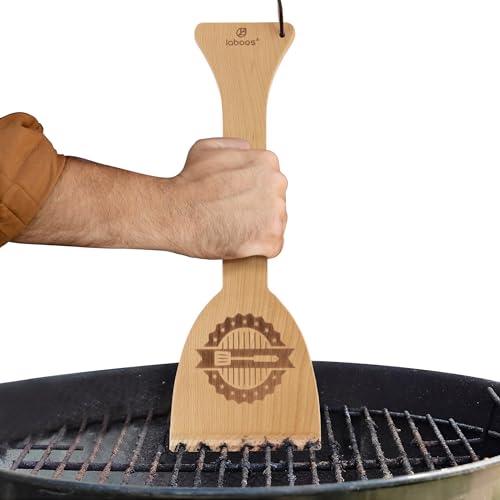
If you're a backyard griller or BBQ enthusiast who uses a Traeger or similar pellet grill, you know the hassle of cleaning grates without worrying about metal bristles. The laboos Wooden BBQ Grill Scraper offers a simple, natural solution. Made from 100% first-class beech wood and finished with food-grade mineral oil, this scraper is designed to safely remove residue without the risk of wire bristles breaking off and ending up in your food.
In real-world use, this scraper performs well for routine cleaning after a weekend cookout or tailgating session. The grooved edge works with the natural contours of your grill grates, and over time it develops custom grooves that match your specific grill pattern. This means the scraper actually gets more effective the more you use it. It's especially handy for campers, RV owners, and patio cooks who want a lightweight tool that won't scratch or damage their grates.
Build quality is solid for a wooden tool. The beech wood is dense and durable, and the mineral oil finish protects against moisture. It's not going to rust like metal scrapers, and it's gentle on porcelain-coated grates. At about 1 pound, it's easy to handle and store. Cleanup is simple: just rinse it off and let it dry. No complicated maintenance.
One realistic limitation is that this scraper isn't a heavy-duty cleaner for baked-on grease. For that, you might need to soak the grates or use a more aggressive tool. Also, while the wood is durable, it will eventually wear down with heavy use. But for regular cleaning after each cook, it's a great choice.
Overall, this scraper is a practical buy for anyone who values safety and simplicity. Whether you're grilling burgers for a crowd, smoking brisket low and slow, or just doing a quick tailgate cook, this tool helps keep your grates clean without the worry of metal bristles. It's a smart addition to any outdoor cooking setup.
Keeping your laboos wooden scraper in good shape is easy. After each use, rinse it with warm water and a mild soap if needed. Avoid soaking it for long periods, as wood can absorb moisture. Let it air dry completely before storing. Occasionally, you can reapply a thin coat of food-grade mineral oil to maintain the wood and prevent cracking.
Don't use this scraper on a hot grill - let the grates cool down first. The wood can char if exposed to high heat. Store it in a dry place, away from direct sunlight or moisture. With proper care, this scraper will last through many grilling seasons, gradually forming grooves that make cleaning even more efficient.

Pros
- Eliminates the risk of metal bristles in food, a major safety advantage
- Comfortable grip and smooth edges make scrubbing grates easy and fatigue-free
- Full-size shape works well on large grills and can be used with one or two hands
- Natural cedar material is eco-friendly and will not scratch or damage grill grates
Cons
- Natural wood may wear down faster than a metal brush, especially with heavy daily use
- Requires occasional sanding or replacing once the cedar becomes too worn to clean effectively
- Not ideal for very stubborn, baked-on residue without some presoaking or grill heating
If you've ever worried about stray metal bristles ending up in your perfectly grilled steak, the Grill Dog Cedar Hog is the solution you've been looking for. This full-size grill scraper is made entirely from 100% natural Western Red Cedar, sourced and manufactured right here in the USA. It's a simple, clever concept: a solid block of untreated wood that contours to your grill grate over time, providing a safe and effective way to clean without any metal bristles that can break off and become a health hazard.
Who is this grill brush for? It's a great choice for backyard grillers who fire up their gas or charcoal grills on weekends, as well as campers and tailgaters who want a lightweight, portable cleaning tool. RV owners will appreciate the compact size and the fact that it won't rust or leave behind any sharp fragments. Even outdoor entertainers who cook on large grates for parties will find the full-size design efficient for cleaning between batches of burgers, chicken, or veggies.
When it comes to real-world cleaning performance, the Cedar Hog really shines on warm grates. Just heat up your grill, give the grates a quick brush, and the natural cedar effectively scrapes away stuck-on food and grease. It doesn't have the aggressive scraping power of a stainless steel wire brush, but it's surprisingly effective on standard grill grates. Over time, the wood molds to the shape of your bars, giving you a customized cleaning surface. It handles grease well and won't cause flare-ups like some chemical-laden cleaners might.
Build quality is solid, with smooth, radiused edges that make it comfortable to hold. The natural cedar is untreated, so you don't have to worry about any chemicals leaching into your food. It's also lightweight (just 1 pound), making it easy to pack for camping trips or bring to a tailgate. However, because it's wood, you'll need to store it in a dry place to prevent cracking or mold. It's not meant to be left out in the rain, so bring it inside after cleaning.
Ease of use is excellent: you simply grab it and scrub. No setting up or assembling anything. Cleanup is a breeze – just give it a quick rinse with water and let it dry. The main limitation is that, like any natural wood product, it will eventually wear down. You might need to sand the surface lightly after several uses, or replace it after a season of heavy grilling. It's also not the best for extremely caked-on gunk – you'll want to heat the grill first to loosen residue.
Overall, the Grill Dog Cedar Hog is a practical, safe, and eco-friendly alternative to traditional grill brushes. It's perfect for grillers who prioritize cleanliness and safety in their outdoor cooking. Whether you're flipping burgers in the backyard, grilling burgers at a campsite, or smoking ribs for a party, this scraper gives you peace of mind while keeping your grates clean. Just be prepared to treat it as a natural, consumable tool – not a permanent fixture.
Keeping your Grill Dog Cedar Hog in good shape is simple. After each use, let the brush cool down, then rinse it with warm water to remove any grease or food particles. Avoid using soap, as it can be absorbed by the wood and potentially affect future grilling. Let it air dry completely before storing it in a dry place – a garage or indoor shed works well. If the cleaning surface becomes rough or uneven over time, you can lightly sand it with fine-grit sandpaper to restore a smooth texture. With proper care, this brush can last through a whole grilling season, making it a reliable tool for any outdoor cook.
The Grill Dog Cedar Hog is versatile enough for many outdoor cooking scenarios. It's ideal for backyard BBQ sessions where you're cooking burgers, steaks, chicken, or veggies on standard gas or charcoal grills. Campers and RV owners will love its lightweight, portable design – just toss it in your gear for campsite cookouts. Tailgaters can use it to clean grill grates between courses at the stadium parking lot. It also works well on flat top griddles and portable grills, giving you a safe, bristle-free cleaning option wherever you cook outdoors. Just remember to heat the grill slightly before cleaning for best results.

Pros
- Bristle-free design eliminates the safety risk of stray metal bristles
- Adapts to grate shape for a more effective clean with each use
- Ergonomic handle reduces hand strain during heavy cleaning
- Lightweight and compact for easy storage in campers, RVs, or tailgating gear
- Compatible with a wide range of grate materials and finishes
Cons
- May require multiple passes for heavy buildup or baked-on residue
- Not as aggressive as metal scrapers for stubborn crusted grease
- Composite material may wear down over time with frequent heavy use
The Outset Verde Wooden Grill Scraper is a clever alternative to traditional metal brushes and scrapers. It is made from a recycled paper composite that feels like wood but is designed specifically for cleaning grill grates without scratching them. Unlike standard wire brushes that can leave behind bristles, this scraper is completely bristle-free, so you never have to worry about stray metal ending up in your burger or brisket.
This scraper is perfect for anyone who spends time around a grill. Backyard grillers who fire up the kettle or gas grills multiple times a week will appreciate how easy it is to scrape off debris after cooking. Campers and tailgaters will like its small size and lightweight construction, which makes it easy to toss in a gear bin or RV storage compartment. It works on porcelain, ceramic, stainless steel, and cast iron, so it fits a wide variety of grates from smokers to flat tops.
When it comes to real-world performance, the scraper shines on hot grates. The manufacturer recommends heating the grill to a high temperature, then using slow and firm pressure to glide the flat edge across the grates. The material adapts over time to conform to the shape of your particular grate, picking up residue that other tools might miss. The ergonomic handle gives you good leverage, so you can apply consistent pressure without straining your hand. It is not designed to chisel off thick carbon crust, but for regular maintenance cleaning, it does a solid job.
Build quality is decent for the price. The composite material feels sturdy enough for routine use, though it won't last forever if you scrub aggressively on rough cast iron. The scraper measures about 10.25 by 4 inches, so it fits in most utensil drawers or can hang on a hook. Cleaning the scraper itself is simple - just hand wash with warm soapy water or toss it in the dishwasher. That ease of cleanup is a nice bonus for anyone who hates scrubbing grilling tools.
There are a few realistic limitations. If you deal with heavy buildup from years of neglect, this scraper will require multiple passes. It lacks the abrasiveness of a metal brush or scraper, so for deep cleaning you might need a different tool. Also, because it is made of composite material, it can wear down over time, especially if you use it on hot grates frequently. But for the price, it is an affordable and safe addition to your outdoor cooking toolkit.
Overall, the Outset Verde Wooden Grill Scraper is a practical buy for backyard cooks, campers, and tailgaters who want a safe, scratch-free cleaning option. It is not a heavy-duty degreaser, but it handles everyday grime well. If you prioritize food safety and prefer to avoid metal bristles, this scraper is worth adding to your grill prep station.

Pros
- Completely bristle free, so no worries about stray wires in your food
- Solid oak construction feels sturdy and lasts through heavy use
- Wide scraping edge cleans efficiently, saving time on grate maintenance
- Multiple handle designs accommodate different grip preferences for better control
Cons
- Wood may char or wear down faster than metal scrapers if used on extremely high heat for long periods
- Not as effective on heavily caked-on grease compared to a wire brush or scraper with a metal edge
- Requires occasional sanding or replacement once the scraping edge becomes too worn
If you've ever found a stray wire bristle stuck to your burger or steak, you know the frustration and safety risk that comes with traditional grill brushes. The CONSDAN Wood Grill Scraper offers a simple, natural alternative: a solid oak scraper that cleans your grill grates without any metal bristles to shed. This is a tool designed for backyard grillers, campers, tailgaters, and RV owners who want a safe, no-fuss way to keep their cooking surface clean before the next round of burgers, steaks, or veggies.
In real-world use, this scraper does a solid job of removing food residue and char from hot grates. The wide scraping edge covers more area per pass, so you can clean a standard gas or charcoal grill in just a few strokes. It works best when the grates are still warm, as the heat helps loosen stuck-on bits. The natural oak wood is dense enough to handle regular scraping without splintering, and over time the edge actually molds to the shape of your grates, making each cleaning session a little more efficient.
Build quality is straightforward but effective. The scraper is made from a single piece of American solid oak, so there are no glued joints or plastic parts to fail. The three different handle shapes give you options for how you grip and apply pressure, which is helpful if you have larger hands or prefer a certain angle. It's lightweight, easy to store in a drawer or hang on a hook, and requires no assembly. Just rinse it off after use and let it dry.
Where this scraper really shines is peace of mind. No more worrying about tiny metal wires ending up in your food or your mouth. For families with kids, frequent entertainers, or anyone who's had a bad experience with bristle brushes, this is a welcome change. It's also a great companion for camping and tailgating, where you want to pack light and avoid chemical cleaners or bulky tools. The wood is naturally antimicrobial and won't scratch porcelain-coated grates.
One limitation to keep in mind: wood is softer than metal, so this scraper won't power through thick, baked-on grease as quickly as a stainless steel brush might. For heavy-duty buildup, you may need to let the grates heat up longer or use a grill stone first. Also, the wood will eventually char and wear at the scraping edge, especially if you use it on very hot grates often. But given the low price and the safety benefit, replacing it once or twice a season is a small trade-off.
Overall, the CONSDAN Wood Grill Scraper is a practical, safe choice for anyone who values clean cooking surfaces without the risk of bristle contamination. It's especially well-suited for backyard BBQ enthusiasts, campers, tailgaters, and RV cooks who want a reliable, eco-friendly tool that gets the job done. If you're tired of worrying about wire bristles in your food, this scraper is worth a try.
Building and Customizing a Wooden Grill Scraper
A custom wooden scraper delivers a tailored cleaning tool that improves naturally every time you cook over open grates. Unlike generic wire brushes that shed loose bristles and scratch protective enamel, a solid wood paddle shapes itself directly to your grill rails. Learning how to shape, bevel, char, and oil the timber ensures that your finished tool remains durable and safe for outdoor cooking. Following a structured building process gives you a reliable barbecue accessory that will serve your outdoor cooking area for seasons to come.
Why Backyard Cooks Choose Wood Over Wire Bristles
Metal wire brushes pose a hidden health hazard that emergency room physicians and food safety experts caution against every summer. Stiff steel wires can break away from deteriorating brush heads, stick to greasy cooking grates, and end up embedded in burgers or steaks. Ingesting these microscopic metal pieces can cause severe punctures throughout the mouth, throat, and digestive tract. Switching to solid wood removes this hazard entirely, giving you and your dinner guests complete peace of mind.
Beyond physical safety, wooden scrapers actively protect the structural integrity of your expensive barbecue grates. Steel bristles frequently scratch porcelain enamel and ceramic finishes, allowing ambient moisture to reach the raw iron beneath and cause rust. Wooden paddles glide across these delicate surfaces without chipping or gouging the protective coatings. Over time, the timber absorbs residual cooking oils, creating a smooth contact face that lifts baked-on carbon without excessive abrasion.
The defining advantage of timber is its unique capacity to form customized grooves through thermal contact. As the beveled wood presses against scorching grill grates, the hot metal rails burn individual channels directly into the tip. These deep grooves wrap around the rounded contours of each bar, cleaning the top and sides in a single fluid stroke. Standard wire brushes simply ride along the crowns of the grates, leaving grease and carbonized sauces untouched between the bars.
Selecting the Right Wood Species for Heat and Food Contact
Selecting an appropriate lumber species represents the single most important safety decision of this entire woodworking project. You should always choose dense, untreated hardwoods that withstand high friction and radiant heat without splintering. Oak, beech, hard maple, and hickory represent the best choices because their tight cell structures resist splitting under firm downward pressure. Some woodworkers prefer western red cedar due to its natural moisture resistance and pleasant aroma, although softer timbers wear down more quickly than dense hardwoods.
Never utilize pressure-treated lumber, shipping pallets, painted boards, or salvaged construction scraps for a grill cleaning tool. Pressure-treated wood contains toxic chemical preservatives, including copper and arsenic compounds, that must never touch surfaces where food is prepared. Discarded shipping pallets frequently absorb industrial fluids, pesticides, and harsh cleaning chemicals during global transit. Inhaling or ingesting residues from chemically treated lumber presents serious health hazards that no amount of washing can eliminate.
Resinous softwoods like pine, fir, and spruce should also remain off your lumber list for this specific application. Softwoods contain high concentrations of sticky pitch and volatile sap that ignite quickly when exposed to direct grill heat. When these softwoods burn against hot grates, they release acrid, bitter smoke and deposit sticky resin directly onto your cooking surface. Sticking with clean, untreated culinary hardwoods guarantees that your scraper remains structurally stable, fire-resistant, and entirely food-safe.
Essential Tools and Workshop Preparation
Constructing a wooden grill paddle requires only basic workshop tools that most homeowners already have stored in their garage or shed. A simple hand saw or electric jigsaw easily cuts the rough paddle profile and handle contour from your chosen hardwood blank. A wood rasp, a bastard file, and an orbital sander with varying sandpaper grits handle the shaping and smoothing stages. A pair of sturdy bar clamps keeps your board firmly anchored to your work table while you shape the edges.
Workshop safety remains essential even when tackling a straightforward DIY project on a weekend morning. Always wear certified safety glasses to protect your eyes from airborne sawdust and wood splinters produced by cutting and rasping. A standard dust mask prevents the inhalation of fine hardwood dust, which can irritate your respiratory system during aggressive sanding. Taking a few moments to organize your workspace prevents slips and ensures clean, accurate cuts.
You may also want a drill and a half-inch spade bit to create a hanging hole at the butt end of the handle. Adding a simple hole allows you to loop a leather cord through the handle for convenient storage on your grill cart hooks. A combination square and a pencil help you mark clean reference lines for the handle width and front bevel angle. Having all your layout tools laid out ahead of time streamlines the building process from start to finish.
Sizing and Shaping the Blank: Dimensions and Handle Ergonomics
Carefully planning your scraper dimensions ensures that the completed tool feels balanced and protects your hands from excessive heat. A total overall length between 15 and 18 inches provides optimal leverage while keeping your knuckles safe from rising grill flare-ups. The paddle head should measure approximately 3.5 to 4.5 inches across, giving it sufficient width to span multiple grate rails simultaneously. A board thickness of three-quarters of an inch to one full inch provides the stiffness needed to resist bending under pressure.
Handle ergonomics directly influence how comfortable the scraper feels during heavy cleaning sessions. Draw a tapered handle layout that narrows down to roughly 1.25 inches across the gripping area, leaving a wider knob at the end to prevent slipping. Cut carefully along your pencil lines with a jigsaw, keeping your blade perpendicular to the board face for square edges. Once the rough outline is cut free, use a wood rasp to soften the transitions between the handle and the broad paddle head.
Rounding the edges of the handle transforms a flat board into a comfortable, ergonomic grip that fits your hand naturally. Use medium-grit sandpaper to break all sharp ninety-degree corners along the gripping area until the handle feels smooth. If you frequently use heavy barbecue mitts while cleaning, test the handle thickness to verify that your grip remains secure. Taking time to refine the handle contours prevents hot spots and blisters when scrubbing stubborn carbon deposits.
Cutting the Beveled Scraping Edge
The front edge of your hardwood paddle requires an intentional bevel to initiate effective scraping and grooving. A blunt, flat face will merely push surface debris across the grates without dislodging baked-on grease. Marking an angled bevel between 35 and 45 degrees across the working end establishes the correct scraping geometry. This wedge-like profile slips under stubborn food residues easily and concentrates downward force directly against the metal bars.
You can shape this front bevel using a hand plane, a coarse wood rasp, or an electric belt sander. Work steadily across the full width of the paddle to ensure the angled face remains straight and flat without low spots. Avoid creating a razor-sharp edge, because fragile wood tips burn away too quickly and chip under heavy scraping pressure. Leave a sturdy blunt leading edge measuring approximately one-eighth of an inch thick to establish a robust foundation for grate grooving.
Check your bevel angle against a flat reference surface before moving on to the charring stage. The angled plane should transition smoothly across the entire width of the board without any visible twist or hollow areas. A uniform bevel ensures that all grate rails make contact at the same depth during the initial burn-in session. Spending an extra five minutes smoothing this angled face guarantees cleaner, more consistent grooves once the wood touches hot grates.
The High-Heat Charring Process: Forming Custom Grate Grooves
The thermal charring process represents the defining step that converts your shaped wooden paddle into a customized grate scraper. Start by firing up your outdoor grill and preheating the cooking grates on high heat for 10 to 15 minutes. The grates must become thoroughly hot so the metal rails immediately scorch the wood fibers upon contact. If your patio features a versatile griddle and smoker combination, make sure you perform this grooving procedure strictly on the open grate section rather than the flat griddle plate.
Put on heavy, heat-resistant barbecue gloves to protect your hands and forearms from intense radiant heat. Position the paddle at a steady 45-degree angle against the hot grates, ensuring the beveled edge sits squarely across several rails. Push the scraper forward and backward along the exact same path using slow, firm downward pressure. As smoke billows from the contact points, the hot metal rails will burn distinct blackened channels into the tapered wood tip.
Continue this deliberate sliding motion in short intervals, lifting the paddle periodically to inspect the developing channels. You want the scorched grooves to reach a depth of roughly one-eighth to one-quarter of an inch, allowing the wood to cradle each bar securely. Always keep a spray bottle filled with clean water right beside the grill to douse any accidental embers instantly. Once distinct channels are established, turn off the grill burners and let both the grates and the wooden scraper cool completely.
Sanding and Finishing with Food-Safe Oils
Once the hot grooving process concludes, finish sanding the entire tool to prepare the timber for lasting outdoor use. Use 120-grit sandpaper to remove any rough splinters or stray scorch marks along the handle and paddle edges. Follow with 220-grit sandpaper across the gripping area to create a smooth, comfortable surface that resists splintering. Do not sand down the interior of the newly burned grooves, as that dense carbon layer acts as a durable, heat-hardened contact surface.
Finishing the wood requires a non-drying, food-grade mineral oil or a high-quality butcher block conditioner. Pour a generous amount of oil directly onto the wood and spread it thoroughly with a lint-free cloth, letting it soak deep into the dry fibers. Allow the first coat to absorb for an hour before applying a second coat over the entire paddle body. Food-grade mineral oil prevents the timber from drying out, cracking, or absorbing greasy meat juices during regular cleaning duties.
Never apply household cooking oils like olive oil, canola oil, or vegetable shortening to finish your wooden grill scraper. Culinary oils break down and turn rancid over time when exposed to oxygen and ambient heat, producing foul odors and harbor bacteria. These rancid oils will transfer directly onto clean cooking grates and spoil delicate foods, such as a flavorful marinated Korean beef barbecue prepared for family gatherings. Pure mineral oil remains odorless, stable, and completely safe for surfaces that touch cooking areas.
Comparing DIY Wooden Scrapers with Commercial Alternatives
Outdoor cooks often weigh the time required to build a custom scraper against the convenience of buying a ready-made commercial option. The market features several solid timber options, such as the Wooden BBQ Grill Scraper, which uses natural beech wood treated with food-grade mineral oil to groove gradually over time. Similarly, the CONSDAN Wood Grill Scraper utilizes solid American oak and offers multiple handle configurations designed for different grip styles. Sourced red cedar paddles like the Grill Dog Cedar Hog BBQ Grill Brush Scraper offer lightweight handling and contour naturally to grill rails as well.
Commercial alternatives also include specialized materials and hybrid designs for different outdoor cooking setups. For instance, the Outset Verde Wooden Grill Scraper employs a recycled paper composite material that mimics wood while remaining dishwasher safe. Meanwhile, cooks who maintain flat-top griddles or cast iron planchas require flat metal edges rather than grooved paddles, making tools like the Vovoly Extra Wide Griddle Scraper with its full-tang wooden handle ideal for scraping griddle surfaces. Understanding these commercial options helps you decide whether crafting your own paddle or buying a manufactured tool best suits your outdoor setup.
Building your own scraper offers distinct advantages in customization that retail products cannot always match. You can tailor the handle length specifically to your height and grill depth, ensuring maximum leverage without hand fatigue. You also have total control over lumber selection, guaranteeing that only pure, chemical-free hardwood touches your cooking equipment. While purchasing a commercial tool saves an hour of workshop time, crafting your own paddle delivers a personalized accessory tailored precisely to your barbecue grates.
Routine Upkeep, Reshaping, and Fire Safety on the Grill
Routine maintenance ensures that your handmade wooden scraper remains functional, hygienic, and structurally sound for multiple grilling seasons. After every cooking session, wipe the wooden tip with a damp cloth to remove accumulated grease and loose carbon bits before putting it away. Always store your wooden paddle in a dry, covered space rather than leaving it exposed to rain on an open grill side shelf. Moisture cycles cause hardwood fibers to swell and warp, leading to premature cracking and mold growth along the grain.
Over months of consistent scraping, the grooves on the working tip will naturally deepen and widen as wood fibers wear away. If the scraper tip becomes excessively thin or develops deep heat fractures, you can refresh the tool in just a few minutes. Simply trim off the worn grooved section using a hand saw, re-establish a fresh 35-degree front bevel, and repeat the hot-grate burn-in process. Always inspect the handle for structural cracks, and replace the entire tool immediately if the handle begins to split.
Safe grilling habits should always guide how you use and store your wooden cleaning tools around open heat sources. Never operate outdoor grills inside an enclosed garage, shed, or covered porch, even with open doors, because fuel-burning grills create deadly carbon monoxide and severe fire hazards. Keep your wooden scraper away from active flames and close burner valves before performing heavy grate maintenance. Using a well-crafted wooden scraper on an outdoor patio ensures a clean cooking surface, delicious barbecue, and complete peace of mind for every cookout.




Write Your Review
No reviews yet. Be the first to share your experience!