


Outdoor cooking equipment faces constant exposure to high heat, greasy marinades, airborne moisture, and harsh weather. Many backyard chefs assume that a shiny exterior is completely impervious to corrosion, only to find brown specks or dull discoloration settling across the lid and side shelves after a busy season. Learning how to prevent rust on stainless steel grill assemblies comes down to protecting the invisible chromium oxide barrier that keeps moisture from reaching raw iron molecules. Setting up a tidy cooking station with a sturdy rolling BBQ prep table keeps acidic sauces and salty seasonings away from hot grill panels during cooking. Routine habits make all the difference in keeping premium metal looking pristine year after year.
Environmental pollutants, coastal humidity, and stubborn grease splatters can rapidly break down metal surfaces if left unchecked. Simple maintenance habits, such as wiping exterior panels with gentle cleaners and avoiding abrasive wire tools, stop oxidation before discoloration takes hold. Stainless steel requires oxygen to regenerate its protective shield, which means trapped dirt and moisture pose the greatest threat to exterior longevity. Taking time to clean exterior hoods, burnished control panels, and lower cart doors will maintain structural durability and preserve the visual appeal of your outdoor kitchen.

Pros
- Easy to use – just spray and wipe; no scrubbing or harsh chemicals needed
- Streak-free finish that actually works on stainless steel without smearing
- Safe on multiple surfaces: grills, smokers, griddles, and even patio furniture exteriors
- Effectively removes bird droppings and tough stains that other cleaners struggle with
- Leaves a pleasant, mild citrus scent (not chemical) during cleaning
Cons
- May affect printed ink on control panels, knobs, or nameplates – always test on an inconspicuous area first
- Not a heavy-duty oven cleaner; for interior grease buildup you'll need a separate degreaser
- Spray nozzle can occasionally clog if not rinsed after use with heavy grime
If you're someone who takes pride in your outdoor cooking setup, you know that a clean grill isn't just about looks - it's about longevity and performance. The Citrusafe Exterior Grill Cleaner is specifically designed for grill owners who want a streak-free shine without the hassle of harsh chemicals or endless wiping. This 16 oz spray is formulated to tackle the unique messes that accumulate on grill exteriors: baked-on grease, bird droppings, pollen, water spots, and that stubborn haze that can make stainless steel look dull.
This cleaner is best suited for backyard grillers, BBQ enthusiasts, tailgaters, and RV owners who use gas, charcoal, pellet, or flat top grills. If you've ever spent time scrubbing your grill's exterior only to be left with smudges and streaks, you'll appreciate how Citrusafe's formula dries clear every time. It works on stainless steel, painted metal, and even some plastics and glass surfaces, so you can use it on smokers, side burners, and patio cooking stations without worry. Just spray, wipe, and admire the mirror-like finish.
From a practical standpoint, this cleaner makes post-cookout cleanup much faster. After a weekend of smoking brisket or flipping burgers for a crowd, grease and smoke residues can cling to your grill's hood and sides. A quick spritz of Citrusafe lifts that grime without requiring elbow grease or multiple passes. The spray is non-abrasive and won't scratch polished stainless steel, which is a common concern with abrasive powders or steel wool pads. It also handles bird droppings and tree sap that can accumulate if you keep your grill outside year-round.
Build quality of the product itself is solid. The 16 oz bottle is easy to handle, the trigger sprayer delivers a fine mist, and the formula is made in the USA. One limitation you should be aware of: the manufacturer warns that some printed inks on control knobs, control panels, or brand nameplates may be affected. So always test on a hidden spot before going all out. This isn't a flaw unique to Citrusafe - most solvent-based cleaners can interact with silkscreened printing. For those areas, a simple damp cloth is safer.
In terms of real-world use, this cleaner shines after every grill session. Whether you're a weekend warrior who grills burgers and steaks or a dedicated pitmaster who does low-and-slow cooks, the exterior of your grill accumulates a layer of grease and smoke residue that can attract more dirt. Regular use of Citrusafe helps maintain that like-new appearance and protects against corrosion from moisture and bird droppings. It's also great for cleaning around handles, thermometer bezels, and grease tray openings where gunk builds up.
Overall, the Citrusafe Exterior Grill Cleaner is a practical, effective tool for any outdoor cook who values a clean, streak-free grill. It's not a heavy-duty interior degreaser - for that you'll want a separate product - but for keeping your pride and joy looking sharp, it does the job beautifully. If you own a stainless steel gas grill or a charcoal kettle and want to keep it showroom fresh with minimal effort, this is a solid buy. Just remember the printed surface warning and you'll be all set.

Pros
- Works fast on rusted grills and smokers, restoring a like-new look without heavy abrasion
- Safe for uncoated stainless steel, so you can use it on gas grills, pellet grills, and charcoal cookers
- Comes with two polishing pads tailored to rust severity, giving you control over the restoration process
- Small bottle lasts multiple applications, saving money compared to buying new grill parts
Cons
- Do not use on coated stainless steel (like fingerprint-resistant fridge surfaces) - can cause irreversible damage
- Polishing process requires patience: first step scratches the surface, then needs careful buffing to restore smoothness
- Does not work on stainless steel/satin nickel finishes - must test with a magnet to confirm material
If you spend weekends barbecuing in the backyard or like to take your cooking setup on the road, you know stainless steel grills and smokers take a beating from the elements. Rain, humidity, and grease can leave rust spots that look ugly and can even affect performance. That is where the comeast Stainless Steel Rust Remover comes in. It is a focused cleaning solution designed specifically for uncoated stainless steel outdoor cooking gear. At 6.67 ounces, the bottle is small enough to toss in a camping bin or keep in your grill shed, but powerful enough to bring back the original luster of your equipment.
When you fire up your gas grill for a weekend cookout or prep your smoker for a brisket low-and-slow session, the last thing you want is rust flaking off into your food. This cleaner targets rust on BBQ grills, flat top griddles, pellet smokers, and even portable camping stoves. It works best on uncoated stainless steel surfaces - the kind you find on most grill hoods, side shelves, and tool handles. The process is straightforward: apply the liquid, let it sit briefly, then use the included polishing pads to scrub away rust. The P800 pad handles moderate rust, while the P2000 pad polishes out scratches for a smooth finish.
From a durability standpoint, this product helps extend the life of your outdoor cooking gear. Instead of replacing a rusted grill top or smoker lid, you can restore it. That matters for tailgaters and RV owners who rely on compact, portable gear that's often stored in damp compartments. The rust remover also works on knives, cookware, and even industrial equipment - so if you use stainless steel utensils or a Camp Chef griddle, this is a solid maintenance addition. Just be aware: this product is for uncoated stainless steel only. If you have a fridge or oven with a fingerprint-resistant coating, do not use it. The damage is permanent.
In practice, the performance hinges on your polishing technique. The first step scrubs away rust but leaves temporary scratches. You then switch to the finer pad to buff those scratches out. This is not a magic spray that makes rust vanish without effort - it requires some elbow grease. However, for grill enthusiasts who take pride in their equipment, the results are worth it. Your grill will reflect heat better, look cleaner, and feel smoother. That can help with even heat distribution on a flat top or reduce hot spots on a smoker lid.
One realistic limitation is the product's specificity. It will not work on stainless steel finishes that are actually plated over another metal - if a magnet sticks to the surface, it is not solid stainless steel. So you cannot just spray it on any shiny metal. Also, non-professionals should note that fully restoring the original mirror finish requires practice. For casual backyard cooks, you might be happy with removing the rust even if the surface is slightly hazy. For serious BBQ competitors, the polishing step is necessary for that showroom look.
Overall, the comeast Stainless Steel Rust Remover is a practical tool for anyone who owns uncoated stainless steel outdoor cooking equipment. Whether you grill burgers for the family, smoke pork shoulders for a party, or run a tailgate setup from your pickup, this cleaner helps keep your gear in top shape. It is not a miracle cure - you have to put in some work - but it beats buying new grates or a new smoker hood. Pair it with regular cleaning to prevent rust in the first place, and your BBQ kit will last for many seasons of outdoor cooking.


Essential Practices for Maintaining Stainless Steel Grills and Preventing Corrosion
Preventing oxidation on an outdoor cooker requires consistent moisture management, prompt removal of acidic food residues, and intentional protection of the metal surface. Stainless steel relies on a microscopic shield of chromium oxide that self-heals in the presence of clean oxygen. When grease, salty marinades, soot, or standing water choke off that oxygen supply, microscopic pockets of corrosion begin to form. Understanding how this metal behaves outdoors allows grill owners to take proactive steps that preserve their equipment for decades.
The Science of Metal Passivation and Surface Breakdown
Stainless steel is an alloy composed primarily of iron combined with chromium, nickel, and other trace elements. The chromium content reacts with atmospheric oxygen to form an invisible, chemically passive barrier across the metal exterior. This passive film prevents the underlying iron atoms from interacting with moisture and ambient air. Because the film is only a few molecules thick, harsh physical scraping or continuous chemical attack can disrupt its continuity.
When environmental contaminants settle on the grill hood or shelves, they create localized barriers that starve the steel of fresh oxygen. Without sufficient oxygen, the chromium cannot regenerate its protective oxide layer across damaged spots. Moisture then penetrates beneath the compromised zone, reacting directly with free iron to form hydrated iron oxide, which we recognize as red rust. Keeping exterior panels clean and dry ensures the metal can continuously draw oxygen from the surrounding air to maintain its self-healing defense.
Surface contamination often starts as a light cosmetic blemish known in outdoor manufacturing as tea staining. Tea staining appears as a faint brownish discoloration along grain lines, weld joints, or microscopic surface pits. While tea staining does not immediately compromise structural strength, ignoring it allows pitting corrosion to penetrate deeper into the sheet metal. Prompt maintenance stops these minor surface marks from developing into permanent structural decay.
Comparing Stainless Steel Grades in Outdoor Cookers
Outdoor grills typically utilize either 304 or 430 grade stainless steel across their construction. Grade 304 contains substantial amounts of nickel alongside chromium, giving it strong natural resistance to rust and oxidation in humid or wet environments. Grade 430 contains lower levels of nickel and higher iron proportions, which makes it more susceptible to ambient moisture and salt spray. Budget-conscious outdoor appliances often incorporate 430 steel on side tables, lower cart panels, and cabinet doors to balance material costs.
Identifying the grade used on different grill components helps tailor your routine maintenance schedule. A simple handheld magnet serves as a practical diagnostic tool for uncoated surfaces. Grade 304 is non-magnetic or only weakly magnetic, while grade 430 readily holds a standard magnet. Cookers built with 430 steel require more frequent cleaning, regular drying after rainfall, and consistent protective conditioning to remain rust-free.
Identifying Common Environmental Triggers of Grill Rust
Outdoor cooking exposes equipment to aggressive elements that rarely encounter indoor kitchen appliances. Sodium chloride from seasoned steaks, dry rubs, and salty marinades quickly eats away at metal finishes if splatters remain on hot shelves. Acidic substances like vinegar, mustard, tomato paste, and citrus juices also degrade passive protective films upon contact. High cooking temperatures accelerate these corrosive chemical reactions, causing stains to bake directly into exterior panels.
Surrounding backyard conditions introduce additional corrosive threats throughout the year. Homeowners living near coastal shorelines battle airborne sea salt that settles on metal surfaces every afternoon. Grills positioned adjacent to chlorinated swimming pools experience chemical mist that actively attacks exposed metal. Airborne tree pollen, bird droppings, and lawn sprinkler overspray deposit mineral residues that trap water against exterior panels and jumpstart localized oxidation.
Selecting Safe Cleaning Tools to Avoid Cross-Contamination
Using improper cleaning implements is one of the fastest ways to introduce rust to an otherwise resilient stainless grill. Traditional carbon steel wire brushes, steel wool pads, and coarse scouring pads shed microscopic carbon steel filaments into the metal grain. These tiny steel fragments immediately oxidize when exposed to morning dew, creating orange rust spots that make the grill appear corroded. Once carbon particles become embedded, removing them requires specialized chemical treatment and abrasive polishing.
Safe cleaning demands soft, non-abrasive tools that lift grease without transferring foreign metals. Microfiber cloths, soft cellulose sponges, and non-scratch nylon pads provide plenty of friction without scratching factory finishes. Always inspect cleaning rags before wiping your cooker to ensure no trapped grit or metal shavings are clinging to the fabric. Wiping firmly in the direction of the visible metal grain prevents circular scratch marks and maintains a uniform factory luster.
Establishing an Effective Post-Cook Cleaning Routine
Consistent habits after each grilling session prevent stubborn grease from turning into corrosive crust. Allow exterior surfaces to cool down until panels are warm to the touch rather than scorching hot. Spraying cold liquids onto blazing metal can warp thin sheet steel and bake cleaning detergents directly into the finish. Once the cooker cools, wipe away food drippings, sauce splashes, and airborne dust before covering the unit.
Dedicated exterior formulas simplify routine care without leaving hazy films. A product like Citrusafe Exterior Grill Cleaner for Outdoor Grill is designed to cut through stubborn grease, pollen, and outdoor grime on exterior hoods and cart panels. Its formulation dries clear on stainless steel surfaces without producing streaks or smudges. Applying a mild exterior cleaner after high-heat cookouts removes aggressive residues before they have time to weaken the underlying passive alloy layer.
Treating Early Surface Rust and Tea Staining
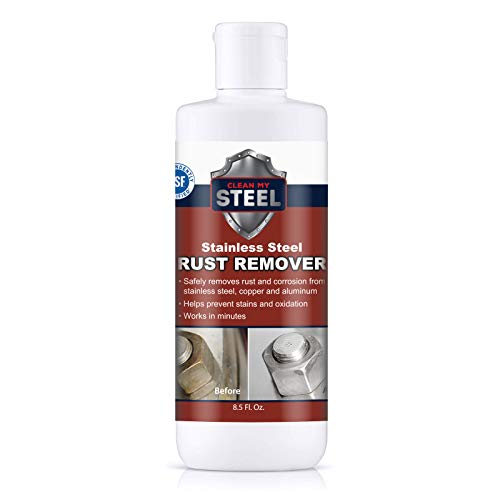
Catching corrosion in its earliest stages allows you to restore factory luster before permanent pitting takes hold. When light orange flecks or tea staining appear on exterior shelves, gentle chemical creams dissolve oxidation without scouring the metal. The CLEAN MY STEEL Stainless Steel Rust Remover Cream holds NSF Category A3 certification, making it safe for use around food prep areas and outdoor cooking equipment. Its smooth formulation lifts metal oxidation on contact, saving owners from aggressive scrubbing with harsh steel pads.
For vertical surfaces like grill hoods and tall cart side doors, runny sprays often slide downward before dissolving stubborn deposits. Using a clinging cream such as CLEAN MY STEEL Stainless Steel Rust Stain Remover allows active ingredients to penetrate targeted areas on vertical panels. Working the cream into the surface with a soft sponge along the grain line lifts flash corrosion and leaves a light protective barrier. Rinsing thoroughly with a damp microfiber cloth and drying the area immediately restores a clean appearance.
Liquid formulations like Rust Remover for Stainless Steel also provide rapid correction on flat shelves and exterior side burners. Letting the solution dwell for two to three minutes breaks the chemical bond between iron oxide and the underlying steel. Following dwell time with a clear water rinse and an immediate microfiber towel dry stops chemical residue from remaining on the panel. Routine spot treatment prevents minor seasonal discoloration from spreading across the entire appliance.
Critical Cautions for Coated Panels and Polishing Pads
Modern grill designs frequently incorporate specialized coatings, clear lacquer protectors, or printed control panel graphics. Products like comeast Stainless Steel Rust Remover Quickly specify that they are suitable exclusively for uncoated, raw stainless steel metals. If your outdoor appliance features a fingerprint-resistant clear coat or colored aesthetic finish, abrasive rust removers will strip that protective layer permanently. Damaging factory clear coats exposes raw metal beneath, leading to rapid, irreversible discoloration that cannot be buffed away.
Mechanical polishing kits requiring abrasive pads demand extreme caution during application. Coarser pads scrub away deep surface corrosion but leave temporary micro-scratches that require progressive fine-grit buffing to blend. Non-professionals can easily leave cloudy patches or uneven textures if pads are applied haphazardly against the factory brush lines. Always spot-test cleaners and polishing compounds in an inconspicuous lower corner, and keep chemical treatments completely clear of printed knob dials and burner labels.
Proper Grill Covers and Seasonal Storage Protection
While shielding outdoor cookers from rain is vital, improper covering practices frequently accelerate corrosion rather than preventing it. Inexpensive, non-breathable vinyl covers trap condensation against metal panels like a greenhouse on warm mornings. Trapped humidity combined with stagnant air creates an ideal environment for rapid flash oxidation along seams and fasteners. Select premium covers crafted from heavy, breathable polyester equipped with built-in mesh ventilation flaps.
Ensuring complete dryness before securing a grill cover is an essential maintenance habit. If unexpected rainfall dampens the cooker before you slide the cover into place, allow the metal to dry completely in the sun first. For built-in outdoor appliances installed inside custom BBQ island setups, ensure the surrounding countertop joints remain sealed with outdoor-rated silicone. Preventing rainwater from pooling beneath the grill chassis stops hidden moisture from rotting the lower body structure.
Managing Multi-Cooker Patios and Griddle Surfaces
Backyard chefs who manage diverse cooking setups face distinct maintenance challenges across different metal surfaces. For instance, owners operating griddle and smoker combo units must balance seasoned cold-rolled steel alongside polished stainless components. Carbon steel griddles require continuous oil seasoning coats to prevent rust, whereas stainless steel grill bodies require grease removal and clean airflow to maintain their passive film. Allowing cooking oil runoff from griddle plates to bake onto stainless panels creates gummy, heat-cured varnishes that attract corrosive moisture.
Separate your cleaning tools and maintenance compounds when switching between different cooking appliances. Never use greasy griddle scrapers or oil-soaked seasoning towels on exterior stainless steel panels. Keep a dedicated set of microfiber cloths and specialized stainless cleaners reserved solely for exterior hoods and cart assemblies. Maintaining clear tool boundaries prevents oily cross-contamination and ensures each metal surface receives its appropriate care routine.
Safe Outdoor Placement and Operational Boundaries
Proper grill placement protects your property while ensuring your cooking equipment operates in a dry, ventilated setting. Fuel-burning appliances, including propane, natural gas, charcoal, and pellet models, must never be operated inside a garage, shed, carport, or enclosed patio. Operating a grill in an enclosed area poses severe risks of deadly carbon monoxide poisoning and catastrophic structure fires. Opening a garage door or cracking a window does not provide sufficient ventilation to clear combustion byproducts or eliminate fire hazards.
Position your outdoor cooker on a flat, non-combustible surface located safely away from wooden deck rails, vinyl siding, and overhanging tree branches. Consult your manufacturer instruction manual for precise outdoor clearance distances and local fire regulations. Keeping your grill outside in a well-ventilated, shaded zone prevents excessive exposure to roof drip lines and lawn sprinklers. Storing fuel cylinders upright outdoors in a secure, shaded location keeps your cooking space safe while protecting your metal investment from avoidable moisture traps.
Consistent care transforms stainless steel grill maintenance from a daunting chore into a brief, rewarding post-cook habit. Promptly clearing food splatters, utilizing non-abrasive tools, and applying targeted cleaners preserves the self-healing chromium shield that keeps corrosion at bay. Selecting breathable covers and ensuring your cooker dries thoroughly after rain will keep panels shining bright across every outdoor season. With proactive care and attention to environmental hazards, your stainless cooker will deliver reliable performance and stunning backyard presentation for years of memorable gatherings.


Write Your Review
No reviews yet. Be the first to share your experience!