


Preparing a large cut of meat or whole bird often leads outdoor cooks to wonder how their kitchen bakeware handles direct fire. If you are asking yourself, can i put a roasting pan on the grill, the short answer is yes, provided you select the right pan material and manage your heat source correctly. Uncoated stainless steel, heavy cast iron, and enameled carbon steel perform wonderfully over indirect heat setups, while thin nonstick coatings require serious caution near intense flames. Adding flavorful smoke with accessories like dedicated smoker boxes can turn a simple roast into a wood-fired centerpiece while your cookware protects the drippings.
Grill setups allow cooks to roast everything from holiday turkeys to pork shoulders without crowding an indoor oven. Many backyard pitmasters like pairing hearty poultry or pork roasts with a tangy barbecue sauce glaze while keeping drippings contained for rich gravies. Success on gas or charcoal grates depends on maintaining an indirect heat zone, keeping grill lids closed to stabilize internal temperatures, and matching pan dimensions to your available grate space. Understanding which pan styles tolerate high heat helps you avoid warped metal or ruined nonstick surfaces during your next outdoor cook.




Using a Roasting Pan on the Grill: Complete Technique and Safety Guide
Putting a roasting pan directly onto grill grates is an effective method for preparing poultry, roasts, and vegetables outdoors. You can safely achieve oven-like results on a grill by establishing indirect heat and picking cookware suited for open-air cooking. Direct flames can quickly warp thin metal and destroy delicate nonstick coatings, making temperature regulation your primary concern. Understanding how various cookware materials handle outdoor grill heat helps protect your equipment while delivering juicy, flavorful meals.
How Pan Materials React to Outdoor Grill Heat
Stainless steel remains one of the most reliable cookware choices for outdoor barbecue grates. Heavy-duty options like the Cuisinart Chef’s Classic Roasting Pan w/Rack and the Tifanso Heavy Duty Stainless Steel Roasting Pan handle indirect ambient heat without degrading. Stainless steel contains no chemical coatings, so you do not need to worry about toxic fumes breaking down when temperatures rise. Although wood smoke can leave cosmetic amber stains on the metal, these surface marks do not harm structural integrity.
Cleaning stainless cookware after outdoor grilling usually requires only warm water, dish soap, and a non-abrasive sponge. Stubborn soot wipes away easily with baking soda paste without scratching the polished finish. Because stainless steel distributes heat evenly, it also lets you move the roaster directly onto indoor burners to simmer flavorful pan drippings into gravy. This versatility makes uncoated stainless steel an exceptional long-term pick for regular backyard roasting.
Cast iron provides remarkable durability when used across both charcoal and gas grates. Purpose-built designs like the Onlyfire Pre-Seasoned Universal Cast Iron Chicken roaster handle rugged outdoor conditions where lighter bakeware can warp. Cast iron absorbs heat slowly and radiates it steadily, which promotes thorough cooking for thick roasts and whole chickens. Its oiled seasoning creates a dependable, non-toxic cooking surface that strengthens with each successful meal.
Maintaining cast iron cookware requires minimal moisture exposure and prompt drying after each wash. Plunging a scorching hot cast iron roaster into cold dishwater can shock the metal and cause severe cracking. Heavy cast iron units also add significant weight to your grill grates, so confirm your cooking surface can support the combined load safely. Applying a light layer of neutral cooking oil after drying keeps the iron shielded against rust.
Enameled carbon steel provides strong heat resistance paired with a smooth, non-reactive glass barrier. Cookware such as the 13 Inch Small Roasting Pan with Lid and Rack uses a glazed enamel finish to shield food from bare metal. This smooth surface eliminates the need for synthetic nonstick chemicals while offering quick cleanup after roasting seasoned poultry or vegetables. Enamel holds up well to elevated oven temperatures, but direct flame contact can still cause localized surface damage.
You should protect enameled cookware from abrupt temperature swings to prevent the protective glaze from cracking. Let the pan cool naturally on a heat-safe surface before rinsing it with lukewarm water. Using silicone or wooden tools inside the roaster helps prevent metal scratches from marring the smooth basin over time. Enamel roasters that feature matching lids also trap moisture effectively, making them ideal for braising tougher meats outdoors.
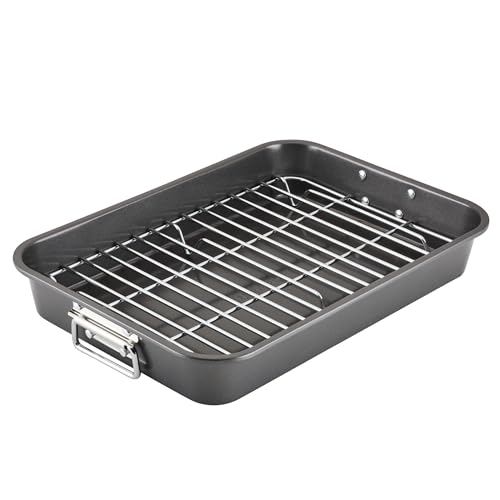
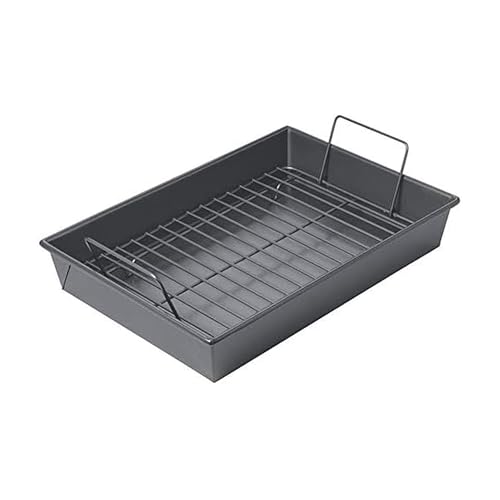
Nonstick coated roasting pans demand strict caution when used on outdoor grilling setups. Products such as the Glad Roasting Pan Nonstick 11×15, the Farberware Bakeware Nonstick Roaster, and the Chicago Metallic Roasting Pan with Rack feature nonstick layers designed primarily for kitchen ovens. The Glad roaster specifies a temperature limit of 464 degrees Fahrenheit and cautions against placing the pan over open flames. Smaller options like the Chicago Metallic Small Roasting Pan with Rack are rated for up to 450 degrees Fahrenheit.
Exceeding stated temperature ceilings can cause nonstick coatings to bubble, peel, or emit unwanted chemical vapors. Direct grease flare-ups beneath grill grates can surge past 600 degrees Fahrenheit in moments, permanently damaging fragile nonstick layers. If you choose to use nonstick bakeware on a grill, keep the pan strictly isolated within a low-temperature indirect heat zone. Checking your grill dome thermometer frequently ensures your cooking environment stays comfortably below manufacturer temperature limits.
Setting Up Indirect Heat on Gas, Charcoal, and Pellet Grills
Gas grill owners can create a dependable roasting zone by lighting the outer burners while keeping the central burners unlit. Position your roasting pan directly over the cold center grates, then close the grill hood to let convection air currents do the work. Adjust burner valves until the internal cookbox thermometer stabilizes between 300 and 350 degrees Fahrenheit. This two-zone configuration roasts whole chickens, pork loins, and beef joints evenly without scorching pan bottoms.
Charcoal grills require banking all hot coals to one side of the lower grate to form separate direct and indirect zones. You can position an empty foil drip tray beneath the cool zone to collect stray drippings before placing your roaster on the grates above. Keep lower and upper air dampers partially open to maintain steady oxygen flow without spiking temperatures. This airflow control maintains a gentle, predictable roasting heat across several hours of cooking.
Pellet grills function naturally as outdoor convection ovens because metal heat diffuser plates shield the grates from open flame. For extended roasting cooks with large turkeys or briskets, outdoor pitmasters often install pellet hopper extension kits to maintain an uninterrupted fuel supply across many hours. Simply place your roasting pan in the center of the cooking grate and program your digital controller to the target temperature. The constant fan draft circulates clean wood smoke evenly around your roaster.
Managing Airflow, Pan Clearance, and Lid Closure
Clearance is a critical factor to verify before setting any large roasting pan onto your grill grates. Cookware measuring 15 or 16 inches, such as the Cuisinart Chef’s Classic or Glad 11×15 roasters, requires ample cooking chamber space. External handles often add several inches to rim dimensions, which might hit the interior firebox or prevent the grill lid from shutting. Always test-fit your roaster on cold grates with the grill hood fully closed before igniting any burners.
Maintaining open space around your cookware ensures consistent convective heat flow and uniform browning. If a roasting pan occupies the entire grate area, it blocks vertical draft currents and disrupts heat circulation. Leave at least one to two inches of clearance between the pan edges and the grill walls. This gap allows hot air to move freely beneath the closed hood, browning the top of your meat while keeping firebox heat balanced.
Elevating Meat with Roasting Racks and Liquid Management
Elevating large cuts of meat above the bottom of the pan is vital for achieving crisp exterior skin. Roasting pans equipped with removable wire racks, like the Farberware Nonstick Roaster or Tifanso Stainless Roaster, allow hot air to reach the underside of your food. Suspending meat above the pan basin prevents the lower half from simmering in rendered juices. Racks with built-in handles also make lifting heavy roasts out of hot pans much safer.
Adding a shallow layer of broth, wine, or water to the pan basin regulates bottom temperatures and curtails fat splatters. Maintaining half an inch of liquid in the base keeps dripping fat from burning against hot metal surfaces. As the liquid slowly simmers, it releases gentle humidity inside the grill hood while capturing drippings for savory gravy. Check fluid levels periodically throughout longer sessions and top them off if the pan runs dry.
Infusing pan liquids with aromatics and seasonings imparts delicious flavor into the meat and surrounding juices. You can introduce herbs, sliced onions, or marinades inspired by Korean beef barbecue traditions to enrich your roasting base. The rising steam blends with ambient wood smoke, softening tough meat fibers while keeping drippings from charring. Once cooking concludes, strain the collected pan drippings through a fine mesh sieve to craft silky finishing sauces.
Preventing Flare-Ups, Grease Fires, and Outdoor Cookware Damage
Grease fires represent a major hazard when roasting fatty cuts of meat on outdoor barbecues. Without a pan, rendered pork or poultry fat drops onto flavorizer bars or live coals, producing sudden flare-ups. A solid roasting pan catches these hot drippings, serving as a protective shield between flammable grease and grill flames. However, allowing grease to pool excessively can still trigger fires if flames brush past the outer pan rim.
Using a roasting pan with deep sidewalls between two and three inches helps contain boiling liquids and prevent accidental spills. Sturdy riveted side handles provide a secure grip, but they absorb intense heat during prolonged cooks. Always wear heavy-duty insulated barbecue gloves when adjusting or removing hot cookware from the grill grates. Map out a clear path to a heat-resistant side table or metal trivet before lifting a loaded roaster from the grill.
Cleaning and Maintaining Roasting Pans After Outdoor Cooking
Outdoor grilling exposes cookware to heavy smoke, soot, and baked-on fat that indoor ovens rarely generate. Stainless steel pans frequently develop dark amber smoke stains on their exterior bases during wood-fired cooking. These discoloration marks are purely cosmetic and do not reduce the structural integrity of the metal. Soaking the cooled pan in hot soapy water loosens stubborn grease before you use a soft sponge to wipe the basin clean.
Nonstick pans require careful washing techniques to avoid scratching delicate synthetic coatings. Avoid wire brushes, harsh scouring powders, or steel wool pads on nonstick models like the Glad or Chicago Metallic roasters. Soak the pan in warm water with mild dish soap, then wipe the surface gently with a soft sponge. Always dry nonstick bakeware thoroughly with a dish towel before storing it away.
Cast iron roasting equipment needs specialized attention to keep its seasoned coating intact. After your cast iron chicken roaster cools, scrub away food bits using warm water and a stiff nylon brush without aggressive soaps. Dry the cast iron immediately over a warm burner or grill grate to eliminate all lingering moisture. Rubbing a light drop of neutral cooking oil over the metal preserves its dark, rust-resistant finish.
Practical Takeaways for Grilling with a Roasting Pan
Roasting pans provide a wonderful way to cook tender, succulent meats while enjoying the benefits of outdoor grilling. The most dependable results come from selecting durable uncoated stainless steel, enameled steel, or cast iron instead of heat-sensitive nonstick bakeware. Always set up an indirect heat zone on gas or charcoal grills to shield the bottom of your pan from direct fire. Measuring your grill hood clearance before starting guarantees that your roaster and lid fit comfortably with room for steady airflow.
Food safety remains the ultimate benchmark for any outdoor roasting session across gas, charcoal, or pellet grills. Never rely purely on elapsed cooking time to decide when poultry, pork, or beef has finished roasting. Insert an accurate digital meat thermometer into the thickest part of the cut to verify safe internal temperatures before serving. Balancing proper cookware materials, indirect temperature control, and accurate internal temperature checks ensures your grilled roasts turn out tender, flavorful, and safe.




Write Your Review
No reviews yet. Be the first to share your experience!