


Unboxing a shiny new barbecue or opening replacement cooking grids brings excitement, but placing food directly onto fresh metal can ruin an outdoor dinner. Factory manufacturing leaves behind protective machine oils, metal dust, and industrial residues that transfer harsh odors to food if not thoroughly removed. Learning how to treat new grill grates prepares your cooking surface for steady heat, creates a slick barrier against sticking, and prevents premature surface rust. Taking the time to wash and season your grids before your first cookout sets the foundation for years of dependable grilling.
Different grate materials require distinct initial care routines, meaning cast iron, porcelain-enameled steel, and stainless steel cannot be handled identically. Raw cast iron demands careful oil seasoning to build a hydrophobic polymer layer, while stainless steel benefits from an initial burn-off and a light oil wipe to minimize protein adherence. Cooks preparing setups for everything from quick weeknight burgers to slow cooking with wood smoker box options will notice an immediate difference in heat conduction and cleanup speed. Following a disciplined preparation routine ensures a clean, non-toxic surface ready to deliver crisp sear marks every time.


Pros
- Solid stainless steel build provides practical corrosion resistance compared to chipped porcelain or rusted iron
- Includes two modular sections that combine for a 16 1/2 by 22 3/4 inch total cooking area
- Broad compatibility across numerous Kenmore, Vermont Castings, Hamilton Beach, and ProChef grill models
- Straightforward maintenance with no pre-seasoning required compared to bare cast iron
Cons
- Requires precise measuring of existing grill boxes and old grates prior to ordering to avoid fit issues
- Lacks interlocking tabs, requiring stable ledge support inside the grill firebox
The Htanch SF8252 replacement cooking grate set is a dedicated two-piece grilling surface engineered to fit specific gas grill models from brands like Vermont Castings, Kenmore, ProChef, and Hamilton Beach. For backyard grillers dealing with pitted, flaking, or corroded original grids, this pair provides a practical refresh. It caters directly to homeowners and outdoor cooking enthusiasts who want to revive an existing outdoor cooker rather than spend significantly more money replacing the entire barbecue station.
In everyday outdoor cooking scenarios, stainless steel grids deliver dependable heat transfer for staples like burgers, hot dogs, chicken breasts, and sliced vegetables. The rod layout allows direct heat from the burners below to interact cleanly with food, helping achieve classic sear marks when the grill is properly preheated. Because the set splits into two separate 16 1/2-inch by 11 3/8-inch sections, it supports standard dual-zone cooking setups, allowing you to manage searing on one side while holding items over indirect heat on the other.
Built from stainless steel, these replacement grates provide durable structural integrity designed to withstand high outdoor cooking temperatures. Unlike porcelain-coated steel wire which can chip over time, or untreated cast iron that demands continuous oiling to prevent rust, stainless steel provides resilient day-to-day operation. The welded rod structure creates a rigid cooking platform that supports heavier cuts of meat, cast-iron skillets, or loaded vegetable baskets without sagging under regular backyard use.
Installation requires zero tools; users simply lift out the degraded cooking grids and set these two sections directly onto the internal firebox ledges. Daily maintenance is similarly low effort. After cooking, a warm grill brush or nylon scraper cleans the smooth stainless surfaces without requiring the delicate handling needed for seasoned iron. For deeper seasonal cleaning, the individual sections are compact enough to be soaked in a utility sink or washed down with warm water and degreasing soap.
While compatibility spans a long list of Kenmore, Vermont Castings, and ProChef models, proper fit relies entirely on exact cookbox dimensions. Grill manufacturers frequently altered internal dimensions across model years, so relying solely on model numbers can occasionally lead to mismatched sizing. Backyard cooks must take careful measurements of their current firebox ledges or original grates before purchasing to ensure the 16 1/2 by 22 3/4 inch total footprint sits flush without sliding.
If your current grill body and burners remain in solid working order but the cooking surfaces have deteriorated, this Htanch two-pack offers an efficient, budget-conscious solution. It delivers reliable stainless steel durability, straightforward cleanup, and immediate renewal of your cooking surface for family weeknight grilling and weekend gatherings.
Crafted from welded stainless steel rods, the Htanch SF8252 grids are structured to handle everyday outdoor cooking demands. The rigid construction supports heavy cuts of meat and cookware without bending, while the stainless material naturally resists the moisture and grease common to gas grill cookboxes.
Compared to porcelain-enameled steel surfaces that can crack and expose bare metal to oxidation, bare stainless steel provides consistent structural performance over multiple seasons of backyard cooking.
Maintaining stainless steel cooking grates is considerably easier than caring for traditional cast iron, as they do not require regular oil seasoning cycles to prevent deterioration. Routine post-cooking cleanings with a standard wire or bristle-free grill brush while the grates remain warm will dislodge grease and food residue efficiently.
Because the set is split into two manageable panels measuring 16 1/2 by 11 3/8 inches each, removing them for thorough soaking or seasonal scrubbing in a utility sink requires minimal effort.
Pros
- Excellent heat retention and even heat distribution across the cooking surface.
- Removable inner grate simplifies charcoal management during long cooks.
- Sturdy cast iron build withstands high heat and heavy use.
- Easy to clean with a grill brush after seasoning – nonstick surface develops over time.
- Compatible with popular Weber kettle models – no modifications needed.
Cons
- Heavier than standard steel grates – adds about 8 pounds to your grill setup.
- Cast iron requires regular seasoning to prevent rust; not as low-maintenance as stainless steel.
- Some users may prefer a single large grate for extra cooking space – the inner grate reduces usable area slightly.
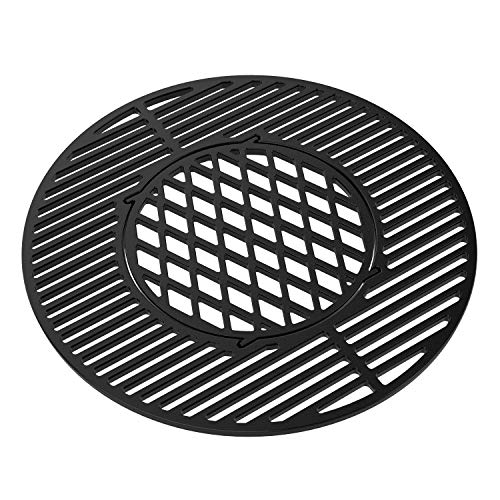
The onlyfire Cast Iron Grill Grate Replacement is a functional upgrade for anyone who owns a Weber 22-inch kettle charcoal grill. Instead of a single piece, this set includes a 21.5-inch outer grate with a removable 11.8-inch inner sear grate. This design lets you access the charcoal without lifting the whole cooking surface – a real convenience when you need to add more briquettes or wood chunks during a long smoking session.
This grate is built for backyard grillers who value heat retention and searing performance. Cast iron holds heat far better than standard steel grates, meaning less temperature fluctuation when you open the lid. Whether you're searing steaks hot and fast or slow-cooking ribs over indirect heat, the even heat distribution helps avoid cold spots. The inner grate is perfect for adding a quick sear after a low-and-slow cook, giving you that crusty bark on brisket or a perfect char on burgers.
Durability is a strong point. Cast iron is heavy – about 8 pounds total – but it resists warping even under high heat. With proper seasoning, it develops a natural nonstick surface that improves over time. Cleanup is straightforward: scrape off residue with a grill brush and oil lightly after each use. Rust can form if left wet, so store the grate in a dry place or cover your grill.
Installation is effortless – just drop it onto the existing grate support tabs in your Weber 22.5-inch Kettle, Premium, or Performer. The inner grate's raised side handles give you a secure grip, even with thick gloves. That said, the two-piece design means you lose a few square inches of cooking space compared to a single full-size grate. For most backyard gatherings, it's not an issue – you still have room for a dozen burgers or two large steaks.
This replacement grate is ideal for weekend BBQ enthusiasts who want better control over their charcoal cooks. It's also handy for tailgating setups if you use a kettle grill at the parking lot – the removable inner grate makes adding fuel fast. Campers who bring a charcoal kettle to the campsite will appreciate the even heat for roasting or searing. Just remember to pack a dry bag to keep the cast iron protected from moisture.
Overall, the onlyfire Cast Iron Grill Grate Replacement delivers real performance improvements for Weber kettle owners. If you like searing with cast iron and want easier access to your charcoal during long cooks, this is a solid, affordable upgrade.
The cast iron construction excels at heat retention, meaning the grate stays hot even after adding cold food. This gives you consistent sear marks and prevents the temperature from dropping too much when you load up the grill. The inner sear grate's smaller openings concentrate heat directly on the meat, creating a crusty exterior while keeping the inside juicy. For low-and-slow cooking, the outer grate works well for indirect heat – place the coals on one side and the food on the other. You can also move the inner grate to a cooler zone for gentle finishing. Overall, this grate system improves both high-heat searing and temperature stability.
Cast iron requires a bit more care than stainless steel, but it's simple once you get into the habit. After grilling, let the grate cool slightly, then scrub it with a stiff grill brush while still warm. Avoid soap – just hot water if needed, but drying thoroughly is crucial to prevent rust. Apply a thin coat of vegetable oil to the surface before storing. Over time, the seasoning builds up, creating a natural nonstick finish. The two-piece design makes cleaning easier – you can remove the inner grate and scrub it separately. Keep the grate in a dry place, and it will last for years.
Pros
- Heavy-duty stainless steel resists rust and warping even with frequent outdoor use
- Enhanced airflow lets you reach high heat faster and maintain steady low temps for smoking
- Easy to clean – food releases easily and ash falls through the open grate design
- Lightweight and compact, perfect for portable grilling on the go
- Direct fit for multiple Weber Go-Anywhere models, no modification needed
Cons
- Only compatible with specific Weber Go-Anywhere models – measure your grill before ordering
- Stainless steel may not retain heat as well as cast iron, so searing might require slightly more fuel
- No carry case or storage bag included for transport
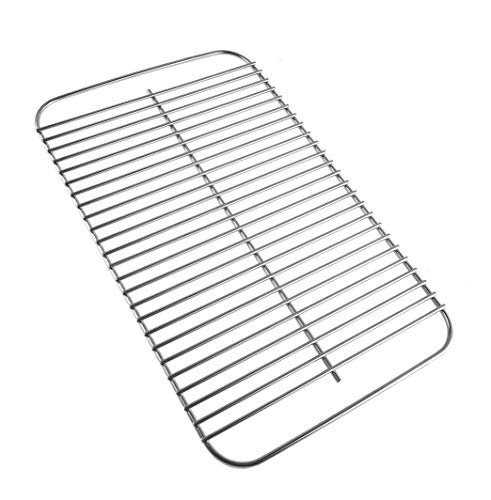
If you own a Weber Go-Anywhere charcoal or gas grill and are tired of dealing with a rusty, clogged cast iron grate, the EasiBBQ stainless steel replacement is worth a serious look. This grate is designed to drop right into your existing grill with no hassle, and it brings a few practical upgrades that make outdoor cooking more enjoyable. Whether you're tailgating before a game, cooking burgers at a campsite, or just grilling on the patio, this grate aims to improve your experience.
The biggest advantage here is the airflow. The open stainless steel design allows oxygen to reach the charcoal much more freely than the original cast iron grate. That means you can get your coals glowing hot in less time, and holding a consistent temperature for low-and-slow cooking or high-heat searing becomes easier. For backyard cooks who like to switch between grilling steaks and smoking ribs, that kind of flexibility matters. The grate also helps prevent ash buildup, so you spend less time cleaning and more time cooking.
Durability is another strong point. Stainless steel resists rust far better than cast iron, especially if you leave your grill outside between uses. The grate measures 16 by 10 inches, giving you enough room for a few burgers, chicken thighs, or veggies. It's lightweight at under two pounds, which makes it a breeze to carry along for camping trips or RV weekends. You can toss it in the trunk without worrying about added weight or breakage.
Cleaning is honestly one of the best parts. Food doesn't stick like it does on some porcelain grates, and the open slots let ash and grease fall straight through. A quick scrape with a grill brush after cooking, and you're done. No need for soaking or scrubbing. That's a real time-saver when you're at a crowded tailgate or trying to pack up camp after a meal.
There are a couple of things to keep in mind. First, make sure your grill is one of the compatible Weber Go-Anywhere models before ordering. This grate won't fit every portable grill. Also, stainless steel doesn't hold heat the way cast iron does, so if you're used to that heavy heat retention, you might notice you need to add a few more coals to get the same searing power. That said, the airflow compensates fairly well, and most users will find the trade-off acceptable for the easier maintenance and portability.
Overall, this EasiBBQ grate is a smart upgrade for anyone who uses a Weber Go-Anywhere grill regularly. It's affordable, practical, and built for real-world outdoor cooking. Campers, tailgaters, and backyard grillers alike will appreciate the better heat control, faster startup, and effortless cleanup. If you're looking to breathe new life into your portable grill, this is a solid choice.
The open stainless steel design of this grate significantly improves airflow compared to the original cast iron grate. You'll notice your charcoal lights faster and burns more evenly, which means less waiting around and more consistent cooking. High-heat searing is achievable with a full chimney of coals, and you can also dial it back for low-and-slow smoking by controlling the grill vents. The grate distributes heat well across its surface, so burgers and chicken cook evenly without hot spots. For gas grill users, the improved airflow also helps with flame stability and reduces flare-ups from grease drips.

Pros
- Provides excellent heat retention for searing burgers and steaks
- Portable and lightweight, ideal for camping, RV trips, and tailgating
- Easy to clean with a simple wipe-down after cooking
- Versatile cooking surface works for breakfast, lunch, and dinner outdoors
Cons
- May require a learning curve for precise temperature control on windy days
- Not ideal for low-and-slow smoking due to flat top design
- Can be heavy for some users to carry long distances
This flat top griddle is a solid addition to any outdoor cooking setup, whether you're a backyard BBQ enthusiast or a weekend camper. It's built for versatility, letting you sear steaks, fry eggs, or grill veggies on a single, even-heat surface. The griddle's design focuses on practical outdoor use, from patio parties to campsite breakfasts.
Who should buy this? If you love tailgating or RV trips, this portable griddle is a no-brainer. Its compact size fits easily in a car trunk or camper storage, and the flat top means you can cook everything from pancakes to stir-fry without needing multiple pans. Backyard cooks will appreciate the large cooking area for feeding a crowd.
In real-world use, the heat distribution is impressively even across the surface, which helps avoid hot spots that can burn food. Searing burgers or steaks gives a nice crust, though achieving a deep smoke flavor is tricky since it's not a smoker or pellet grill. Temperature control is straightforward with the burner knob, but wind can affect performance, so a wind guard helps on breezy days.
Build quality is decent for the price. The griddle surface feels sturdy and resists rust with proper care, but it's not heavy-duty cast iron. The legs fold for transport, and the grease tray slides out for easy cleanup. Wheels would be a plus for moving it around a patio, but it's light enough to carry short distances.
Setting up is quick: unfold the legs, connect a propane tank, and you're cooking in minutes. Cleanup is simple too—scrape off residue and wipe with a paper towel. The main limitation is that it's not meant for low-and-slow cooking or smoking; it's a griddle for high-heat, fast cooking. Also, the cooking surface can get scratched if you use metal utensils, so stick with plastic or wood.
Overall, this flat top griddle is a practical choice for outdoor cooks who want a portable, easy-to-clean cooking surface for everyday meals or gatherings. It's not a replacement for a smoker or charcoal grill, but it excels at quick, versatile cooking. If you need a reliable griddle for camping, tailgating, or patio use, this one delivers solid performance.
This griddle heats up quickly and maintains a steady temperature across the entire surface, making it reliable for cooking multiple items at once. The even heat helps you get consistent browning on pancakes or a nice sear on burgers. It handles high heat well for fast grilling, but you'll want to keep an eye on it in windy conditions to avoid temperature swings.


Pros
- Excellent heat retention for consistent searing and even cooking
- Direct fit for many CharGriller and King Griller models, no modification needed
- Sturdy cast iron construction that holds up to high heat and heavy use
- Four-piece design offers flexibility for two-zone cooking or easy removal
Cons
- Cast iron is heavy, adding significant weight to the grill grates
- Requires seasoning and careful cleaning to prevent rust, especially in humid climates
- Some users may need to confirm exact measurements, as fit can vary slightly between models
If you own a CharGriller or King Griller gas grill and the original cooking grates are showing their age, the Votenli C6505A 4-pack of cast iron cooking grids is a practical replacement option. These grates are designed to fit a wide range of models, including the CharGriller 2121, 2123, 2222, 2828, 3001, 3008, 3030, 3725, 4000, 4208, 5050, 5072, 5252, 9020, and King Griller 3008 and 5252. Each grate measures 19 3/4 inches by 6 3/4 inches, and the set covers a total cooking area of 19 3/4 by 27 inches, giving you plenty of space for burgers, steaks, chicken, and veggies for a backyard party or tailgate.
Cast iron is a favorite among BBQ enthusiasts because it holds heat like nothing else. These grates get hot and stay hot, which means you get a solid sear on steaks and burgers without the grill temperature dropping when you load up the cooking surface. For weekend grillers who want that restaurant-quality char, this is a big plus. The heat retention also helps with even cooking across the entire grate, so you won't get hot spots that burn one side of your food while the other side stays undercooked.
Installation is straightforward. These grates are a direct replacement for the listed models, so you just pull out the old ones and drop these in. No tools or modifications needed. The weight is worth noting though. At about 16.7 pounds for the set, they are noticeably heavier than standard steel or porcelain-coated grates. That extra heft is what gives them their thermal mass, but it can make handling a bit more cumbersome, especially when you're cleaning them after a cook.
Durability is where cast iron shines, but it also demands a bit of care. These grates are built to last, resisting warping even under high heat. However, they are prone to rust if left exposed to moisture. After each use, you should scrape off any residue with a grill brush and then apply a light coat of oil to keep them seasoned. If you live in a humid area or store your grill outside, you might need to bring the grates indoors during rainy seasons. It's a small trade-off for the cooking performance they deliver.
One realistic limitation is the potential for breakage during shipping. Cast iron is brittle, and the manufacturer warns that the grids may be fragile in transit. When your package arrives, unpack and inspect each grate carefully. If any are cracked or broken, contact the seller right away. Also, double-check your grill model and the measurements before ordering. While the fit is compatible with many models, it's always smart to confirm that your specific grill uses grates of this size.
Overall, the Votenli cast iron cooking grid set is a solid choice for backyard grillers who want to revive an older CharGriller or King Griller gas grill. You get the heat retention and searing power of cast iron without the cost of a new grill. If you're willing to put in a little maintenance to keep them seasoned and rust-free, these grates will serve you well for many cookouts. For tailgaters and patio cooks who value performance over convenience, this is a practical upgrade.
Cast iron grates are known for their ability to hold and radiate heat evenly, and the Votenli set delivers on that promise. When you preheat your grill, these grates get hot fast and maintain that temperature even when you add cold food. This means better sear marks on steaks and burgers, and more even cooking across the whole surface. The four-piece design also allows you to set up two-zone cooking: you can pile coals or turn on burners on one side for direct high heat, while the other side stays cooler for indirect cooking. This is great for thicker cuts like chicken breasts or pork chops that need to cook through without burning on the outside.
Cast iron is built to last, but it does require some upkeep. These grates are heavy and sturdy, and they won't warp or bend under normal grilling temperatures. The main thing to watch for is rust. After each use, clean off any food residue with a grill brush while the grates are still warm. Then apply a thin layer of cooking oil to keep them seasoned. If you store your grill outside, consider covering it or bringing the grates indoors during wet weather. With proper care, these grates can outlast your grill. The manufacturer also recommends careful unpacking, as cast iron can crack if dropped or handled roughly during shipping.
These grates are ideal for backyard grillers who already own a compatible CharGriller or King Griller gas grill and want to upgrade the cooking surface without buying a new grill. They work great for weekend BBQs, tailgating, and patio cooking where you want high heat for searing. The large surface area can handle enough burgers or chicken for a family gathering or small party. If you're into low-and-slow smoking, these grates will hold heat well for indirect cooking, but remember that they are designed for gas grills, not dedicated smokers. For campers or RV owners, the weight might be a drawback, but if you have a portable gas grill that fits these dimensions, they can still be a good option for campsite cooking.
Pros
- Excellent heat retention for consistent grilling results on steaks, burgers, and veggies
- Durable cast iron with porcelain coating provides rust resistance and easy maintenance
- Universal fit adjusts easily to most grills without tools, saving setup time
Cons
- At over 6.5 pounds, it's heavy for backpacking or frequent transport
- Porcelain coating can chip if dropped or scraped against metal surfaces
- Only 7.75 inches deep, which may be too narrow for larger grills with wide cooking chambers
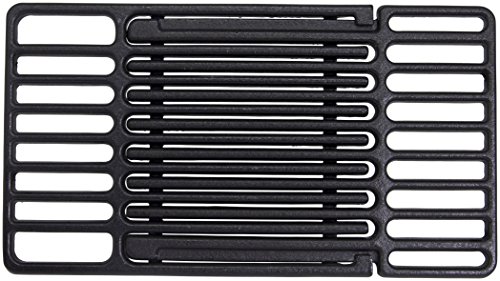
This Char-Broil Universal Cast Iron Grate is a replacement or upgrade grate designed for a wide range of outdoor cooking equipment. It's perfect for backyard grillers, campers, tailgaters, and RV owners who want better heat retention and searing performance from their existing gas or charcoal grill. The adjustable width lets it fit grills from 14 to 19.5 inches across, so it can revive an old kettle or upgrade a portable tailgating setup.
When it comes to real-world cooking performance, this grate shines. Cast iron holds heat like no other material, giving you steady, even temperatures across the cooking surface. That means perfect sear marks on steaks, even browning for burgers, and consistent heat for veggies. The grate gets hot quickly and stays hot even when you load it with food, which helps reduce temperature drops when cooking for a crowd. It also works great for low-and-slow smoking setups on charcoal grills, as the cast iron absorbs and radiates heat gently.
Build quality is solid. The grate is made from heavy-duty cast iron with a porcelain coating that resists rust and makes cleaning easier than bare cast iron. The coating is smooth, so food releases well and you can wipe it down with a stiff brush after grilling. Weights just over six and a half pounds, so it feels sturdy on the grill grates. The adjustable design uses simple sliding brackets, so you can set it to the exact width needed without any tools.
Setup is straightforward: just adjust the two ends to match your grill's side rails and drop it in place. For cleanup, let it cool, then scrub with a wire brush or scrape off residue. The porcelain coating helps prevent sticking and rust, but you should still dry it thoroughly after washing. It stores easily in a garage or shed, though its weight means you probably won't take it on backpacking trips. For car camping, tailgating, or patio cooking, it's a breeze to carry from the car to the campsite or tailgate lot.
Realistic limitations include the weight and the coating's durability. If you drop the grate on concrete or scrape it aggressively with metal tools, the porcelain can chip, exposing the bare iron underneath. That can lead to rust over time if not dried and oiled. Also, the grate is only 7.75 inches deep, which might be a bit narrow for extra-wide grills or for cooking large quantities of food at once. For most standard backyard grills and camp stoves, it fits well.
Overall, this is a practical upgrade for anyone who uses a gas or charcoal grill and wants better heat performance without buying a whole new grill. Backyard cooks will appreciate the even cooking and easy cleanup. Campers and tailgaters will like the universal fit and sturdy build. Just handle it with care to avoid chipping the coating. If you're looking to improve your grilling game for weekend BBQs or campsite meals, this grate is a solid choice.
Cast iron grates are known for superior heat retention, and this Char-Broil model delivers exactly that. It heats up quickly and maintains steady temperatures even when you flip multiple burgers or steaks at once. The surface gets hot enough for a strong sear, locking in juices and creating those desirable grill marks. For charcoal setups, the cast iron absorbs radiant heat and helps manage flare-ups by distributing heat evenly across the cooking area. For gas grills, it enhances the recovery time after opening the lid. Whether you're doing fast grilling for a crowd or slow cooking ribs with indirect heat, this grate performs consistently.
Essential Guide to Treating and Seasoning New Grill Grates
Treating new cooking surfaces before exposing them to food is an indispensable part of grill ownership. Factory packaging protects metals from humidity during shipping and storage, but those protective oils cannot come into contact with dinner. A proper treatment routine removes chemical films, cures bare metals, and establishes a durable barrier that repels water and prevents meat from sticking. Whether you are firing up a brand-new cooker or installing replacement parts, completing this initial seasoning cycle ensures dependable results across every backyard cookout.
Why New Grill Grates Require Treatment Before First Use
Freshly manufactured grill components pass through metal presses, industrial cutting machinery, and assembly lines before they arrive on your patio. Manufacturers coat metal parts with light mineral oils or rust inhibitors to stop oxidation inside shipping boxes. If you heat these parts with food on top, those chemical coatings volatilize directly into your ingredients, imparting bitter tastes and unpleasant aromas. Washing and thoroughly heating new grids clears away these unwanted industrial residues before any meat touches the metal. Beyond cleanliness, treating new metal creates an essential protective foundation that shields the grate from outdoor weather.
Microscopic pores and imperfections cover bare metals, giving moisture and salty marinades easy access to raw iron or steel. Heat-polymerized cooking oils fill these tiny voids, forming a slick, glassy coating that resists water infiltration. This simple initial step stops surface rust before it starts and keeps delicate foods like fish and chicken from tearing apart during cooking. Taking time to treat your cooking grids protects your equipment investment while safeguarding the flavor of your food.
Identifying Your Grate Material: Cast Iron, Stainless Steel, and Porcelain Enamel
Determining the exact metal composition of your grids dictates the precise cleaning and heating procedure you must follow. Raw cast iron grids, such as the inner sear insert of the onlyfire Cast Iron Grill Grate Replacement Gourmet, possess unmatched thermal retention. Cast iron features a rough, porous texture that requires repeated oil seasoning to build rust resistance and nonstick performance. Without a continuous oil treatment, exposed cast iron oxidizes rapidly when exposed to humidity and outdoor air.
Stainless steel grids present a smooth, silver appearance and deliver exceptional resistance against outdoor corrosion. Replacement options like the Htanch SF8252 (2-Pack) 16 1/2″ Stainless Steel grids or the compact EasiBBQ 80631 Stainless Steel Grill Grate do not require traditional deep seasoning because chromium naturally prevents rust. Porcelain-coated options, such as the Outdoor Bazaar 3-Pack Adjustable Cooking Grates and the Direct store Parts DC115 Porcelain Coated Cast iron set, feature a glossy ceramic glaze over metal. Knowing which material sits in your grill prevents using improper cleaners or excessive heat that could damage protective finishes.
Step One: Washing Away Factory Oils and Manufacturing Residue
Every set of replacement cooking grids must undergo a thorough manual wash before installation in the firebox. Prepare a sink or large utility basin with warm water and mild liquid dish soap. Use a soft sponge, microfiber cloth, or non-abrasive dish brush to scrub every side of the bars. Avoid using steel wool, coarse abrasive pads, or wire brushes, especially on glossy finishes or brand-new stainless steel.
Scrubbing with warm soapy water lifts shipping oils, packaging dust, and stray metal shavings from the factory. Rinse each grid thoroughly with clean warm water until all soap bubbles vanish completely from the surface. Drying the grids completely is a mandatory preservation step, particularly for cast iron parts like the Votenli C6505A(4-Pack) 19 3/4″ Cast Iron Cooking grates. Water left on raw metal triggers immediate flash rust within minutes of exposure to air, so wipe each piece thoroughly with clean lint-free towels.
Step Two: Performing the Initial High-Heat Burn-Off
Once your grids are washed, rinsed, and dried, they must endure a controlled high-temperature burn-off. Place the cleaned grates directly into your outdoor barbecue and ignite the burners or light your charcoal. Close the grill lid and bring the internal temperature up to roughly four hundred to four hundred and fifty degrees Fahrenheit. Allow the heat to build steadily rather than pushing the grill to its absolute maximum limit immediately.
Let the grill run at this temperature for approximately twenty to thirty minutes. You will likely observe thin wisps of smoke rising from the exhaust vents as microscopic residues vaporize into the air. This thermal purge burns off volatile organic compounds, shipping lubricants, and moisture trapped inside the metal pores. Turn off your burners after thirty minutes and let the grill cool naturally until the grids are warm but safe to touch with heat-resistant gloves.
Step Three: Choosing the Right High Smoke Point Oil
Selecting an appropriate cooking oil is the cornerstone of building a resilient, nonstick polymer barrier on your grids. Oils with high smoke points withstand intense grilling temperatures without breaking down into acrid, carbonized ash. Canola oil, refined peanut oil, grapeseed oil, and vegetable shortening represent practical choices with smoke points exceeding four hundred degrees Fahrenheit. Canola oil remains popular due to its wide availability, neutral scent, and balanced fatty acid profile that cures cleanly under heat.
Avoid using extra virgin olive oil, unrefined coconut oil, or butter during the initial treatment cycle. These lower smoke point fats break down rapidly below three hundred and fifty degrees Fahrenheit, creating sticky, rancid residues rather than a slick shield. Aerosol nonstick cooking sprays should also be avoided on warm grills because aerosol propellants create serious flare-up hazards. Stick to pure liquid oils poured into a small bowl and applied with a folded cotton cloth or paper towel.
Step Four: The Heat Polymerization Process for Cast Iron
Transforming wet cooking oil into a hard nonstick patina requires chemical polymerization driven by heat. Dip a folded paper towel into your oil and wipe a paper-thin sheen across all surfaces of your cast iron grates. Place the oiled grates back into the grill chamber and close the lid tightly. Reignite your gas burners or adjust your charcoal damper to hold an ambient temperature around four hundred degrees Fahrenheit.
Maintain this steady heat for forty to sixty minutes without opening the grill lid unnecessarily. At this temperature, the fatty acids in the oil oxidize and cross-bind directly with the iron, forming a hard, insoluble polymer finish. Shut off the heat source once the hour ends and let the grill cool completely to ambient outdoor temperature. Cooking high-fat cuts like juicy Korean barbecue dishes during your first few sessions will naturally reinforce this seasoning patina with clean rendered fats.
Conditioning Stainless Steel and Porcelain-Coated Surfaces
Stainless steel grids do not absorb oil like cast iron, but they still benefit from an initial conditioning cycle. Fresh stainless steel rods often present micro-abrasions that grip meat proteins during high-heat searing. After washing and completing the burn-off, wipe the warm stainless steel with a light coat of high-smoke oil and heat the grill to three hundred and fifty degrees for fifteen minutes. This quick step conditions the metal surface so spatulas glide smoothly under delicate burgers and chicken breasts.
Porcelain-enameled surfaces, like the Char-Broil Universal Cast Iron Grate, feature a non-porous glass glaze that already seals the core against rust. Attempting to bake a thick polymerized seasoning layer onto porcelain is unnecessary because the oil cannot bond with glass. Simply wash new porcelain grates gently, perform a brief twenty-minute burn-off at moderate heat, and apply a light wipe of oil immediately before preheating for food. Avoid using abrasive steel tools on porcelain surfaces, as cracked or chipped enamel exposes the base iron to moisture.
Common Mistakes That Damage Fresh Cooking Grids
Many cooks inadvertently degrade brand-new cooking surfaces by using excessive quantities of oil during initial seasoning. Slathering thick pools of grease over the grates prevents air from circulating evenly around the metal bars. Instead of curing into a hard shield, pooled oil turns into a gummy, sticky sludge that burns into bitter black carbon during subsequent grilling. Always wipe away excess oil with a clean dry cloth until the metal appears almost dry before turning on the heat.
Applying sweet sauces too early represents another frequent pitfall that strips fresh seasoning layers. Marinades rich in brown sugar or molasses can burn into stubborn carbon deposits that cement directly to fresh metal. If you enjoy brushing meat with sweet fruit-based barbecue sauces, wait until the final five to ten minutes of cooking. Adding sugary glazes too soon scorches the sauce and forces aggressive scrubbing that strips away your protective patina.
Routine Post-Cook Maintenance to Preserve the Treatment Layer
Maintaining treated cooking grids takes only a few minutes at the end of each grilling session. Once you finish cooking, close the grill lid and allow the burners to run on high for ten minutes to carbonize leftover drippings. Brush away the dry, powdery ash with a safe, bristle-free cleaning tool while the grates remain warm. Leaving soft food debris or salty marinades on the cooking surface attracts moisture that accelerates oxidation overnight.
After sweeping the bars clean, apply a quick protective swipe of high-smoke oil using tongs and a folded cloth. This warm post-cook oil wipe replaces microscopic patches of seasoning stripped during cooking and seals the metal against ambient humidity. Let the grill cool completely with the lid closed before placing a weather-resistant cover over the cooker. Routine post-cook maintenance transforms grill cleaning from an exhausting chore into a quick habit that prolongs grate life.
Outdoor Safety, Ventilation, and Workspace Best Practices
Operating a grill during initial burn-in and seasoning cycles demands strict adherence to outdoor fire safety principles. Cooking appliances fueled by propane, natural gas, charcoal, or wood pellets must never be operated inside a garage, breezeway, carport, or enclosed patio. Even with a garage door opened fully, burning fuels produce colorless, odorless carbon monoxide gas that can accumulate quickly to hazardous levels. Keep your barbecue on an open, level outdoor surface at least ten feet away from combustible walls, wooden fences, and low-hanging tree branches.
Factory burn-offs and oil polymerization generate significant smoke and fumes as shipping residues vaporize. Ensure children and pets remain away from the immediate cooking perimeter while the grill heats to high temperatures. Always keep a bucket of dry sand, a designated fire extinguisher, and heavy leather grilling gloves nearby whenever managing open flames. Inspect fuel hoses and burner tubes for leaks or blockages before initiating extended high-heat heating cycles.
Final Practical Takeaway for Long-Lasting Grilling Surfaces
Taking thirty to sixty minutes to wash, burn off, and oil-condition your new cooking grates pays massive dividends across dozens of future backyard meals. Understanding whether your grids feature raw cast iron, resilient stainless steel, or porcelain-coated construction allows you to apply the appropriate technique without causing accidental surface damage. Thin coats of high-smoke oil, gradual thermal management, and gentle non-abrasive cleaning tools form the cornerstone of successful grate care. Fire up your cooker with confidence, maintain safe outdoor clearances, and enjoy the dependable performance that properly treated cooking surfaces deliver.




Write Your Review
No reviews yet. Be the first to share your experience!