


Many backyard cooks invest in stainless steel cooking equipment expecting a lifetime of gleaming, maintenance-free performance. However, discovering orange spots or stubborn pitting on an outdoor cooker often raises an urgent question: will a stainless steel grill rust over time? While stainless steel contains alloys designed to resist oxidation, outdoor exposure and high heat can compromise that defense. Understanding how environmental elements affect metal surfaces is essential whether you maintain a freestanding cart or design built-in backyard outdoor kitchen setups.
The short answer is that stainless steel can indeed corrode when its protective barrier suffers damage from harsh chemicals, high heat, or surface contamination. Different steel grades, such as 304 and 430 alloys, provide varying levels of protection against moisture and salty coastal air. Fortunately, routine care, proper cleaning techniques, and timely maintenance can keep your outdoor cooking station looking pristine. Recognizing the early signs of surface discoloration helps protect your investment before deep structural damage takes hold.

Pros
- Non-toxic and safe for food contact surfaces, ideal for grill grates
- Works quickly on rust stains without heavy scrubbing
- Versatile for multiple outdoor cooking and patio items
- NSF approval adds credibility for food safety
Cons
- Small 4oz bottle may not cover large grill surfaces in one application
- Requires proper surface prep for best results on heavy rust
- Not a heavy-duty rust remover for deeply pitted or severely rusted metal
If you spend any time grilling outdoors, you know the struggle of keeping stainless steel looking its best. Rust spots, discoloration, and stubborn stains can make even the nicest grill look neglected. That's where Clean My Steel's Non-Toxic Stainless Steel Rust Remover comes in. This 4oz bottle packs a professional-strength punch, but without the harsh fumes or abrasive chemicals you might expect from a rust remover. It's NSF approved, which means it's safe for use on surfaces that come into contact with food, like your grill grates, smoker racks, or camp stove.
This product is best suited for backyard grillers, BBQ enthusiasts, campers, tailgaters, and RV owners who want to maintain their outdoor cooking equipment. Whether you're cleaning a gas grill after a weekend cookout, removing rust from a cast iron griddle, or sprucing up a portable camping stove, this formula is designed to be gentle yet effective. It's not just for grills either, you can use it on stainless steel sinks, knives, cookware, and even patio furniture. For outdoor cooks who take pride in their gear, this is a handy tool to have in your cleaning kit.
In terms of real-world performance, this rust remover works quickly on light to moderate rust stains. You apply it directly to the affected area, let it sit for a few minutes, and then wipe it away. The non-toxic formula means you don't have to worry about lingering chemical residues on your cooking surfaces. It also leaves behind a protective coating that helps prevent future rust, which is a nice bonus for gear that lives outside. For heavy rust or deeply pitted metal, you might need to repeat the process or use a bit more elbow grease, but for everyday maintenance, it does the job well.
Build quality is solid, the bottle is compact and easy to store in a garage, RV, or camping bin. The formula itself is a liquid, so it's easy to apply with a cloth or sponge. There's no need for special tools or protective gear, just basic common sense. Since it's non-toxic and NSF approved, you can use it with confidence around food prep areas. That's a big plus for anyone who cooks outdoors regularly and wants to keep their equipment clean without introducing harsh chemicals into their cooking environment.
One realistic limitation is the bottle size. At 4 ounces, it's enough for several applications on smaller items like a camp stove or a few grill grates, but if you're tackling a large commercial-grade grill or a full smoker, you might find yourself needing more. Also, while it works well on surface rust, it's not a miracle worker for severely corroded metal. For best results, clean the surface first and follow the instructions carefully. It's also worth noting that this is a cleaner, not a heavy-duty rust converter, so manage your expectations accordingly.
Overall, Clean My Steel's rust remover is a practical addition to any outdoor cook's maintenance routine. It's safe, effective, and versatile enough to handle multiple tasks around the patio, campsite, or tailgate. If you're looking for a non-toxic way to keep your stainless steel gear looking sharp and rust-free, this is a solid choice. Just be prepared to buy a larger size if you have a lot of surface area to cover.

Pros
- Excellent at removing burnt-on food and grease from grill grates without scratching non-coated surfaces
- Long-lasting – each pad handles multiple tough cleaning jobs before needing replacement
- Versatile – works on grills, smoker racks, oven grates, broiler pans, and even camping cookware
- Compact and lightweight, easy to pack for camping, tailgating, or RV trips
Cons
- Can be too abrasive for non-stick or coated cookware – only use on stainless steel, cast iron, or uncoated surfaces
- May leave fine scratches on polished stainless steel if used with too much pressure
- Requires thorough rinsing after use to prevent metal shavings from sticking to pads
If you’re serious about outdoor cooking, you know the joy of a perfectly seared steak or a slow-smoked brisket is often followed by the dread of cleanup. Burnt-on grease, caramelized sauces, and stubborn food residue can turn a great BBQ into a chore. That’s where the Scotch-Brite Stainless Steel Scrubbers come in. These three heavy-duty pads are designed specifically for the toughest baked-on messes on grill grates, oven racks, broilers, and non-coated cookware. They’re not flashy, but they’re essential for any backyard griller, camper, tailgater, or RV owner who wants to spend more time cooking and less time scrubbing.
Let’s talk real-world performance. After a weekend of grilling burgers, hot dogs, and chicken thighs, your grill grates are a mess. These scrubbers cut through that charred buildup fast – no soaking required. The stainless steel fibers are aggressive enough to scrape away burnt-on food without damaging your grates if they’re cast iron, stainless steel, or porcelain-coated. I’ve used them on my Weber kettle grill after a low-and-slow smoke session, and they made quick work of the sticky residue left by applewood smoke and pork fat. They also handle the grease splatter on the inside of a flat top griddle, though you’ll want to be gentle on seasoned surfaces.
Durability is a strong point. Each pad holds its shape and scrubbing power through multiple uses. I’ve rinsed them off after cleaning a dirty smoker rack and reused them for the next cookout without any fraying. They don’t rust or fall apart like cheaper alternatives. For campers and tailgaters, this is a big plus – you can toss them in a ziplock bag and pack them for your next trip. They’re lightweight and take up almost no space in a camping tote or RV drawer.
That said, these pads are not for everything. Avoid using them on non-stick pans, ceramic coatings, or any delicate surfaces – they will scratch. Also, after scrubbing, you’ll want to rinse the pad thoroughly to remove any metal particles that could transfer to your cookware. It’s a small extra step, but it keeps your grates in good shape. Some users might prefer a less abrasive option for routine cleaning, but for those really tough jobs, these scrubbers are unmatched.
In terms of value, you get three pads for a very reasonable price. They’ll last through many cleaning sessions, especially if you rotate them. For backyard grillers who cook multiple times a week, or for tailgaters who need to clean up after a big game party, these are a practical investment. They also work great on oven racks, broiler pans, and even outdoor pizza stones (carefully). If you’re serious about maintaining your outdoor cooking gear without spending a fortune on specialty cleaners, the Scotch-Brite Stainless Steel Scrubbers are a solid choice.
To get the most out of your Scotch-Brite Stainless Steel Scrubbers, rinse them thoroughly after each use under hot water. Squeeze out any trapped food particles and let them air dry. For extra-stubborn grease, a drop of dish soap helps. Store them in a dry place to prevent any metallic odor. Avoid using them on non-stick or coated surfaces to prevent scratching. Replace when the pad starts to lose its scrubbing edge – usually after several heavy-duty sessions.

Pros
- Solid stainless steel build provides practical corrosion resistance compared to chipped porcelain or rusted iron
- Includes two modular sections that combine for a 16 1/2 by 22 3/4 inch total cooking area
- Broad compatibility across numerous Kenmore, Vermont Castings, Hamilton Beach, and ProChef grill models
- Straightforward maintenance with no pre-seasoning required compared to bare cast iron
Cons
- Requires precise measuring of existing grill boxes and old grates prior to ordering to avoid fit issues
- Lacks interlocking tabs, requiring stable ledge support inside the grill firebox
The Htanch SF8252 replacement cooking grate set is a dedicated two-piece grilling surface engineered to fit specific gas grill models from brands like Vermont Castings, Kenmore, ProChef, and Hamilton Beach. For backyard grillers dealing with pitted, flaking, or corroded original grids, this pair provides a practical refresh. It caters directly to homeowners and outdoor cooking enthusiasts who want to revive an existing outdoor cooker rather than spend significantly more money replacing the entire barbecue station.
In everyday outdoor cooking scenarios, stainless steel grids deliver dependable heat transfer for staples like burgers, hot dogs, chicken breasts, and sliced vegetables. The rod layout allows direct heat from the burners below to interact cleanly with food, helping achieve classic sear marks when the grill is properly preheated. Because the set splits into two separate 16 1/2-inch by 11 3/8-inch sections, it supports standard dual-zone cooking setups, allowing you to manage searing on one side while holding items over indirect heat on the other.
Built from stainless steel, these replacement grates provide durable structural integrity designed to withstand high outdoor cooking temperatures. Unlike porcelain-coated steel wire which can chip over time, or untreated cast iron that demands continuous oiling to prevent rust, stainless steel provides resilient day-to-day operation. The welded rod structure creates a rigid cooking platform that supports heavier cuts of meat, cast-iron skillets, or loaded vegetable baskets without sagging under regular backyard use.
Installation requires zero tools; users simply lift out the degraded cooking grids and set these two sections directly onto the internal firebox ledges. Daily maintenance is similarly low effort. After cooking, a warm grill brush or nylon scraper cleans the smooth stainless surfaces without requiring the delicate handling needed for seasoned iron. For deeper seasonal cleaning, the individual sections are compact enough to be soaked in a utility sink or washed down with warm water and degreasing soap.
While compatibility spans a long list of Kenmore, Vermont Castings, and ProChef models, proper fit relies entirely on exact cookbox dimensions. Grill manufacturers frequently altered internal dimensions across model years, so relying solely on model numbers can occasionally lead to mismatched sizing. Backyard cooks must take careful measurements of their current firebox ledges or original grates before purchasing to ensure the 16 1/2 by 22 3/4 inch total footprint sits flush without sliding.
If your current grill body and burners remain in solid working order but the cooking surfaces have deteriorated, this Htanch two-pack offers an efficient, budget-conscious solution. It delivers reliable stainless steel durability, straightforward cleanup, and immediate renewal of your cooking surface for family weeknight grilling and weekend gatherings.
Crafted from welded stainless steel rods, the Htanch SF8252 grids are structured to handle everyday outdoor cooking demands. The rigid construction supports heavy cuts of meat and cookware without bending, while the stainless material naturally resists the moisture and grease common to gas grill cookboxes.
Compared to porcelain-enameled steel surfaces that can crack and expose bare metal to oxidation, bare stainless steel provides consistent structural performance over multiple seasons of backyard cooking.
Maintaining stainless steel cooking grates is considerably easier than caring for traditional cast iron, as they do not require regular oil seasoning cycles to prevent deterioration. Routine post-cooking cleanings with a standard wire or bristle-free grill brush while the grates remain warm will dislodge grease and food residue efficiently.
Because the set is split into two manageable panels measuring 16 1/2 by 11 3/8 inches each, removing them for thorough soaking or seasonal scrubbing in a utility sink requires minimal effort.
Pros
- Long 17-inch reach protects arms and hands from heat and splatter during grilling and campfire cooking
- Locking ring keeps tongs closed, making them easy to pack in a camping stash or kitchen drawer
- Dishwasher safe and rust-resistant for low-maintenance care after outdoor cooking sessions
- Heat-resistant tips handle high-temperature grilling without warping or melting
- Non-slip silicone grip stays secure even when handling greasy ribs or wet vegetables
Cons
- Only one tong included - you may want a second pair if cooking multiple items at once
- Longer tongs require a bit more storage space compared to standard kitchen tongs
- Silicone grip strips may eventually wear down with heavy dishwasher use over years
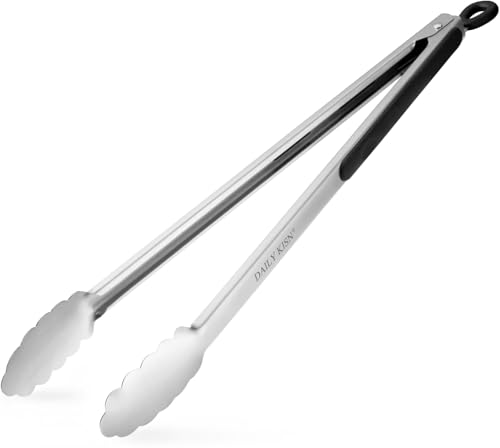
If you spend any time flipping burgers over hot coals, searing steaks on a propane grill, or roasting marshmallows at a campsite, you know how important a solid pair of tongs is. The DAILY KISN 17 Inch Extra Long BBQ Tongs are built specifically for outdoor cooking enthusiasts who need reach, safety, and durability. Made from food-grade stainless steel with a brushed anti-rust finish, these tongs can handle the heat of a blazing fire or a scorching flat top without warping or corroding.
These tongs are best suited for backyard grillers who want to keep their hands away from flare-ups, campers who cook over open flames, and tailgaters who need a reliable tool for serving burgers and brats at the parking lot. The 17-inch length lets you grab food from the back of a large grill or reach into a deep campfire pit without bending over or getting too close to the heat. The non-slip silicone strips on the handle give you a confident grip even when your hands are slick with oil or sauce, and the heat-resistant stainless steel tips are rated for over 600°F, so they won't melt or deform on a hot grate.
In real-world outdoor cooking, these tongs perform well for fast grilling tasks like flipping chicken thighs or turning skewers, as well as low-and-slow handling of ribs or brisket when you need to move meat around a smoker. The pull-ring locking mechanism is a practical touch - it keeps the tongs closed during storage in a camping bin or grill cart, and prevents them from accidentally opening while you're reaching for a tool. Cleanup is straightforward: they're dishwasher safe, but a quick rinse with dish soap works just as well after a messy cookout.
Build quality is solid for the price point. The stainless steel feels sturdy and the brushed finish resists rust from rain and humidity, though like any metal tool, leaving them wet for extended periods could cause spots. There's no flimsy flex when gripping heavy items like a whole chicken or a pack of burgers. The locking ring is simple and effective, and the silicone grip is firmly attached to the handle.
One realistic limitation is that this is a single tong, not a pair. If you're cooking for a crowd or running a two-handed flipping operation, you might want to buy two. Also, the extra length means these tongs take up a bit more drawer or hook space than standard kitchen tongs. But for outdoor cooking specifically, the longer reach is a clear advantage - it keeps you safe from heat splatter and allows you to access deep grills or campfire coals without crouching.
Overall, the DAILY KISN 17 Inch BBQ Tongs are a practical, affordable addition to any outdoor cook's kit. Whether you're flipping burgers at a weekend BBQ, serving up grilled veggies at a tailgate, or reaching for fire-roasted corn at a campsite, these tongs deliver the reach and heat protection you need. They're not flashy, but they do the job reliably, and the easy lockdown and dishwasher-safe design make them a low-fuss tool for any outdoor cooking scenario.

Pros
- Stainless steel construction offers excellent durability and weather resistance for long-term backyard use.
- Exact fit for a wide range of Char-Griller and King Griller gas grill models, saving you the hassle of searching for the right size.
- Smooth surface makes post-cook cleanup quick, reducing time spent scrubbing and maintaining your grill.
- Heavy-duty build ensures even heating and minimal flex even under high heat, ideal for searing steaks or slow-cooking ribs.
Cons
- Only compatible with specific grill models (listed in description), so measure your original grates to ensure a proper fit before ordering.
- Stainless steel grates may be prone to discoloration over time if not seasoned or cleaned regularly.
- Some users may find the grates slightly heavier than porcelain-coated alternatives, though this adds to durability.
If you own a Char-Griller or King Griller gas grill, you know that over time the original cooking grates can rust, warp, or lose their nonstick surface. The Votenli S6505A 4-pack stainless steel replacement grates offer a practical and budget-friendly solution to breathe new life into your backyard grill. These grates are designed to fit a wide range of popular models, including the Char-Griller 2121, 2123, 2222, 2828, 3001, 3030, 3725, 4000, 5050, 5252 and many more, as well as King Griller models like the 3008 and 5252.
For backyard grillers and BBQ enthusiasts, the first thing you will notice is the solid feel of these grates. Made from stainless steel, they resist rust better than traditional chrome or porcelain-coated grates, especially when exposed to rain or humidity. The 19 3/4 by 6 3/4 inch individual grates combine to give you a generous 19 3/4 by 27 inch total cooking surface, enough space to cook a full weekend BBQ spread of burgers, hot dogs, chicken breasts, and vegetables all at once.
Cooking performance is where these grates shine. Stainless steel heats up quickly and retains heat well, which helps reduce hot spots and gives you more consistent searing. Whether you are grilling steaks for a backyard party or slow-cooking ribs for a tailgate, the grates distribute heat evenly across the surface. While they won't add smoke flavor on their own, they work perfectly with gas grills that use smoker boxes or wood chips. The smooth surface also makes it easy to get those signature grill marks without food sticking.
Durability is a key strength here. The stainless steel is thick enough to resist warping under high heat, and it cleans up easily with a grill brush and a bit of soapy water. Because these are replacements, they drop directly into your existing grill without any tools or modifications. That means less time setting up and more time cooking. For campers and tailgaters, the four-piece set is easy to transport separately, so you can pack them in an RV or truck without taking up the whole trunk.
One realistic limitation is compatibility: you must measure your original grates carefully before ordering. While the description lists many models, there are always variations. Also, stainless steel can discolor over time if not cleaned regularly, but that is purely cosmetic and does not affect cooking performance. Some grillers prefer cast iron for its heat retention, but stainless steel offers easier maintenance and lighter weight.
Overall, the Votenli S6505A grates are an excellent choice for anyone who wants to restore their Char-Griller or King Griller grill without spending a fortune on a new grill. They are practical for weekend backyard cooks, tailgaters, and outdoor entertainers who value quick heat-up, easy cleanup, and reliable performance. If your current grates are past their prime, this 4-pack is a solid upgrade that will keep you grilling happily for seasons to come.
Understanding Corrosion on Stainless Steel Grills
Stainless steel remains the premier choice for outdoor cooking appliances because of its natural resistance to weathering and heat. Even so, barbecue owners regularly discover reddish-brown blemishes on their cooking grates, lid panels, and burner covers. The direct answer to whether stainless steel will corrode outdoors is yes, it can develop rust when environmental conditions compromise its surface chemistry. Understanding the science behind this metal helps explain why discoloration happens and how you can stop it early.
How the Chromium Oxide Layer Protects Stainless Steel
Ordinary steel oxidizes quickly when exposed to moisture and ambient oxygen, producing standard iron oxide or common rust. Stainless steel prevents this reaction by incorporating a minimum of ten and a half percent chromium into the molten alloy. When chromium meets atmospheric oxygen, it creates an invisible, microscopic shield known as a chromium oxide passive film. This microscopic barrier prevents moisture and air from reaching the iron molecules underneath.
This passive protective layer possesses a remarkable ability to self-heal under normal atmospheric conditions. If an abrasive brush lightly scratches the metal, newly exposed chromium reacts with ambient oxygen to rebuild the protective shield immediately. However, this self-repairing process requires consistent access to clean air and an uncompromised surface. When stubborn grease, baked-on food debris, or chemical residues starve the metal of oxygen, the passive layer breaks down and rust begins to form.
The Difference Between 304 and 430 Stainless Steel Grades
Manufacturers construct outdoor cooking equipment using several different stainless steel alloys, with 304 and 430 being the most common. Premium grills frequently use 304-grade stainless steel, which contains eighteen percent chromium and eight percent nickel. The inclusion of nickel creates an austenitic crystalline structure that dramatically boosts resistance to chemical corrosion and moisture. You can generally identify 304 alloy because it is non-magnetic or only weakly magnetic when tested with a common refrigerator magnet.
More budget-friendly outdoor grills often rely on 430-grade stainless steel for structural cart panels, side shelves, and doors. This ferritic alloy contains ample chromium but little to no nickel, which makes it strongly magnetic and less expensive to manufacture. While 430 steel offers reasonable defense against standard backyard weather, it remains substantially more prone to surface pitting and atmospheric discoloration over time. Knowing which grade makes up your grill components helps set realistic expectations for routine upkeep.
Primary Causes of Grill Rust and Surface Discoloration
One of the most frequent causes of sudden grill browning is cross-contamination from standard carbon steel tools. When someone scrubs a stainless cooking surface with a carbon steel wire brush, tiny microscopic iron filings shear off and lodge into the metal. These foreign iron particles oxidize rapidly when damp, leaving behind bright orange streaks that look like the grill itself is decaying. In reality, this cosmetic issue is often the tool shedding rust rather than the base appliance failing.
Atmospheric chlorides represent another aggressive enemy of outdoor metal equipment. Grills situated near coastal ocean air or adjacent to residential swimming pools endure continuous exposure to airborne salt and chlorine vapor. Chlorides attack microscopic weaknesses in the chromium oxide barrier, causing localized pitting corrosion that spreads beneath the surface. Homeowners in these coastal or poolside environments must wipe down their cooking stations far more frequently to prevent aggressive pitting.
Cooking ingredients also present a direct chemical hazard to unprotected metal grates and interior cookboxes. Barbecue seasonings, acidic tomato glazes, vinegar mops, and heavy salt rubs can eat into the protective passive layer if left uncleaned after cooking. High heat bakes these aggressive organic acids directly into the metal pores, initiating localized chemical pitting. Letting grease trays and grate bars sit coated in salty marinades for weeks guarantees eventual surface oxidation.
Extreme thermal stress from high-output burners can also alter the protective properties of metal alloys. Concentrated heat exceeding several hundred degrees alters the crystalline surface structure, causing heat tint that shifts from golden straw to dark blue and brown. While heat tint is not rust initially, this thermal oxidation can deplete localized chromium reserves and leave the underlying metal susceptible to moisture attack. Interior parts like flame tamers and burner shields experience this thermal degradation most severely.
Identifying Surface Rust Versus Structural Corrosion
Before attempting any repairs, inspect the metal carefully to determine the exact severity of the oxidation. Light reddish discoloration, commonly called tea staining, appears as a thin, hazy film across exterior lids and side tables. This superficial blemish does not penetrate the metal thickness and easily wipes away with an appropriate metal polish. Catching discoloration at this early stage prevents deeper damage and keeps your outdoor cooker looking pristine.
Structural corrosion, by contrast, presents a much more serious challenge that threatens the safety and stability of your equipment. Severe corrosion manifests as rough, flaky metal scales, deep cratered pits, or perforations in the firebox floor. If you press firmly against the affected spot and the metal flexes, crumbles, or reveals a hole, the integrity of the component has failed. Pitted cooking grates or fractured burner brackets require outright replacement rather than simple cleaning.
Safe Methods for Removing Rust from Stainless Surfaces
Restoring oxidized metal requires cleaners formulated to remove iron oxide without etching the surrounding steel. Products like concentrated, non-toxic rust removers dissolve stubborn stains while actively encouraging the metal to re-passivate its protective layer. Formulations bearing food-contact safety clearances prove particularly valuable for cooking chambers, warming racks, and interior components. Avoiding harsh industrial muriatic acids or abrasive bleach preserves the delicate alloy balance and protects your cooking environment.
Selecting the right abrasive pad is just as critical as choosing an effective cleaning compound. Traditional steel wool leaves behind microscopic carbon steel fragments that trigger fresh rust blooms within days. Instead, use non-metallic scouring pads, fine nylon scrubbing blocks, or dedicated stainless steel scouring pads designed for heavy-duty kitchen cookware. These specialized scrubbers provide sufficient scrubbing friction to dislodge baked-on soils without scratching deep gouges into the metal finish.
Begin the restoration process by washing the area with warm water and mild dish soap to strip away surface grease. Apply your chosen rust-removing formula directly to the oxidized spots and let it dwell according to the package directions. Scrub gently following the direction of the metal grain rather than making circular motions that create visible swirl marks. Rinse the surface completely with clean water and dry it immediately using a microfiber towel to prevent mineral spots.
Maintaining and Replacing Cooking Grates and Burners
Cooking grates endure the most punishment of any grill component because they interact directly with high heat, meat drippings, and cleaning tools. Solid stainless steel rods hold up better than thin wire grates, but they still require deliberate post-cook attention. After burning off stubborn food residue, brush the grates while warm using a brass or coil-style stainless brush. Applying a thin coat of high-smoke-point cooking oil forms an extra protective barrier between outdoor cooks.
When cooking grates become severely pitted, replacement sets restore proper cooking performance and sanitation. Standard aftermarket cooking grid sets, such as two-pack or four-pack stainless grids built for specific brand footprints, slide directly into compatible fireboxes. Checking the exact length, width, and bar spacing of your original cooking grids ensures a secure and level fit. Installing fresh replacement grates eliminates rough, rusty surfaces that cause delicate proteins to tear and stick.
Long grilling accessories like heavy-duty locking tongs also benefit from proper post-cooking care. Utensils crafted from food-grade stainless steel resist corrosion during active grilling sessions over high flames. However, leaving sauce-coated tongs damp inside an outdoor drawer can encourage localized rust around hinge pins and spring mechanisms. Washing utensils promptly in the sink or dishwasher and drying them thoroughly prevents hinge binding and keeps handles functioning smoothly.
Backyard cooks who enjoy adding rich wood smoke frequently place heavy-duty smoker boxes for added flavor across their burner shields. While wood chips generate excellent smoky aromatics, smoldering wood embers release acidic pyroligneous moisture that settles inside the cookbox. Allowing wet wood chips or damp ash to sit inside a closed grill creates an acidic, high-moisture microclimate that accelerates burner oxidation. Empty your accessory smoking gear and brush off your burner diffusers as soon as the equipment cools.
Environmental Protection, Covers, and Seasonal Storage
Many outdoor cooks assume that keeping a grill tightly covered at all times prevents every form of weather damage. Unfortunately, cheap, non-breathable vinyl covers often act like miniature greenhouses during damp spring and autumn weather. Moisture rising from damp patio pavers collects on the underside of the fabric, trapping high humidity against the metal panels. Without proper ventilation, this trapped moisture slowly dissolves the passive chromium oxide shield and invites mold and surface blemish.
Select heavy-duty protective covers featuring built-in side vents that encourage constant cross-ventilation. On dry, sunny afternoons, pull the cover off completely for a few hours to let ambient air circulate through the cabinet. If your patio space permits, store your cooking station beneath a covered pergola or overhang where driving rain cannot drench the hood. Keeping the appliance off bare soil or damp grass also minimizes ground moisture rising into the cart base.
Preparing your grill for winter storage requires a comprehensive deep clean to remove corrosive grease deposits. Scrape down the interior casting, vacuum out cold ash or carbon flakes, and degrease the exterior panels completely. Dry every internal surface by firing the burners on moderate heat for fifteen minutes to evaporate remaining water droplets. Once the metal cools, apply a food-safe mineral oil film across the grates and store the unit in a dry shed.
Safe Outdoor Operation and Placement Limitations
Operating any outdoor grill requires strict adherence to fire safety protocols and manufacturer clearances. Fuel-burning equipment must never be operated inside a residential garage, screened porch, breezeway, or enclosed patio, even if the primary vehicle door stands wide open. Charcoal, propane, and natural gas combustion generate dangerous carbon monoxide gas, which is an odorless, invisible, and lethal hazard in confined areas. Furthermore, flare-ups from hot dripping grease can rapidly ignite overhead garage rafters, storage shelves, or nearby drywall.
Always position your outdoor cooking unit on an open, level surface situated well away from combustible building walls and overhanging trees. Maintaining recommended manufacturer clearance distances prevents heat damage to vinyl siding and keeps airborne grease embers from landing on dry foliage. Never leave lit cooking equipment unattended, and keep a functional fire extinguisher rated for grease fires nearby. These basic fire prevention rules ensure your backyard gatherings remain safe and enjoyable for everyone.
When cooking flavorful dishes like sweet and savory marinated beef barbecue recipes, sugary marinades inevitably drip onto hot flavorizer bars. Sugars caramelize rapidly, forming sticky carbon layers that cling tenaciously to the metal structure. Brushing the grates and wiping down interior drip trays immediately after each session stops corrosive marinade buildup from attacking the metal underneath. Consistent post-meal cleanup keeps your cooking station sanitary, odor-free, and ready for your next outdoor feast.
Practical Prevention Strategies for Long-Term Durability
Developing a consistent maintenance schedule takes only a few minutes per week and saves substantial money on replacement parts. Keep a dedicated cleaning kit near your grill containing non-scratch scouring pads, a soft microfiber cloth, and a safe metal polish. Inspect your burner tubes and heat shields monthly to clear away spider webs, soot deposits, and minor surface oxidation. Addressing small cosmetic spots before they deepen into structural pits keeps your outdoor equipment operating at peak efficiency.
Outdoor stainless steel grills can indeed develop rust if neglected, but corrosion is entirely preventable with informed maintenance practices. Selecting quality alloys, avoiding carbon steel cleaning tools, and wiping away acidic seasonings preserve the metal’s natural protective chemistry. Combining routine cleaning with breathable protective covers ensures your investment withstands harsh seasonal weather. With mindful care, your stainless cooker will deliver delicious meals and dependable performance for countless seasons ahead.



Write Your Review
No reviews yet. Be the first to share your experience!