


Every backyard cook eventually faces the charred residue of past cookouts, where carbonized sauces and grease cling stubbornly to cooking grids. Learning how to clean outdoor gas grill grates correctly protects food flavor, extends equipment longevity, and prevents dangerous flare-ups during your weekend grilling sessions. While many grill owners scrub aggressively without a clear strategy, different surface materials like porcelain enamel, cast iron, and stainless steel require distinct maintenance techniques to prevent accidental surface damage. Whether you cook on portable carts or premium outdoor barbecue island setups, establishing a predictable cleaning routine ensures your cooking surface stays hygienic and ready for high-heat searing.
Safety concerns have also reshaped modern cleaning practices, especially with growing awareness surrounding loose metal wire bristles detaching and ending up in cooked food. Modern maintenance relies on bristle-free grill scrapers, heat-activated steam cleaning tools, and biodegradable citrus degreasers that loosen stubborn carbon deposits without introducing safety risks. By understanding when to clean your grates hot versus cold, you can remove greasy build-up efficiently while maintaining the protective seasoning on heavy iron bars. Regular grate upkeep also preserves burner performance, reduces unwanted acrid smoke, and keeps your gas grill running at peak efficiency all season long.

Pros
- Safe and effective cleaning without bristle concerns - ideal for families and health-conscious grillers.
- Steam-cleaning action tackles burnt-on residue quickly, even after high-heat searing or low-and-slow smoking sessions.
- Replaceable head design offers long-term value and reduces plastic waste compared to single-use brush heads.
- Works on all grill types and grate materials, making it a versatile addition to any outdoor cooking arsenal.
- Heat resistance up to 600°F allows you to clean while grates are still hot, speeding up the cleaning process.
Cons
- Requires preheating the grill and dipping the brush in water, which adds a step compared to traditional dry scraping.
- The initial purchase price is higher than many basic wire brushes, though the replaceable head offsets long-term cost.
- Some users may find the brush head becomes less effective over time as the padding wears, requiring replacement heads.
The Grill Rescue BBQ Replaceable Cleaning Head is a bristle-free grill brush designed for safe, effective cleaning on all types of grates. It uses steam-cleaning technology - simply heat your grill, dip the brush in water, and scrub away grease and residue without the risk of wire bristles breaking off into your food. This makes it an excellent choice for backyard grillers, BBQ enthusiasts, campers, tailgaters, and RV owners who want peace of mind while cooking outdoors.
In real-world use, this brush performs admirably on both high-heat searing and low-and-slow smoking setups. The steam action lifts burnt-on gunk from cast iron and stainless steel grates, leaving them clean with minimal effort. While it doesn't directly affect heat consistency or smoke flavor, a clean grate is essential for good searing and preventing flare-ups, which indirectly improves your cooking results. The heat resistance up to 600°F means you can clean while the grill is still hot, saving time between cooks.
Build quality is solid - the cleaning head uses a high-temperature Aramid Fiber layer that withstands repeated use, and the polypropylene handle offers a comfortable, non-slip grip. The replaceable head extends the brush's lifespan, making it a more sustainable and cost-effective option compared to disposable brushes. It's also dishwasher safe, so cleanup after a long tailgate or camping trip is as simple as tossing it in the machine.
Setup and storage are straightforward: the brush is ready to use out of the box, and its compact size (5 x 4 x 18 inches) fits easily in a grill caddy or camping gear bag. The only limitation is the extra step of preheating and dipping in water, which might feel unnecessary to those used to a quick dry scrape. Also, the upfront cost is higher than basic wire brushes, but the replaceable head design saves money over time.
Overall, this brush is a practical investment for anyone who grills frequently - whether you're hosting a backyard party, smoking brisket on a weekend, or cooking burgers at a campsite. It prioritizes safety without sacrificing cleaning power, and its compatibility with all grate materials adds versatility. If you value a bristle-free, low-maintenance cleaning routine, the Grill Rescue system is worth considering.
To get the most out of your Grill Rescue brush, follow these simple care tips. After each use, allow the brush head to cool slightly, then rinse it under warm water or place it in the dishwasher for a thorough clean. The head is dishwasher safe, but avoid using abrasive cleaners that could wear down the padding.
When the brush head becomes less effective at removing residue - typically after several months of regular use - simply replace it with a new Grill Rescue cleaning head. The handle is designed to snap on and off easily, so swapping heads takes seconds. Store the brush in a dry place away from direct heat to prolong its lifespan. Regular replacement ensures optimal cleaning performance and safety.


Pros
- Safe cleaning without wire bristles, protecting your family from accidental ingestion.
- Powerful citrus-based cleaner easily cuts through baked-on grease and carbon buildup.
- Kit includes everything you need: spray, brush, scrubber pads, scraper, and towel, no extra purchases required.
- Works on both hot and cool grills, offering flexibility for different cleaning routines.
Cons
- For extremely charred grates, some elbow grease may still be needed; the cleaner alone won't dissolve heavy creosote instantly.
- Scrubber pads are refillable but replacements are sold separately, adding ongoing cost over time.
- The cookbox scraper is best used on cool surfaces; it may scratch delicate porcelain coatings if used aggressively.
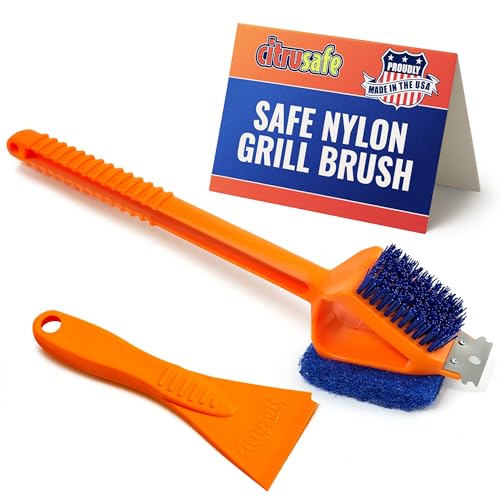
The Citrusafe Complete Grill Cleaning Kit is not your average grill cleaner. It is a thoughtfully assembled set designed to replace the dangerous wire brushes and harsh chemical sprays that many BBQ enthusiasts rely on. Instead, this kit uses a citrus-based degreaser, a nylon brush, heavy-duty scrubber pads, a cookbox scraper, and a microfiber towel to clean your grill safely and effectively. Whether you own a charcoal kettle, a propane gas grill, a smoker, or even a flat top griddle, this kit has the tools to handle the mess.
This kit is built for anyone who takes outdoor cooking seriously. Backyard grillers who fire up the Weber every weekend, campers who throw a grate over an open fire, tailgaters who need a quick cleanup between games, and RV owners who don't want wire bristles scratching their portable grills will all appreciate the safety-first approach. The stars are the Citrusafe Grill Cleaner spray, which uses natural degreasing power from citrus peels to break down grease, and the nylon brush and scrubber pads that work on a cool grill. No more burning off residue or worrying about stray bristles in your burger.
In real-world use, this cleaner shines on moderately soiled grates and cookboxes. Spray it on, let it sit for a few minutes, then scrub with the nylon brush or the heavy-duty pads. The grime dissolves quickly, and the included cookbox scraper reaches into corners that brushes miss. For a neglected grill that has months of caked-on grease, you may need to repeat the process, but the result is a cookbox that looks nearly new. The microfiber towel lifts away remaining residue without scratching porcelain or stainless steel surfaces.
Build quality of the tools is solid. The nylon brush handle is heavy-duty plastic with a comfortable grip, and the scrubber holder accepts the replaceable pads firmly. The scraper has a slim profile that fits into the tight gaps of most grills and smokers. The spray bottle has a trigger that produces a fine mist, covering grates evenly without waste. Everything in the kit is designed to be reused, cutting down on disposable grill wipes and paper towels.
Setup is simple: unpack the items and start cleaning. The spray works right out of the box, and all tools are ready to go. Transport is not an issue since it is a cleaning kit, but the spray bottle and tools fit easily in a garage cabinet or a camping tote. Storage is straightforward: keep the spray away from direct sunlight, and hang the brush and scraper to dry.
Limitations are minor. For grills with extremely heavy carbon buildup (think years of neglect), you may still need to use a metallic scraper or a second application. The scrubber pads are effective but wear out after several uses, and replacement packs are sold separately. Additionally, the nylon brush is not as stiff as wire, so it may take a bit more scrubbing on stubborn spots. Nonetheless, for routine maintenance and even deep-cleaning, this kit is a safe and effective choice. It earns a strong recommendation for any outdoor cook who wants to eliminate the risk of wire bristles and keep their cooking gear in top shape.
The Citrusafe Complete Grill Cleaning Kit comes with five essential items to tackle every part of your grill or smoker. You get a 16oz bottle of Citrusafe Exterior Grill Cleaner (also safe for interior use), a heavy-duty nylon brush with an integrated cookbox scraper, a scrubber handle plus three replaceable scrubber pads, a separate cookbox scraper for tight areas, and a premium microfiber cleaning towel (color may vary). Together, they cover cleaning from grates to hoods to side tables. Everything is manufactured in the USA by Bryson Brothers, a brand focused on safer outdoor cooking products.
For best results, clean your grill when it is cool to the touch. Spray the Citrusafe cleaner liberally onto grates and cookbox surfaces, let it sit for 3-5 minutes to loosen grease, then scrub with the nylon brush or scrubber pads. Use the cookbox scraper for baked-on residue in corners. Wipe away residue with the microfiber towel, then rinse with water if desired. For routine maintenance after each cook, a quick spray and wipe keeps grates looking new. The scrubber pads can be replaced when they become worn; replacement pads are available separately. The spray lasts through many cleanings, making this kit a great value for frequent grillers.
Comprehensive Strategy for Cleaning and Preserving Outdoor Gas Grill Grates
Cleaning gas grill cooking grates effectively requires matching your technique to your specific grate material, carbon buildup level, and preferred operating temperature. Meat drippings, acidic marinades, and sugary glazes undergo rapid thermal breakdown during cooking, transforming into hardened carbon deposits that harbor off-flavors and attract moisture. Removing this residue promptly prevents metal corrosion, promotes even heat conduction across cooking zones, and significantly lowers the chance of sudden grease flare-ups. Modern maintenance methods provide flexible options, allowing cooks to leverage steam-assisted hot cleaning, cool citrus degreasing, or profile-matched scraping tools to maintain their equipment properly.
Identifying Grate Materials and Their Vulnerabilities
Grill grates are primarily manufactured from porcelain-enameled steel, solid stainless steel rods, or heavy cast iron. Porcelain-coated grates feature an exterior glass ceramic glaze fused over metal, providing natural non-stick properties and reliable resistance to environmental rust. However, this glossy coating can fracture if struck with sharp steel blades, heavy scrapers, or overly aggressive scouring pads. In contrast, solid stainless steel rods resist moisture naturally and tolerate firm mechanical scraping without flaking, although they develop a harmless golden-bronze heat patina over extended seasonal use.
Cast iron grates provide exceptional thermal mass and superior heat retention, making them ideal for high-heat searing and creating distinct grill marks. The primary trade-off with cast iron is its acute vulnerability to oxidation whenever humidity or water contacts unprotected metal. These heavy bars depend entirely on a polymerized oil layer to prevent surface rust and release cooked meats cleanly without tearing. Using harsh caustic degreasers or soaking cast iron in water baths strips that vital seasoning away, leaving bare iron exposed to outdoor humidity, pitting, and structural deterioration.
Safe Alternatives to Traditional Wire Bristle Brushes
Traditional wire brushes have historically been widely used in backyard cooking, but they present well-documented physical health hazards. Thin steel bristles can easily detach from the brush head during vigorous scrubbing, lodging imperceptibly between cooking bars or adhering directly to food during subsequent cooks. Ingesting detached metal bristles can cause severe internal punctures and acute gastrointestinal injuries, leading many grillers to eliminate wire-bristle tools entirely. Fortunately, innovative tool designs now offer effective cleaning power without introducing dangerous loose metal fragments to your cooktop.
Steam-cleaning tools represent an increasingly popular bristle-free category, relying on water vaporization to soften and lift baked-on grease. Tools like the Grill Rescue BBQ Replaceable Cleaning Head feature thick composite aramid fiber cleaning heads that withstand temperatures up to 600 degrees Fahrenheit. The cook dunks the textured head into water and glides it across heated grates, generating concentrated steam that lifts oily residue into the washable fabric. These replaceable cleaning heads attach securely to rugged polypropylene handles, allowing grillers to refresh worn cleaning pads without replacing the entire handle assembly.
Profile-matched metal scrapers and flame-resistant sponges provide another reliable mechanical alternative. The Grill Floss Premium Grill Scraper for Outdoor grills utilizes a notched stainless steel head that wraps around individual round rods, cleaning the top, sides, and underneath surfaces without requiring you to remove greasy grates. Similarly, tools like the Grill Stripper Bristle Free Grill Brush pair a flame-resistant scrubbing sponge with a multi-angle scraper plate, clearing carbonized residues before steam wipes the bars clean. Wireless nylon brushes, such as the CitruSafe dual-head tool, provide yet another safe option, specifically engineered for cool surfaces to prevent plastic bristles from melting.
The Hot Grate Steam Cleaning Procedure
Hot steam cleaning works by using thermal shock and rapid moisture vaporization to release stubborn carbon from metal cooking rods. Begin by igniting your gas grill burners, closing the lid, and allowing the cooking chamber to preheat on medium-high heat for ten to fifteen minutes. This initial thermal phase carbonizes wet food residue, transforming leftover grease and sauces into brittle black char that separates easily from the rods. Always confirm that your gas control valves operate smoothly and that no gas odors linger around connections before initiating the preheat cycle.
Once the cooking grids reach temperatures between 400 and 600 degrees Fahrenheit, prepare a heat-resistant bowl filled with clean tap water. Dip your steam cleaning brush, such as the Grill Rescue cleaning head or Grill Stripper sponge, directly into water so the absorbent layer saturates thoroughly. Press the damp cleaning pad firmly against the back of the grates, pushing forward across the bars in smooth, deliberate strokes while wearing heat-resistant gloves. Rinse the pad frequently between passes, and shut off all burner control knobs and fuel supplies once the bars appear clean.
The Cold Grate Citrus Degreasing Method
Cleaning grates when the grill is completely cold offers a calm, safe maintenance method that eliminates heat exposure and reduces fuel consumption. This chemical approach works especially well for porcelain-coated grates and delicate outdoor cooking equipment that cannot tolerate aggressive mechanical scraping. Specialized degreasing formulations rely on natural d-limonene solvents derived from citrus peels, which dissolve coagulated grease and animal fats without producing harsh chemical fumes or damaging protective exterior finishes.
The Citrusafe Complete Grill Cleaning Kit illustrates this cool cleaning philosophy by combining a 16-ounce citrus degreasing spray with non-metal scrubbing tools. Spray the citrus cleaner generously across all cool cooking grids, ensuring the liquid coats the top, sides, and bottom rods evenly. Allow the formula to dwell undisturbed for one to three minutes so the natural citrus enzymes penetrate and emulsify hardened grease layers. Scrub the cooking grids using a CitruSafe 3in1 Nylon Grill Brush with Cookbox scraper, then wipe the loosened residue away with a clean microfiber towel.
Deep Cleaning for Heavily Carbonized Grids
While routine surface scrubbing keeps grates functional, intensive cooking eventually leaves thick layers of polymerized grease on the undersides of the grids. This accumulation frequently happens when basting meats repeatedly with a thick, sugary barbecue glaze recipe that drips between the rods and bakes onto shielded surfaces. Similarly, wood chips or pellets smoldering in dedicated smoker box setups can deposit sticky creosote layers across the bottom grid edges over multi-hour barbecue cooks. When carbon deposits become visibly thick, removing the grates for an intensive deep clean restores proper airflow and heat distribution.
Begin your seasonal overhaul by turning off the gas supply at the propane tank or natural gas shutoff valve to ensure zero fuel flow. Carefully lift the cool cooking grates out of the grill body and place them flat inside a utility tub or on a protective drop cloth. Stainless steel grates can soak for thirty to forty-five minutes in hot water mixed with grease-cutting dish soap and baking soda to soften stubborn underside carbon. For bare cast iron grates, avoid soaking and apply a baking soda paste directly, or use the curved blade of the Grill Floss scraper to rotate around individual rods and peel away carbon skirts without moisture damage.
While the cooking grates are removed, use a rigid plastic putty knife or a dedicated cookbox scraper tool to push debris down into the grease management tray. Clear dry ash and charred food scraps away from the burner ports and flavorizer bars, ensuring that burner flame holes remain open and unobstructed. Rinse the cleaned grates thoroughly with clean water to remove any residual cleaning agents or dislodged grease slurry. Dry all components immediately with clean cotton shop towels or microfiber cloths, ensuring no standing moisture remains in corners or joints.
Re-Seasoning Cast Iron and Preventing Corrosion
Cast iron and raw steel grates require immediate re-seasoning after any intensive washing procedure to seal microscopic pores against ambient humidity. Moisture from outdoor air, condensation beneath grill covers, and rain can induce rapid oxidation on unprotected iron within just a few hours. To re-season cleaned cast iron grates, select a cooking oil with a high smoke point, such as canola, grapeseed, or refined avocado oil. Avoid unrefined olive oil or butter, as their low smoke points cause premature smoking, acrid bitter flavors, and rapid breakdown.
Apply a thin, even coat of oil across all surfaces of the dry grates using a folded paper towel or clean lint-free cloth. Wipe off any excess pooling oil, as heavy puddles create gummy, sticky residues rather than a hard, smooth protective glaze. Place the lightly oiled grates back into your gas grill, close the lid, and ignite the burners on medium heat around 400 degrees Fahrenheit for approximately thirty to forty-five minutes. Turn off the burners and let the grates cool slowly inside the closed cookbox to restore the durable, rust-resistant non-stick patina.
Routine Maintenance Habits to Prevent Heavy Buildup
Establishing consistent pre-cook and post-cook cleaning habits prevents carbon from accumulating into thick, stubborn crusts that demand hours of scraping. The simplest habit begins before cooking: always preheat your outdoor gas grill on high for ten to fifteen minutes before placing food on the grates. This high-temperature preheat incinerates grease remnants left from the previous meal, turning organic residue into powdery white or gray ash that brushes away effortlessly with minimal pressure.
A quick swipe with a bristle-free tool immediately following your preheat burn-off leaves the bars spotless right before food contacts the metal. Once the bars are clean, lightly oil the grates using a folded paper towel dipped in cooking oil held securely with long grilling tongs. This pre-cook lubrication creates a temporary barrier that prevents lean meats from tearing and minimizes sauce caramelization directly onto the metal rods. Following dinner, perform a brief post-cook maintenance pass with your steam sponge while the grill retains residual heat to clear fresh drippings before they harden.
Safe Outdoor Operation and Fire Prevention
Safety must guide every stage of gas grill operation, cleaning, and ongoing maintenance. Liquid propane and natural gas are pressurized fuels that require proper ventilation and strict adherence to outdoor operating boundaries. Never operate an outdoor gas grill inside a garage, carport, covered breezeway, screened porch, or any enclosed indoor space, even with overhead doors fully opened. Operating fuel-burning appliances in enclosed spaces generates lethal concentrations of odorless carbon monoxide gas and creates severe structural fire hazards.
Always position your gas grill outdoors on a stable, level surface with ample clearance from combustible building walls, wooden deck railings, and overhanging tree branches. When cleaning heavily soiled grates, be mindful of grease accumulation in the drip pan below the burners, as neglected grease trays can ignite during high-heat preheating. If a grease fire erupts, close the grill lid, turn off burner controls if accessible safely, shut off the gas cylinder, and let the fire starve of oxygen without adding water. Periodically inspect burner tubes for spider webs or insect debris to prevent dangerous flashback fires through the control panel.
Practical Takeaways for Long-Term Grate Care
Maintaining pristine gas grill grates is straightforward when you choose cleaning tools suited to your grate material and establish steady maintenance routines. By swapping out dangerous wire bristle brushes for modern steam tools, profile-matched stainless scrapers, or citrus-based degreasers, you safeguard your family against metal ingestion while achieving superior cleaning results. Regularly matching heat-activated steam passes with cool chemical degreasing ensures your cooking grates stay spotless throughout the year. Consistent care keeps food tasting its best, protects your investment in quality hardware, and guarantees that every cookout starts from a clean, sanitary cooking foundation.


Write Your Review
No reviews yet. Be the first to share your experience!