


Transforming an outdoor barbecue into a high-heat baking chamber requires balancing intense bottom heat with radiant top convection. Standard kitchen ranges frequently stall around 500 degrees Fahrenheit, whereas an outdoor barbecue can easily achieve the blistering temperatures needed for authentic artisan crusts. Learning how to make pizza in grill oven environments allows outdoor cooks to produce crisp bases, airy crust bubbles, and perfectly melted cheese without investing in dedicated commercial ovens. Achieving this balance depends heavily on understanding thermal transfer, proper preheating procedures, and establishing indirect cooking zones. Cooks experimenting with wood-fired aromas often integrate durable smoker boxes to introduce clean wood smoke alongside convective baking heat.
Direct flame exposure will quickly scorch raw dough before toppings can melt, which makes heat deflection equipment essential for success. Using a heavy baking stone or conductive steel plate creates a stable thermal reservoir that mimics traditional masonry floor ovens. Maintaining steady airflow across the cooking chamber ensures that ambient heat reflects off the closed grill lid, baking the upper crust at the same rate as the base. By combining proper fuel management, thermal surfaces, and calculated timing, outdoor enthusiasts can replicate pizzeria-quality results right on their patio. Mastering these foundational techniques guarantees consistent results across gas, charcoal, and pellet fuel setups without burning delicate crusts.

Pros
- Excellent heat conductivity for superior crust crispiness
- Versatile use in oven, BBQ, or grill for various dough-based recipes
- Easy to clean compared to porous pizza stones
- Solid build quality ensures long-term durability
Cons
- Weighs over 13 pounds, making it less portable for camping or tailgating
- Requires significant preheat time (about 45-60 minutes) to reach optimal temperature
- May not fit in smaller ovens or compact BBQs due to its 13x13 inch size
The Hans Grill Pizza Steel PRO is essentially a heavy-duty steel plate designed to replicate the intense heat of a brick oven in your own kitchen or backyard. At 1/4 inch thick and 13 inches square, this baking steel sits directly on your oven rack or on your BBQ grates, absorbing and radiating heat with exceptional efficiency. Instead of relying on porous stone, this conductive steel transfers heat directly to your pizza dough, resulting in a crust that's crispy on the bottom and perfectly cooked on top.
This pizza steel is best suited for backyard grillers and outdoor cooks who already enjoy firing up their BBQ for more than just burgers and steaks. If you love hosting pizza nights on the patio or want to expand your BBQ's repertoire beyond grilling, this steel is a smart addition. It also appeals to indoor cooking enthusiasts who want the same crust quality without investing in a dedicated pizza oven.
In real-world cooking, the Hans Grill Pizza Steel PRO excels at heat consistency and searing. Once preheated for about 45 minutes to an hour, the steel holds a steady temperature that crisps up the bottom of your pizza in under 10 minutes. The thick steel ensures no hot spots, so your crust cooks evenly from edge to edge. While it doesn't produce smoke flavor on its own, when used on a charcoal or wood-fired BBQ, you can still get that subtle smokiness from the grill environment.
Build quality is solid. The steel is heavy—over 13 pounds—and feels robust. There's no risk of cracking like with ceramic stones, and the smooth surface resists rust when properly cared for. Just keep it dry and occasionally season it with a light oil coat. The included beechwood peel is functional, though not exceptional, but it does help slide pizzas on and off the steel easily. For portability, this isn't something you'd toss in a cooler for a camping trip—it's a permanent fixture for your home kitchen or patio setup.
Cleanup is straightforward: let the steel cool, then wipe down with water. No soap needed. Any stuck-on residue can be scraped off gently. Avoid soaking or using harsh detergents, as they can strip the seasoning and lead to rust. Storage is easy enough—just find a flat, dry spot in your kitchen or garage.
One realistic limitation is the preheat time. You can't decide to make pizza on a whim and have it ready in 20 minutes. Plan ahead. Also, the 13x13 size might be too large for compact ovens or small grills. If you have limited space, measure your oven or grill interior first. Overall, for anyone serious about making exceptional pizza at home or on their BBQ, the Hans Grill Pizza Steel PRO offers excellent value and performance.

Pros
- Heats evenly and holds temperature well for consistent results on grill or oven
- Complete kit includes everything needed for pizza making, from dough to slice
- Sturdy cordierite material handles high heat without cracking when used correctly
- Wood peel doubles as a serving board, adding utility for tailgating or patio parties
Cons
- Stone is heavy (9.35 lbs) and may be cumbersome to transport for camping
- Requires careful preheating and gradual temperature changes to avoid cracking
- Wood peel handle may need extra care to prevent varnish peeling if washed roughly
The RitualLife Pizza Stone Set is a versatile outdoor cooking accessory that transforms your grill or oven into a pizza oven. Designed for backyard grillers, campers, tailgaters, and RV owners, this 5-piece kit includes a 15x12 inch cordierite stone, acacia wood peel, stainless steel cutter, dough scraper, and removable handles. It’s a practical upgrade for anyone who loves crispy, evenly baked pizza without needing a dedicated pizza oven.
When it comes to real-world cooking performance, this stone excels at heat retention and even distribution. Preheat it properly on a gas or charcoal grill, and you’ll get a crust that’s golden and crunchy on the bottom while the toppings cook through. While it won’t add smoke flavor on its own, using it on a charcoal or pellet grill infuses the pizza with a subtle smoky note that elevates the taste. The stone handles temperatures up to 1500°F, so it’s fine for high-heat grilling, but avoid thermal shock by letting it warm up gradually.
Build quality is solid for the price. The cordierite material is durable and resists cracking under normal use, though a few users report cracks after years of heavy use or sudden temperature changes. The wood peel is attractive and functional, but the varnish can peel if scrubbed harshly. The stone itself requires no seasoning, and stains are normal — they actually improve the non-stick surface over time. For outdoor durability, it’s best stored in the oven or a dry place to avoid moisture absorption.
Setup is straightforward: place the stone on the grill grates or oven rack, preheat for 30-45 minutes, then launch your pizza. The included peel makes transferring dough easy, and the cutter slices through with minimal effort. Cleanup is simple — once cool, scrape off residue and wipe with a damp cloth. Avoid soap and water soaking, as the stone is porous. The dough scraper is also handy for cleaning counters or scraping burnt bits off the stone.
One realistic limitation is the stone’s weight — at nearly 10 pounds, it’s not the most portable for camping trips, but it works fine for tailgating if you have a sturdy table. The rectangular shape fits most standard grills, but measure your grill space first. Some users wish it were larger, but the 15x12 inch size accommodates a 12-inch pizza comfortably, with room for bread or cookies.
Overall, this kit is a smart buy for backyard cooks who want to make pizza on their grill without spending hundreds on a dedicated pizza oven. It’s also a great gift for outdoor entertainers or anyone who enjoys homemade pizza with a crispy crust. Pair it with a charcoal grill for smoky flavor, or use it in the oven for year-round baking. Just follow the care instructions, and it’ll serve you well for many cookouts.
Using this pizza stone on a gas or charcoal grill delivers excellent results. The cordierite stone absorbs and radiates heat evenly, producing a crispy crust that rivals pizzeria quality. For best results, preheat the stone on the grill for at least 30 minutes at 500-550°F. On a charcoal grill, the stone helps stabilize temperature fluctuations, while on a pellet grill, it adds thermal mass for consistent baking. Avoid placing a cold stone on a hot grill to prevent cracking. The stone also works well on campfires if placed on a grate, but monitor heat closely.
Cleaning the RitualLife pizza stone is easy but requires care. Never use soap or submerge the stone in water, as the porous cordierite will absorb liquids and odors. Instead, let the stone cool completely, then scrape off food residue with a spatula or the included dough scraper. Wipe with a damp cloth, and allow to air dry. Stains and dark spots are normal and actually help create a non-stick surface over time. For the wood peel, clean with white vinegar and wipe dry — avoid soaking. The stainless steel cutter can be hand washed with mild soap. Store the stone in the oven when not in use to keep it dry and ready.
This 5-piece kit includes everything you need to make pizza from scratch. The 15x12 inch cordierite stone comes with two removable stainless steel handles for safe transport. The acacia wood peel doubles as a serving board or cutting surface. The stainless steel pizza cutter features a comfortable wooden handle and a blade cover for safe storage. A plastic dough scraper helps shape dough and clean up work surfaces. An e-recipe book provides tips and recipes to get started. All items are packaged in a gift-ready box, making this set a practical present for any outdoor cooking enthusiast.
Pros
- Excellent heat retention and even cooking for crispy crusts on pizza and bread.
- Thermal shock resistant cordierite holds up to high grill temps without cracking.
- Easy to clean with included scraper and warm water; no soap needed.
- Versatile for both oven and grill, making it a great outdoor cooking accessory for pizza nights or baking.
Cons
- Small size (15x12 inches) only fits personal pizzas up to 11 inches; not ideal for large gatherings.
- Requires proper preheating for best results; may need 30-45 minutes to fully heat.
- Heavy at 6.8 lbs, which can be cumbersome to handle and store; not the most portable option for camping.
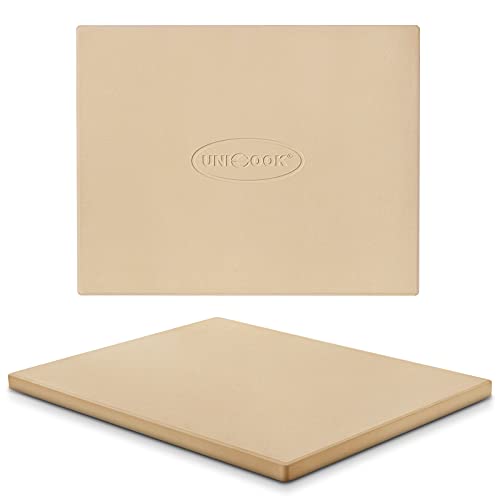
The Unicook Pizza Stone is a rectangular cordierite baking stone designed for use in both ovens and grills, making it a versatile addition to any outdoor cooking setup. While it's not a standalone grill or smoker, this stone transforms your existing gas or charcoal grill into a mini pizza oven, perfect for backyard cooks who want to expand their menu beyond burgers and steaks. It's best suited for backyard grillers, patio cooks, tailgaters, and even RV owners who want to bake pizza, bread, or cookies while camping.
In real-world cooking performance, the stone excels at heat retention and even distribution. The 0.6-inch thick cordierite absorbs and radiates heat consistently, eliminating hot spots that can lead to soggy centers or burnt edges. After preheating your grill with the stone inside for about 30 minutes, you'll get a crispy, golden crust on your pizza - similar to a brick oven. The porous surface also wicks away moisture from the dough, ensuring a firm base rather than a doughy one. While it won't produce smoke flavor like a smoker, you can add wood chips to your grill for a subtle smoky twist.
Build quality is solid for the price point. The cordierite material is thermal shock resistant up to 1450°F, so it can handle the high heat of a grill without cracking under normal use. The stone is heavy at 6.8 lbs, which aids heat retention but makes it less portable for campers who hike in. For tailgating or RV trips, it's manageable if you have a stable surface. There are no grates or wheels - it's a simple slab that sits directly on your grill grates or in the oven. Over time, it may develop discoloration from grease or food residue, which is normal and doesn't affect performance.
Setup is straightforward: place the stone on your grill grates with at least 1-2 inches of clearance on all sides for airflow. Preheat gradually to avoid thermal shock. Cleaning is easy after it cools - just scrape off residue with the included plastic scraper and wash with warm water and a brush. Avoid soap, as the stone can absorb it and affect taste. Storage can be tricky due to its weight and size, but it's small enough to fit in a cabinet or under a grill cover.
A realistic limitation is the size: 15x12 inches only accommodates personal pizzas up to 11 inches. If you're cooking for a crowd, you'll need to bake in batches or consider a larger model. Also, the stone requires patience - you must preheat thoroughly for best results, which adds time to your cook. It's not ideal for quick weeknight dinners, but for weekend BBQ parties or a relaxed tailgating session, it's a fun tool.
Overall, the Unicook Pizza Stone is a practical accessory for outdoor cooking enthusiasts who enjoy homemade pizza or artisan bread on their grill. It delivers consistent heat, a crispy crust, and is easy to maintain. If you have a grill and want to up your outdoor baking game without buying a separate pizza oven, this stone is a budget-friendly choice. Just keep the size and preheating time in mind for your specific use case.
The Unicook Pizza Stone delivers even heat distribution thanks to its thick cordierite construction. After preheating in a gas grill at 500°F for 30 minutes, the stone holds steady temperature, producing a crispy bottom crust on homemade pizza. The porous surface absorbs excess moisture, preventing sogginess. While it won't sear like a flat top or produce smoke flavor, it excels at baking. For outdoor bakers, this means consistent results batch after batch - great for pizza, bread, or even cookies on the grill.
Cleaning the Unicook Pizza Stone is simple but requires care. After the stone cools completely, use the included plastic scraper to remove any stuck-on food or dough residue. Then hand wash with warm water and a brush - never use detergent, as the stone can absorb soap and impart flavors to future bakes. Discoloration from grease is normal and doesn't need scrubbing. Avoid soaking the stone. Over time, the porous surface will develop a seasoned patina that enhances cooking. Store in a dry place to prevent mold.

Pros
- Dual-purpose design saves space and money by combining a brush and scraper in one tool.
- Brass bristles are tough on burnt-on food but gentle enough not to scratch pizza stones.
- Heat-resistant materials allow you to clean while the stone is still warm, improving efficiency.
- Stainless steel head resists rust and corrosion, holding up well in damp outdoor storage conditions.
Cons
- Brass bristles may wear down over time with heavy use, requiring eventual replacement.
- The handle could be longer for added safety when cleaning very hot oven surfaces.
- Not suitable for cleaning non-stick surfaces or delicate cookware due to the abrasive bristles.
If you own a pizza oven or use a pizza stone on your grill, you know that cleaning burnt cheese and crust off the stone is one of the most annoying parts of outdoor cooking. The Hans Grill 2-in-1 Pizza Oven Brush and Scraper is a simple, affordable tool that tackles this job head-on. It combines a stiff brush and a sturdy scraper in one head, so you can remove both loose debris and stubborn baked-on residue without switching tools. This makes it a handy addition for backyard grillers, campers, tailgaters, and anyone who enjoys cooking pizza outdoors.
This tool is best suited for home cooks who frequently use pizza stones in a grill, smoker, or dedicated pizza oven. It is also handy for RV owners who cook pizza while camping and need a compact cleaning solution. The dual-purpose design means you do not have to carry multiple brushes or scrapers, which is a real plus for tailgating setups or storage-limited patios. It works well on both indoor and outdoor pizza stones, so it can serve double duty in your kitchen and backyard.
In real-world use, the brass bristles do a solid job of scrubbing away food particles without scratching the stone surface. The scraper edge lets you lift off larger pieces of burnt cheese or crust that a brush alone might miss. Because the head is heat-resistant, you can use it while the stone is still warm, which makes cleaning much easier. The handle is comfortable to grip and keeps your hands safely away from the hot surface. For best results, use it after the stone has cooled slightly but is still warm to the touch, and avoid using soap or water as the stone is porous.
Build quality is decent for the price point. The stainless steel head resists rust, and the brass bristles hold up well under normal use. The handle feels sturdy and is securely attached. However, like any brush with metal bristles, it may shed a few bristles over time, so inspect it periodically and replace it if bristles become loose. It is not designed for non-stick surfaces or delicate cookware, but for pizza stones and grill grates, it works fine.
Cleanup of the brush itself is straightforward: just tap it out or rinse it off and let it dry. It is compact enough to store in a drawer, hook on a grill cart, or toss into a camping bin. Overall, this is a practical, low-cost tool that solves a specific problem for pizza lovers who cook outdoors. If you are tired of scrubbing your pizza stone with a regular brush or scraping it with a metal spatula, this 2-in-1 tool is worth picking up.
Keeping your pizza stone clean is essential for good cooking results, and the Hans Grill 2-in-1 Brush and Scraper makes it easy. After cooking, let the stone cool slightly but not completely. Use the scraper edge to lift off large pieces of burnt cheese or crust, then follow up with the brush to sweep away remaining crumbs and ash. Do not use soap or water on the stone, as it can absorb moisture and cause cracking. For the brush itself, simply tap it against a trash can to remove debris, or rinse it with water and dry it thoroughly. Store it in a dry place to prevent rust on the metal parts. If bristles start to loosen over time, replace the brush to avoid stray bristles ending up in your food.

Pros
- Superior heat retention keeps crust crispy and cooks evenly
- Works in both conventional ovens and all types of grills (charcoal, gas, pellet)
- Thick 0.57-inch cordierite construction holds heat for extended cooking
- Reversible design doubles cooking area and extends stone life
- Included dough scraper simplifies cleaning and dough handling
Cons
- Heavy at 5.3 pounds – not ideal for ultra-light camping setups
- Requires careful preheating (always start cold) to avoid thermal shock
- May develop natural discoloration over time; this is normal and doesn't affect performance
The Unicook 12-inch square pizza stone is a smart addition for anyone who loves cooking pizza outdoors. While it's not a grill itself, this cordierite stone transforms your existing grill or oven into a high-temperature pizza oven. Backyard grillers, campers, tailgaters, and RV owners will find it especially useful for getting that crispy, restaurant-style crust without the cost of a dedicated pizza oven.
Cooking performance is where this stone shines. The porous cordierite pulls moisture away from the dough, so you never end up with a soggy center or burnt edges. The heat distributes evenly across the whole 12x12 surface, eliminating hot spots that can ruin a pie. For the best results, preheat the stone inside a cold grill or oven – that gradual temperature climb helps the stone retain heat and gives you a nice, crisp bottom crust. It handles temperatures up to 1450 degrees Fahrenheit, so it's perfectly safe for gas grills, charcoal kettles, pellet smokers, and even campfire cooking if you're careful.
Build quality is solid. The 0.57-inch thick cordierite resists thermal shock better than many ceramic stones, and the reversible surface means you can use both sides over time. It comes with a plastic scraper for removing stuck-on bits, but hand washing with warm water is all it needs. One thing to note: like most unglazed stones, it will develop darker spots after several uses. That's normal and won't affect cooking – it's just the stone seasoning from oil in the dough.
Who should buy this? If you're a backyard entertainer who loves hosting pizza nights, or a camper who wants to bake bread over a campfire, this stone is a practical upgrade. It's small enough to pack alongside a portable grill for tailgating, yet large enough to cook a 12-inch pizza, a batch of cookies, or a small loaf of bread. The weight (just over 5 pounds) is manageable for car camping or RV kitchens but might be too heavy for backpacking trips.
One realistic limitation is the learning curve. You must preheat the stone gradually – always place it in a cold oven or grill, then heat together. Dropping it into a hot environment can cause cracking. Also, the stone gets very hot and stays hot for a while after cooking, so handle with mitts and let it cool before washing. The discoloration may bother some users, but it's cosmetic only.
Overall, the Unicook pizza stone delivers great value for the price. It's a simple, effective tool that takes your outdoor pizza game up a notch. Whether you're smoking a brisket low and slow and want to bake a quick pizza for a crowd, or you're at a campsite making artisanal bread, this stone handles the job. If you're ready to move past metal pizza pans and want that authentic crispy crust, this is a solid choice.
The Unicook pizza stone's cordierite construction is purpose-built for high-heat cooking. Its porous nature pulls moisture from the dough, which prevents the dreaded soggy center that metal pans often cause. The stone's even heat distribution means no burnt edges or undercooked spots – just a uniform golden crust. For outdoor cooking, preheat the stone in your grill for at least 30 minutes at around 500 degrees Fahrenheit. The hotter the stone, the crispier the crust. You can use it in charcoal grills, gas grills, pellet grills, and even campfires (with careful heat management). Just remember to always start the stone cold and heat it gradually to avoid thermal shock.
Cleaning the Unicook pizza stone is straightforward but requires care. Never use soap – just hand wash the cooled stone with warm water and the included plastic scraper to remove food residue. Avoid seasoning the stone with oil or grease, as cordierite doesn't need it. Over time, the stone will develop darker spots from absorbed oils and sugars. This is normal and actually improves the non-stick surface. Store the stone in a dry place and allow it to fully dry after washing. With proper care, this stone will last for years of outdoor pizza making.
Comprehensive Guide to Baking Pizza in an Outdoor Grill Oven
Baking authentic pizza outdoors requires turning your barbecue into an effective thermal oven that balances intense bottom contact with ambient top heat. Standard grill grates deliver narrow grill marks rather than the uniform blistered base characteristic of traditional pizza crusts. Placing a dedicated baking stone or heavy steel slab over the cooking grid provides the sustained thermal mass needed for proper oven spring. With the right setup, cooks can produce artisanal pies featuring bubbly mozzarella, charred crust bubbles, and completely baked dough centers.
Thermal Dynamics: Balancing Conduction, Convection, and Radiation
Successful pizza baking relies on three distinct thermodynamic mechanisms working in harmony inside the grill chamber. Conduction occurs where the dough directly contacts the preheated stone or steel, instantly driving moisture out and setting the crust. Radiation emanates downward from the intensely heated metal lid, melting toppings and browning cheese. Convection flows as circulating currents of superheated air sweep across the surface of the pie, developing crust coloration and cooking raw sauce.
Direct flame application creates an aggressive temperature imbalance that frequently ruins outdoor baking attempts. When burner heat strikes a baking surface directly from below without adequate air movement, the dough base chars black before toppings melt. Establishing indirect heat zones or using flame tamers allows convective currents to rise along the perimeter walls before rolling across the pizza top. This balanced thermodynamic flow closely replicates the rolling heat signature found inside traditional wood-fired brick ovens.
Selecting the Foundation: Cordierite Stone vs. Conductive Baking Steel
Choosing between a ceramic stone and a metal baking plate dictates how quickly thermal energy transfers into raw pizza dough. Cordierite ceramic surfaces, such as the Unicook rectangular and square baking stones, handle extreme temperatures up to 1,450 degrees Fahrenheit while resisting thermal shock. Cordierite features microscopic pores that naturally absorb excess steam and moisture escaping from raw dough, creating a remarkably crisp bottom crust. These porous ceramic slabs heat evenly, mitigating localized hot spots that often occur on standard grill grates.
Conductive metal surfaces like the Pizza Steel PRO by Hans Grill offer an alternative thermal profile suited for rapid heat conduction. Metal transfers heat into dough roughly twenty times faster than ceramic, resulting in explosive oven spring and deep blistered charring. The Hans Grill design utilizes a one-quarter inch thick square steel profile, balancing substantial heat retention against excessive preheating duration. Cooks seeking high-volume output often favor steel because it recovers stored heat rapidly between successive pizza bakes.
All-inclusive kits like the Pizza Stone for Oven and Grill Set from RitualLife combine a fifteen-inch cordierite stone with essential handling equipment. The RitualLife model provides heat tolerance up to 1,500 degrees Fahrenheit alongside removable handles, an acacia wood peel, a cutter, and a dough tool. Ceramic stones require cautious handling because sudden impact or exposure to cold moisture while hot can cause mechanical fractures. In contrast, heavy baking steels cannot shatter from thermal shock, though they require routine drying to prevent surface oxidation.
Airflow Clearances and Grill Cavity Dimensions
Proper dimension matching between your baking plate and the barbecue interior is critical for consistent heat circulation. Manufacturer specifications for Unicook stones emphasize maintaining at least one to two inches of open clearance on all sides inside the cooking chamber. If a baking slab completely covers the primary grate area, it chokes off convective draft and traps burner heat directly beneath the stone. That restricted airflow causes scorching temperatures at the base while leaving the upper cooking chamber significantly cooler than desired.
Square twelve-inch platforms, such as the compact Unicook square baking stone, fit neatly into smaller portable grills and compact outdoor ovens. Larger rectangular slabs measuring fifteen by twelve inches provide comfortable staging space for personal pizzas up to eleven inches in diameter. Kettle-style charcoal grills perform best with circular baking surfaces that mirror the rounded bowl geometry. Always measure your interior firebox dimensions before placing a stone to guarantee adequate perimeter ventilation and free flame movement.
Grill Configuration: Setting Up Gas, Charcoal, and Pellet Rigs
Configuring a multi-burner gas barbecue requires establishing dedicated indirect heat zones beneath the stone. Turn outer burners to medium-high while leaving burners directly underneath the baking plate on low or completely off. This perimeter burner arrangement prevents bottom scorch while forcing thermal energy to rise along the grill hood and roll downward across the cheese. Allow the closed grill to preheat for at least twenty to thirty minutes so the stone absorbs sufficient thermal energy.
Charcoal grills demand deliberate fuel banking to achieve the same convective flow pattern. Arrange burning briquettes or lump charcoal into a horseshoe or split two-bank perimeter pattern around the outer edges of the charcoal grate. Place the baking stone directly in the center above the void to shield dough from direct radiant ember heat. Outdoor chefs managing automated smokers often attach pellet grill hopper extensions to maintain continuous fuel feeds during prolonged high-heat baking sessions.
Pellet grills deliver excellent indirect heat circulation because built-in heat diffuser plates naturally baffle direct flame. Set the controller to its highest baking setting, typically between 450 and 500 degrees Fahrenheit, and place your baking slab onto the central grate. Because pellet grills utilize motorized induction fans to circulate heat, convective air currents cook pizza toppings evenly without requiring secondary heat deflectors. Keep the barbecue lid closed as much as possible throughout preheating to prevent precious radiant heat from escaping into the open air.
Dough Formulation, Hydration, and Launching Technique
High-heat outdoor baking demands dough formulations that tolerate extreme radiant temperatures without rapid burning. Traditional kitchen oven recipes frequently contain granulated sugar, honey, or olive oil to assist browning at lower household temperatures. Inside a 600-degree grill oven, added sugars caramelize prematurely and turn bitter black within minutes of contact with a hot stone. Stick to lean dough recipes containing unbleached flour, clean water, fine salt, and yeast to maintain structural elasticity and resistance to scorching.
Hydration levels between sixty and sixty-five percent offer the ideal moisture content for outdoor baking stones. Higher hydration doughs produce airy crust bubbles, but they can stick tenaciously to wooden peels during launching. Dust your pizza peel lightly with coarse semolina flour or fine cornmeal to create a friction-free roller bearing layer beneath the dough. Test the dough movement by gently shaking the peel back and forth before adding sauce or heavy toppings.
Excessive toppings introduce water that inhibits dough baking and creates a soggy center. Keep sauce layers thin and drain fresh mozzarella thoroughly on paper towels before tearing it across the pizza. When you are ready to bake, open the grill lid swiftly, position the peel lip near the back edge of the stone, and pull backward with a confident shuffling motion. Rapid execution minimizes chamber temperature loss and keeps the stone hot for maximum bottom crust lift.
The Baking Sequence: Managing Crust Rise, Rotation, and Doneness
Once the raw pizza rests securely on the hot surface, close the barbecue hood immediately to trap convective heat. During the initial ninety seconds, conductive heat transfers into the dough, causing trapped moisture to vaporize into large structural air pockets. Resist the temptation to lift the lid repeatedly during this critical rise stage, as open lids vent superheated air needed to soften toppings. A digital infrared thermometer helps verify stone temperatures between 550 and 650 degrees Fahrenheit before introducing dough into the chamber.
Barbecues inherently feature hot zones along the rear wall where exhaust vents channel heat toward the outside. After roughly three to four minutes of baking, slide a metal peel beneath the crust and rotate the pizza 180 degrees. This rotation prevents localized scorching on the side facing primary burner draft while ensuring uniform cheese bubbling across the entire surface. If you are baking sweet flatbreads or specialty pies, pairing grilled dough with tangy barbecue sauce glaze recipes introduces rich caramelization without overwhelming the underlying crust.
Visual inspection provides the most dependable gauge of complete doneness in high-heat outdoor environments. The rim should display golden-brown coloration with scattered dark leopard spotting, while cheese ought to bubble vigorously across the center. Slide your peel underneath the pie and lift the edge slightly to confirm that the bottom crust has achieved a rigid, deeply browned structure. Transfer the finished pizza to a wire cooling rack for two minutes before slicing so the crust retains its crisp texture without steaming itself soft.
Cleaning, Maintenance, and Tool Care for Grill Pizza Accessories
Caring for cordierite ceramic baking stones requires avoiding chemical cleaners and harsh soaking procedures. Cordierite is an intrinsically porous mineral material that readily absorbs liquid, including dish soap and chemical degreasers. Using soap on a pizza stone contaminates the porous matrix, causing chemical fumes and unpleasant tastes during future baking sessions. Allow the stone to cool completely inside the grill before attempting any maintenance to avoid catastrophic thermal shock fractures.
Once the stone cools to ambient temperature, scrape away charred cheese, burnt cornmeal, and food residue using a flat plastic or stainless tool. Multi-purpose instruments like the Hans Grill 2-in-1 Pizza Oven Brush & Scraper feature durable brass bristles and a sturdy scraper head that clear debris without scratching smooth surfaces. If stubborn spots remain, wipe the cooled slab using a damp cloth and warm tap water without submerging the stone. Surface stains and dark discoloration develop naturally with repeated high-heat use and do not impair cooking performance.
Baking steels require distinct maintenance procedures similar to seasoned cast iron cookware. Wipe steel surfaces dry immediately following cleaning to prevent moisture from causing rust patches across the metal face. Apply a microscopic layer of high-smoke-point cooking oil over the steel surface occasionally to maintain a resilient protective barrier against ambient outdoor humidity. Store both ceramic stones and baking steels in dry, climate-controlled indoor spaces between cooking sessions to prevent mold accumulation and environmental corrosion.
Grill Safety, Flare-Up Prevention, and Location Boundaries
Operating an outdoor barbecue at extreme baking temperatures presents safety hazards that require careful risk management. Fuel-burning barbecues produce deadly carbon monoxide gas and open flame, making indoor operation strictly unacceptable under any circumstances. Never operate a gas, charcoal, or pellet grill inside a residential garage, carport, porch enclosure, or breezeway, even with doors or windows open. Grills must always be operated outdoors in well-ventilated open spaces situated safely away from combustible walls, wooden eaves, and patio overhangs.
High internal baking temperatures can rapidly ignite residual grease clinging to burner tubes, flame tamers, or lower drip pans. Before preheating your barbecue for pizza, clean out the firebox, empty the grease collection cup, and scrape down interior walls. Grease accumulation ignited beneath a 600-degree baking stone creates uncontrollable grease fires that compromise grill equipment and ruin food. Keep a dry chemical fire extinguisher nearby and never throw water onto an active grease fire inside an outdoor cooker.
Handling heavy baking slabs heated above 500 degrees Fahrenheit demands protective equipment and careful hand placement. Always wear heat-resistant barbecue gloves with extended wrist cuffs when adjusting grill vents, opening hoods, or repositioning baking accessories. Tools such as the RitualLife metal handle assembly allow cooks to steady hot stones, but lifting heated ceramic slabs should be avoided until they reach ambient room temperature. Keep children and household pets away from the active cooking area while preheating, baking, and cooling high-temperature outdoor equipment.
Key Practical Takeaways for Consistent Backyard Baking
Converting your outdoor barbecue into a dependable pizza oven centers on controlling conductive bottom heat and convective lid draft. Selecting a resilient cordierite stone or rapid-transfer baking steel establishes the thermal mass required for genuine crust blister and rapid moisture evaporation. Maintaining proper perimeter airflow ensures rolling heat browns mozzarella and sauce without burning raw dough bottoms prematurely. Careful heat zoning, lean dough formulations, and deliberate rotation turn backyard barbecues into exceptional pizza baking stations.
Consistent practice with launching techniques and peel dusting eliminates frustrating kitchen mishaps and torn dough bases. Regular inspection of grill cleanliness prevents hazardous grease flare-ups, while appropriate brush and scraper tools preserve baking surfaces for years of reliable service. Treating your barbecue setup with safety-first vigilance ensures delicious outdoor meals without exposing home or family to unnecessary hazards. Outdoor pizza baking rewards patient temperature management with crispy, flavorful crusts that easily surpass conventional kitchen range results.






Write Your Review
No reviews yet. Be the first to share your experience!